Category Archives: Artists

Doulton’s Persianware Pt.1

20140614-151747-55067702.jpg

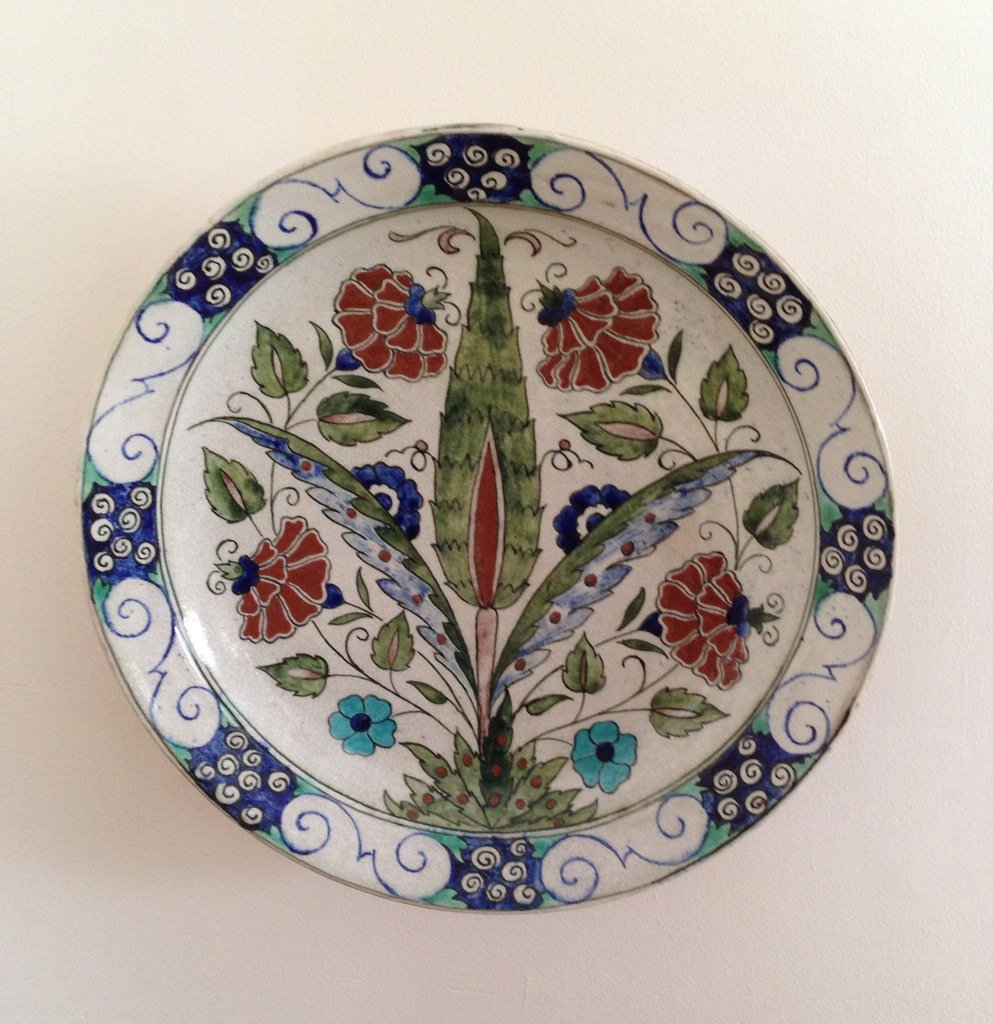
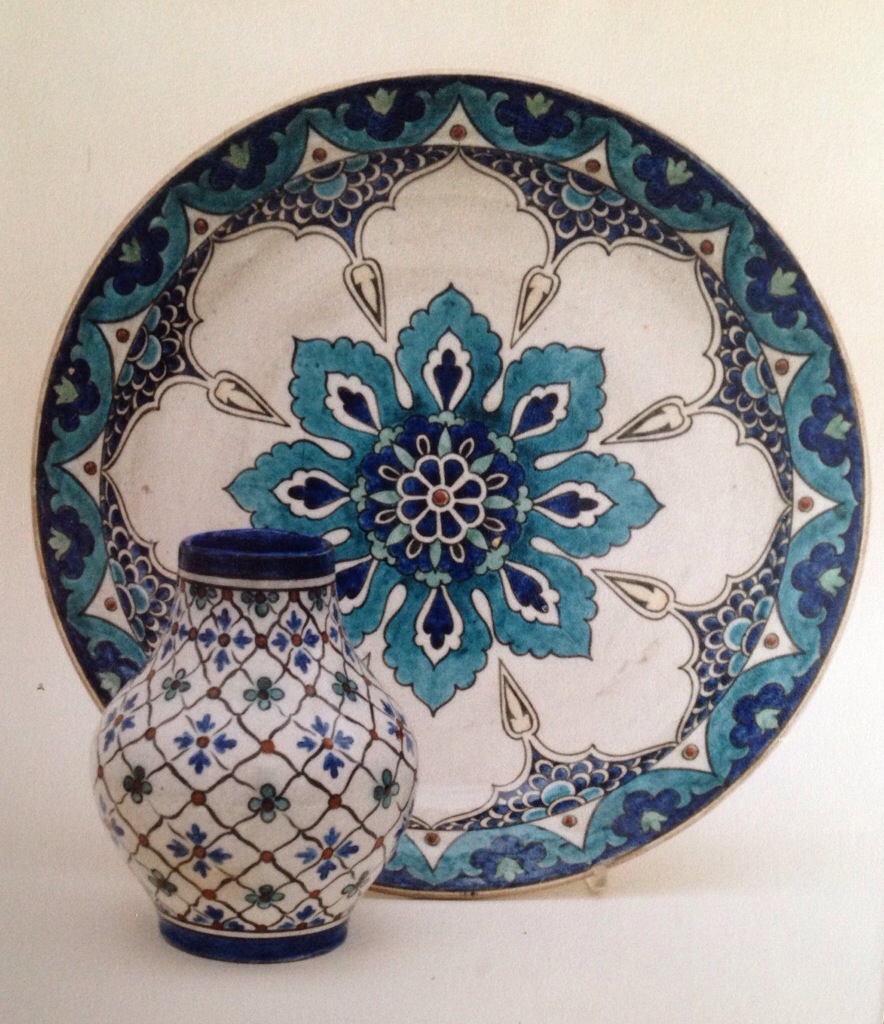
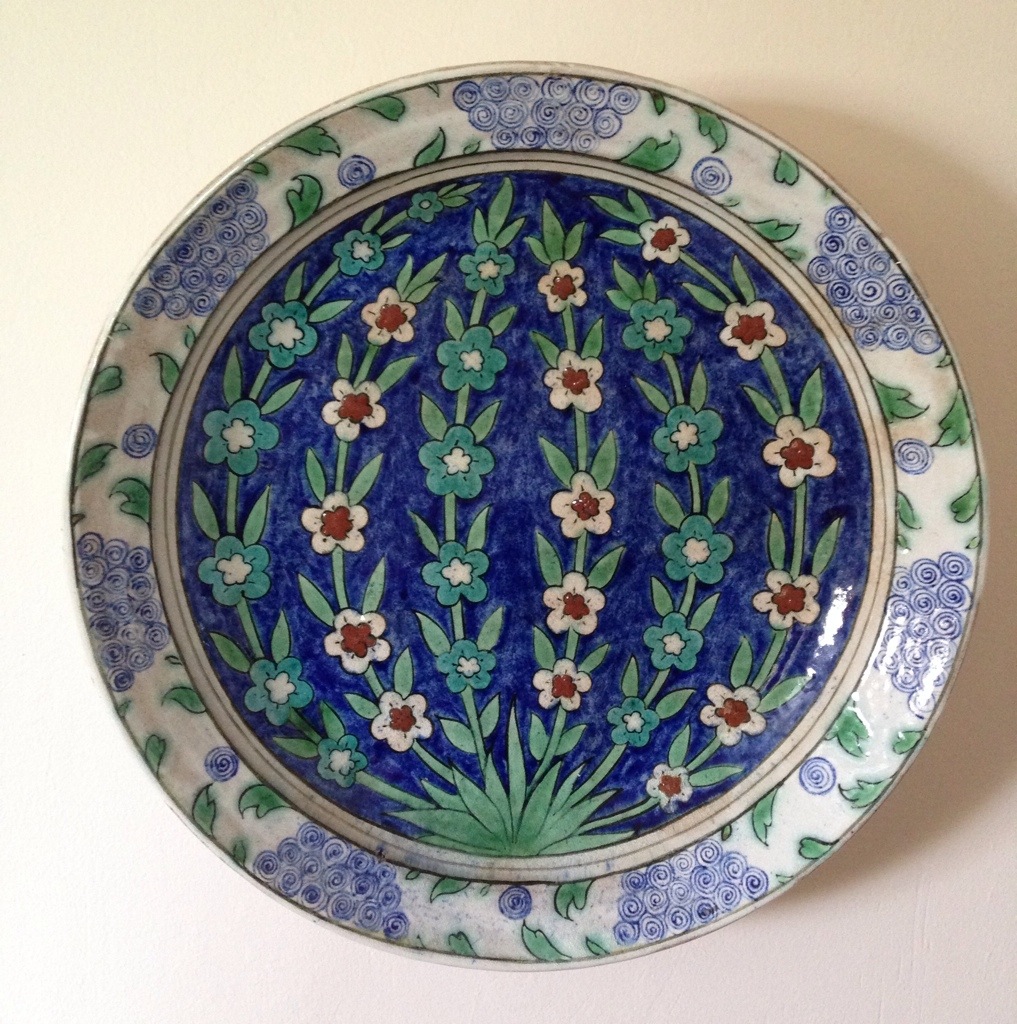
These dramatic designs by William Rowe and Harry Simeon form part of a very limited range of Lambeth wares that fall under the heading Persianware and should not be confused with the seriesware pattern of the same name or earlier Persian style products from Lambeth.

20140614-151916-55156472.jpg

Produced between 1919-22, these items are particularly hard to find and when they do turn up they cost a king’s ransom!

Painted in blue and green on a coarse body, items to be found in this ware are typically plaques measuring 13″ in diameter and vases in 3 or 4 typically Doulton shapes.

20140614-151948-55188036.jpg

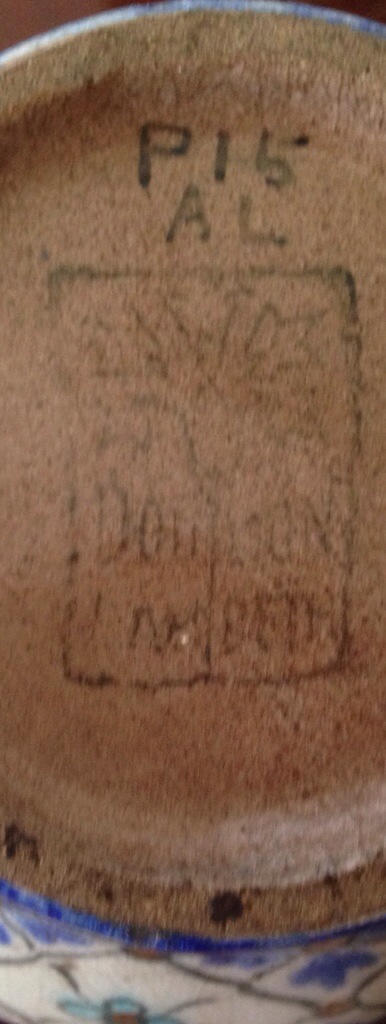
This Persianware has a special backstamp too.

20140614-152133-55293078.jpg

Kate Greenaway’s influence on Doulton Seriesware

20140612-165019-60619498.jpg

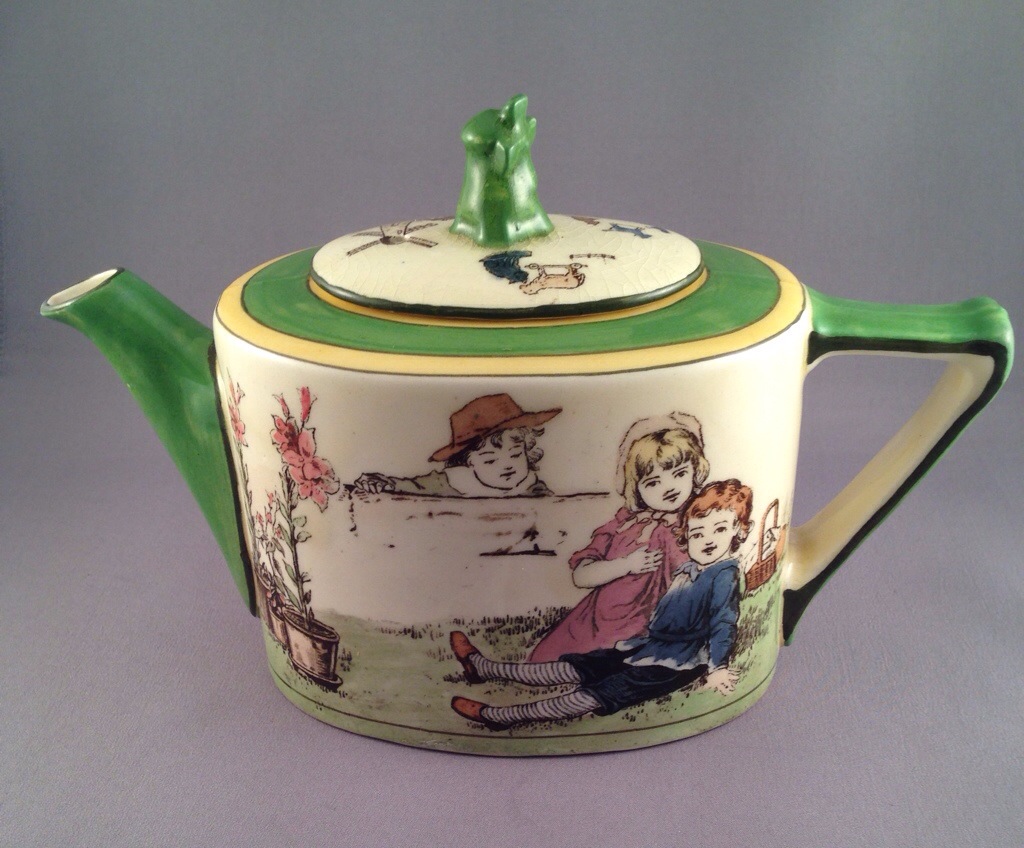
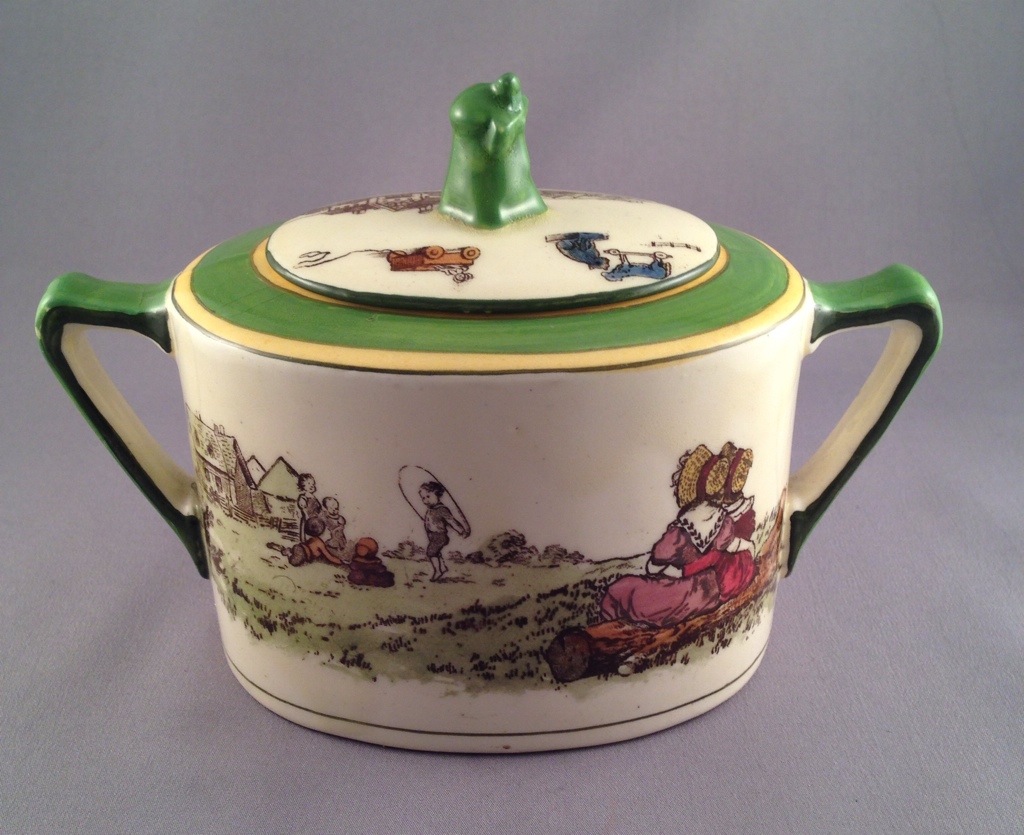
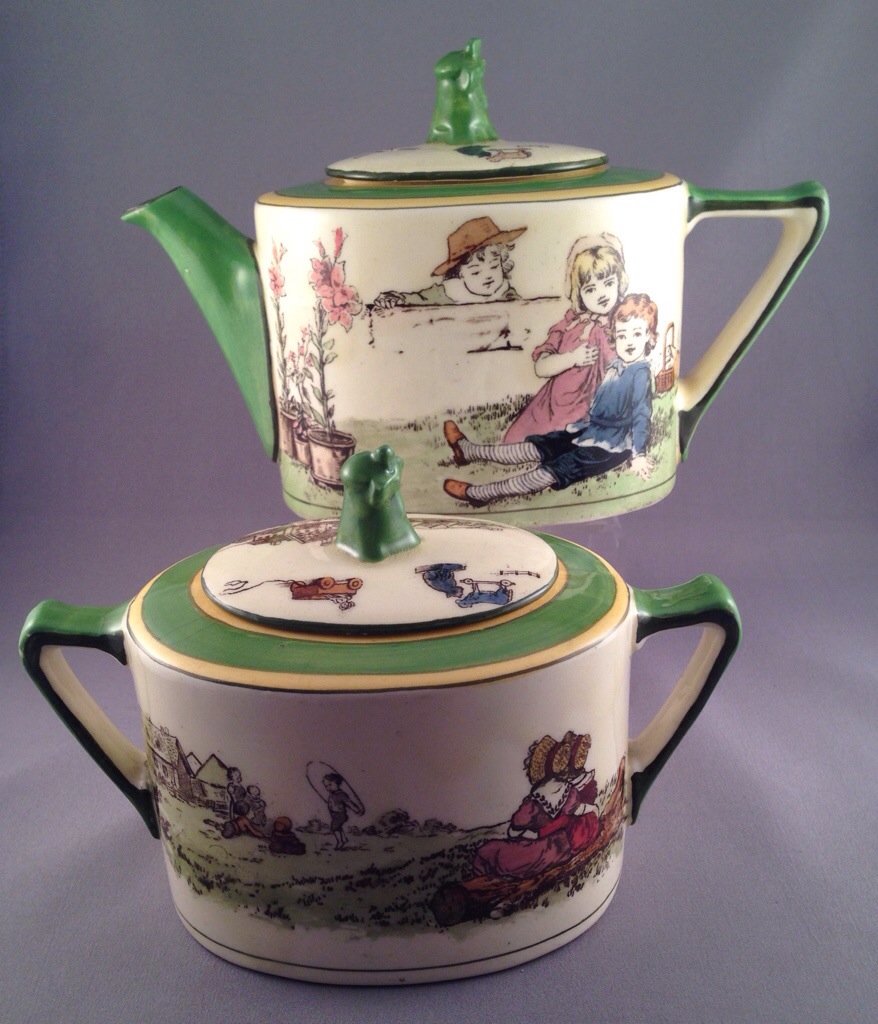
The style of dress on this early teapot is clearly influenced by the illustrations if Kate Greenaway from Victorian times, although the actual designs on this and the sugar basin below are actually by C. Van Brown.

20140612-165213-60733540.jpg

This aesthetic style is so closely influence by Kate Greenaway that it could be one of her illustrations. She undoubtedly started something of a craze in Victorian times for this style of dress and decoration. She certainly revolutionised children’s books and clothes of the late 19th Century.

The designs illustrated actually belong to the Pastimes series produced around 1902.

20140612-165504-60904865.jpg

It wasn’t until 1978 that doulton actually used some of her illustrations on plates from her illustrations for an Almanack from 1884.

Of course there is also the series of 18 figures introduced from 1976 started by Peggy Davies and continued by Pauline Parsons all based on Kate Greenaway’s style.

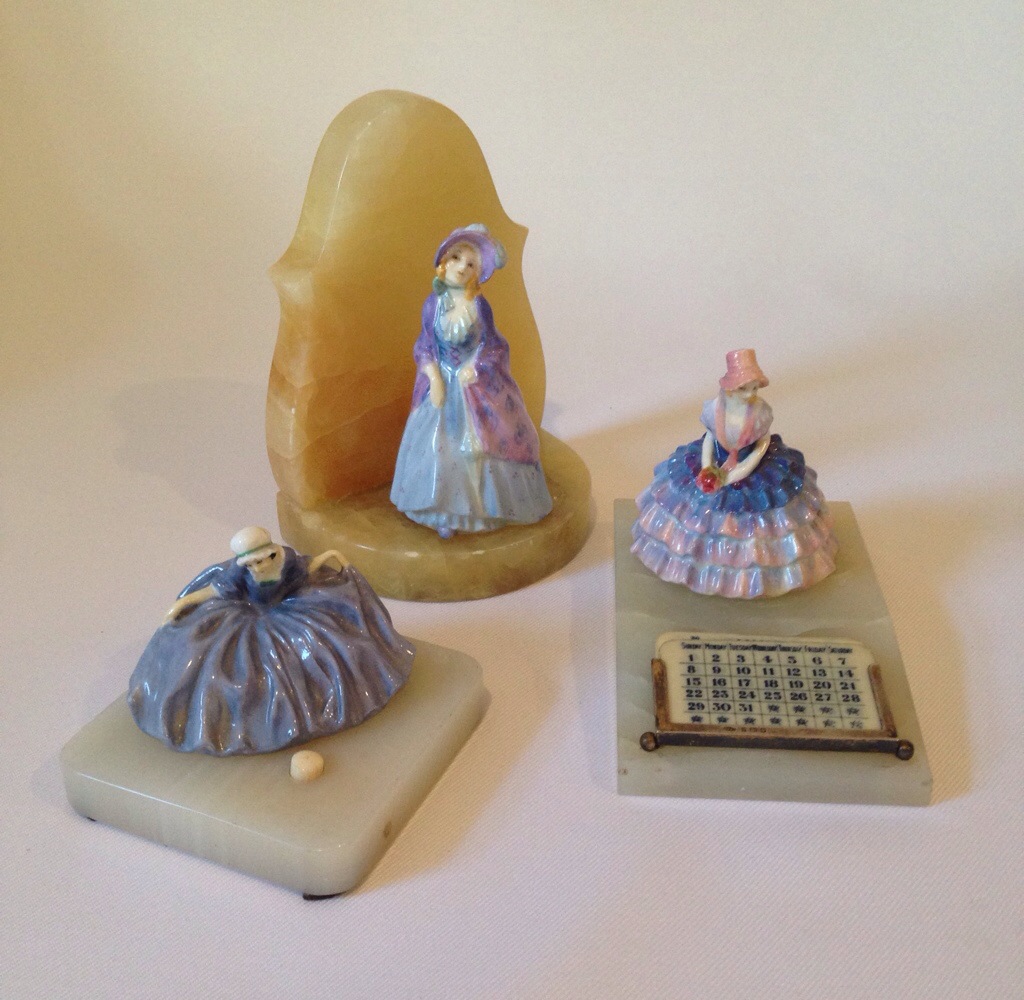
Dishes, bookends and calendars!

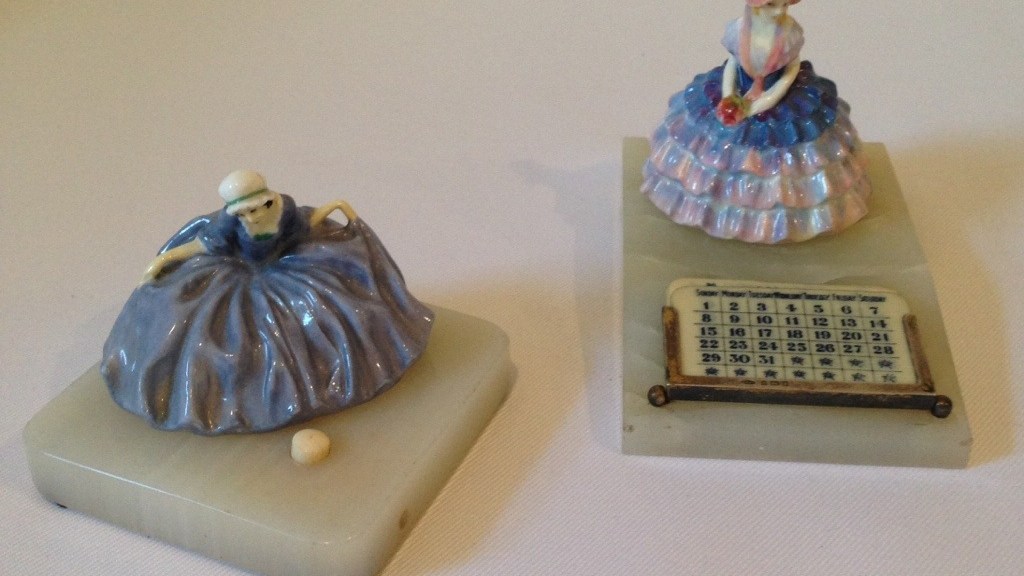
Collectors are often bemused to see their cherished figures mounted on bookends, calendars and dishes! This trend began in the early 1920’s at the same time as the figure lamps were produced.

‘M’ series miniatures are perhaps most often associated with bookends and certain calendars like these below.
20140609-202118-73278144.jpg

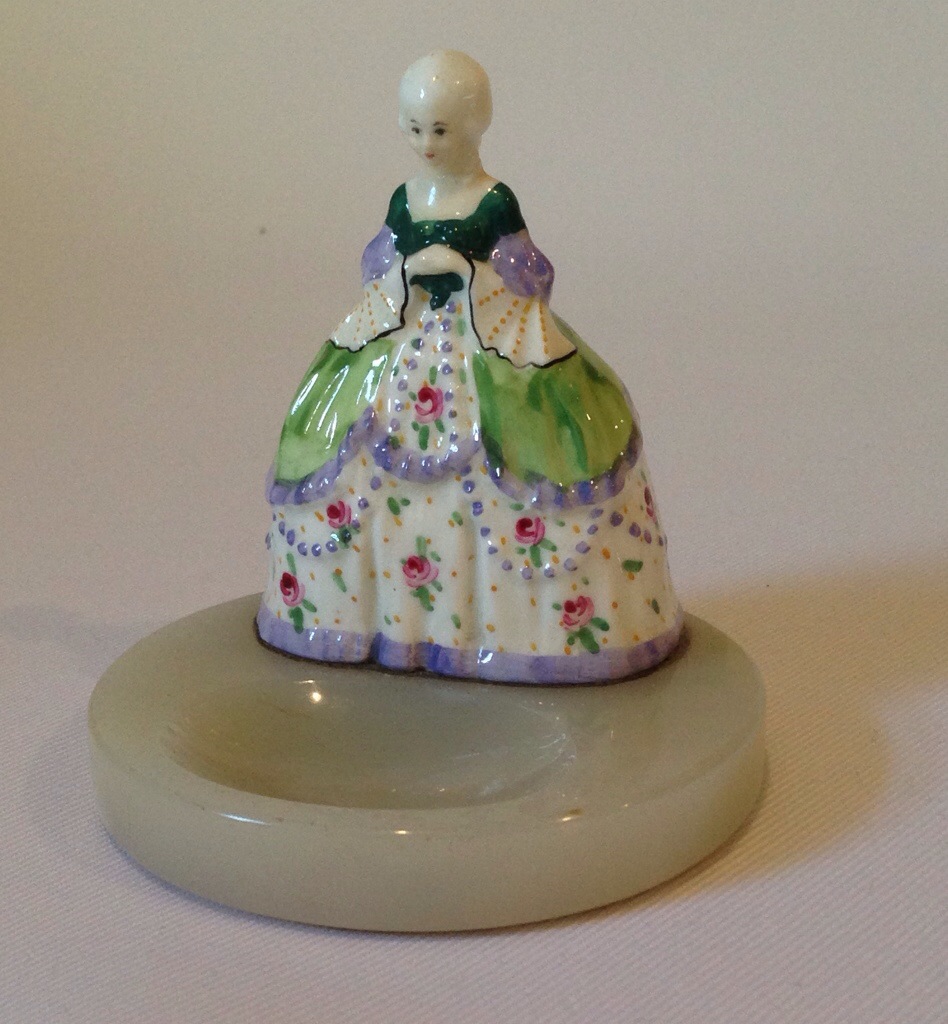
Occasionally very rare figures turn up mounted on bases, such as this Crinoline Lady pin tray.

20140609-202218-73338744.jpg

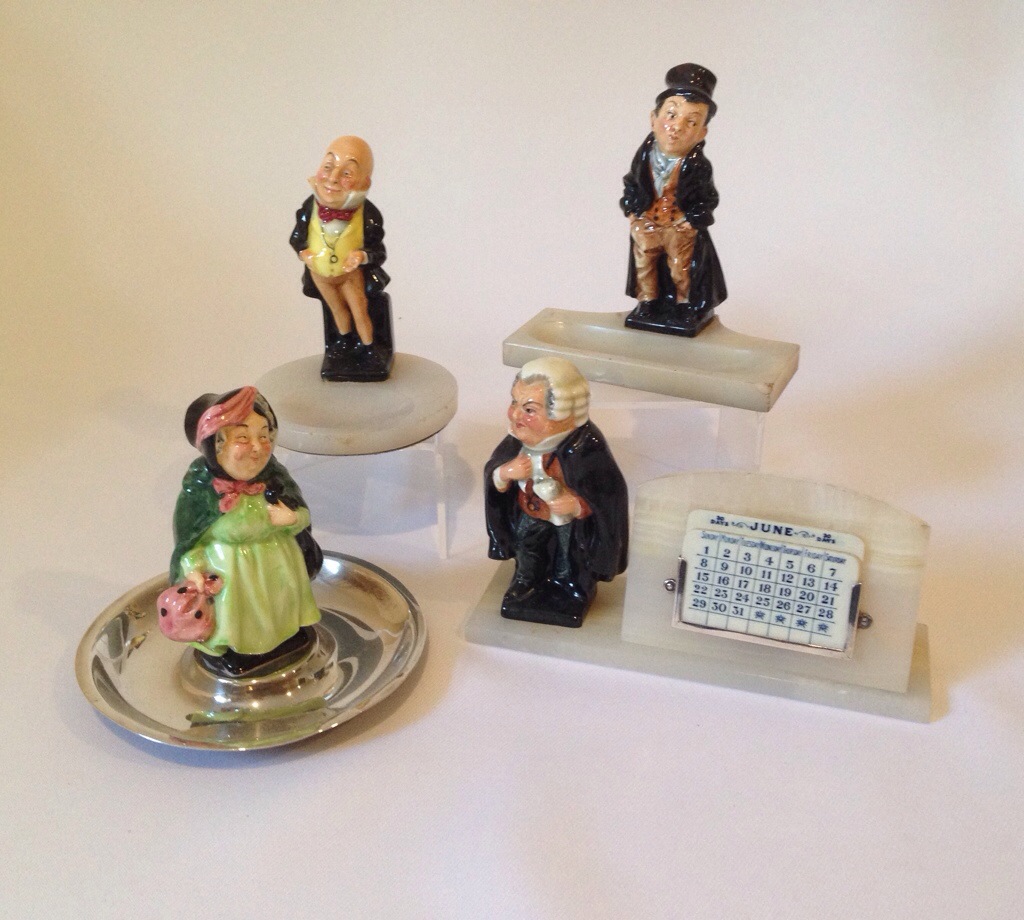
Harradine’s small Dickens figures appear mounted on a variety of bases, like this selection too.

20140609-202320-73400474.jpg

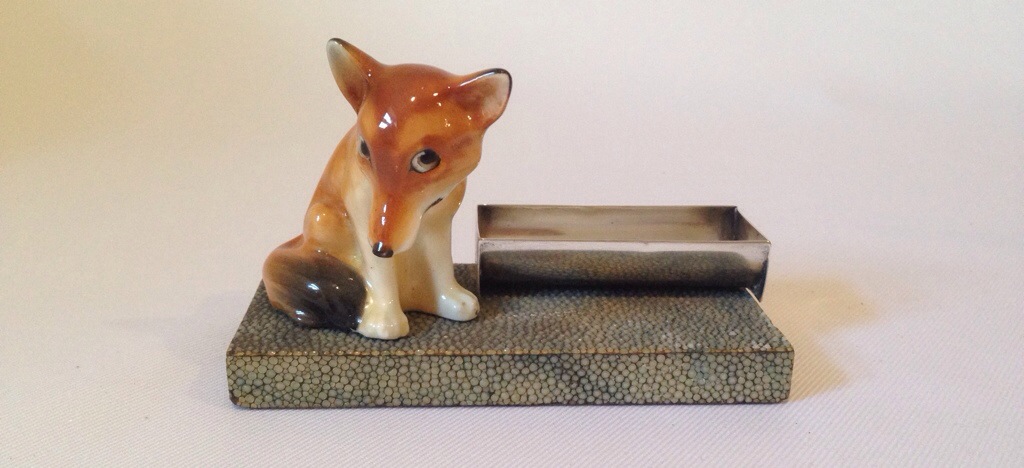
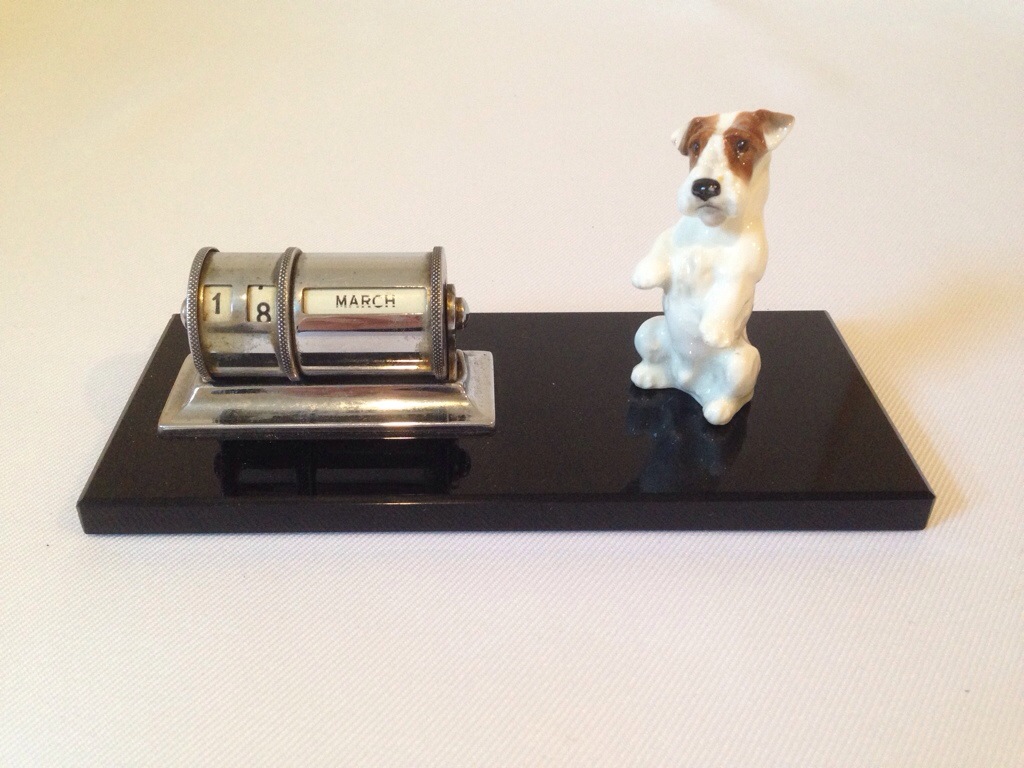
Small Doulton animals are also found mounted as many different objects but particularly desk furniture. Here is a comical fox I found mounted as a stamp tray.

20140609-202543-73543628.jpg

And also a Sealyham begging mounted on this calendar.

20140609-202620-73580712.jpg

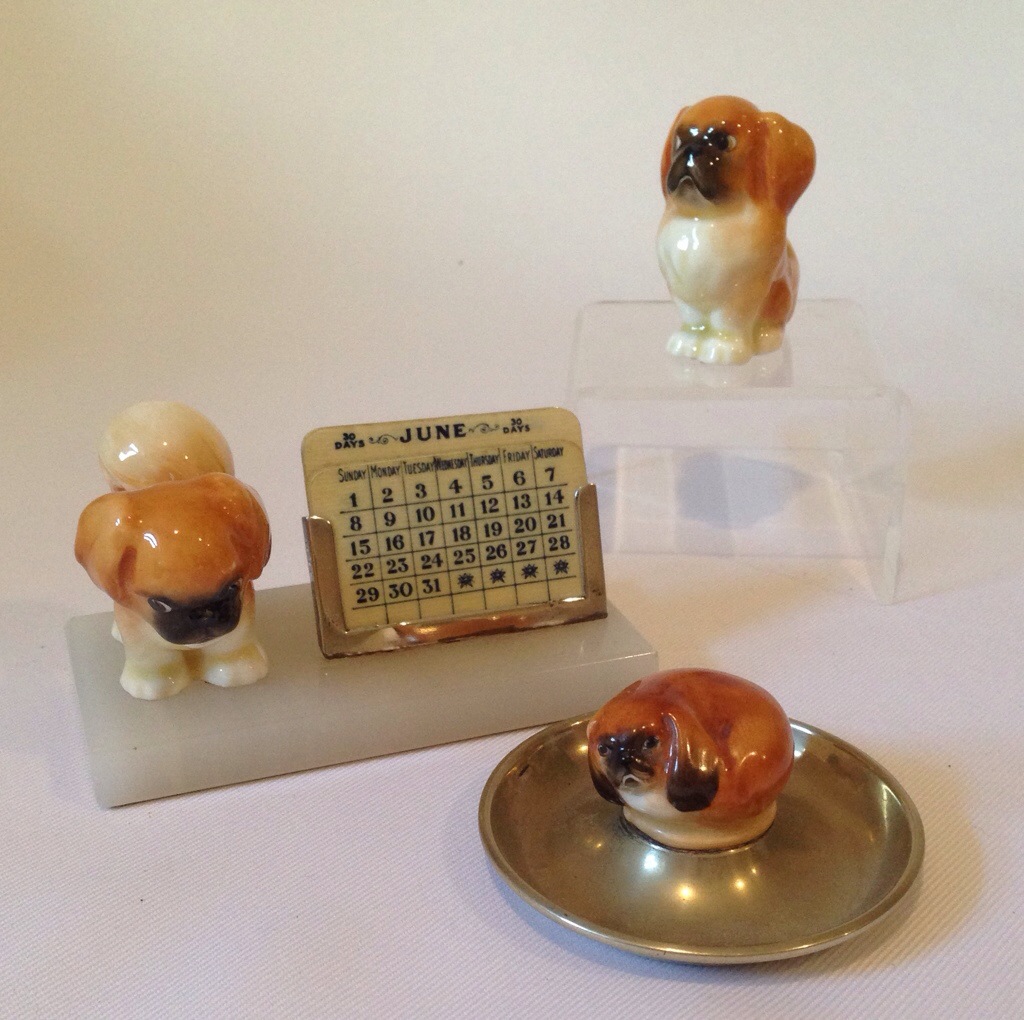
As many of you know Pekingese play an important part of my life and I have managed to assemble this small group of objects all with mounted Pekingese!

20140609-202748-73668591.jpg

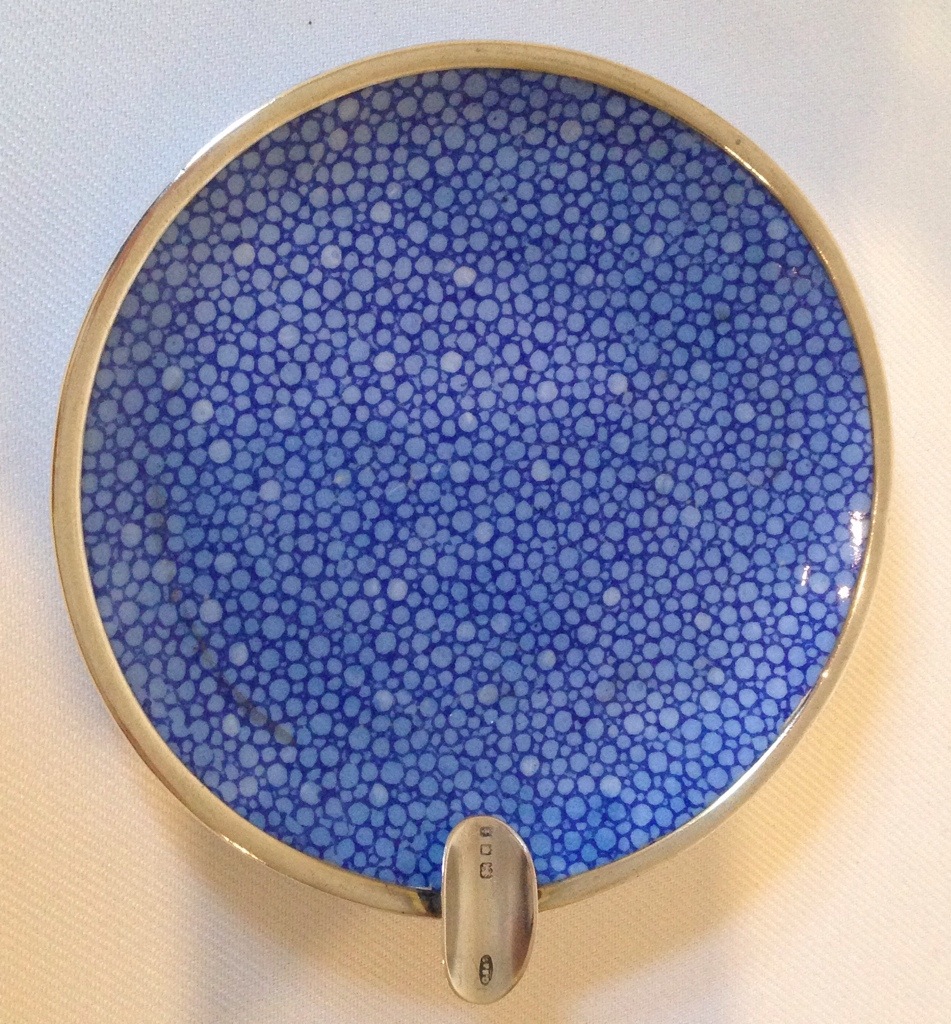
Many of these objects, especially those mounted with sterling fittings would have been retailed by top jewellers of the period including Asprey and Garrards in London. Even more ‘normal’ objects such as pin trays were given sterling mounts so as to make them exclusive objects for top jewellers, such as this Shagreen pin dish (in an unusual blue) which has been given silver mounts to turn it into an an ashtray!

20140609-203147-73907255.jpg

This is only a sample of possible objects, and we would love to hear from you if you have other items mounted with Royal Doulton on our Doulton Collectors Facebook page!

Doulton’s ‘red’ ladies

Red has long been one of the most popular colours amongst figure collectors, but it took almost 20 years for Doulton to cotton on!

The earliest figures were produced in a rainbow of colours but it wasn’t until the late 1920’s that red colourways of figures began to emerge with the introduction of figures such as Kathleen, Priscilla and Rosina.

Thereafter there has been a parade of other red figures culminating in the late 1930’s and the immediate years after the war with the introduction if three of the most famous Doulton ladies ever: Top o’ the hill, Auntumn Breezes and of course Christmas Morn. The lengthy production of these figures not only stands as popular proof of the model but also the popularity of their colourways!

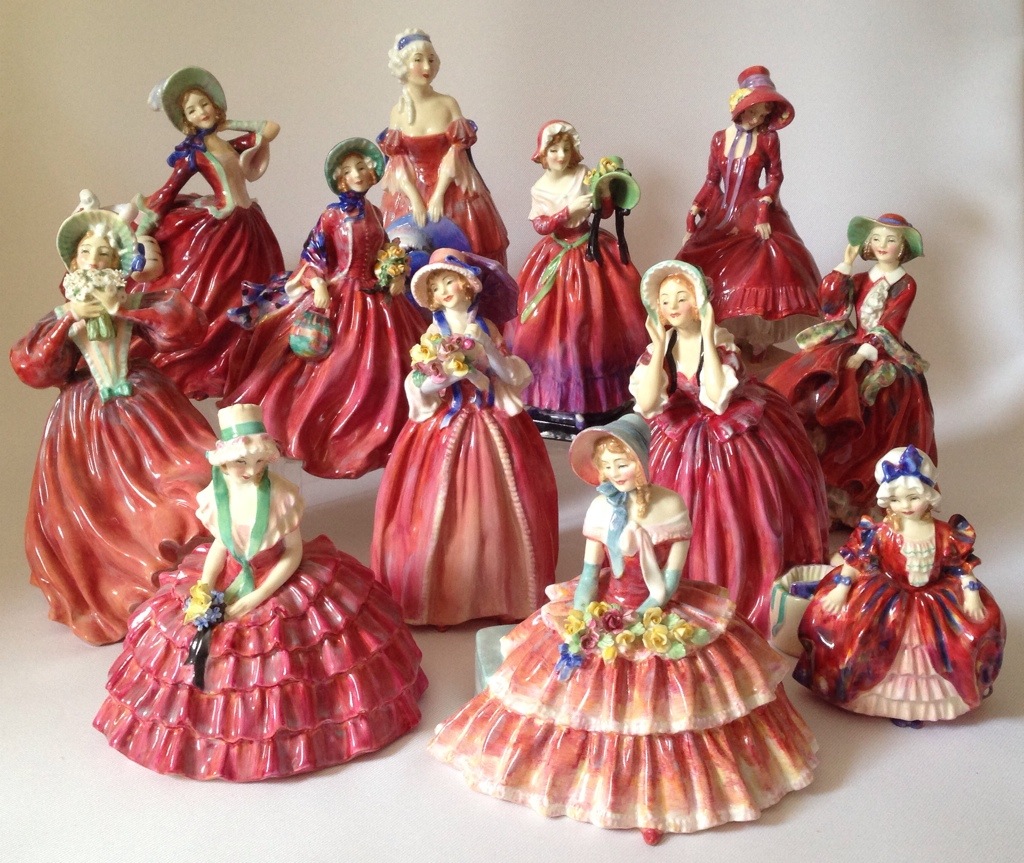
Here are a selection of my favourite ‘red’ ladies!

20140608-165331-60811943.jpg

Since the introduction of Christmas Morn there have been an array of other ladies in red – perhaps you have them in your collections?

Happy collecting and remember we would love to hear from you on our Doulton Collectors Club Facebook page!

Unusual Lambeth Glazes to match Burslem’s Sung and Chang

Just as Doulton in Burslem under the direction of Charles Noke were experimenting with glazes in the early 20th Century, so too was his London counterpart Joseph Mott, art Director at Doulton Lambeth.
Mott can truly be said to have seen it all at Doulton as he began working there in the 1880’s when some of Doulton’s most famous artists were in full swing including the Barlows, Mark Marshall etc…
Just as sales at Burslem were on the rise so too began the steady decline of Lambeth wares. However, under Mott’s direction the art department survived for another half century.
Mott had a chemists background so it is no surprise that the following pieces have turned up, all showing the most wonderful types of glaze and most bearing his initials.

20140608-133202-48722793.jpg
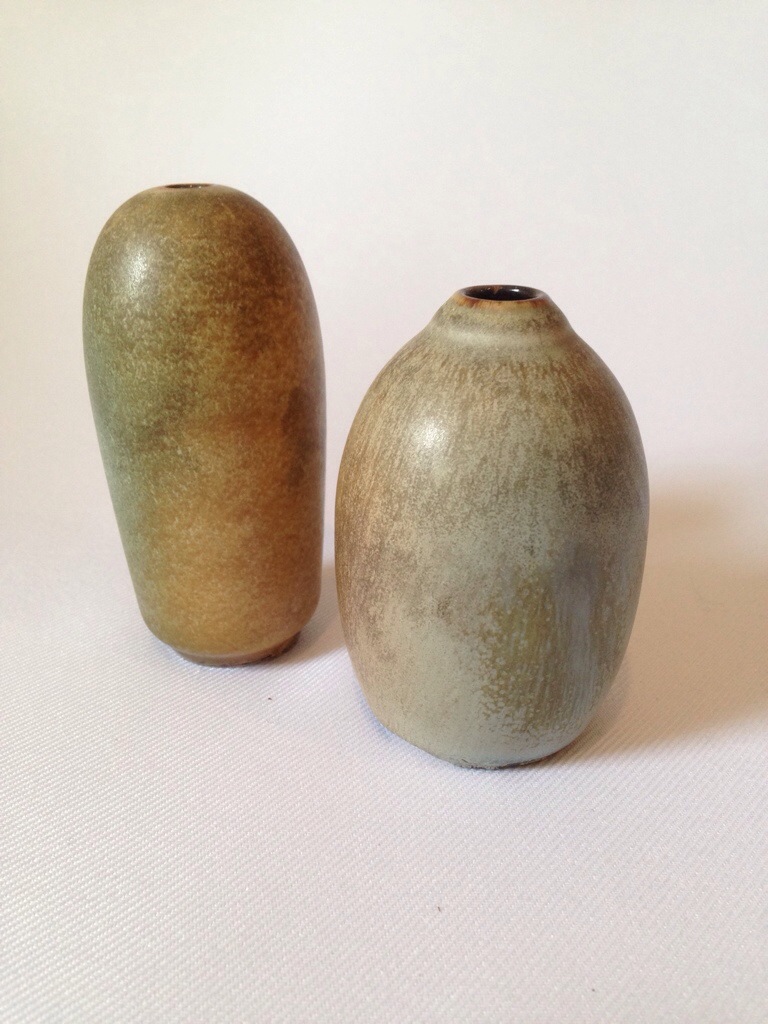
A deep-glazed slender vase.

20140608-133239-48759280.jpg
Two ‘hare’s foot’ glaze vases.

20140608-133319-48799911.jpg
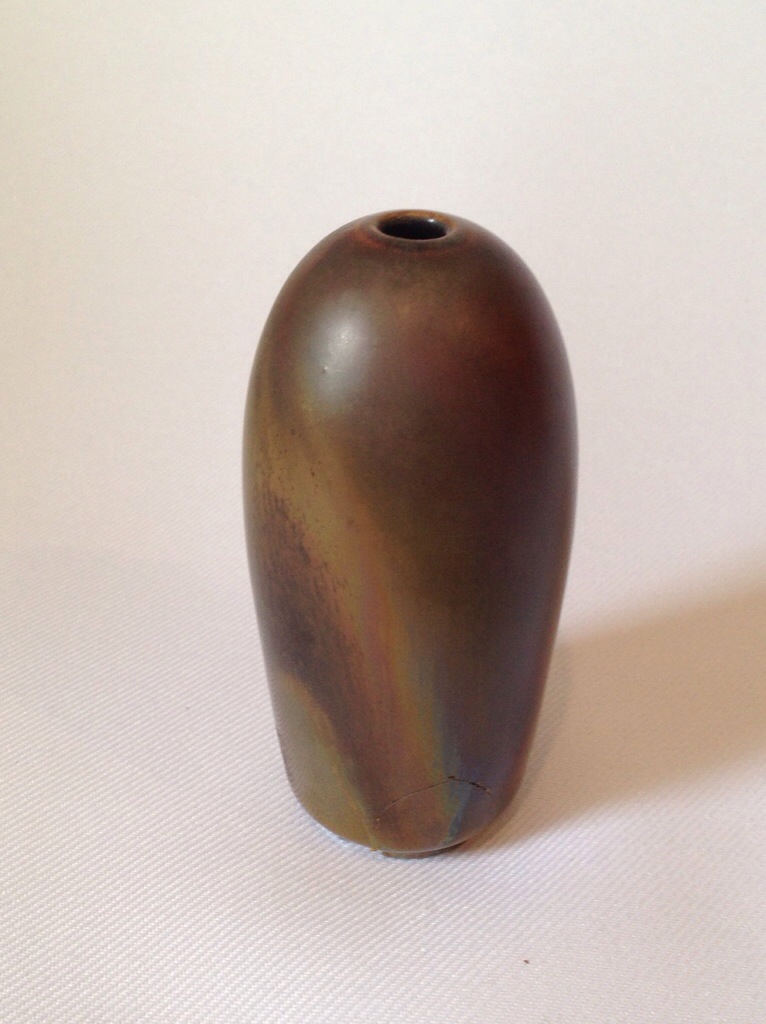
An unusual vase signed by Mott.

20140608-133420-48860390.jpg

20140608-133419-48859216.jpg
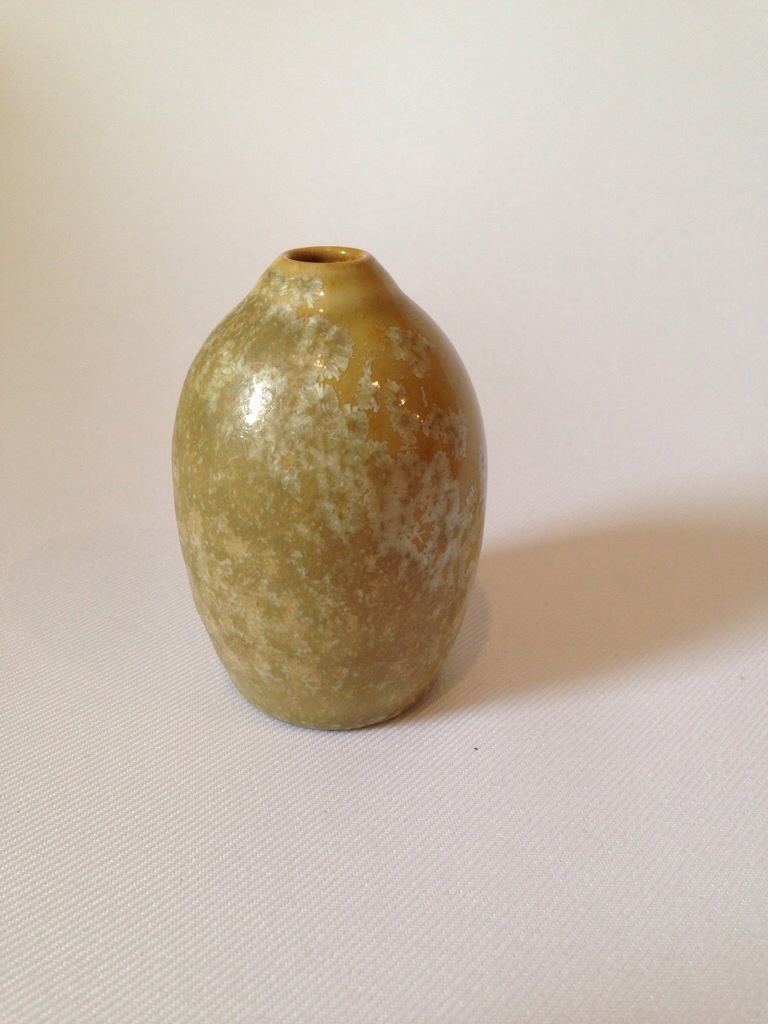
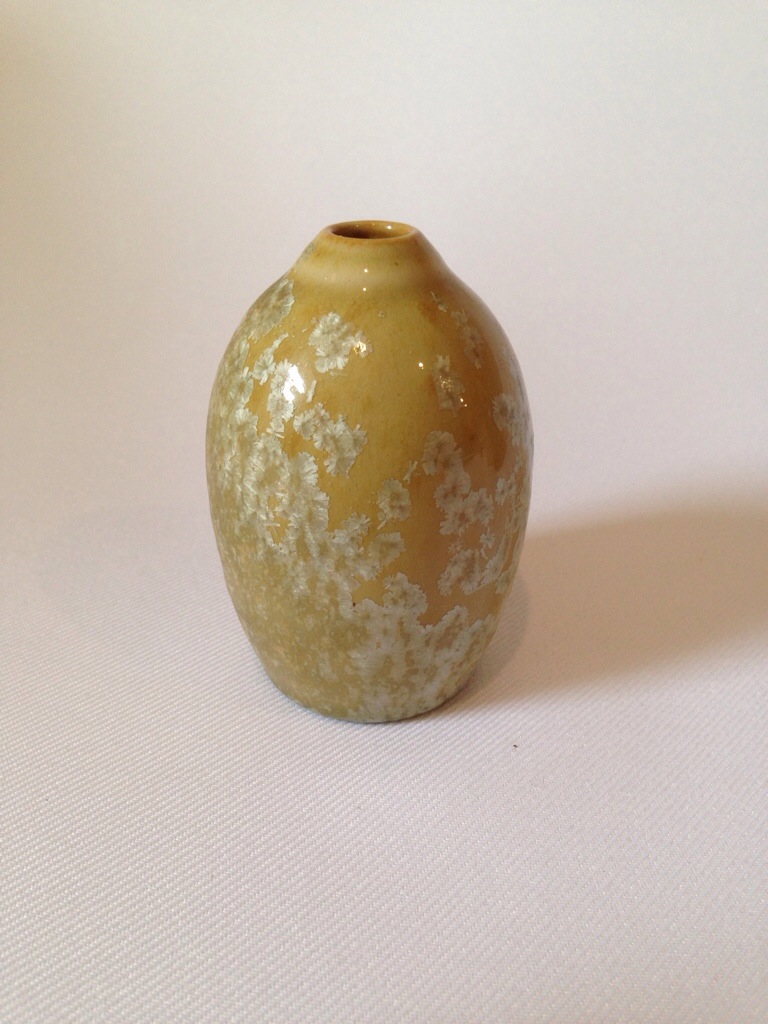
Two views of a striking crystalline vase.

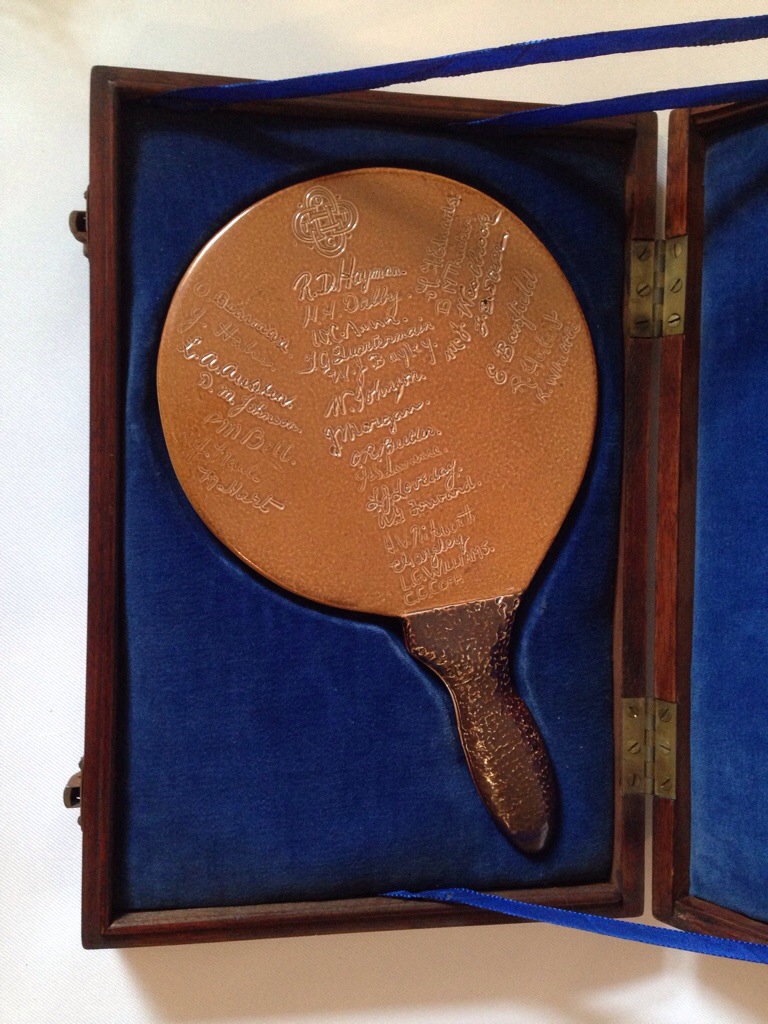
One piece of stoneware I have at home is a fun Doulton stoneware table tennis bat presented by Mott’s fellow players to him in 1935, and signed by them all.

20140608-133515-48915707.jpg

Mott’s contribution to the Lambeth factory goes far beyond glazes but that is the focus of this piece today.

Doulton’s most unusual glazes: Sung, Chang and Chinese Jade

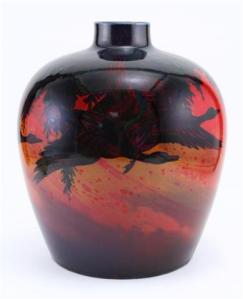
Charles Noke continued to experiment with glazes long after the departure of Cuthbert Bailey with whom he had perfected the Flambé glaze in the early 1900’s. And so in 1920 Sung was introduced, whereby painted decoration, colour and gilt are fused with the a flambé glaze.
FLM_Sung Vase Ducks in Flight (Small)

A stunning Sung vase.

I am sure you will agree that these pieces are magnificent. However, it is in the flesh that these pieces must be enjoyed to full effect as in this slide. Vases, large and small were decorated with exotic birds, pixies in woodlands, fish in seascapes along with many other subjects.
FLM_Sung Owl with Owlet Wing HN160 (Small)

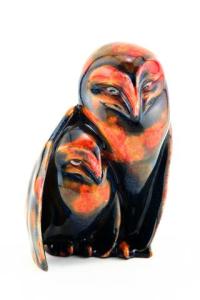
Sung owls.


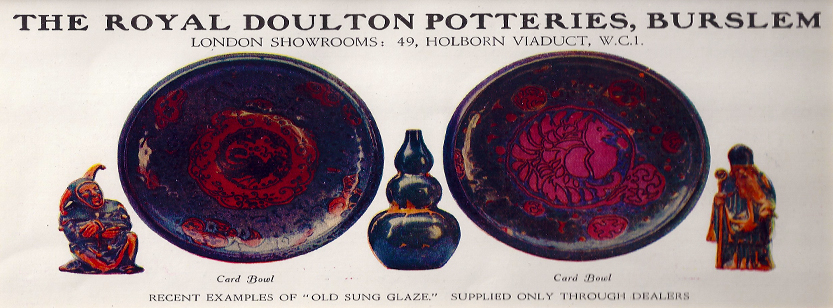
These pieces were painted principally by Harry Nixon, Arthur Eaton and Fred Moore. Sung glazes can be found on Buddhas, as can also be seen here in this advert from the 1920’s, a handful of suitable early figures from the HN range such as A Spook, as well as animals, in particular elephants, a favourite of Charles Noke can also be found.
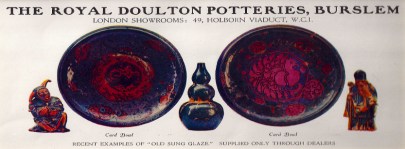
Image

Orignial Sung advert ca. 1920.

FLM_Sung Foxes Curled HN117 (Small)

Sung curled foxes.

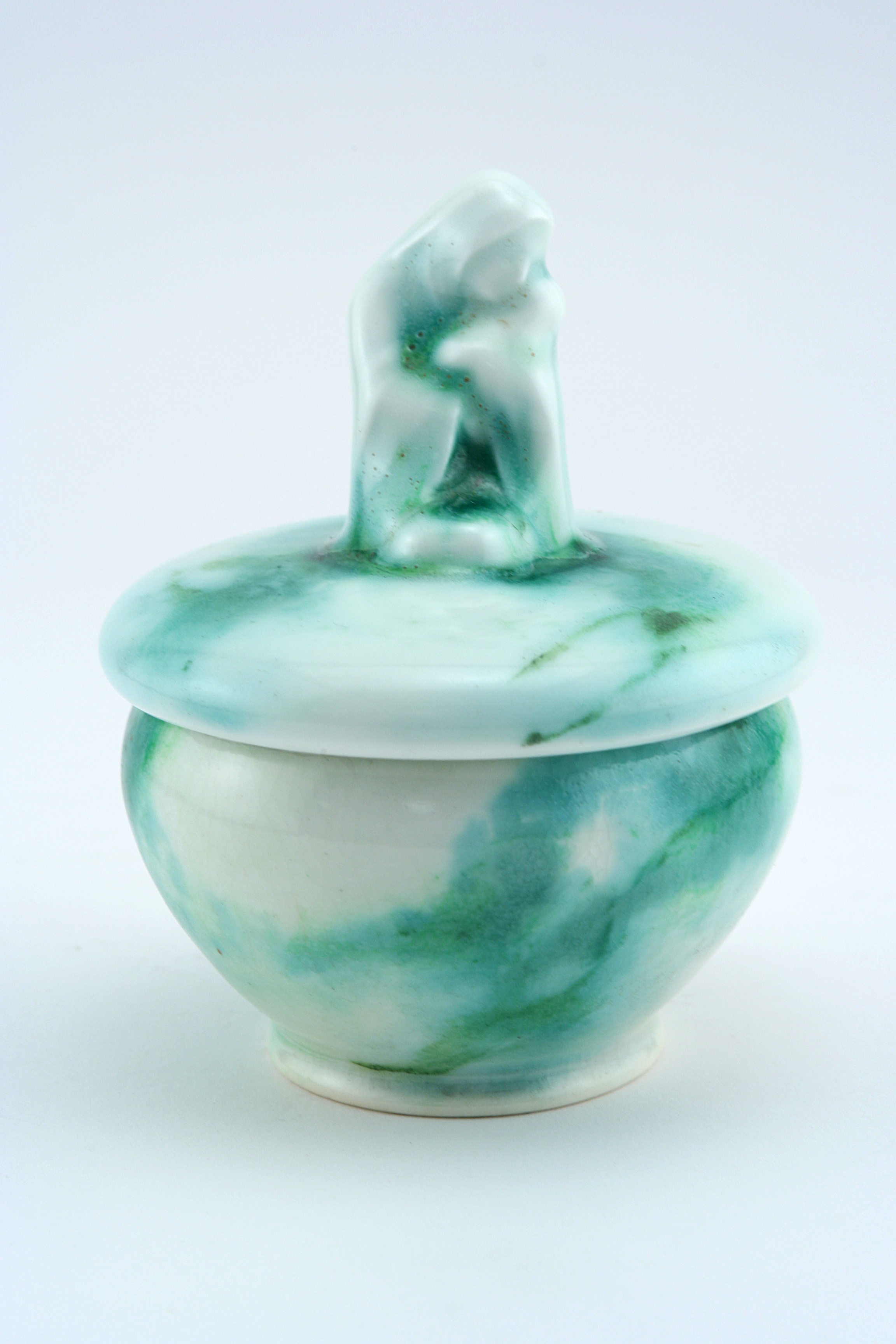
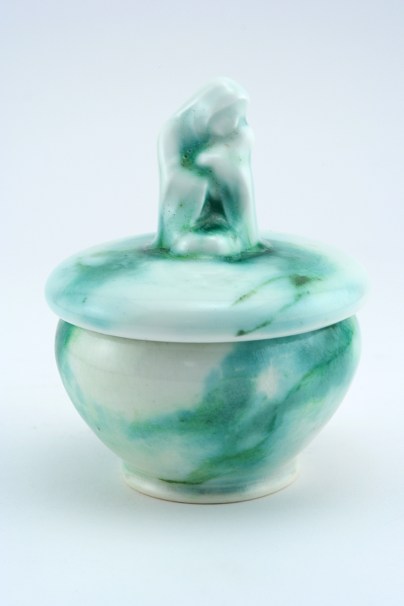
Another magnificent addition to the Burslem range in 1920 was the Chinese Jade glaze, imitating the ancient Chinese glazes of centuries before, by using a thick white glaze streaked with green. Pieces of Chinese Jade are exceptionally rare, due to the costliness of production, together with the high proportion of rejects due to the inherent difficulties in achieving this technique.
Image

Chinese Jade lidded bowl with ‘Despair’ HN596 as the finial (the name of this figure is only a name given when the original figure book was published in 1978 as there is no record of its actual name).

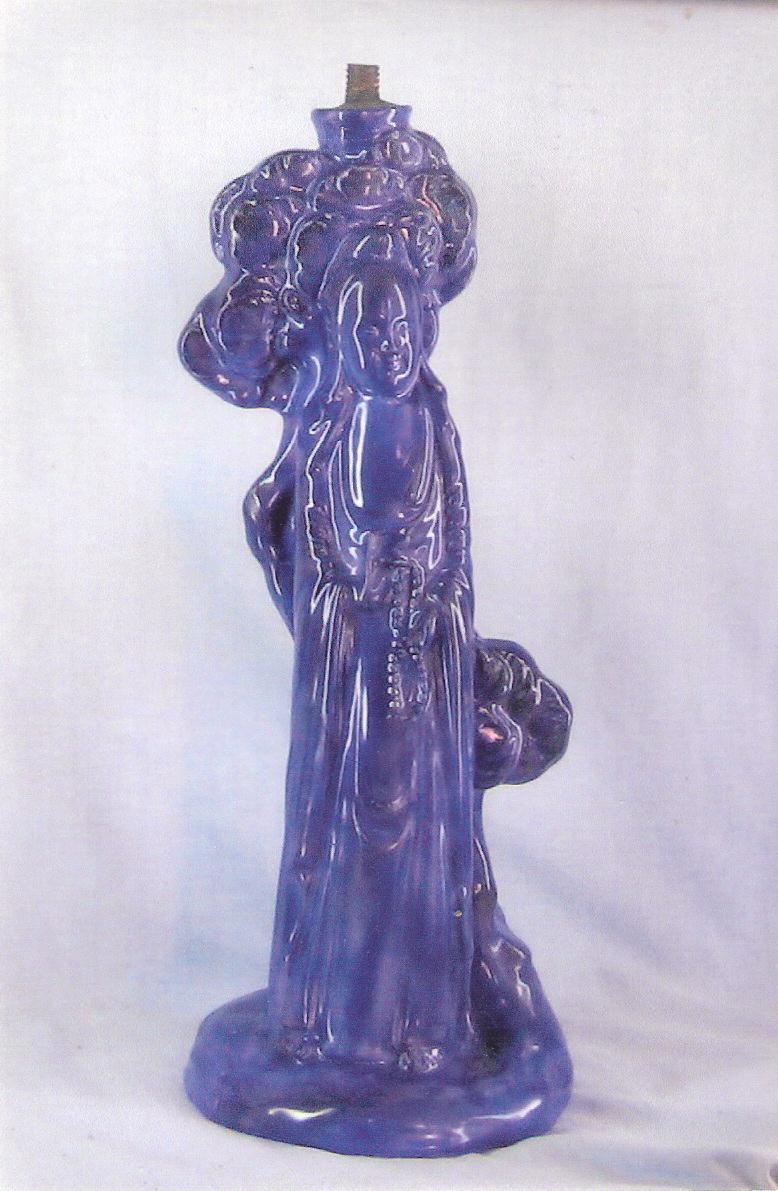
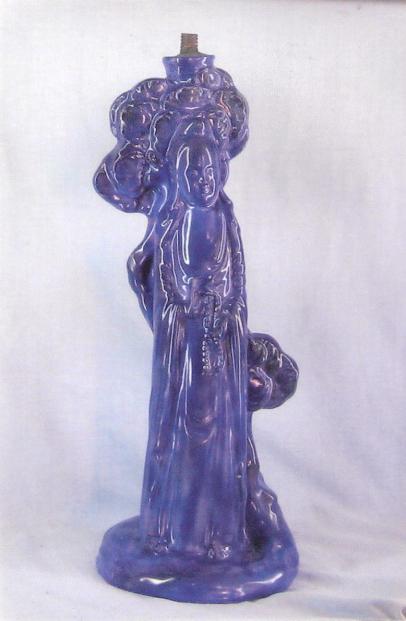
A variation of this ware exists whereby the green streaks are replaced by blue ones, and this extraordinarily rare glaze is aptly named Lapisware.
Image

A very rare Lapisware lamp base.

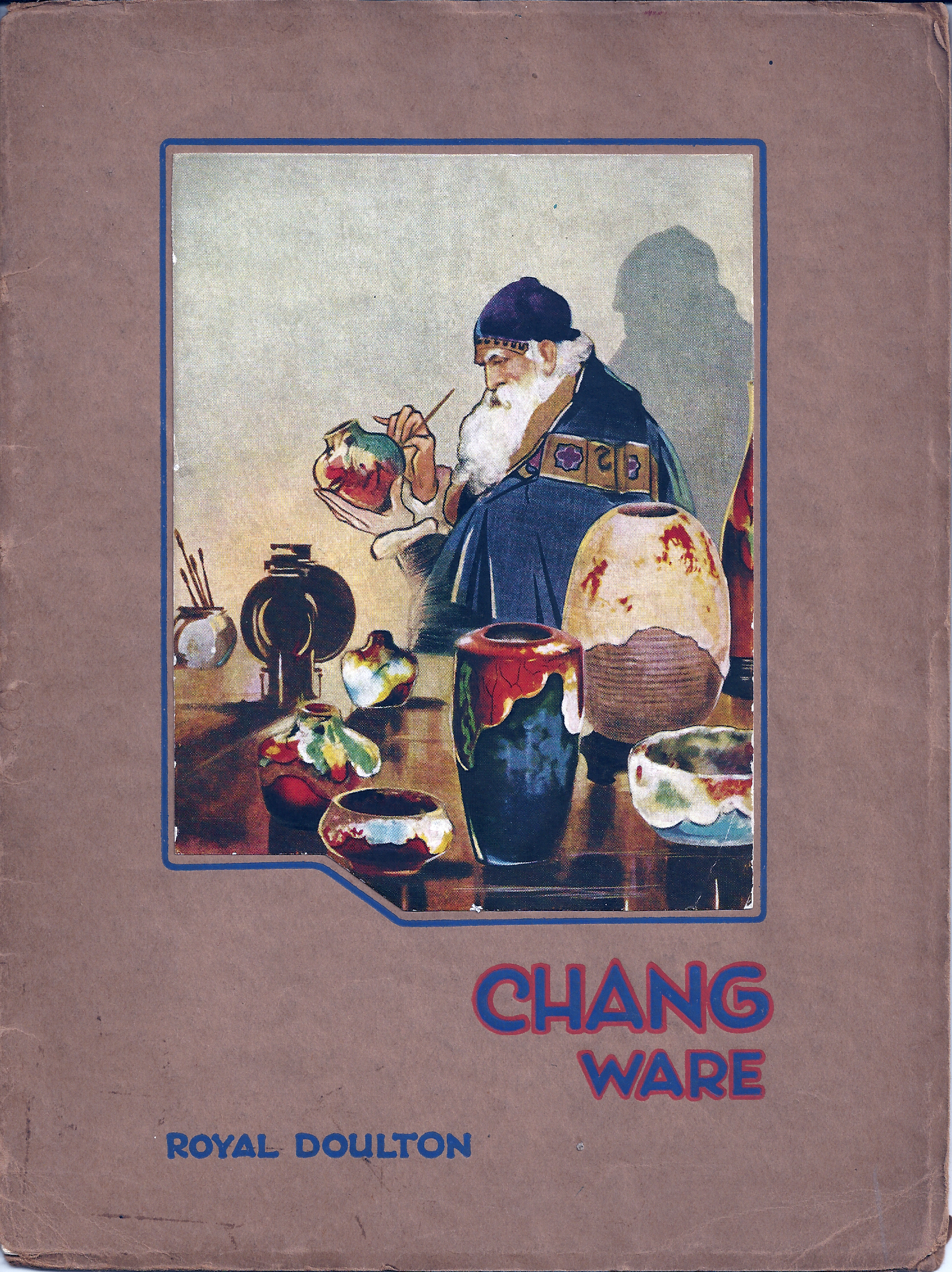
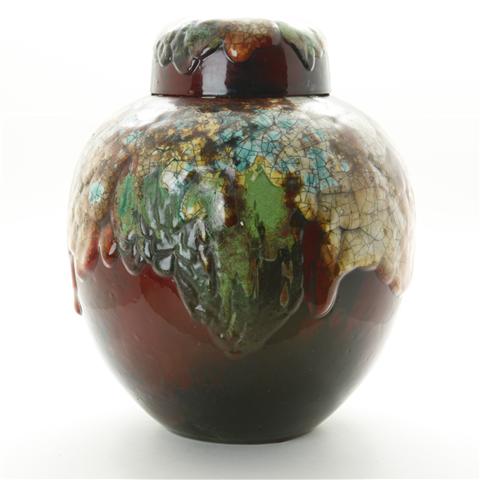
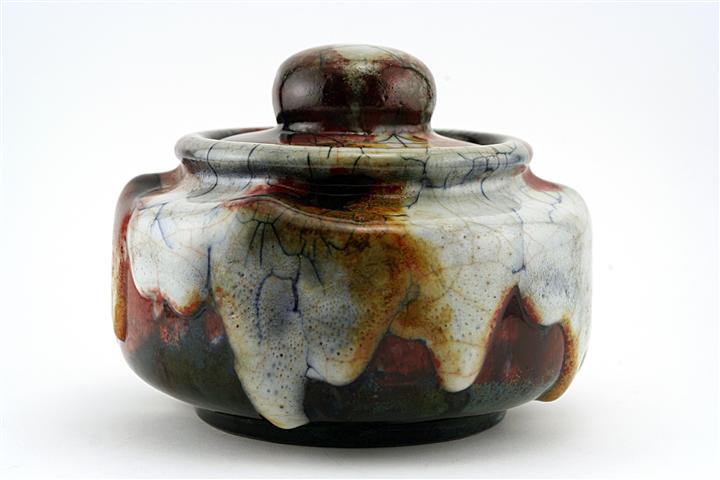
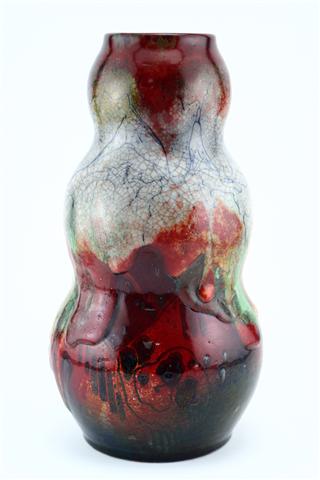
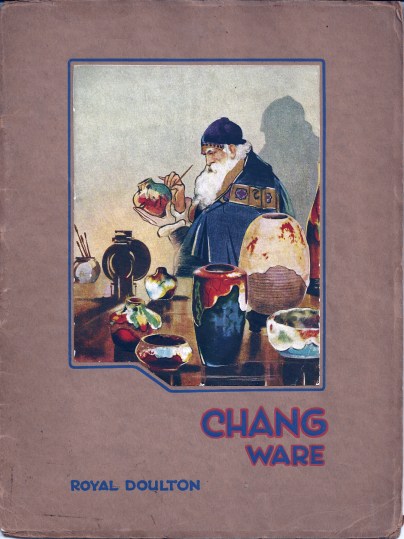
Another glaze worthy of inclusion here is perhaps the most magnificent of all. Chang ware was introduced in 1925 and involved a thick body upon which multi-coloured thick glazes were allowed to run and crackle – contrary to all usual pottery rules.
Image

Original Chang catalogue cover.

The results you can see from this slide are breathtaking. Nothing like this glaze had been sen before even in ancient times, and it was greeted by worldwide acclaim. Chang pieces are usually found with the monogram for Harry Nixon on their bases together with Noke, for either Charles or Jack Noke, who succeeded his father as art director in the late 1930’s. The addition of Noke’s name signified the quality such work achieved.
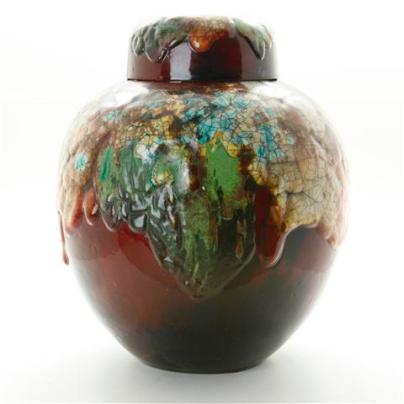
Image

Chang ginger jar and cover.

To finish here are a selection of other glaze pieces from the early 20th Century. Enjoy!
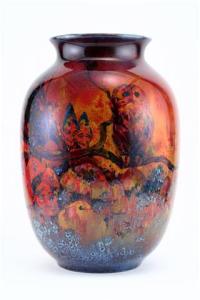
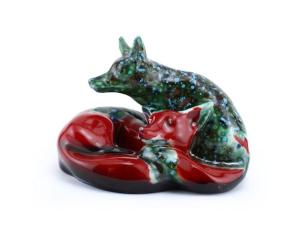
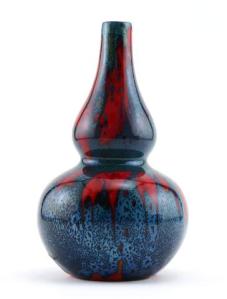
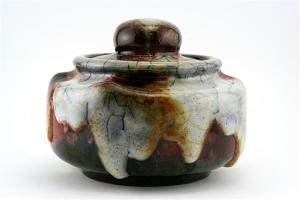
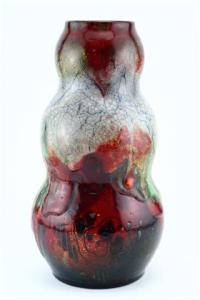
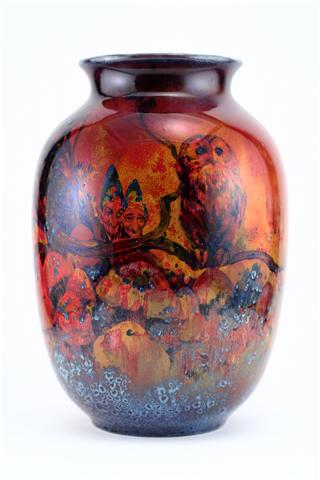
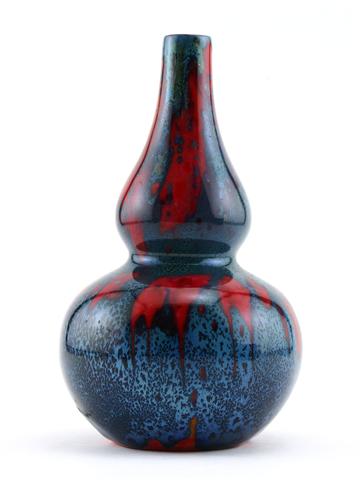
FLM_Sung Vase Gnomes in Tree 13H (Small) FLM_Sung Vase Gourd Shape 6H (Small) FLM_Chang Tobacco Jar (Small) FLM_Chang Vase 3 Tier 11H (Small)

Doulton’s Hyperion ware

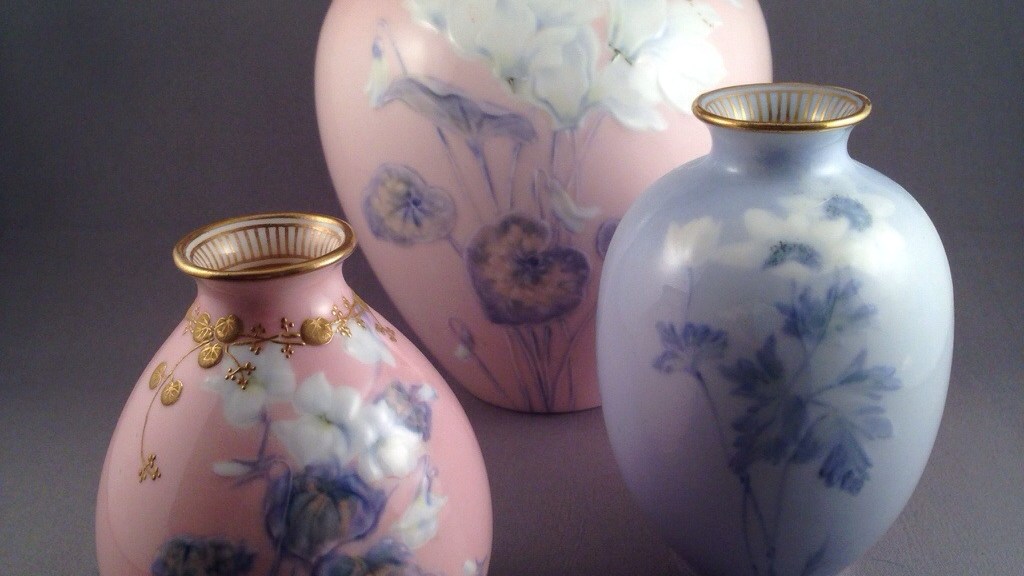
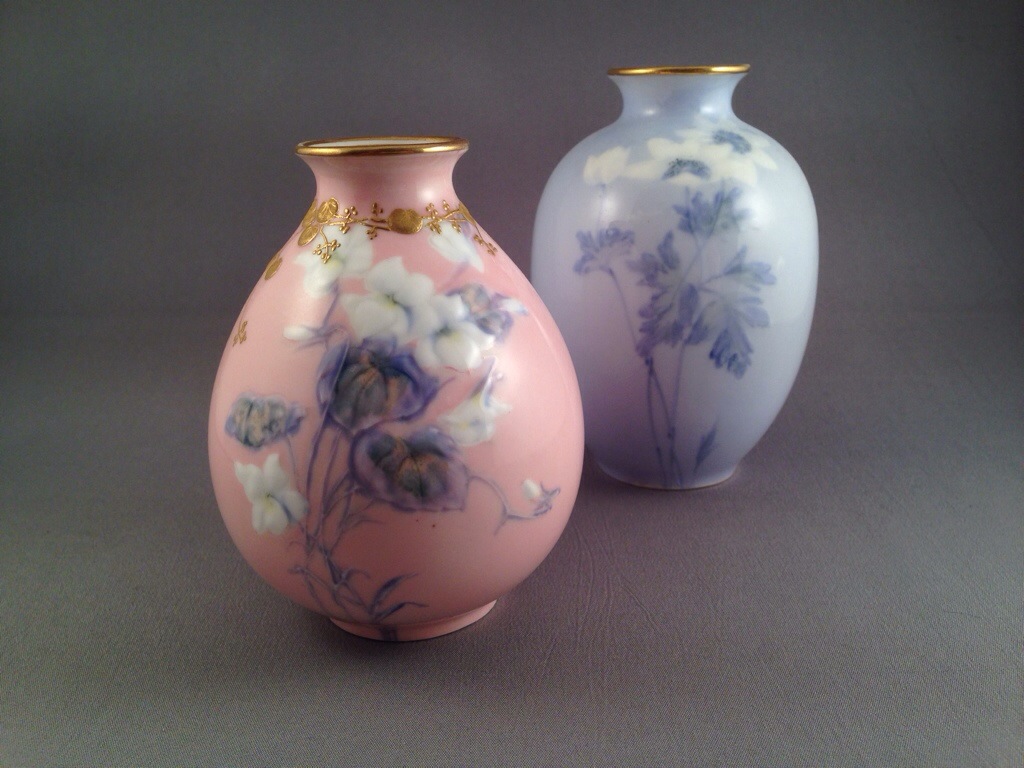
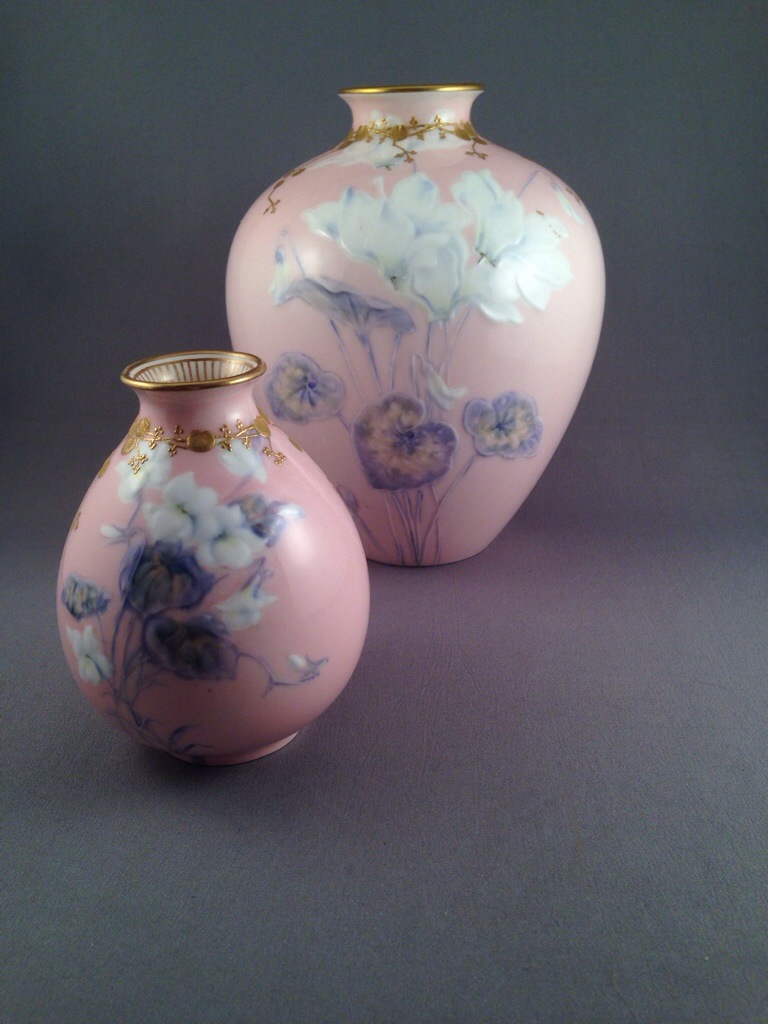
This has to be one of my favourite of all the Doulton wares, although I only have three examples in my collection. This ware had a very short production around 1900 and pieces are typically pastel pink or pastel blue and come in the usual range if shapes Doulton used in vases from this time. Although I did once have a cobalt blue example signed Walklate.

20140603-202538-73538188.jpg

This particular style of painting was introduced by Noke and pieces of this ware are generally painted by Fred Walklate, John Kelsall or Edward Raby – three if Doulton’s most prestigious artists of the time.

20140603-202622-73582551.jpg

This ware has no special mark but is so distinctive that it stands out from the crowd. The freehand floral images painted onto the pastel body were often outlined in gilt and there was often acid etching too, as in the two examples shown.

Hyperion ware is very rare today so pieces rarely appear on the secondary market.

The enchanting Lizana – another one not included in Reflections!
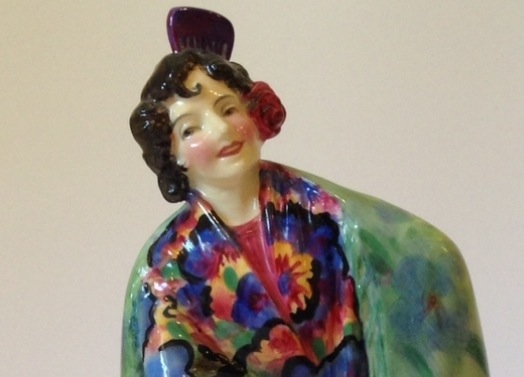
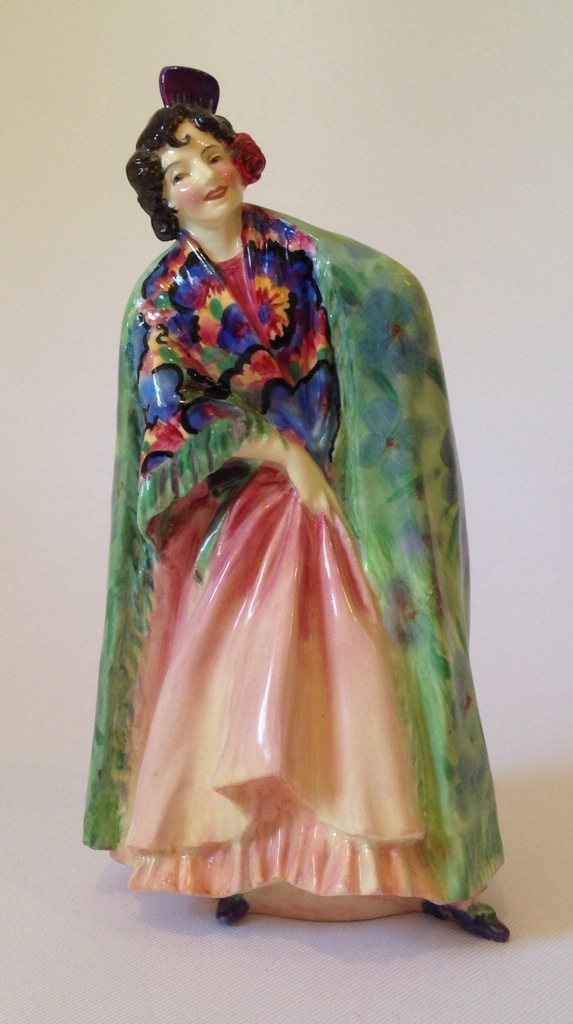
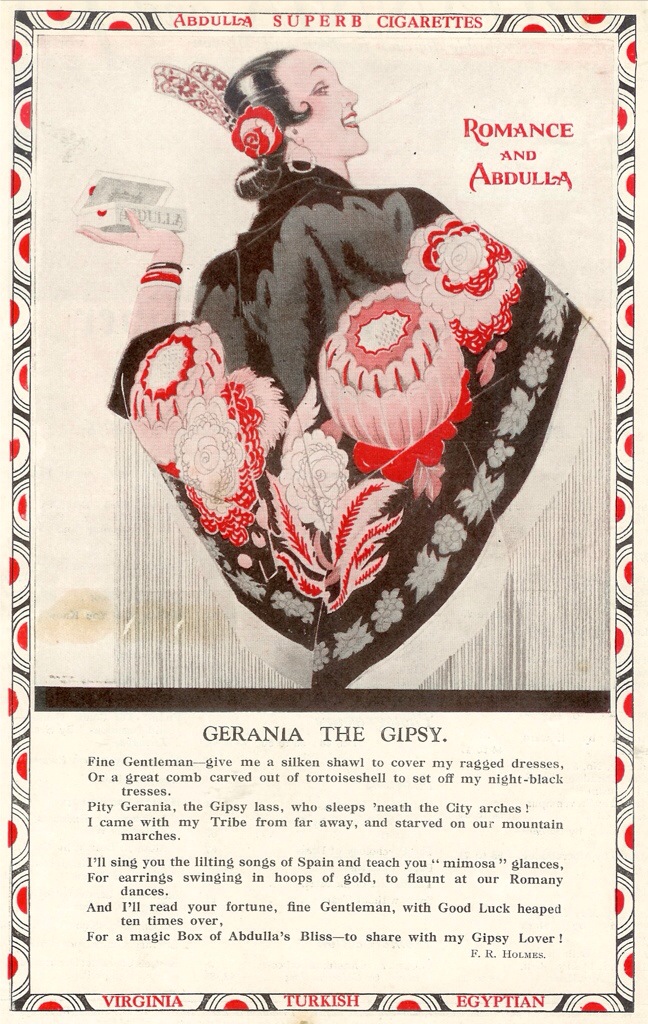
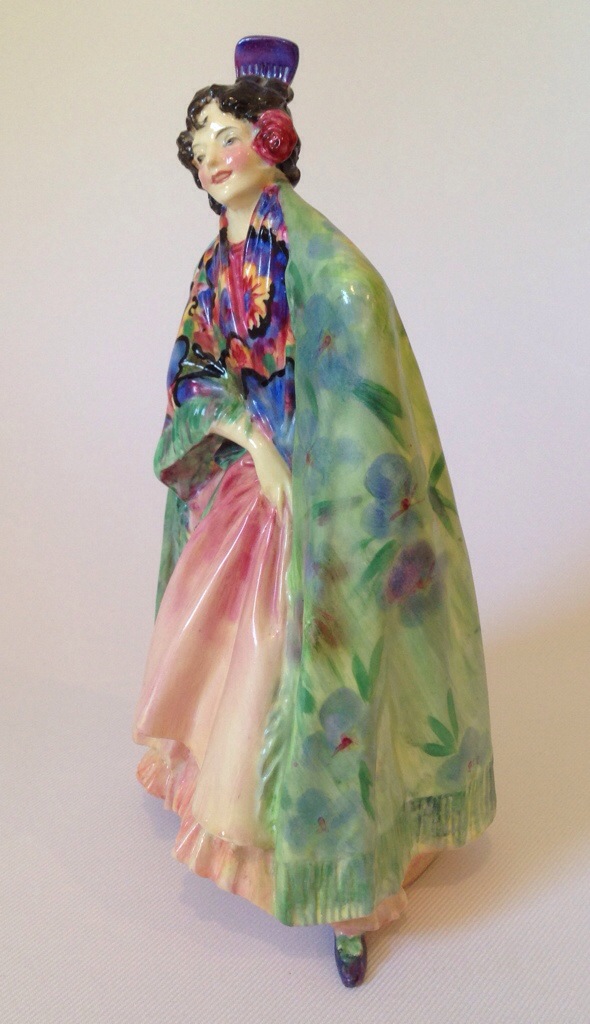
Inspired to share this next piece by a fellow collector who cherishes her Doulton figure Lizana, here is the inspiration behind her – a contemporary cigarette advert! Not quite PC today but the effort and detail put into advertising this brand of Abdulla cigarettes is to be marvelled, especially the rhyme at the bottom!

20140601-113004-41404565.jpg

20140601-113050-41450633.jpg

20140601-113106-41466632.jpg

(C) Christopher Evans 2014

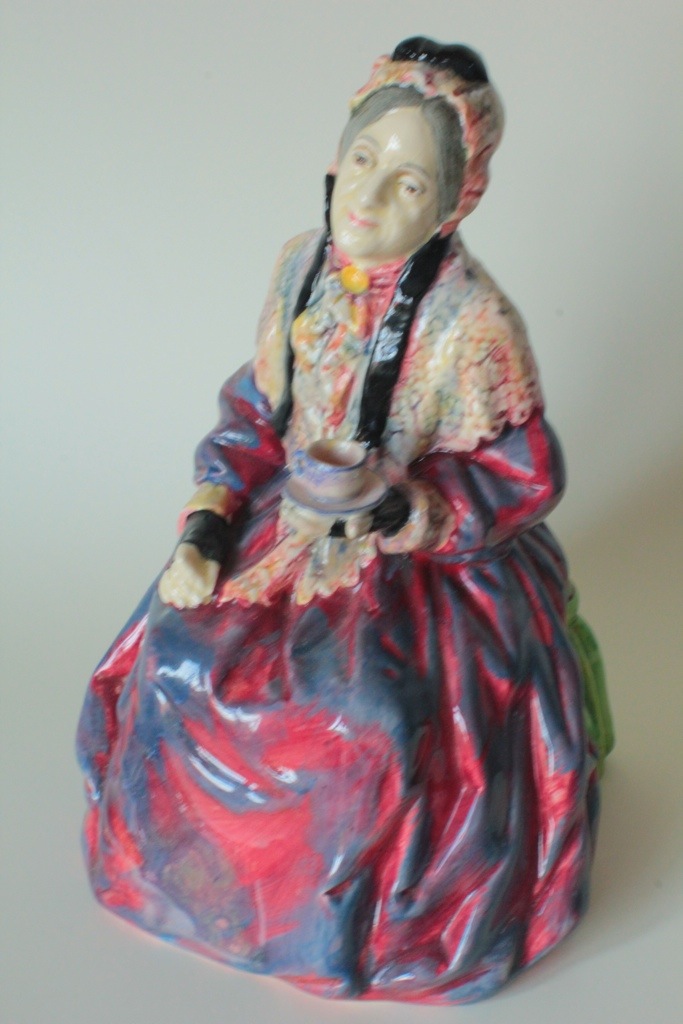
W S Penley as CHARLEY’S AUNT (second version)  Issued in 1930 H. Fenton

20140601-110147-39707794.jpg

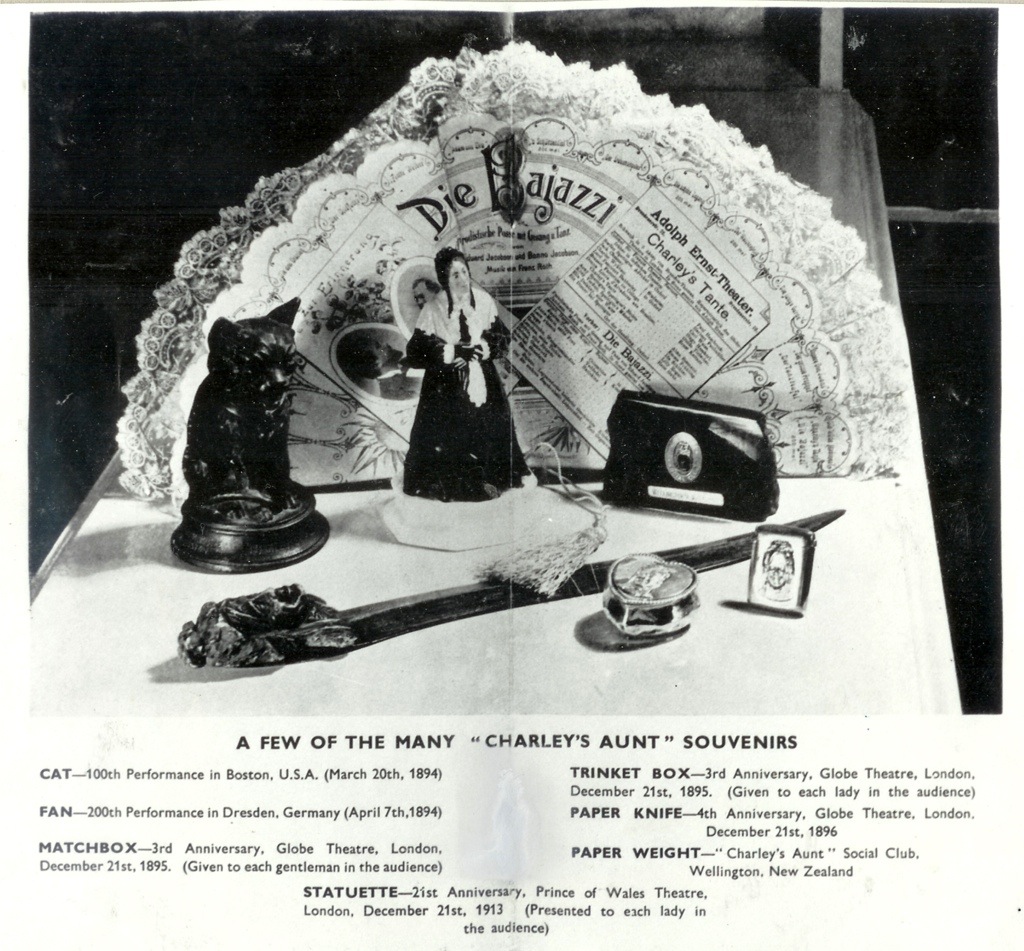
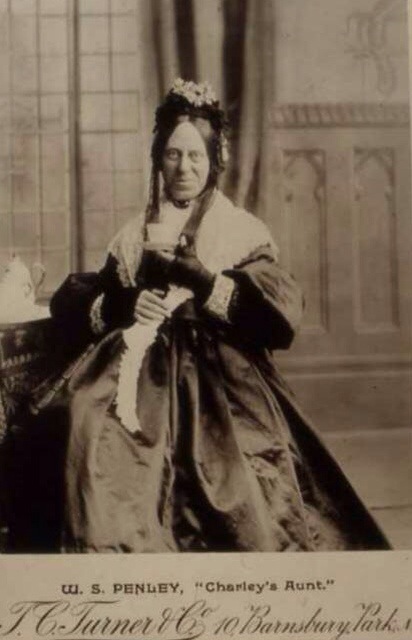
The contempory theatre greatly influence Noke’s figurine range. W S Penley was popular in his role in Charley’s Aunt by Brandon Thomas, where he plays an Oxford undergraduate who impersonates an “Aunt from Brazil” who is to act as chaperone to some young ladies  he and his friends wish to entertain. Charley’s Aunt ran for 1,466 performances after opening in 1913. On various anniversaries ladies in the audience were presented with a Doulton figurine of the main character commissioned by the author Brandon Thomas. About 500 – 600 of this commissioned figure were given away, together with a range of other souvenirs of the performances like those in the advert above. Early in his career in 1916, Noel Coward played the part of Charley.

20140601-110236-39756858.jpg


A contemporary picture and version 2 of this unusual figure, modeled in an identical post and holding a cup of tea.

20140601-110251-39771373.jpg

The figure was modelled by Albert Toft (1862 – 1949 ) who taught Leslie Harradine at Camberwell School of Art at evening classes when he was completing his apprenticeship at Doulton Lambeth. Toft  himself had studied at Stoke on Trent and  later at the Royal College of Art.

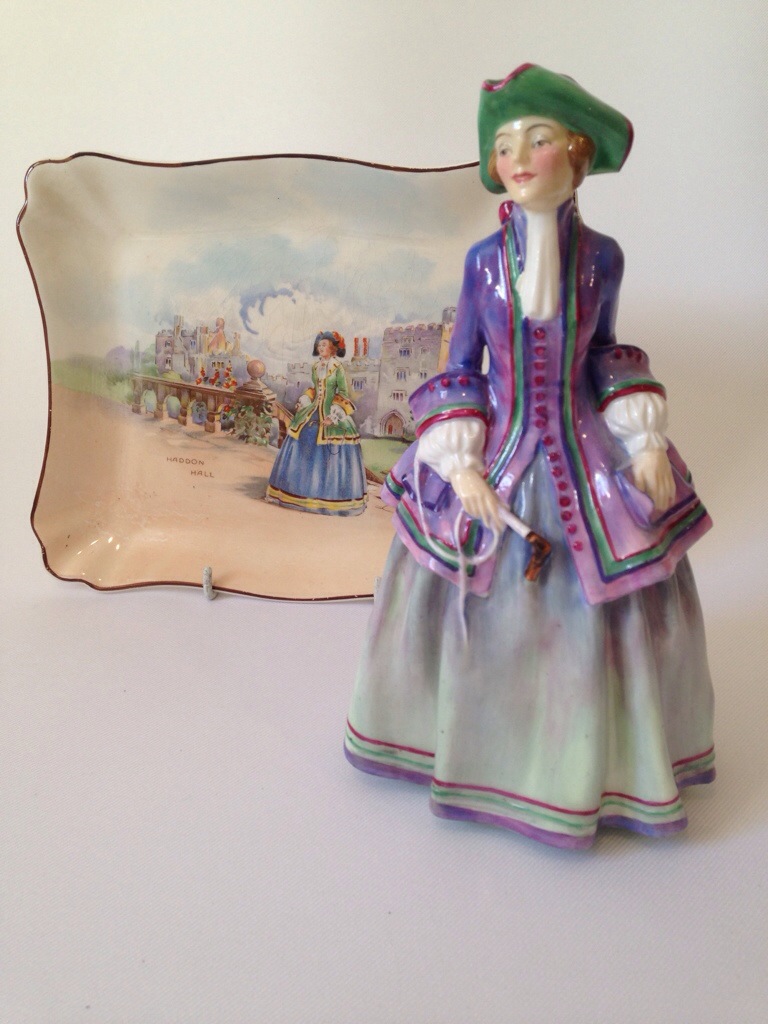
Regency HN1752 finds a home in Doulton’s famous seriesware pattern Historic England!

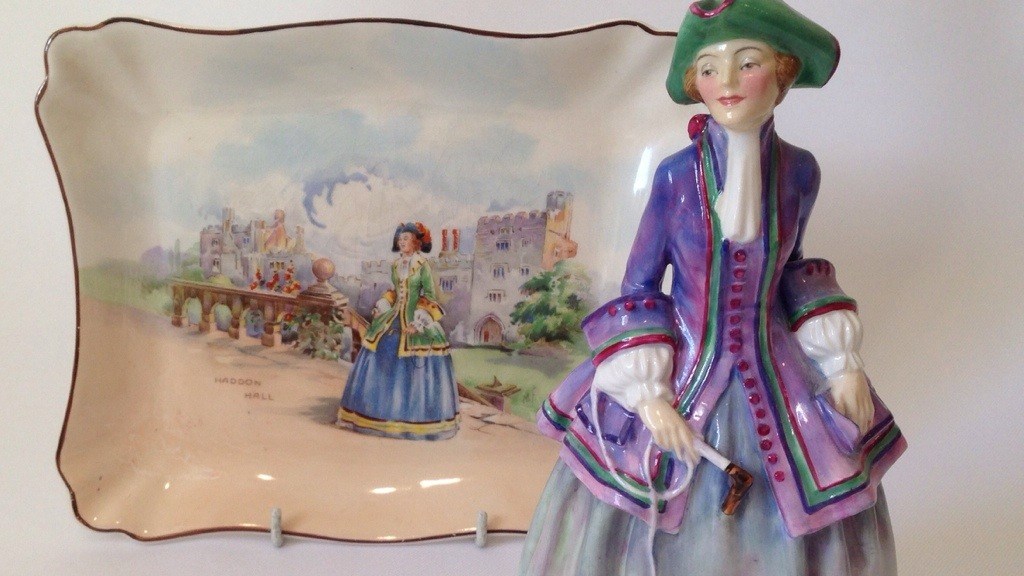
A few years ago I spotted the tray below and instantly recognised my figure Regency as the character in the scene!

20140601-081825-29905039.jpg

The seriesware picture is faithfully copied from Harradine’s figure, save that the riding crop has changed hands and a feather has been added to the tricorn hat!

The story behind the seriesware pattern is that the lady is Dorothy Vernon, daughter of Sir George Vernon who owned Haddon Hall, who runs off with the son of the Earl of Rutland – a union opposed by the parents probably because of religious differences!

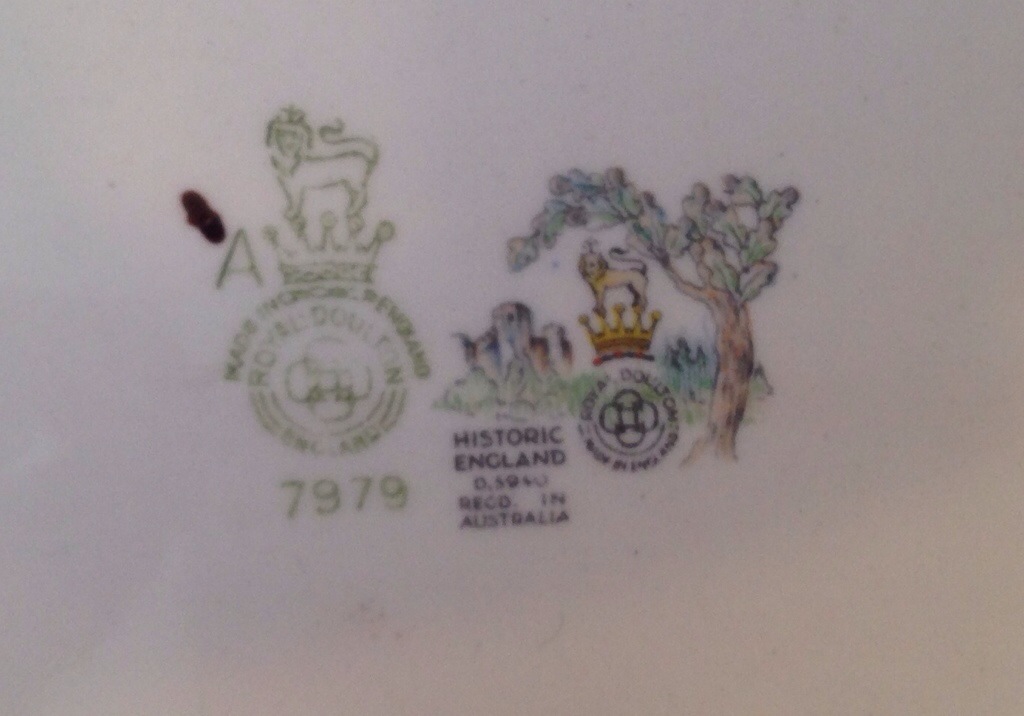
The series was introduced in 1938 and withdrawn by the early 1950’s.

20140601-081913-29953347.jpg

Once again Doulton surprises us with this link between the figure range and seriesware!