Category Archives: Doulton Collectors club

Doulton’s Titanian ware

There were two great Doulton art factories in the 1920’s, with others factories both in the UK and in Europe too where more utilitarian goods such as Doulton drainpipes and sanitaryware were produced.

In Burslem, where figure production had been revived, Doulton’s Art Director, C. J. Noke was simultaneously keen to establish and indeed re-discover many of the ancient Chinese transmutation glazes of yesteryear. He had already re-discovered, introduced to the public in 1904 at the St. Louis Exhibition and by the 1920’s firmly established the world famous Doulton Flambé glazes but Noke together with his team of assistants continued experimenting with glazes and bodies so that today we have other glaze wares including Chang, Chinese Jade and of course Titanian to collect.
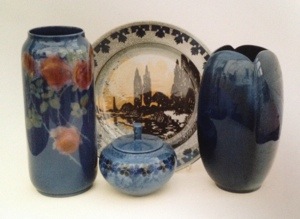
20140511-155407.jpg

The diversity of Titanianwares from handpainted, to glaze, to seriesware.

The unique Titanian glaze uses a titanium oxide which results in a bluey colour and pieces of Titanian ware can vary from white to dark blue glazes.
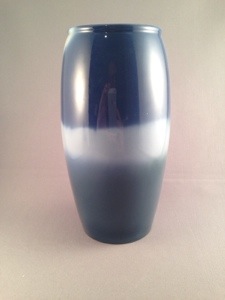
20140511-155538.jpg

An unusual Titanian vase illustrating the varied colour of this glaze.

It was often used as the background to Doulton’s fine porcelain wares that were painted with typically birds but also oriental figures and flowers by leading artists including Harry Allen, F. Henri and Harry Tittensor.
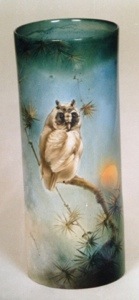
20140511-155413.jpg

A charming Titanian vase and owl, handpainted.
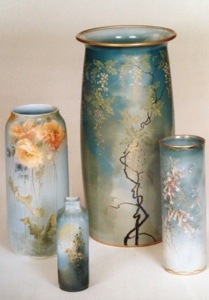
20140511-155426.jpg

A group of desireable, floral Titanian vases.
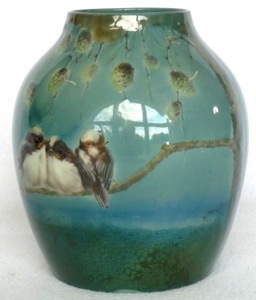
20140511-155545.jpg

A typical Titanian vase signed F. Allen.
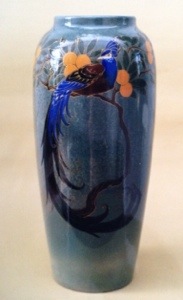
20140511-155434.jpg

A tall Titanian vase with a Bird of Paradise design.

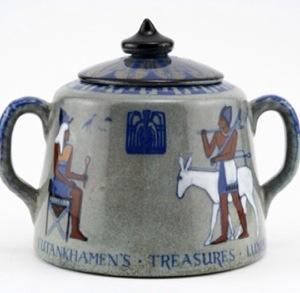
Doulton’s seriesware was also in some instances given a Titanian glaze including the Sunset with Poplars range and of course the Tutankhamen set commemorating the opening of the Egyptian King’s tomb in the early 1920’s.
20140511-155557.jpg

A Titanian lidded sugar commemorationg the opening of Tutankhamen’s tomb.

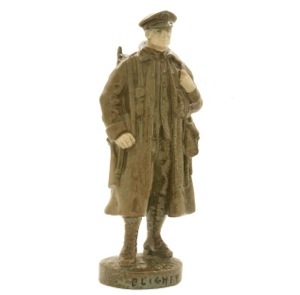
Figures too were given the Titanian treatment and three of the rarest figures today are commonly found in Titanian when they occasionally do turn up, namely the Australian and New Zealand Digger figures and their British counterpart Blighty – all issued at the end of the first world war.
20140511-155606.jpg

The rare Blighty in a Titanian glaze.

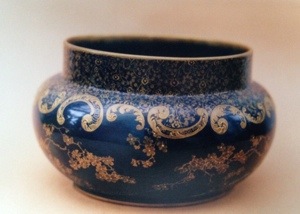
The body of Titanian pieces can vary immensely from an egg-shell like porcelain to a heavy earthenware. This diversity in body is reflected in the price range for these wares, but this in turn allows varied scope for collectors today.
20140511-155419.jpg

Here is a heavily gilden earthenware Titanian rose bowl.

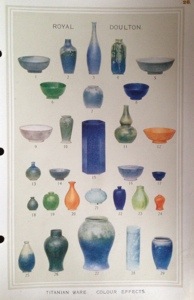
My own particular tastes when it comes to Titanian are for the unusual shapes and glaze effects rather than the handpainted items. The Titanian glaze was introduced in 1915 and in production until ca.1930  and so pieces of Titanian ware can be found if you have a keen eye or if you have a dealer onside who will search these pieces out.
20140511-155401.jpg

A catalogue page from 1924 illustrating the types of pieces that appeal to me.
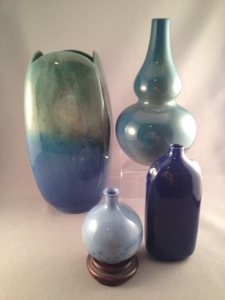
20140511-155441.jpg

A group of interesting shaped Titanian vases.
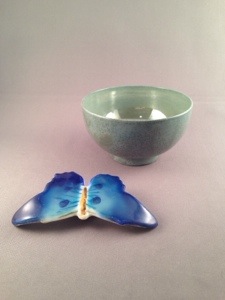
20140511-155453.jpg

Above and below a lustred Titanian dish with butterfly.
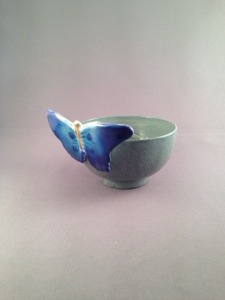
20140511-155500.jpg

As always, if you have pieces in your collections please share via our Doulton Collectors Club facebook page!
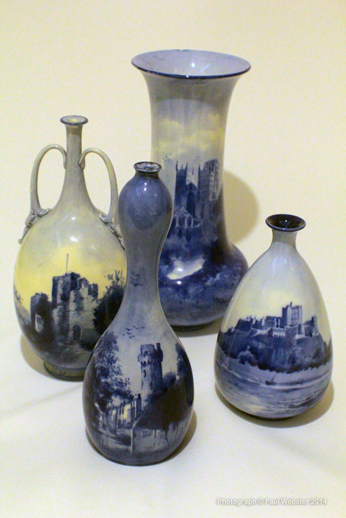
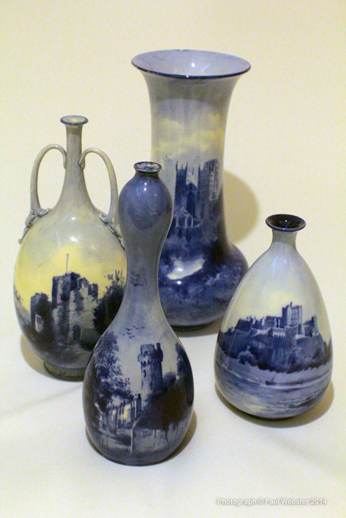


Early Doulton blue and white handpainted ware

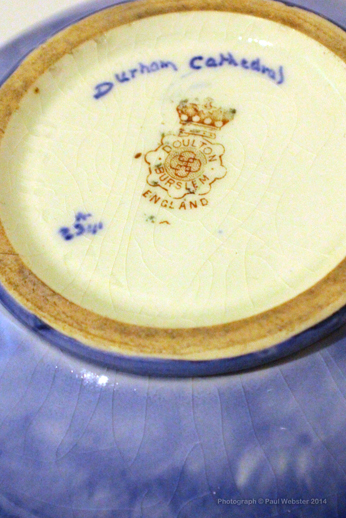
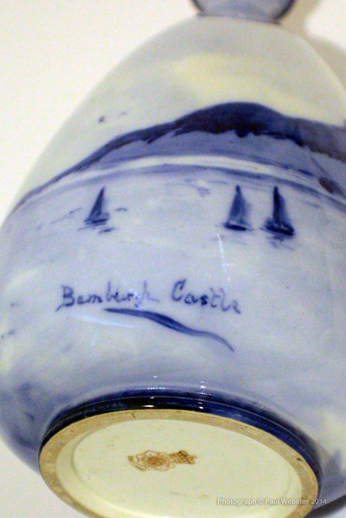
This is a little recognised area of collecting yet, they show the great potential Doulton of Burslem showed at the end of the 19th Century. There is very little to explain other than these pieces typically cover castles or other monuments such as Durham Cathedral pictured on the tallest of the vases (14″ tall).

Image

These pieces can be bought relatively inexpensively, as many I presume imagine them to be transferware rather than handpainted pieces.

Image

There is no special backstamp to these pieces as you can see from the image above, yet each carries the name of the subject to the body, save the Durham Cathedral piece which is titled to the base.

Image

These rather simplistic designs particularly appeal, especially given the time they were produced when tastes were much more frivalous and over the top!
 

Doulton for the garden

Just when you think the house is full of all things Doulton and where else can you possibly place new bits…let’s take a look at some neat ideas for the garden.

Throughout the world there is famous Doulton statuary recognising the famous, as well as great occasions, but Doulton were keen that everyone should be able to decorate their own gardens with their products.

Thus Doulton produced all manner of garden ornamentation for us to now seek out and fill our own green havens with.

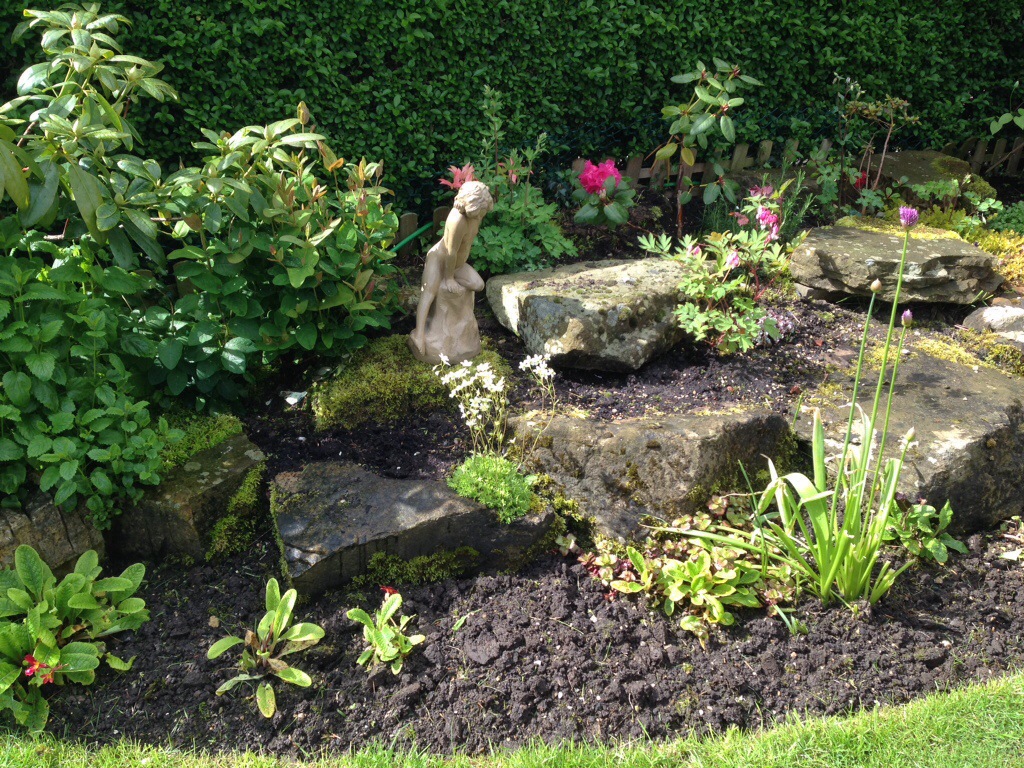
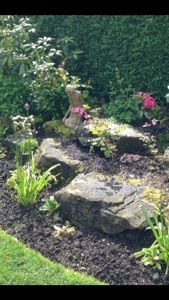
Here is one piece I have called ‘Reflections of Childhood’ but I am sure many of you will instantly recognise it as simply a large version of Leslie Harradine’s ‘Child Study’ HN 603.

20140510-131721.jpg

20140510-131733.jpg

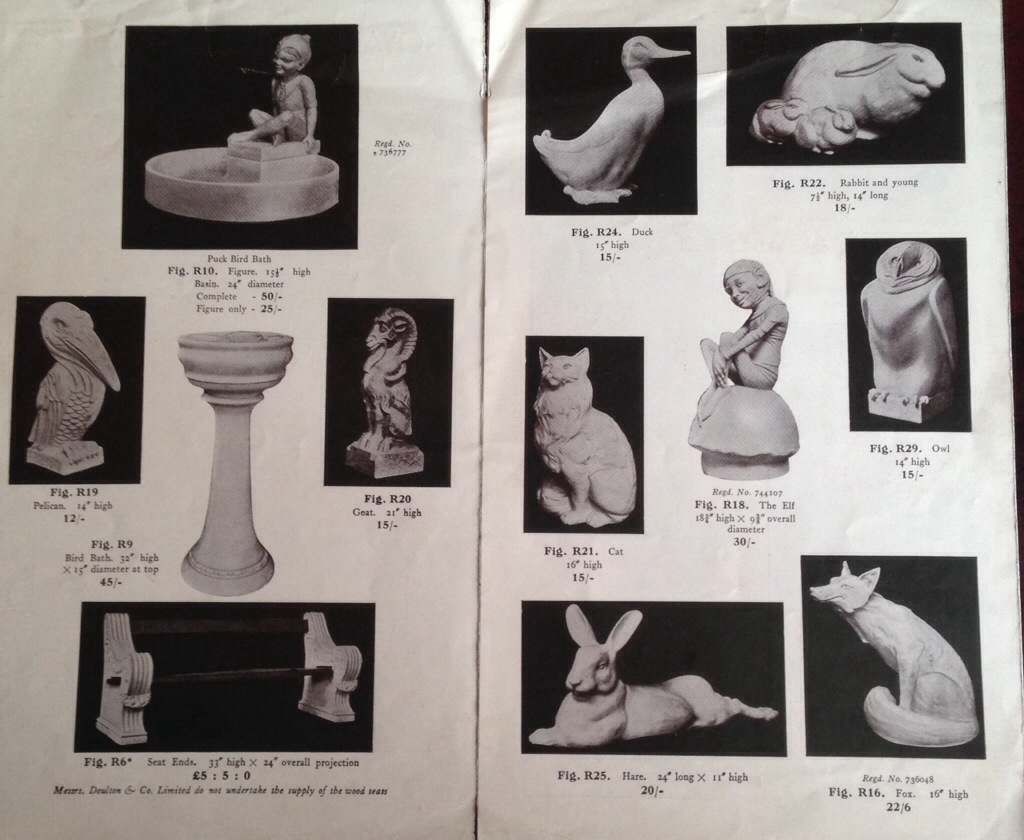
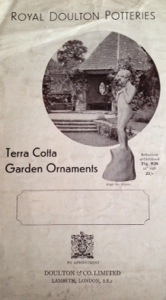
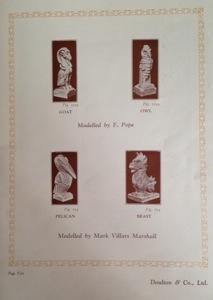
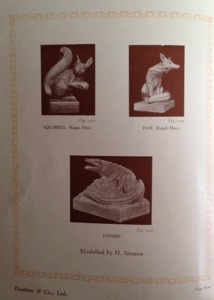
This was a particular traite of the garden ornament selection, as other figures but also animals were re-modelled in larger scale so as to suit a garden setting. Here are a selection of catalogue pages dating from 1928 to the mid 1930’s where you can see other such examples.

20140510-131838.jpg

20140510-131856.jpg

20140510-131908.jpg

20140510-131915.jpg

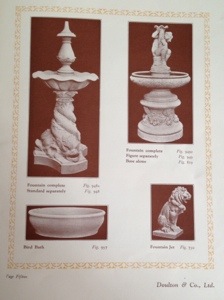
Not surprisingly garden fountains, sundials and all manner of other garden ornamentation were also made and here are a few more examples …

20140510-132123.jpg

What better way to enjoy your Doulton than in the summer sun and here we have another area for us all to collect!

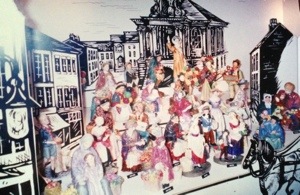
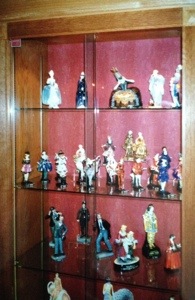
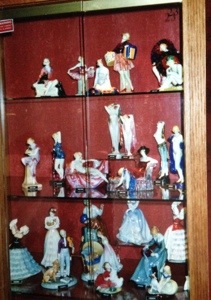
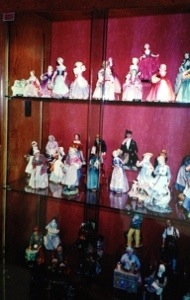
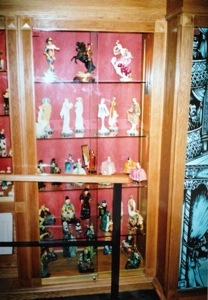
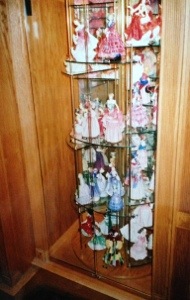
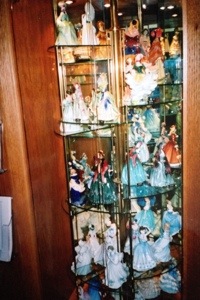
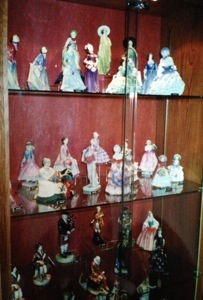
The former Doulton Museum at Nile Street

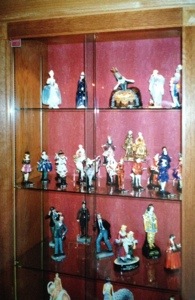
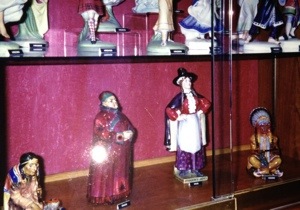
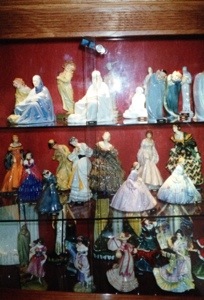
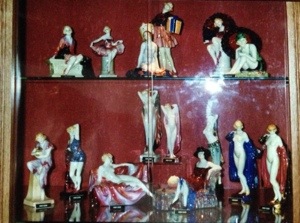
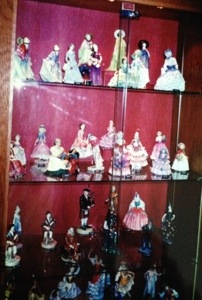
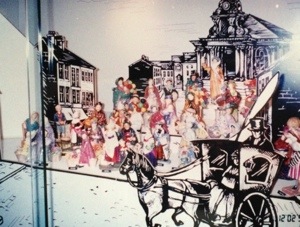
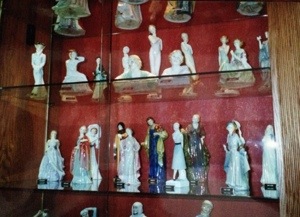
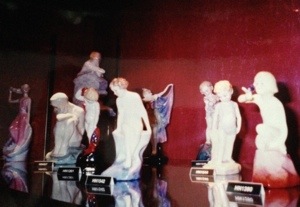
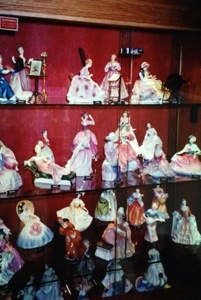
Just a few pictures from the old figure museum on one of the last times I visited ca.2002.
Thank goodness I had the chance to visit many times as sadly it was sold off many years ago now.
Whilst the museum was built up in relatively recent times, the figures in it formed the basis of the original Doulton Figures Book in 1978. They were sought from all corners of the globe by Richard Dennis and his then assistant Jocelyn Lukins before she left to set up on her own.

Anyway, enough chat…here are a handful of pictures! Enjoy…..

20140509-191552.jpg

20140509-191600.jpg

20140509-191608.jpg

20140509-191615.jpg

20140509-191622.jpg

20140509-191630.jpg

20140509-191640.jpg

20140509-191647.jpg

20140509-191656.jpg

20140509-191706.jpg

20140509-191714.jpg

20140509-191721.jpg

20140509-191729.jpg

20140509-191737.jpg

20140509-191743.jpg

20140509-191750.jpg

20140509-191757.jpg

Collecting Royal Doulton M series figures

It has been a while since any new light was shed on Doulton’s first set of miniatures, so I thought it time to address this!

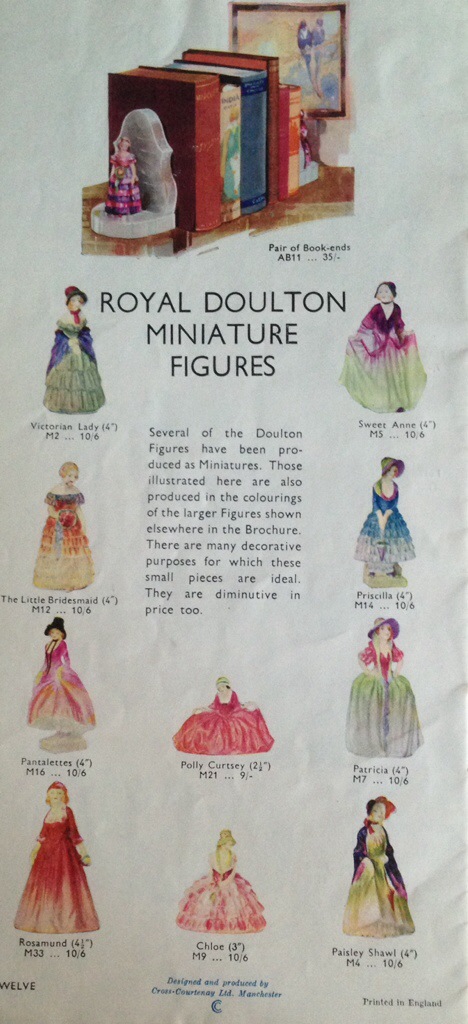
20140506-181638.jpg

A page from a catalogue from 1933.

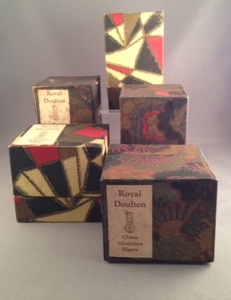
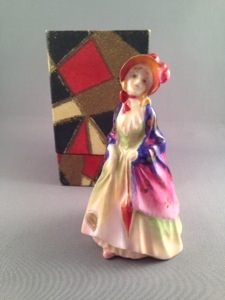
Collectors always looking for the unusual will be pleased to see these original boxes for the M series. They are all typically Art Deco in decoration and there appears to be just three styles of decoration. These little boxes were included in the advertising for the M series as a selling point yet very few exist today, unfortunately!

20140506-181612.jpg

A group of original boxes in two of the three designs used.

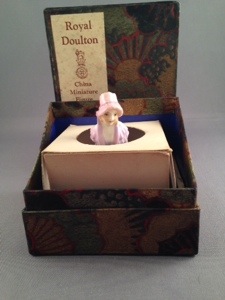
20140506-181621.jpg

Chloe sitting in her original packaging within her box.

Whilst miniatures offer collectors the opportunity to collect even more figures due to their size, collectors around the world do specialise in just these figures. Like their larger counterparts occasionally colourways turn up and of course like all figures some are more sought after than others.

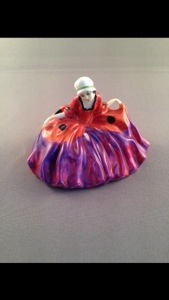
20140506-181656.jpg

A striking version of the miniature Polly Peachum

This area of collecting really does offer us bargains as more common figures such as the Paisley Shawl for example are relatively inexpensive at the moment. Yet the quality so typical of Doulton figures is echoed in this range with their miniature faces and exquisite decoration. Even in their hey day Doulton advertised them as being of ‘diminuative’ price too!

20140506-181629.jpg

The Paisley Shawl next to her original box and complete with original sticker.

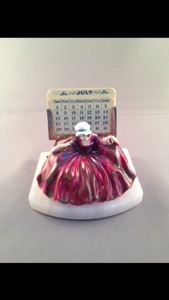
Doulton’s range of M figures were available mounted on calendars, pen holders, pin trays… The list is endless! However, the top London jewellers such as Asprey had them mounted with sterling silver fittings and these top make pieces are the most popular today.

20140506-181647.jpg

A quality desk calendar with another Polly Peachum.

Whatever your tastes and needs, as always Doulton had something for everyone and thus established a strong buying base with collectors around the world. As Henry Doulton once said it was easier to sell something expensive but of better quality than something cheaper and of lesser quality!

20140506-181701.jpg

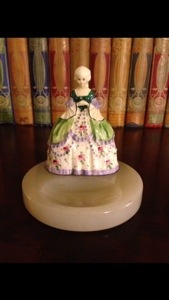
And finally a recent find, looking very smart the Crinoline Lady atop a pin dish.

So why not start a collection of these charming miniature figures and have fun deciding how to display them yourselves!

Ideas for collecting and also displaying your Doulton figure collection

After a while we all realise that suddenly we have quite a sizeable collection (be it figures, character jugs, stoneware, Burselm art wares…the list could go on) and aside from the hole in our bank accounts we often wonder at that point – when did collecting become such an obsession…or at least that is what happened to me many years ago now.

The next time you think about your growing collection is when suddenly you have no more space for that particular piece you have been searching for for, so long…it was a bargain…how could I say no? They are but some of the excuses I have made to myself in the past.

So I thought it a good excuse to share a few collecting themes I have gone through over the years.

Collecting the same figure in all colourways – this remains something of an obsession for me and as anyone who knows me will say, my promise to only buy one, maximum two things at Doulton fairs rarely happens, as I spot that one figure I have ALWAYS wanted.

Image

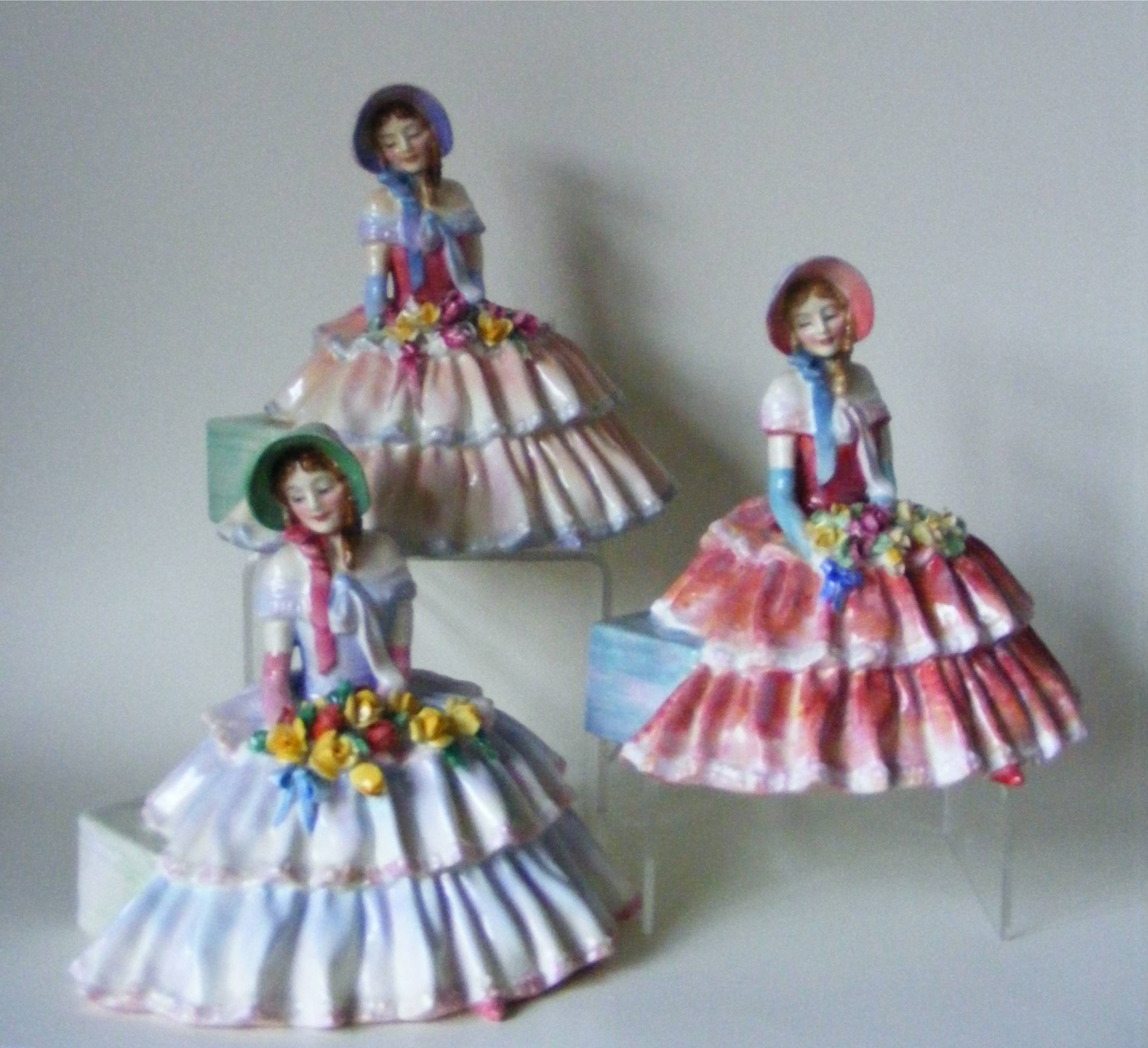
Day Dreams – one of my favourite figures in all 3 colourways.

Doulton Street vendors – this was an early phase, and whilst I still have a few prized pieces, many have been exchanged along the way for other pieces. Regrets? Well I wish I had space for more….

Image

Some of the first Doulton figures I collected.

Doulton child studies – an easy theme to collect as due to their size you can assemble a collection large or small! I will leave it to you to guess which way my collecting went in this area!

Image

Both colourways of Granny’s Shawl.

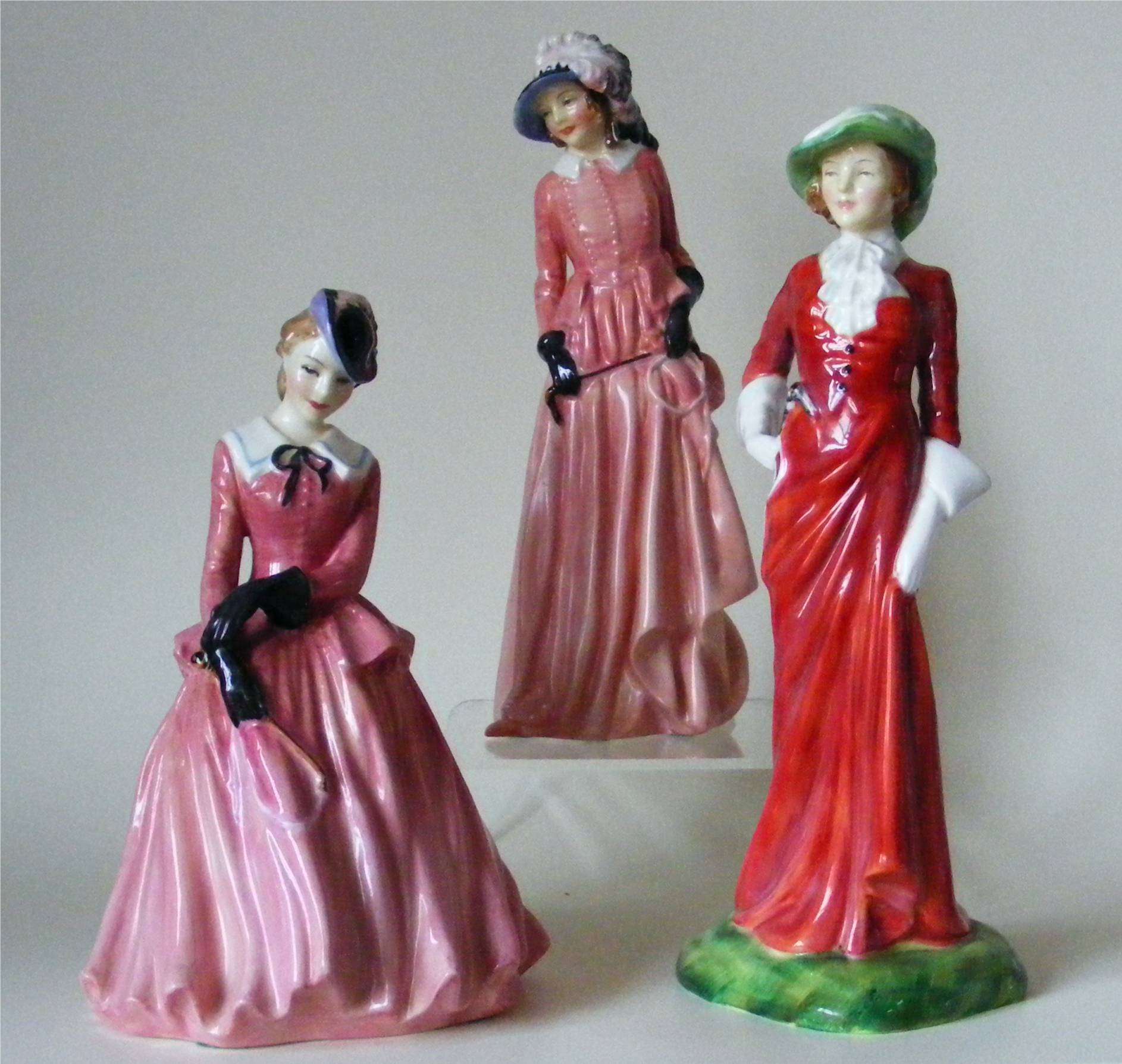
Collecting themes – one particular field I once found myself gathering were riding related figures such as the three below. Other themes are powdered wigged ladies, bonnets, figures with feet popping out….the list is endless.

Image

A group of powdered wigged ladies.

Image

A riding theme.

Image

Let’s go Dutch!

Collecting by size – again once you assemble the group you want there is always the chance to find a miniature figure, or as in the picture here a medium sized figure.

Image

Veronica in large and medium sizes.

Image

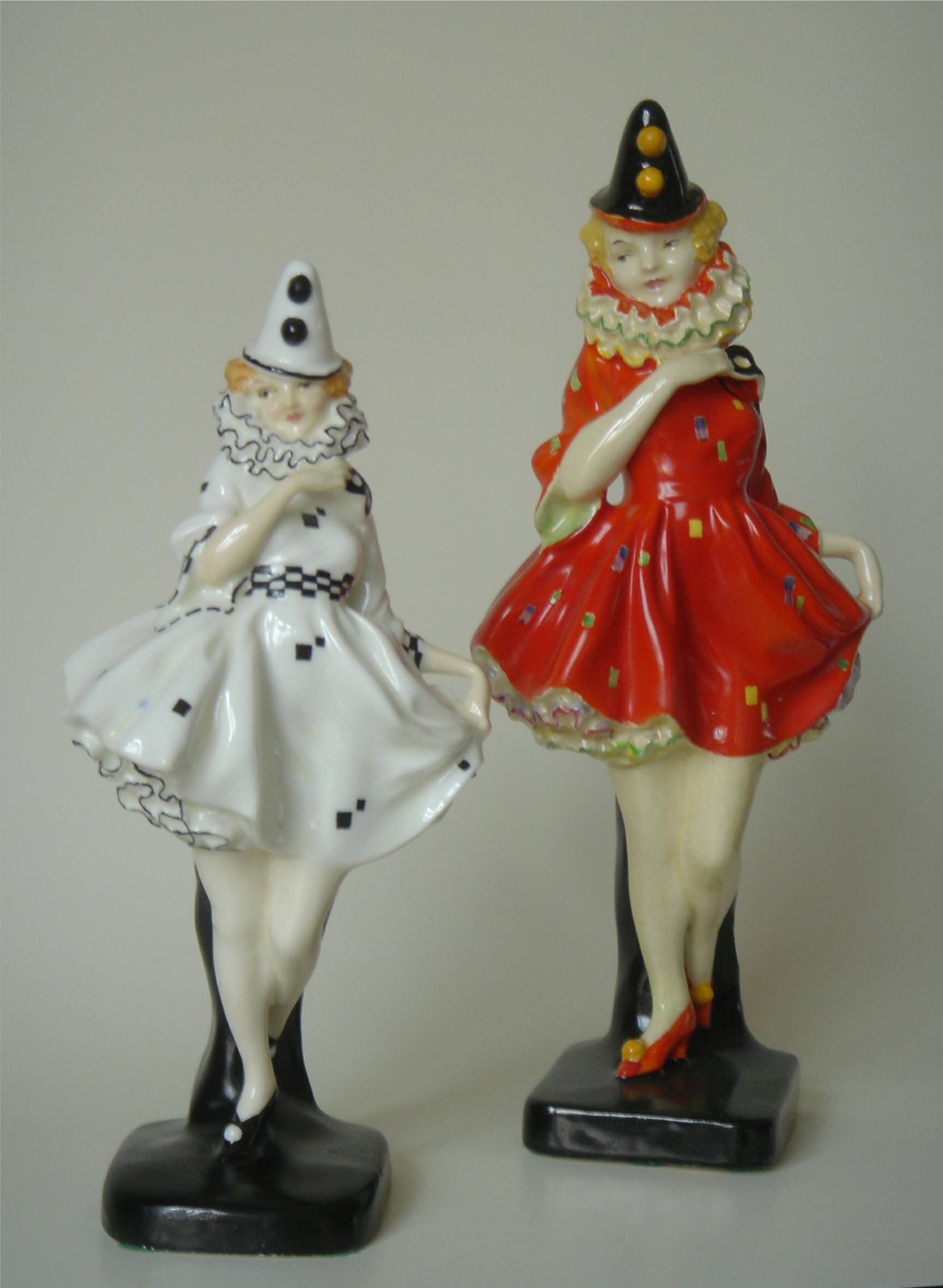
Pierette in her usual and extra large sizes (earthenware)

Figures mounted on things – these can be lamps, ashtrays, bookends, pipe stands, calendars…the list is once again endless. I have shared lamps in the past, so here are a pair of my favourite bookends, unusually with full size figures rather than miniatures on them!

Image

Rose and Marie mounted on bookends and in the reverse colourways to the ones usually found.

So there we are, a few of my favourite themes. How do you organise your figures or other Doulton? Time to share…how do you orgainse your collections?


Speaking of colourways of Doulton figures….here are a few more examples to enjoy!

Just a few more colourways, prototypes and rare figures to share with you all! Thanks once again to Seaway China for the use of their pictures too!

Image

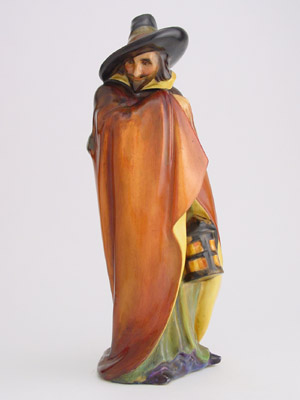
An unusual Guy Fawkes

Image


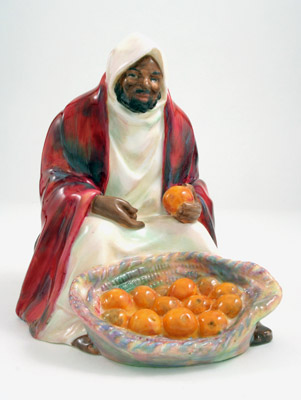
A very different Orange Vendor

Image

The rare HN1563 version of Sweet and Twenty

Image

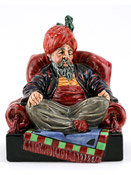
Abdullah in red

Image

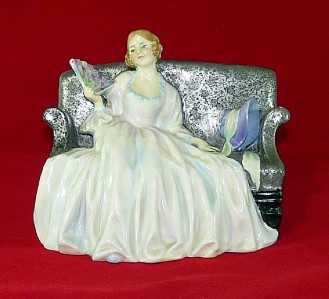
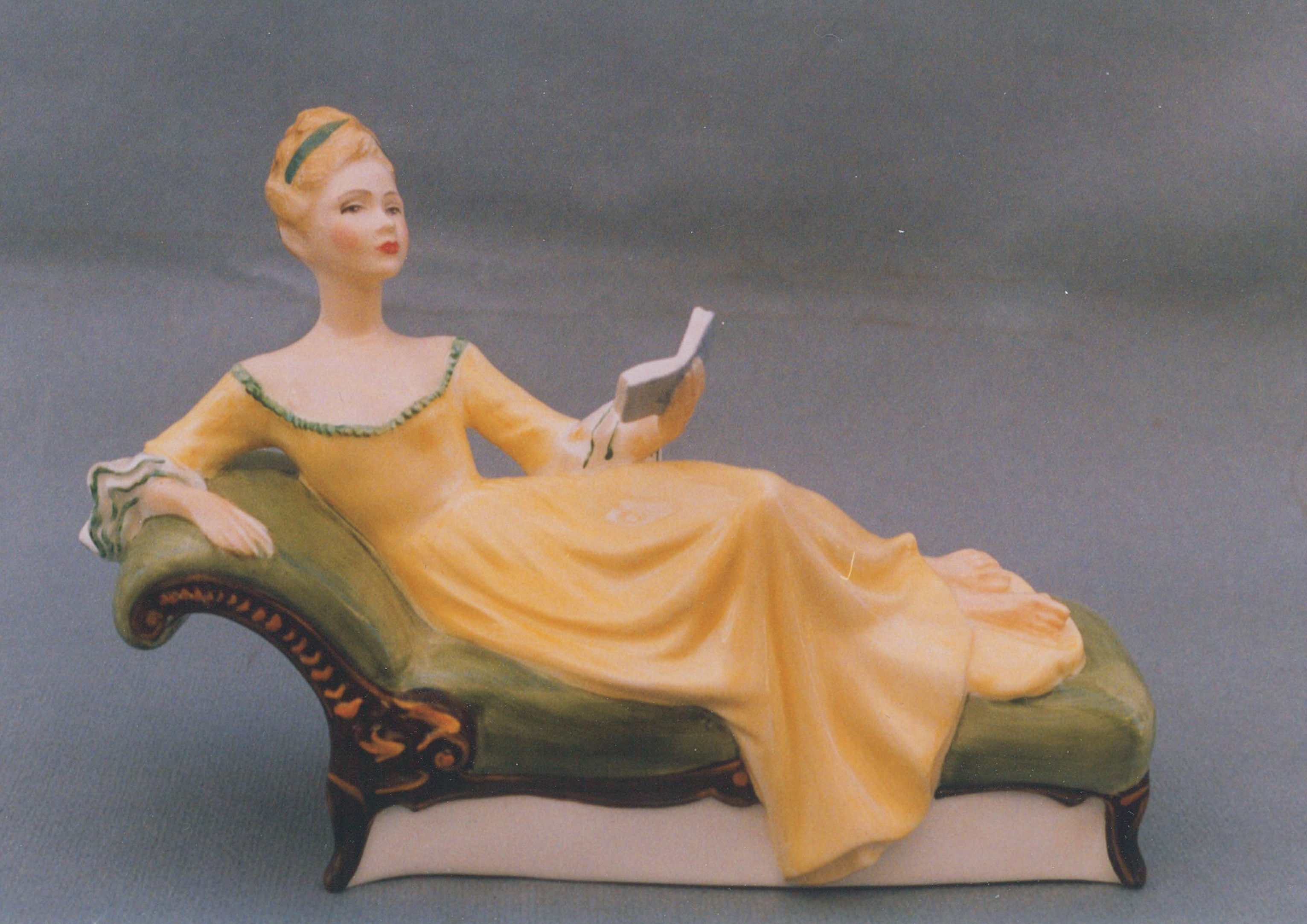
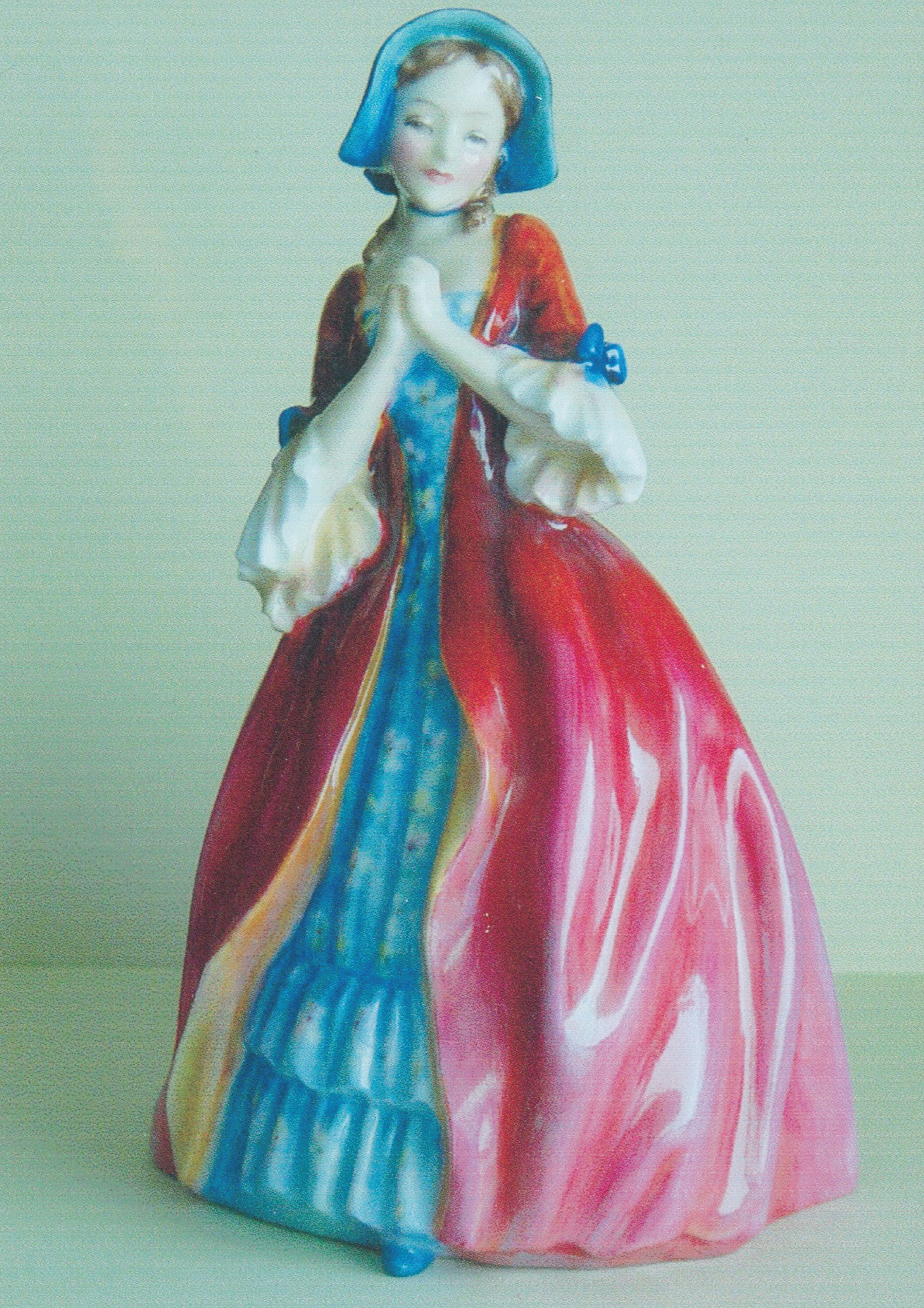
A nice version of Repose in yellow

Image

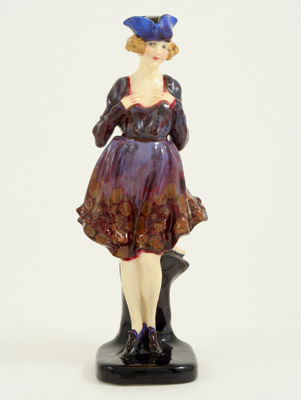
Mam’selle in a typical 1920’s colouring

Image

A nice Deirdre dated 1947 that I once had

Image

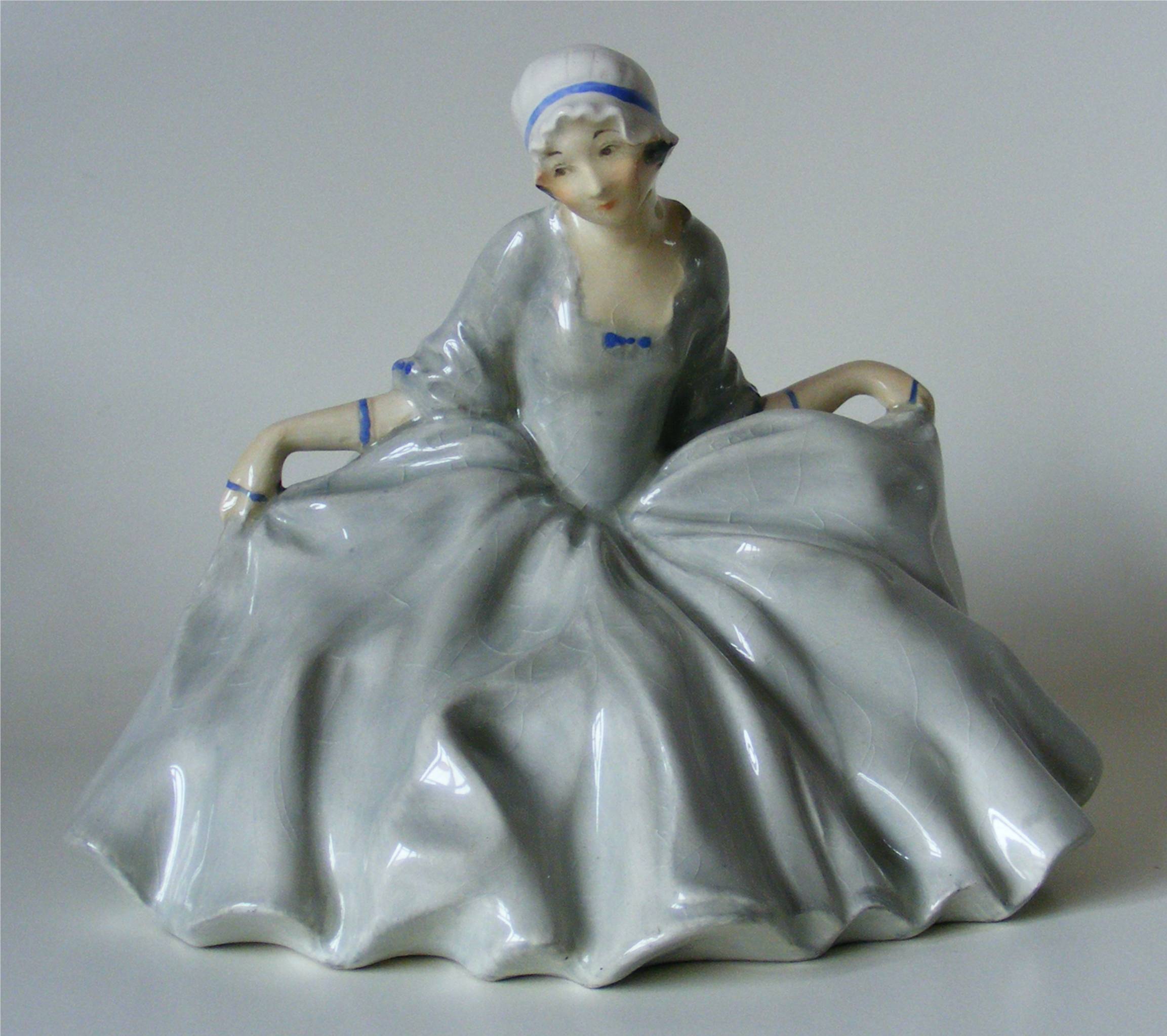
Polly Peachum in grey

Image

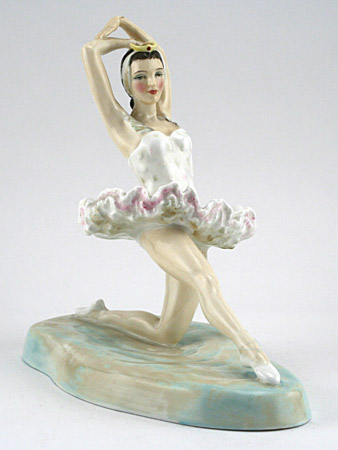
A charming Ballerina prototype from the 1960’s

Image

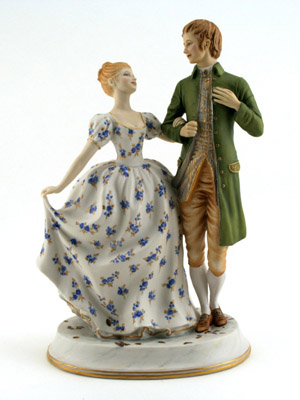
An elaborately painted Young Love


And that’s all for colourways and prototypes for today!! Enjoy and keep hunting!

C

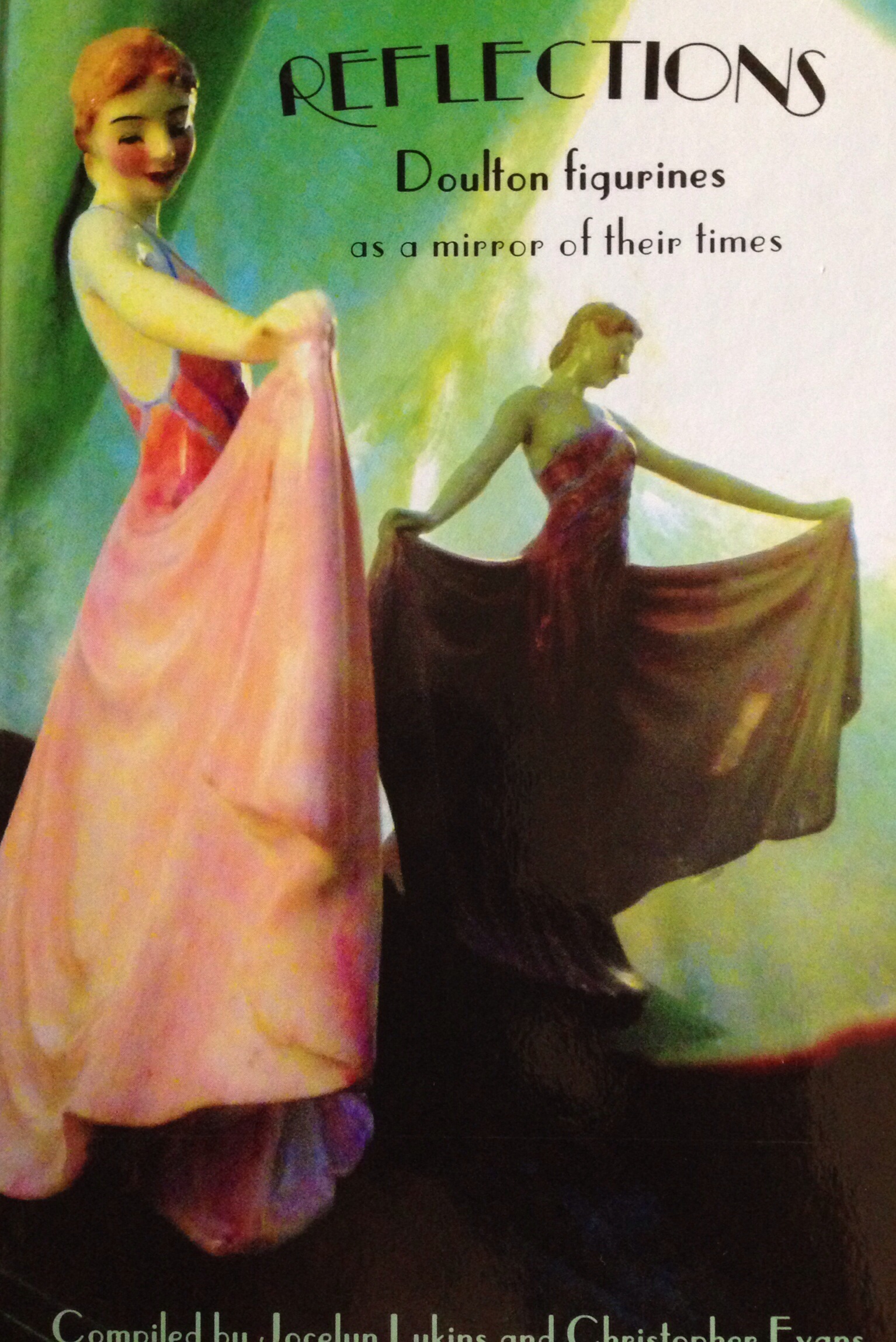
A short video to advertise my book Reflection – Royal Doulton figures as a reflection of their times

Follow this link for a sample of pages and a brief explanation of the book!

20140427-181720.jpg

Key Burslem Dates Part II

Part II : 1900-1929

1900       Cuthert Bailey, a Chemist joined Doulton & Co.

Ivory Body introduced

Hyperion and Morrisian wares introduced

1901       Gibson Girl designs introduced

1902       Lion and Crown Backstamp used for Royal Doulton

1904       Flambé – experimental wares begun

1905       Mandarin and Crested wares introduced, together with Christmas miniatures

1906       Seriesware introduced

1907       Crystalline introduced

1908       Flambé aninals first seen and Dickensware introduced

1911       First attempts at a new figure range begun

1913       Famous visit to Burslem by King George and Queen Mary to Doulton at Nile St.

HN Figures and animals launched

1914       John Slater Art Director at Burselm retires. Charles J. Noke takes up the reins

1915       Titanian wares introduced

1916       Reco Capey lustre and flambé designs introduced

1919       John Slater purchases the Slater Collection

1920       Barbotine, Chinese Jade and Sung launched

1924       Shagreen and Maori wares introduced

1925       Chang launched

1929       Classic Doulton figure ‘Old Balloon Seller’ introduced

Image

An early view of the Doulton studio ca. 1910

An unusual colourway of Puff and Powder

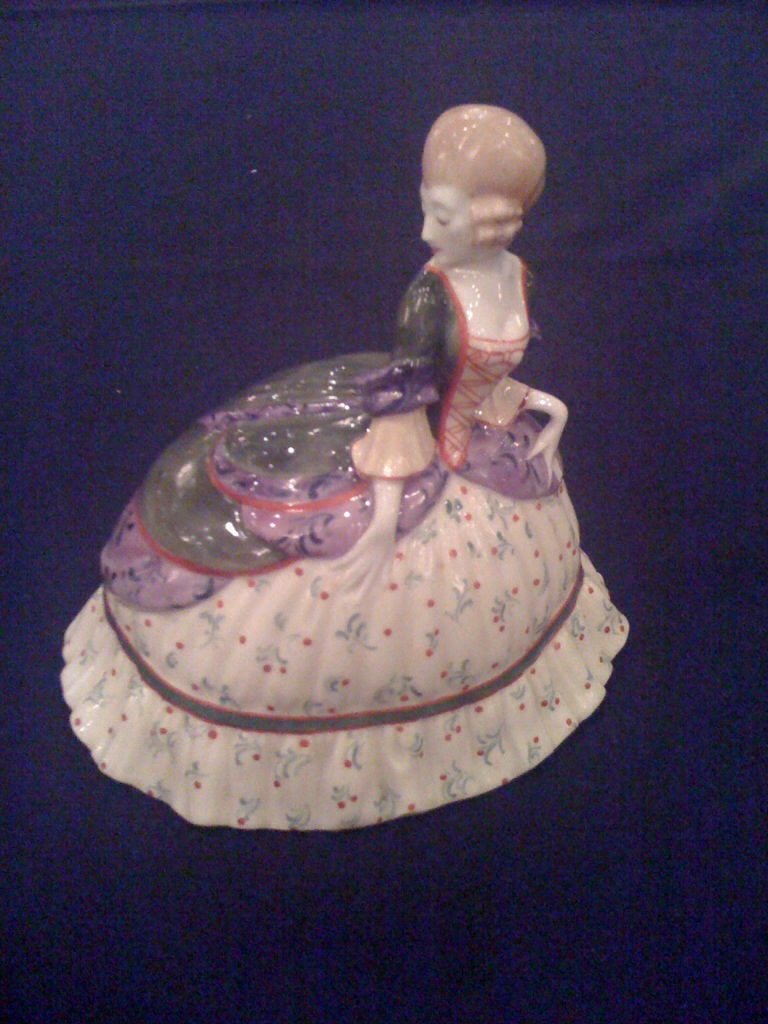
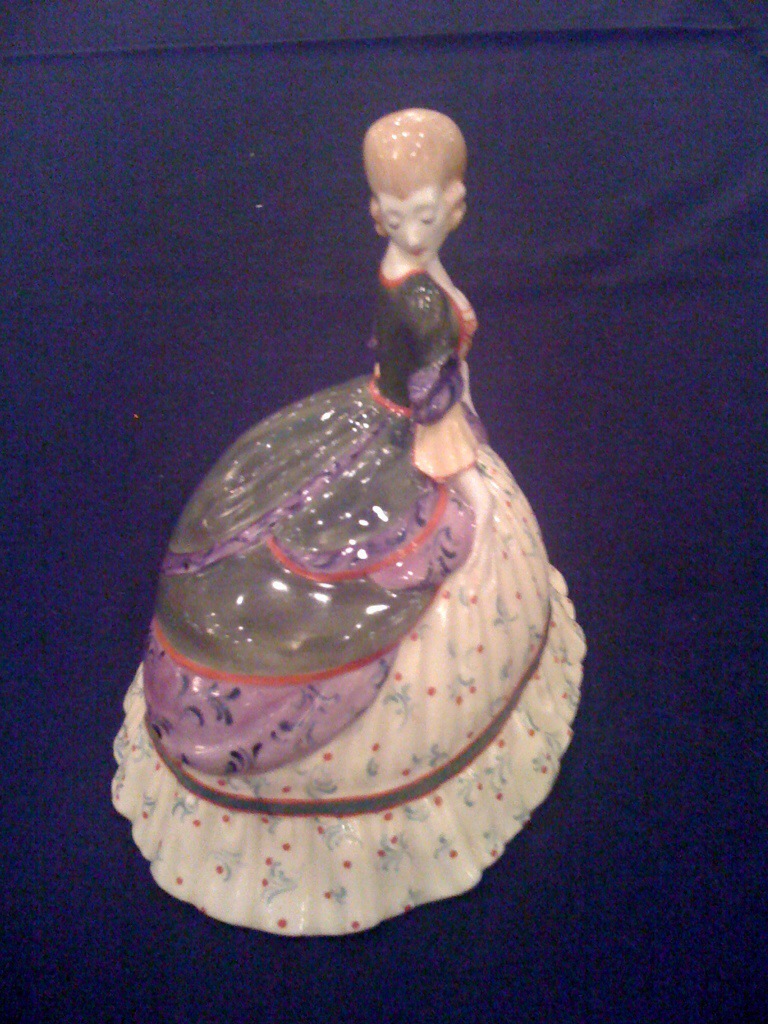
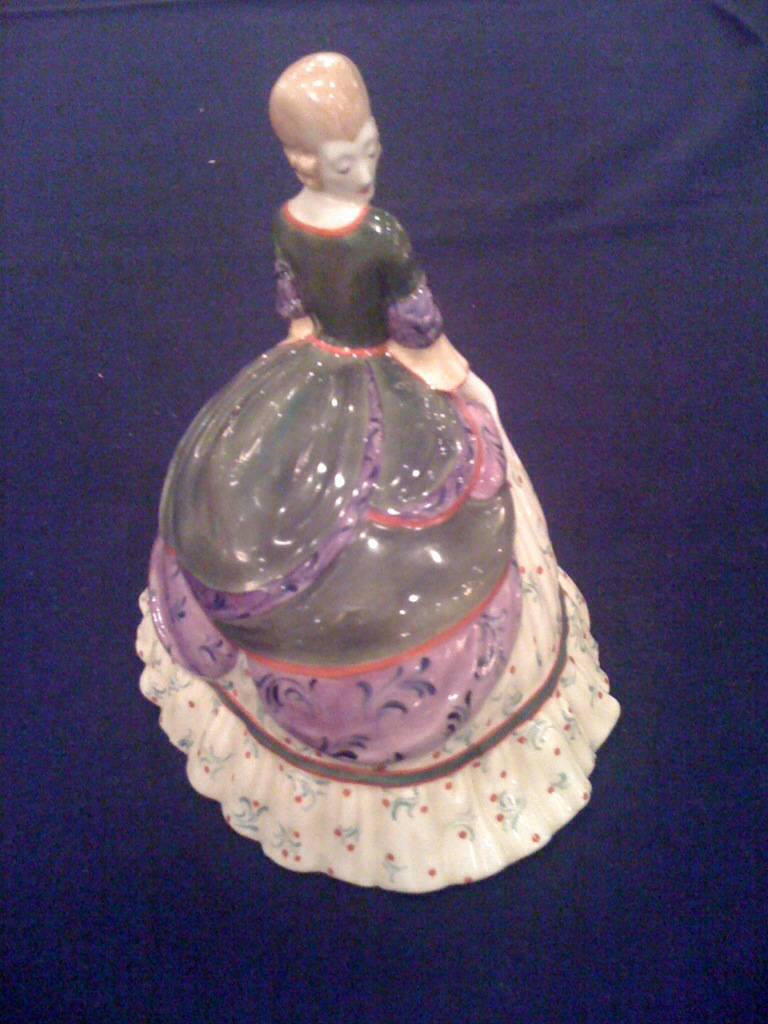
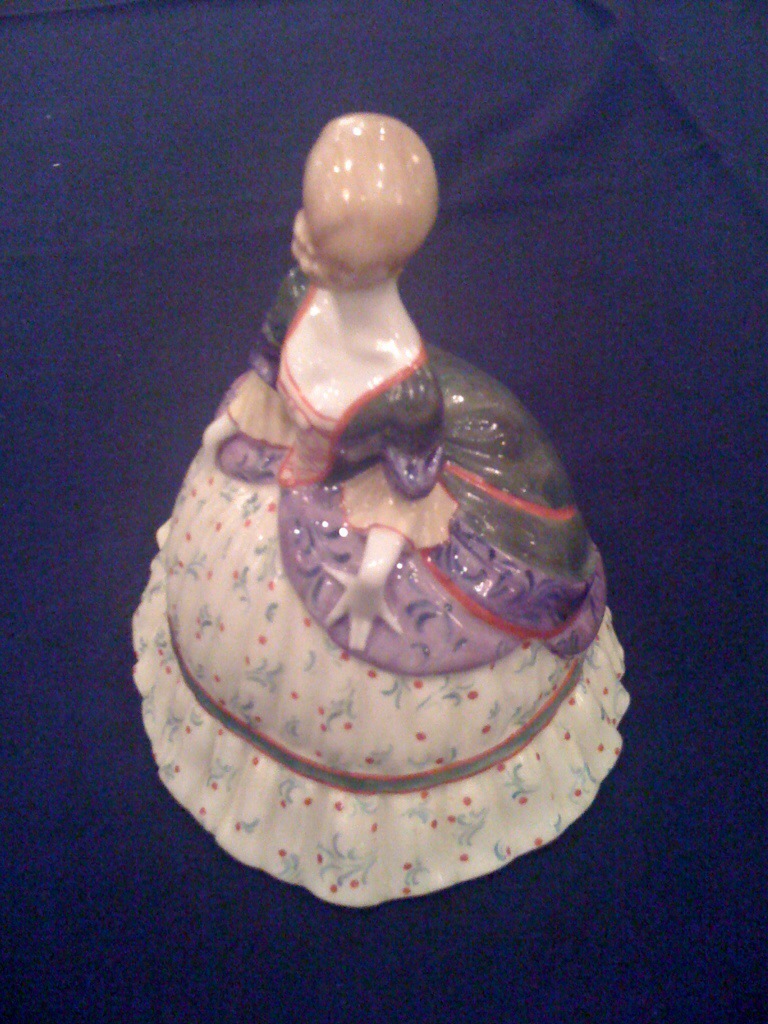
Here are some pictures of an unusual Puff and Powder I once came across from Seaway China. She is decorated in the Bakst style like several of Harradine’s early figures of the 1920’s. Leon Bakst’s designs for the Ballet Russe were distinctive because of the use of contrasting fabrics placed together; something you can clearly see from this figure. Interestingly the piece is taken from a Raphael Tuck picture by Stanislaus Longley, an artist whose work Harradine regularly used as inspiration for figures but who is only credited with inspiring a handful of figures from the mid to late 1930’s rather than the 1920’s.
Here are the pictures to enjoy!

20140426-220742.jpg

20140426-220804.jpg

20140426-220829.jpg

20140426-220859.jpg

20140426-220926.jpg