Category Archives: Figure Articles

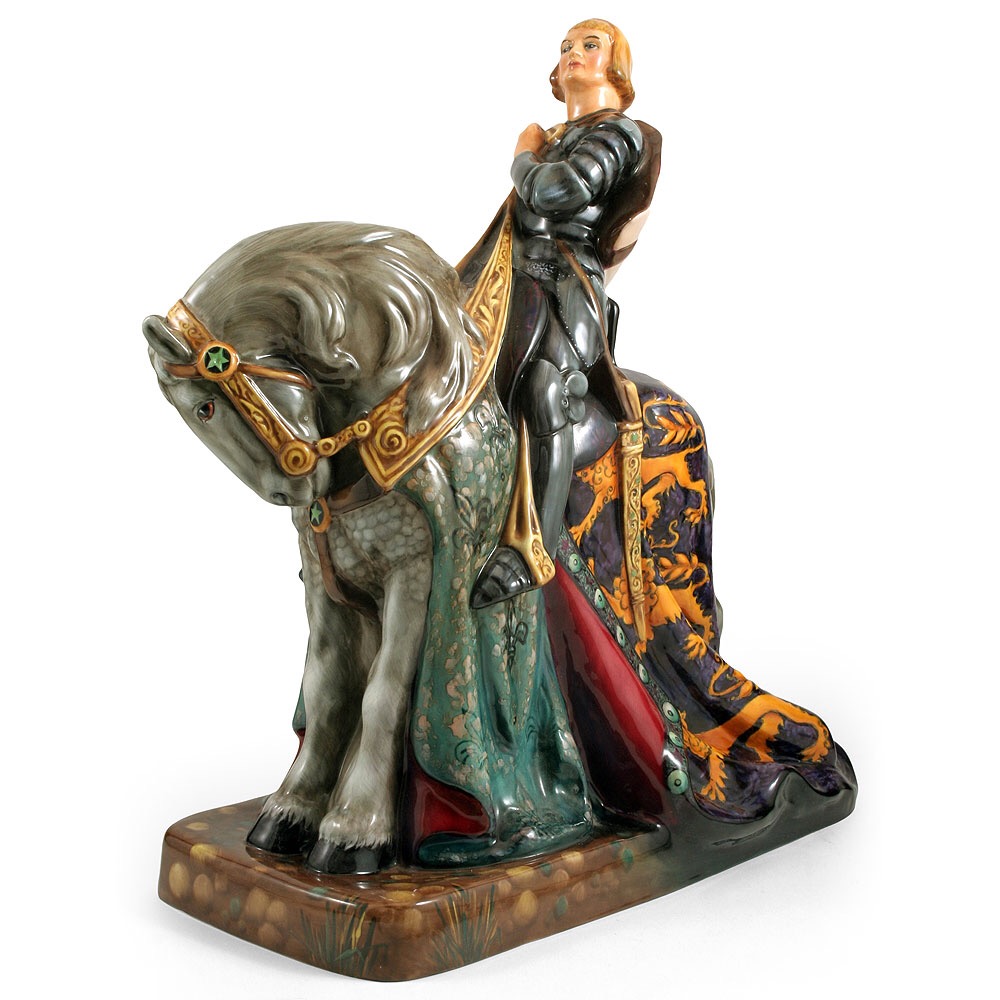
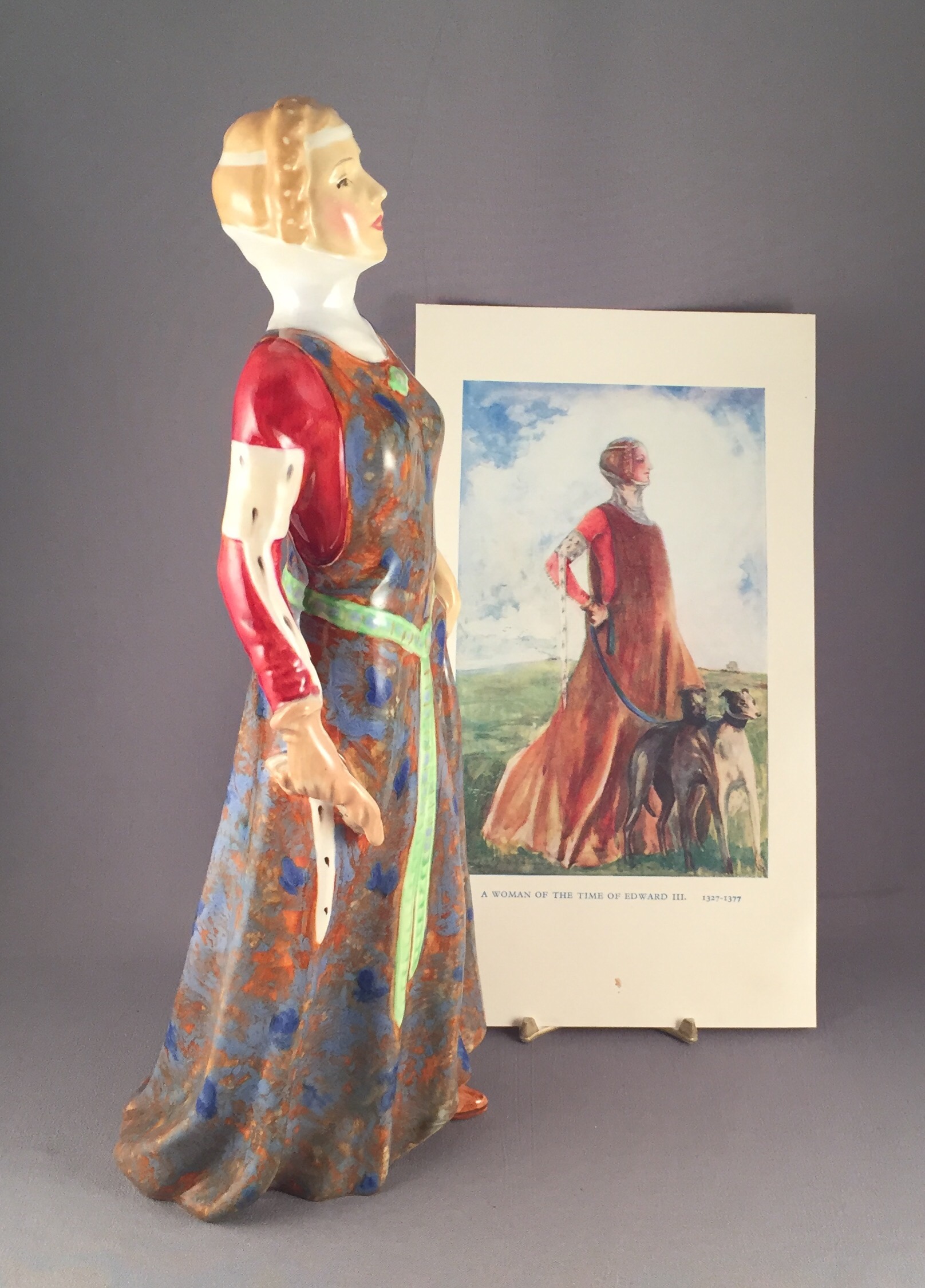
Royal Doulton’s Philippa of Hainault HN 2008

This interpretation of the Queen of Edward III belongs to a wonderful series of Ladies from English History that were among the first of Peggy Davies’ models produced by Rpyal Doulton after WWII.

She ruled at a time when chivalry and pageantry filled the English court. Her husband and son, the Black Prince were men of war. Their captives the Kings of France and of Scotland were treated according to their rank, valour and misfortune – something that was attributed to her influence! 
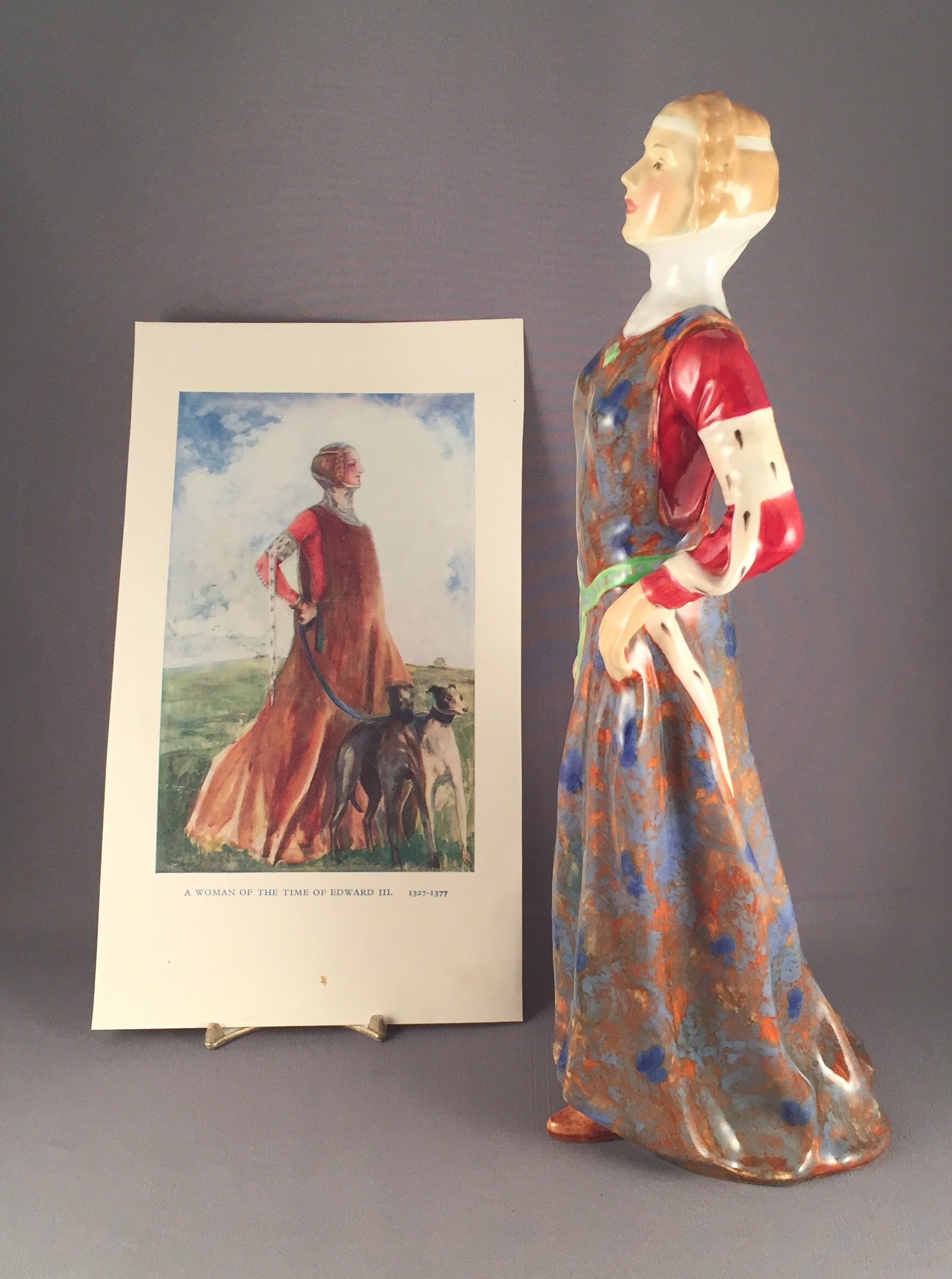
That she is remembered for her gentleness and clemency is illustrated by the tale of her pleading for the lives of six citizens of Calais when the town fell. 

The Royal Doulton series of Period Figures in English History was made up of six personalities and was available for a short period (1948-53) and are all considered rare today! 
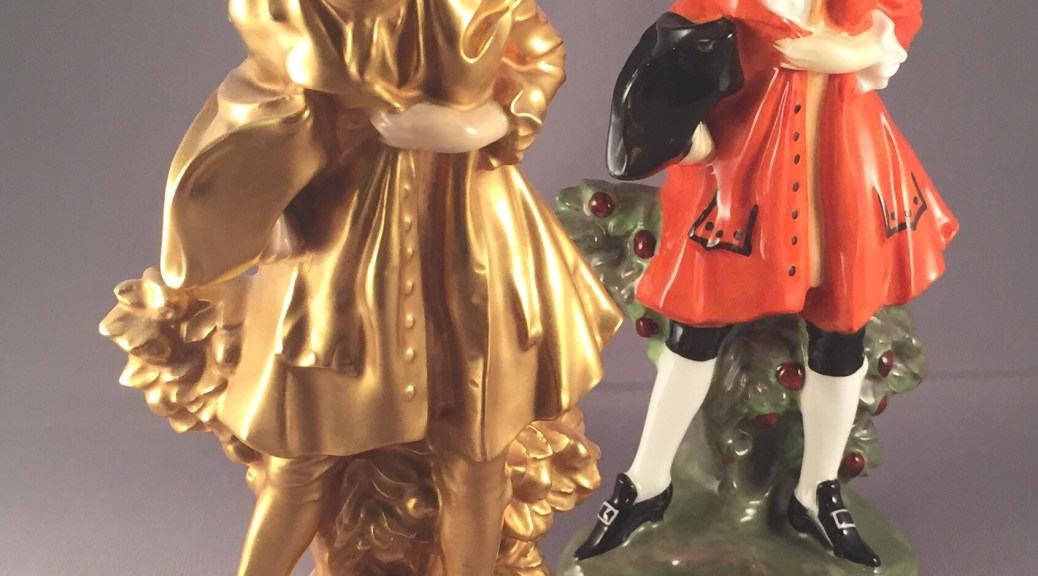
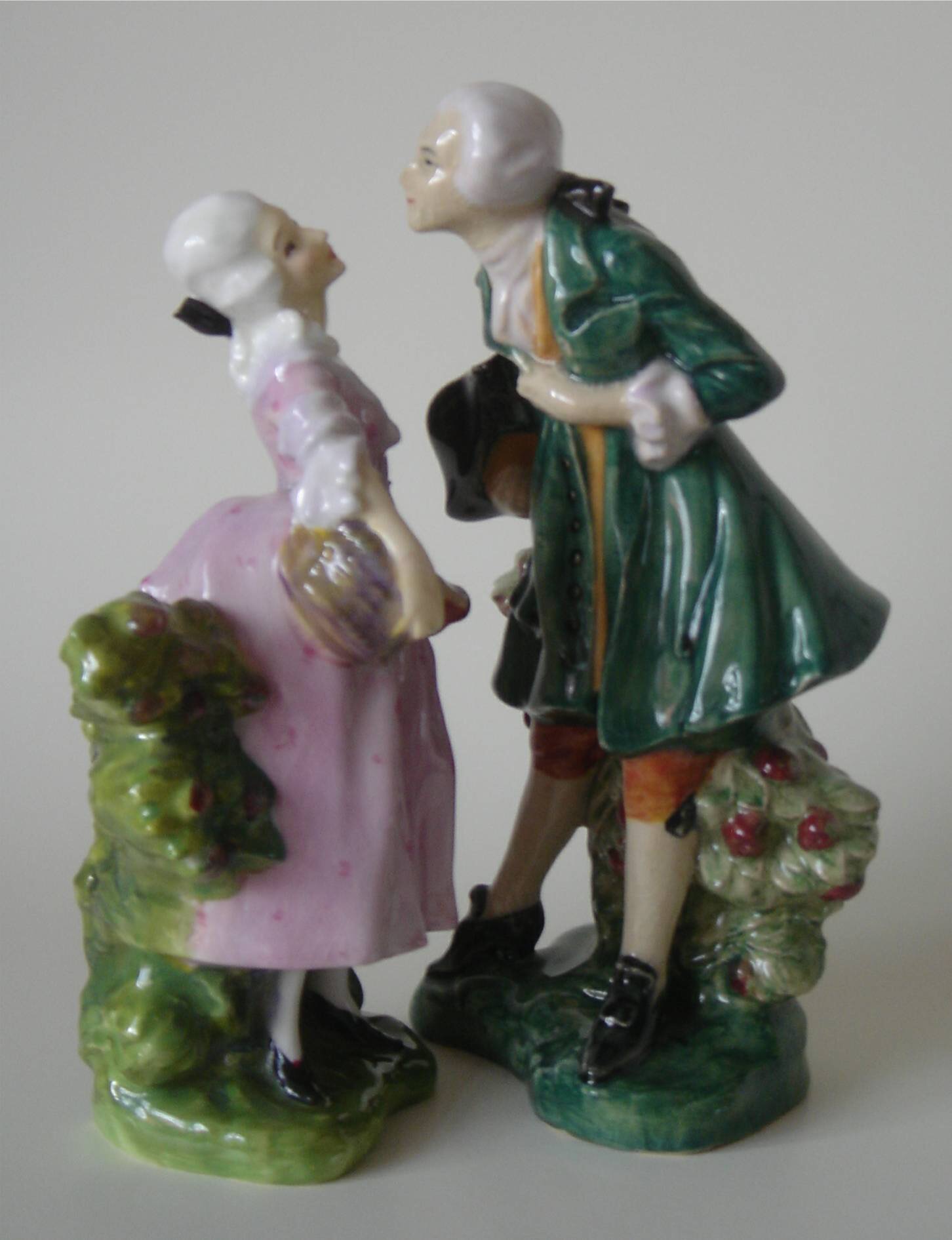
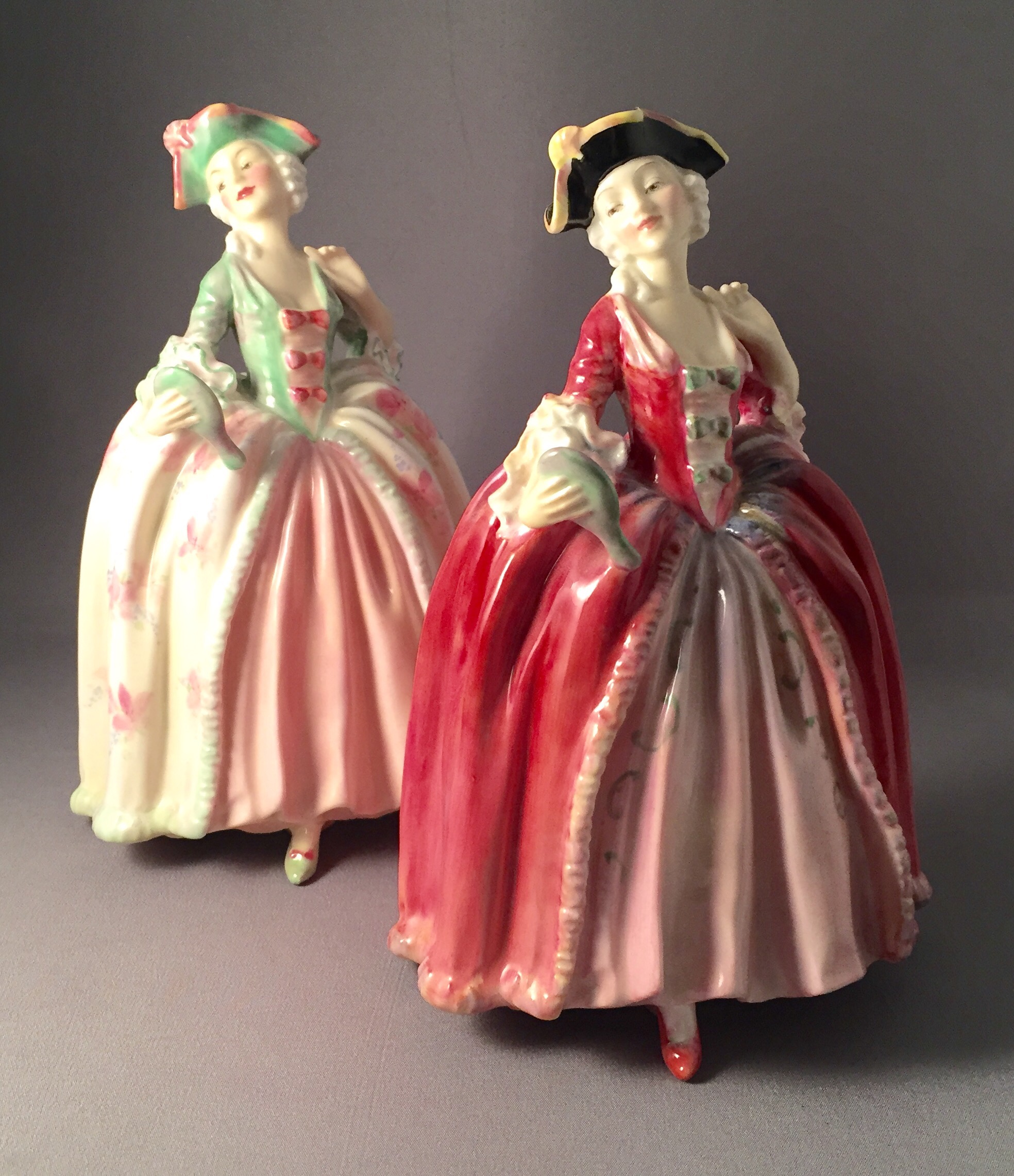
Royal Doulton’s Masquerade pair.

The sheer variety of early figures in Royal Doulton’s HN collection illustrates the lengths that were gone to, to appeal to early collectors as the company tried to discover a popular house style.


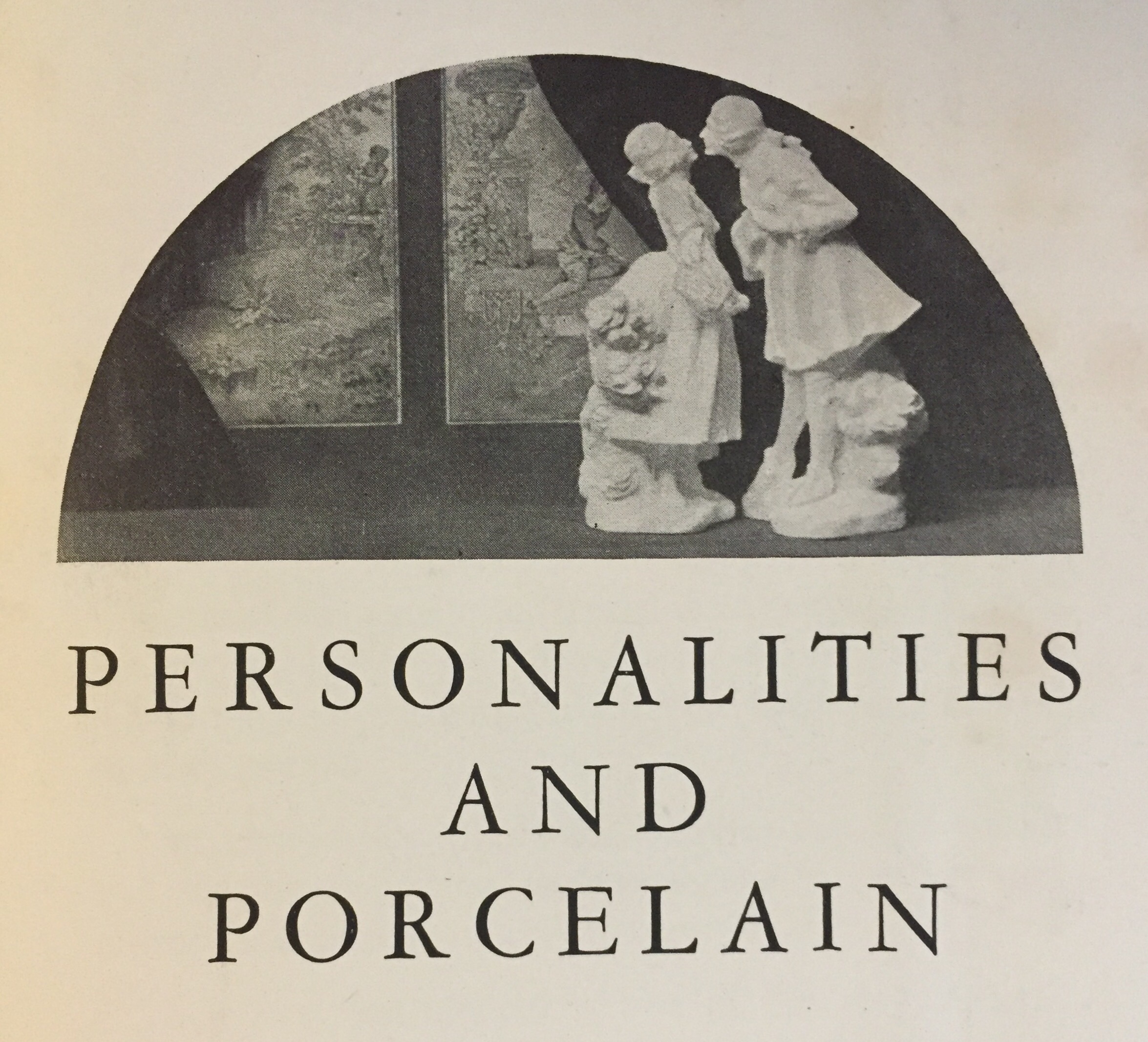
Title page of an early figure catalogue.

Of course by the time the Masquerade pair appeared in 1924, the great Leslie Harradine had already been supplying models to the Burslem art studios for a few years. 


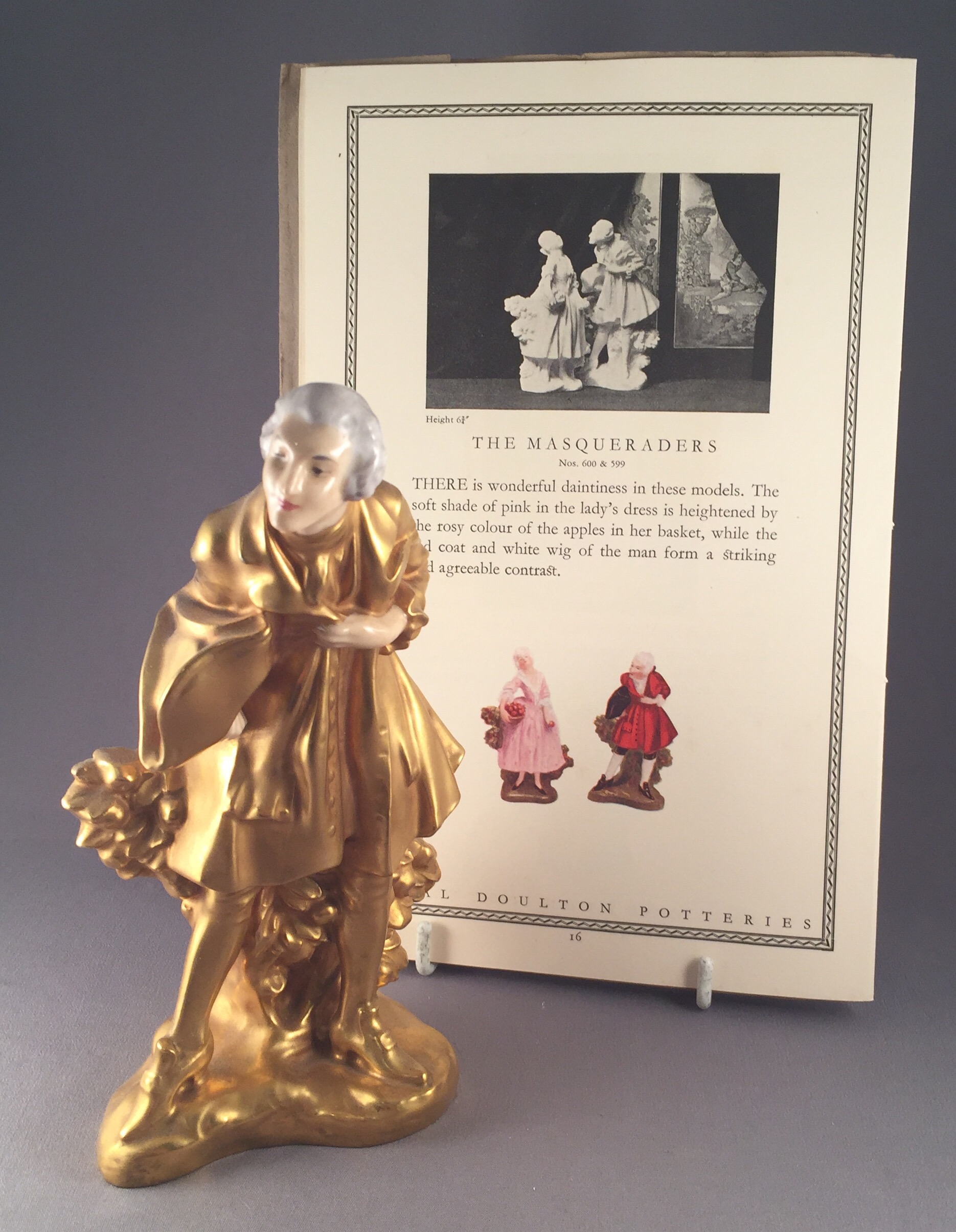
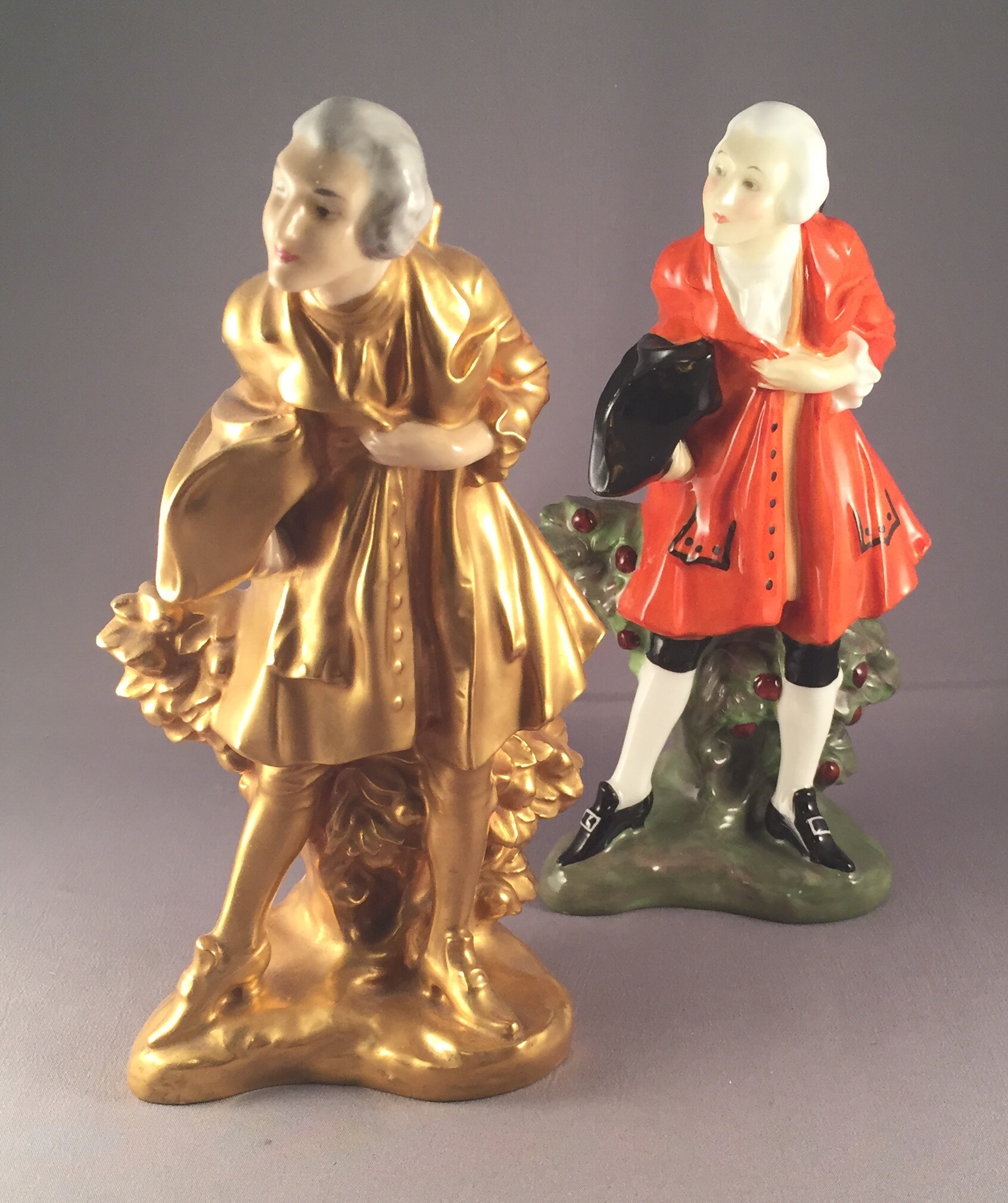
A burnished gold HN636 Masquerade.

During the early 20thC there was huge interest in masked and costume balls and the latter must have inspired this pairing and other Chelsea inspired figures from a bygone age in English china manufacturing. 


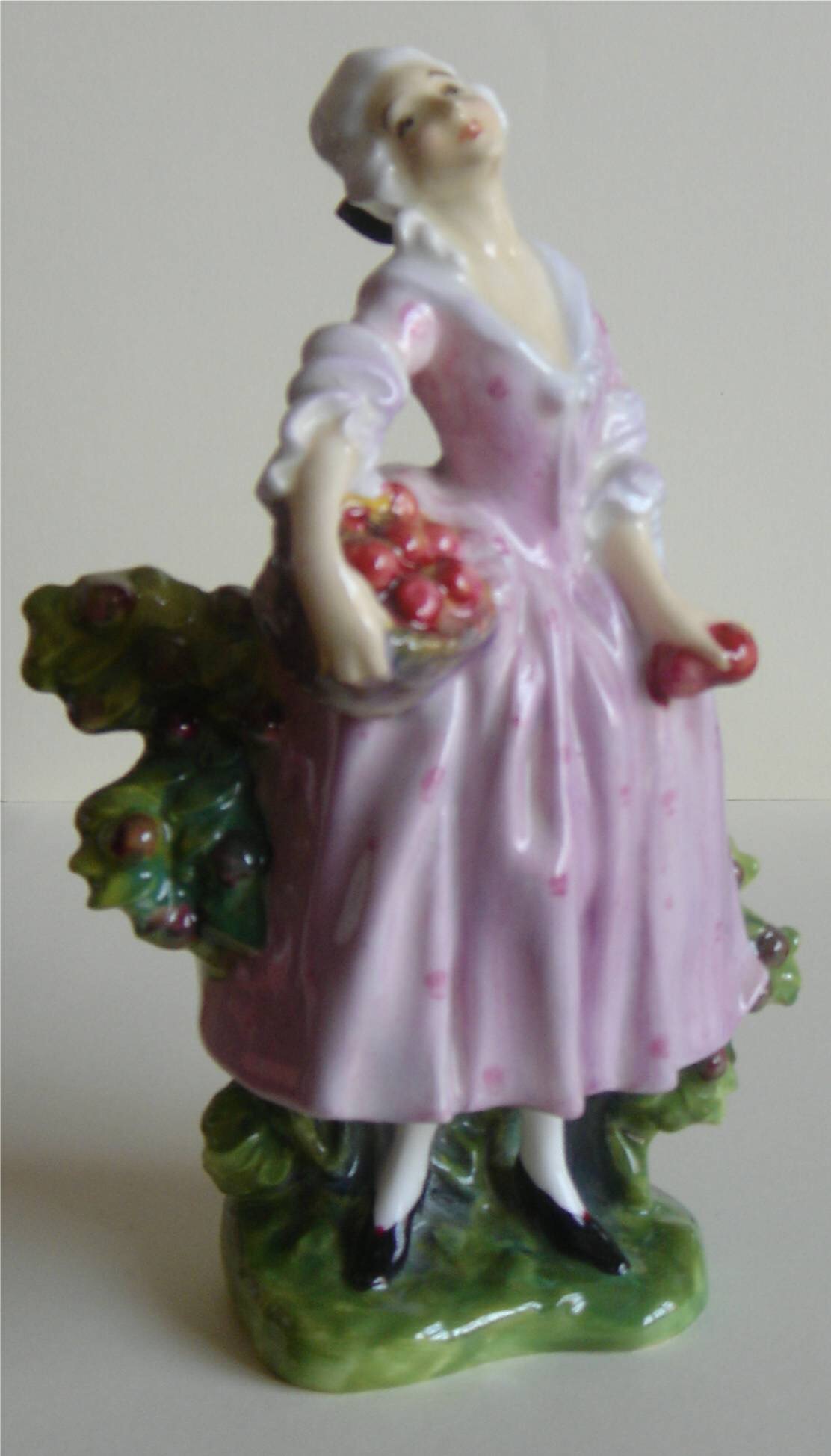
Masquerade (female) HN 600.


‘Kissing’ Masqueraders HN 600 in china and HN 683 in earthenware.

Interestingly the two Doulton models’ bases fit so that the couple can kiss if the owner so wishes. They appear in this 1920’s figure catalogue titled Personalities and Porcelain along with a group of other early figures. Also of interest to note is that HN683 and HN 637 the last versions of each were actually made in earthenware rather than china like the other versions.


Masquerade HN 599 & 636.

Typical of Doulton’s studios they also experimented with this pair and a handful of other figures, producing examples in burnished gold with ivory face and hand details, imitating gold/bronze and Ivory figurative sculptures from the art nouveau era. 

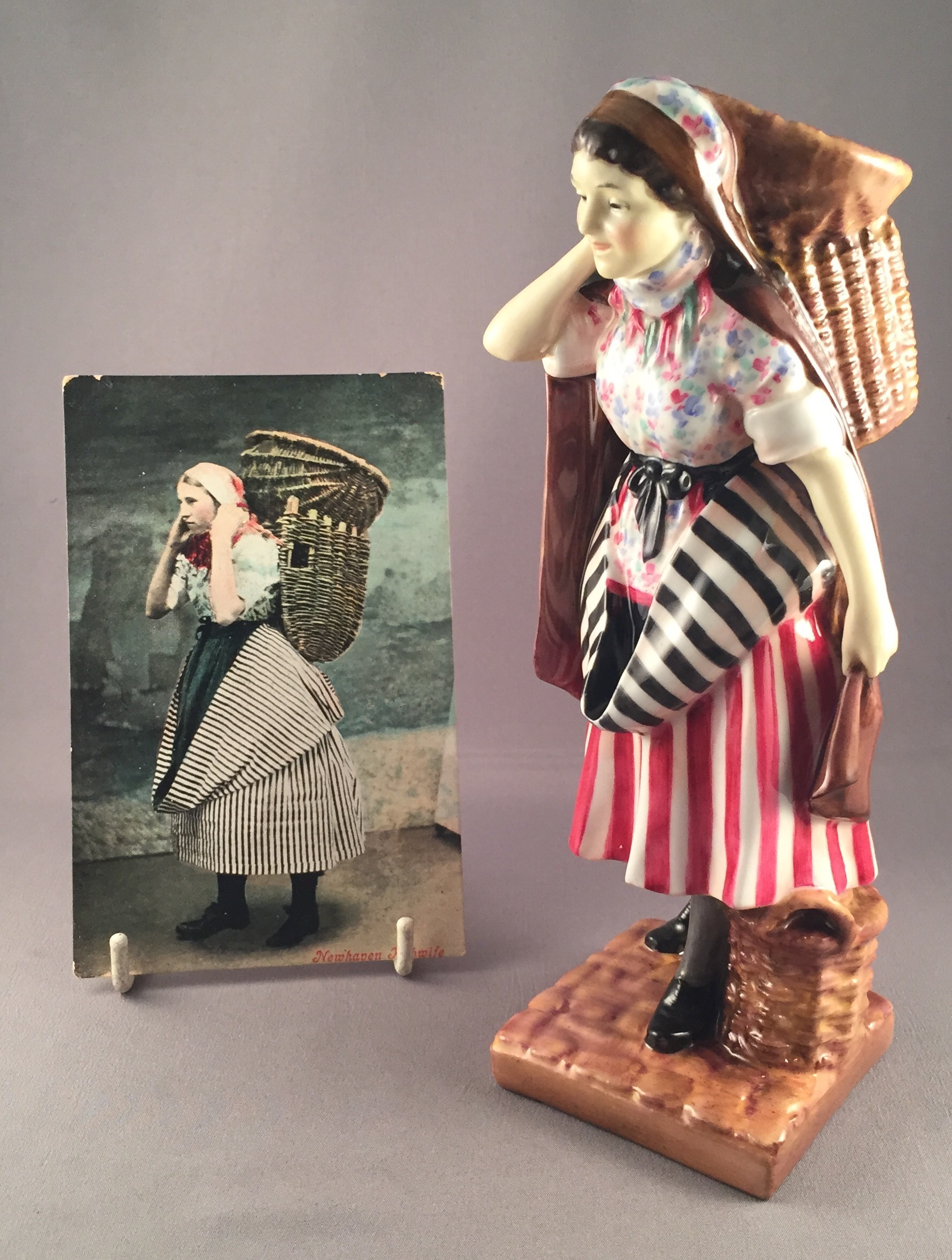
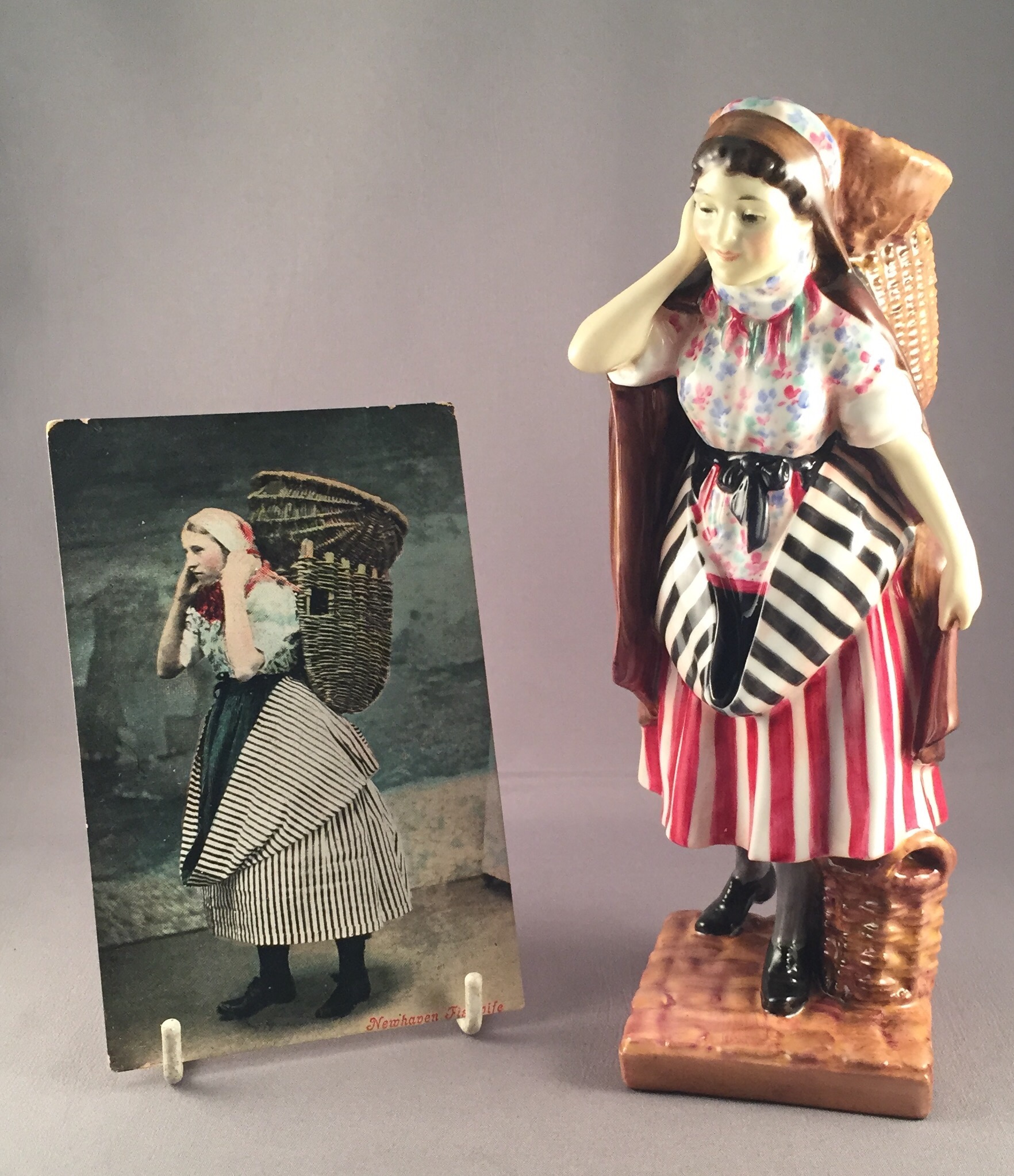
Royal Doulton’s Newhaven Fishwife.

The Royal Doulton figure Newhaven Fishwife HN 1480 is like so many of their period street sellers and character figures, based closely on real life. The Scottish fishwives of Newhaven had a reputation for their beauty and industry. They were hard-bargainers though, and all the fishermen of the Firth of Forth in Edinburgh, Scotland, brought their catches to Newhaven for the fishwives to sell in Edinburgh city. 
  
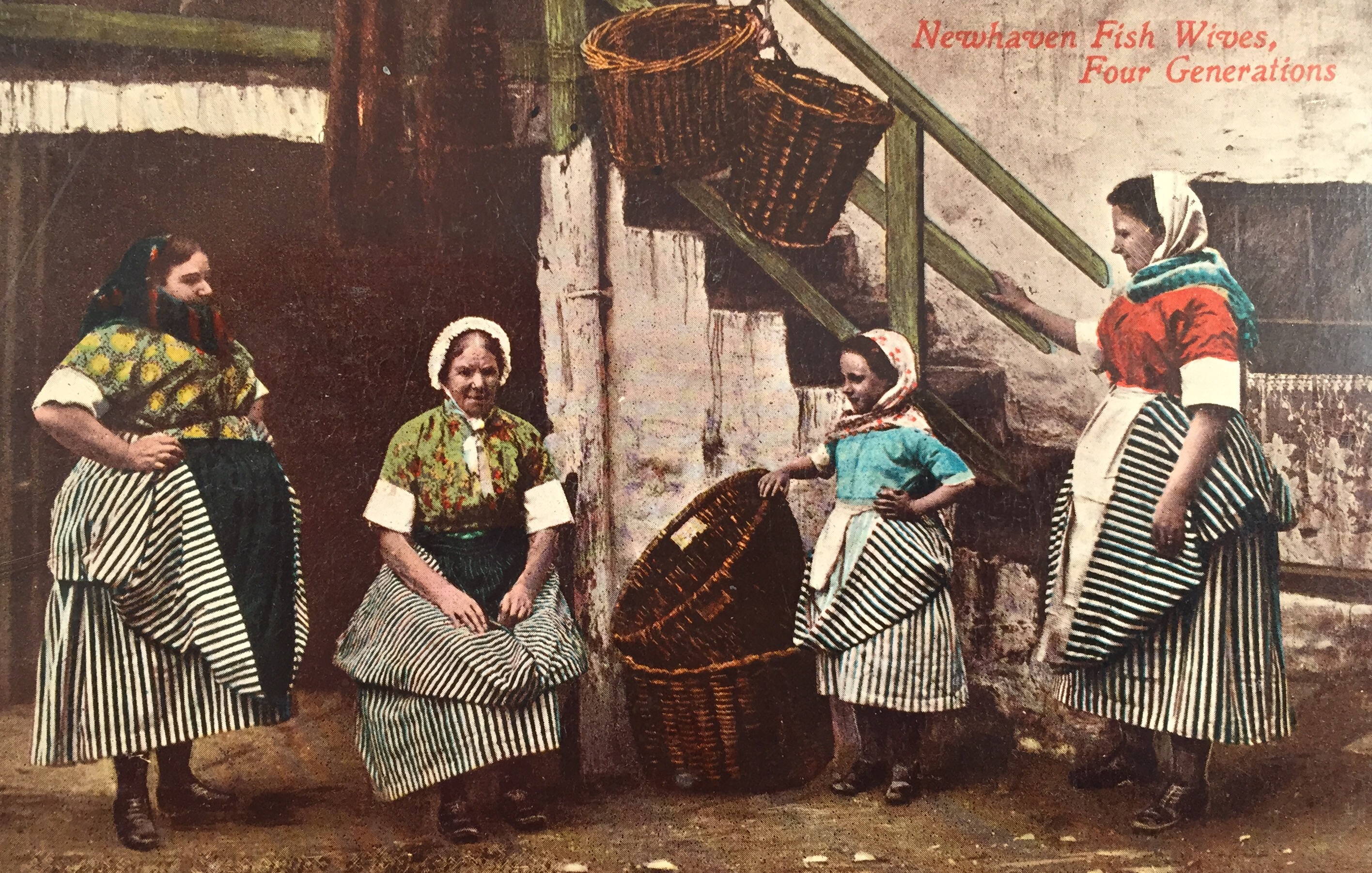
Just like the Doulton figure, the fishwives of Newhaven wore distinctive costumes of layers of colourfully striped petticoats with a muslin cap or other similar headdress, together with a scarf, the tassels of which you can make out in the picture and also around the neck of the figure itself. Their fish, including haddock and herring, were carried on their backs in creels, again just like the figure.  

  
The Newhaven Fishwife although introduced in the 1930s, was not a Leslie Harradine figure, but a model by Harry Fenton, more famously associated today with Doulton’s Character Jugs. She is recorded as having been produced between 1931-37, however, her scarcity reinforces the reality that many figures were made to order rather than being readily available. 


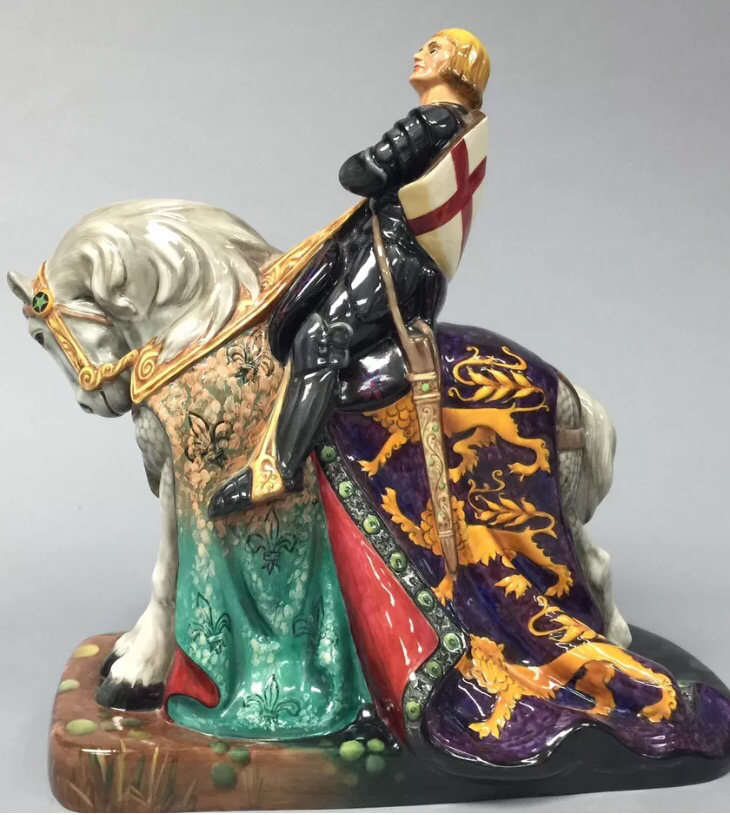
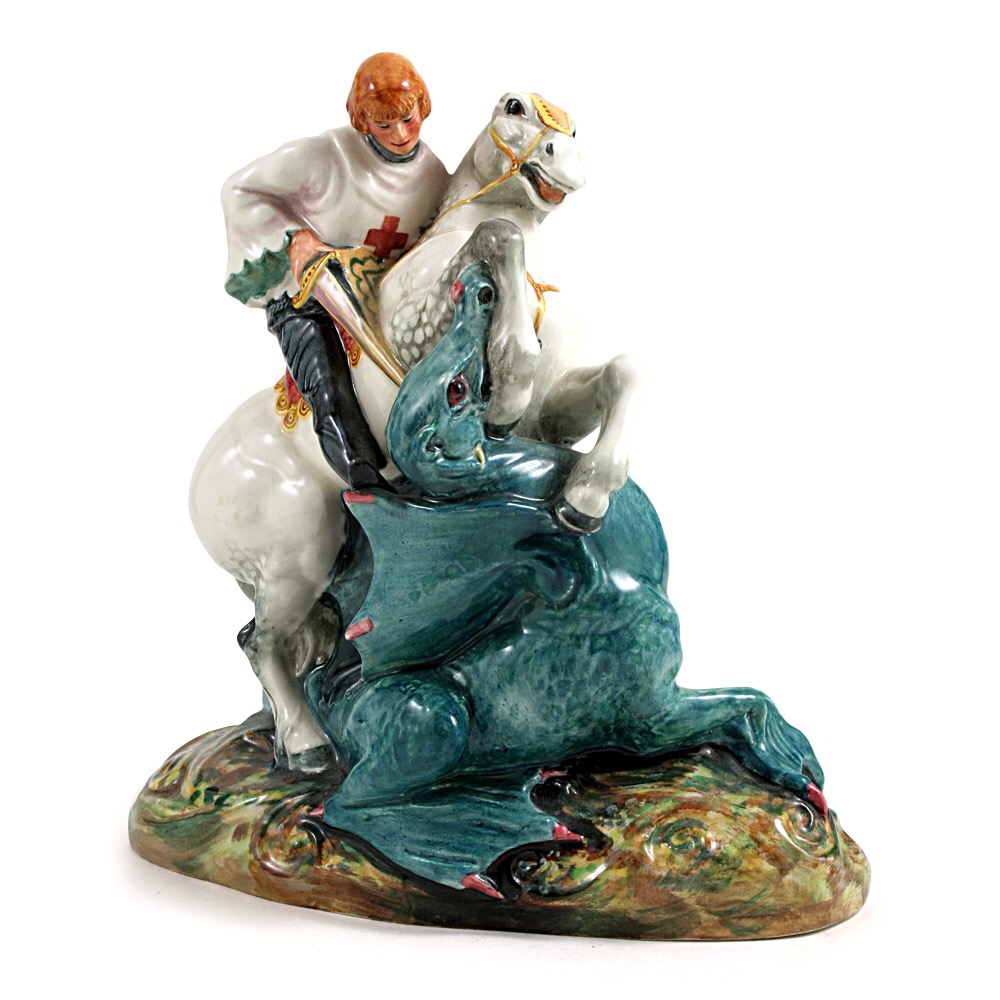
Royal Doulton’s celebration of St George.

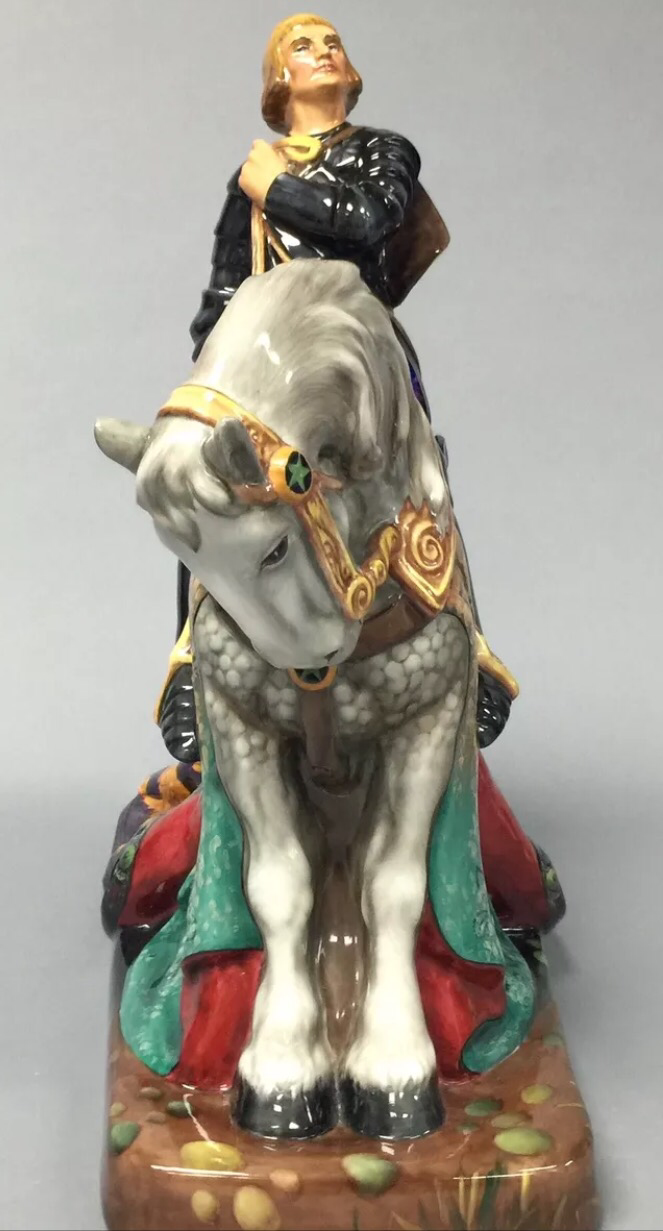
  St George HN 2067.

England’s patron saint is celebrated annually with St George’s Day on the 23rd April. Symbolic references to him and the story of his slaying a dragon can be found throughout Bristish life: his cross forms the national flag of England, also it features within the union flag of the United Kingdom and is also contained with other flags containing the Union Flag such as New Zealand’s and Australia’s.


England’s patron saint can be traced back through history to before the Norman Conquest of 1066 and it is recorded that by the 14thC St George had been declared England’s patron saint and protector of Royalty!
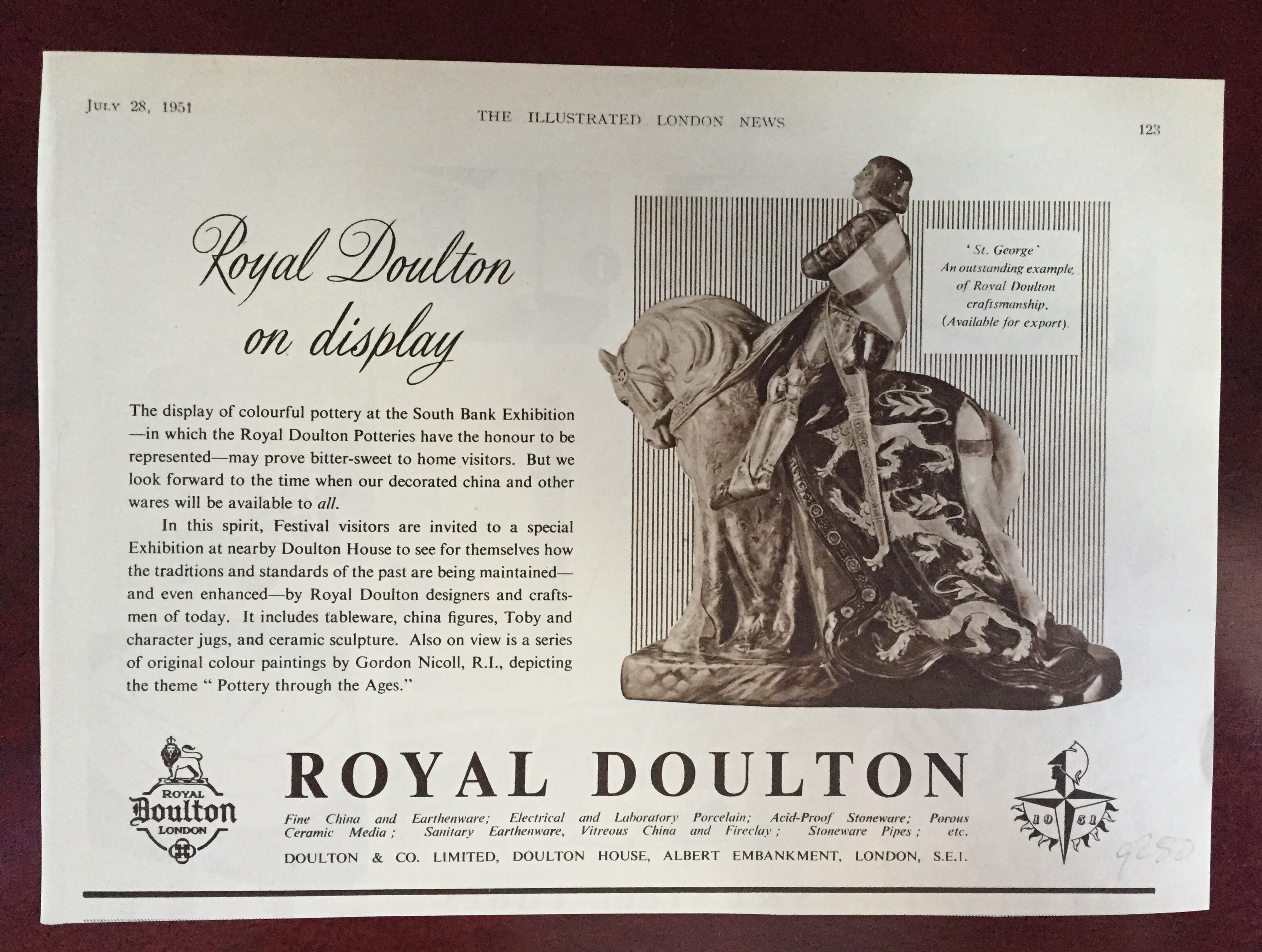
 Doulton advert for their Festival of Britain stand 1951.

 Doulton’s first figure model of St George (above) introduced as HN 385 was by Stanley Thorogood and was based on an earlier study by the artist from 1915.

 
 St George by Peggy Davies 1950-85.
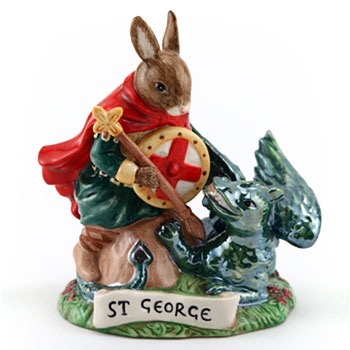
Doulton have produced the figures above as well as featured him in other popular lines produced including their Bunnykins range. 

 
Bunnykins St George.


Collecting Royal Doulton’s seasoned characters! 
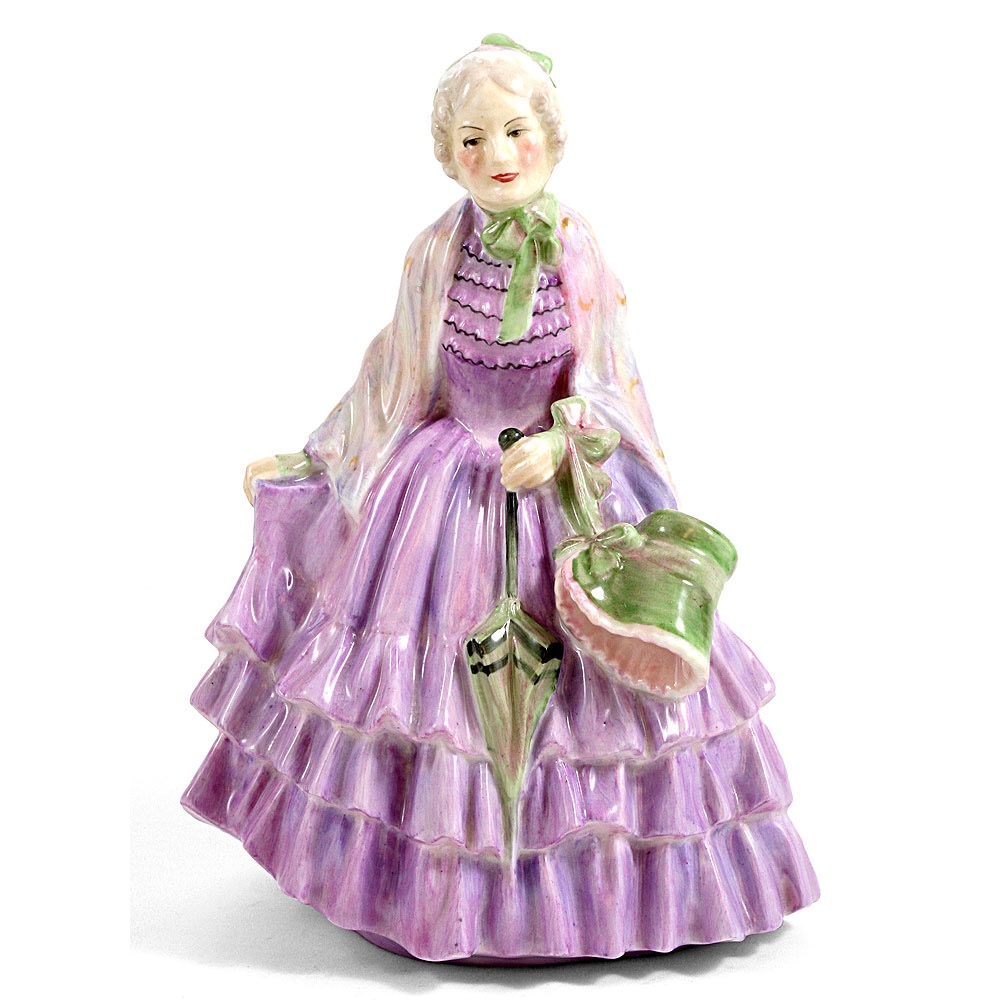
Granny’s Heritage HN 1873.
Everyone looks forward to that time in our lives when things slow down a little and we imagine that we will have time to enjoy the finer things in life! This perhaps explains collectors’ fascination with what we might term the ‘older generation’.

The very rare Granny HN 1804.

From the 1920’s Royal Doulton have been producing older characters as part of their famous HN range of figures in recognition of this basic sentiment.


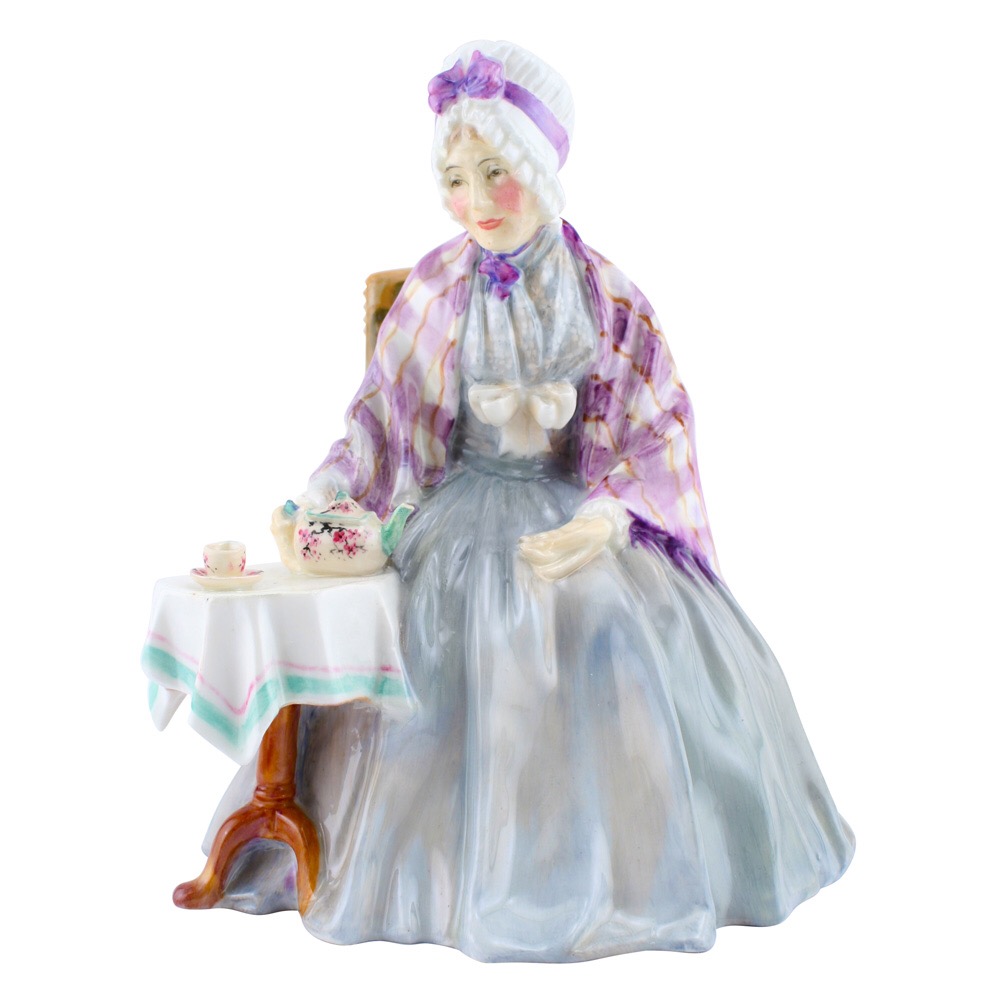
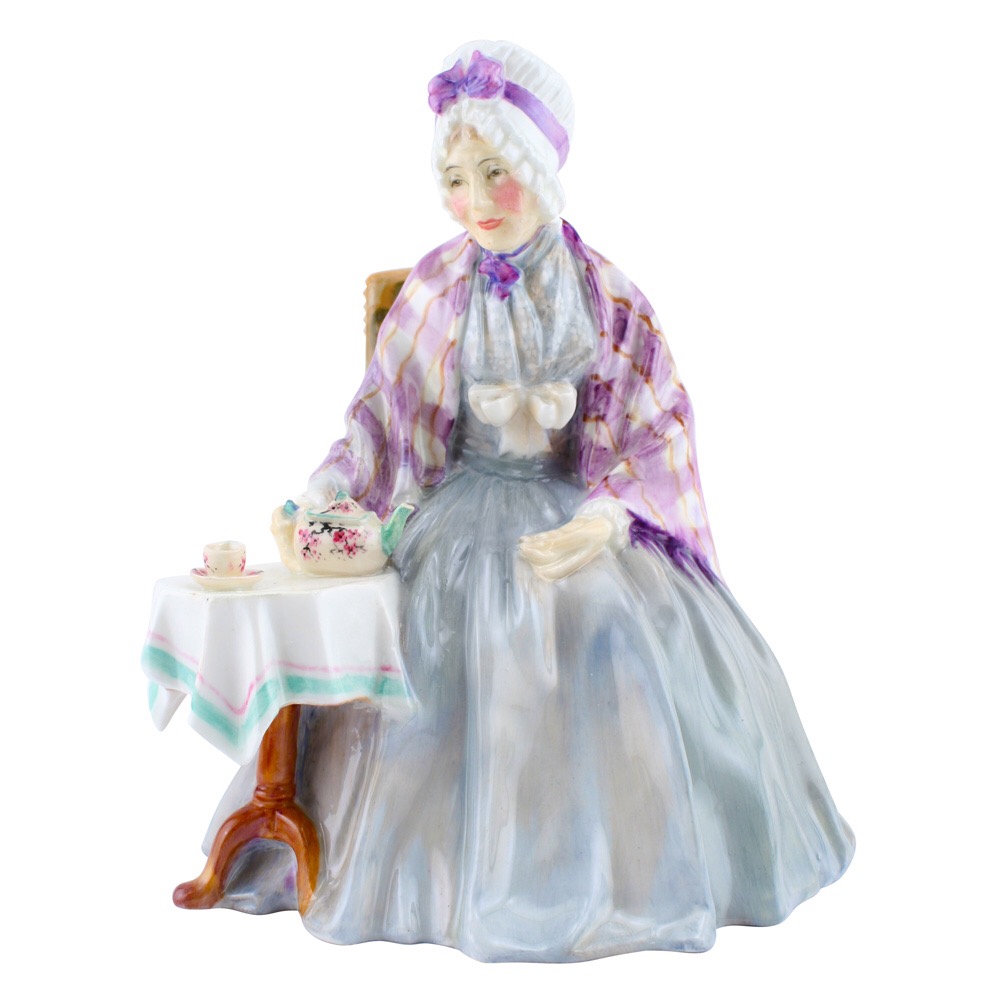
A Gentlewoman HN 1632.

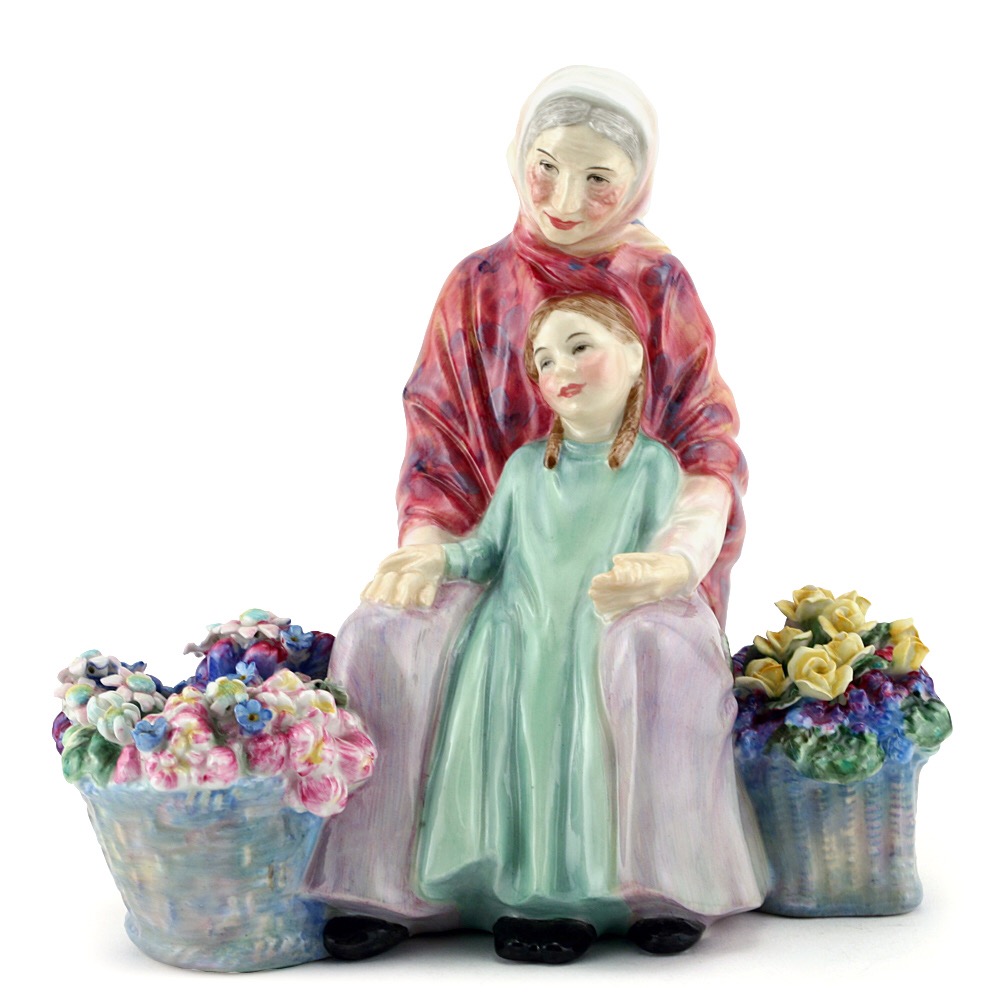
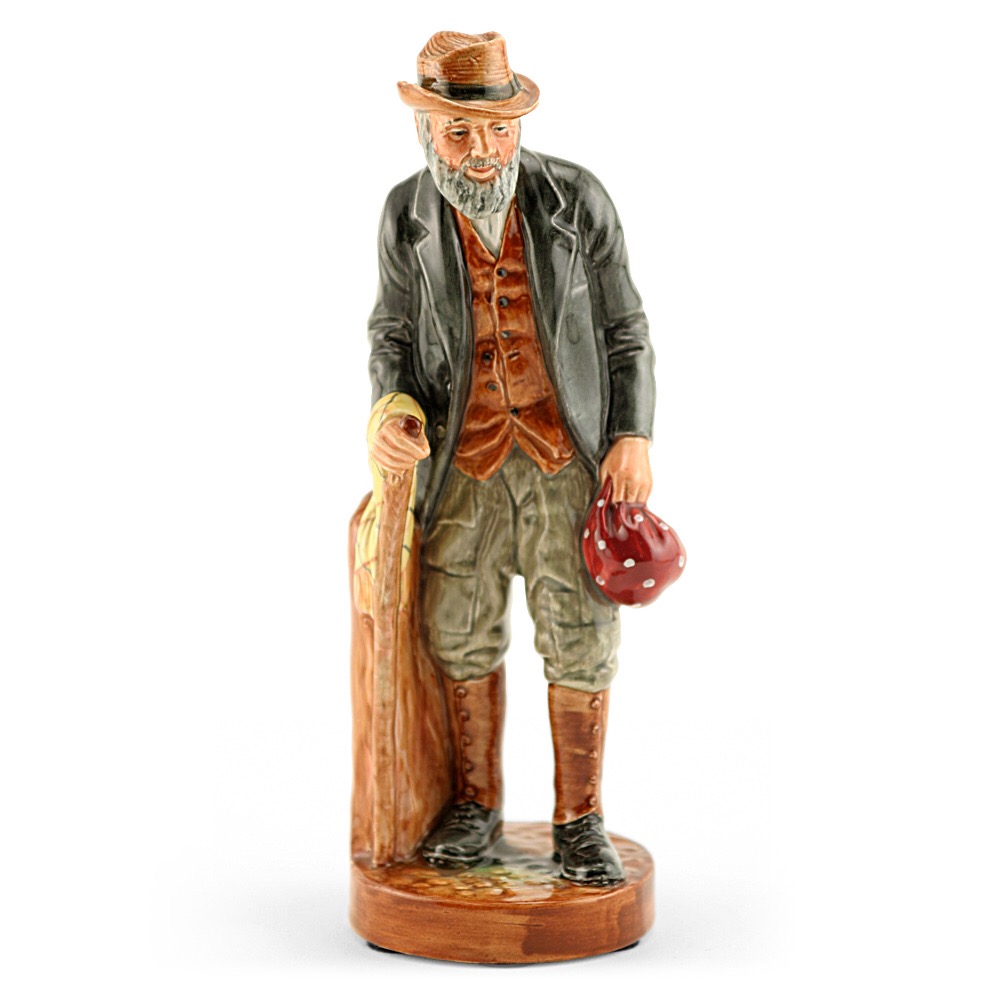
Whether it be the famous impoverished Old Balloon Seller or 1930’s figures such as Darby and Joan, A Gentlewoman or Granny all of whom are portrayed in aged contentment knitting, enjoying some snuff, serving tea or out and about! All the things we imagine that we may have done generations before now.


Gaffer HN 2053.

Respect and affection appear to be the watchwords with these characters with names such as Grandma and Gaffer being used over time. The term Gaffer of course referring to a boss or older man.


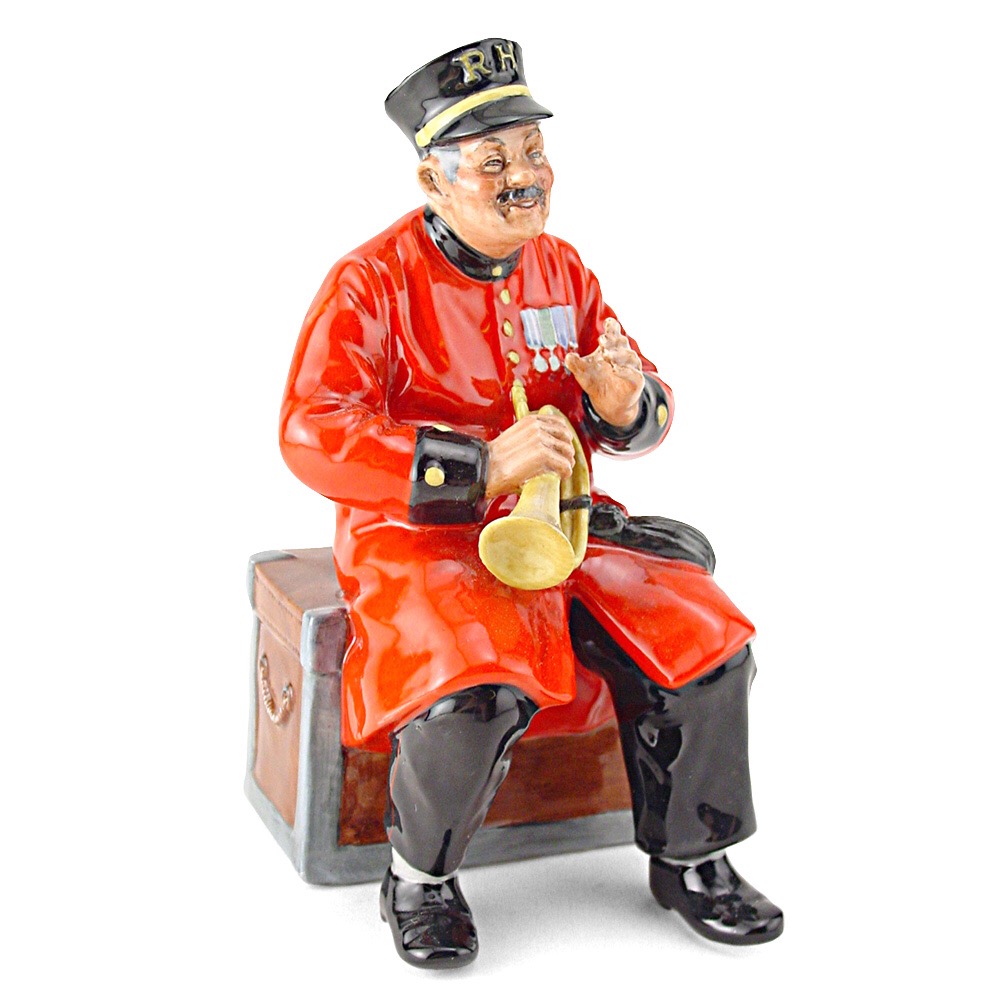
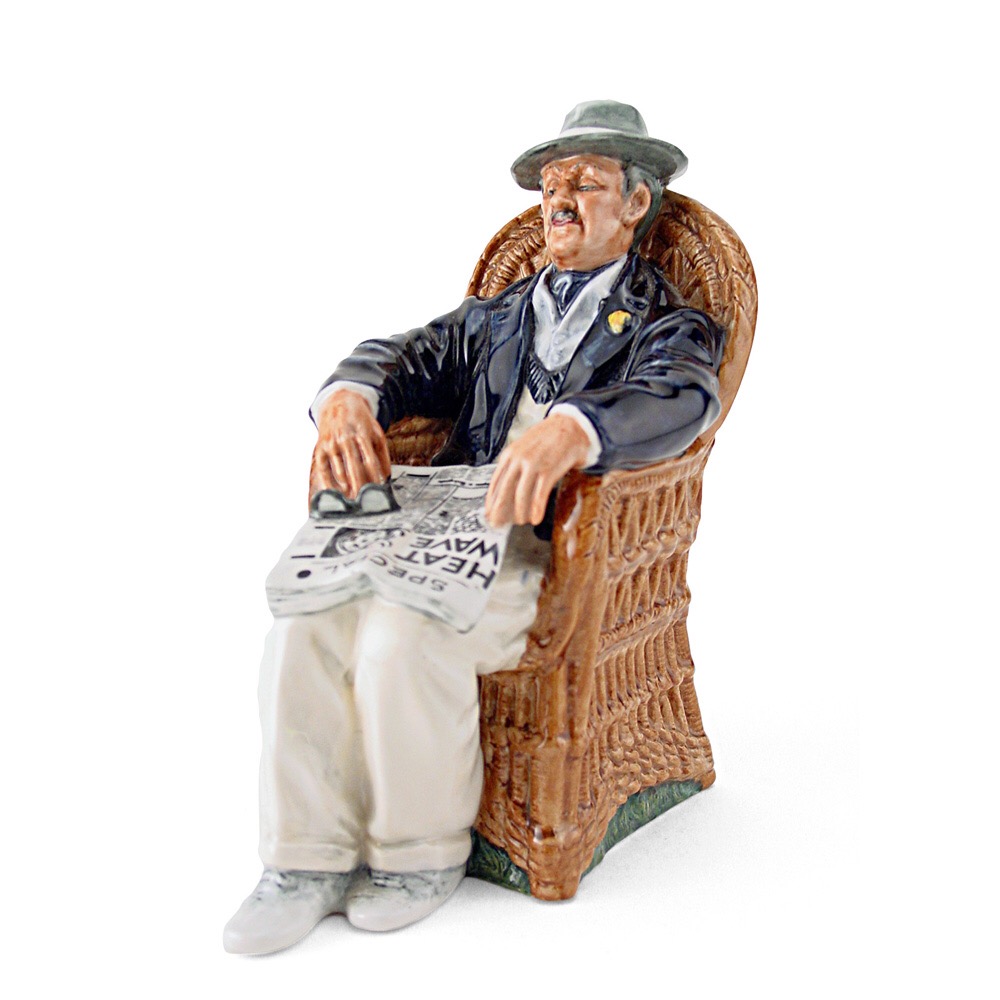
Past Glory HN 2484.

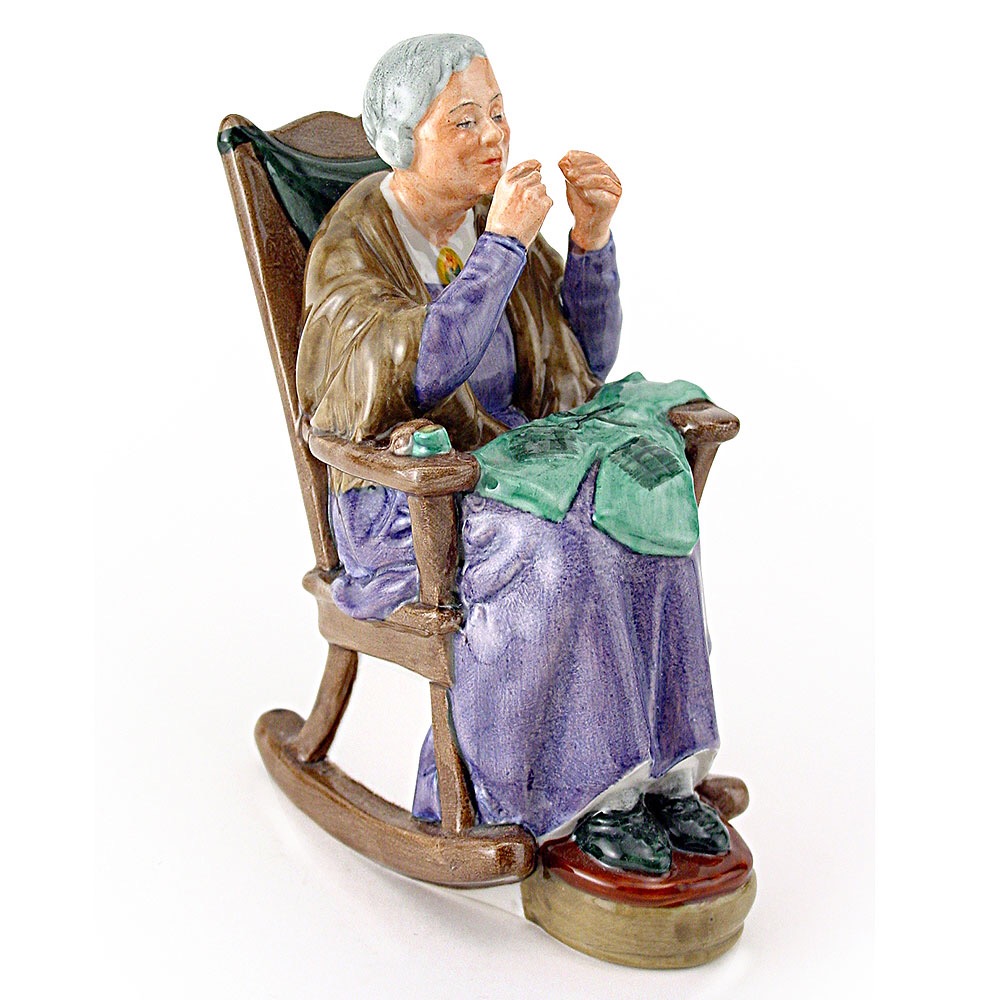
This reverence for the older generation also explains figures such as Past Glory HN 2484, Takings Things Easy HN 2677 and Stitch in Time HN 2352.


Taking Things Easy HN 2677.

Displayed as part of a group of elder characters or among more typical figures, each tells a tale of its own and it is perhaps for this reason that even today we fill our homes with these gentle characters!


A Stitch in Time HN 2352.

Thanks to Seaway China for the use of their photos.

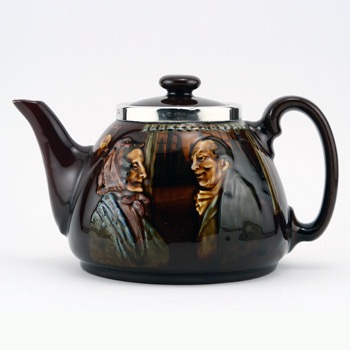
  And finally a rare Kingsware teapot with Darby and Joan to illustrate that it isn’t just figures that feature older characters!

Mirror, mirror …who is the fairest Doulton lady of them all? 

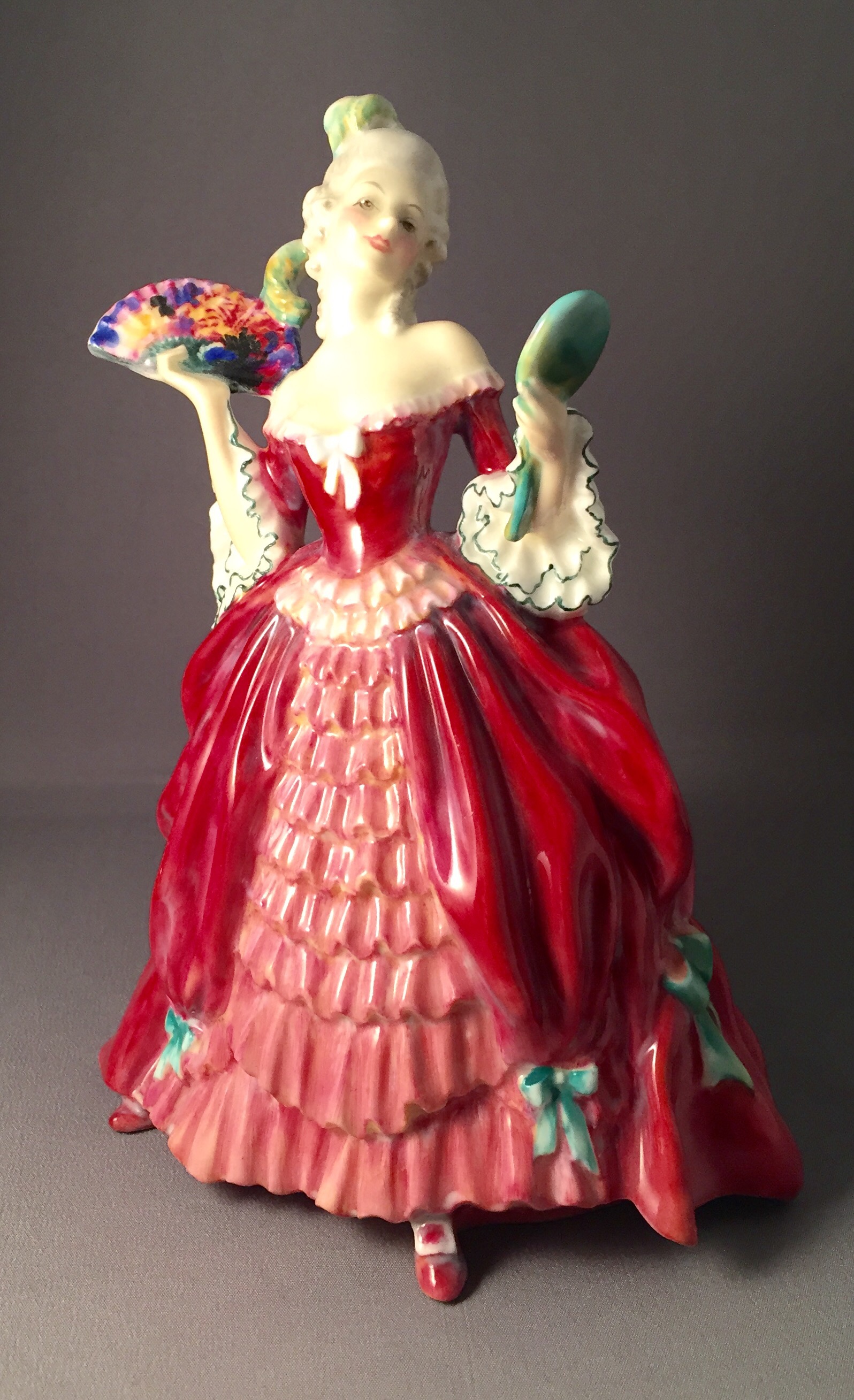
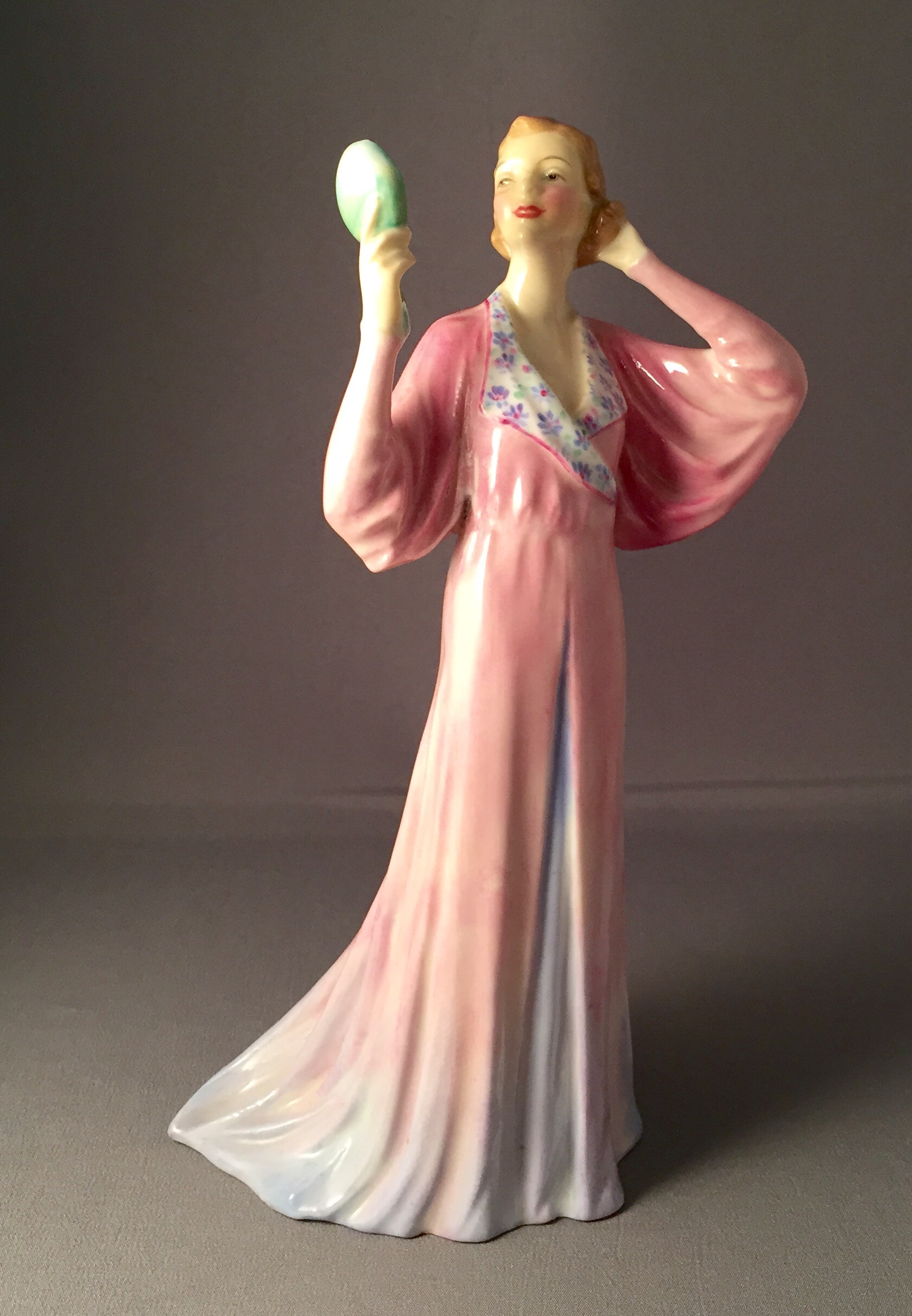
Whilst bouquets of splendid flowers, fans and ermine muffs may be what Doulton ladies are typically modelled holding, mirrors too can be found being held aloft by a small selection of figures both old and new.

 Lady Pamela HN 2718.


Camille HN 1586(L) and 1648(R).

Perhaps contrary to traditional views of what is virtuous and what is not, a figure admiring her own beauty was possibly not considered a positive trait and maybe the reason why there are so few ladies holding mirrors?


A prototype from 1940. Another variation of this lady has appeared holding a mask instead of the mirror.

Alternatively, perhaps it is the precariousness of having an arm stretched out holding a mirror that explains why so few ladies have appeared holding mirrors. Certainly when one looks at Harradine’s the Mirror you can see how fragile that little hand help mirror is!


The Mirror HN1852.

Whatever the reason it is something of a shame as the selection shown illustrate how wonderfully stylish these ladies are.

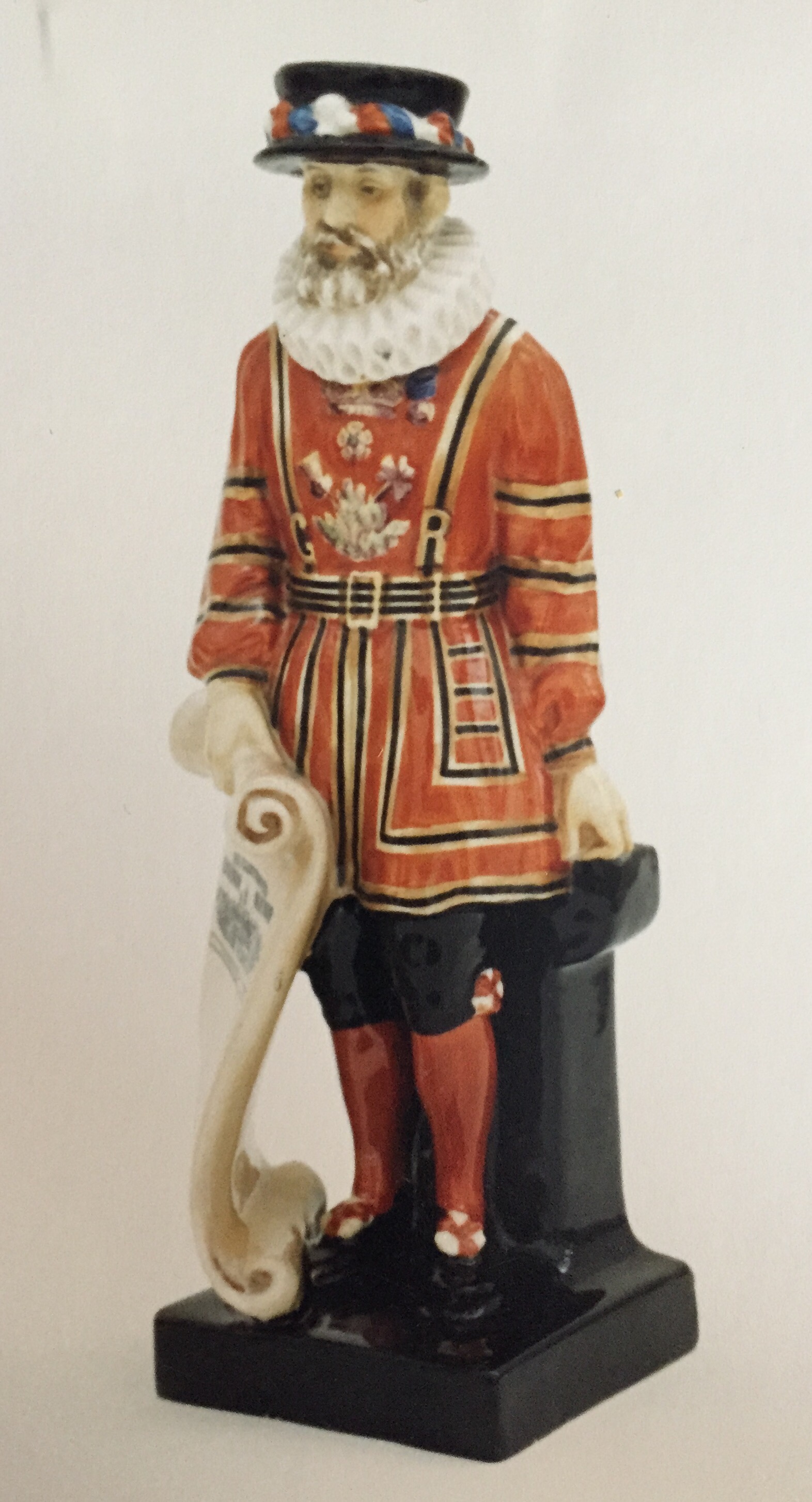
Royal Doulton’s Standing Beefeeter advertising figure.


This rather quaint figure produced in the early 1920’s is another advertising figure, but this time it’s purpose is to advertise the once popular Illustrated London News magazine. It covered all topical issues and as well as political comment, satire and stories, it also included full page prints for its readers of modern pictures. It was originally a weekly broadsheet but it move to bi-annual until it ceased production after the millennium.

The Beefeeter is a warder of the Tower of London and not a Yeoman of the Guard as is often stated. The Warder Beefeeter served the Towers prisioners and to protect the Crown Jewels but today they act more as tourist guides.

This Doulton personification of this famous London character holds an actual copy of the Illustrated London News from May 14 1842 , whose print is actually readable. Examples without any text do exist but it is the original that is most eagerly sought after.

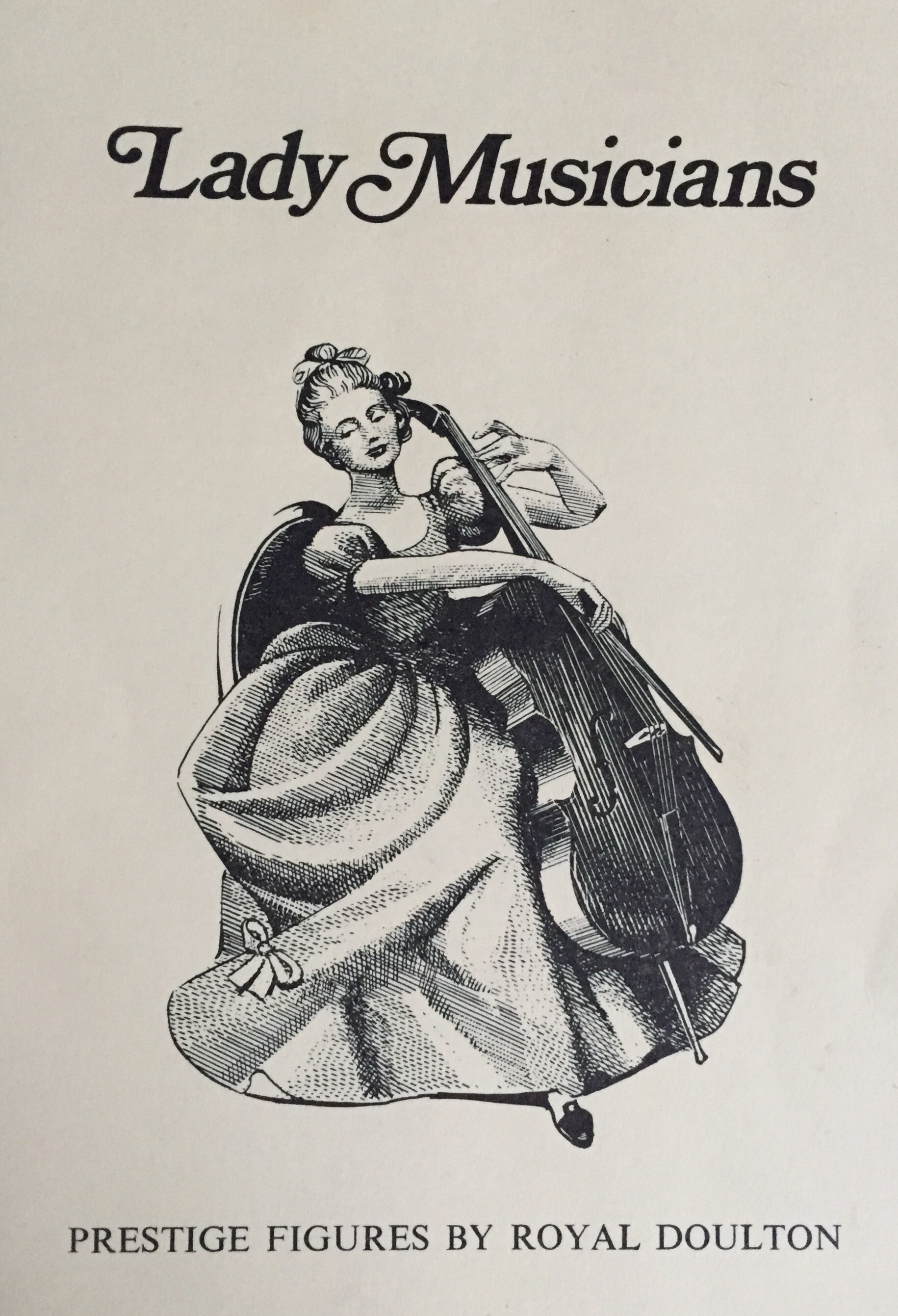
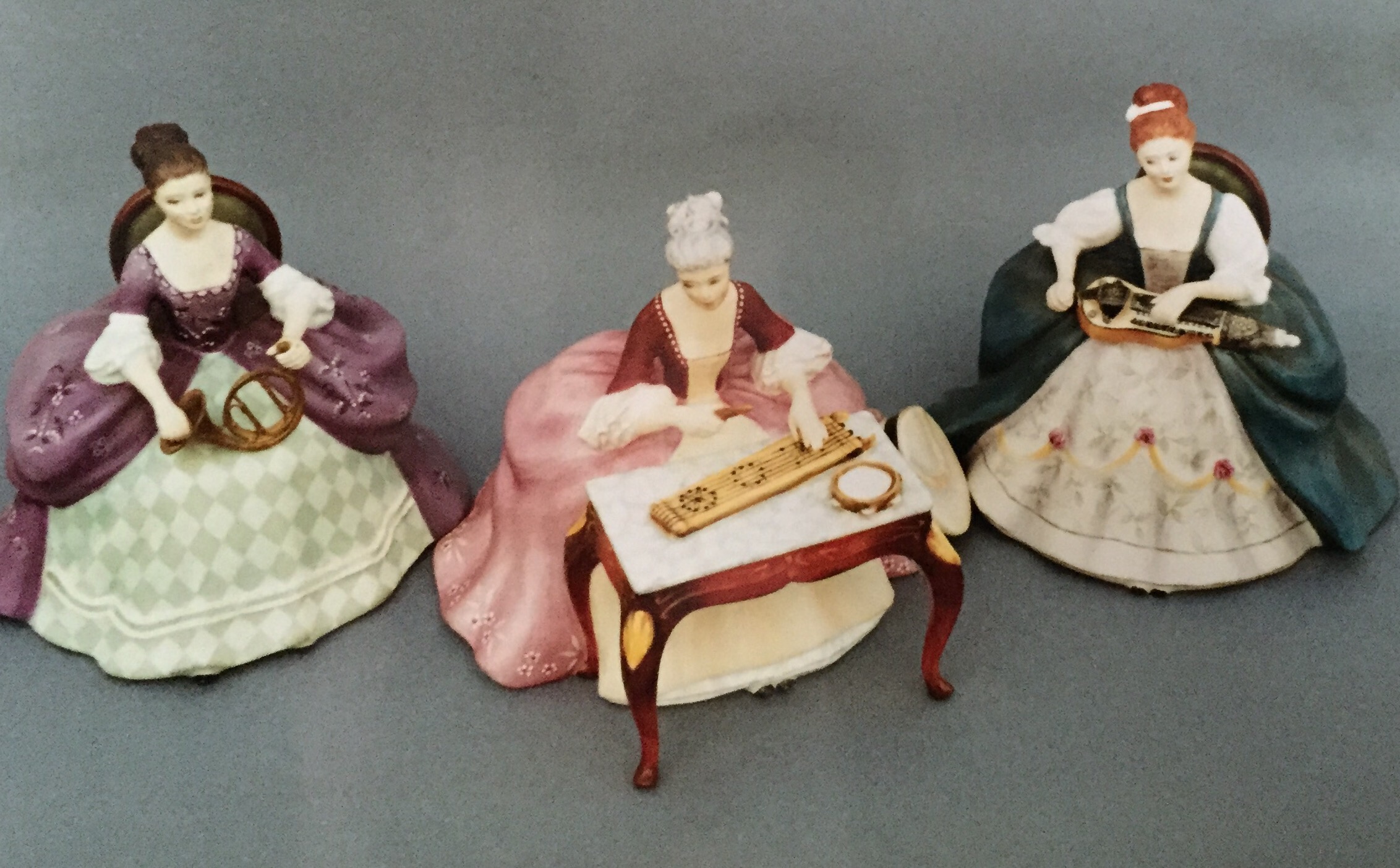
Royal Doulton’s Lady Musicians series by Peggy Davies.

The twelve lady musicians who make up this elegant series were all modelled by the legendary Peggy Davies and the first figurine Cello was introduced in 1970 with the others progressively introduced from that year. 

 
Cover of a booklet produced by Doulton to advertise the new Lady Musicians series.
Another first was that these figures were the first in 50 years to carry the name of their modeller to the base in recognition of Peggy’s massive contribution to the Doulton fame.

  
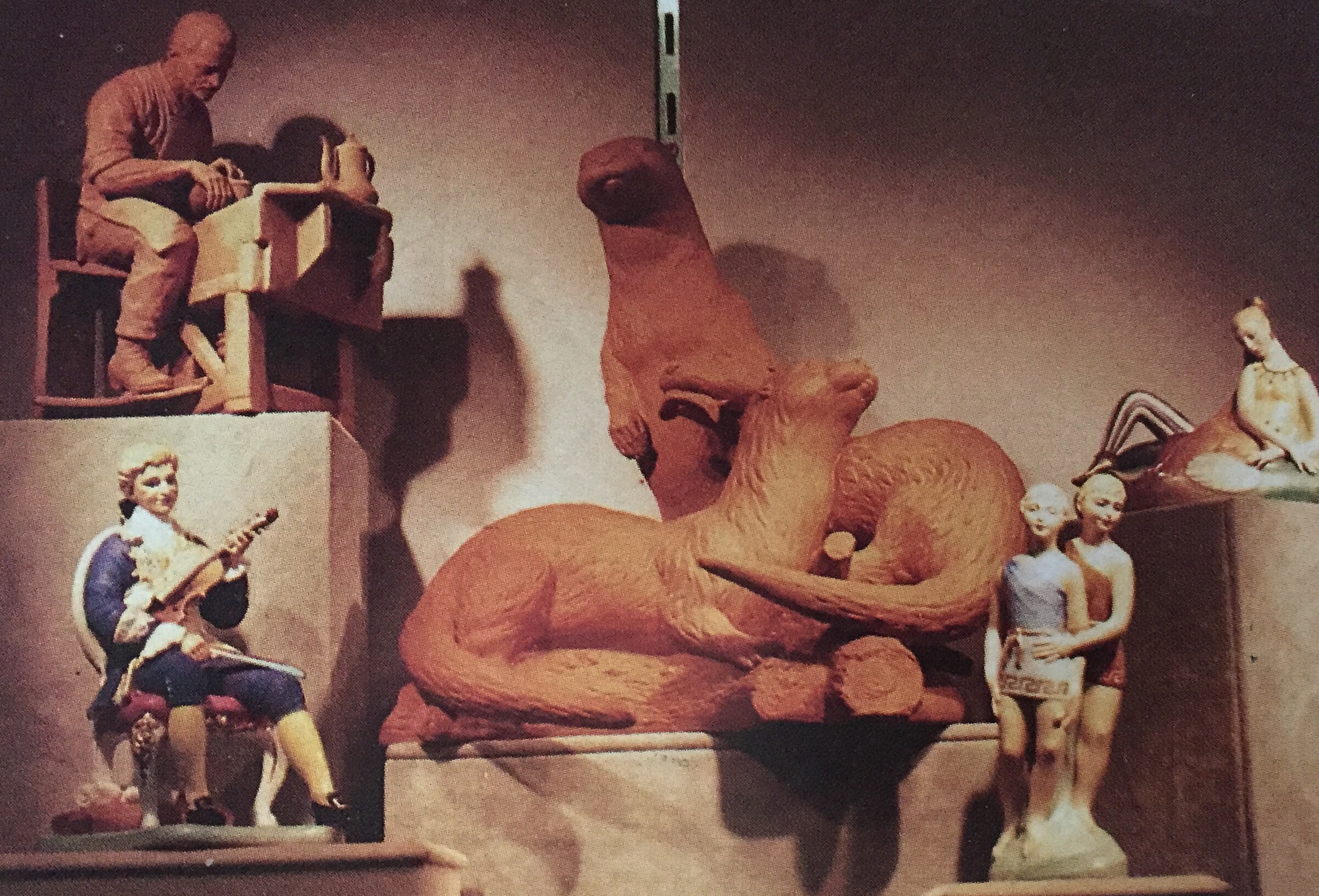
A contemporary Australian exhibition of Peggy’s independent work.

Each of these lady musicians were produced in a limited edition of 750 pieces and were produced in a matt finish, popular at the time. The idea behind the series being that over the years an 18th Century orchestra could be built up. 

  
The Leader.

Typical of Peggy we can still recognise today the results of her painstaking research and technical expertise we associate with her work.

  
Lady Musicians HN 2795, 2798 & 2796.

Again typical of Peggy is that she decided to introduce her own figure The Leader to accompany this series under her own name to satisfy collectors’ requests. During the 18th Century it would have been more usual to have a leader rather than a conductor. 

The story of Royal Doulton’s Miss Sketch (1923).


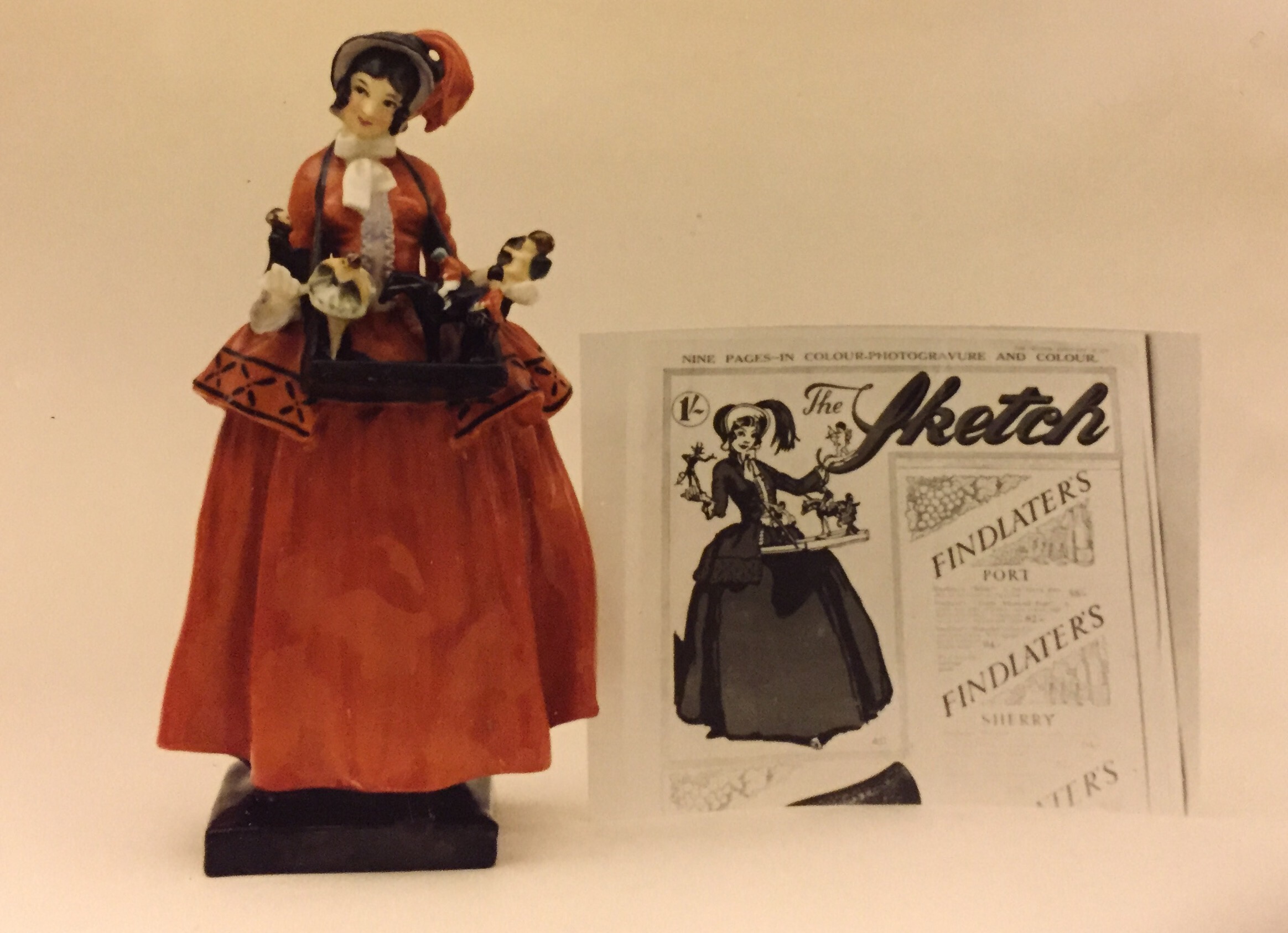
This wonderfully detailed figure was commissioned by The Sketch magazine and consequently has no HN number or official title to her base as she was simply made for advertising purposes and not for sale to the general public. In the early years of the HN collection several advertising and publishing houses commissioned Doulton figures to advertise their products including The Perfect Pair HN581, which celebrates the amalgamation of Eve magazine and The Tatler from 1923 and another famous figure the Standing Beefeeter, which carries no official name or HN number, and who was made to advertise The Illustrated London News in 1924.

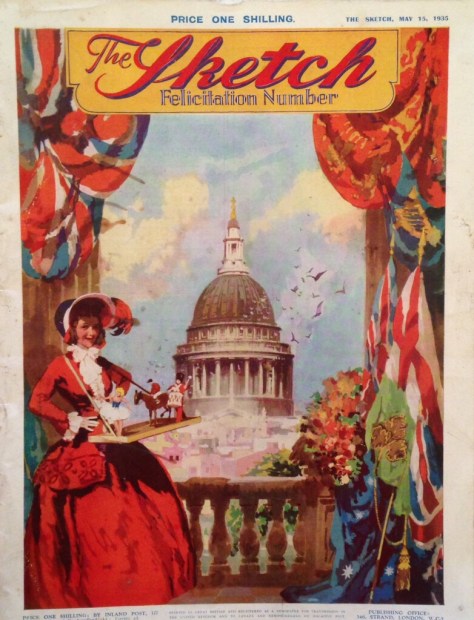
The figure of Miss Sketch appeared on the front of the magazine and Doulton’s study is a very faithful copy of this peddler lady. In her tray she carries miniature figures representing the subjects covered by the publication: a ballerina for the theatre: a jockey for sport: a cupid for love stories: a soldier for current affairs and a devil who represents devilish satire.

A letter has been discovered preserved inside of one of these rare figures. The letter from the Sketch magazine is dated 1927 and was sent presenting the winner of the magazine’s cross- word with their figurine as a prize. What a wonderful treat?

Royal Doulton’s tribute to the Elizabethan explorer Sir Walter Raleigh.

The name Sir Walter Raleigh will forever be associated with Elizabeth I and the first Elizabethan era when great fame and fortune came readily to England’s Virgin Queen. It was a time of great discoveries and of worldliness that Sir Walter contributed to.


Sir Walter Raleigh HN 1751.

Sir Walter Raleigh – poet, writer, soldier, courtier and explorer – is today recognised as one of the 100 most important people in England’s history.


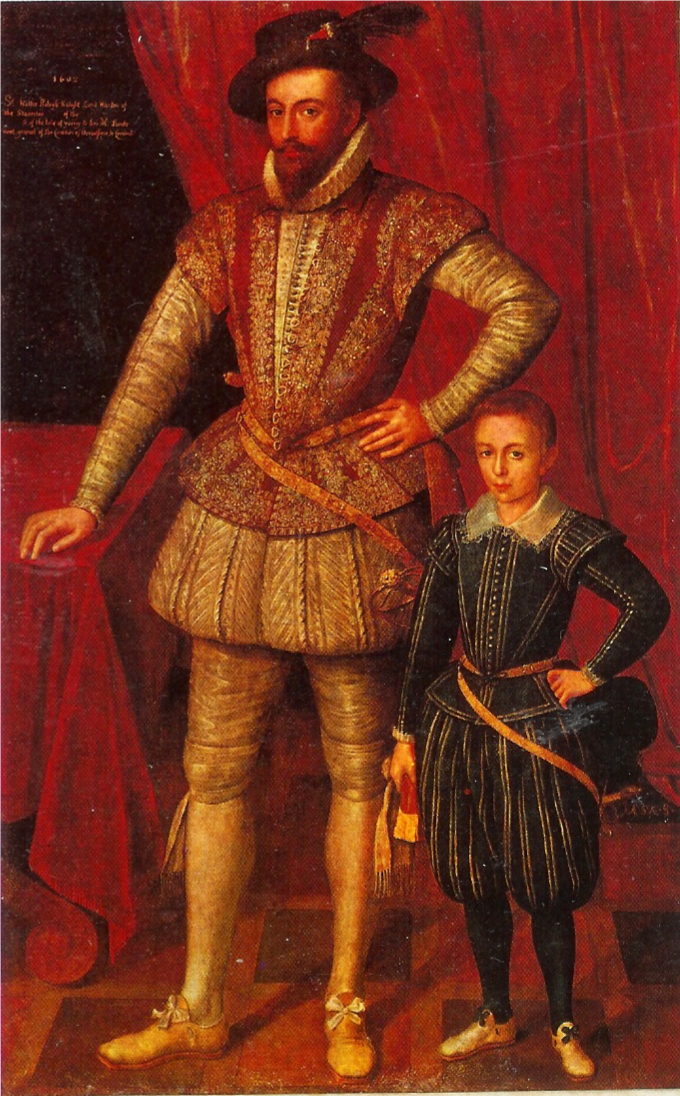
A portrait of Raleigh with his son in a similar pose to the Doulton figure.

Hailing from Devon, he was a favourite of Elizabeth I at one time and was knighted by her in 1585. He was instrumental in the colonisation of North America and his explorations to Virginia paved the way for future English settlements there.


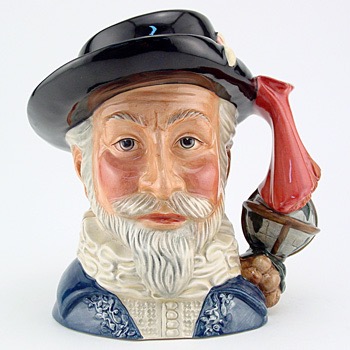
One of Doulton’s famous character hugs to the great man.


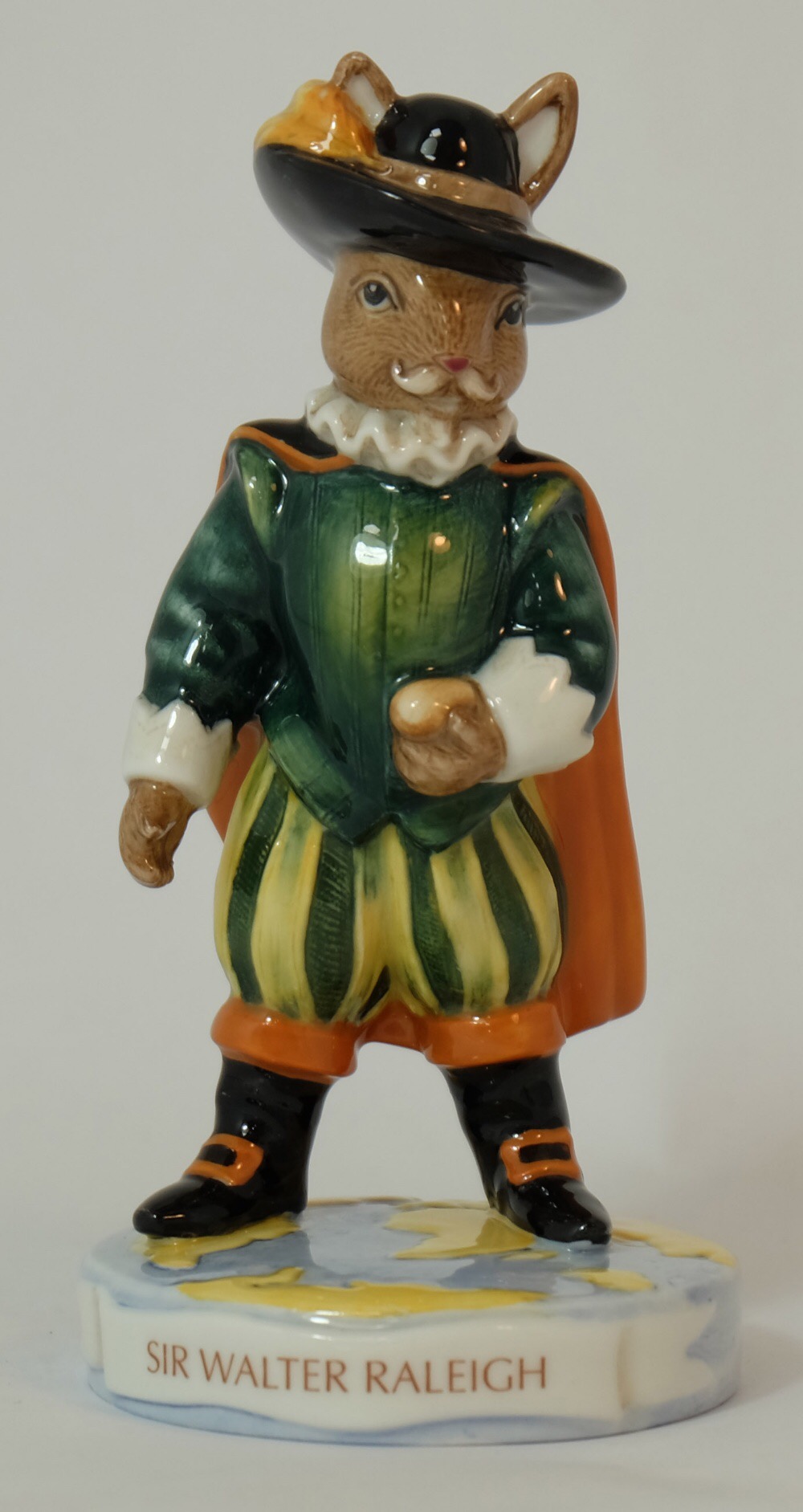
There has even been a Doulton Bunnykins made of Raleigh.

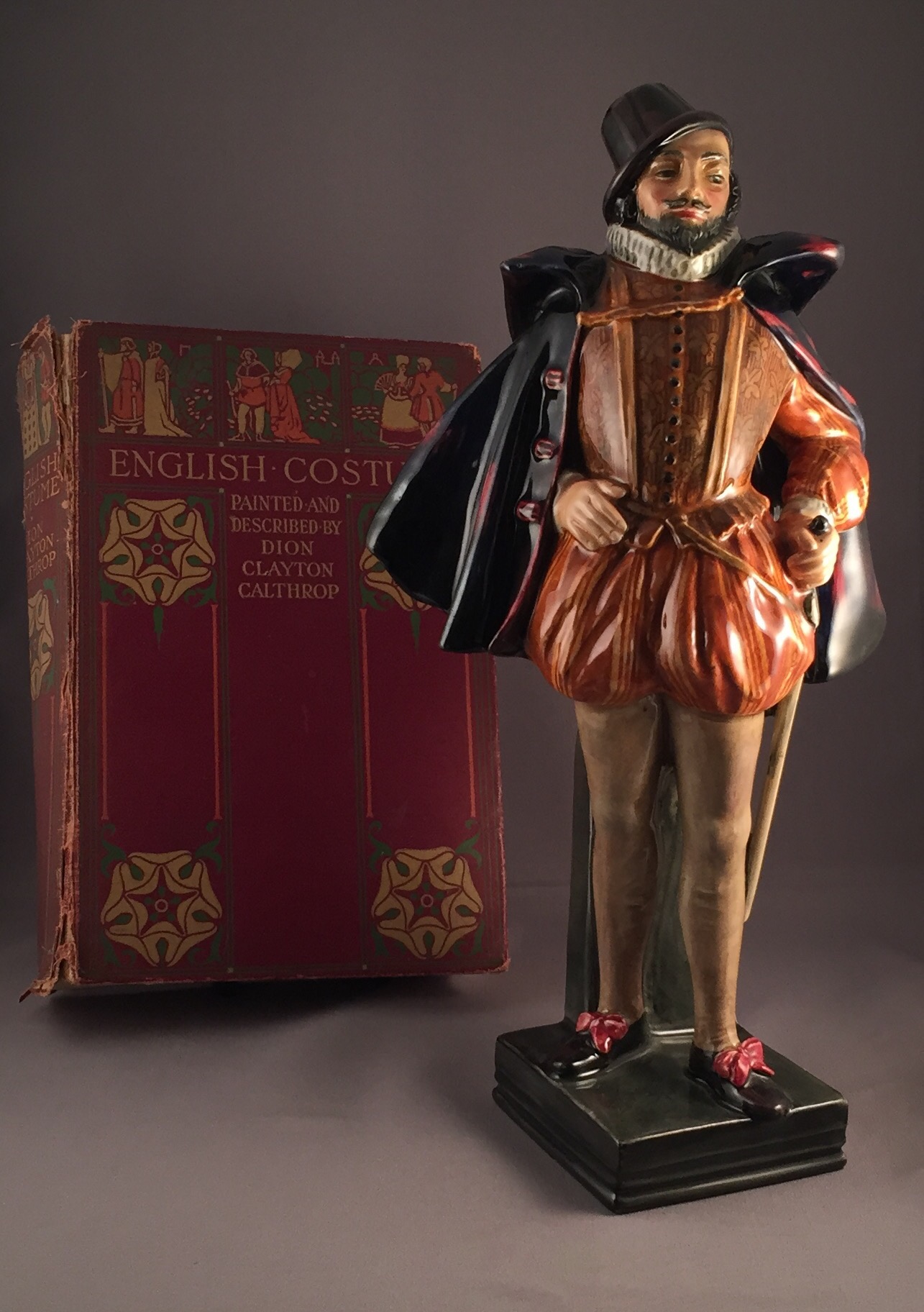
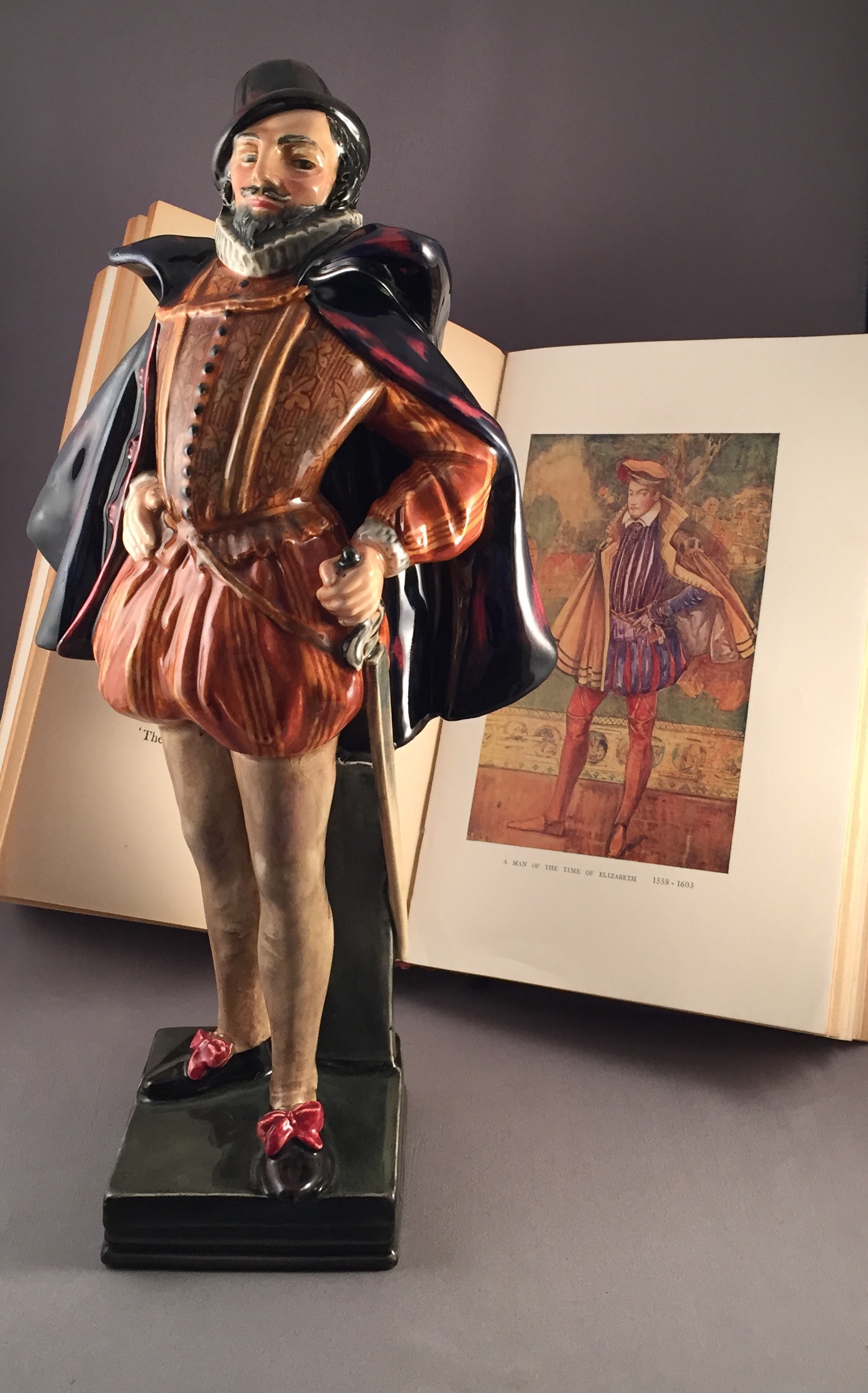
Whilst his story is a famous one, inspiration for this true to life study of him by Royal Doulton derives from a popular source of early Doulton figures, Dion Clayton Calthrop’s book on English Costume from the early 20th Century. He appears to have been modelled on the illustration shown with minor changes including the ruff around his neck.

HN 1751 and one of Calthrop’s illustrations.