Category Archives: Figure inspiration

An interesting Doulton prototype and the story behind it.

Whilst pictures and adverts provided much inspiration for Doulton’s modellers, real life and sometimes family life also played a role in inspiring them.

/home/wpcom/public_html/wp-content/blogs.dir/574/66790219/files/2014/12/img_1070.jpg
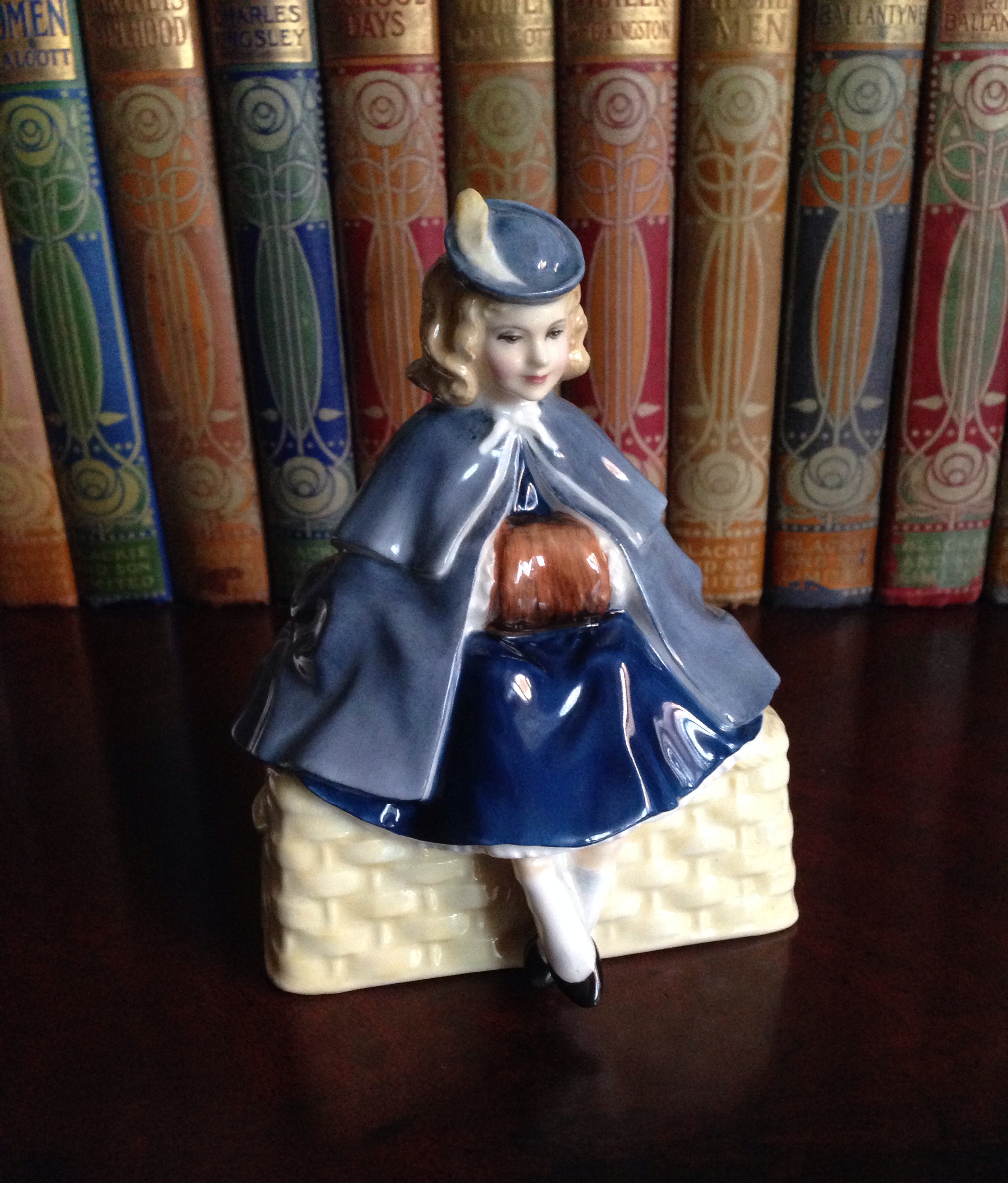
This delightful prototype of a girl by Peggy Davies has cropped up a handful of times and I understand that she is a childhood representation of an aunt who as a child was sent to Canada for adoption, but who was ultimately and happily returned to the family to care for. This is how Peggy saw her waiting to board the boat to Canada, dressed in her best and with her trunk.

The inspiration for Harradine’s figures In The Stocks and Tildy!

As you’ll be aware a particular interest of mine is tracking down the inspiration of figures, particularly early ones and more particularly those of Leslie Harradine, Royal Doulton’s genius sculptor.

IMG_0936.JPG

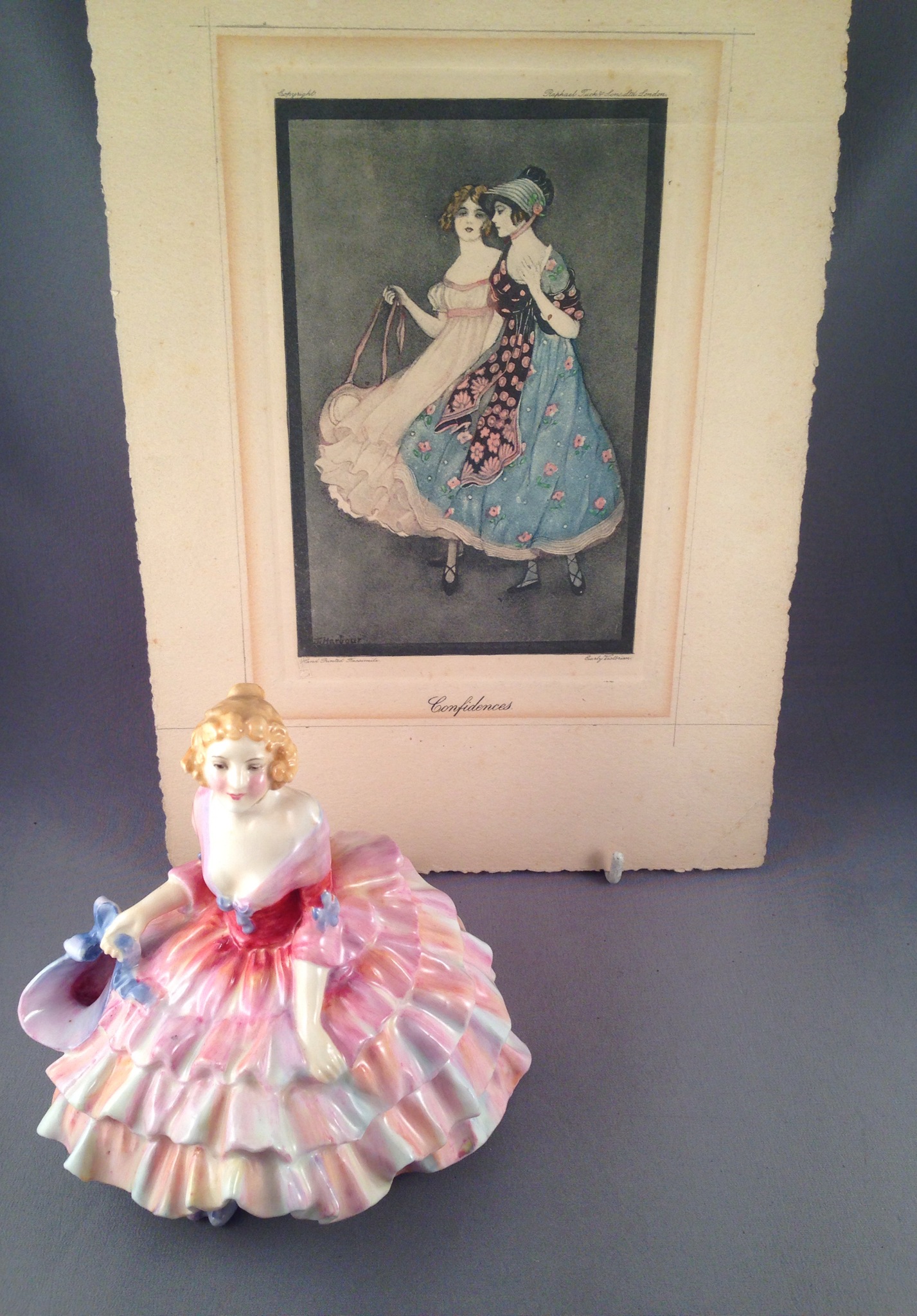
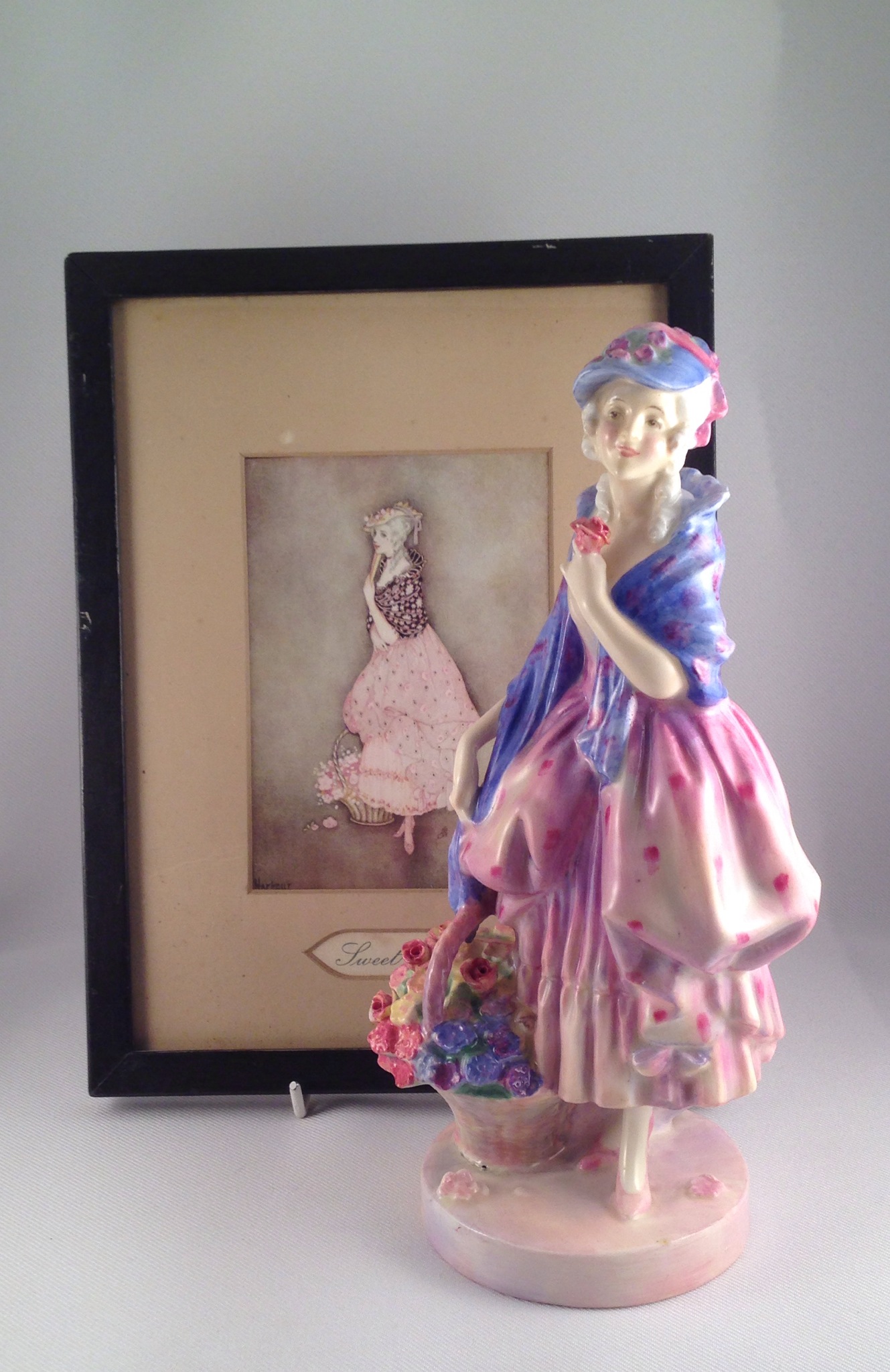
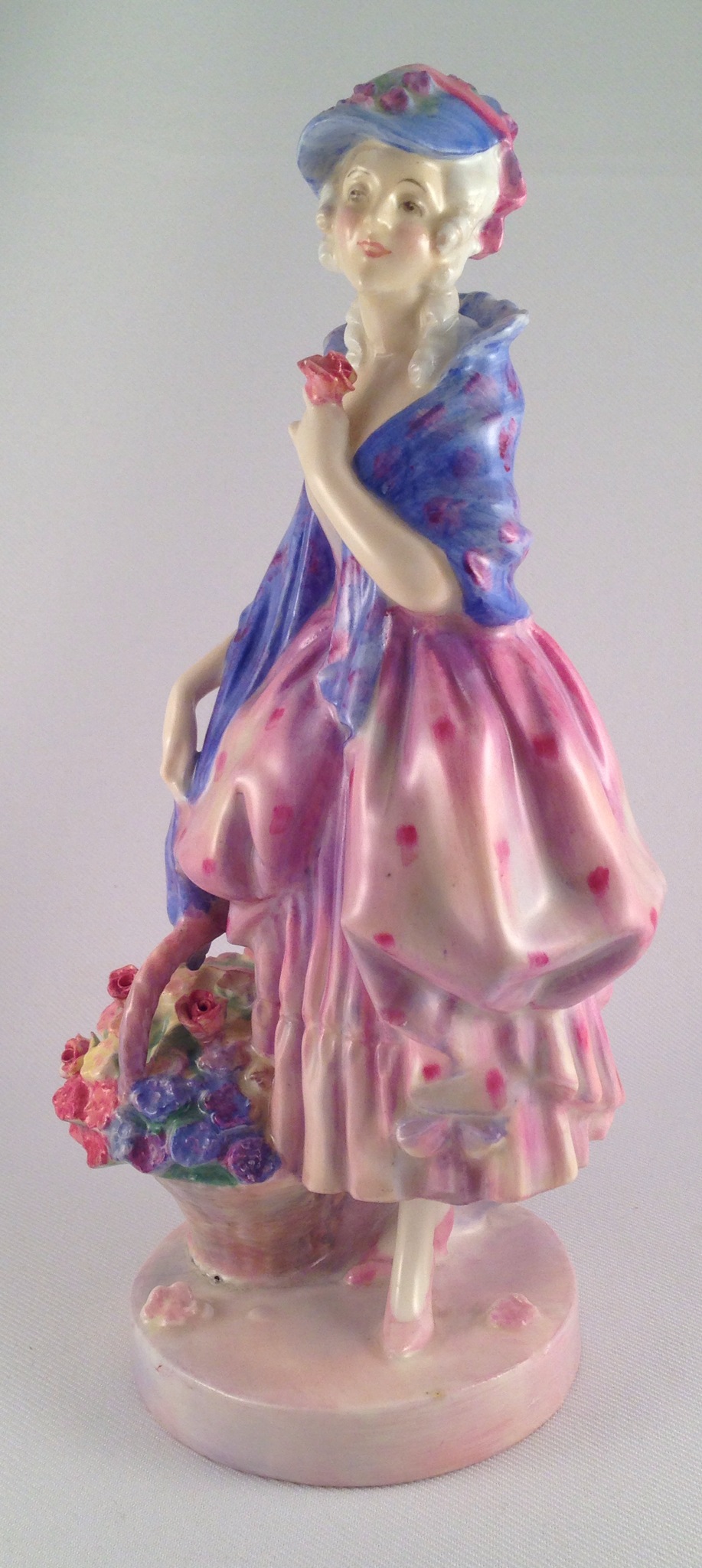
Above you can see Tildy HN1576 together with her inspiration drawn by Jennie Harbour who provided many such ladies for Harradine; whether she was aware of this is unknown. (The Doulton lady is taken from the lady on the left.) Yet, Doulton did have some agreement with Raphael Tuck the publisher of these Jennie Harbour pictures, although correspondence between the two firms that exists only refers to pictures by Stanislaus Longley and Molly Benetar.

IMG_0938-0.JPG
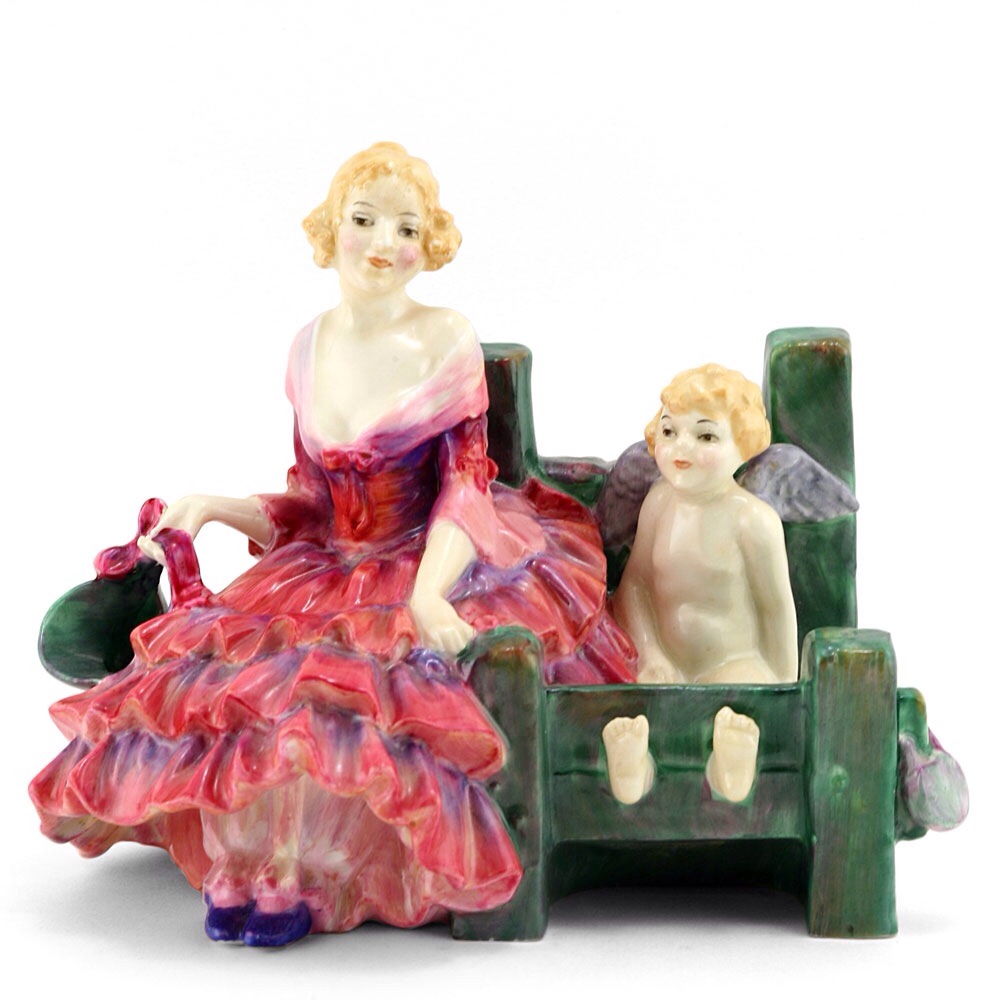
Here you can also see Harradine’s In the Stocks HN1474 who would be adapted to become Tildy.

IMG_0937.JPG
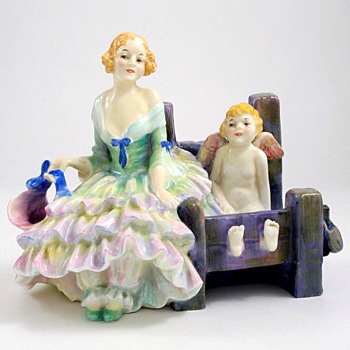
And here is HN1475 the other colourway of In the Stocks. Both versions of this lady taken from the Harbour picture are very rare today and so both had limited production, even more limited than is suggested in the figure book. In the Stocks was introduced in 1931 and Tildy in 1933, suggesting the former had been deleted by then. Tildy it is recorded, was withdrawn in 1939, but by 1939 would be a more accurate description as I have never seen a later 1930’s dated example. Perhaps someone out there has?

The WMODA exhibition ‘A flair for fashion’.

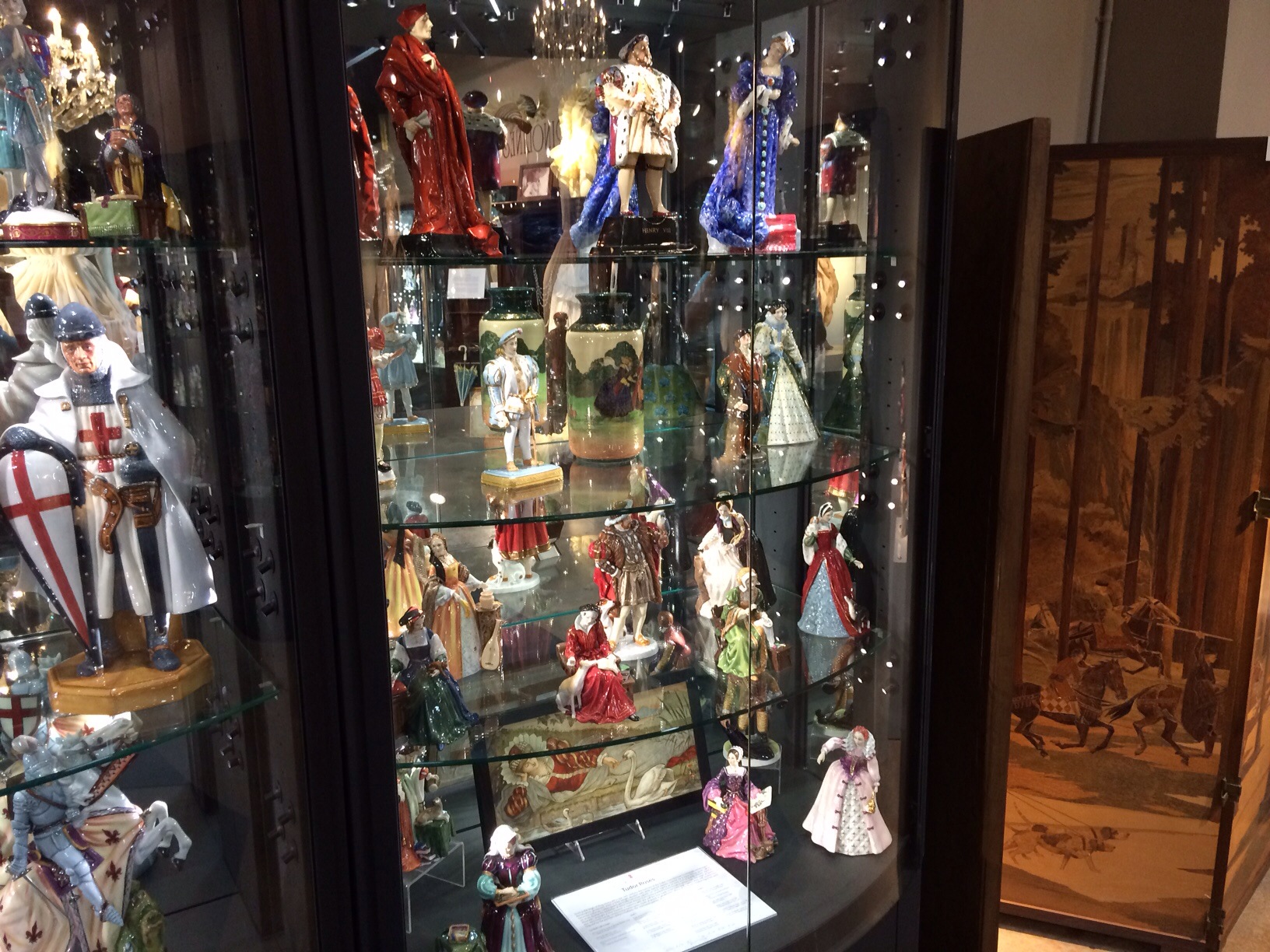
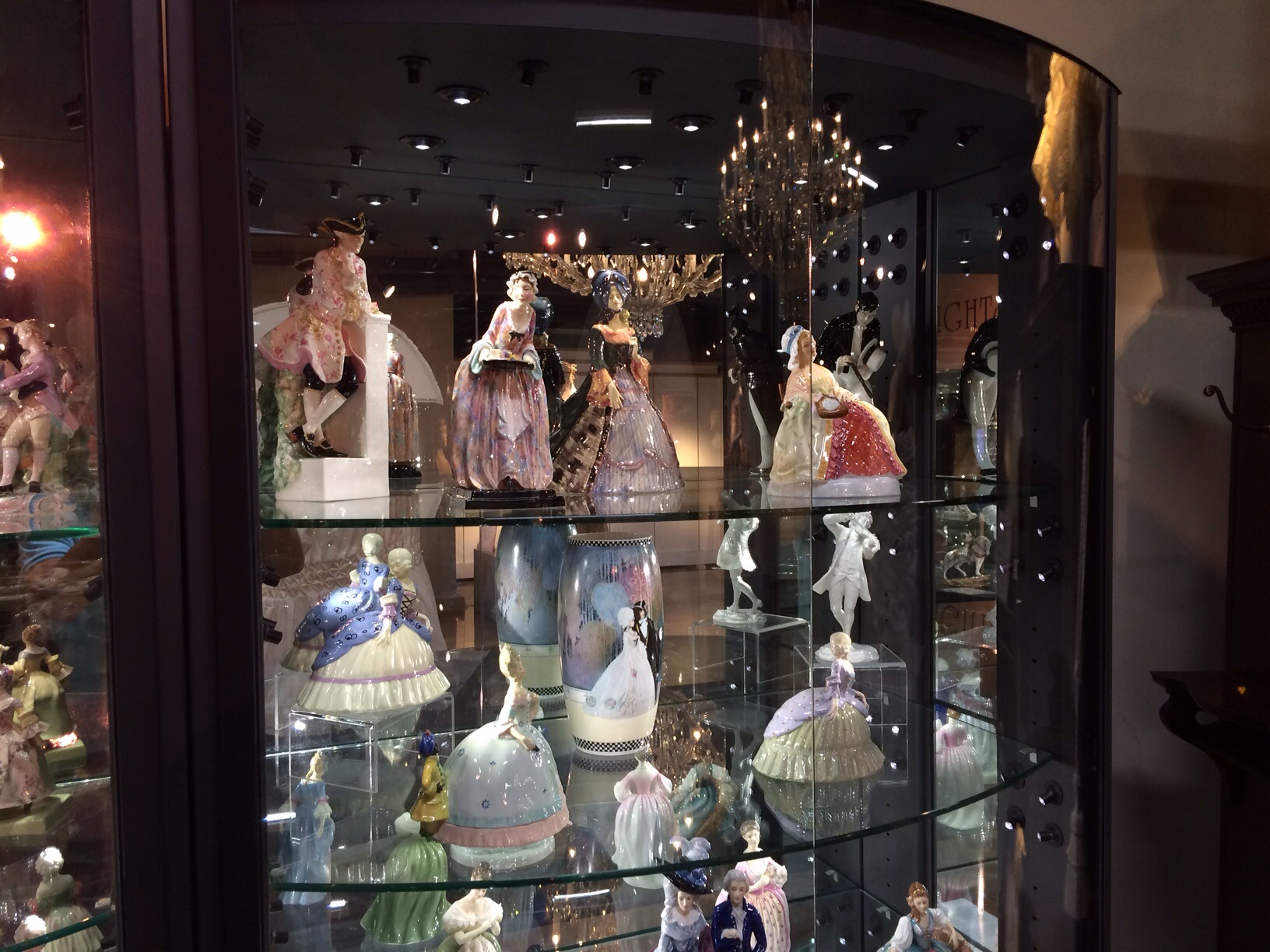
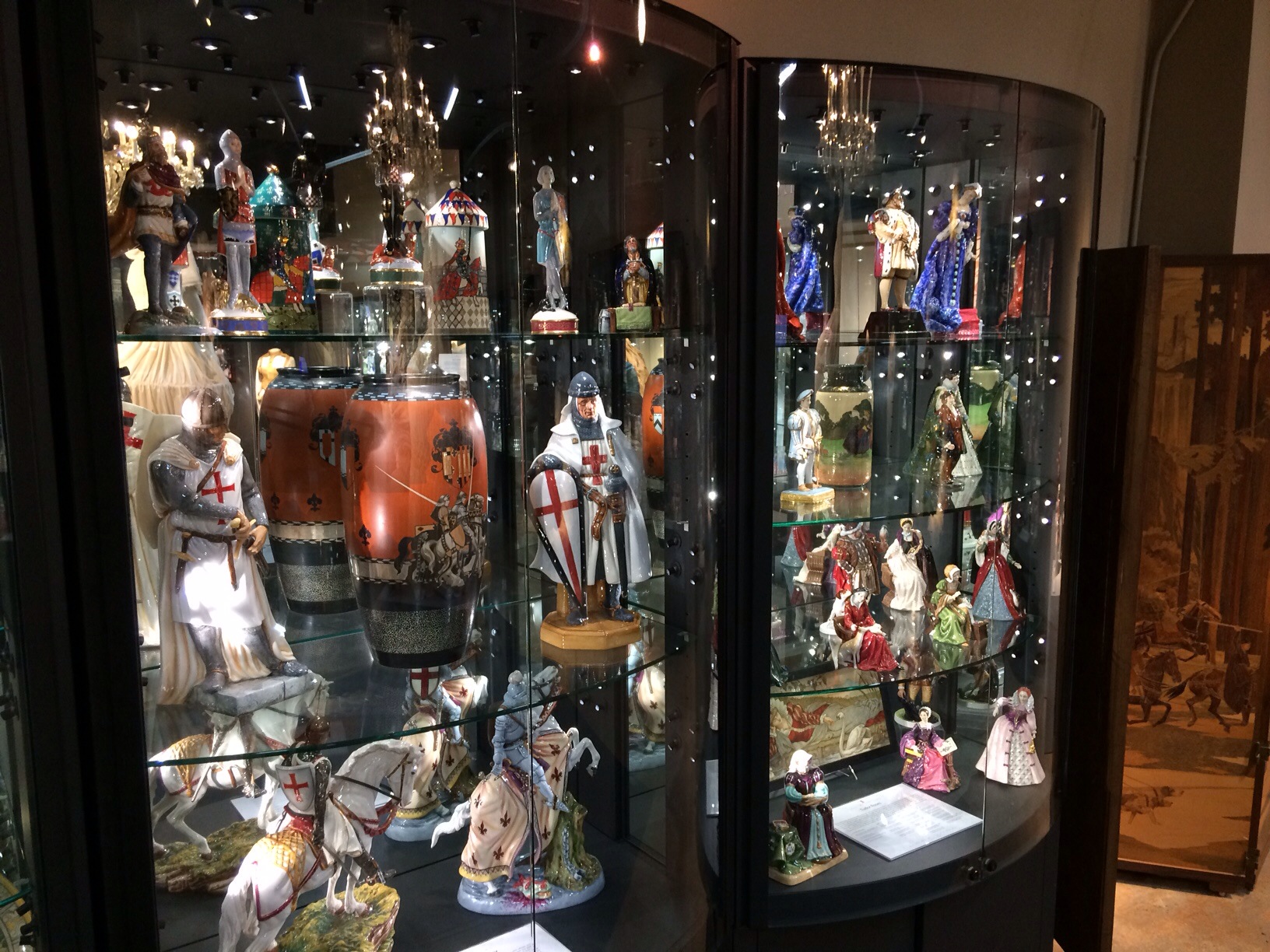
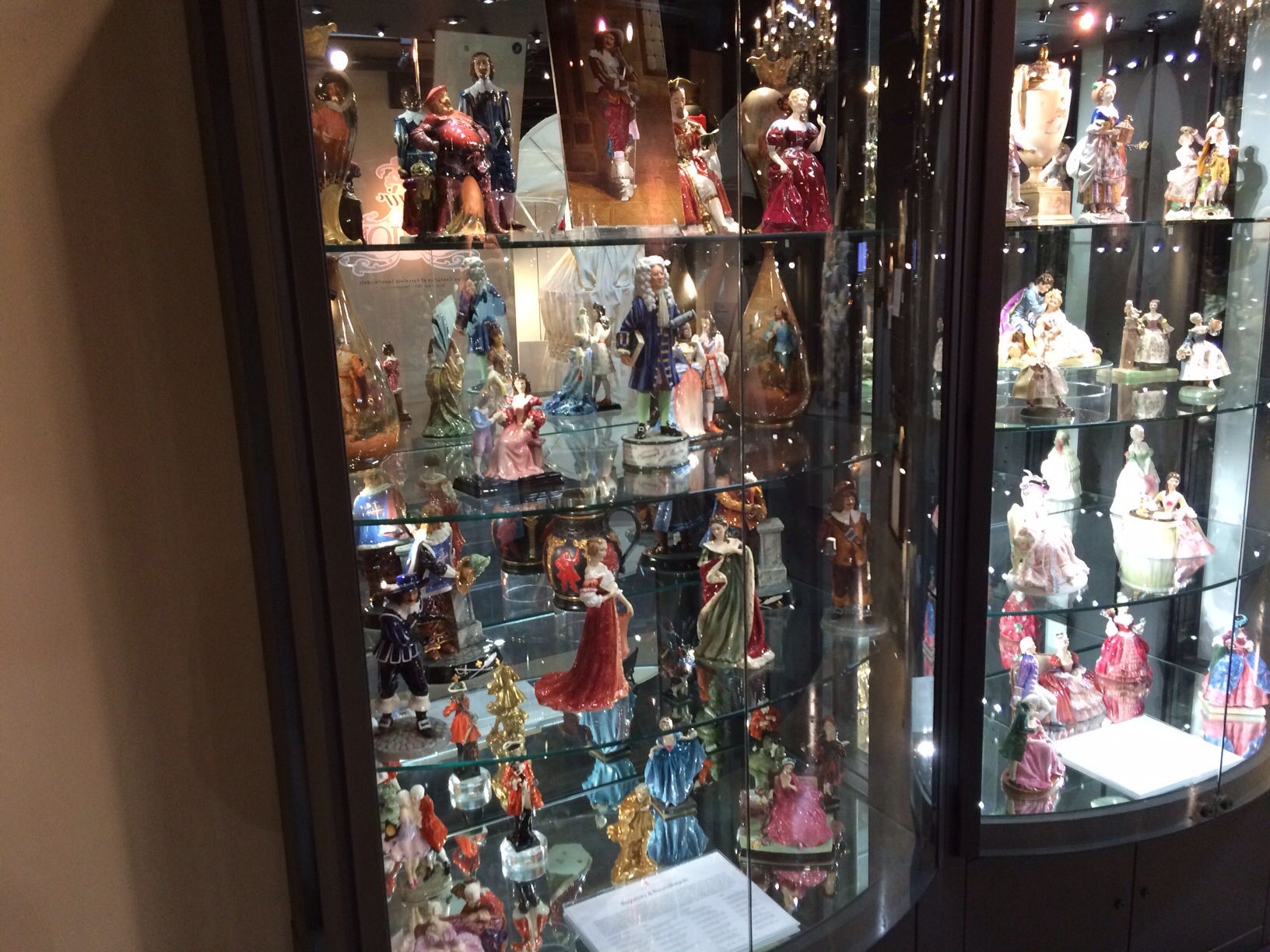
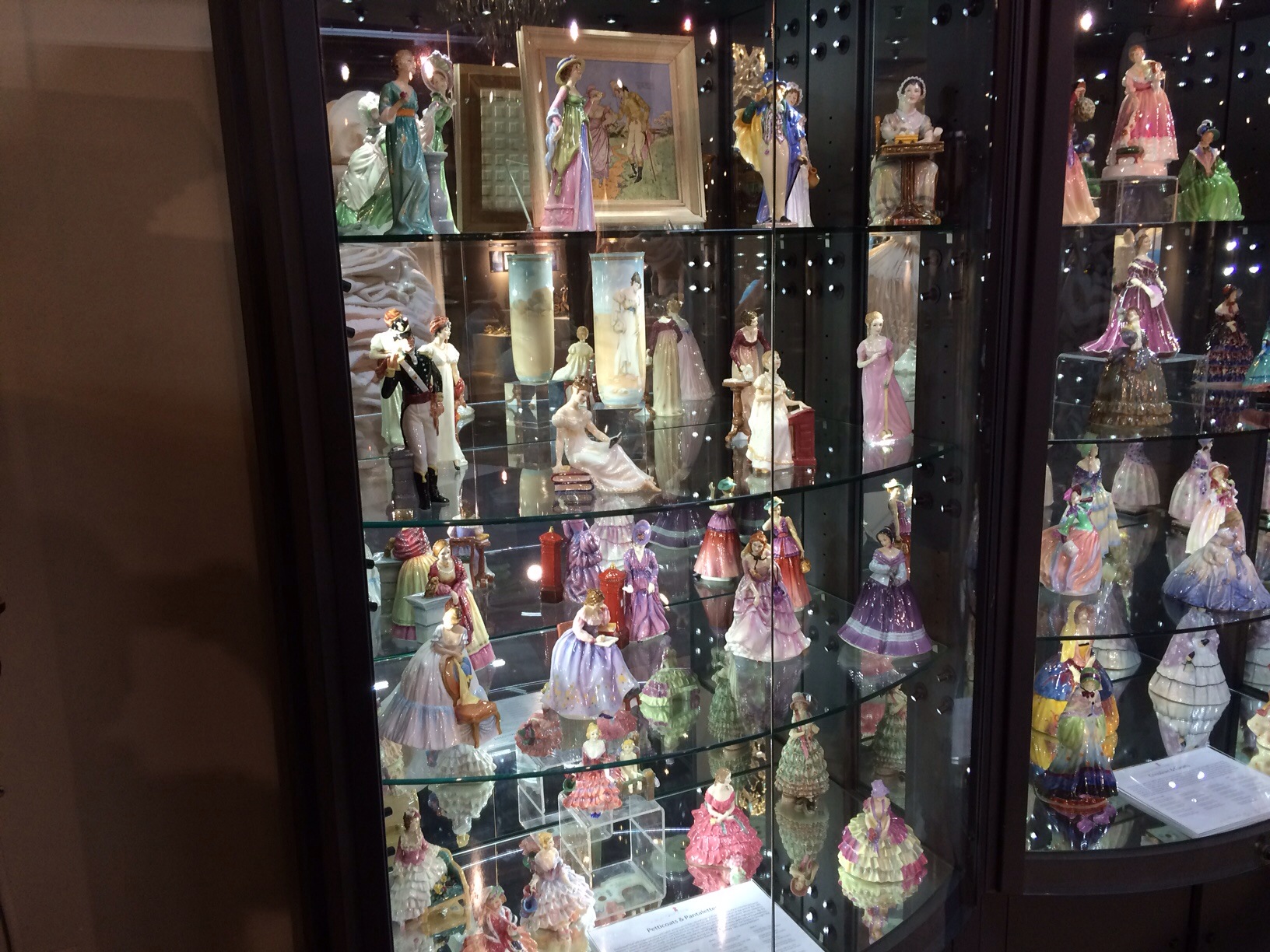
I’ve just had some extra pictures of the current exhibition at the WMODA housed at the Gallery of Amazing Things that I thought would interest us all!
The sheer breadth of exhibits is to be marvelled but for me it is the massive array of Doulton wares that interests me most!
Here are a few pictures of the figures currently on display as part of the Flair for Fashion exhibition! Enjoy!!

For further information visit –

http://galleryamazing.com
and

Home

IMG_5703.JPG

IMG_5699.JPG

IMG_5701.JPG

IMG_5700.JPG

IMG_5702.JPG

Collecting Doulton’s galloping gals!

IMG_0663.JPG

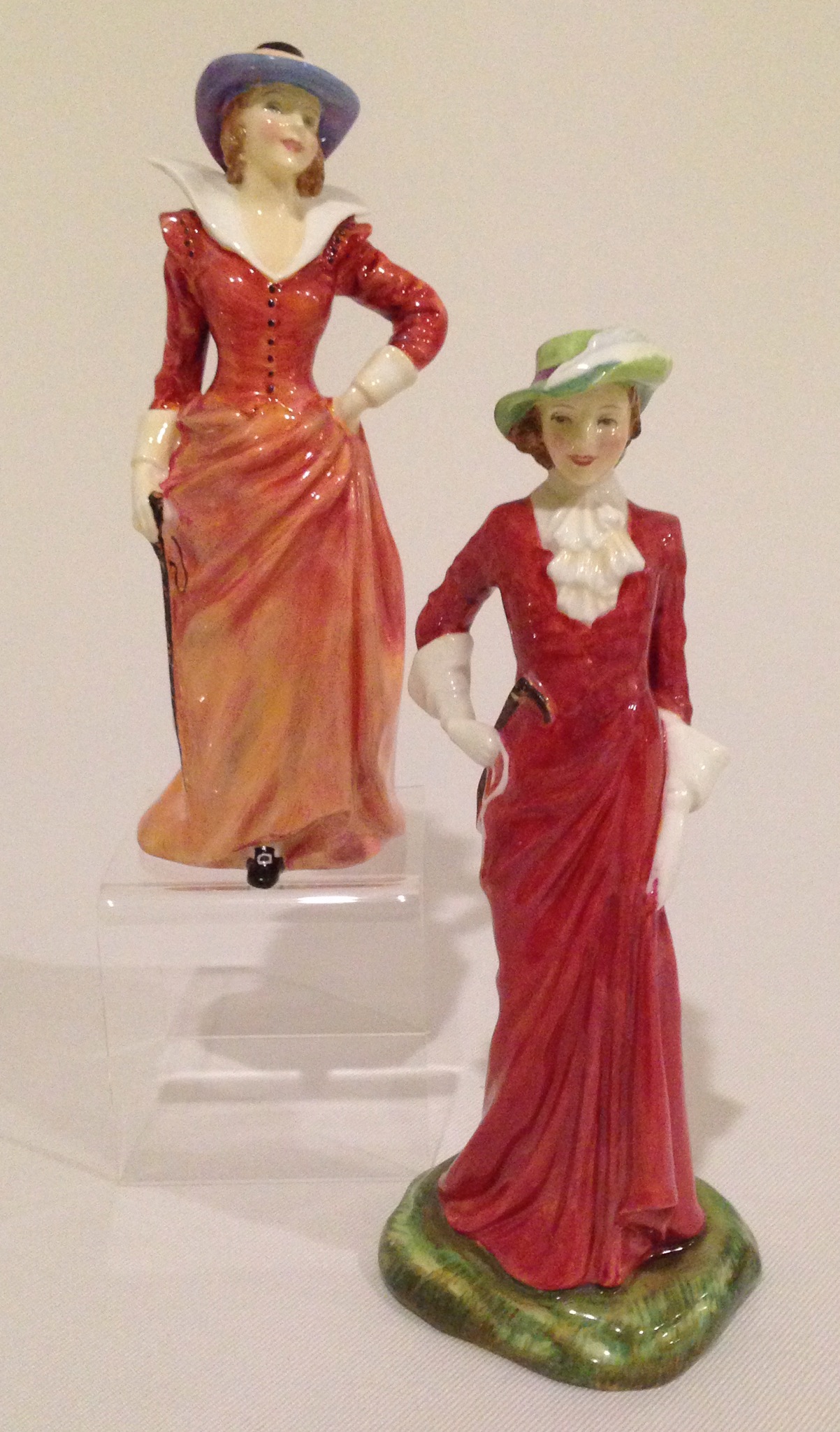
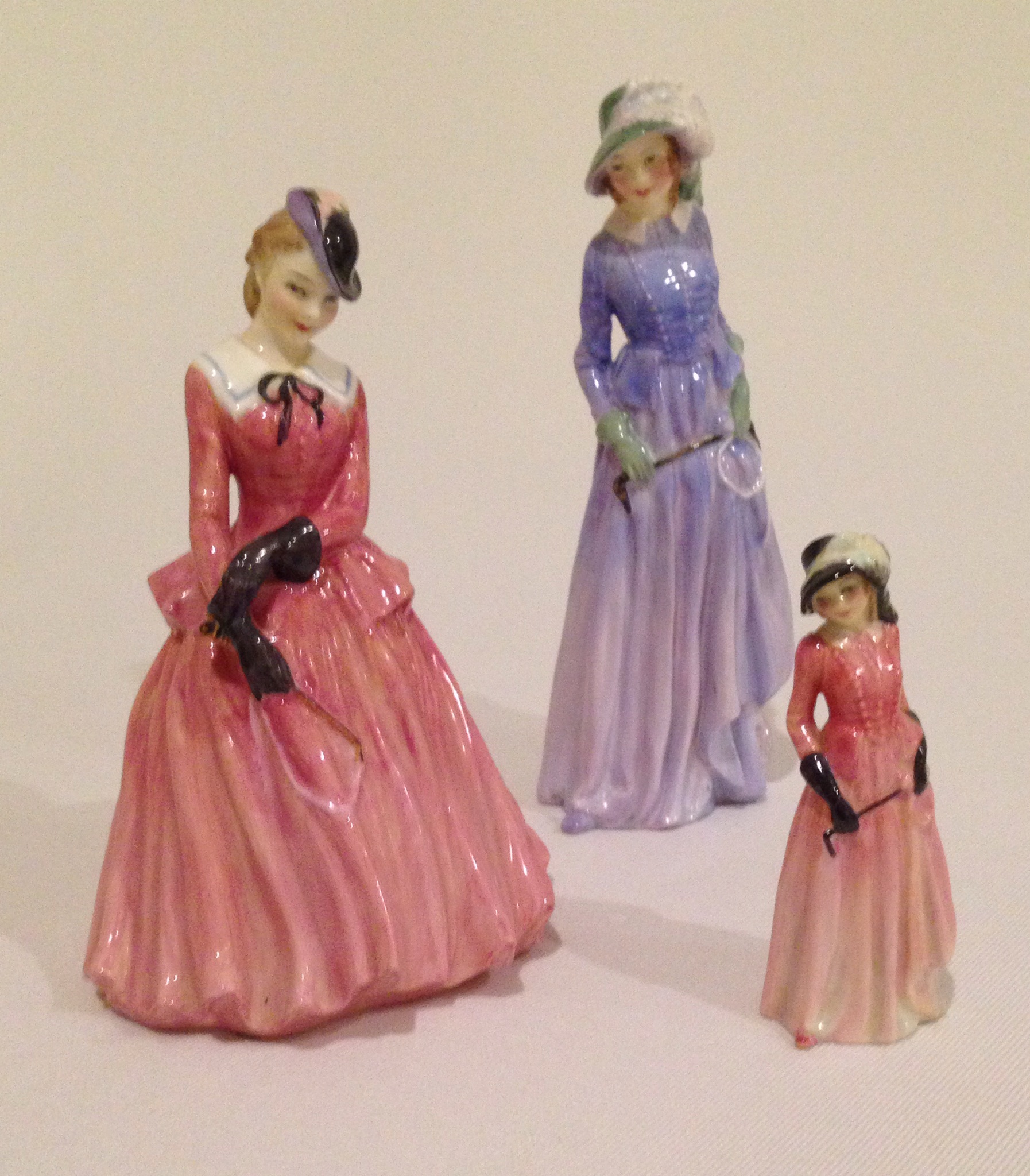
Collecting ‘themes’ is something we look at sporadically but often it is only on reflection that we – or should I say I – realise that we already have a sub-theme already in our collections. This was certainly the case with these Doulton ladies in riding costume!

IMG_0664.JPG

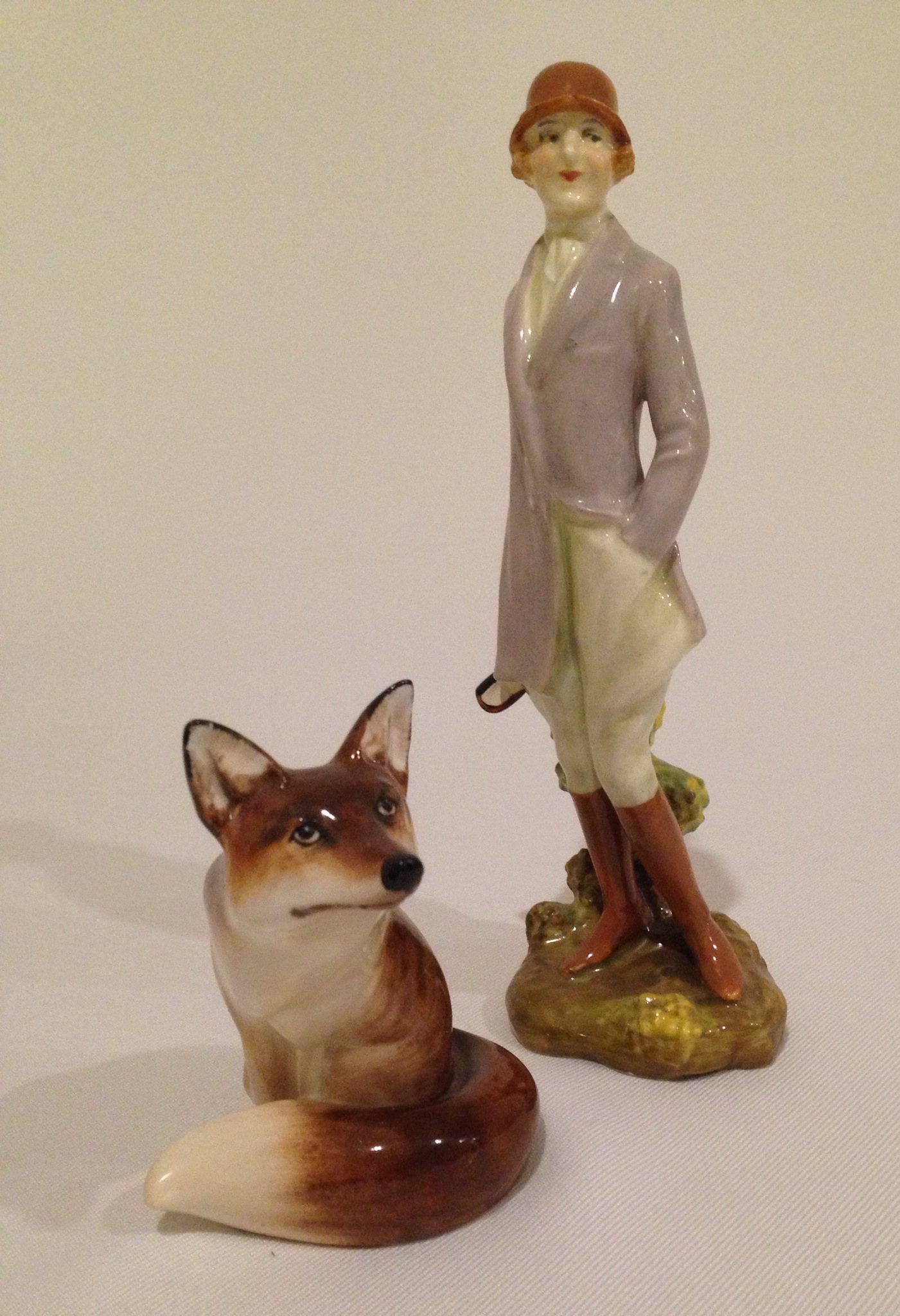
I have to admit that I don’t have them displayed as a group, but that is simply because they have been gathered over time and they’ve ‘slotted’ in as and where I can! However, I did find that I had one of my favourites, the Hunts Lady, standing ironically next to a fox!

IMG_0665.JPG

Perhaps I’ll find somewhere to have them as a group now, next time I move things around!

Doulton’s 1930’s glamour girls.

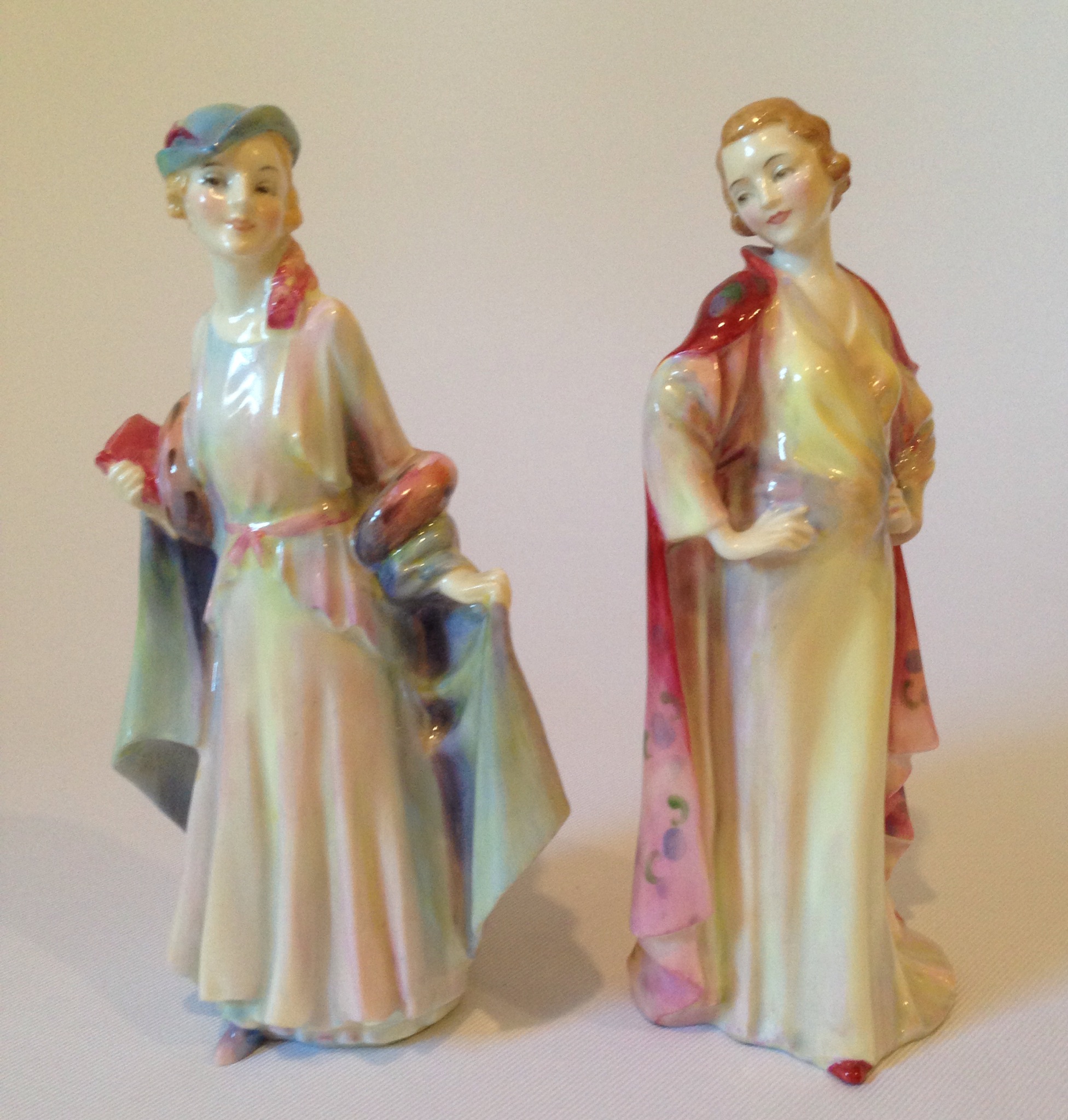
After the roaring twenties, the 1930’s developed into a decade of glamour where long, sleek lines and Hollywood glamour took over. Whilst Doulton continued to produced the Victorian style ladies, characters and child studies so favoured by collectors, there were a distinct group of glamour girls which were introduced as a nod to this change in style.
IMG_0586.JPG

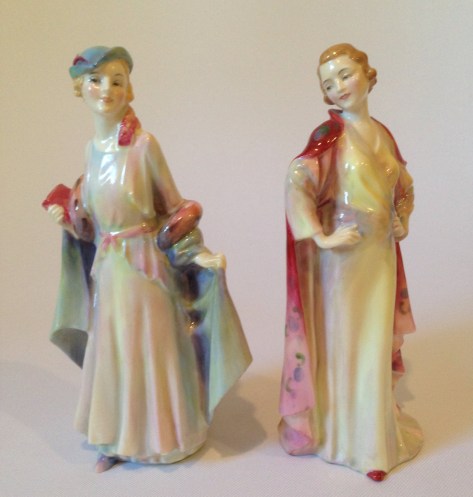
Two of the first introduced, also happen to be two favourites of mine – Clothilde and Gloria, who appear to have stepped straight out if the pages of a glossy fashion magazine.

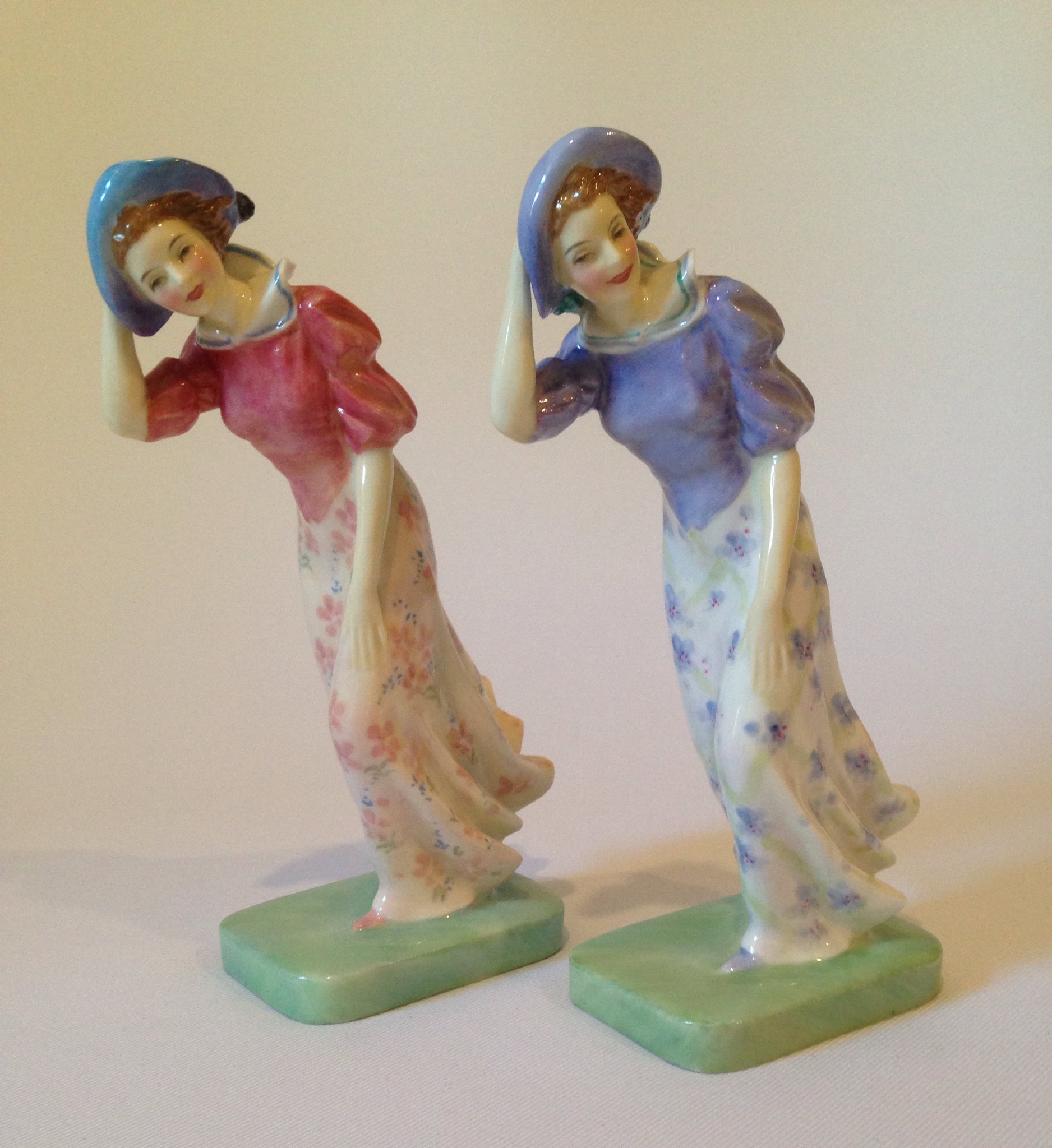
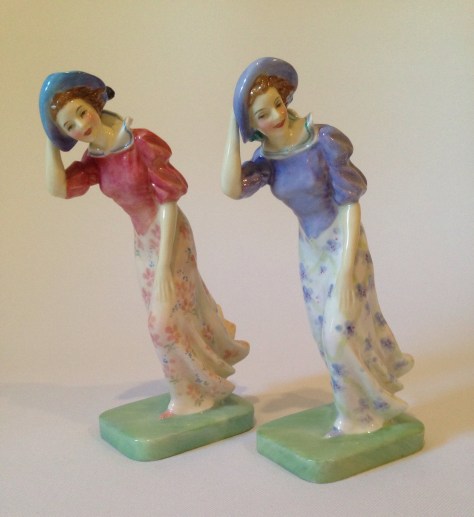
Hats have always been a popular theme for collectors, so it is no surprise to see Windflower here with her contemporary brimmed hat.
IMG_0589.JPG

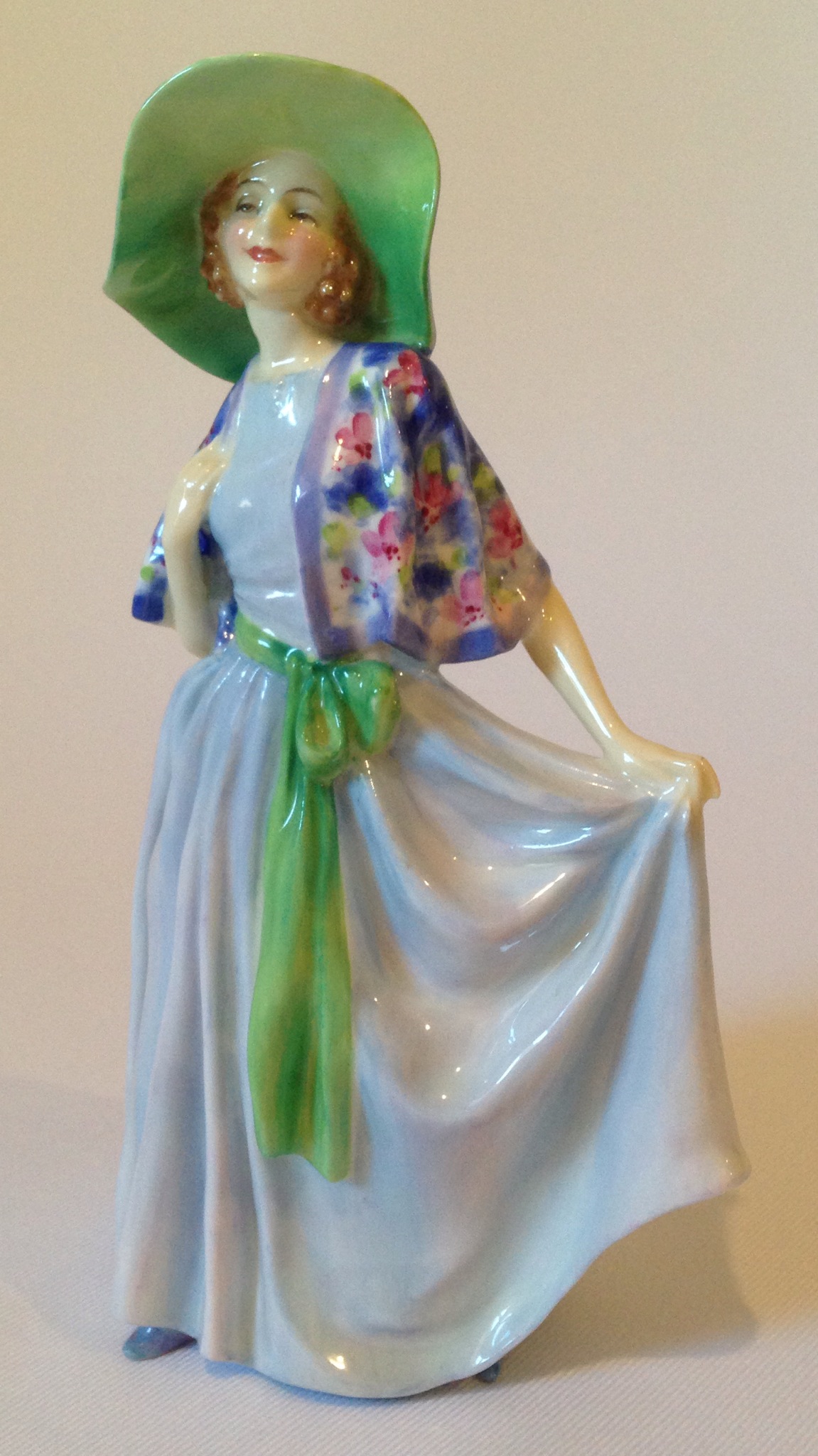
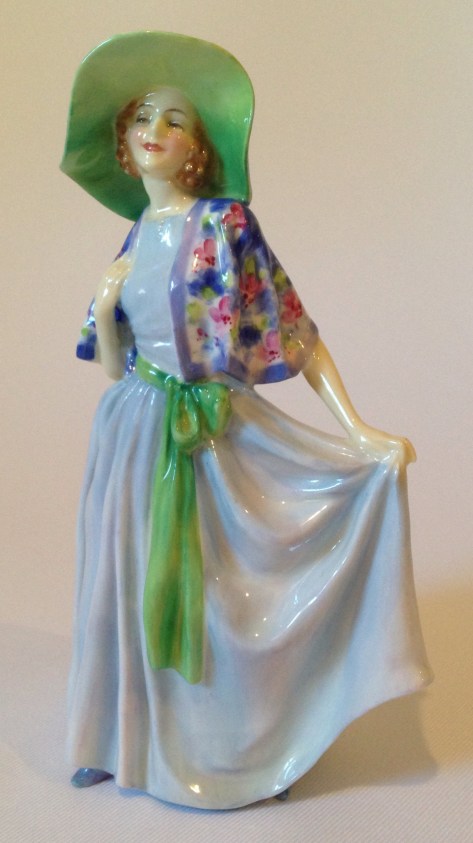
Another hat girl is Nadine, who could be promenading along a boardwalk in the evening sun, lapping up attention from her would-be admirers.
IMG_0585.JPG

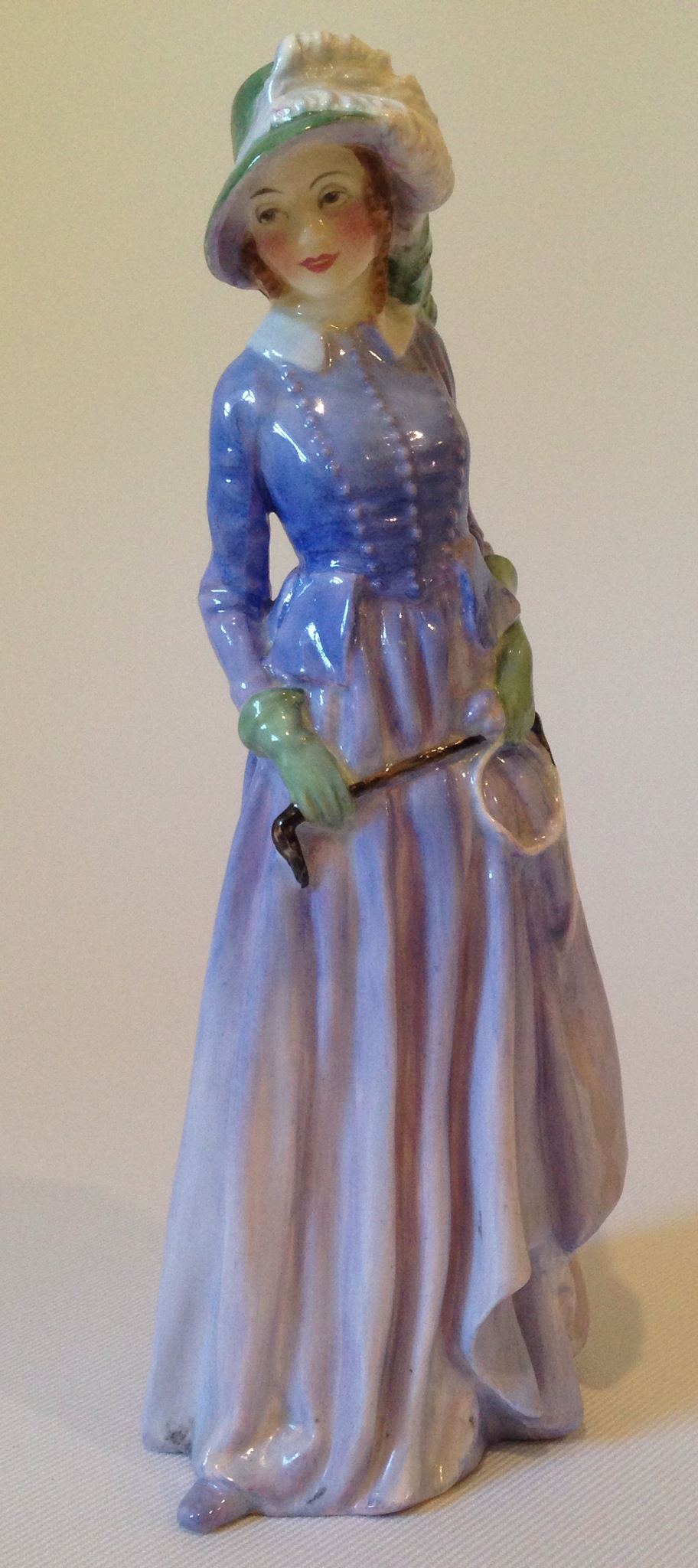
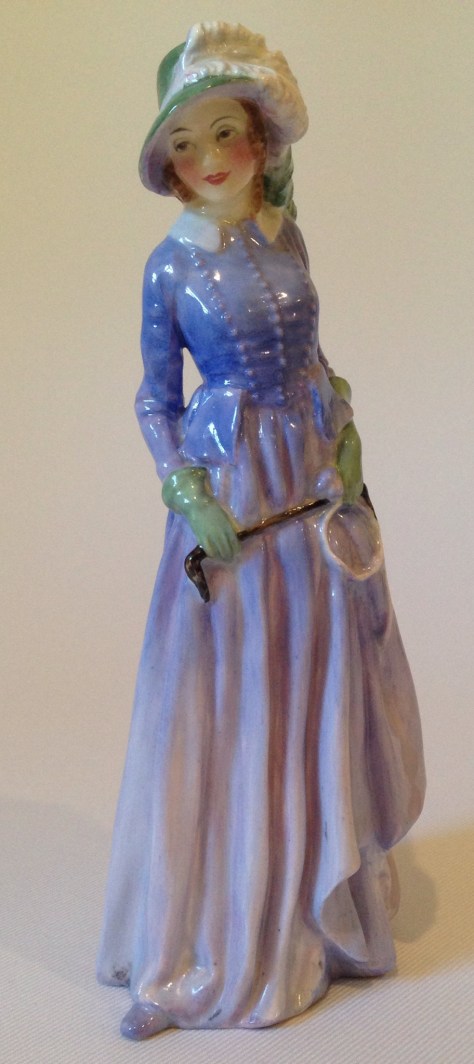
Still other ladies seem to represent popular sports such as the stylish Maureen with her riding crop.
IMG_0587.JPG

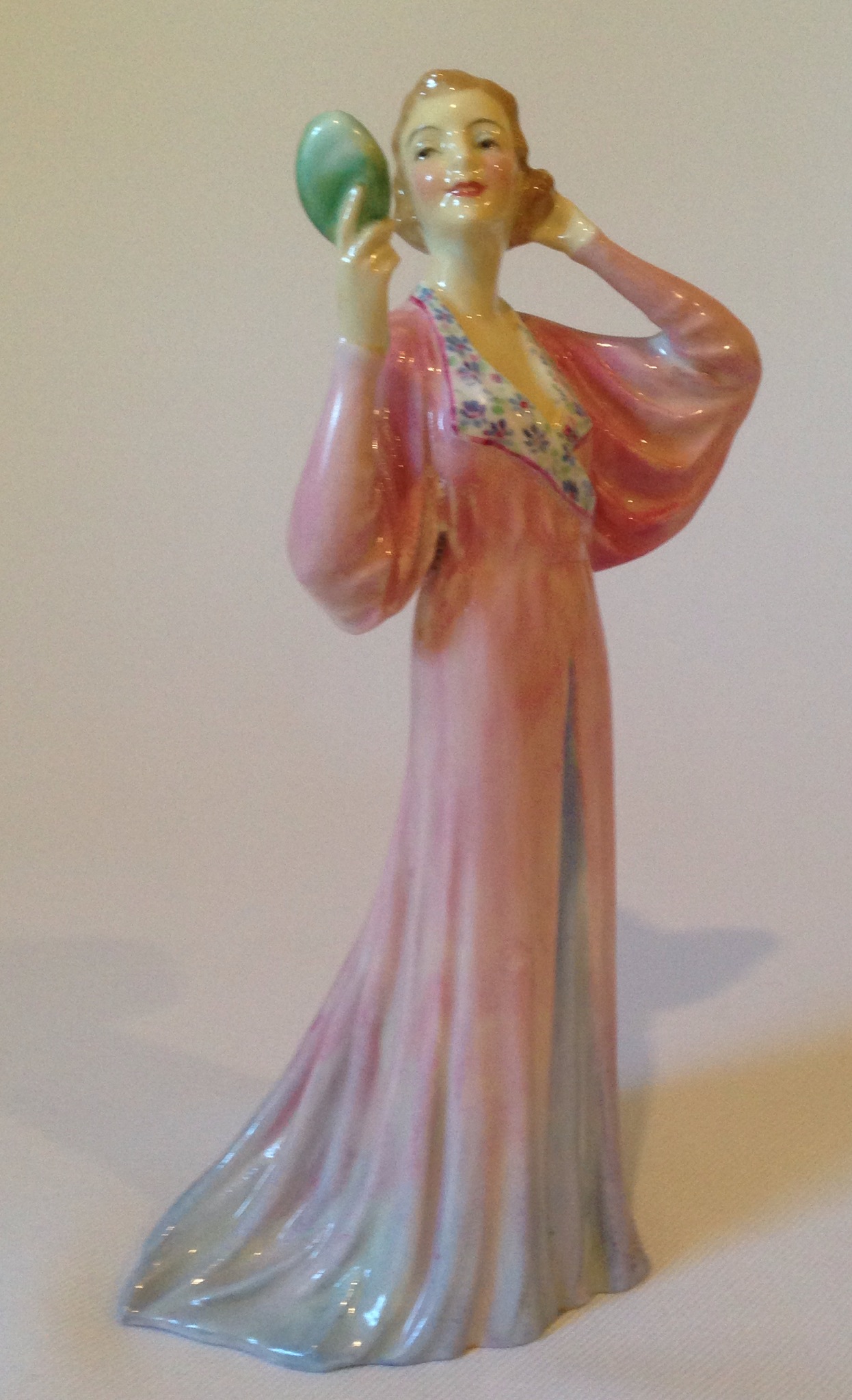
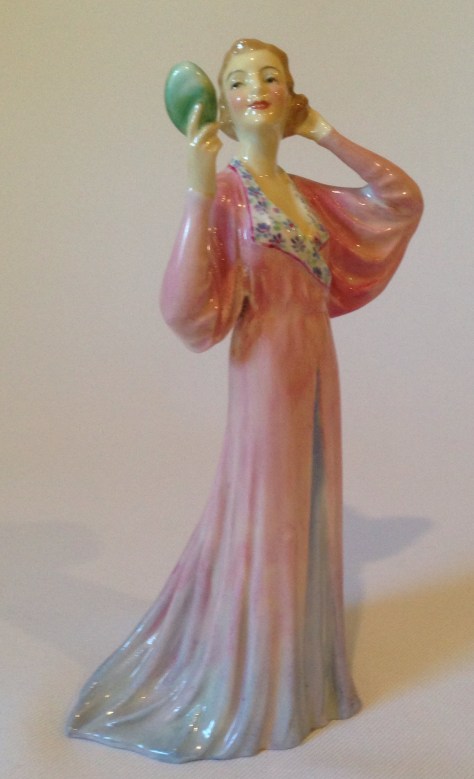
Another favourite figure of mine is this, The Mirror, with her chic dressing gown, admiring her reflection in her mirror. She is such a delicate figure it is not hard to see why so few have survived.
IMG_0584.JPG

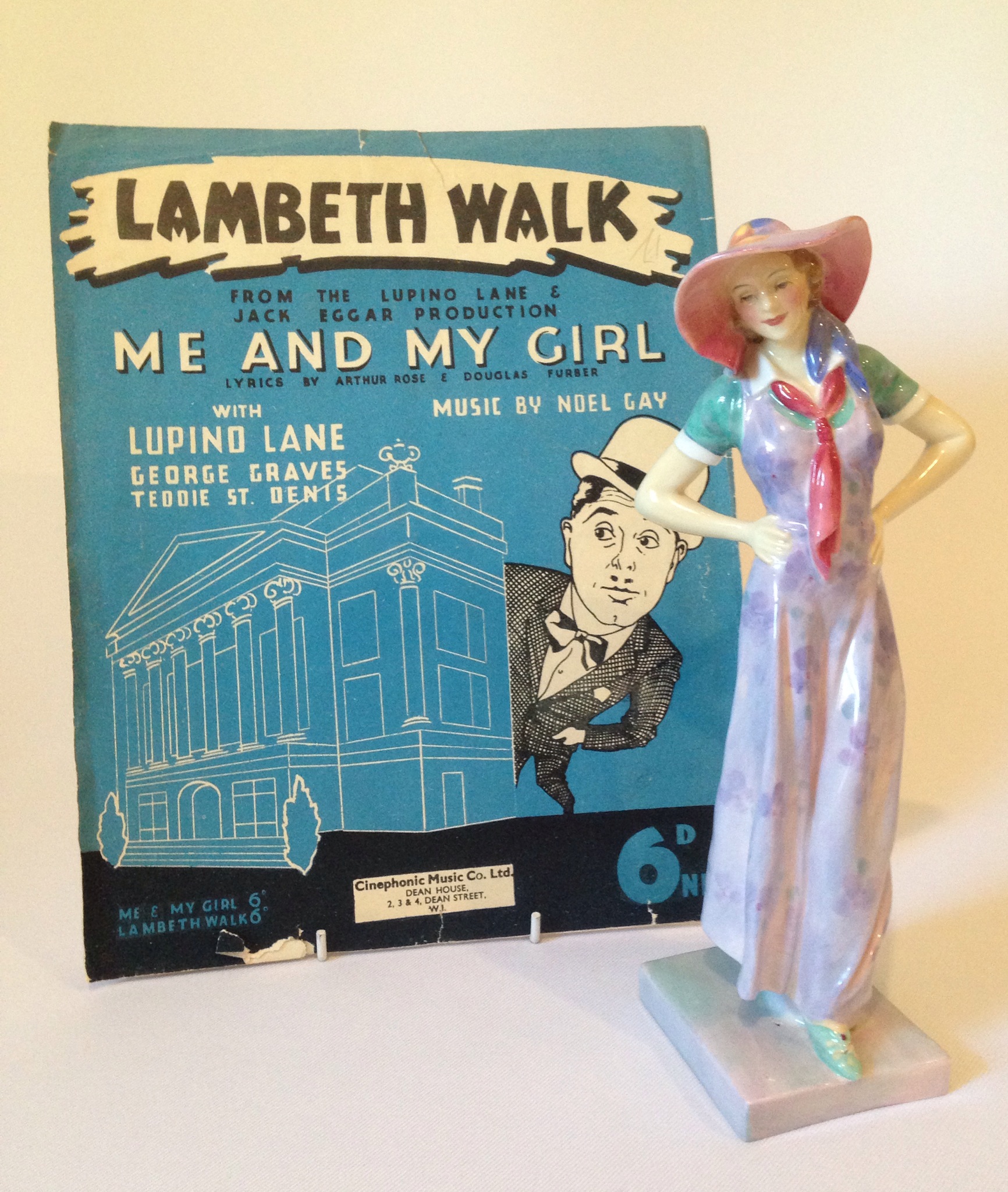
A final figure that I’d like to share is the stunning Lambeth Walk, shown dancing to the famous tune of the same name. Her clothes are the epitome of 1930’s chic and this colourway of her is so detailed.
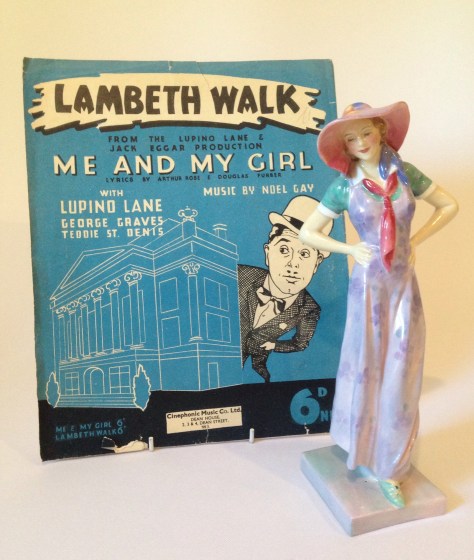
IMG_0590.JPG

An Amazing Adventure – Part 2

IMG_0506-0.JPG

Continuing my look back at last Saturday’s talk, here are a few more choice items from the selection that I took along. The premise of the talk was ‘My Collection’.
In this section the theme was the development of figures, so I took the art nouveau, square Harradine vase along so as to discuss Harradine’s roll but also the links with Doulton from his time as an apprentice modeller, to the period 1910-14 when he supplied models to Lambeth on a freelance basis and finally how the link with Burslem was established with the introduction of his first figure into the HN Collection in 1920.
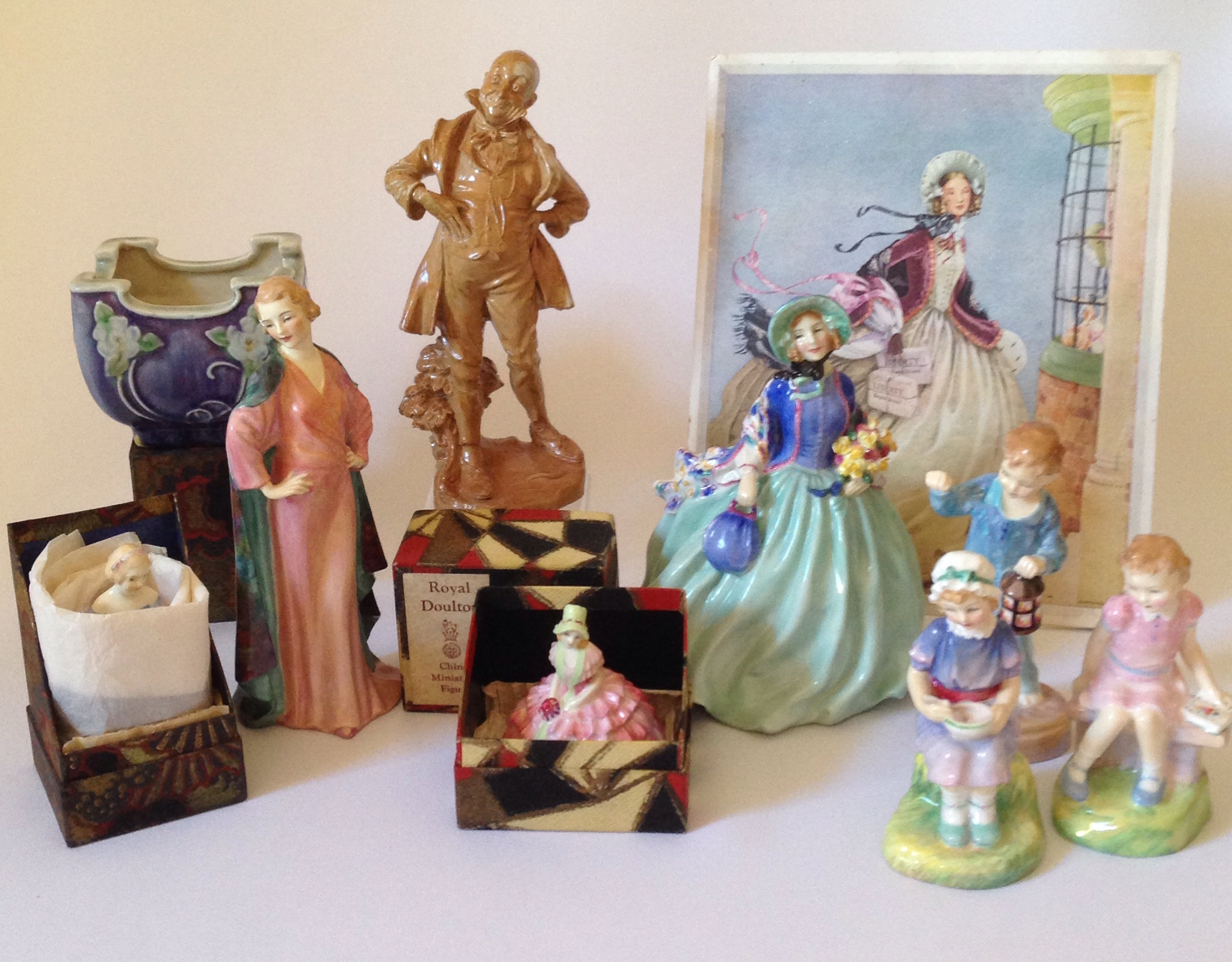
The first figure we looked at was Harradine’s original model for Micawber and we discussed the process and arrangement he had with Charles Noke.
Next up were the M series and these original boxes for them. Most of these M figures were of course based on Harradine’s larger models.
A popular theme for all figure collectors has always – well since HN1 – been children so I shared a few favourites from the Nursery figures set including a prototype in my collection.
Honey and her inspiration followed, a typical painting by Stanislaus Longley, who Harradine used repeatedly for inspiration. Interestingly this work was also used by the famous London store Liberty for a Christmas catalogue cover in the 1930’s – and that is also pictured.
This section was completed with a discussion on colourways and I shared a version of Clothilde that I have from 1937.

Next time I’ll share some Burslem art wares that we discussed!

Royal Doulton’s tribute to the American actress Doris Keane.

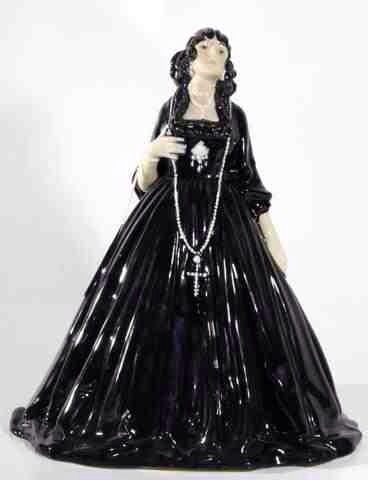
Doulton’s accurate representation of the famous American actress in the risqué play ‘Romance’ first performed in 1913 in the states before travelling to the UK two years later, proved a popular figure as you will see.

IMG_0330.JPG
A Lambeth version of Doris Keane together with her later, miniature self.

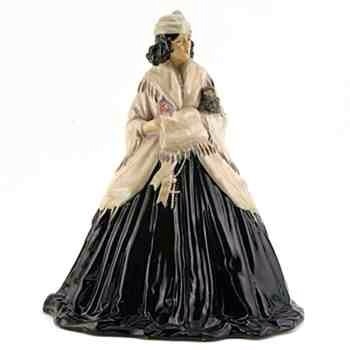
Doris plays an Italian opera singer, an over the top character who always wears black and carries a pet monkey.

IMG_0329.JPG
HN 96 with her carrying the pet monkey!

The story follows the ill fated love story of the opera singer and a clergyman. He gives her his mothers pearls and pendant – which can be seen in all versions of this figure – but she realises her past would ruin his career so the two part declaring their undying love.

IMG_0331.JPG
An unusual gloss version of HN 90 sold at Bonhams.

Their love scenes, the role of the clergyman and Doris’ undressing on stage made the play a transatlantic success! When she arrived in England she was mobbed and Romance played for over a thousand performances in London alone!

IMG_0332.JPG
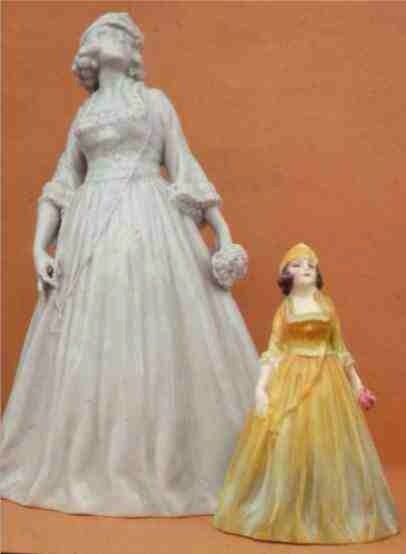
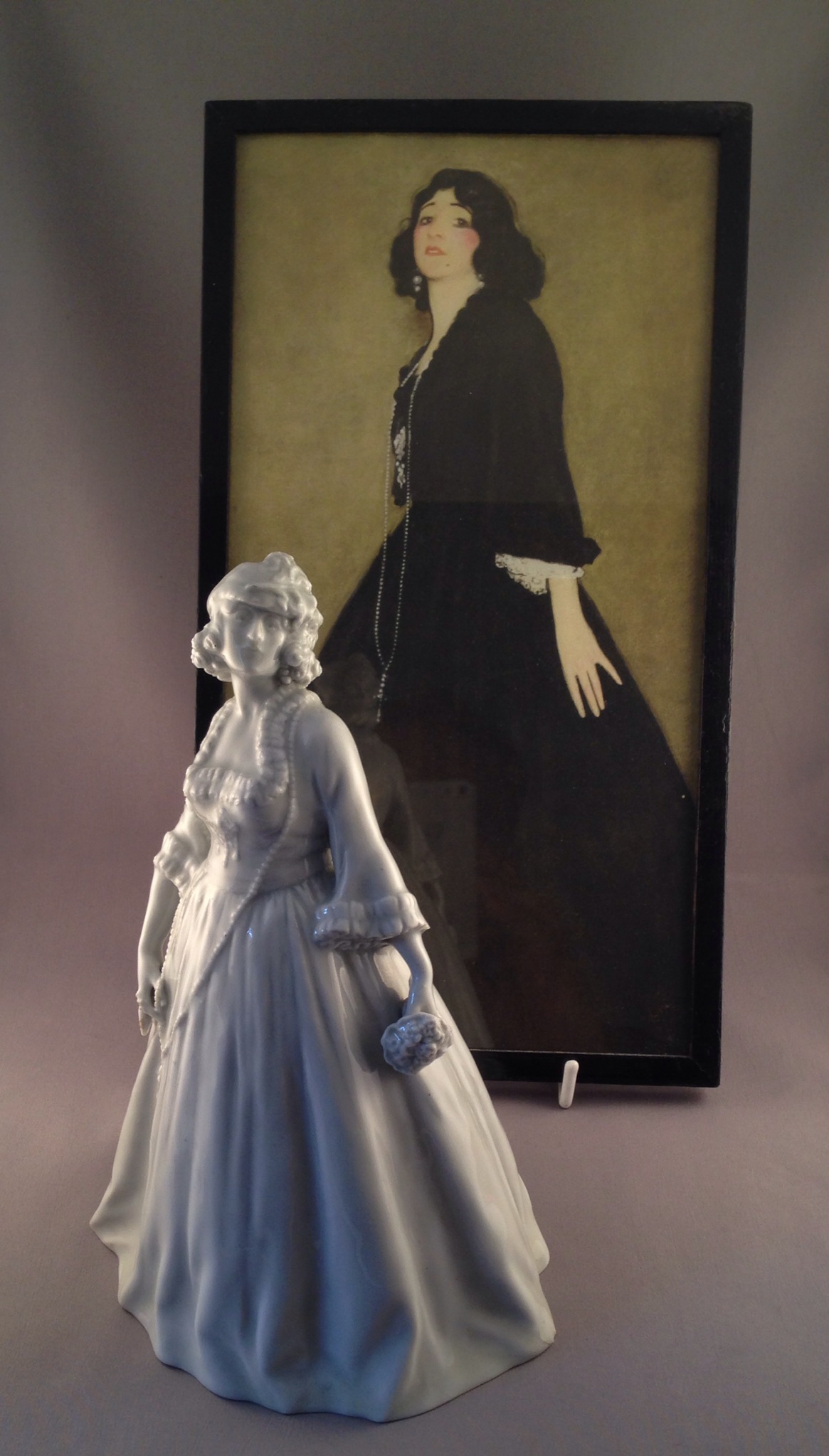
An unusual hard paste porcelain body version of Doris Keane by John Broad ca.1919. The porcelain body was another invention of Lambeth’s art director Joseph Mott.

This Lambeth version of Doris Keane above would eventually be remodelled and produced in china at Burslem under the name Rosamund and as you can see also above a miniature version was also issued. The two earlier Burslem versions of Doris Keane as Cavallini HN90 & 96 were a monumental 26-28 cms tall, typical of early figures in the HN collection.

Reflections: the source of Harradine’s popular figure Phyllis.

As you know it is a real interest of mine to research where figures derive their inspiration. Those who have read my book ‘Reflections’ with Jocelyn, will have seen the section on the illustrator Jennie Harbour.

IMG_0161.JPG

Very little is known about the illustrator but her work can be found on Tuck’s postcards as well as in many editions of deco books from the time. Her illustrations remain popular today around the world and framed, vintage prints can sell for a fair sum.

Back to Phyllis, as you can see she has been expertly interpreted from Jennie Harbour’s illustration ‘Sweet Nell’ by Harradine. Here she is as HN1486, although the most readily found version is HN1420 as it was clearly the most popular colourway. I have always felt that she makes the perfect partner to Dolly Vardon save for the base on Phyllis. Perhaps there is a version if Phyllis out there without a base. As we know modifications were frequent on these early figures, and we looked at how a stepped vase was added to Harradine’s Helen some time ago.

IMG_0164.JPG

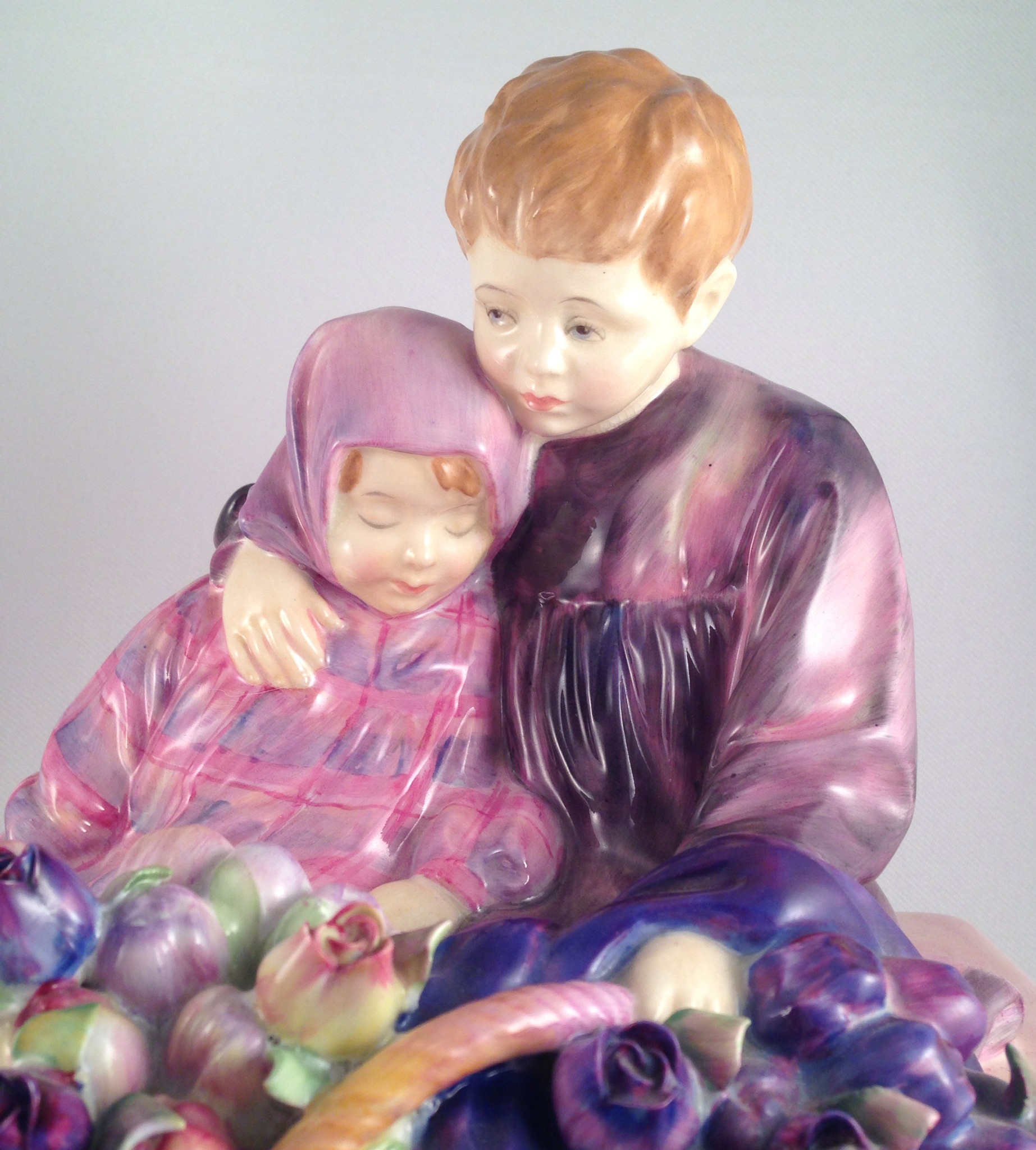
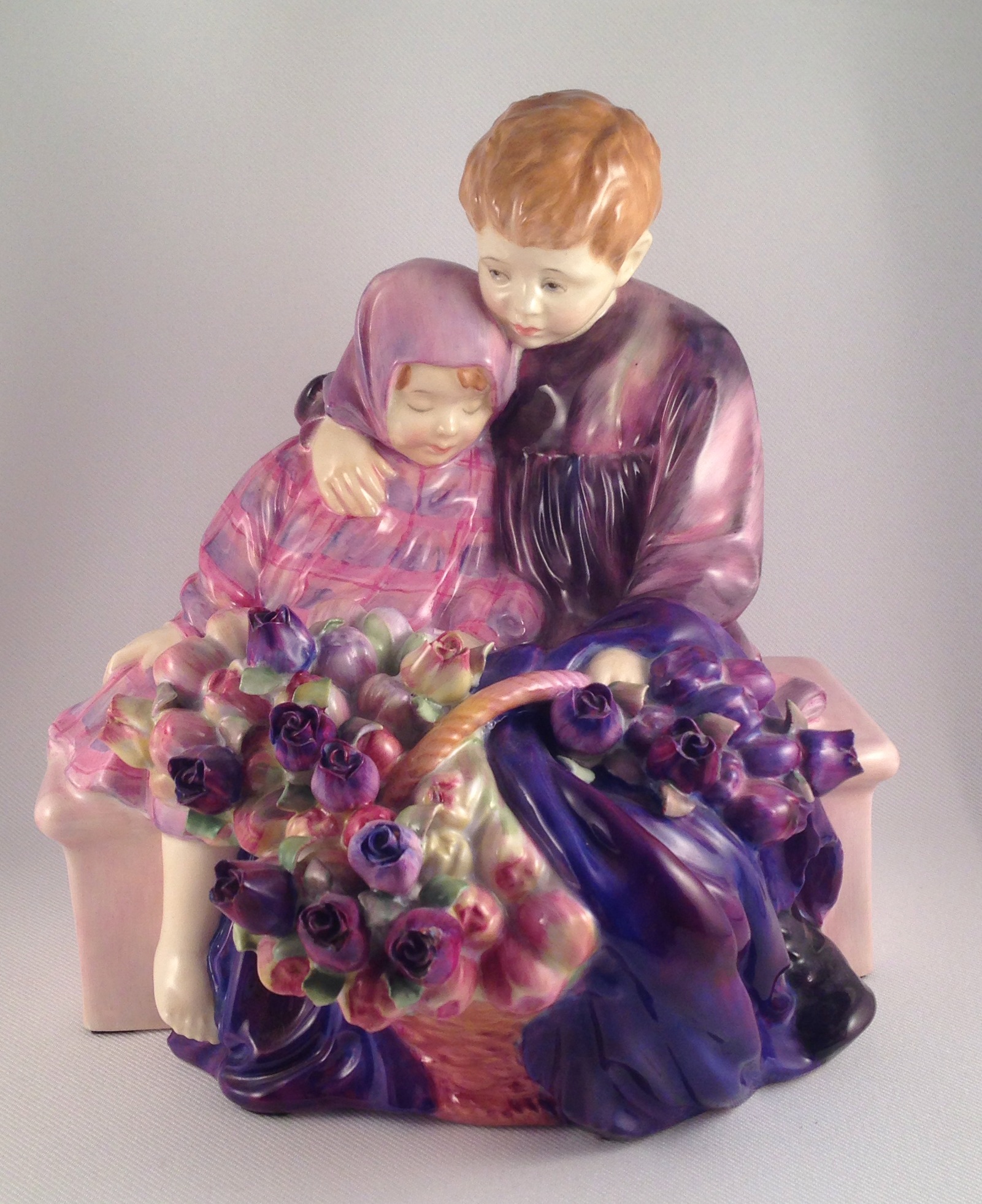
A look back at the enduringly popular Flower Seller’s Children.

IMG_0140.JPG
A close up of the skilfully painted children’s faces.

This delightful study was the concept of Leslie Harradine in 1921 during his first year of supplying models to Doulton’s studios in Burslem. Harradine had been apprenticed to Doulton in Lambeth in the early years of the 20th Century but factory life he found unbearable and so broke loose from these confines. He continued to supply models to Lambeth’s studios until his departure for Canada. This early time in Harradine’s association with Doulton we have covered already in the three part article on his life.

IMG_0139.JPG
HN1206 1926-1943

Upon his return Charles Noke, Burslem’s art director, tried every enticement to attract Harradine to move to the Potteries but to no avail. A compromise was of course reached whereby he would supply models to Burslem, something that continued for many decades.
This early group by Harradine was available in 5 different colourways and one HN1342 was produced until 1993. Whilst not classed as a prestige piece the painting that can be found on these pieces is stunning as I am sure you will agree.
Harradine’s inspiration for this piece apparently came during an evening out in London, whereupon he saw such a scene and sketched it upon his shirt sleeve. A romantic story for a sentimental group.
The enduring charm of this study meant that a collectors plate and more recently a miniature version of this group HN4807 was introduced in 2005.

Royal Doulton’s Fairies

IMG_9927.JPG
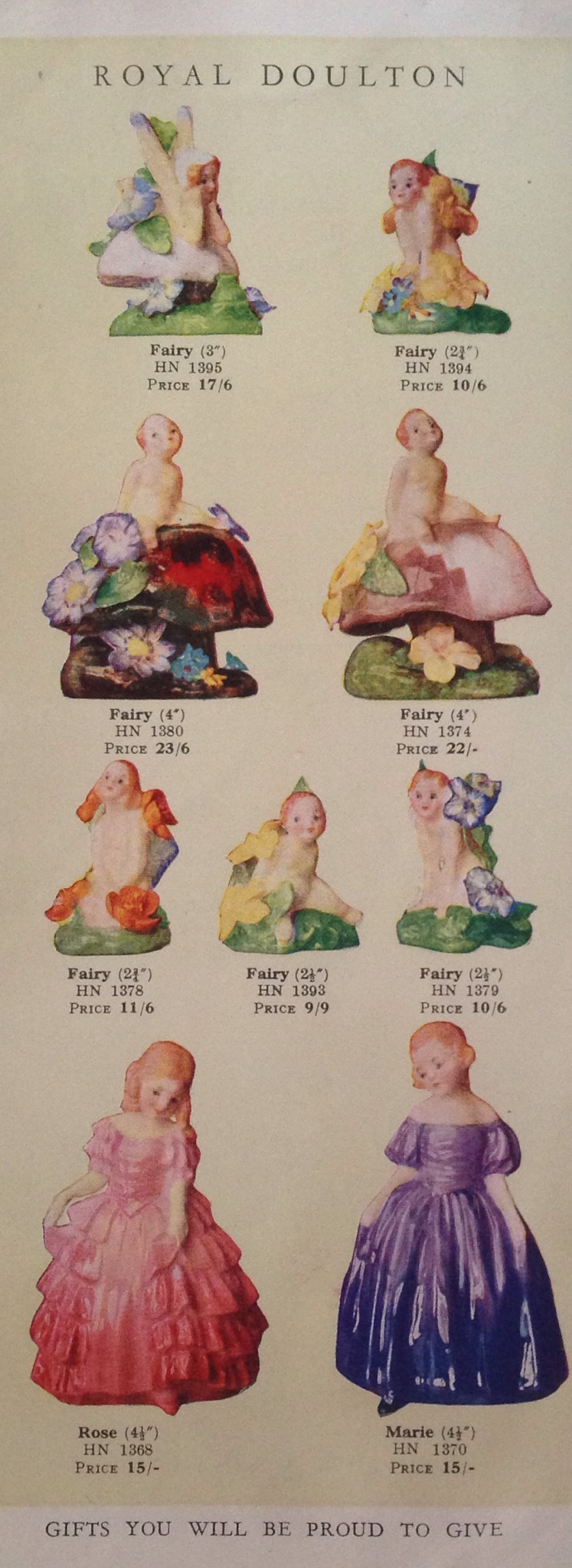
A catalogue page from 1930.

These sprightly, mythical creatures of many a folklore were immortalised by the great Leslie Harradine for the HN collection in 1930, but interest in all things ‘fairy’ had reached a fever pitch a decade before with the so-called Cottingley fairies; a series of 5 photographs of fairies taken by two young cousins and heralded by Arthur Conan Doyle (author of the Sherlock Holmes stories) as evidence of their existence. Alas the cousins would admit eventually that all but the fifth was faked and that, it has been suggested, was probably the result of a double exposure by the young girls.

IMG_4993.JPG
Doulton produced at least 7 different figures of fairies from standing with wings, to perched on toadstools to simply hiding in the undergrowth. Each is a charming study of childhood and many were available with differing flowers and even different colourways during their short production in the 1930’s. Certainly the second and sixth versions are the same child as ‘Boy on Pig’ HN1369 attributed to CJ Noke rather than Harradine. There are a further 6 fairies listed but which did not go into production.

IMG_4992.JPG
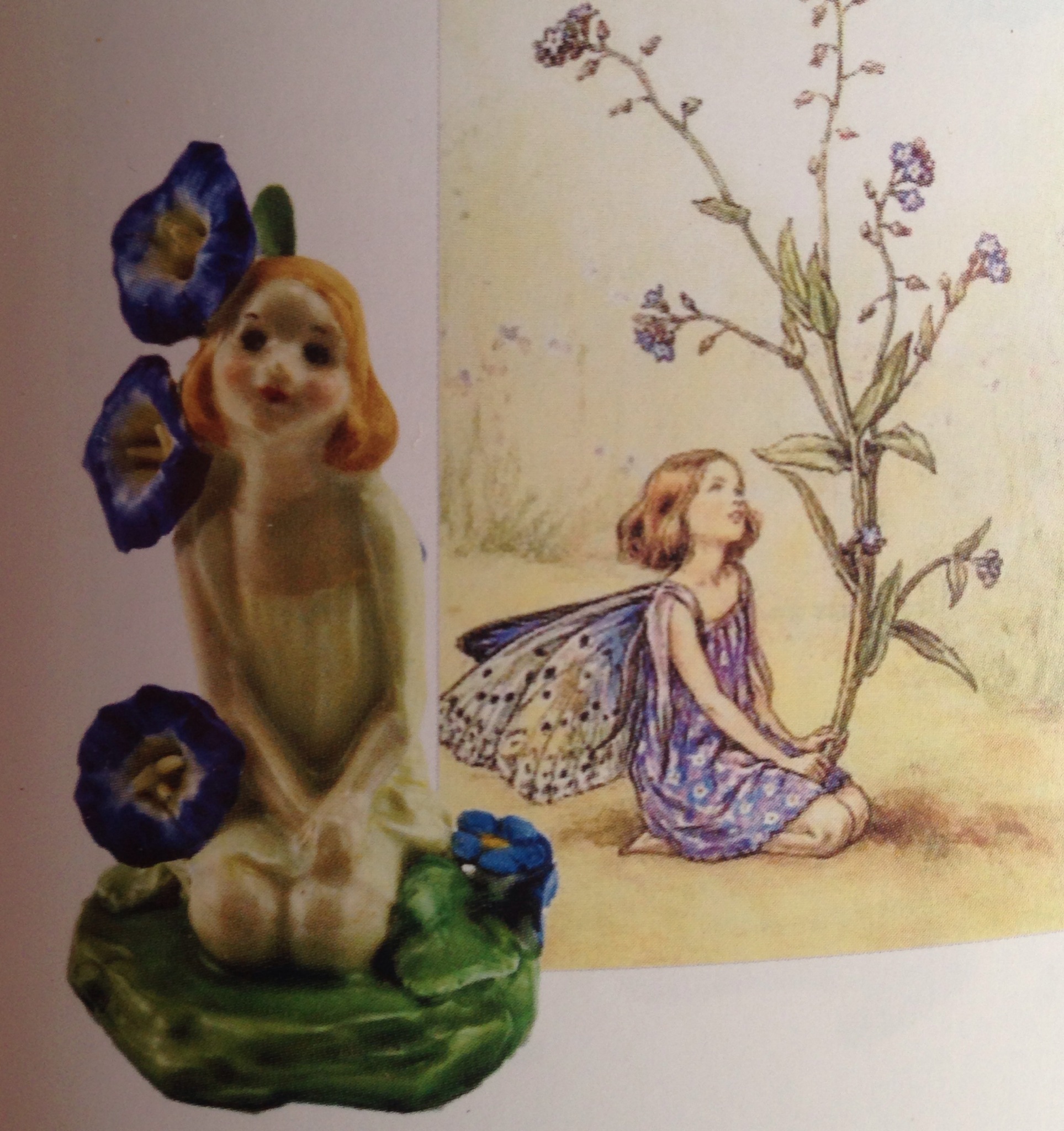
Doulton’s Fairies HN1396 and HN1375 were even modelled after the fairy illustrations of Cicely Mary Barker that remain popular to this day.

IMG_9928.JPG
A display of these figures really is magical, however, tracking them down is just as elusive as finding the real thing…or so it seems!

IMG_9925.JPG
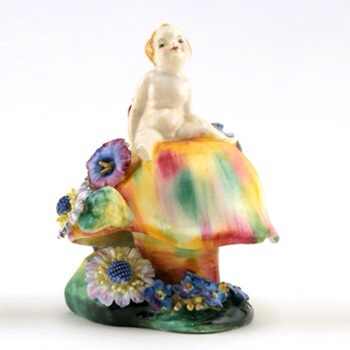
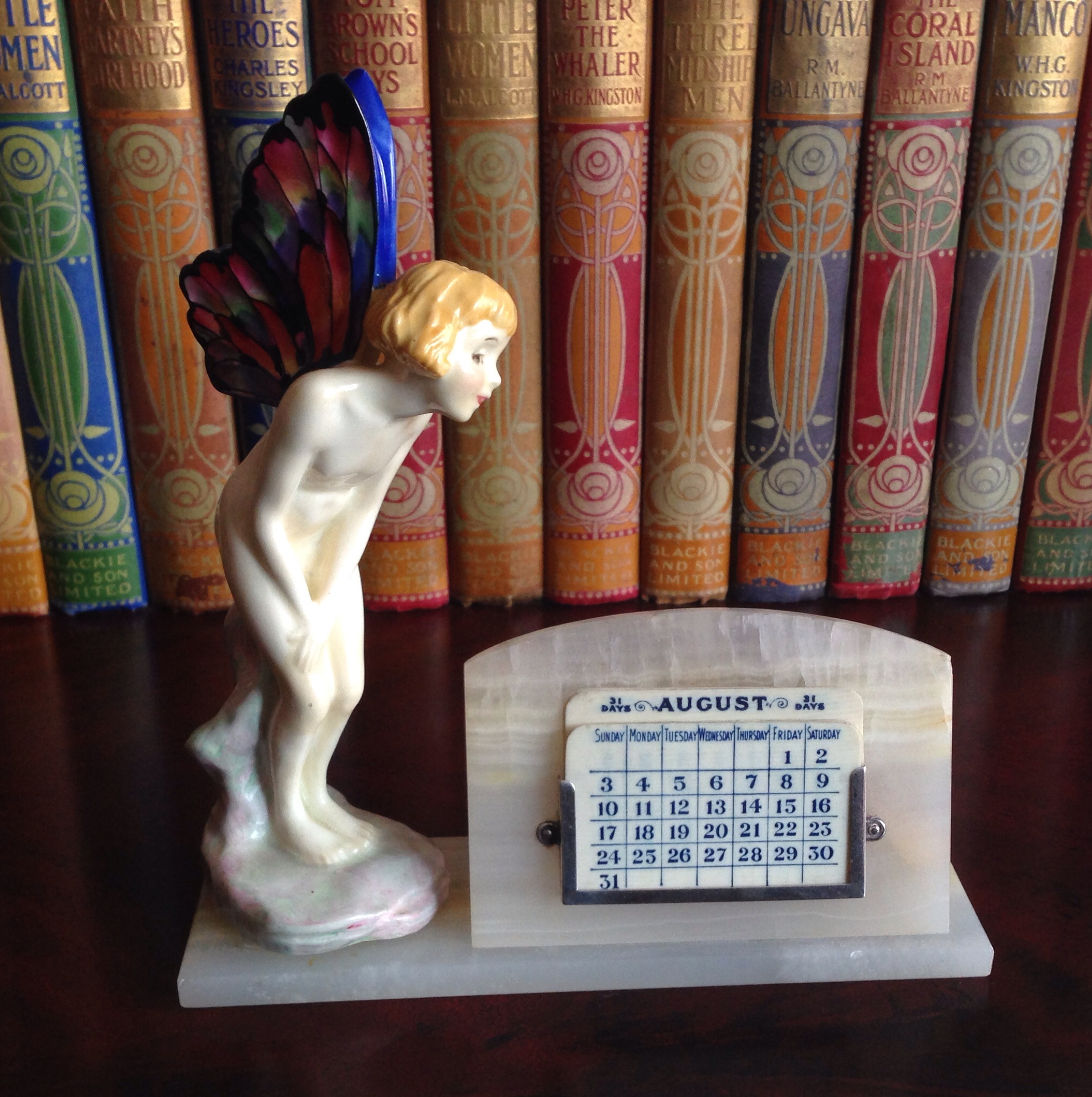
Finally a Fairy that has fluttered down on to my desk….