Category Archives: Lambeth

Doulton Lambeth’s pâte-sur-pâte technique.

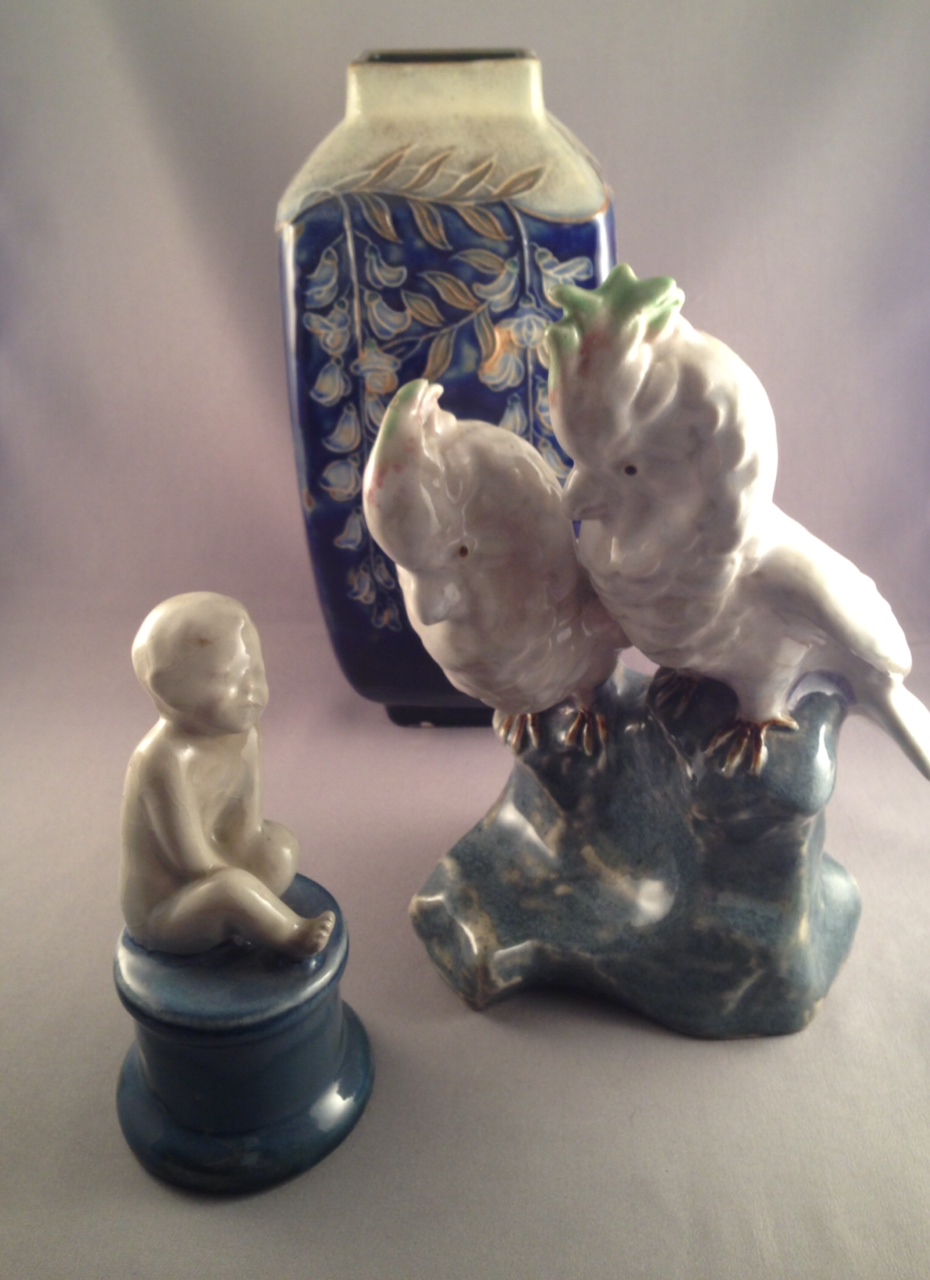
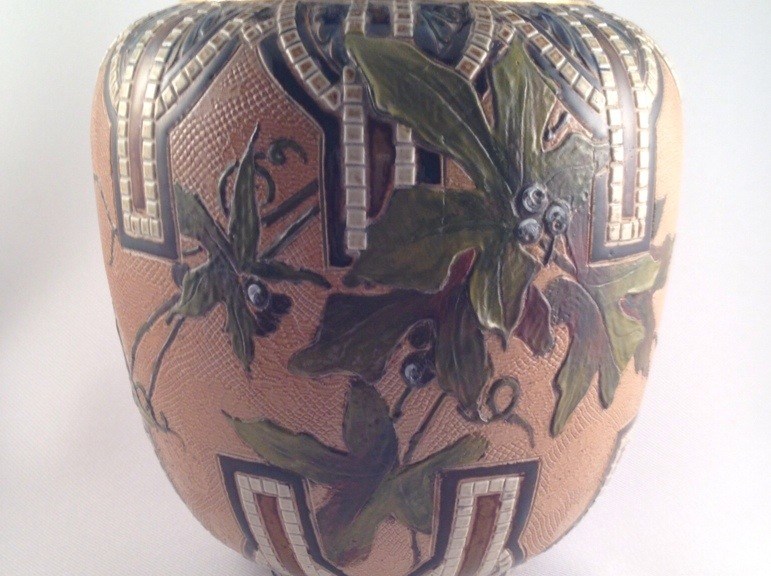
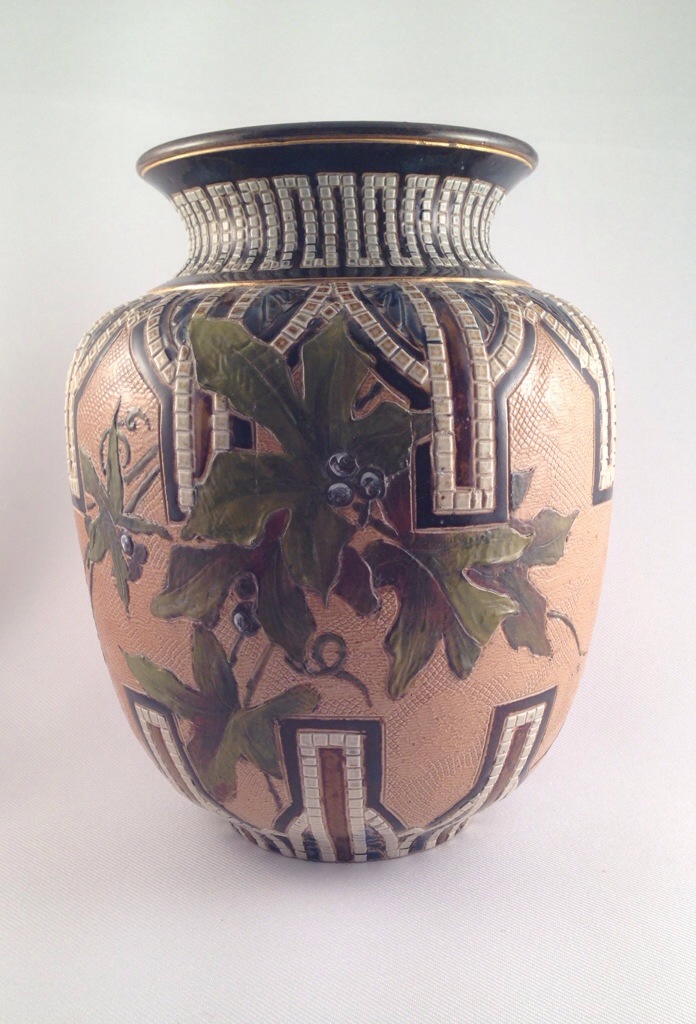
A chance finding of the vase below inspired me to do a quick résumé of this once popular technique. Literally translated it means paste on paste, this type of ware was produced between 1878 and ca. 1906.

20140526-172437-62677474.jpg

This type of ware was favoured by Florence Barlow who painted her birds and also Eliza Simmance who used it to highlight her flower designs.

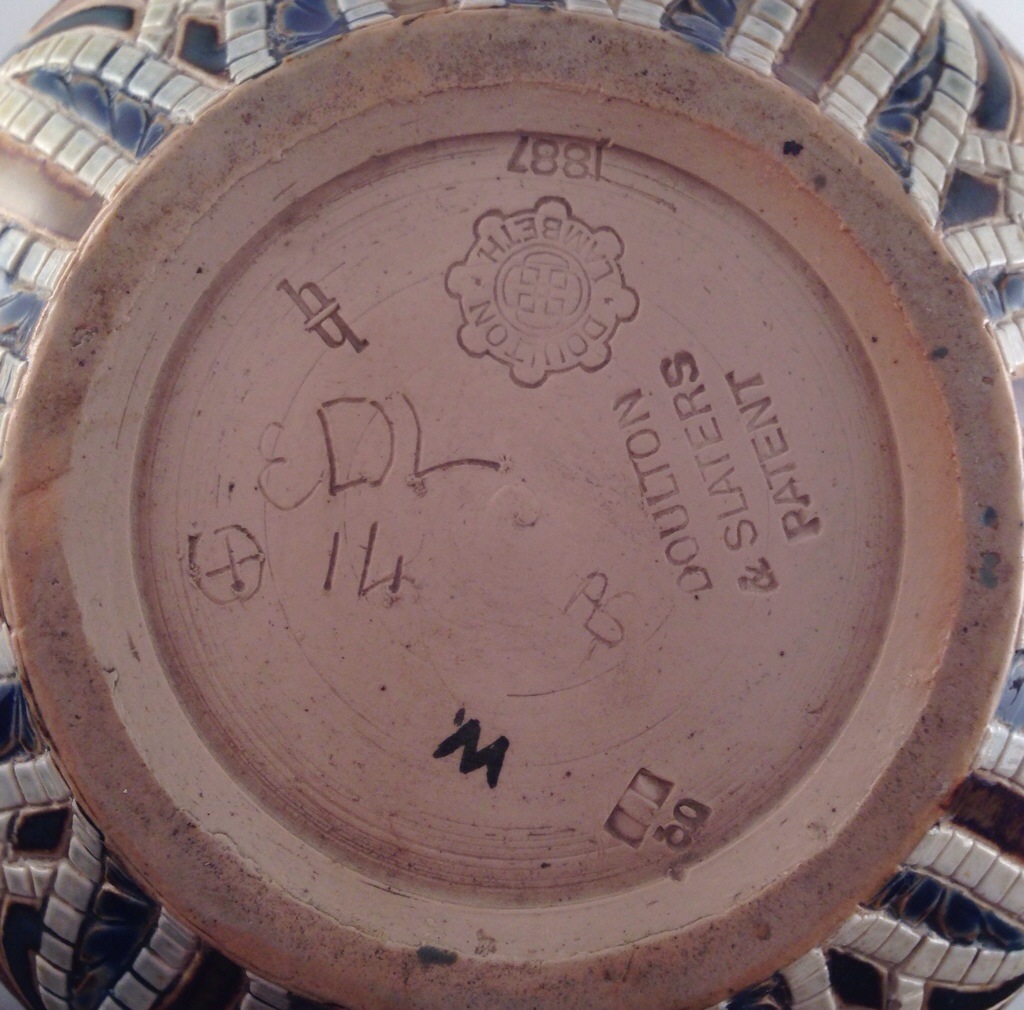
An unusual technique and pieces of this ware are relatively scarce. Here is the base I the vase above with Edith Lupton’s initials and a series of clear markings including a date.

20140526-172554-62754073.jpg

Doulton’s Impasto ware

20140526-165942-61182464.jpg

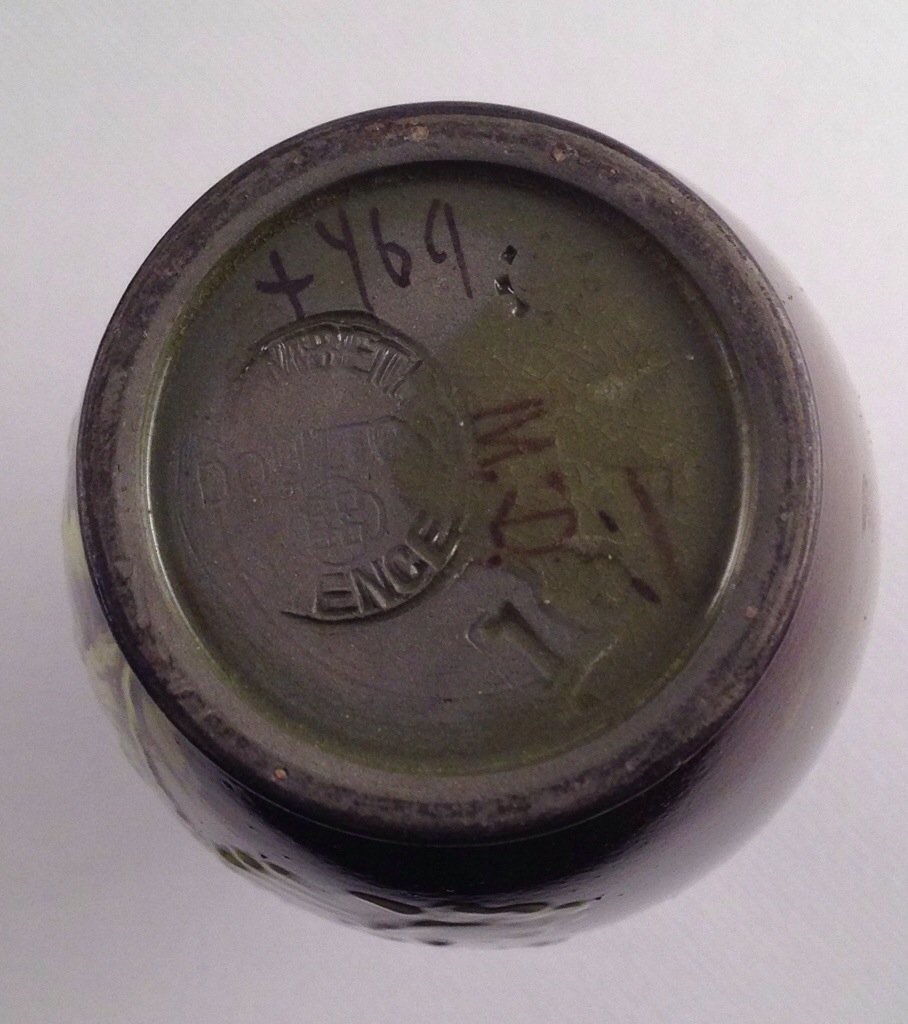
Impasto ware is often confused with faience simply because the body it uses is often the same. Later pieces seem to actually use a faience body as you can clearly see with this marking.

20140526-170018-61218097.jpg

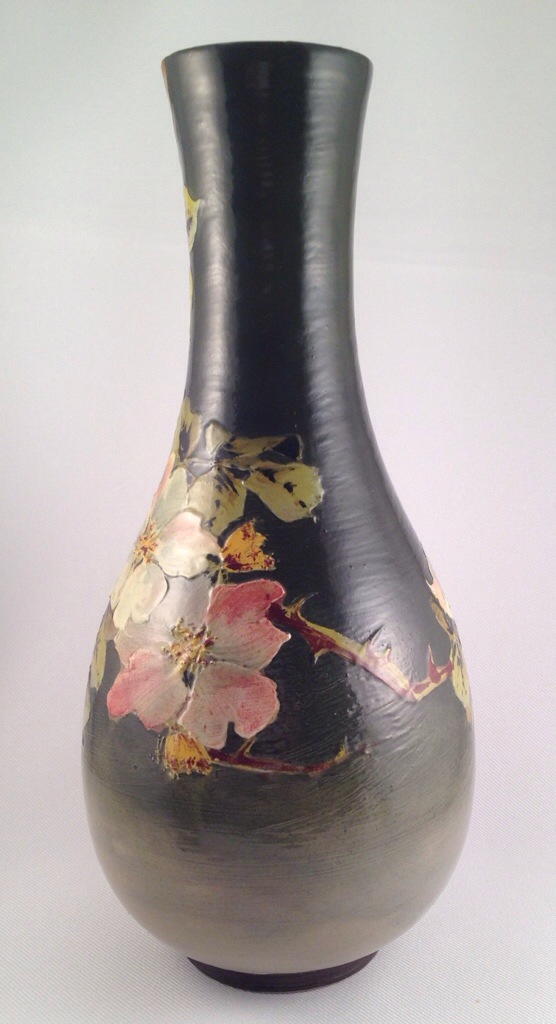
The similarity to faience differs with the decoration of Impasto ware. The coloured slips with the latter were applied so thickly that the images, mainly of flowers, appear almost in relief.

20140526-170338-61418582.jpg

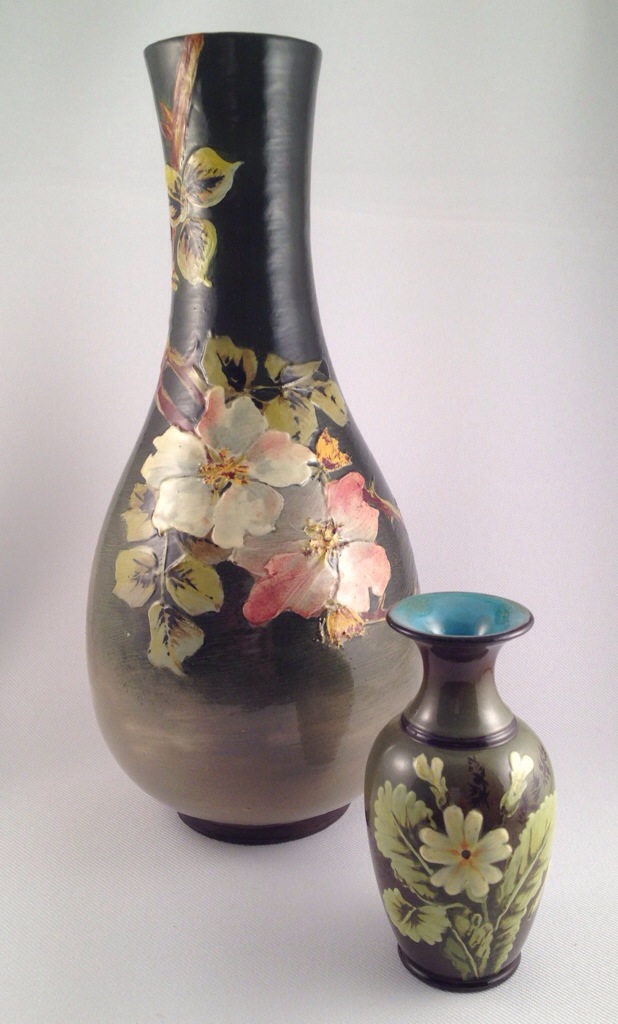
Impasto was produced between 1888 and ca.1914. The great Kate Rogers seems to have been particularly associated with this ware and the large vase above is by her and dated 1888.

Don’t forget if you like my Doulton articles, join our facebook page for more discussion, articles and pictures!

doultonchristopher1's avatardoultoncollectorsclub

Search facebook for: Doulton Collectors Club and ask to join the group!

Image

View original post

Doulton for the garden

Just when you think the house is full of all things Doulton and where else can you possibly place new bits…let’s take a look at some neat ideas for the garden.

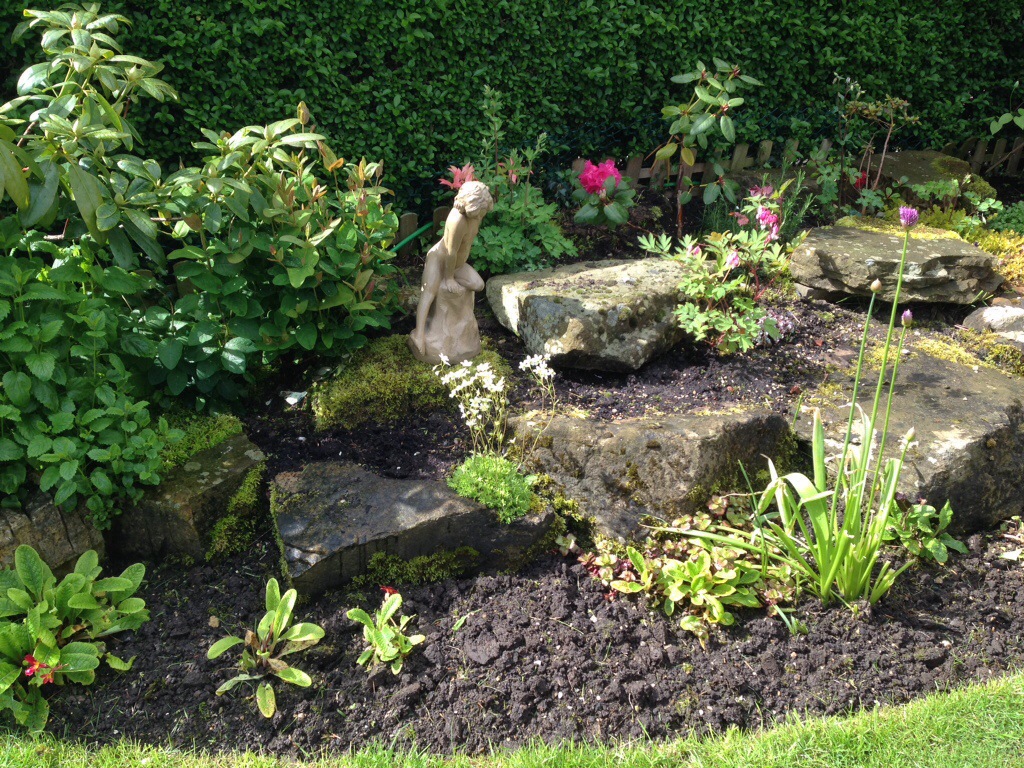
Throughout the world there is famous Doulton statuary recognising the famous, as well as great occasions, but Doulton were keen that everyone should be able to decorate their own gardens with their products.

Thus Doulton produced all manner of garden ornamentation for us to now seek out and fill our own green havens with.

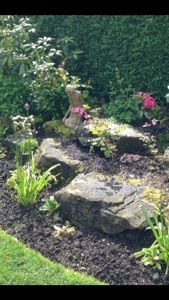
Here is one piece I have called ‘Reflections of Childhood’ but I am sure many of you will instantly recognise it as simply a large version of Leslie Harradine’s ‘Child Study’ HN 603.

20140510-131721.jpg

20140510-131733.jpg

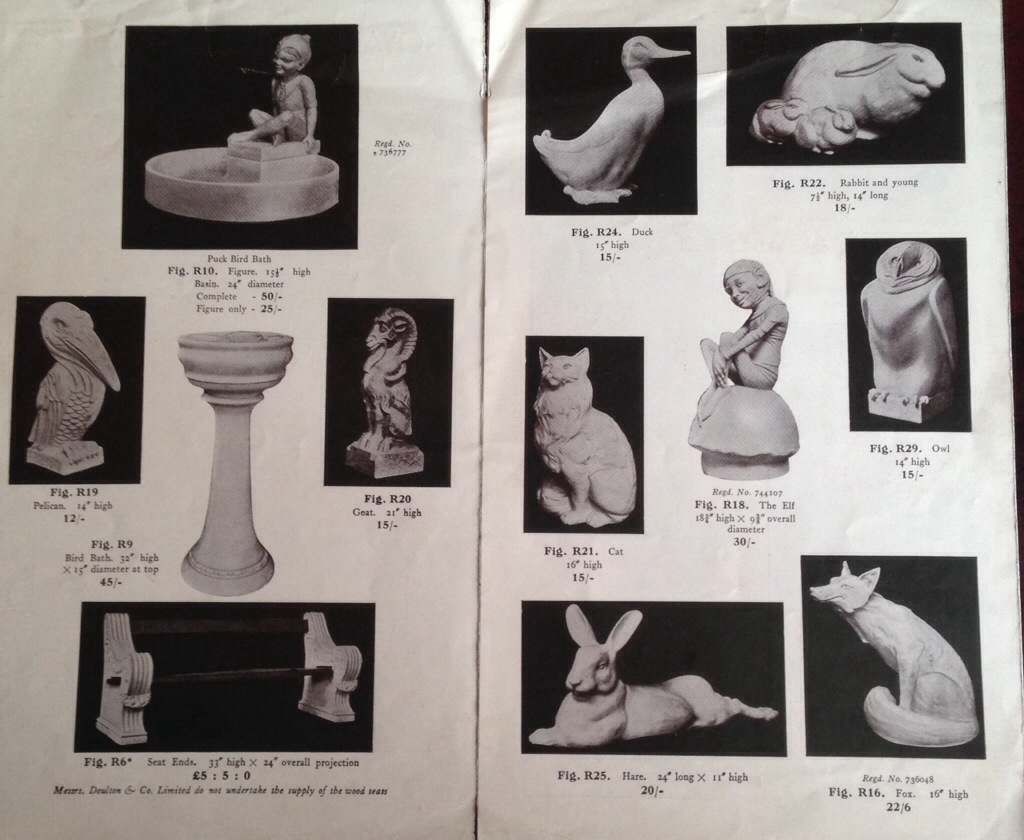
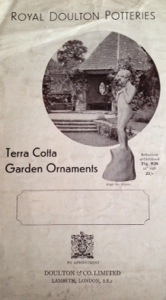
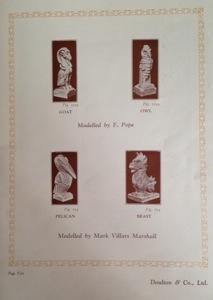
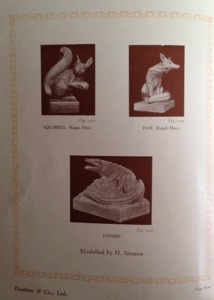
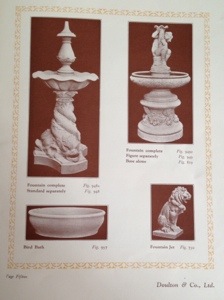
This was a particular traite of the garden ornament selection, as other figures but also animals were re-modelled in larger scale so as to suit a garden setting. Here are a selection of catalogue pages dating from 1928 to the mid 1930’s where you can see other such examples.

20140510-131838.jpg

20140510-131856.jpg

20140510-131908.jpg

20140510-131915.jpg

Not surprisingly garden fountains, sundials and all manner of other garden ornamentation were also made and here are a few more examples …

20140510-132123.jpg

What better way to enjoy your Doulton than in the summer sun and here we have another area for us all to collect!

Leslie Harradine Part 3 – the family man

Image

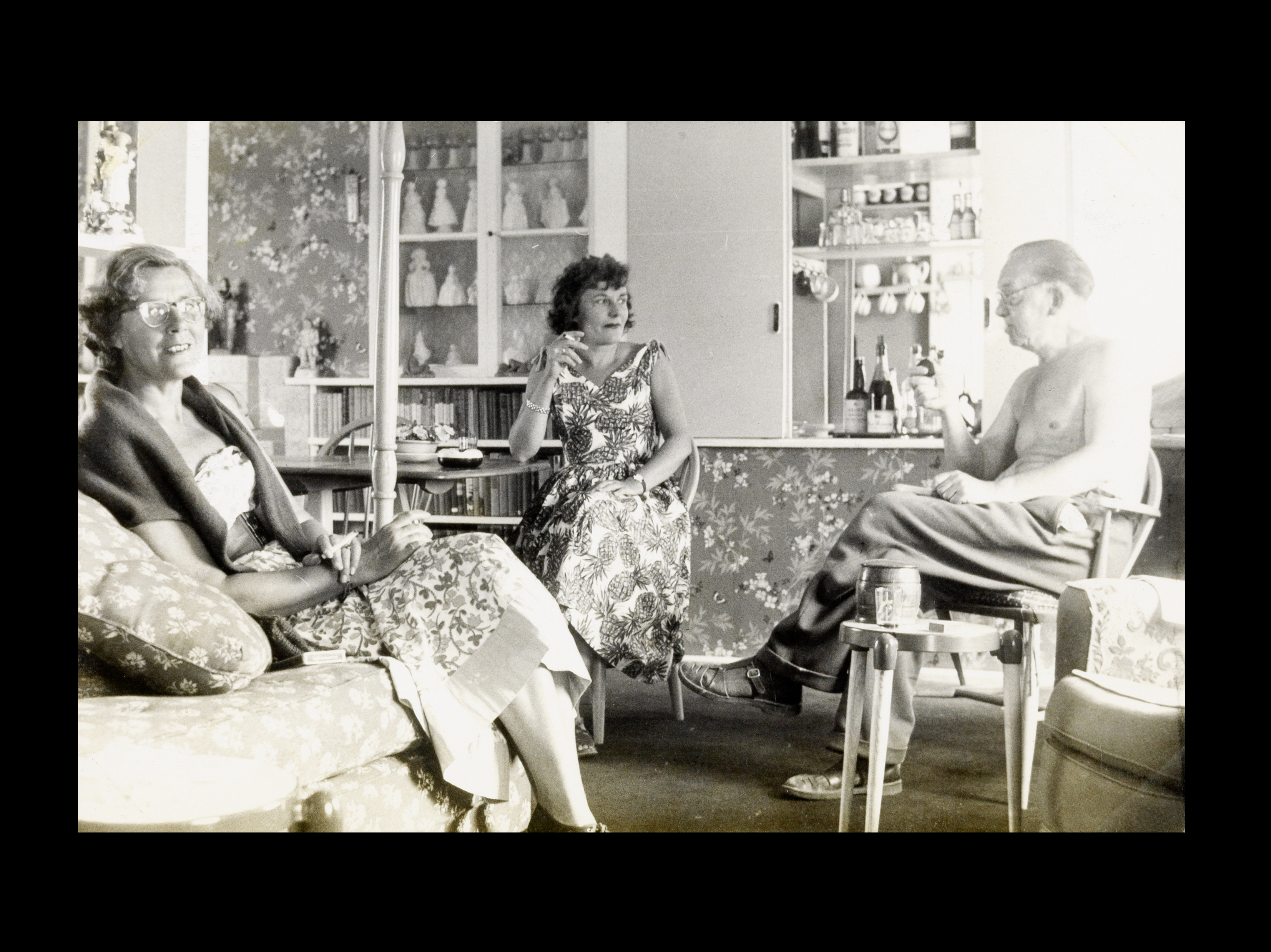
Leslie Harradine relaxing at home in later years. Note the undecorated figures in the cabinet behind his wife, Molly (photo courtesy Seaway China).

In this final part of our series on Leslie Harradine’s life, we will look at him as a family man. Very little is really known about him other than the bare facts that he married three times and had six children and a step-son. Harradine had a habit of marrying his models and all three wives were his muses. From his first marriage Harradine had three daughters, Jessie, Josie and Norma and from his second another two Helen and Diana and a son Richard. The children apparently all knew one another, although Helen once said that she didn’t think Harradine liked children and that he firmly believed in the old adage that ‘children should be seen and not heard’!

Helen also famously said that all his wives loved her father to the end, although he seemingly cast them aside until his third wife Molly.

In recent times a collection of Harradine’s undecorated figures was sold by a London saleroom and purchased by a  friend of mine. The auctioneer believed they had been consigned by Molly’s son. Harradine’s other families seemingly did not have any or many of their father’s work, indeed a grown up Helen and her son purchased a set of his Dickens miniatures from Jocelyn Lukins in the 1980’s.

Two of Leslie Harradine’s undecorated figures sold by a descendant (courtesy of Bonhams).

Very little additional information is known, but some recollections were provided by a close friend of Jocelyn’s whose family had holidayed with the third Harradine family.

Image

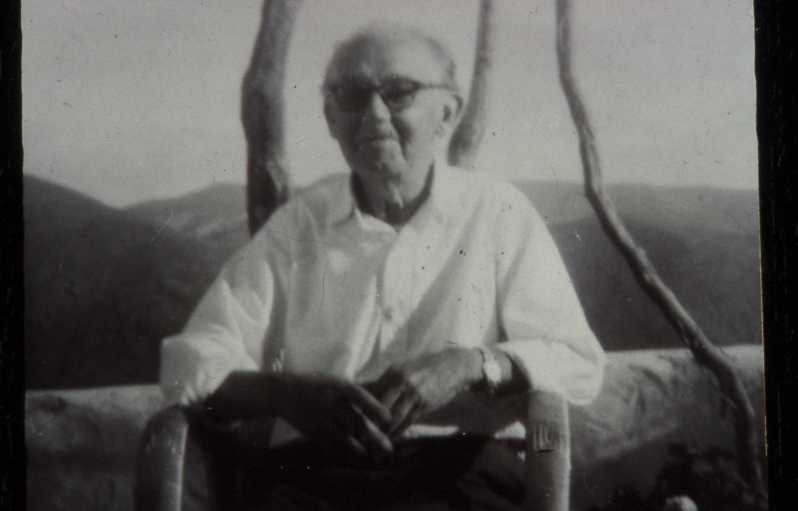
A holiday snap of Leslie Harradine taken by a family friend

Leslie Harradine died in a Gibraltar hospital and I remember being told that the hospital had some Doulton architectural tiles, one final link to the maker and factory he helped make so famous the world over!

If you have any additional information on this great man, we would love to hear from you!

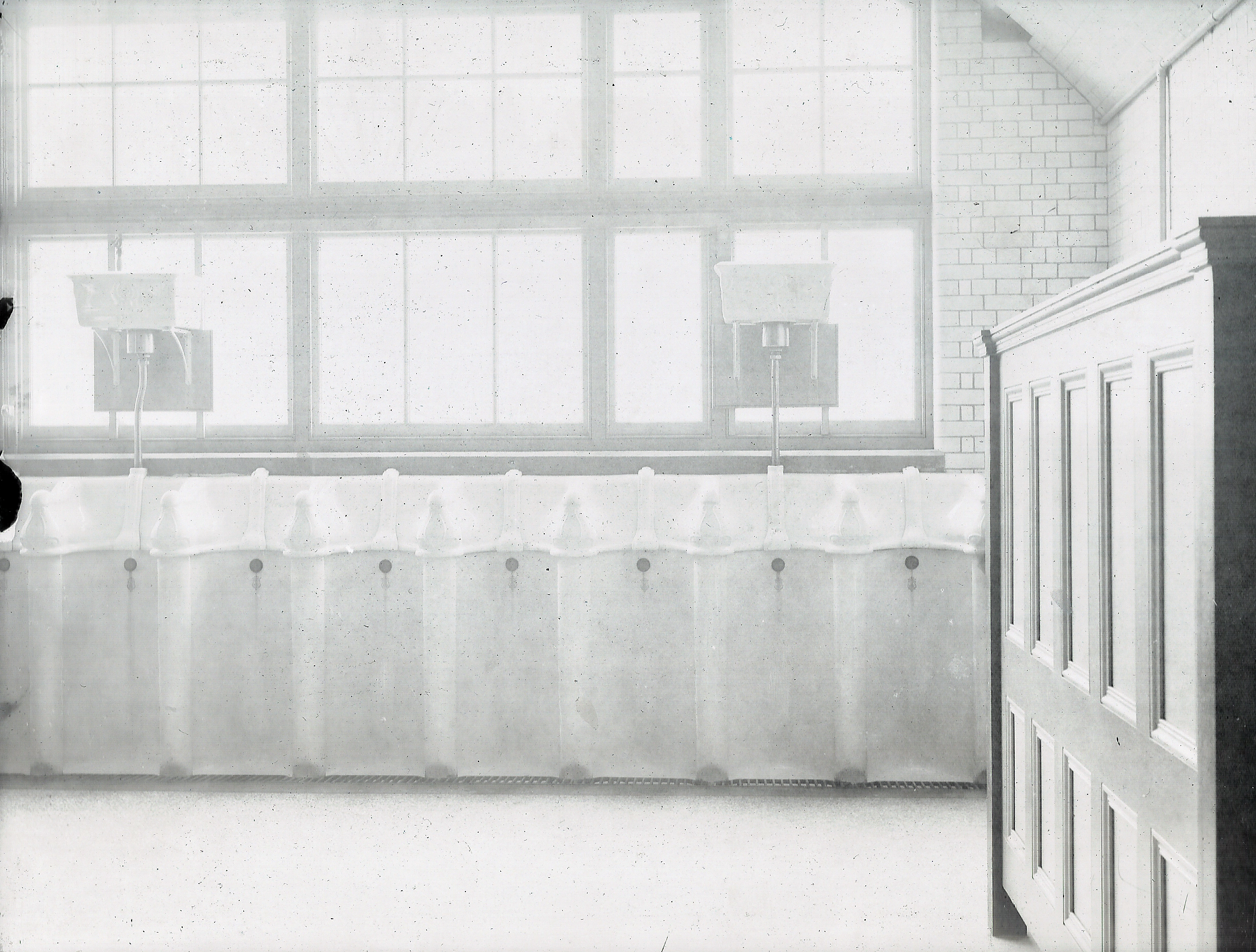
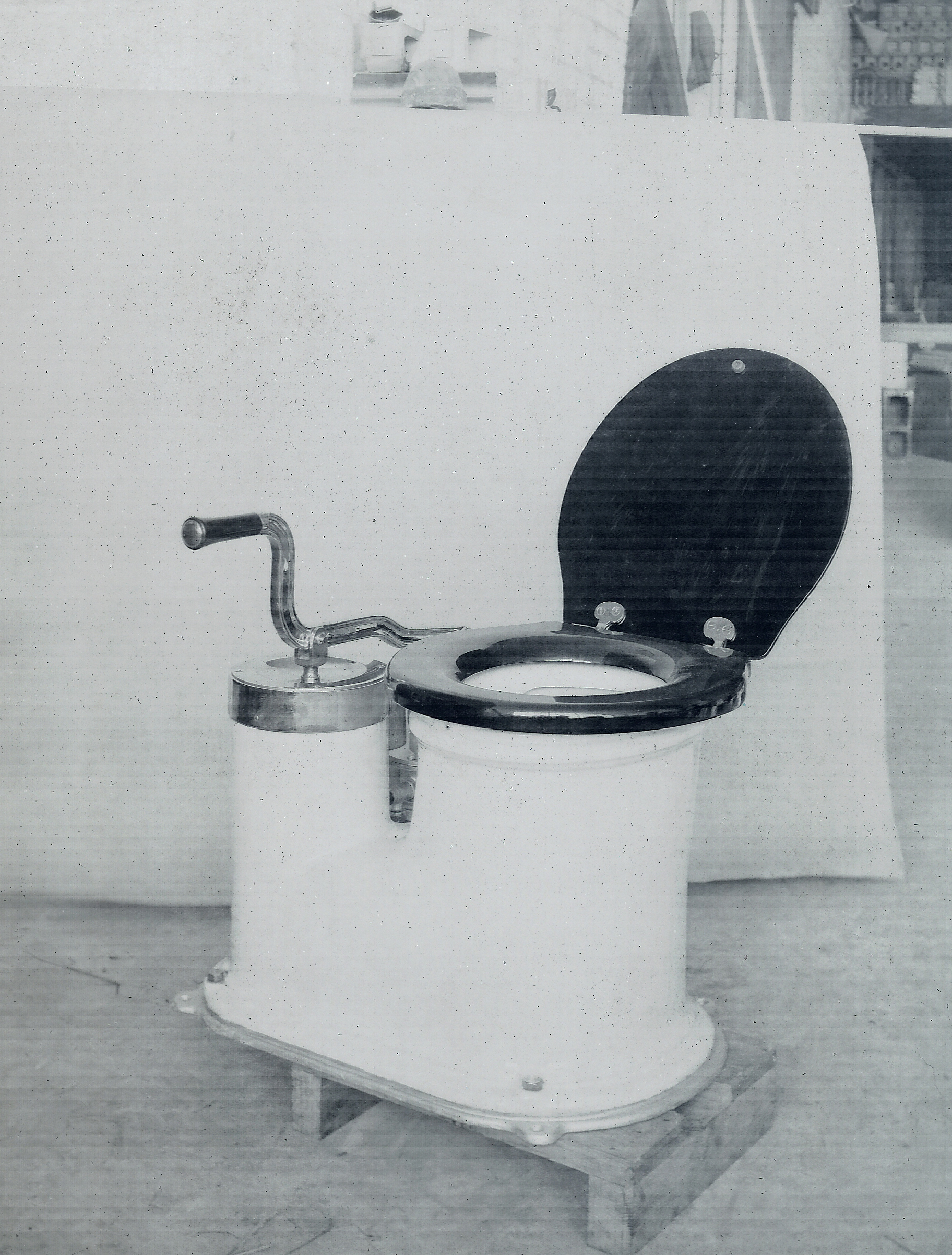
From Doulton’s humble, yet practical beginnings…


Image

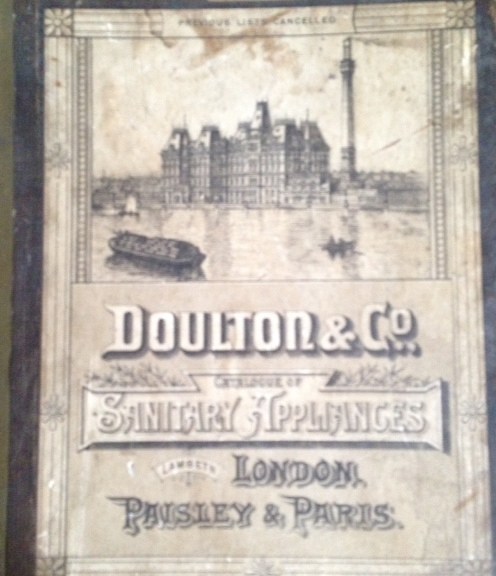
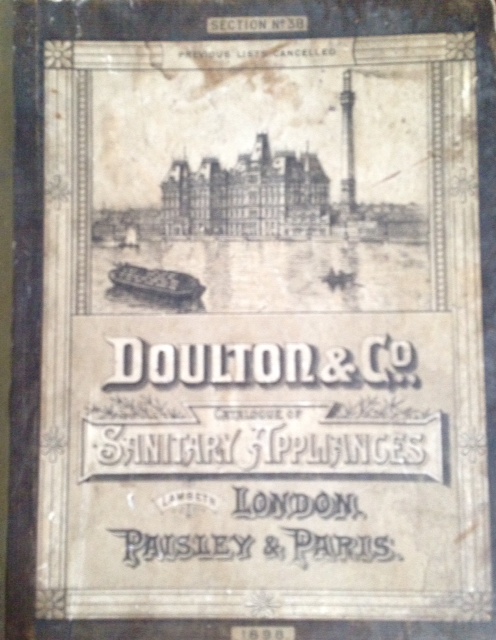
The front cover of a late 19th Century Sanitaryware catalogue

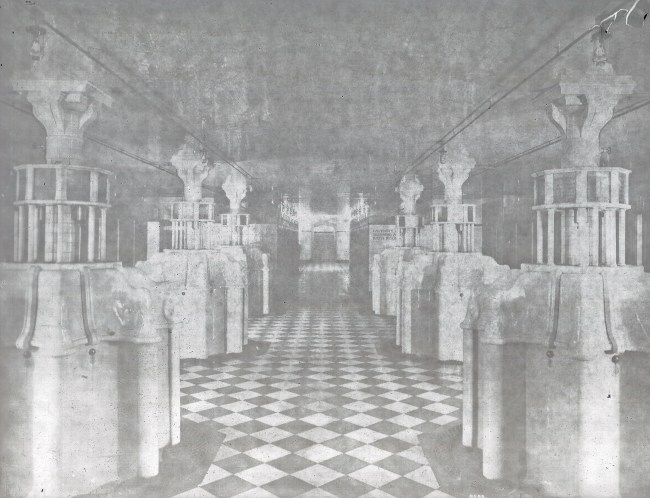
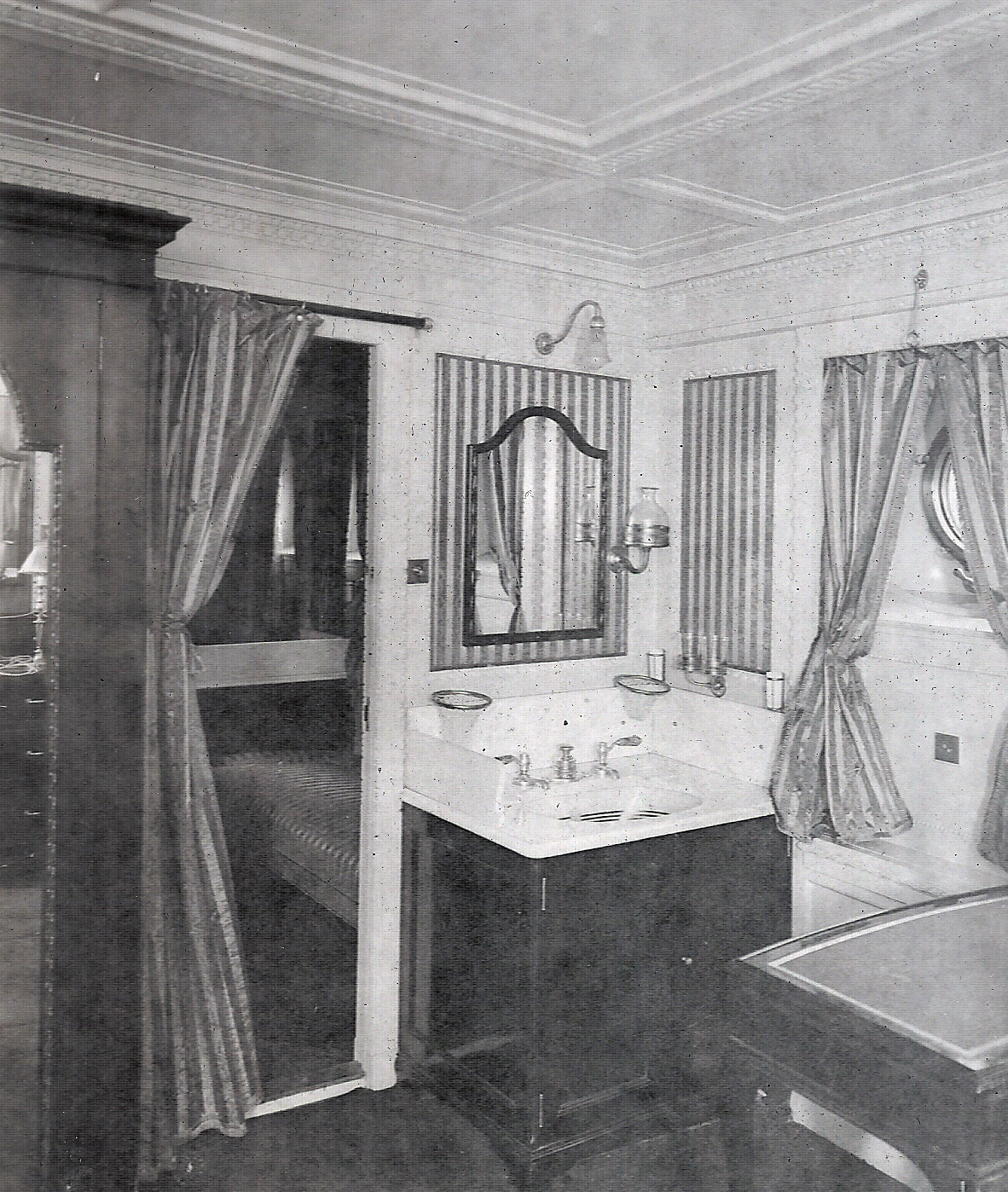
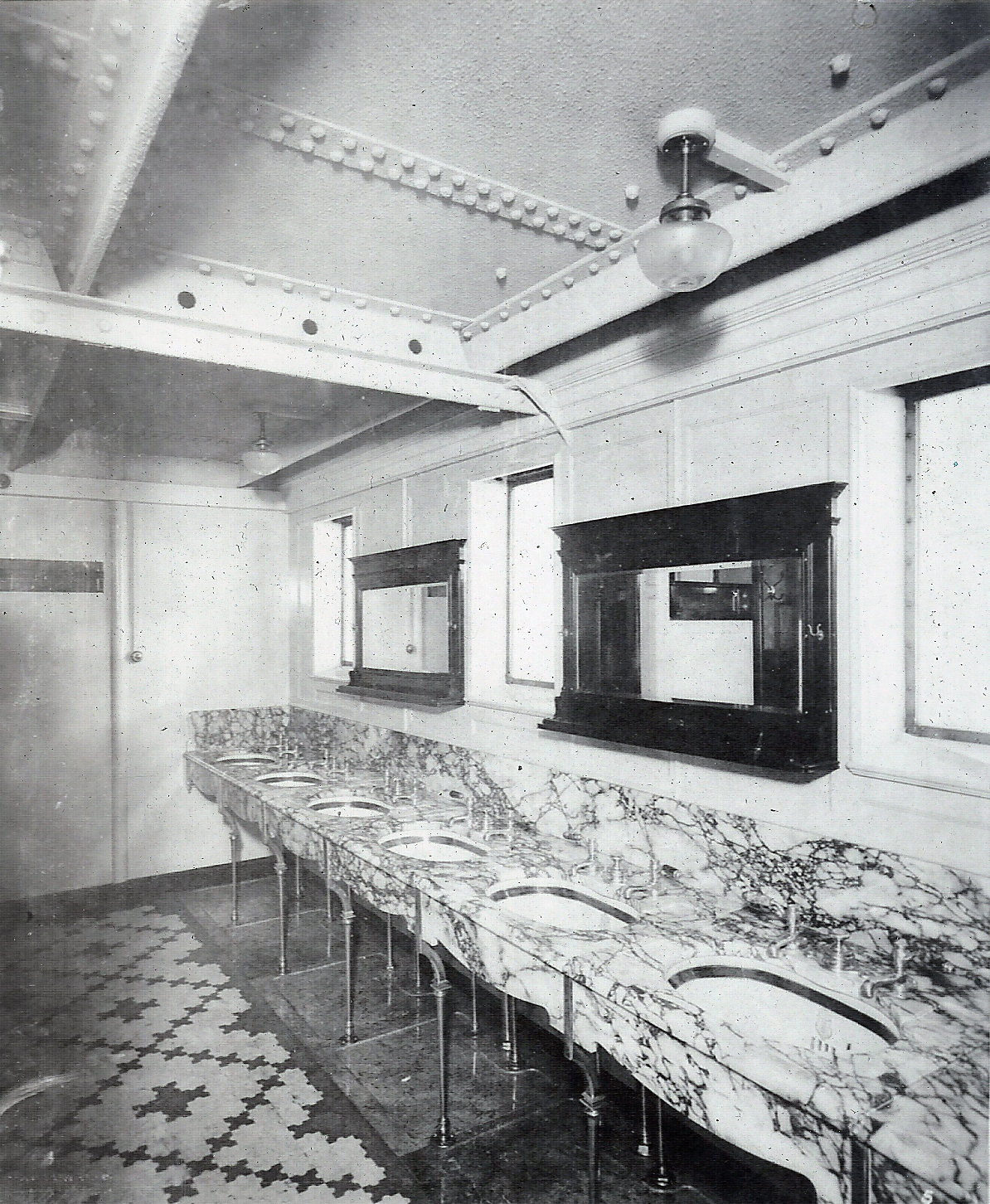
Hardly the topic of a long article but the discovery of a box of original Doulton glass plates used for their catalogues and adverts from the 19th and early 20th Centuries inspired me to share some of them with you all as I imagine they were long discarded as not interesting. Aside from the Victorian style used, you can get a glimpse of the sheer variety of customers that Doultons must have supplied from grand hotels to shipbuilders!! Over the years I have come across a number of early ‘Sanitaryware’ catalogues where such items as the ones in the pictures are illustrated.

Anyway, a glimpse into the past….enjoy!

Christopher

Image

Image

Image

Image

Image

Although there are many more slides….I wonder how many toilets we want to look at in one go, so all for now! Thanks for reading!


Doulton for Doulton’s sake!

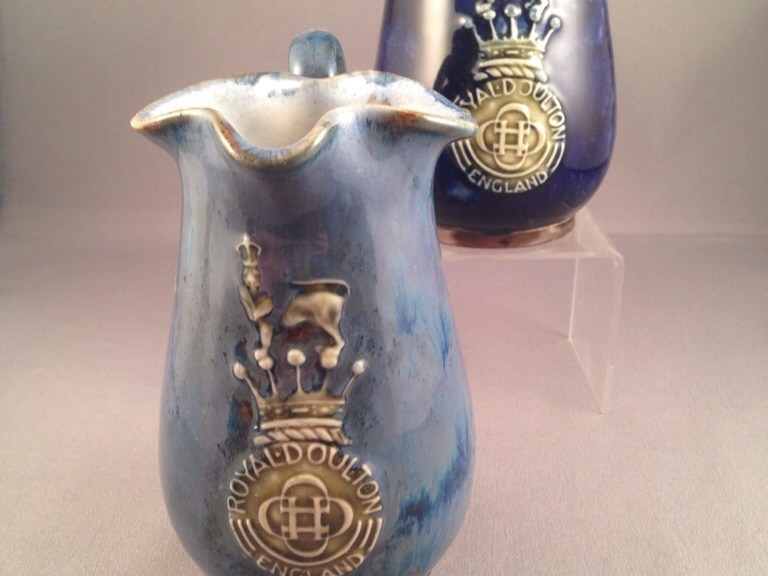
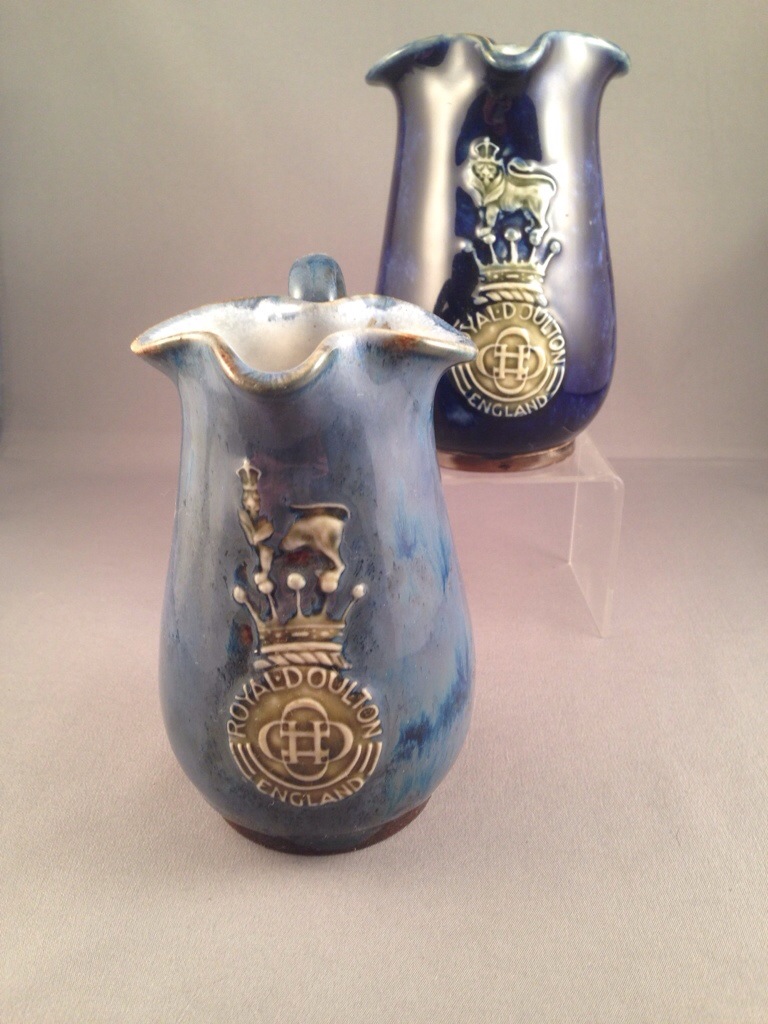
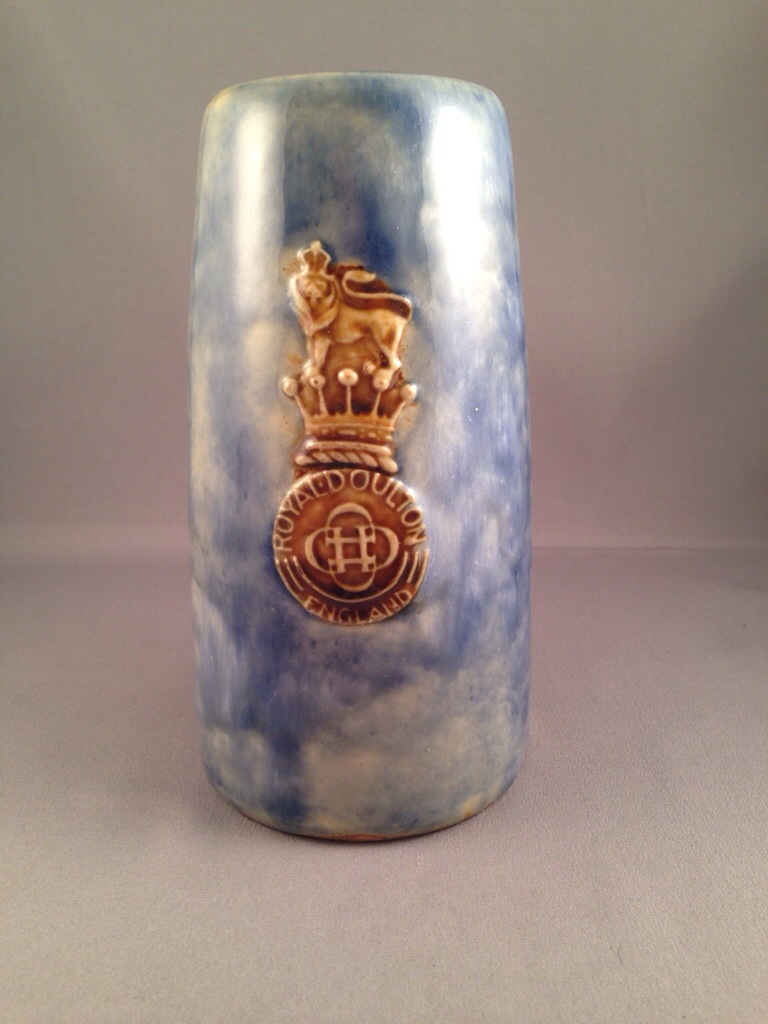
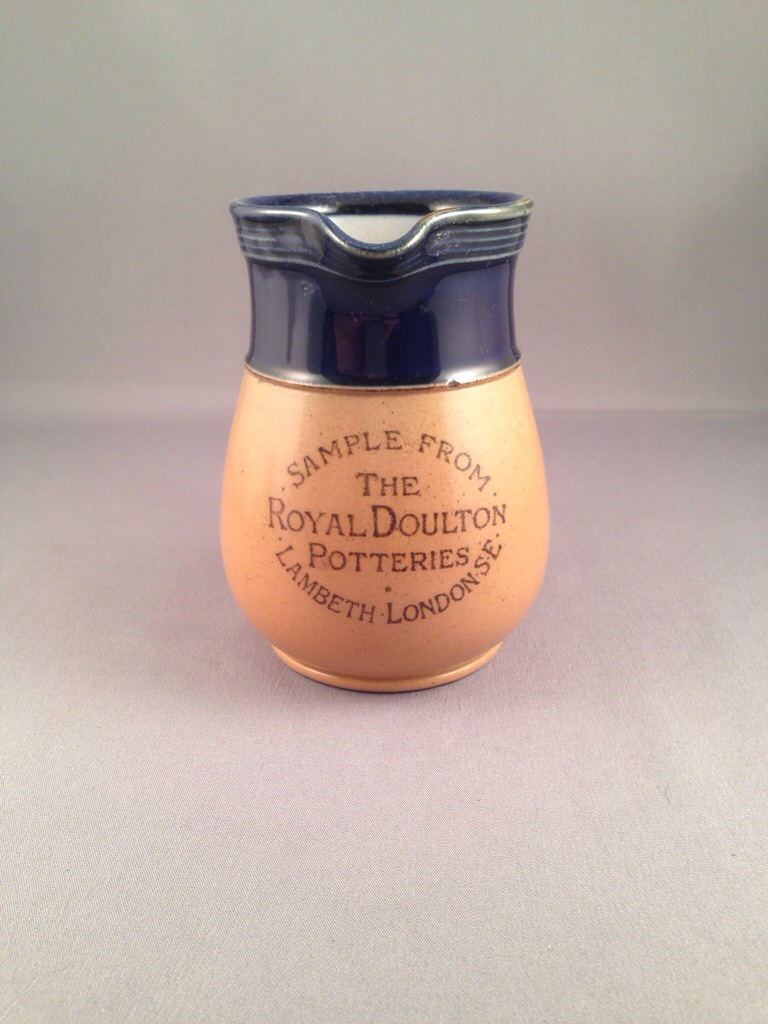
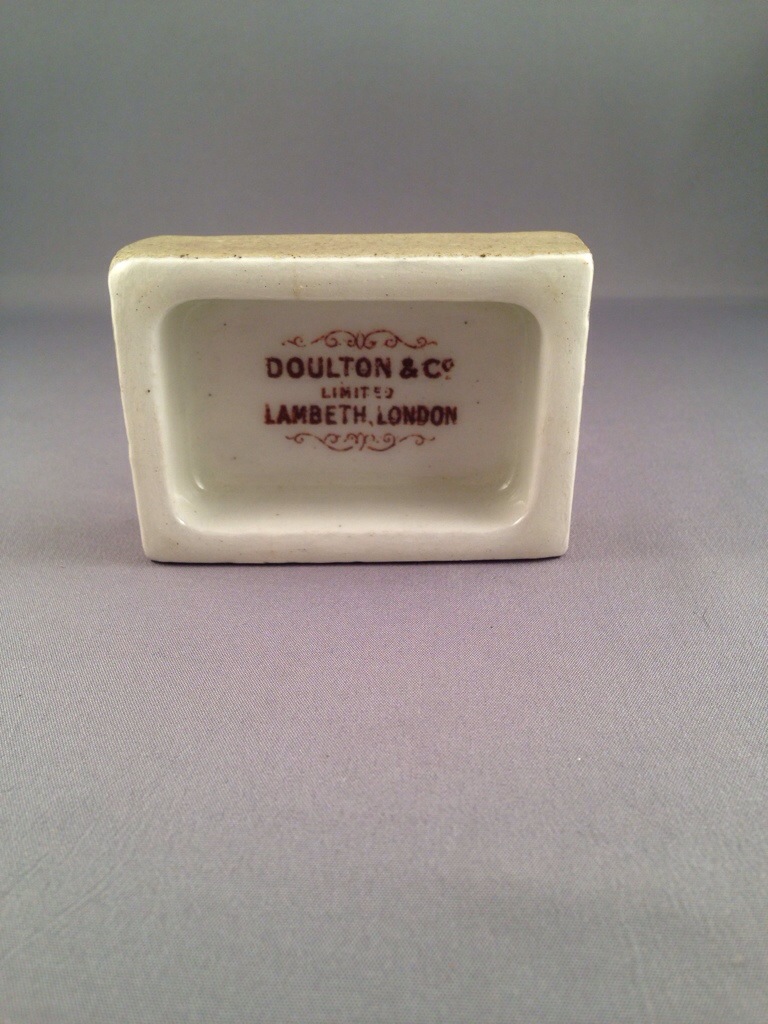
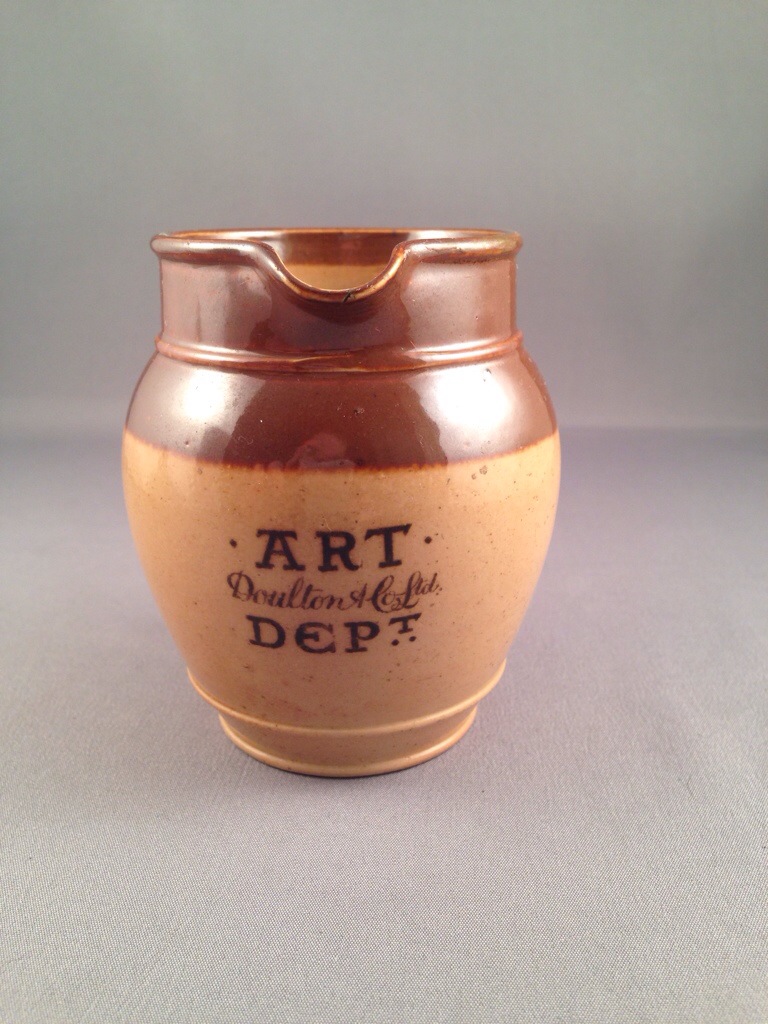
With a book devoted specifically to this field of collecting and others by Jocelyn Lukins covering advertising wares made and Lambeth and Burslem also available via Paul Webster Antiques, I thought I would share some interesting pieces I have come across where Doulton have produced items for their own publicity.

20140504-172019.jpg

A pair of small Lambeth jugs early 20th Century

20140504-172026.jpg

A similar vase to the two jugs above, again early 20th Century

20140504-172034.jpg

An unusual jug produced as an example of Doulton’s stoneware

20140504-172043.jpg

A miniature tradesman’s sample of an early Doulton belfast sink

20140504-172053.jpg

A pot from the Lambeth Art Dept. that ‘escaped’ at some point!

20140504-172101.jpg

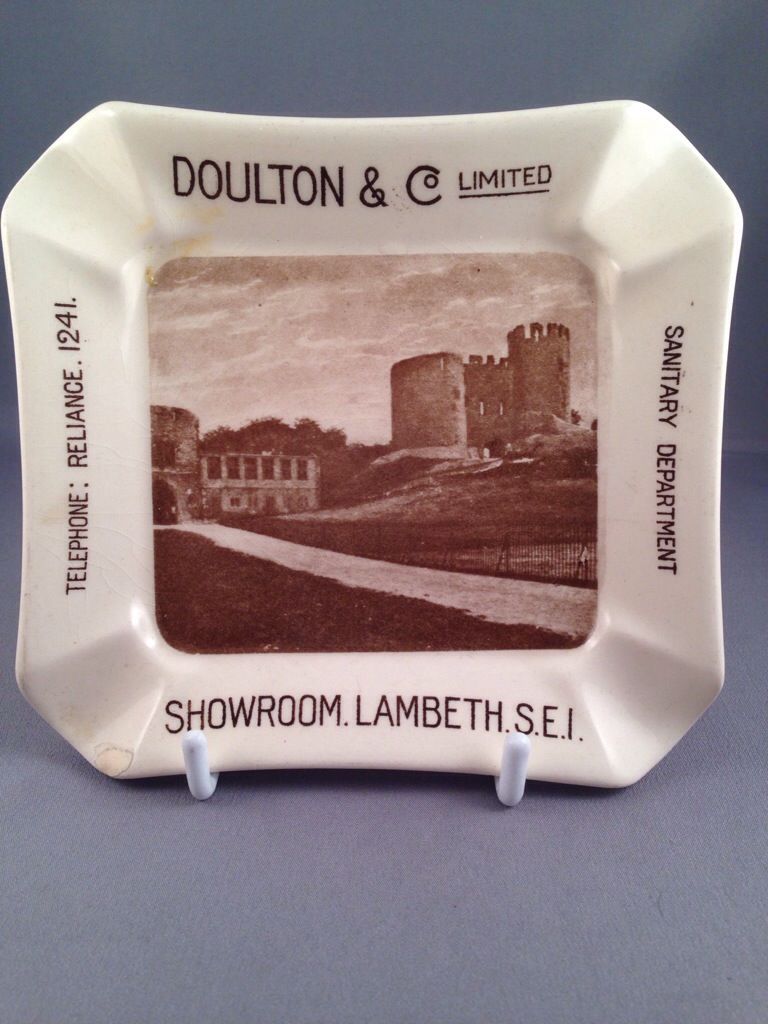
An interesting Burslem piece this time, for Sanitary ware and the London Showroom

20140504-172108.jpg

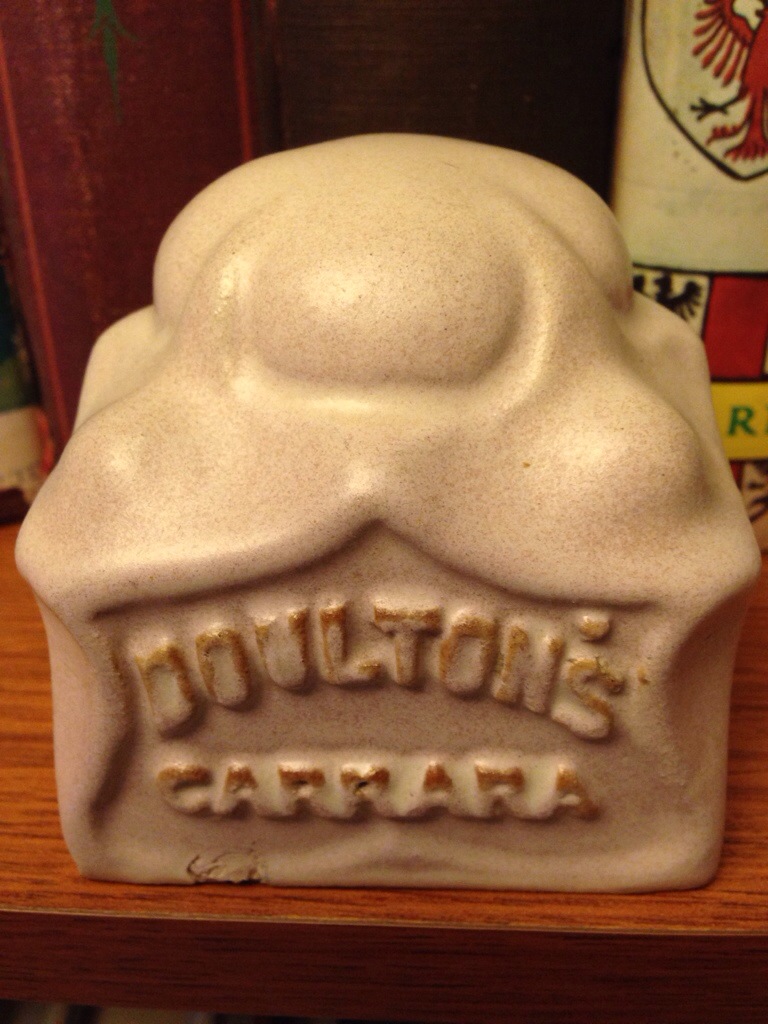
Carrara ware pieces occasionally turn up including the Mark Marshall Seahorse or Harradine’s Polar bear, but I have never seen this piece again. It is almost a scarab design. Whatever it might be it is certainly art nouveau in style.

20140504-172119.jpg

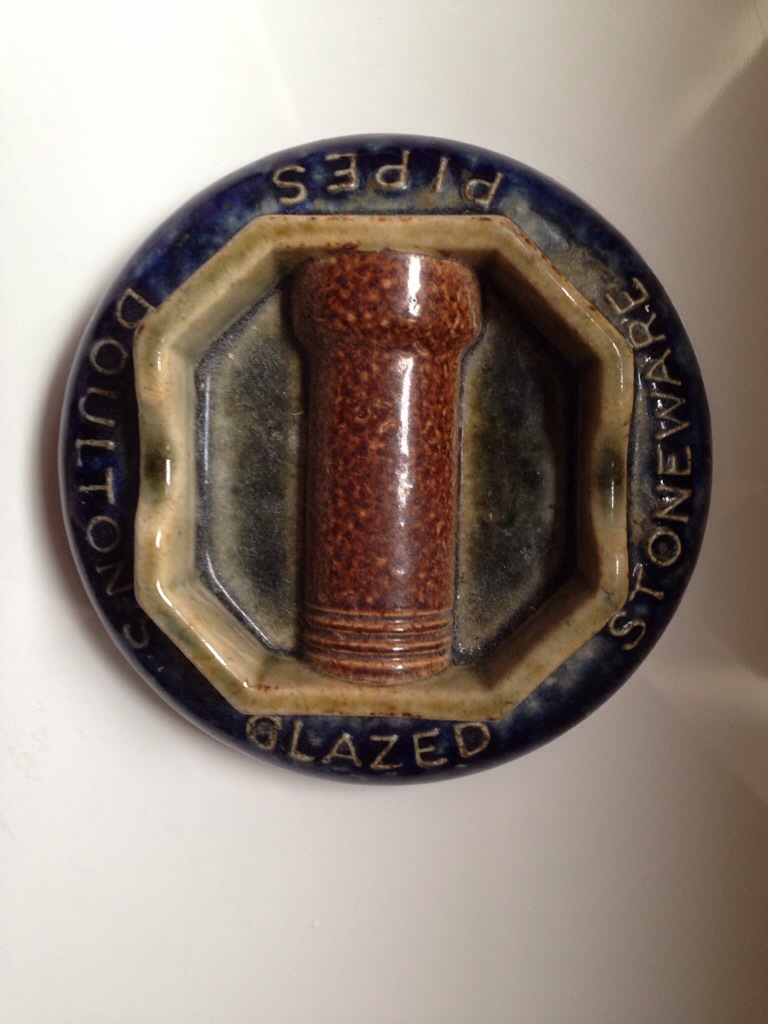
Doulton drainpipes this time; here we have an ashtray with a central pipe. We must all pay hommage to these simple drainpipes, as it was they and other utilitarian wares that funded the art department at Lambeth for so long!

20140504-172126.jpg

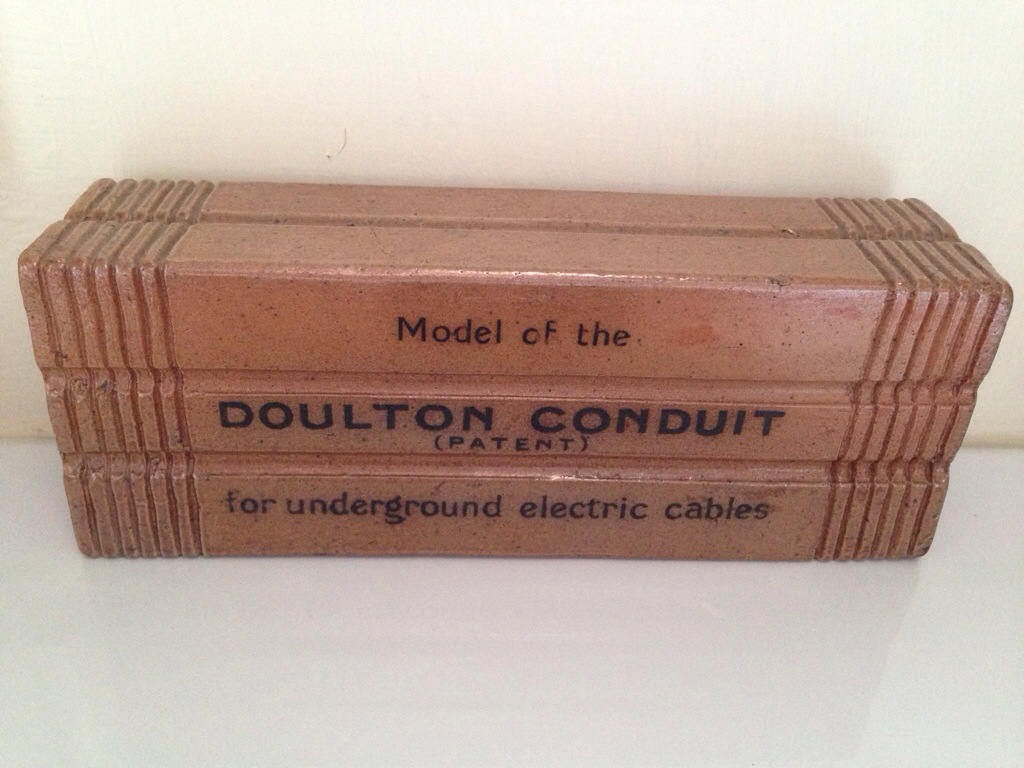
One of my favourite finds! An early sample of the conduit used in the London underground.

I am sure we would all love to hear from collectors with other unusual Doulton advertising wares, so join our facebook page ‘Doulton Collectors Club’ and post pictures for us all to see!!

Leslie Harradine Part 2 – A change of allegiance

Image

A rare photograph of Leslie Harradine

The next chapter of Harradine’s association with Doulton begins in 1919. Noke, Art Director at Doulton’s Burslem factory recognised Harradine’s talent for figure making and attempted to recruit him. Noke had been particularly impressed by the set of six Dickens figures Harradine had modelled for Lambeth.

Image

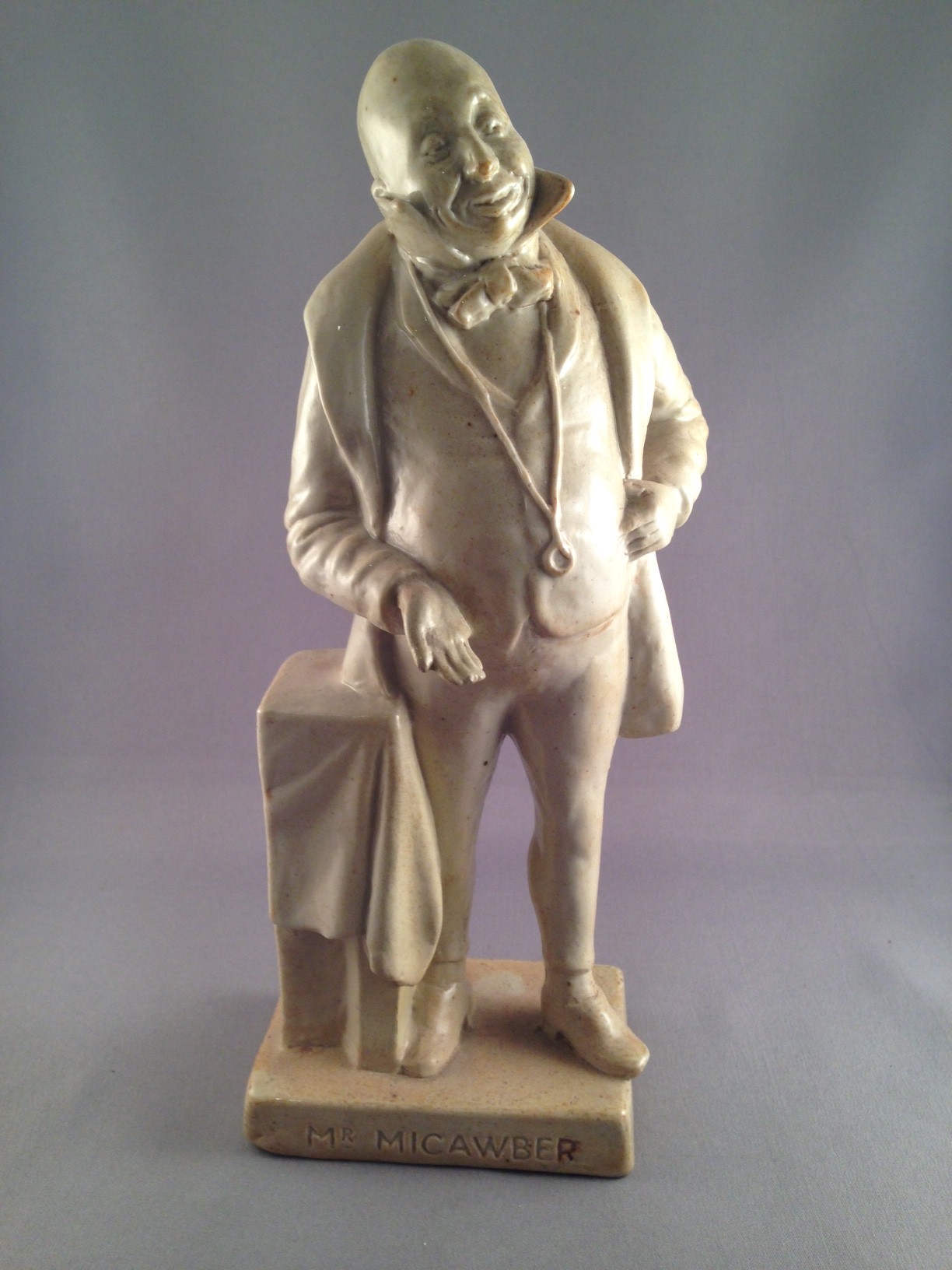
One of Harradine’s six Dickens figures made for Lambeth – Mr Micawber

However, not under any circumstances would Harradine consider working at Burslem, but via Lambeth’s Art Director Joseph Mott’s intervention, a meeting between Noke and Harradine was arranged whereby Noke travelled to London to meet with Harradine. The result of this meeting was of course that arrangement that has become legend amongst Doulton figure collectors. Thus Noke and Harradine came to an arrangement, whereby Harradine would send a succession of models to Burslem for Noke’s approval and a change of allegiance to Doulton’s of Burslem. This was an arrangement that lasted almost 40 years and would continue when Noke’s son succeeded him as Art Director in 1936 at Burslem. Harradine modelled in his preferred medium – salt glaze stoneware and sent one or two models per month wrapped in brown paper, and whose arrival would cause something of a stir when they arrived in Burslem.

Image

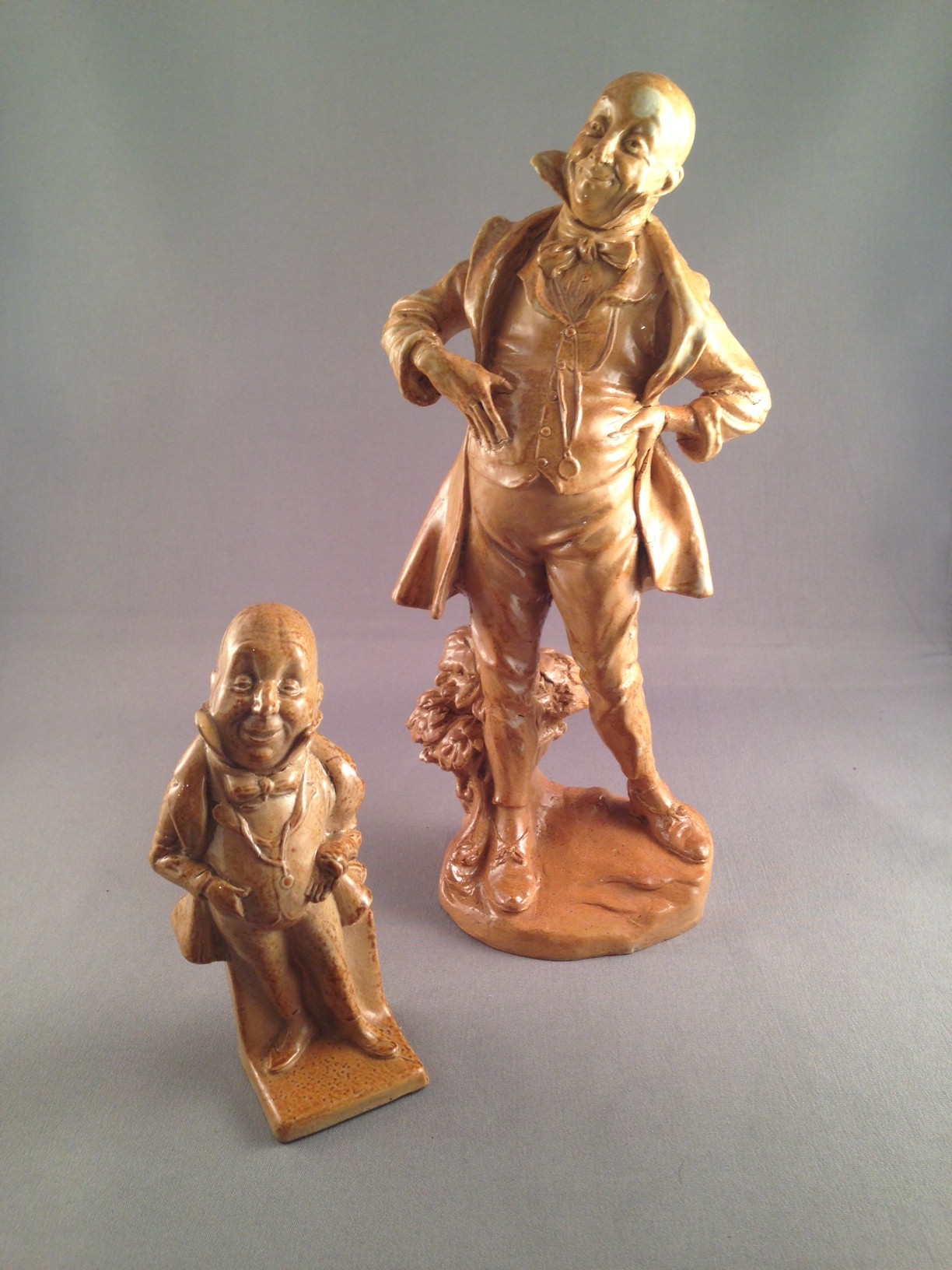
Here are two of Harradine’s original models for Burslem figures, both of Mr Micawber (first and second versions)

His models would deliver the popular success that the HN range had hitherto not achieved, representing fashions and interests from their own era. Harradine modelled women, men and children with equal skill. His figures entered the HN range in 1920 with The Princess HN391 until 1956, when his last ‘new’ model was introduced, Dimity HN2169, although many of his studies remained in production decades after this.

Image

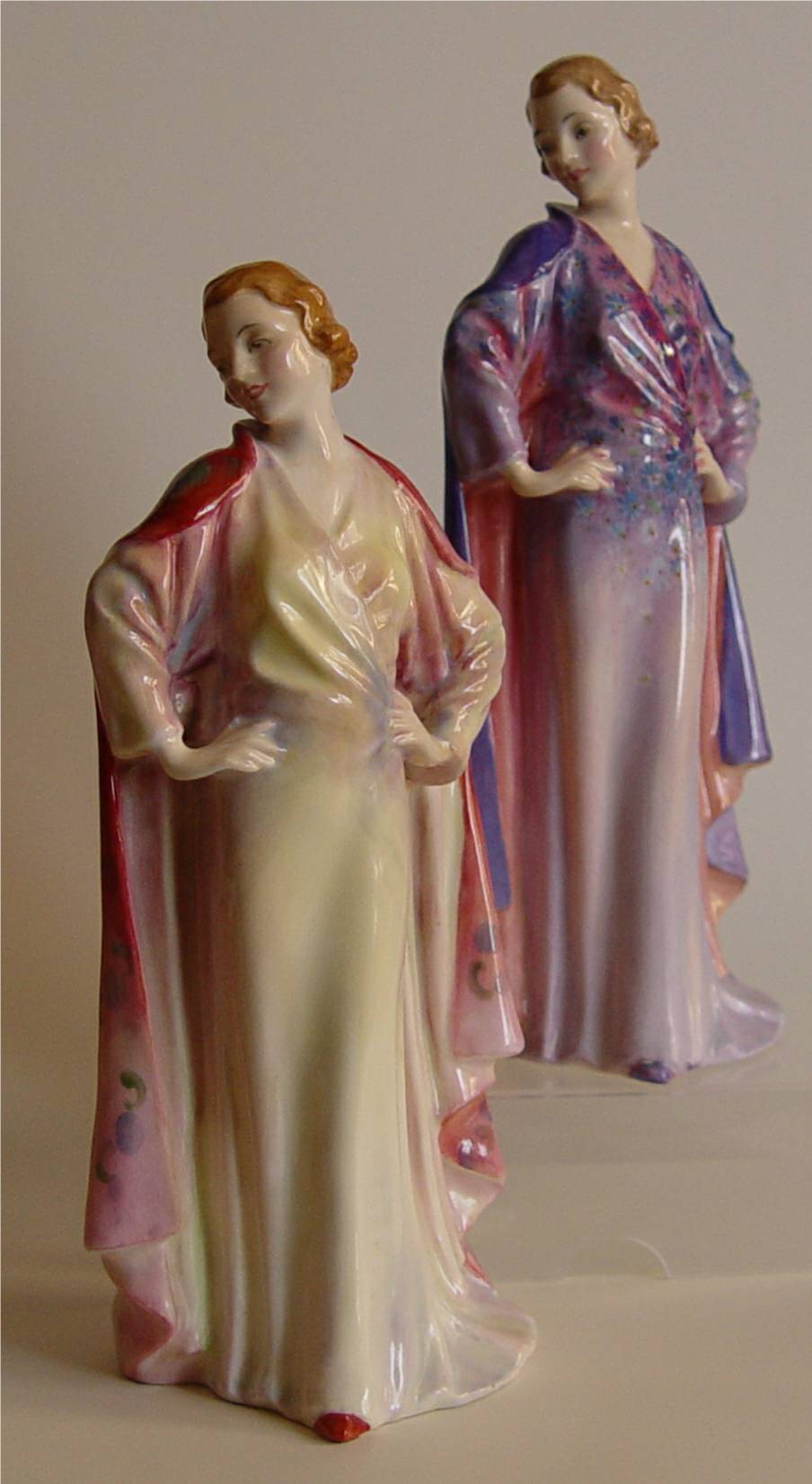
The very stylish Clothilde in two colourways

At last Noke had found a modeller who could tap into the so-called ‘moment’ whatever it was, whether it is flapper girls, Victorian ladies, children or group studies. All were executed with precision and subtle style. Harradine remained something of a nomad yet he continued sending in models from addresses in England, the Channel Islands and Spain until the end of this great partnership.

In our final part to the Harradine story, we will look at Leslie Harradine, the family man.

Leslie Harradine – Part 1 The early Lambeth years

Leslie Harradine – Part 1 The early Lambeth years

Much has been written about Leslie Harradine over the decades since the resurgence of interest in Doulton art wares.
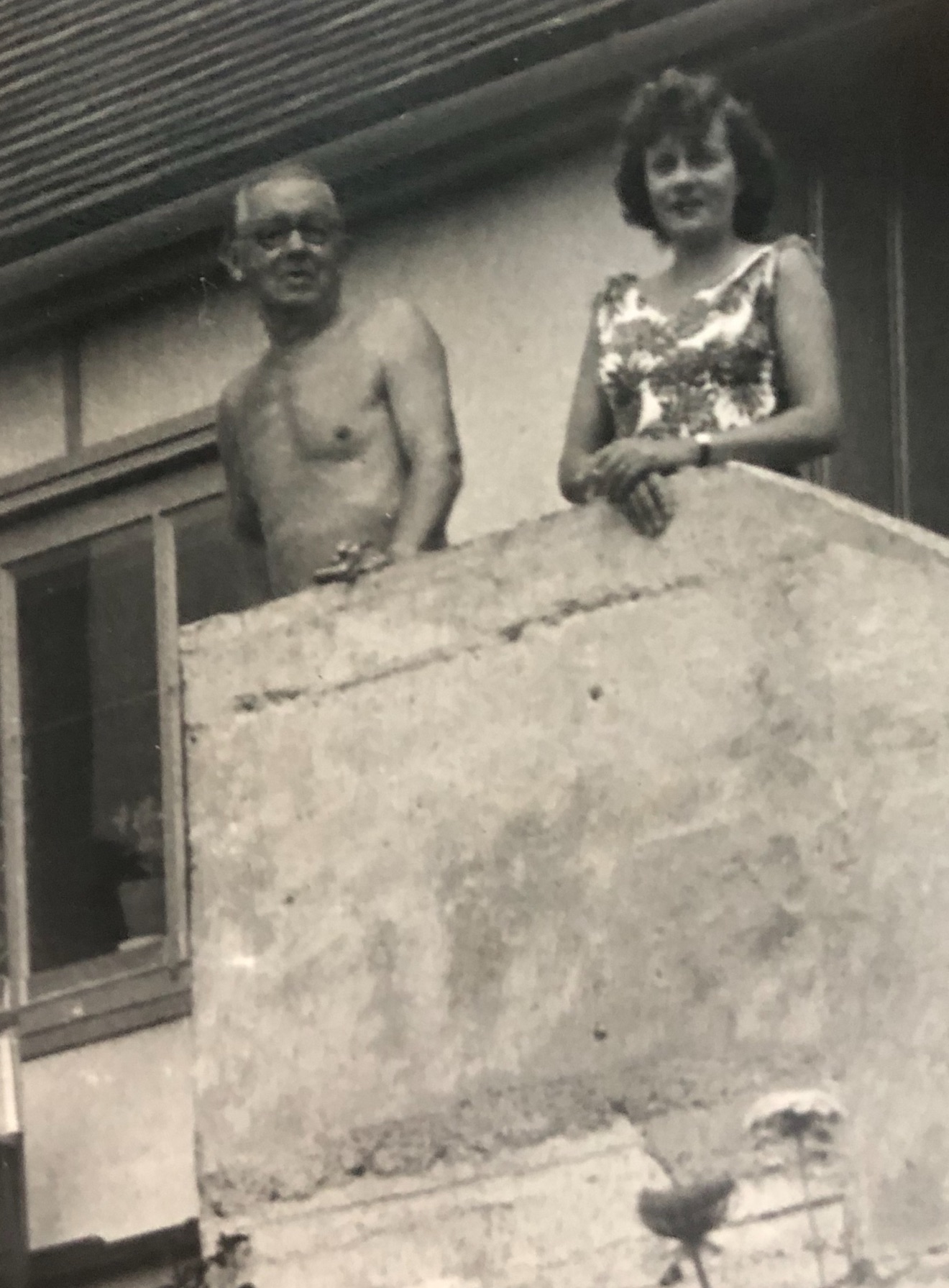
Above: A rare glimpse into Harradine’s life with his 3rd wife.

Arthur Leslie Harradine was born in 1887 in Clapham, London, the son of a solicitor. In 1902 at the age of 15 he began an apprenticeship at Doulton as a learner modeller under the tutelage of George Tinworth and John Broad, although he also assisted Mark Marshall and Frank Pope at this time too. He would late remark about his experiences at this point in his life that he wished ‘he (Tinworth) would give up those dreary religious plaques and concentrate on mice and frogs’. Perhaps providing us with a clue not only into his own artistic preferences but also into his personal beliefs too.

During this early training Harradine attended evening classes at Camberwell School of Art under Albert Toft, who ironically would provide the model W. S. Penley as Charley’s Aunt HN35 to what would become the HN collection, that Harradine himself would influence so dramatically only a few years later.

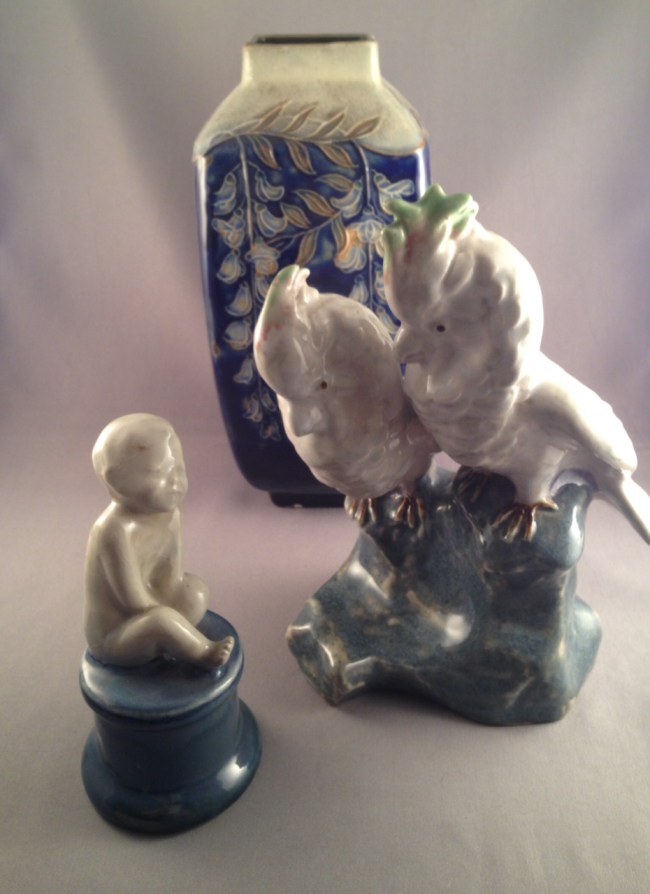
In 1908 suffering from the confines of factory life, Harradine left Doulton at the end of his apprenticeship and unexpectedly set up as a poultry farmer in Hertfordshire with his brother Percy. Naturally he set up a studio there and continued the link with Doulton by sending in over eighty different models for them to reproduce as slip cast art ware. The list of items sent varied from figure groups to vases to child figures. These early piece demonstrated perfectly his ability to interpret people from all walks of life and all cultures.
Image

Three examples of Harradine’s early work for Lambeth

With the outbreak of World War I in 1914 Doulton’s art ware production was curtailed and so Harradine decided to emigrate to Canada with his brother, where they acquired 4000 acres of farming land in Saskatchewan. The open spaces suited both brothers and Harradine continued to model pieces but alas could not fire them. In 1916 the brothers enlisted into a Canadian regiment, Lord Strathcona’s Horse Regiment and saw action in France. Leslie had three horses shot from under him and unfortunately the last fell on him, injuring his leg, resulting in his being ‘invalided out’ after long spells in hospitals convalescing.
Image

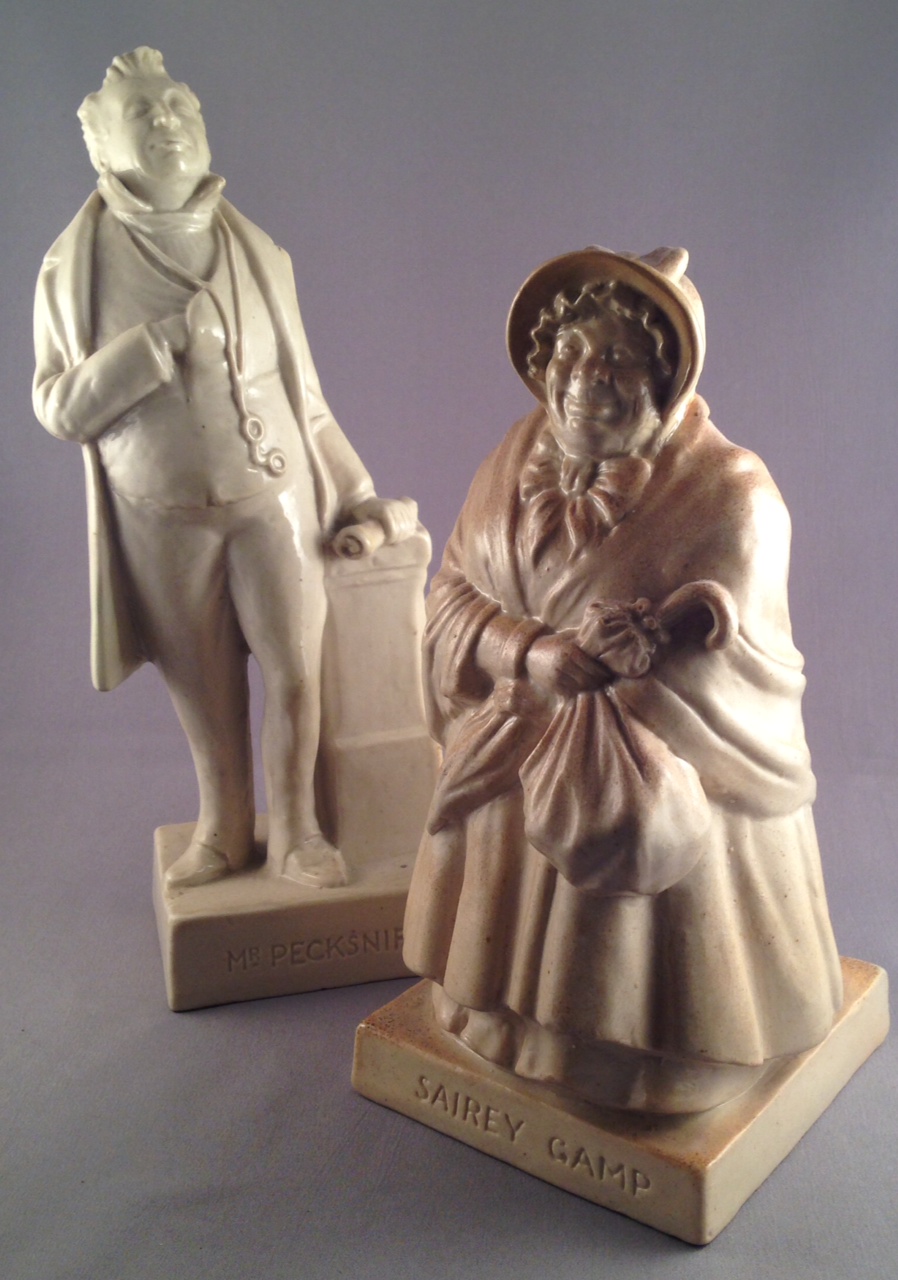
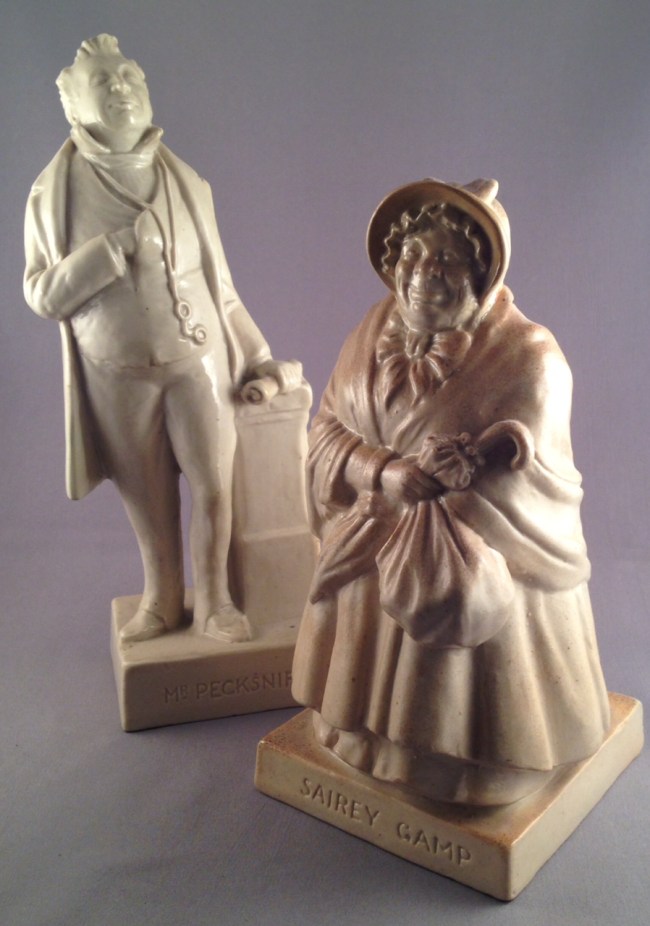
Two of Harradine’s large size Dickens figures made at Lambeth

By the end of the war family life had added a new dimension to his bohemian life. With a wife and a daughter, with two more daughters to follow, Harradine became a freelance artist to support his young family; continuing to do models for Doulton’s Lambeth works.
Image

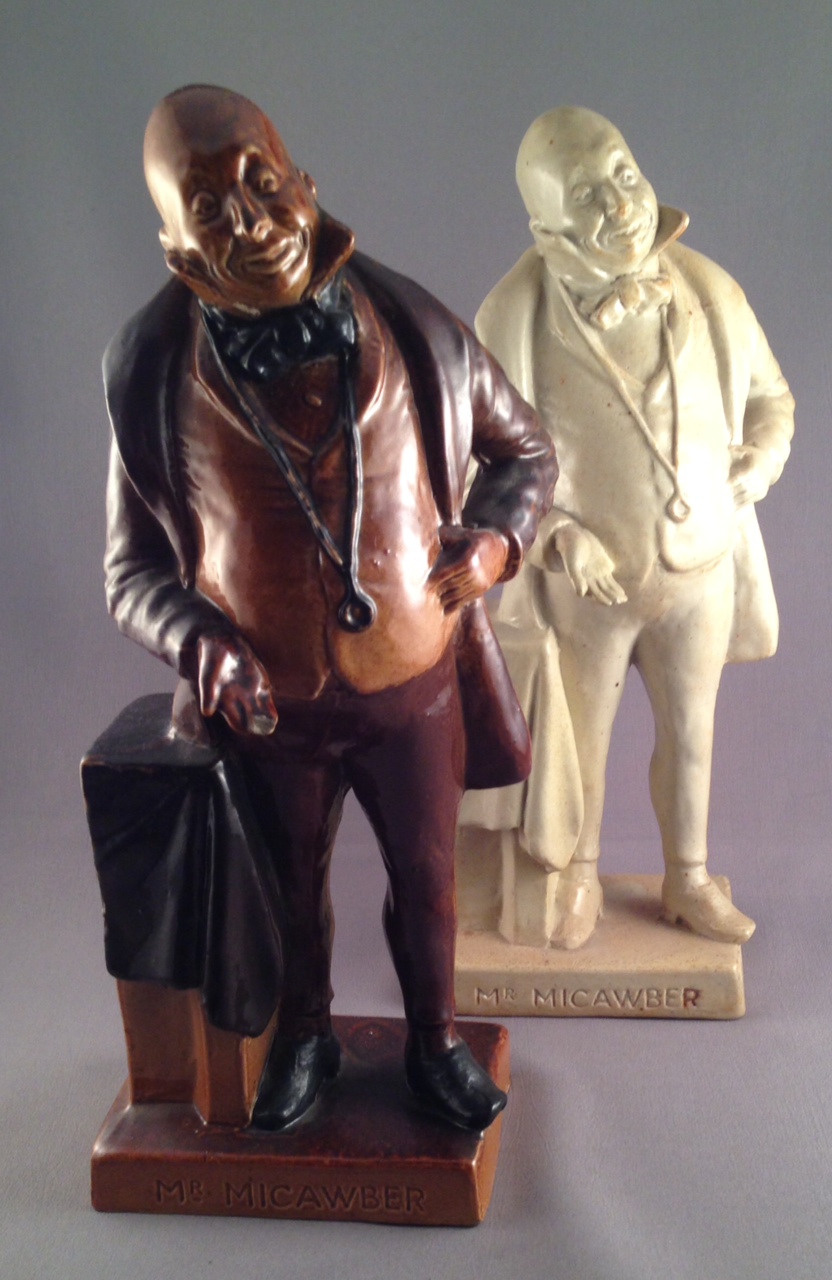
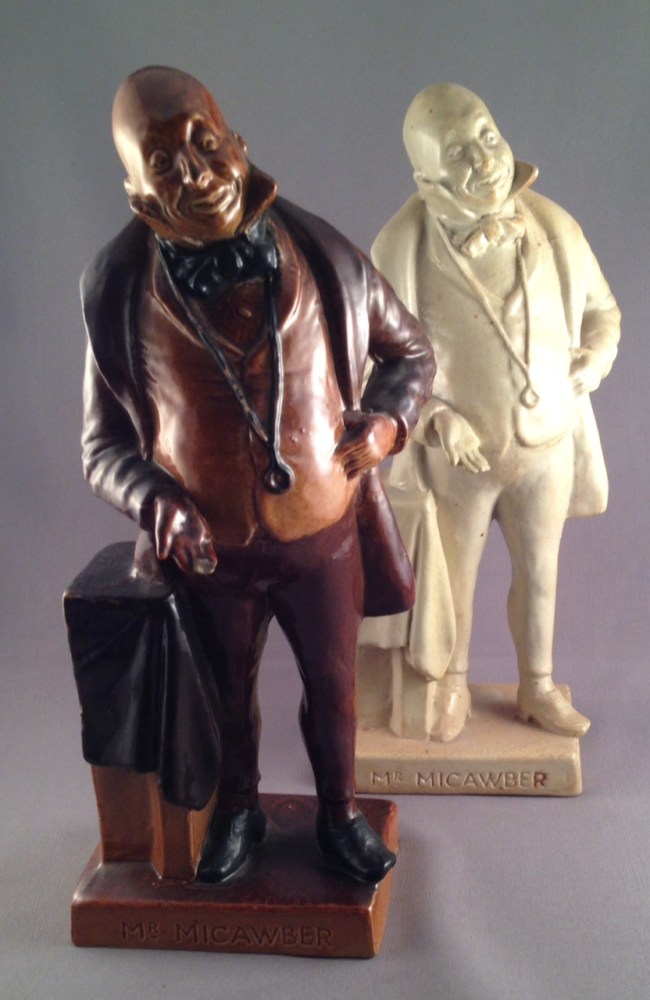
Mr Micawber made at Lambeth. The brown glazed version is much more unusual, although perhaps less popular than the usual white glazed figure

And so the first chapter of Harradine’s association with Doulton comes to a close. In the next we will look at how new links were established with Doulton at Burselm and the great influence he made on the HN collection for Doulton.


Doulton at War (1939-45) – A brief account of the damage at both the Burslem and Lambeth factories

Much is documented about the wares produced by Doulton during this period as much of what was produced is so very rare that only one or two examples of items exist to this day.
However, very little has been documented about what actually happened at the Burslem and Lambeth factories at this time. Naturally there was a shortage of raw materials that had a major impact on production, but also the calling up of employees from both factories must have almost halted production of most wares, save utilitarian items needed for the war effort.

Image

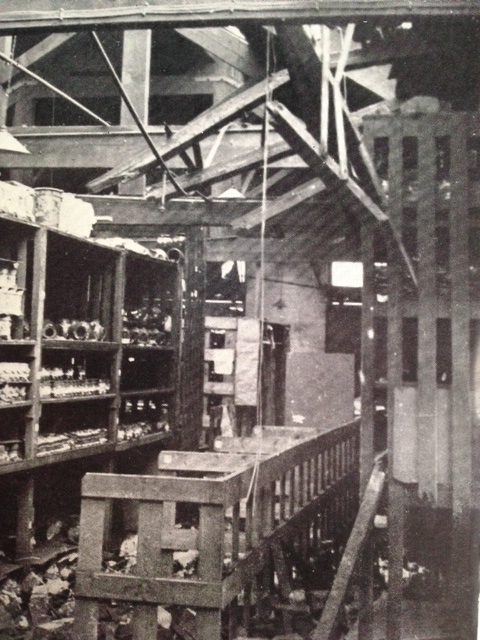
Damage to the Burslem warehouse October 1940

The war came early to the Burslem factory, when in October 1940 a three-storey warehouse housing finished goods and also the Art Director’s studios were bombed. Here you can see a couple of pictures of the debris it left behind. Try as I might the only things I can pin point are a Limited Edition Jug and what is probably some Flambé ware.

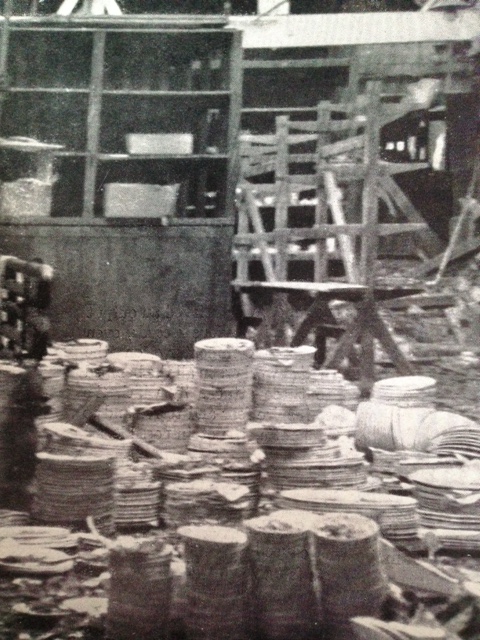
Image

A further view of the damage cause to the warehouse at Burslem in 1940

At Lambeth too, the factory sustained damage as did many of their employees’ homes. In May 1941 the Lambeth showrooms took a direct hit and were destroyed but fortunately there was no loss of life at that point. In typical Doulton form for the company at this time, financial assistance was provided to employees suffering from war damage to their homes.

Whilst the above is merely a snap-shot of events during the war-years, it allows us to share these unique pictures from the time.