EDMUND DULAC 1882 – 1953
Dulac was born in Toulouse, France. His artistic ability showed itself early on and drawings exist from his early teens. He won the 1901 and 1903 Grand Prix for his paintings submitted to annual competitions whilst at the Ecole des Beaux Arts. A scholarship took him to Paris and the Academie Julien where he stayed for three weeks. That same year (1904) he left for London and the start of a meteoric career.
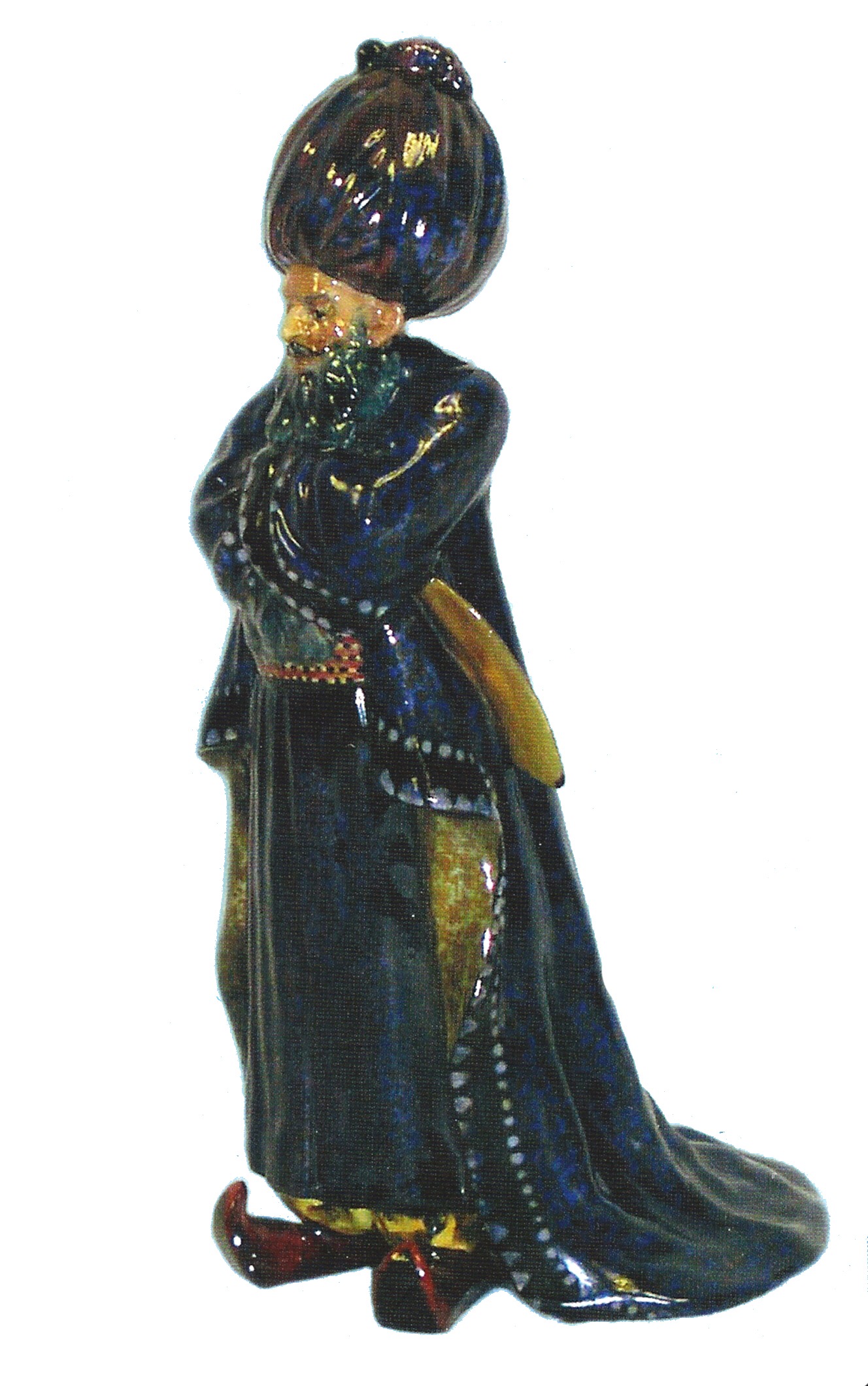
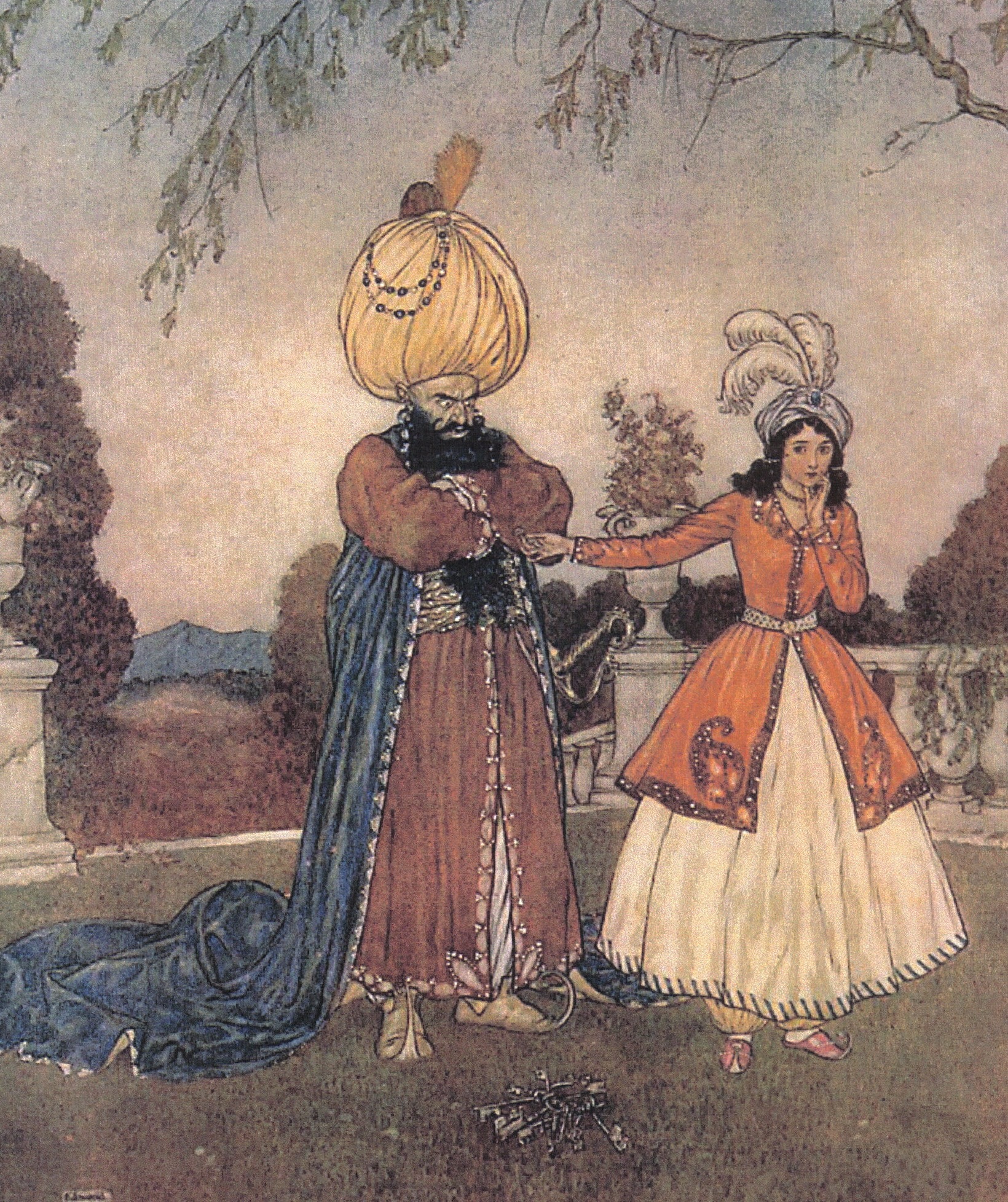
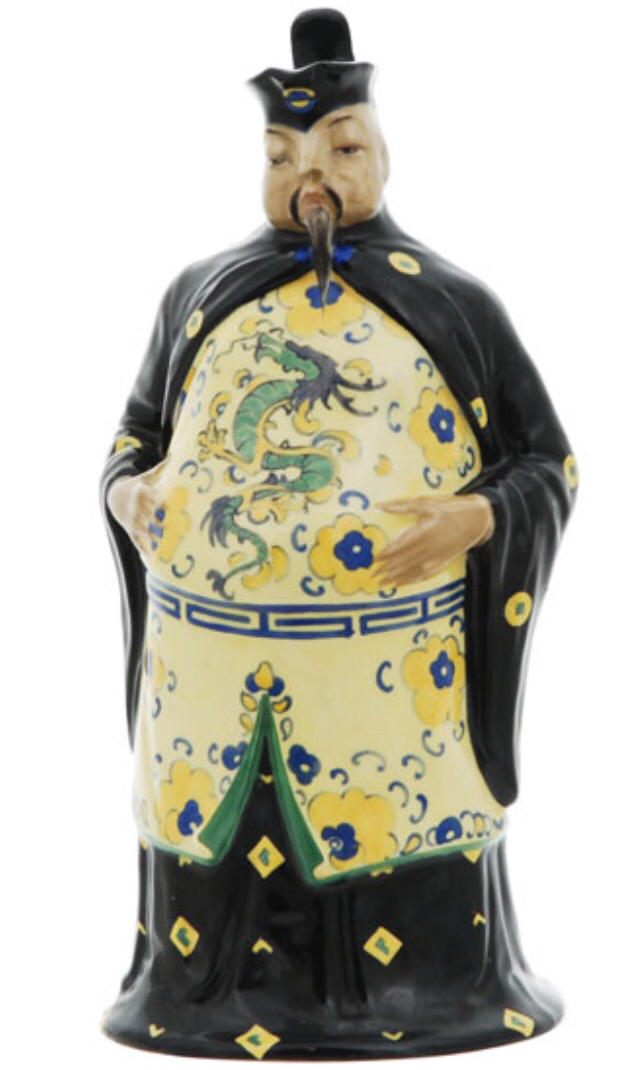
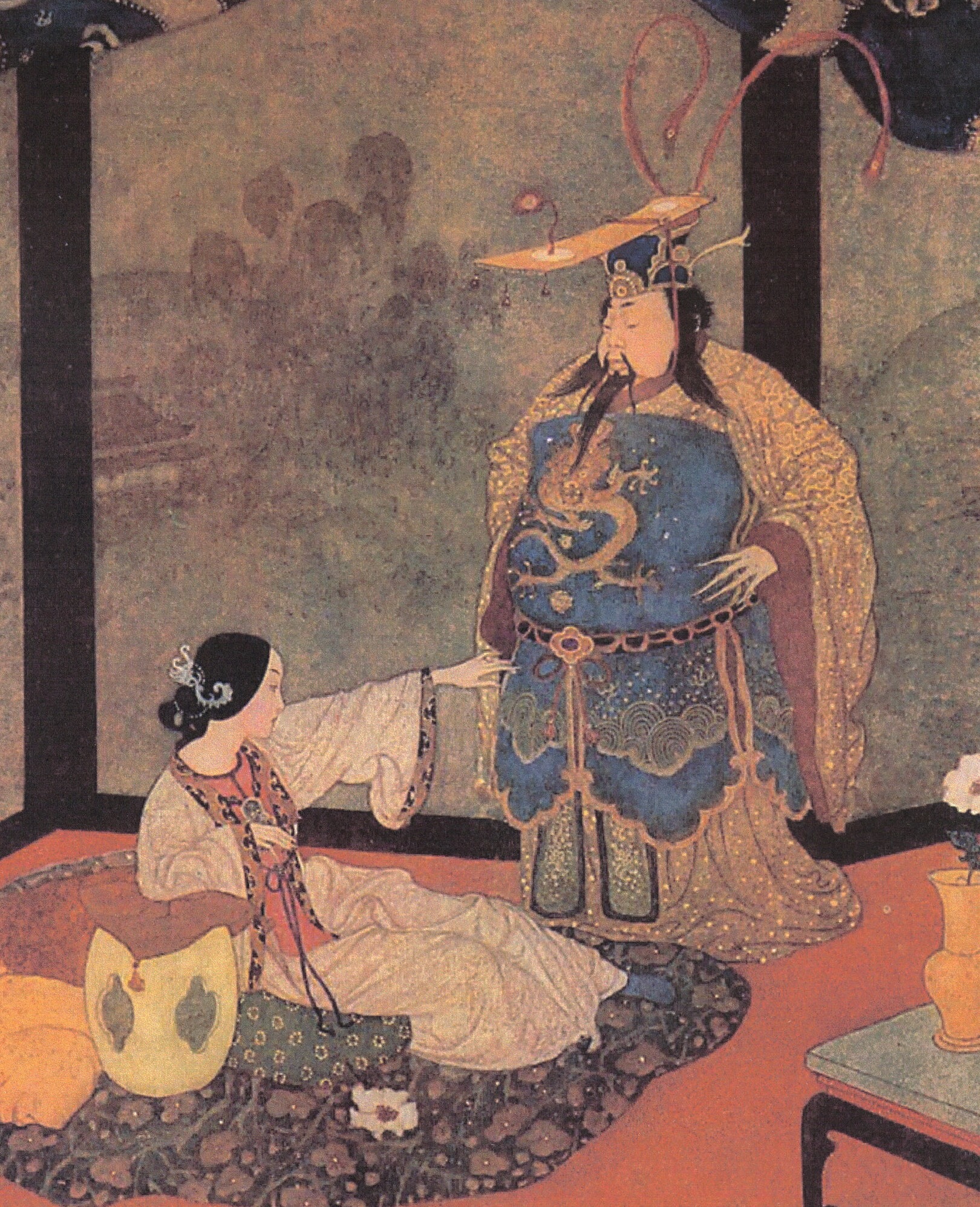
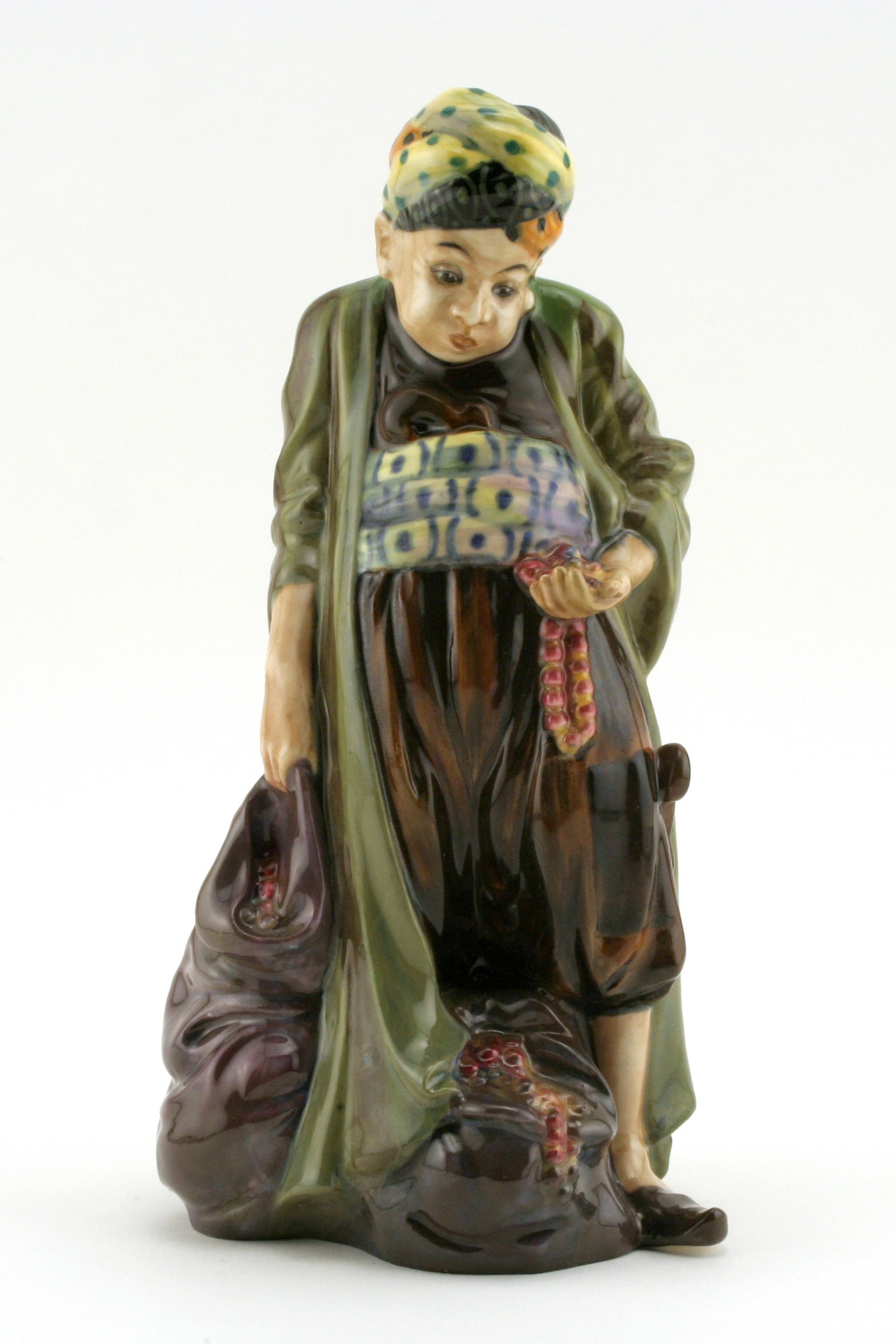
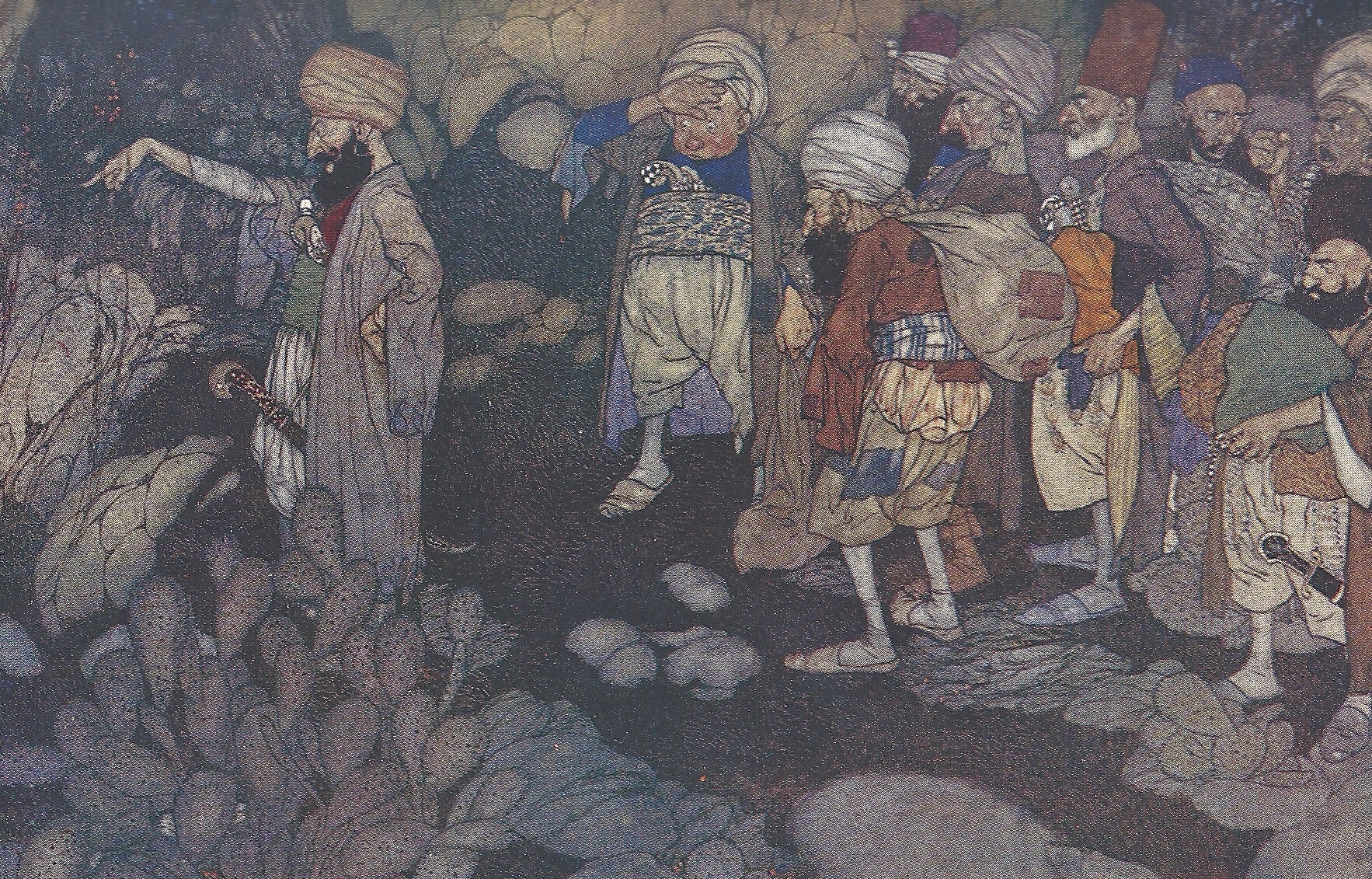
A chance happening across Dulac’s Picture Book for the French Red Cross (1915) led to the following discoveries:
BLUEBEARD HN75 issued in 1917. E W Light.
MANDERIN HN84 issued in 1918 .Charles Noke.
ONE OF THE FORTY HN417 issued in 1920. Harry Tittensor.
Dulac’s illustration above and others by him were used in an early 20th Century version of the popular takes 1001 Arabian Nights.
Also inspired by Dulac illustrations but not shown here is PRINCESS BADOURA HN2081 issued in 1952 again by Harry Tittensor.
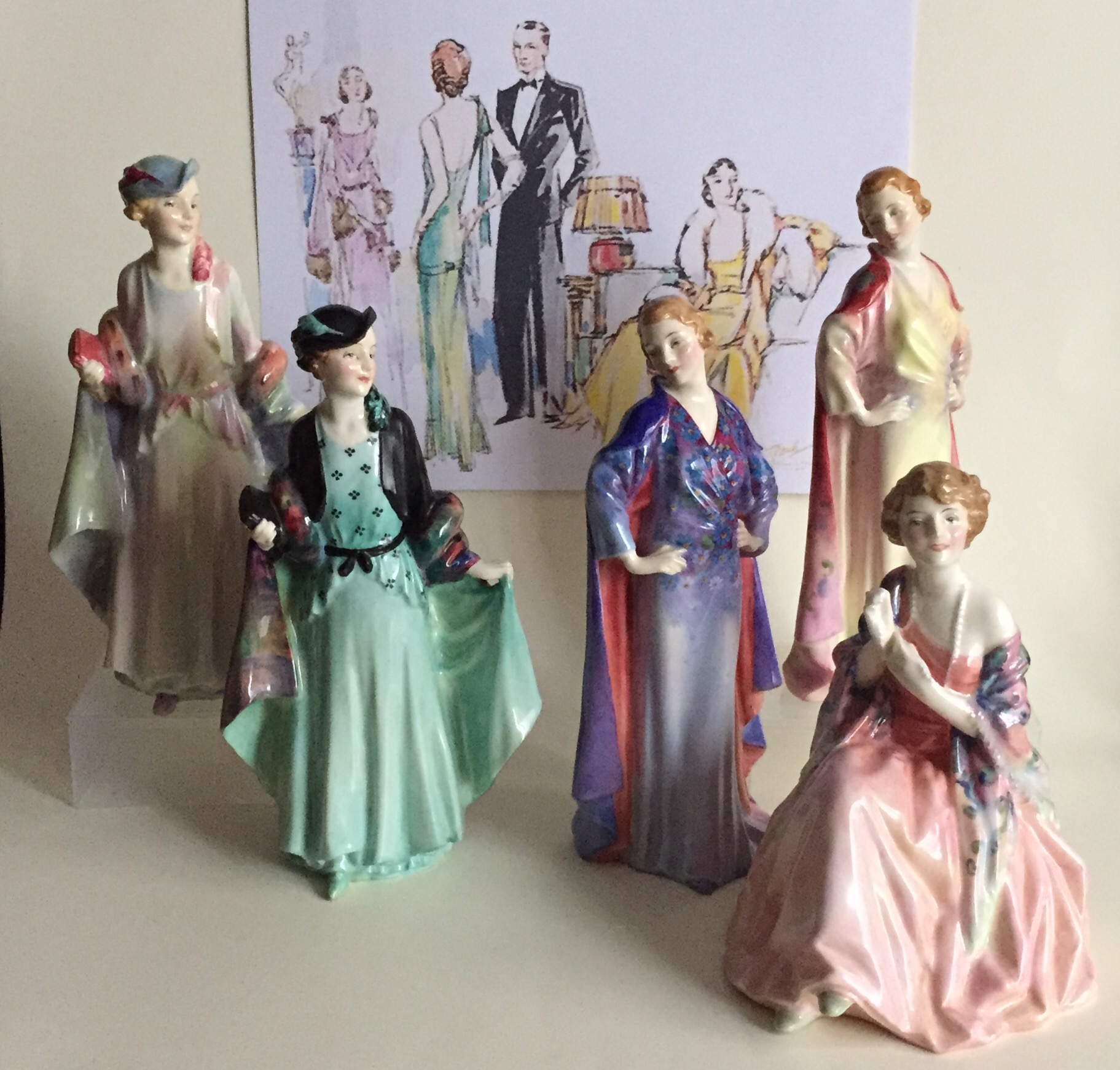
If the 1920’s were typified by ‘Putting on the ritz’ then the 1930’s were about sleek lines and glamour.
Typically, Doulton once again responded to the fashion of the times with a handful of designs inspired straight out of early 1930’s fashion magazines. Indeed we know that Mrs Harradine was a fan of a magazine called Britannia & Eve, as her husband based his figure Pamela on a cover girl from 1930.
Even the names chosen for this select band of ladies represent their time, with stylish names such as Clothilde, Aileen and Gloria.
Once again Doulton figures can be truly said to have represented their times, just as they had in the 1920’s with perennial favourites such as Pierette and Butterfly in their party costumes and as they would at the end of the 1930’s with Hollywood inspired glamour including The Mirror and Nadine.
Don’t forget – Sunday 8th November sees the second of 2015’s Doulton, Beswick and Moorcroft Pottery Fairs. at Tillington Hall Hotel, Stafford.
Simply print an image of this advert for free entry on Sunday 8th November!
Remember if you are a subscriber to the Doulton Collectors Club magazine that there is a special event offer – if you haven’t received your email about it, please PM or email for further details.
Or, If you are not currently a subscriber, please PM or email for further details on how to subscribe.
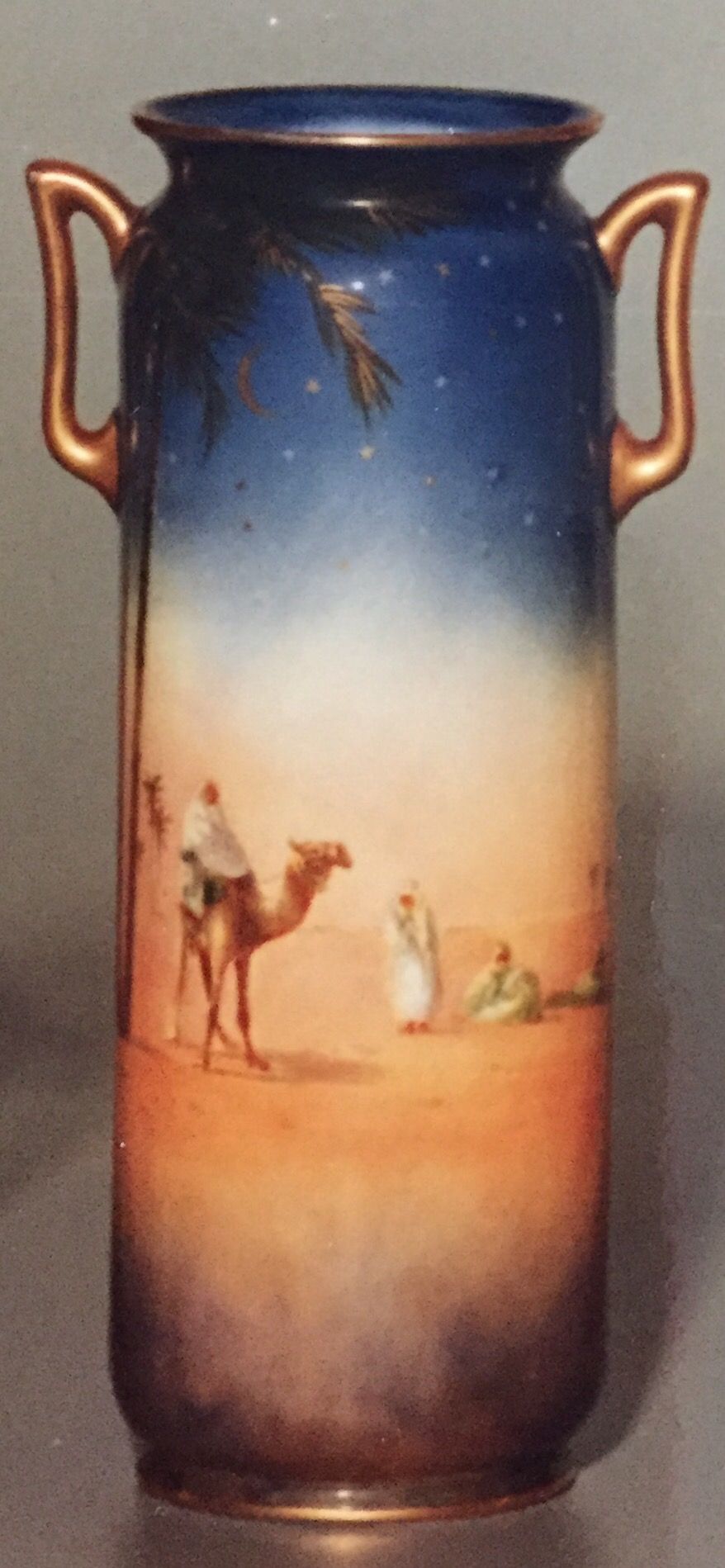
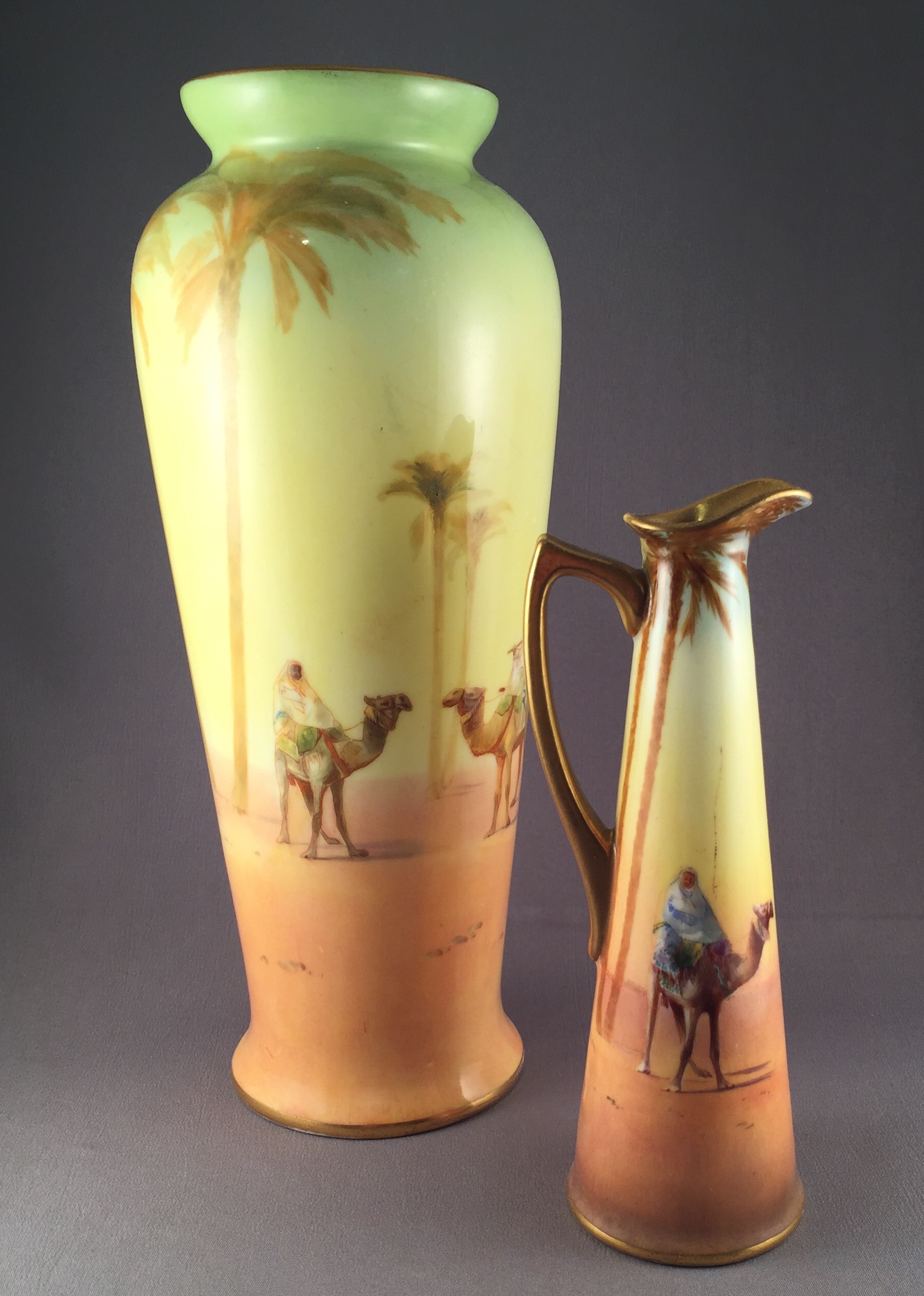
The name Harry Allen will be familiar to many Doulton collectors because of his association with so many of Doulton’s most famous lines from Flambe, Sung, Titanian, figures and of course to the fantastic hand painted items by this great Doulton artist.
The son of Robert Allen who himself led an art studio at Doulton in Burslem, Harry proved himself a versatile artist but he will be forever associated with his enchanting desert scene images carefully painted onto all manner of items from jugs to plates and everything in between!
Whilst not readily available today, with perseverance it is possible to build a collection of his romantic desert scene work. You will find that Harry signed his work either in full or as H. Allen or else as H. A.
The desert scene items I have come across can be dated to c. 1905, with the yellow desert background being the most usual.
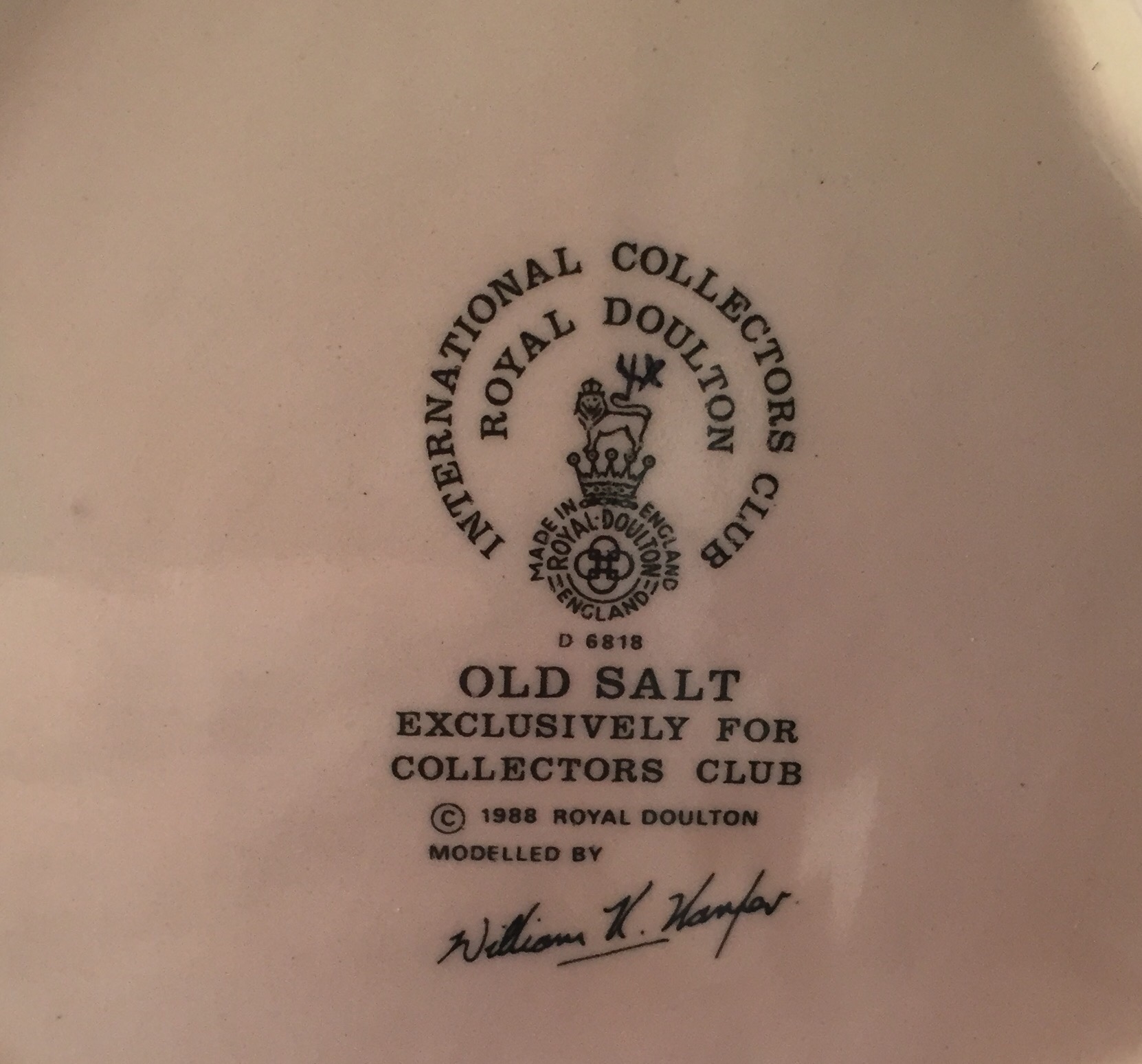
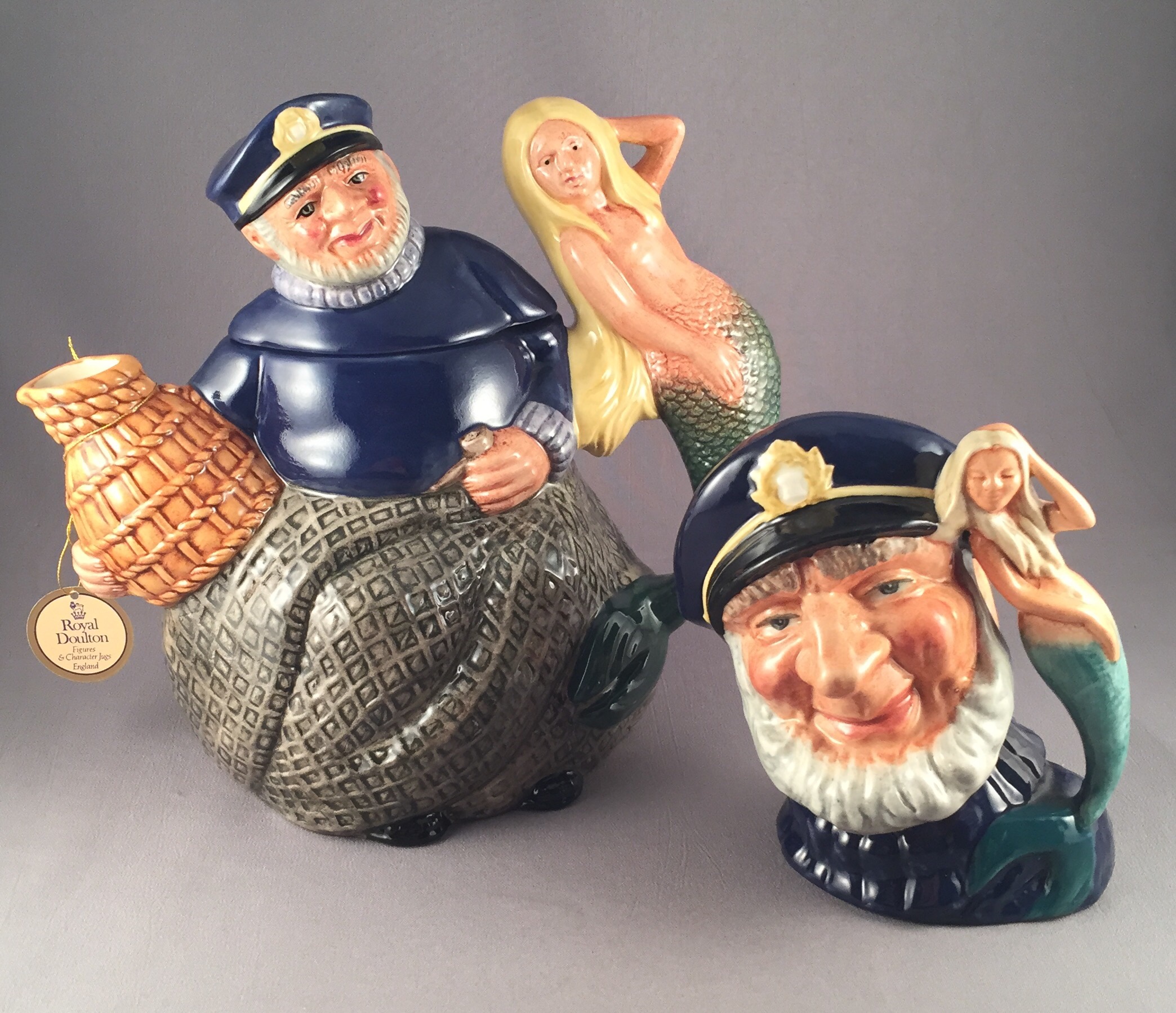
Originally introduced in 1939 for a very brief period, Doulton once again introduced character teapots in 1988 with Old Salt pictured. Once again it was a remodelled character jug personality that provided inspiration for the piece. Thereafter other famous Doulton characters appeared including the Balloon Man and Woman Teapot based on those two famous figures. The difference being with these new teapots was that whilst Old Salt was a RDICC exclusive, many of the other new models weren’t but were limited edition pieces.
Old Salt teapot and original character jug that inspired it!
Whilst many characters were produced to a prototype stage, they never reached full production so the range was originally intended to be quite extensive.
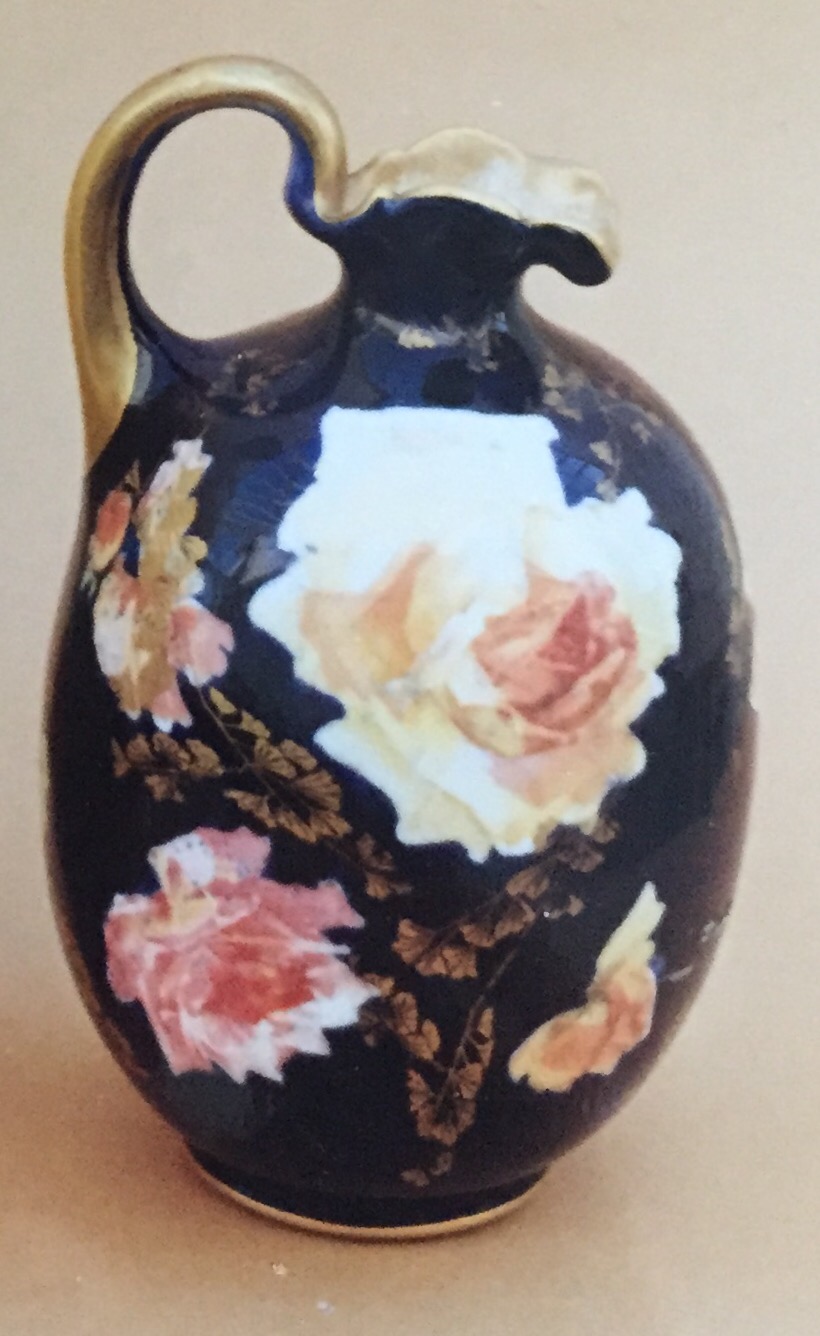
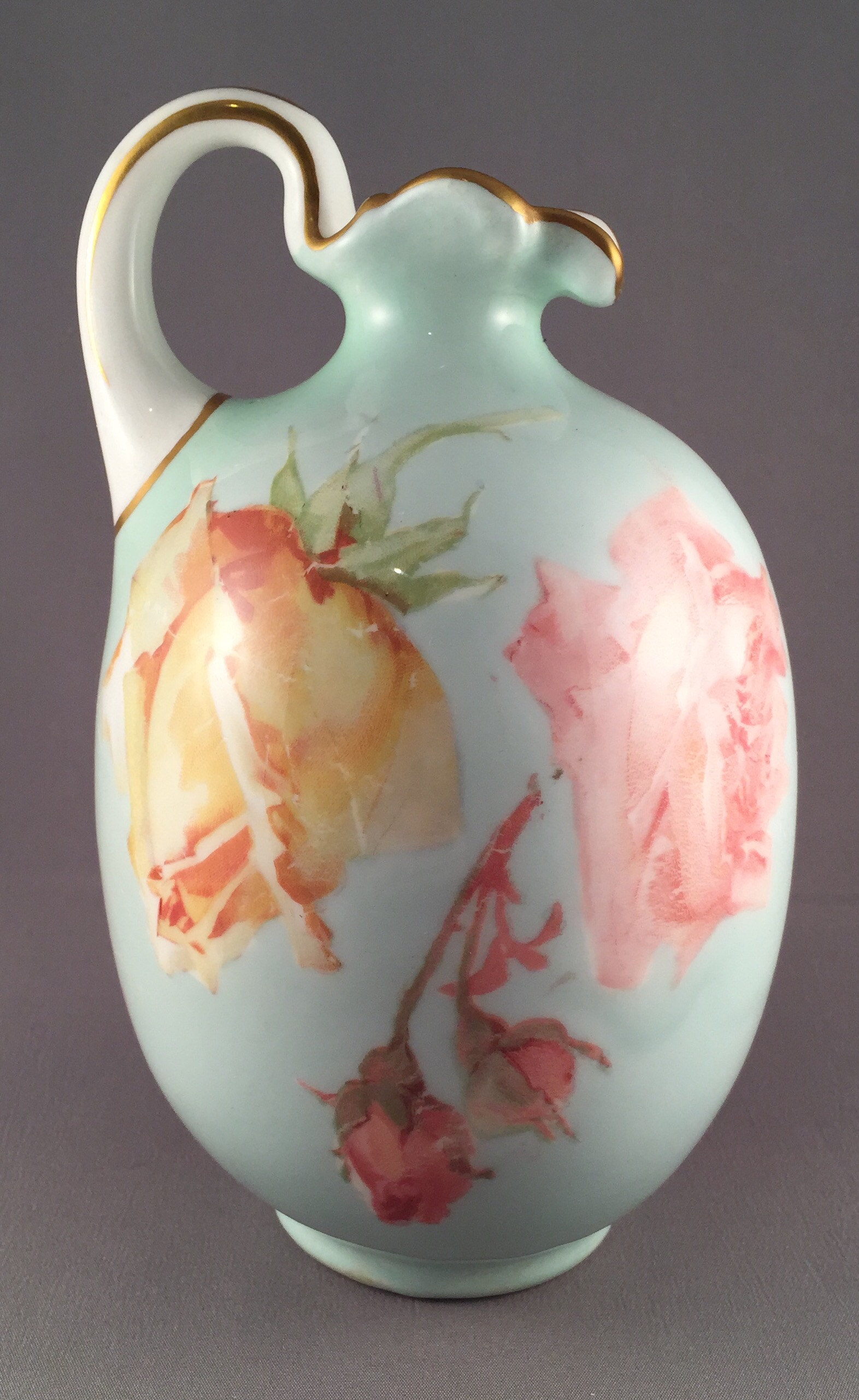
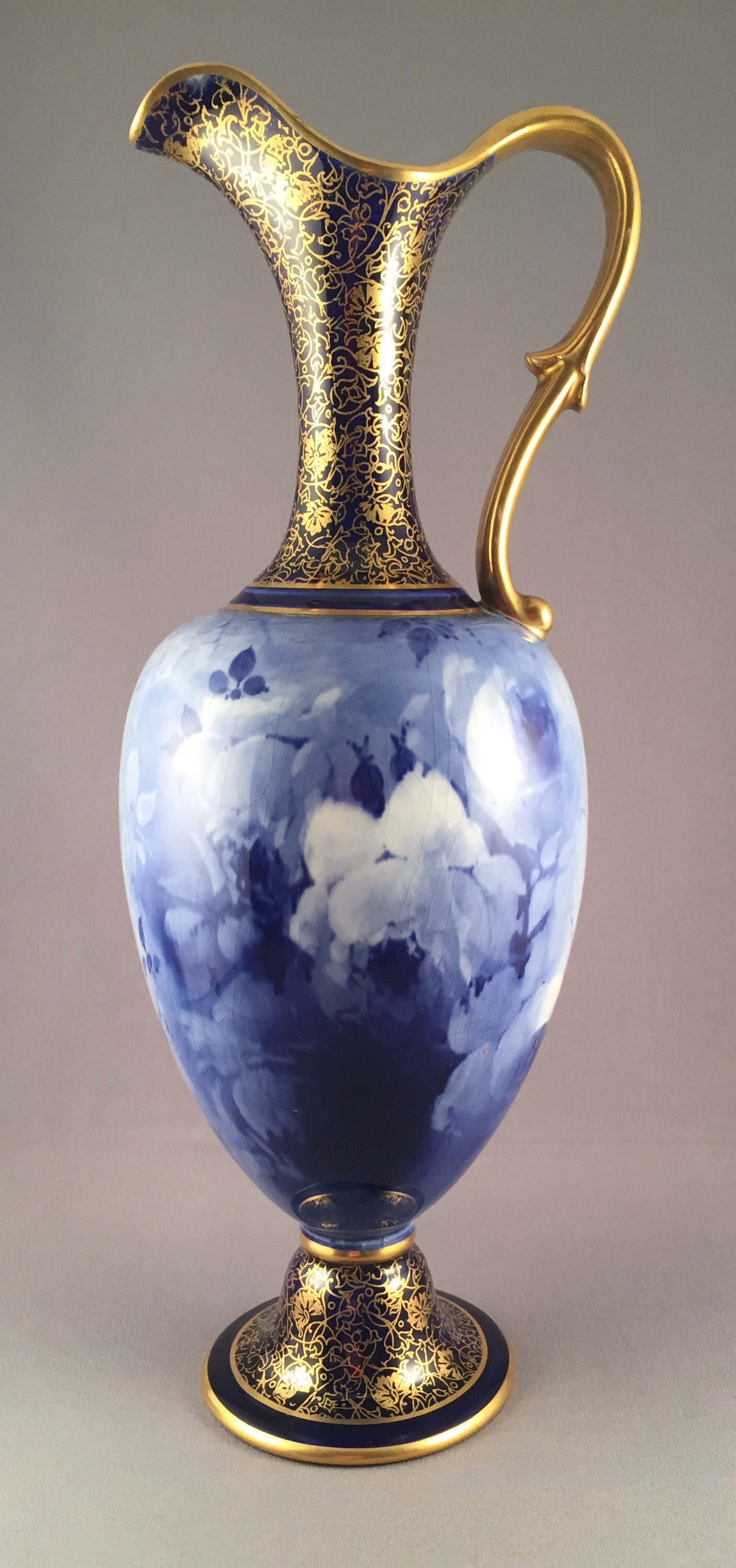
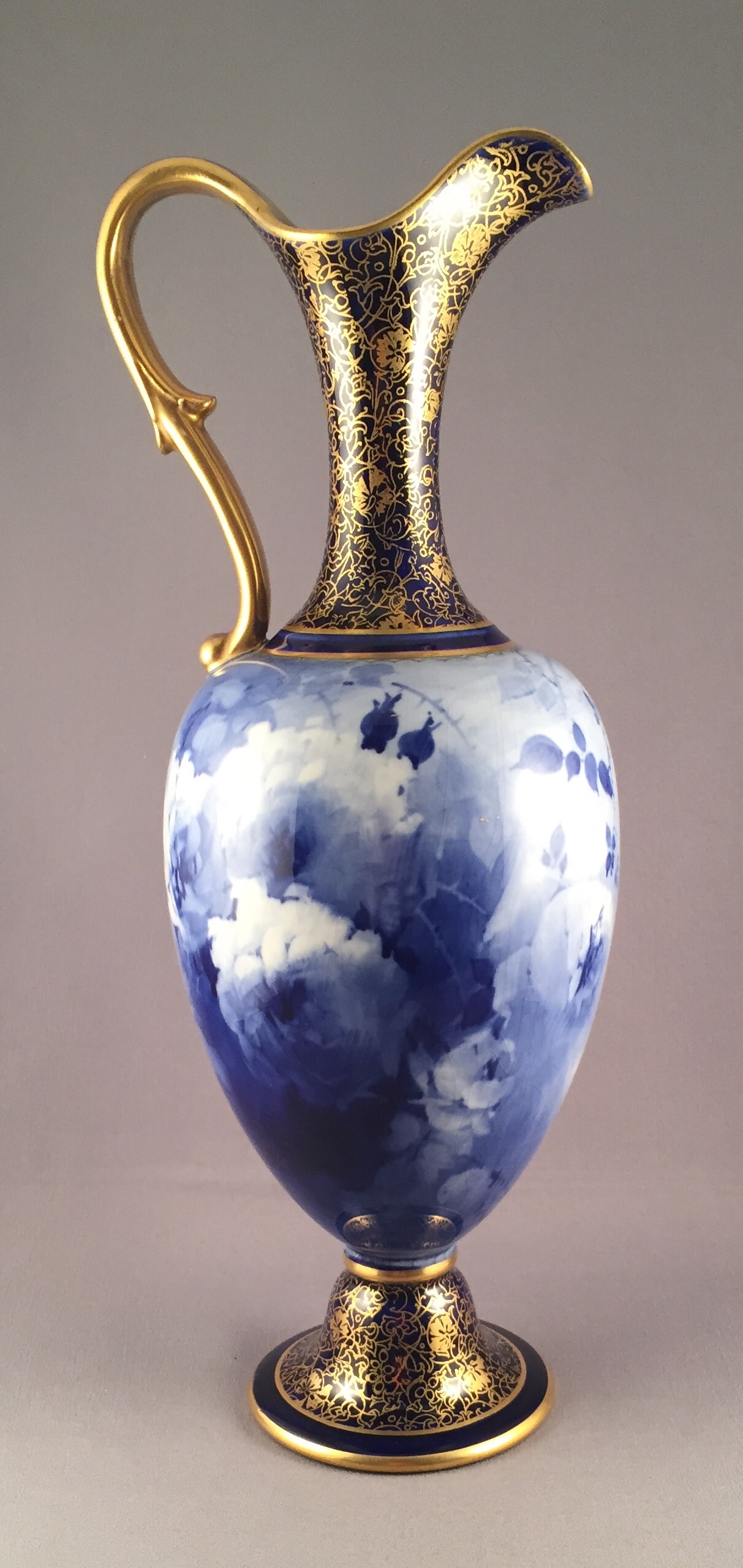
Whenever one thinks of Doulton roses the names Edward Raby and perhaps the successor to his ‘throne’ Percy Curnock spring immediately to mind. However, there was a range of Doulton decorated with ‘print and tint’ roses from the early years of the 20th Century that were intended to be more accessible to collectors.
Typically this range of wares were produced on a cobalt blue ground and occasionally they had further gilded embellishment such as in the above illustration.
More recently I came across the turquoise jug pictured below decorated using the same rose images as were found on the cobalt blue versions. As always, Doulton never fails to throw up surprises to keep us on our toes!
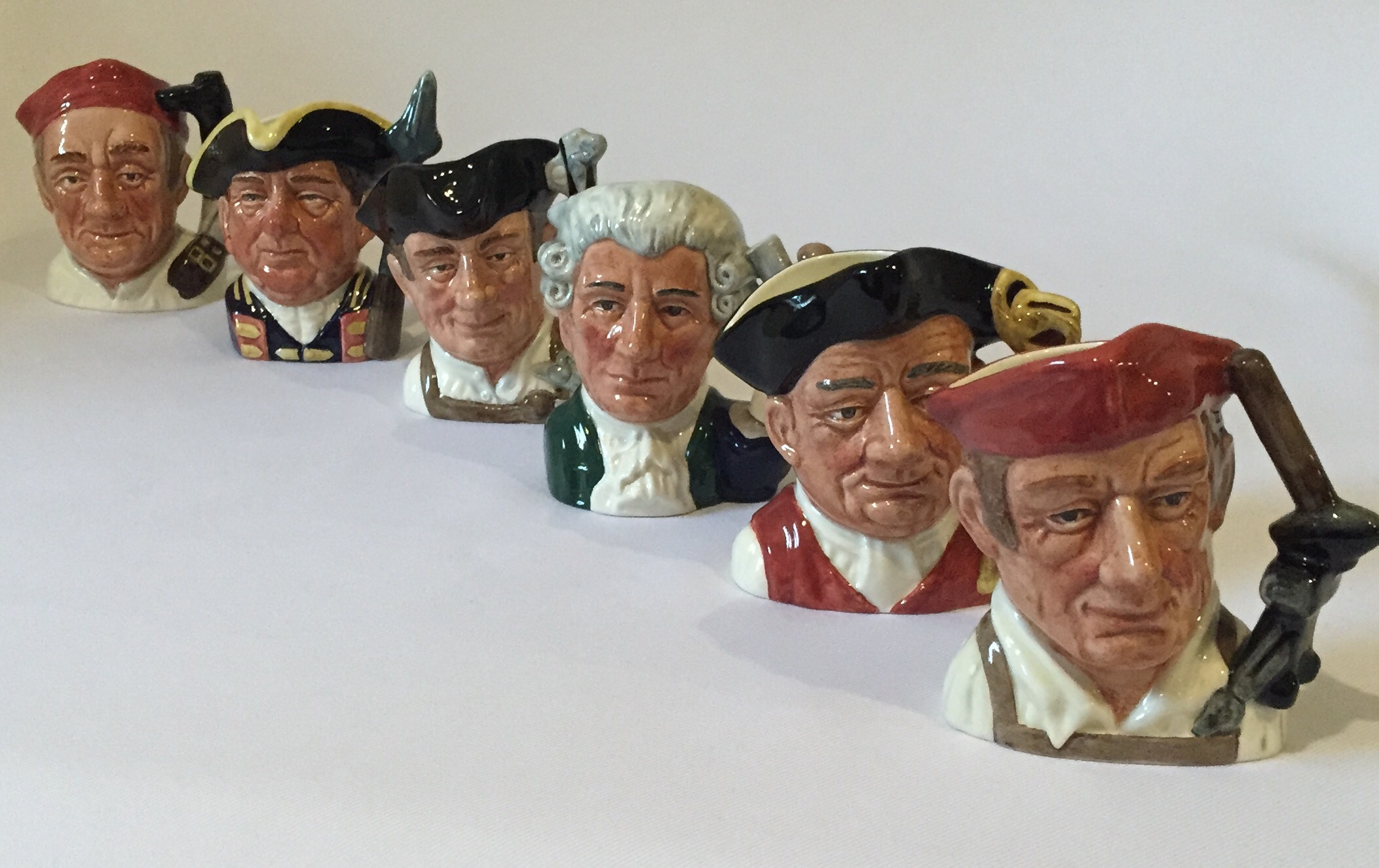
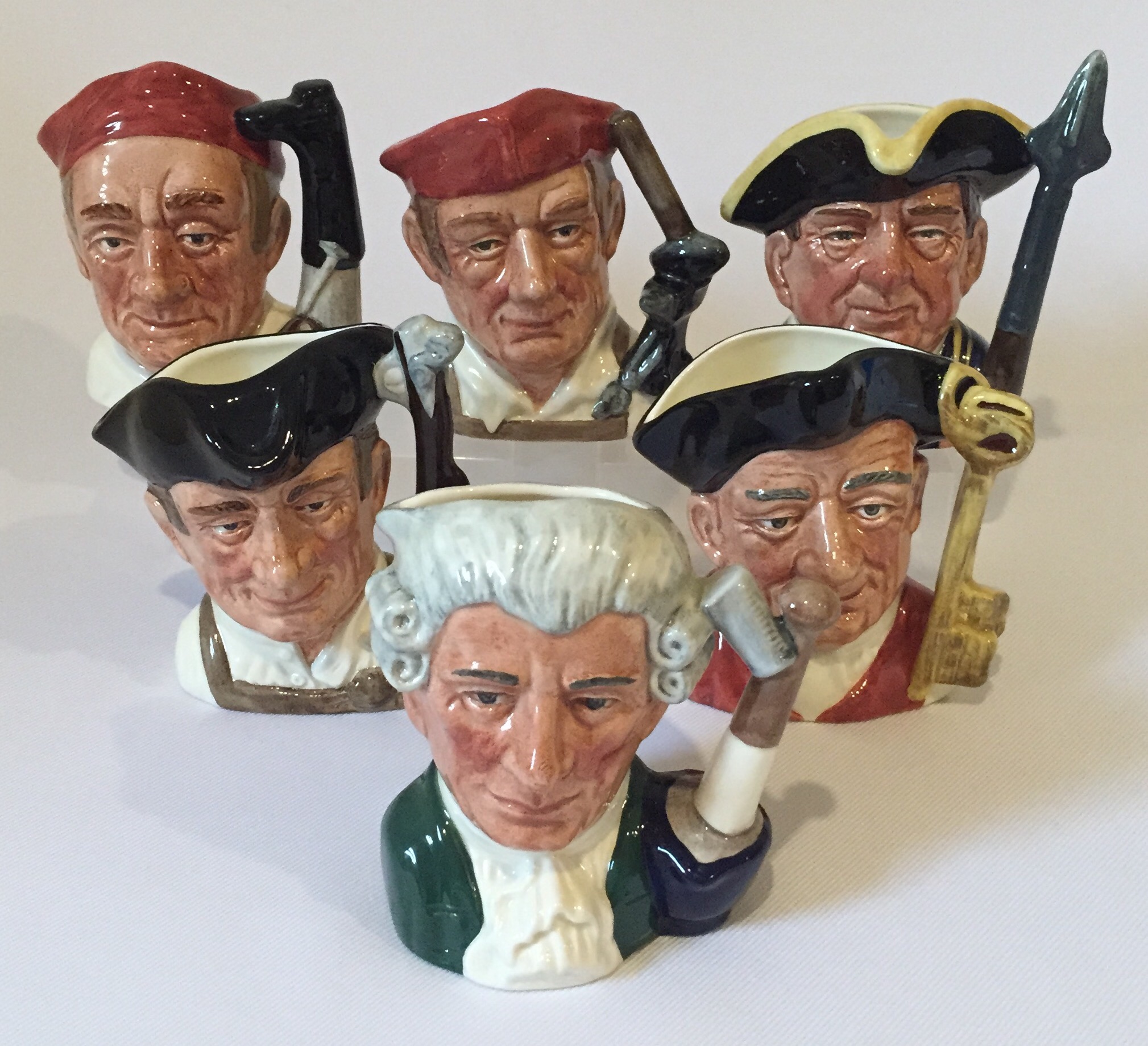
In 1960 Doulton introduced their popular Williamsburg personalities into the HN collection and they were soon followed by seven character jugs representing characters from colonial Williamsburg. The set of seven jugs remained in production for some 20 years and there was to be a further character, the Cabinet Maker, added in 1981 but the collection was discontinued before he was able to join them!
The set of seven jugs were modelled by either Max Henk or David Biggs and available in large, small or mini sizes during their 20 year production. The seven characters to collect are: the Bootmaker, the Goaler, the Gunsmith, the Guardsman, the Night Watchman, the Apothecary and the Blacksmith. Fortunately the Cabinet Maker would make an appearance as D7010 rather than the original D6659 in 1995 at the RDICC Williamsburg Convention in a limited edition of 1,500 pieces and so did eventually complete this popular set!
Williamsburg is an ambitious restoration of an 18th Century US town and the capital of Virginia, it began falling into neglect once the seat of government moved in 1780 and the town lost its importance. Williamsburg’s restoration began in 1926 and today it is populated with hundreds of staff who carry on 18th Century life – from their clothing to their traditional trades resp resented by these character jugs!
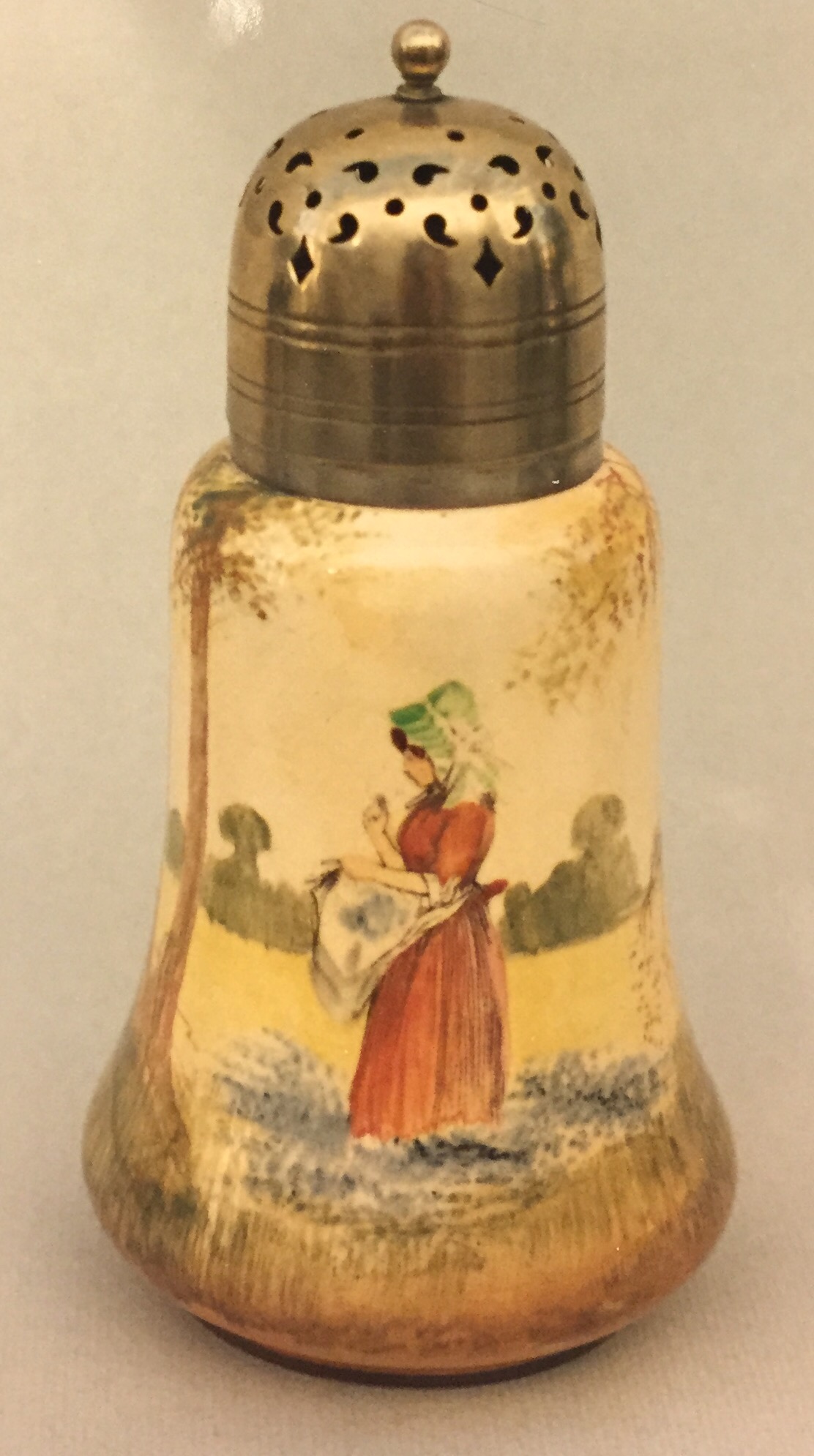
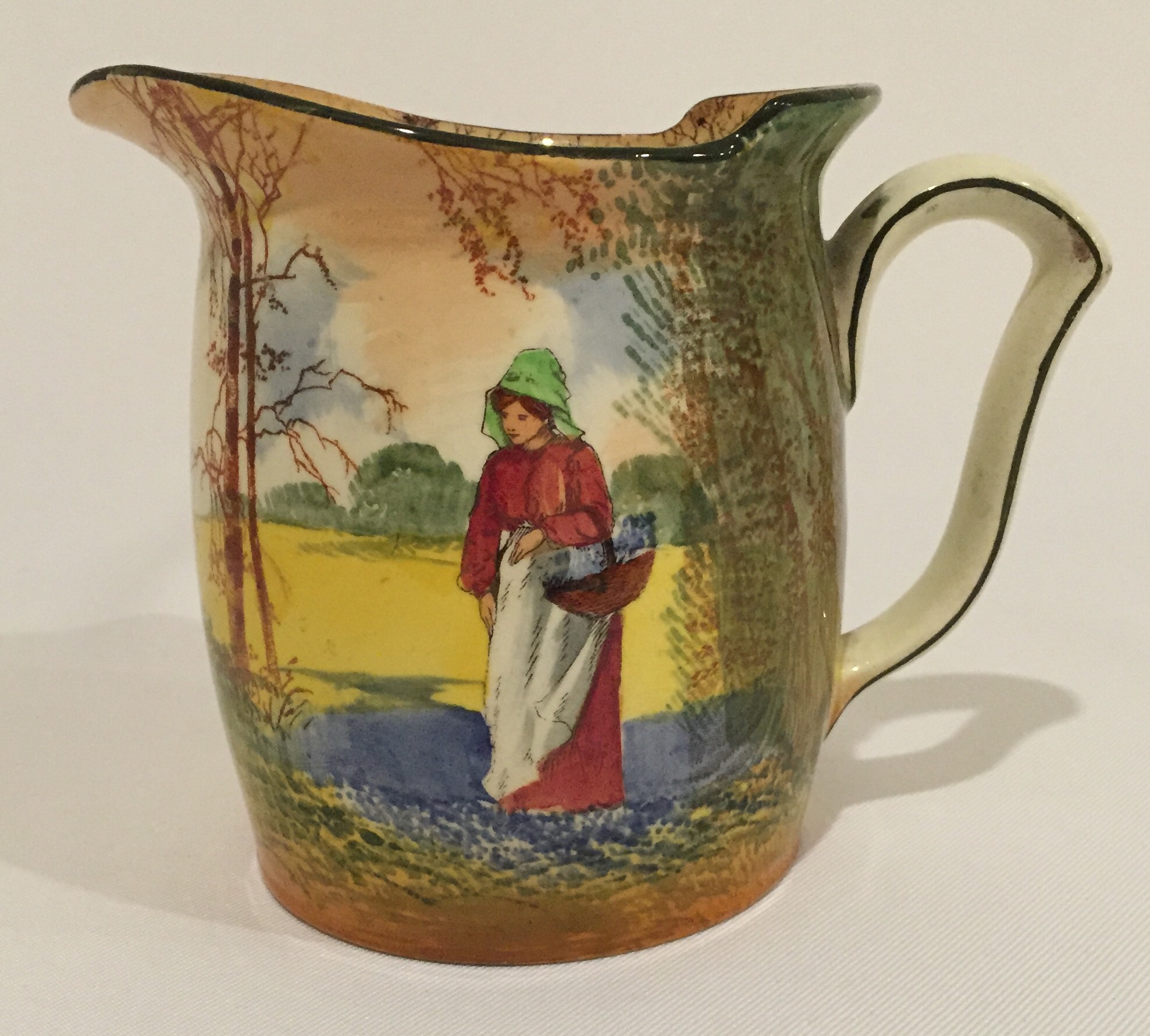
This delightful series was introduced in 1914 at the start of the First World War however, early examples can still be found despite wartime restrictions.
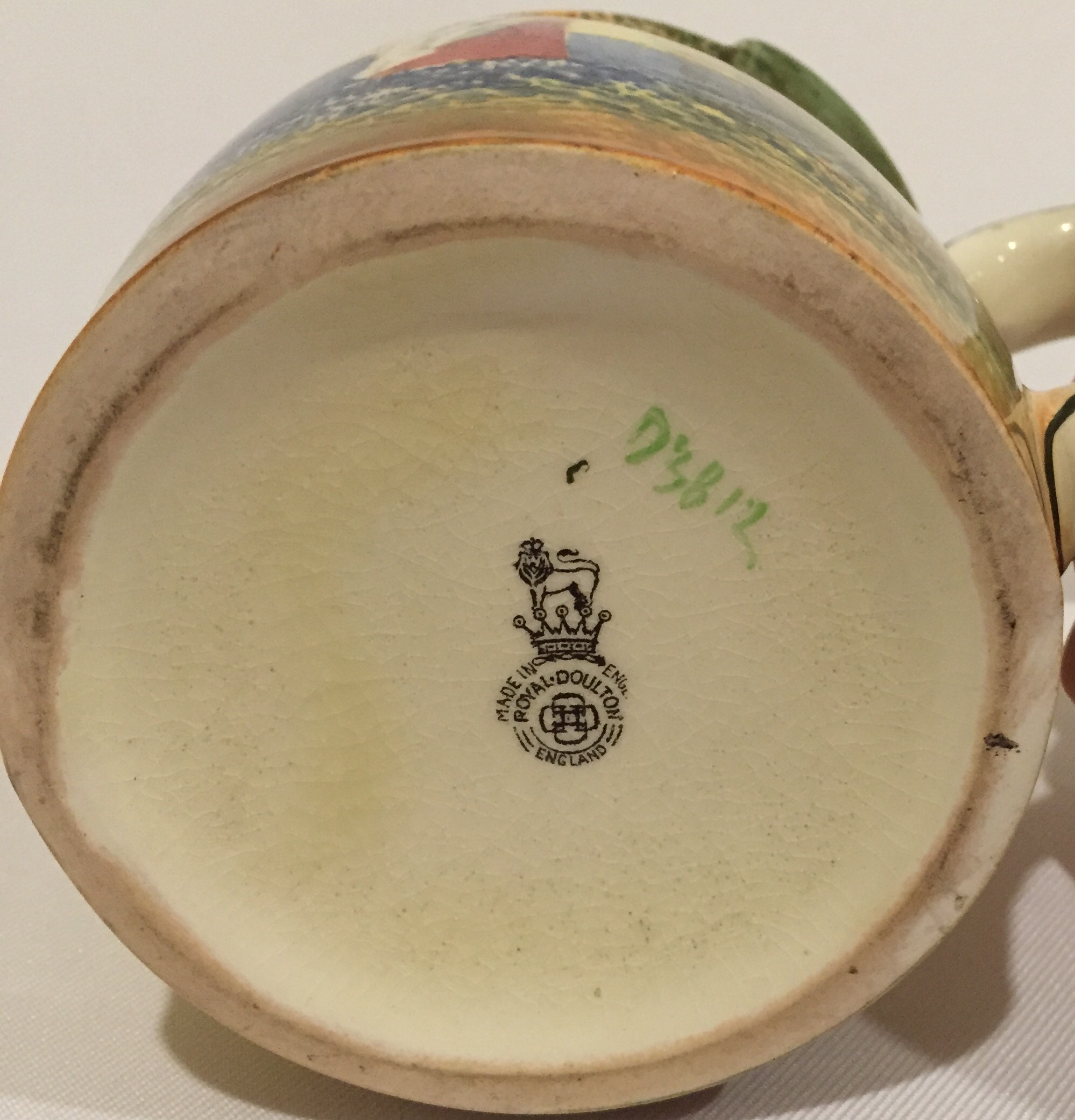
In total there are some 12 scenes to collect which can bear one of three reference numbers: D3567, D3812 and E8503.
The series was withdrawn by 1928 and whilst rack plates are the most easily found items from this romantic series other items such as the sugar shaker and even a tea set have been found.
Typical of the early patterns they feature much hand painting too that give them an extra special appeal to collectors!
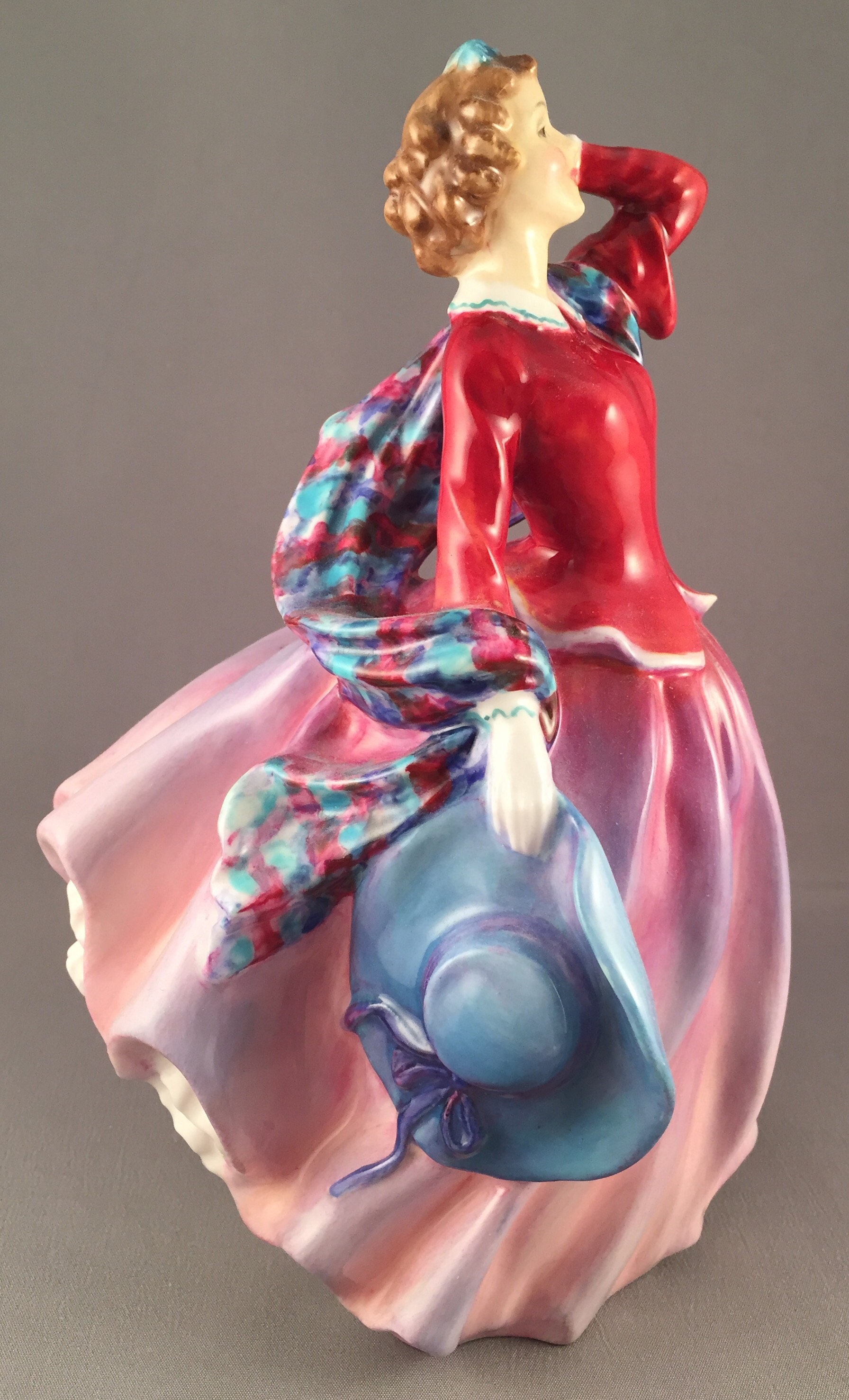
Leslie Harradine’s figurine Blithe Morning certainly has non of the ghostly spirit of the film Blithe Spirit, that invariably influenced her name! The film Blithe Spirit appeared in 1945 and was based on the play of the same name by Noel Coward. The play and film are centred around the socialite and novelist Charles Condomine, who invites the eccentric medium and clairvoyant, Madame Arcati played by Margaret Rutherford, to his house to conduct a séance, hoping to gather material for his next book. The deception backfires when he is haunted by the ghost of his annoying and temperamental first wife, Elvira, after the séance. Elvira makes continual attempts to disrupt Charles’s marriage to his second wife, Ruth, who cannot see or hear the ghost. The comedy is now a classic film.
Harradine’s very typical Doulton lady exudes her own kind of blithe spirit as strolls carefree into an oncoming breeze. Introduced in 1949 as HN 2021 in blue colourway and a year later as HN 2065 in a red colourway so favoured by Doulton collectors. She remained in production for some 20 plus years and today’s she is the type of figure that every Harradine collector wants!
Pictured along with the two typical colourways is a further colourway from 1948, which is almost a combination of the two official versions but as is usual with colourways there is added detail particularly to her shawl.
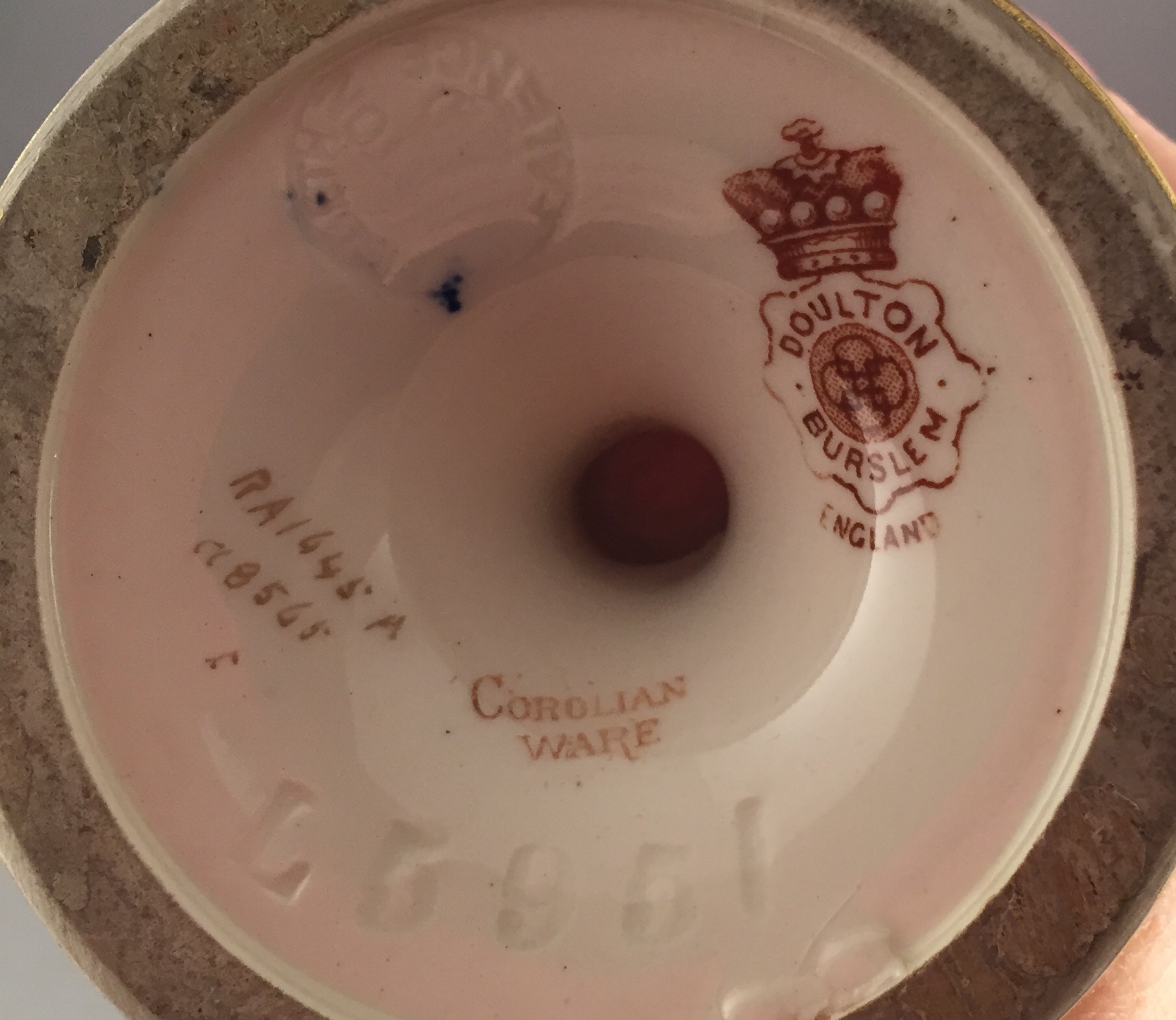
This type of ware was an invention of John Slater and because of the period of production can be found with the Doulton coronet backstamp. No doubt the name is derived from corolla as the images on these pieces are typically floral.
The process involved multiple firings of blue and white transfer images which gave them depth and one can usually find one of Robert Allen’s pseudonym signatures on the body of vases: Kelsall and A. Wagg.