Royal Doulton’s ‘Skating’ seriesware pattern

20140711-111157-40317537.jpg
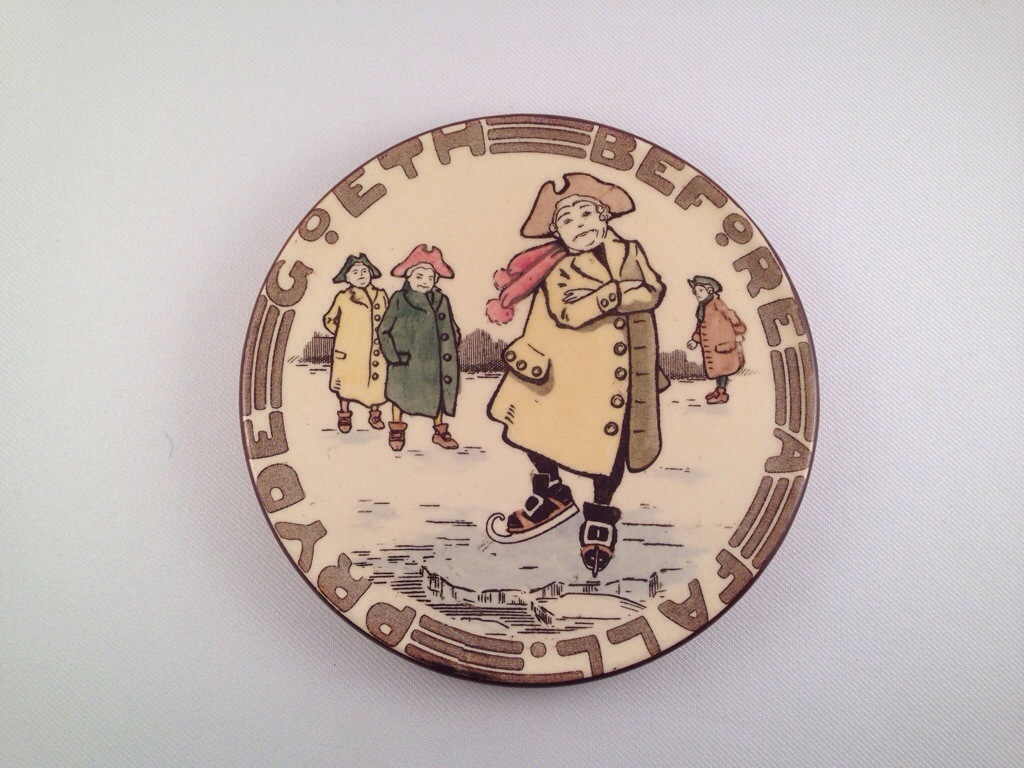
An early trivet in the Skating pattern dated 1907.

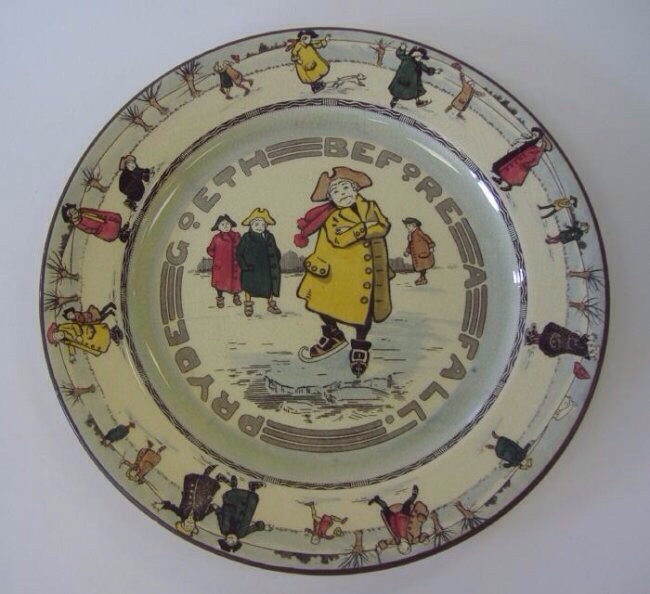
This old world comic scene of skaters with the inscriptions ‘Pryde goeth before a fall’ or ‘Do not worry, do not flurry, nothing good is got by worry’ are particularly hard to find today and always popular with collectors.

20140711-111512-40512307.jpg

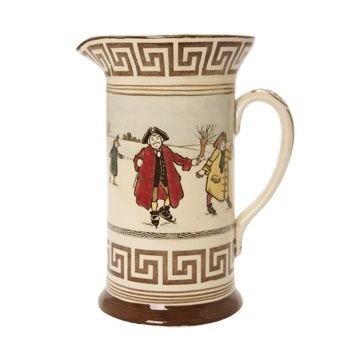
A charming jug with the alternate Greek key border.

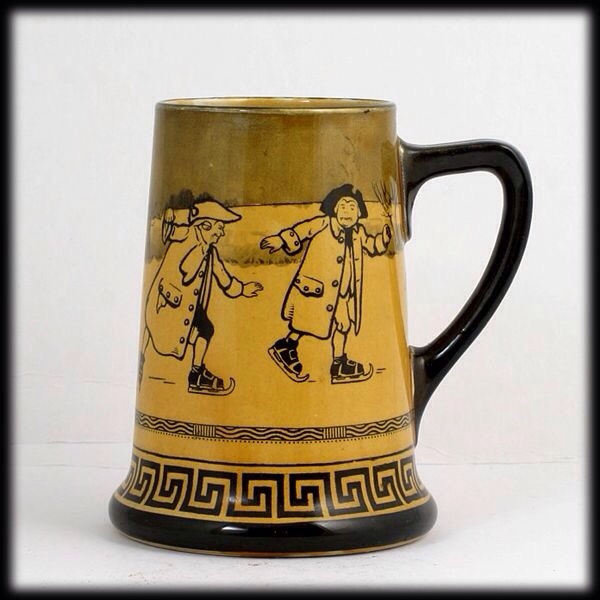
Introduced in 1907 and certainly withdrawn before the late 1920’s this series offers 14 different scenes for collectors with a handful of subtle variations to borders and also glazes for collectors to seek out.

20140711-112004-40804916.jpg

A jug in a treacle or Holbein glaze as I have occasionally heard it called.

A display makes an eye catching feature at Christmas and I know of several collectors who specialise in collecting particular shapes with all seriesware patterns; trivets being a popular theme and of course I collect pin trays as a few if you know.
Typically rack plates are the most easily found items, and this is also the case with this rare pattern.

20140711-112143-40903055.jpg
A super rack plate with an illustrative border.

Royal Doulton’s Gaffers seriesware

20140711-102116-37276799.jpg
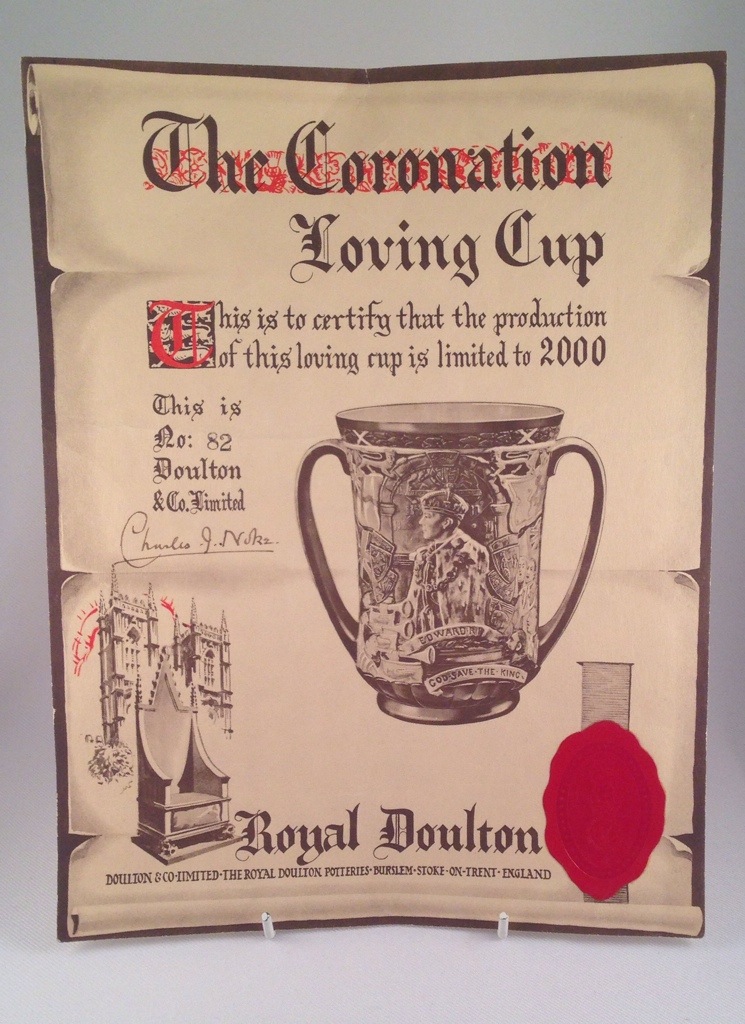
An early publicity booklet for the Gaffers pattern.

This quaint series certainly belongs to a different age although the dialect is still associated with the wonderful people of Somerset.

20140711-101144-36704131.jpg
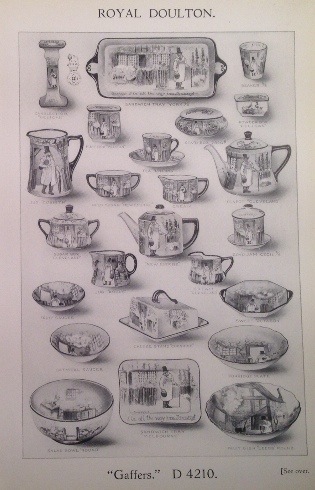
A catalogue page illustrating some if the styles available ca.1924.

The leaflet pictured above comes with a vivid description of his life and routine, even explaining some of his typically ‘Zummerset’ sayings!

The pattern was introduced in 1921 and being popular remained in production until WWII.

FullSizeRender(13)

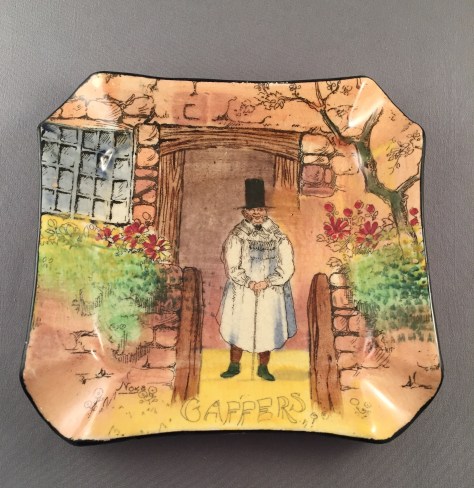
A Gaffers ash tray.

There were some 19 different scenes available, designed by the great C. J. Noke and typically bearing his signature; he  had a particular interest in all things literary and other personalities from English heritage.
20140711-101435-36875271.jpg
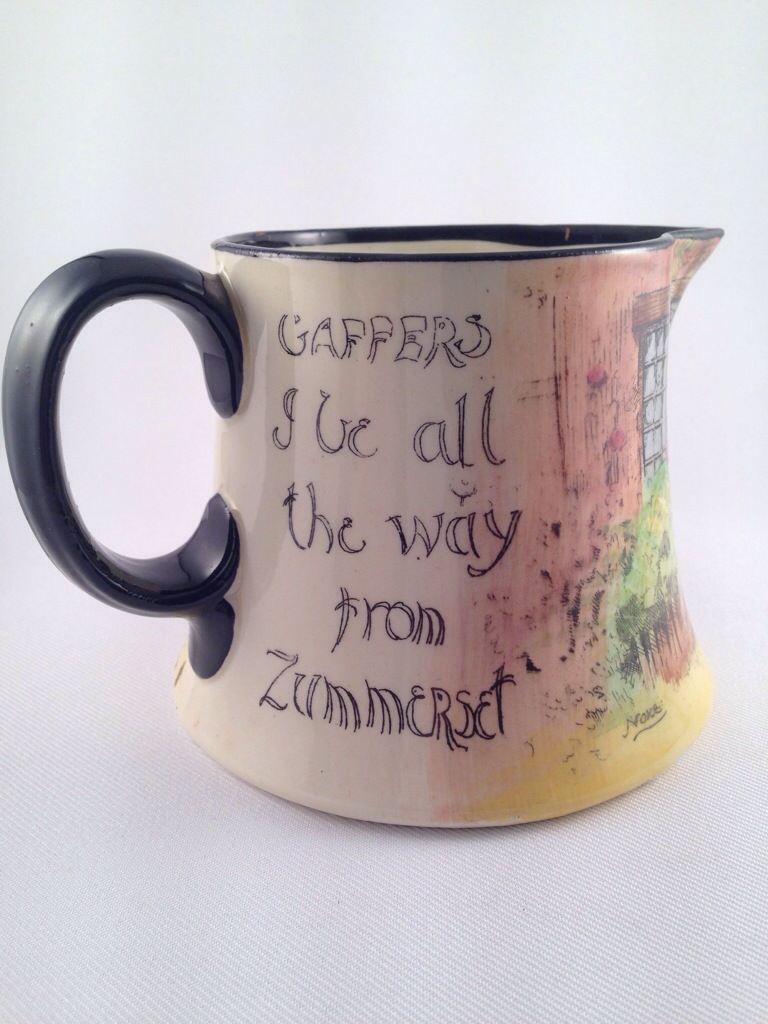
A large milk jug with scene 1 on it.

20140711-101524-36924730.jpg
The reverse of the same jug with the inscription ‘GAFFERS I be all the way from Zummerset’.

The character, the Gaffer, derives his name from respect as it refers to either an older man or master, not the more common term today for a boss.

FullSizeRender(17)

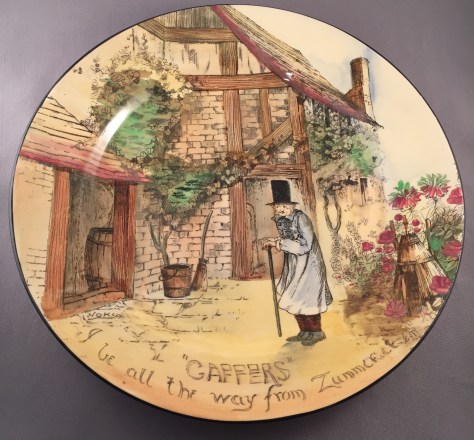
A typical 12″ rack plate.
The Gaffer is seen in his typical smock of brown holland or hand-made linen, with either an umbrella or knobbly stick in his hand.
FullSizeRender(15)

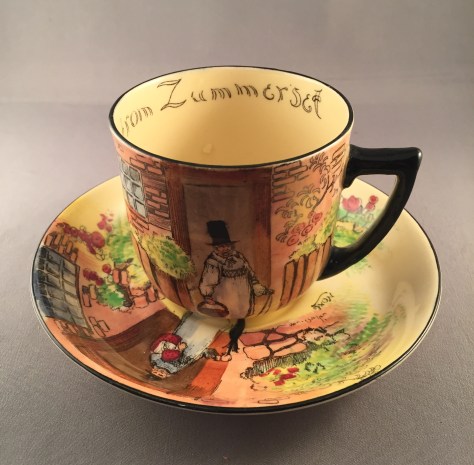
A Gaffers tea cup and saucer.


Collecting Doulton Queensware

20140706-115836-43116881.jpg
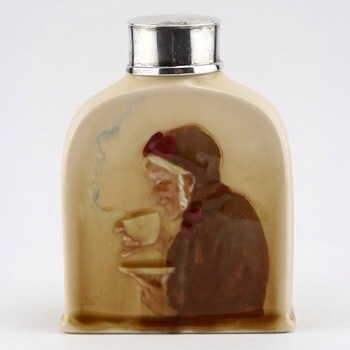
Queensware tea caddy

Queensware has been described as the perfect partner to Doulton’s famous Kingsware. The method if decorating is exactly the same as that for Kingsware, but the body is an ivory colour.

20140706-115916-43156172.jpg
Micawber jug minus stopper.

During it’s production it proved less popular than Kingsware, and as with all rarities is much sought after by collectors, especially those in Australia.
The exact introduction date of Queensware is not known although the first reference to it by Doulton was in 1932, however there is a Hogarth jug D5173 from 1931.

20140706-120008-43208222.jpg
Queensware Parson Brown.

Just as Kingsware, Queensware can be found in whiskey flasks, tablewares and other novelties.

Doulton’s Mandarin ware!

20140706-093640-34600985.jpg

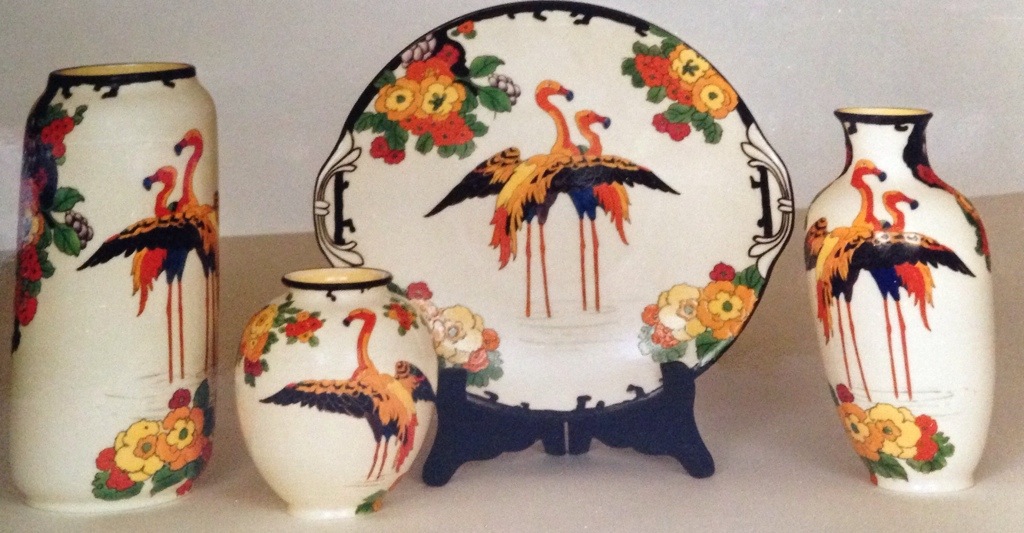
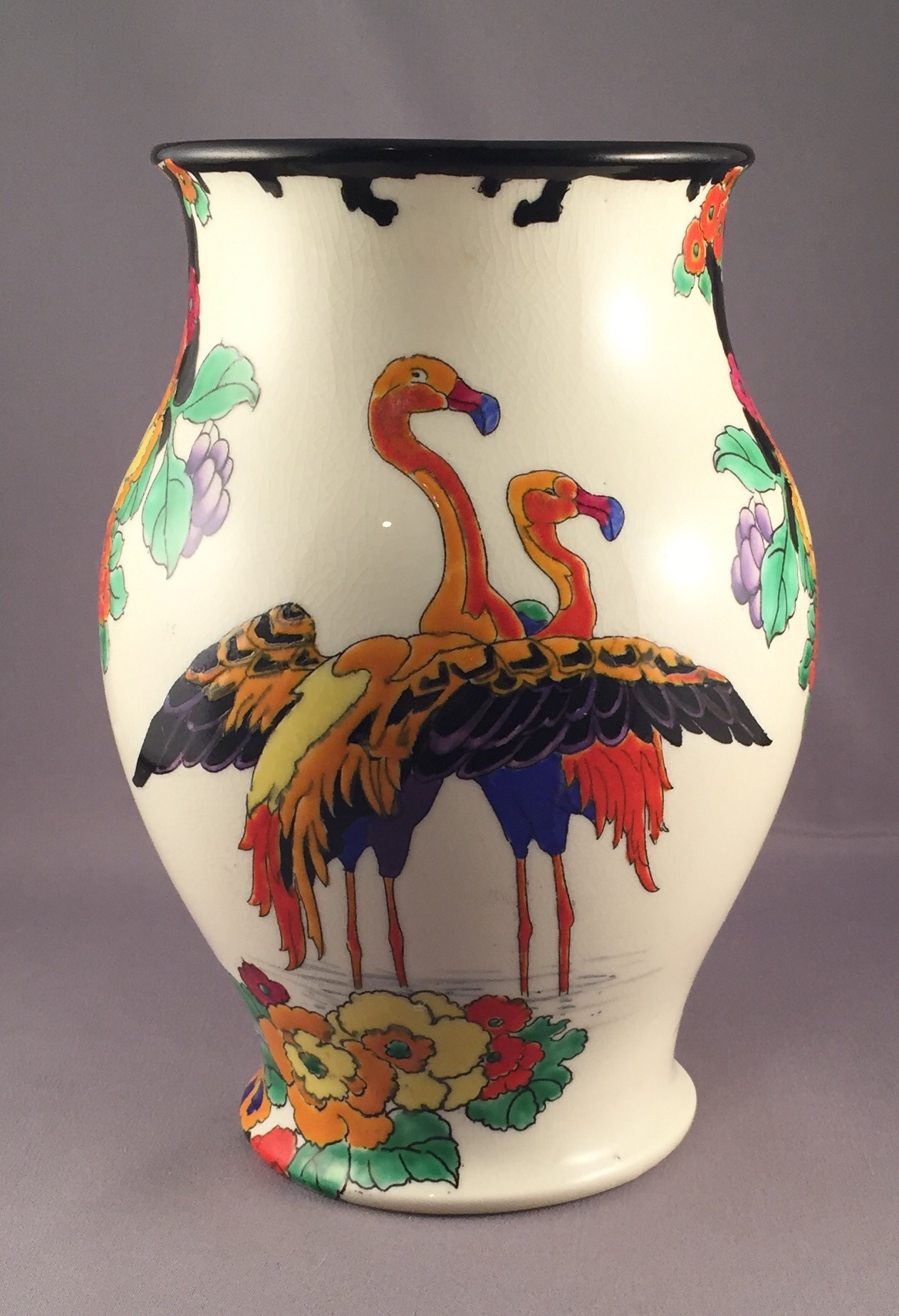
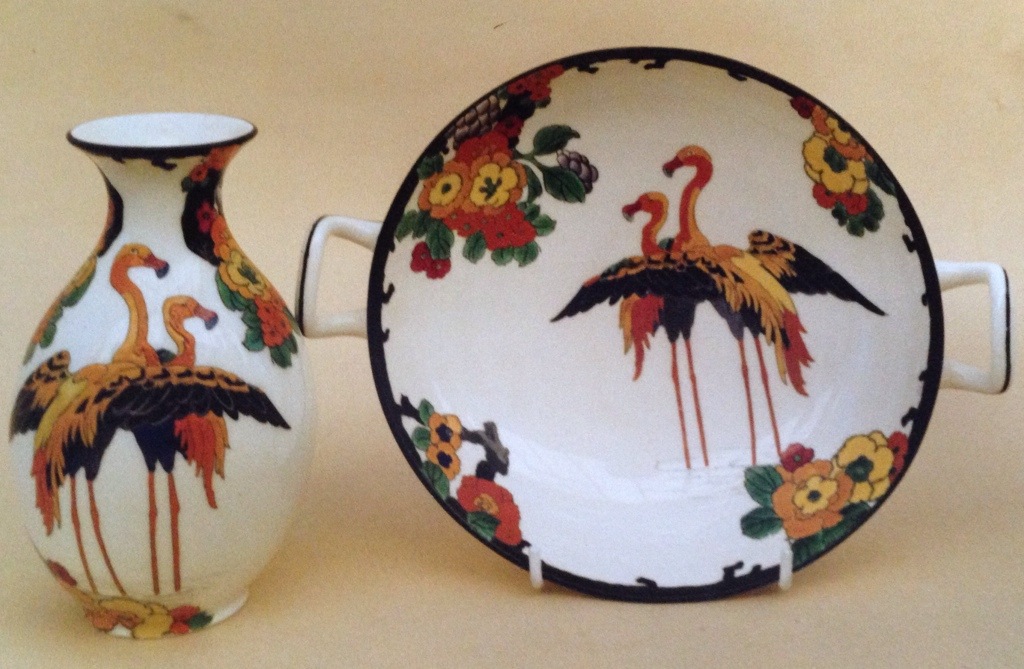
Doulton’s popular Mandarin ware falls into two broad categories. The first like the pictures above and below has an almost seriesware feel but features much painting around a transfer pattern.


Typically prunus and flamingos feature on this first type of mandarin ware.

20140706-094250-34970286.jpg
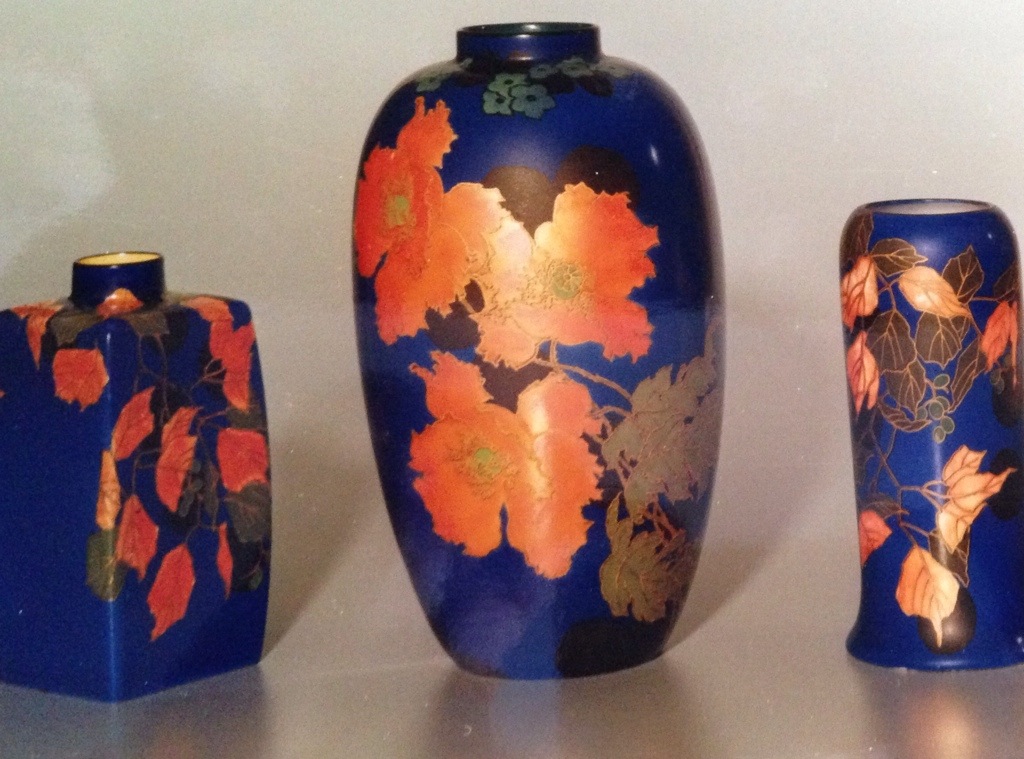
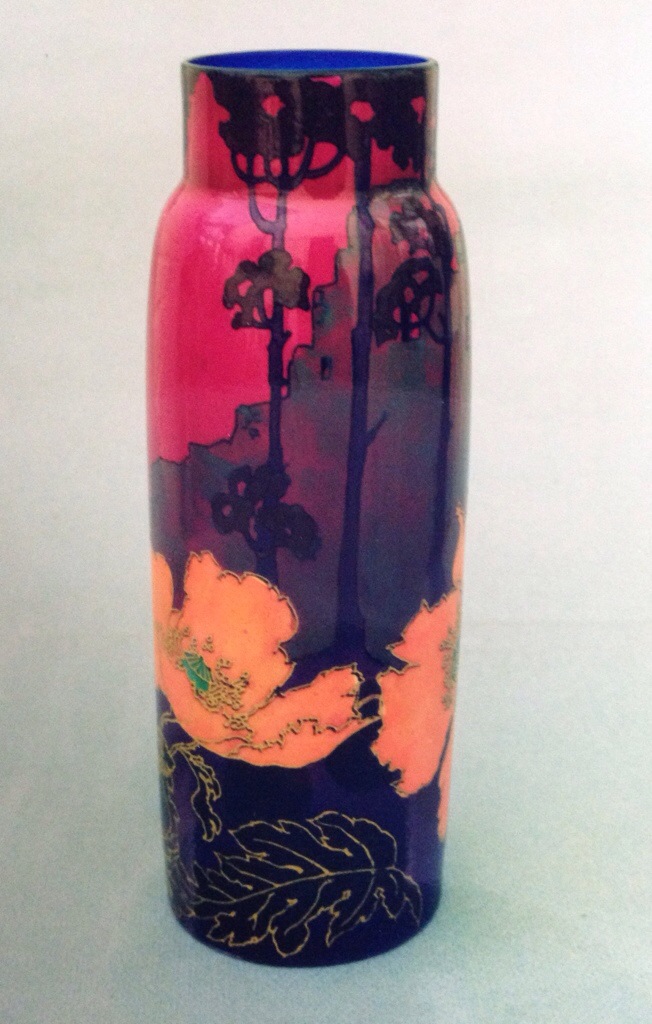
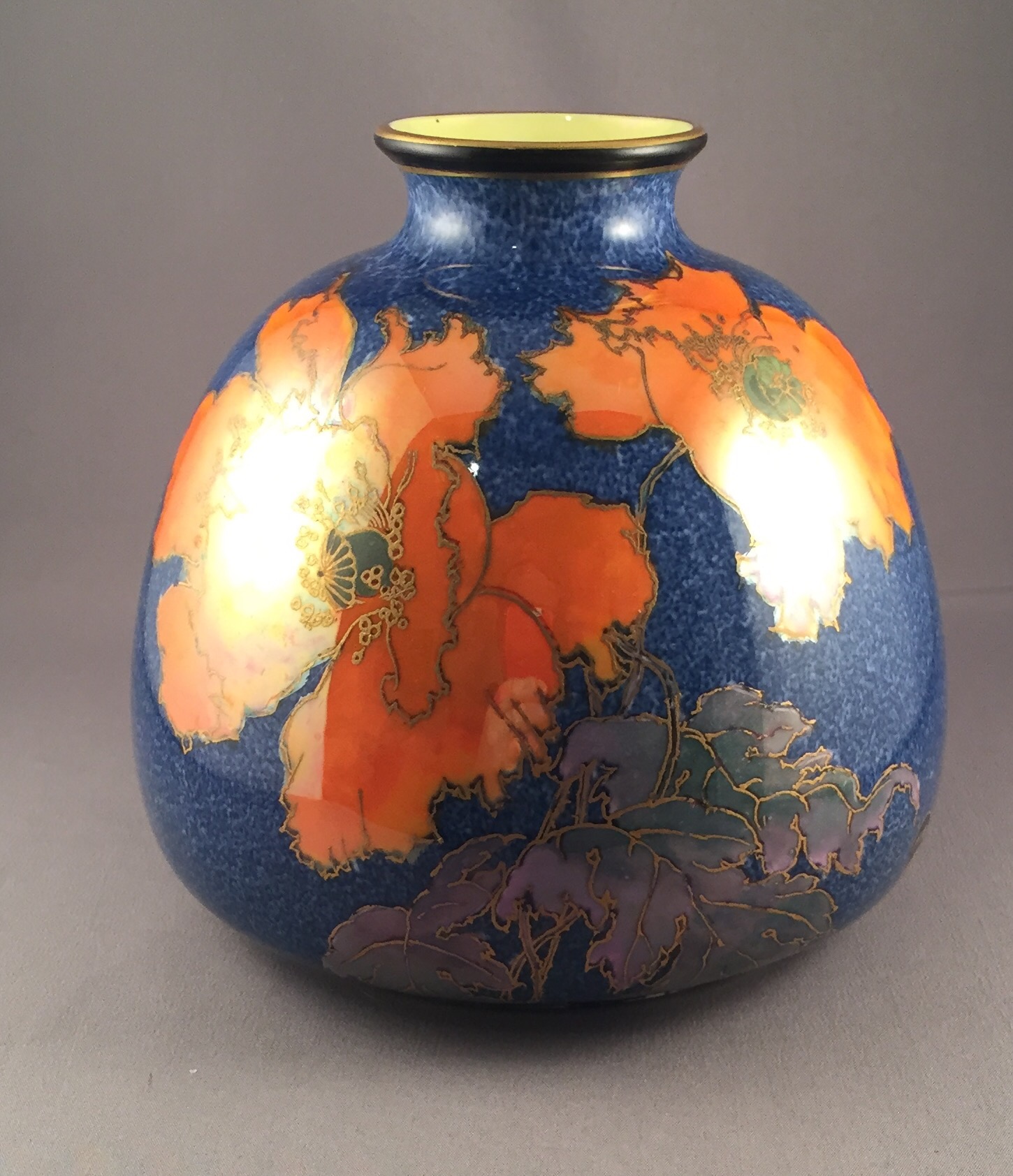
The second is much more delicate and feature lustred poppies generally against a blue background. As with many Doulton wares the shapes of vases used really distinguish this second type of Mandarin ware.

20140706-094038-34838508.jpg

I once came across a Sung version of this type of Mandarin vase and it was exquisite as you can see. Both types of Mandarin ware are much sought after today and pieces are quickly snapped up by collectors.

20140706-094211-34931715.jpg

A rare Sung version of the Mandarin poppy design. 

Both types of Mandarin ware are difficult to find today and production certainly ceased by the 1930’s.


A recent find in the poppy design from the 1920’s.

Collecting Doulton Holbein ware

Around the turn of the 20th Century there were many exciting introductions at Doulton’s Burslem studios, many the brainchildren of the famous Charles Noke.

20140706-091630-33390006.jpg

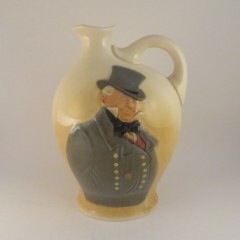
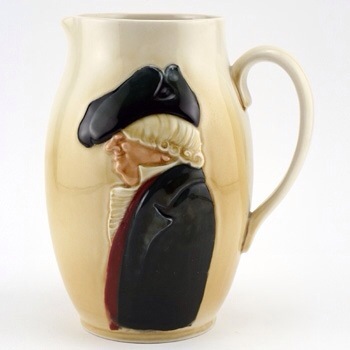
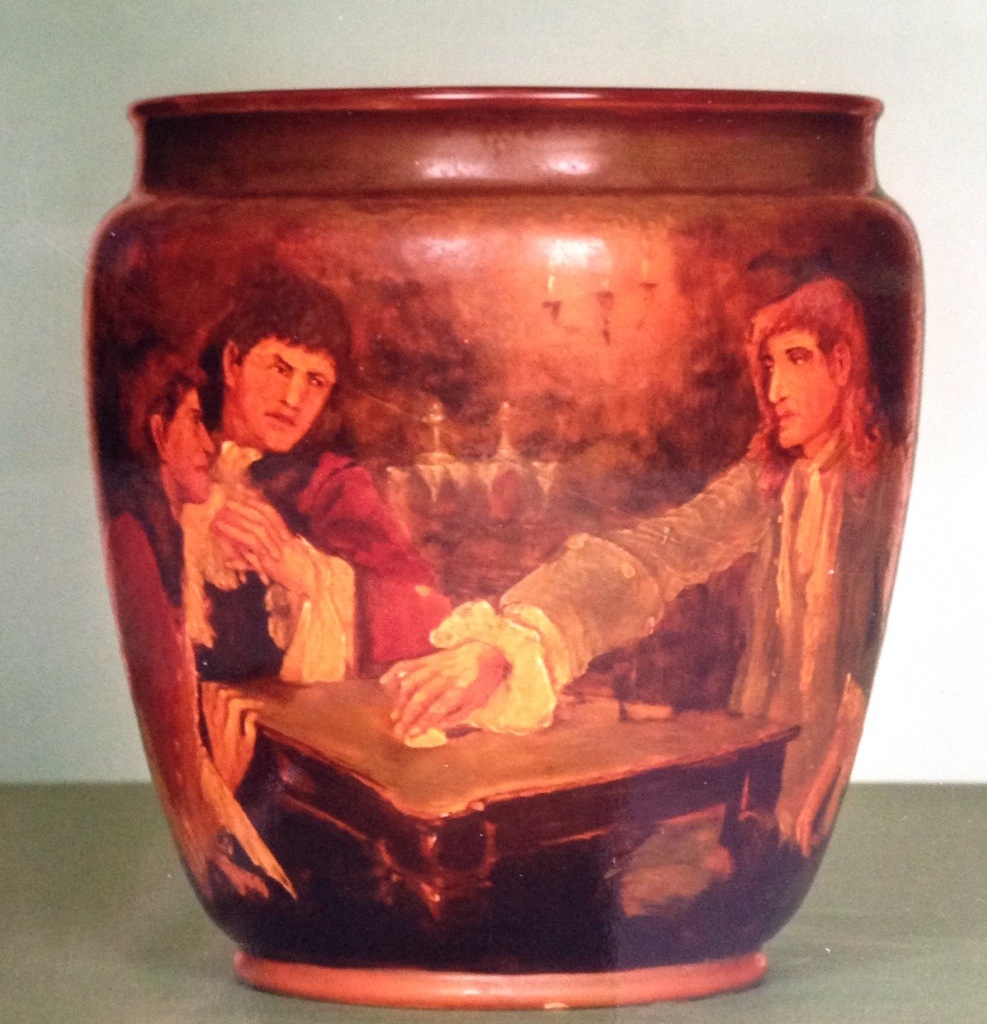
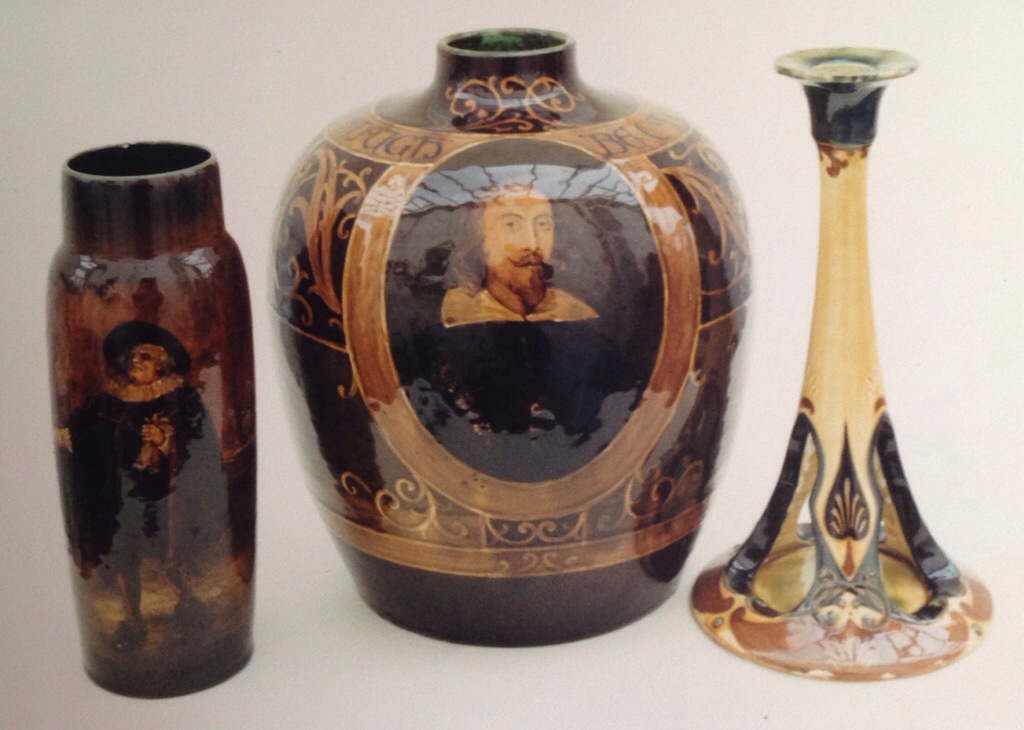
Holbein ware is a typical example of Noke’s experimentation with glazes. Holbein wares give the impression of old masters through the use of yellow, green and brown slip on a cream earthenware body. Portraits on these vases were typically by Harry Tittensor and Walter Nunn among others.

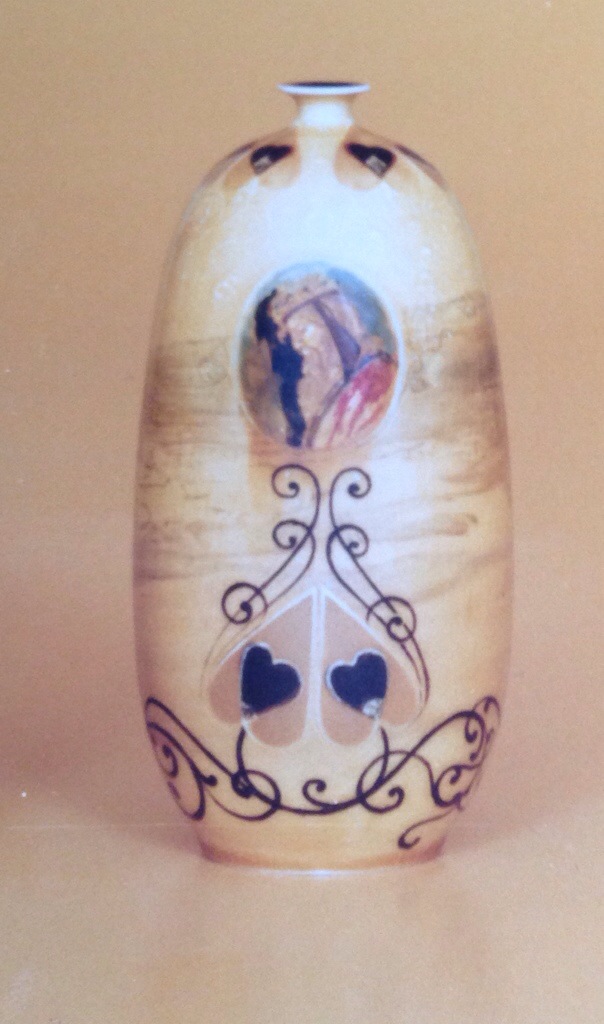
Incidentally this name of ware was also given to a series of items including candlesticks and oil lamp bases modelled in an art nouveau style but not bearing any portrait!

20140706-091737-33457490.jpg

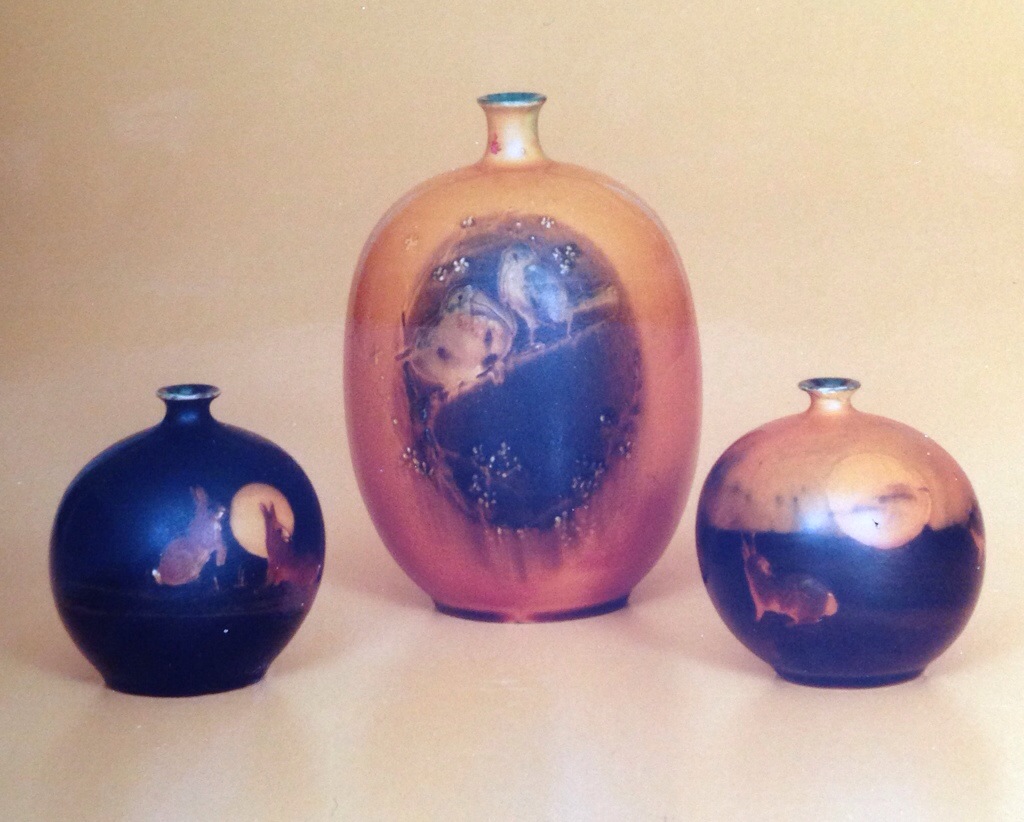
Further Holbein pieces not featuring portraits but rather nocturnal animals including owls also appear.

20140706-091803-33483109.jpg

This ware had a special backstamp but it was not always used, creating certain confusion about this particular ware. This ware should not be confused with Rembrandt ware.

20140706-091821-33501869.jpg
L-R Holbein vase, Rembrandt vase and Holbein

candlestick.

Collecting Doulton Spanish wares

This technique introduced around 1890 offers something for every collector, with simple to elaborate designs and with prices to match!

20140706-084930-31770969.jpg

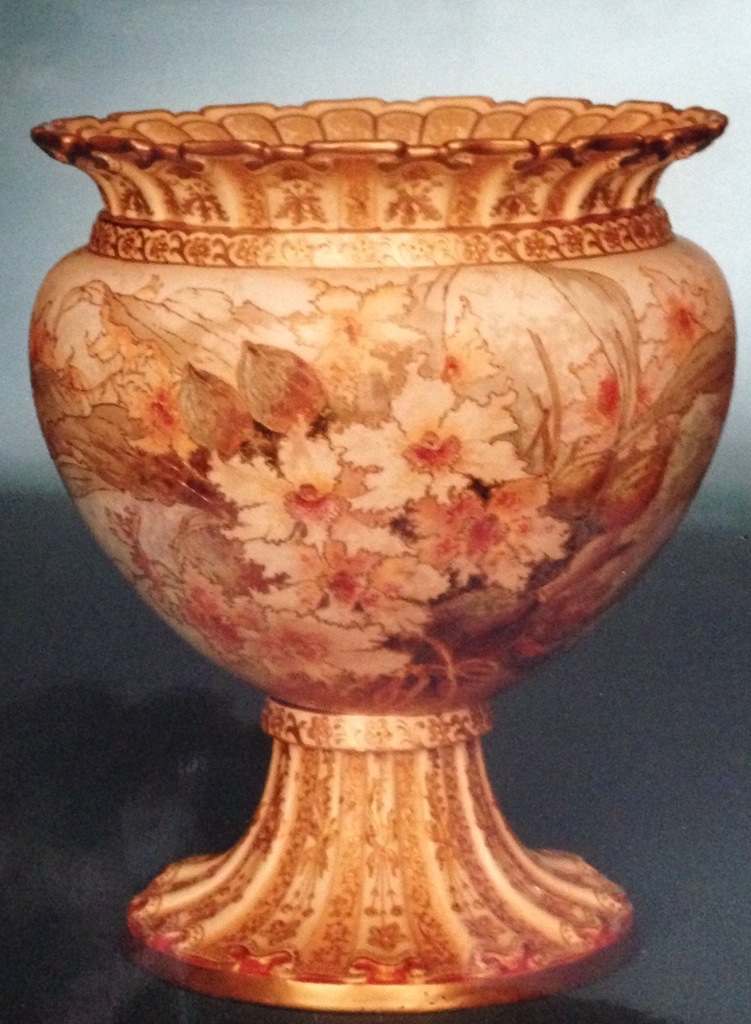
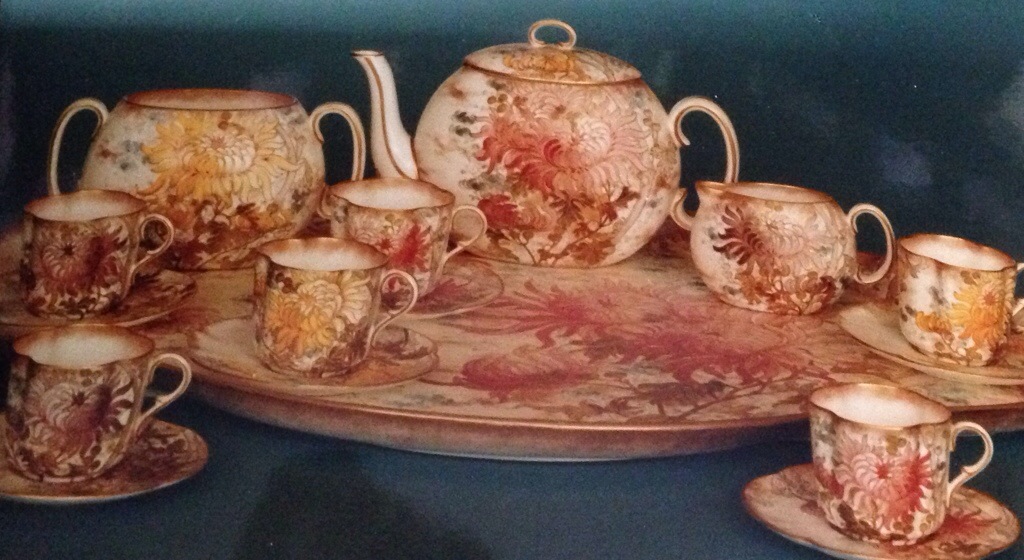
The Spanish ware technique consisted mainly of flowers outlined in raised gilt. Examples of handpainting and transfer printing can be found on this ware, although the general rule of thumb for collectors is the more elaborate the more likely it is that it is an artist piece.

20140706-085257-31977301.jpg

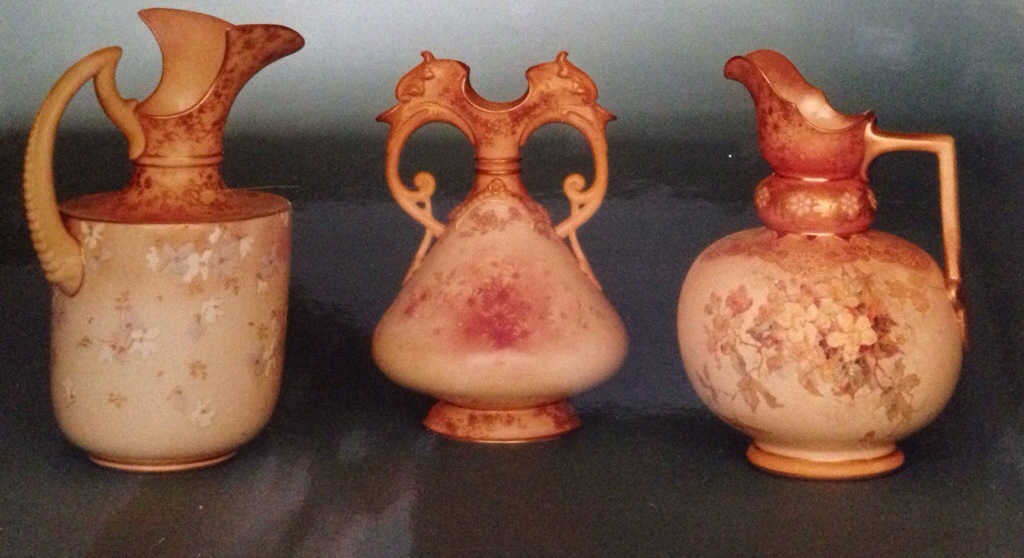
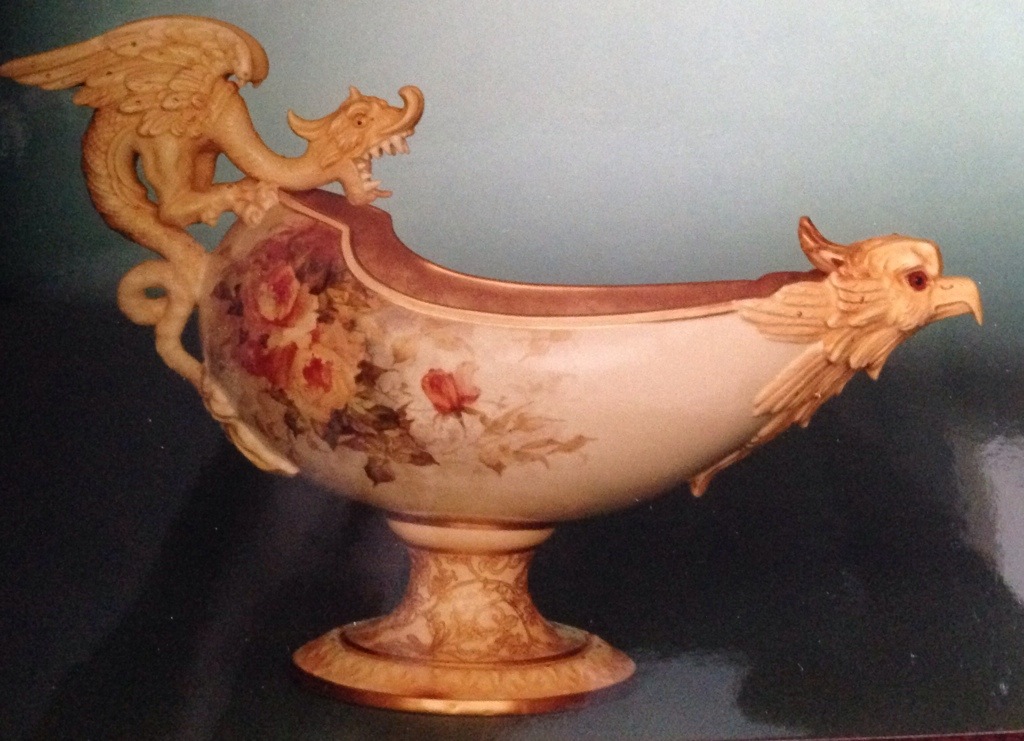
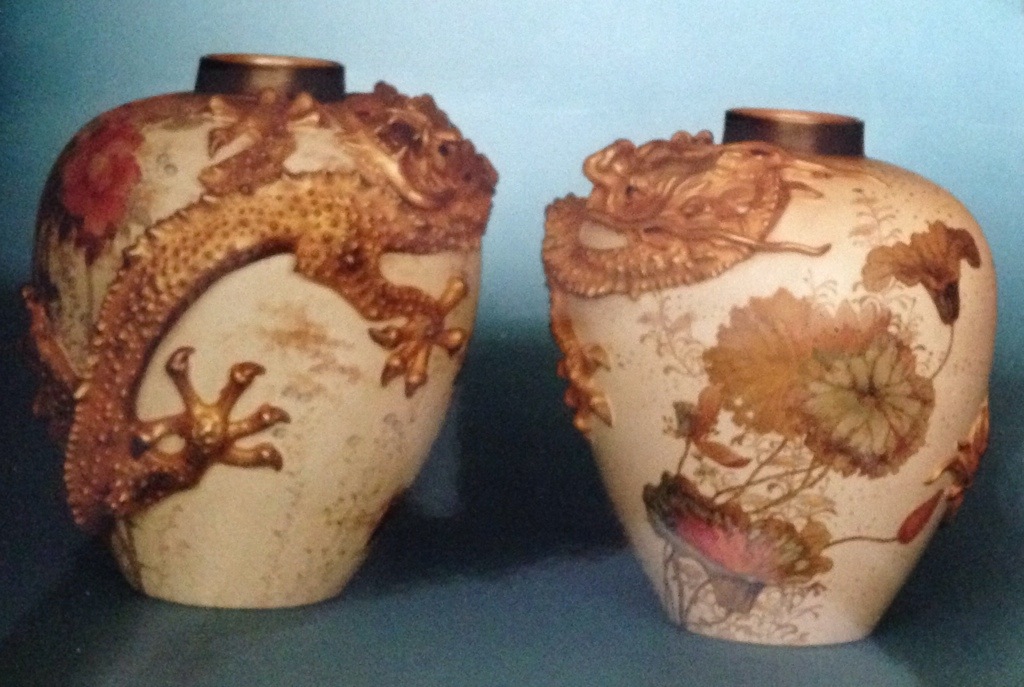
The body used on this ware was often Vellum, just like the small range of figures developed in the late 19th Century. The gilding on this particular ware is exceptional and the styles of vases etc…were equally elaborate and often featured dragons.

20140706-085459-32099479.jpg

This method of decoration was often used on high end tablewares, and cabinet sets like the one below were particularly popular with this decoration.

20140706-085613-32173238.jpg

Prices for Spanish ware correspond to how elaborate the piece is and there are many avid collectors of this ware around the world.

20140706-085729-32249413.jpg

Spanish ware production ceased sometime around the outbreak of WWI in 1914.

Collecting Doulton postcards

20140705-085308-31988354.jpg

I always say Doulton, unlike any other pottery has something for every collector and here is another theme to collect – postcards.

Doulton produced or rather had printed postcards to advertise a number of their wares such as serieswares, Lambeth wares and also figures.

20140705-085408-32048836.jpg

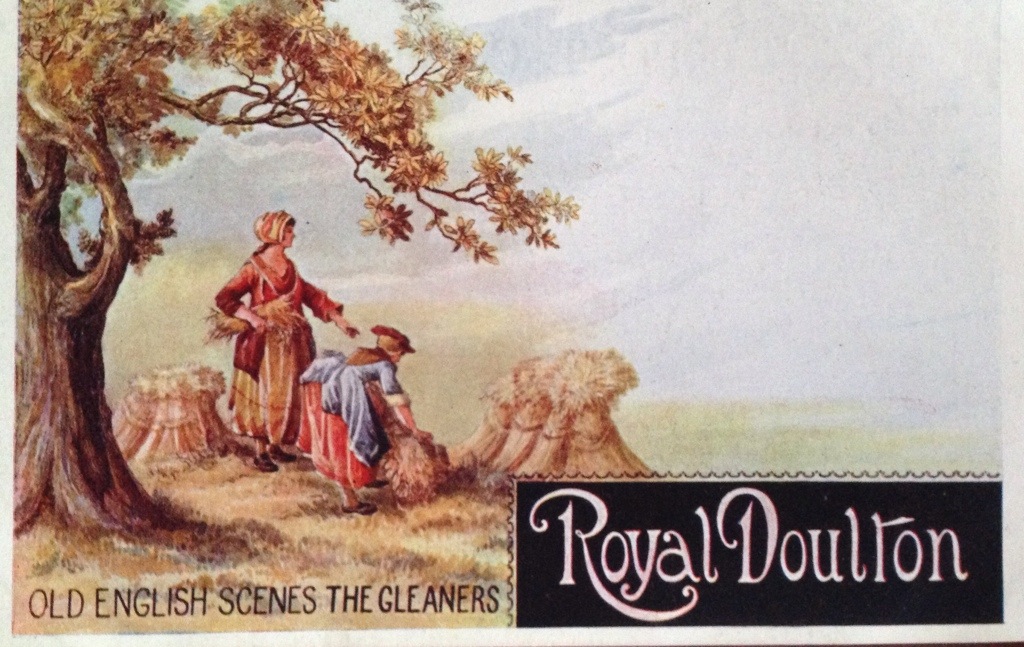
Some postcards, like the two illustrated for seriesware are works of art in their own right and can stand along side pieces of actual seriesware in a display.

20140705-085438-32078306.jpg

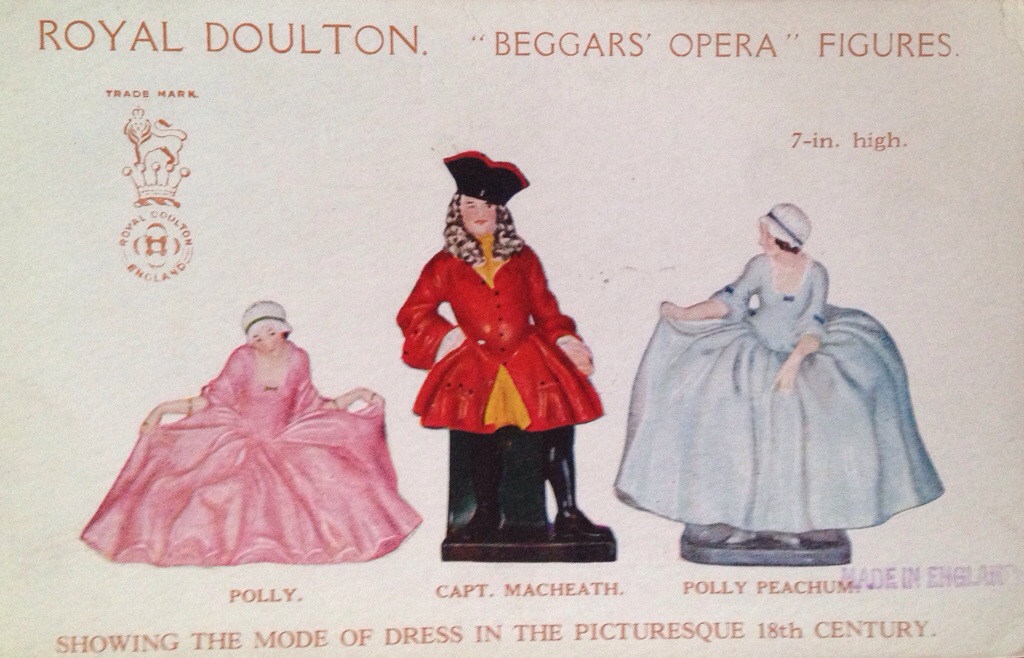
I have not found many advertising figures but this one for the Beggar’s Opera series is a favourite.

20140705-085506-32106424.jpg

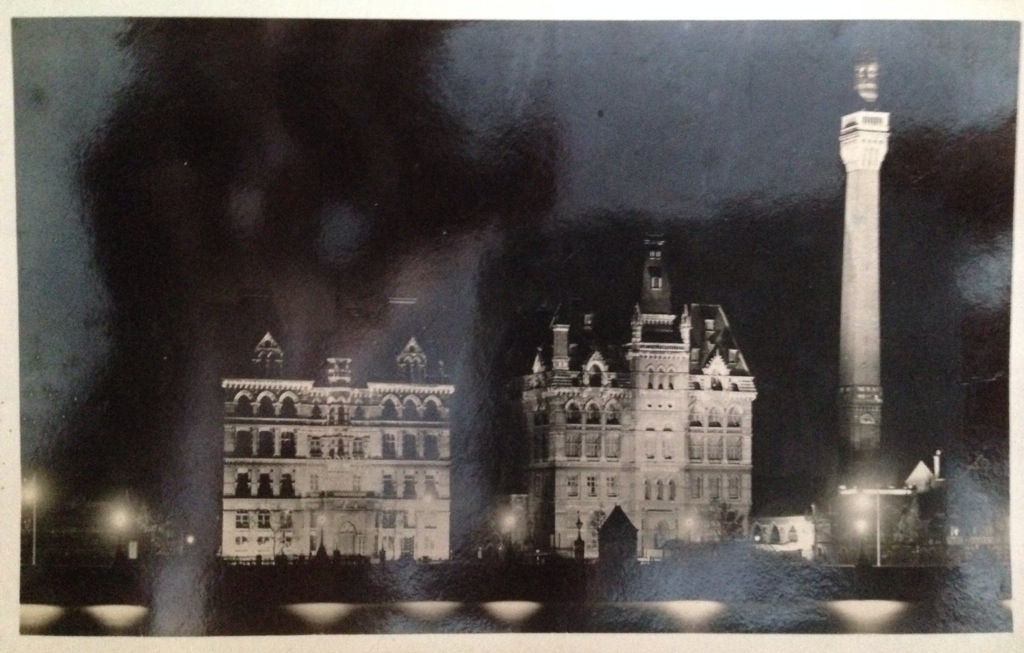
Postcards were produced not only to sell items but to re-enforce Doulton as a world player in the pottery market. Here is a great postcard advertising their Lambeth showrooms.

20140705-085532-32132258.jpg

In recent times postcards were produced for the old visitor centre at Nile St. Burslem featuring their artists at work as well as displays and prized museum pieces.

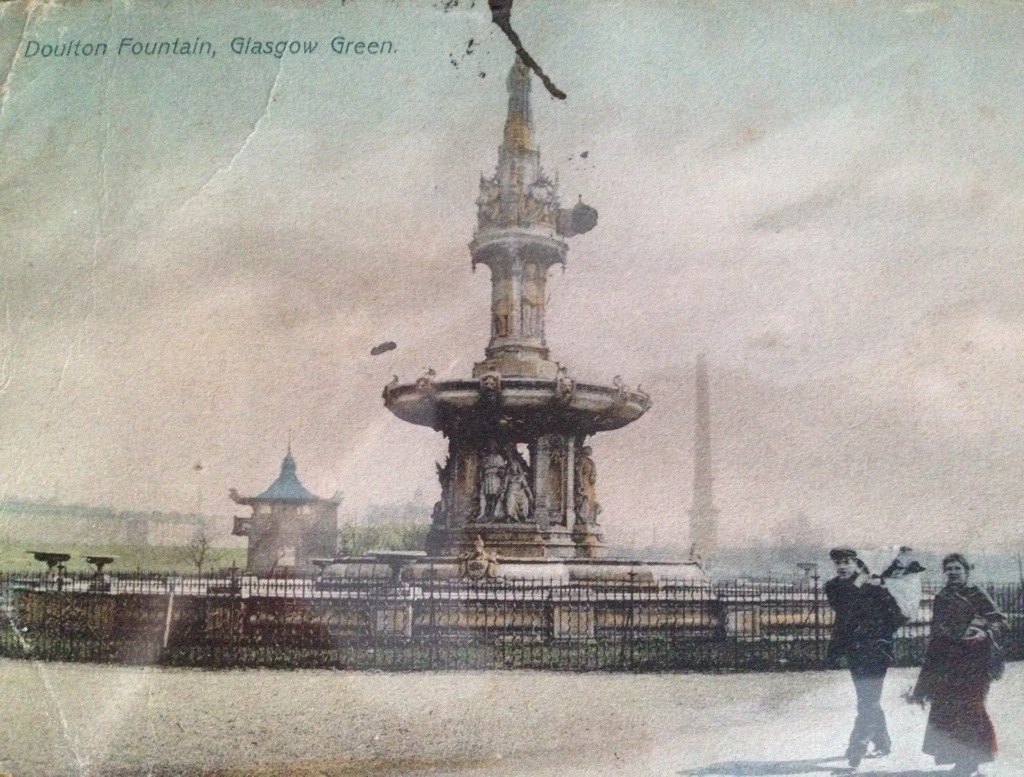
Postcards featuring Doulton were also popular and I have a series of birthday cards featuring Doulton items. Here is a postcard from Glasgow featuring their famous Doulton fountain.

20140705-085718-32238845.jpg

Whatever your interest in Doulton you are bound to find some derivative such as postcards to enhance your collection!

Doulton artist profile – Henri Boullemier

20140704-165242-60762745.jpg

Henri as his name suggests was of French descent and he and his brother followed in their famous fathers’ footsteps with their chosen profession as high end porcelain painters.
All three worked at Minton at one point in the late 1800’s and the two sons’s style was very much influenced by their father who at Minton worked with other of his countrymen including the famous Solon. The father had previously worked for Sèvres.
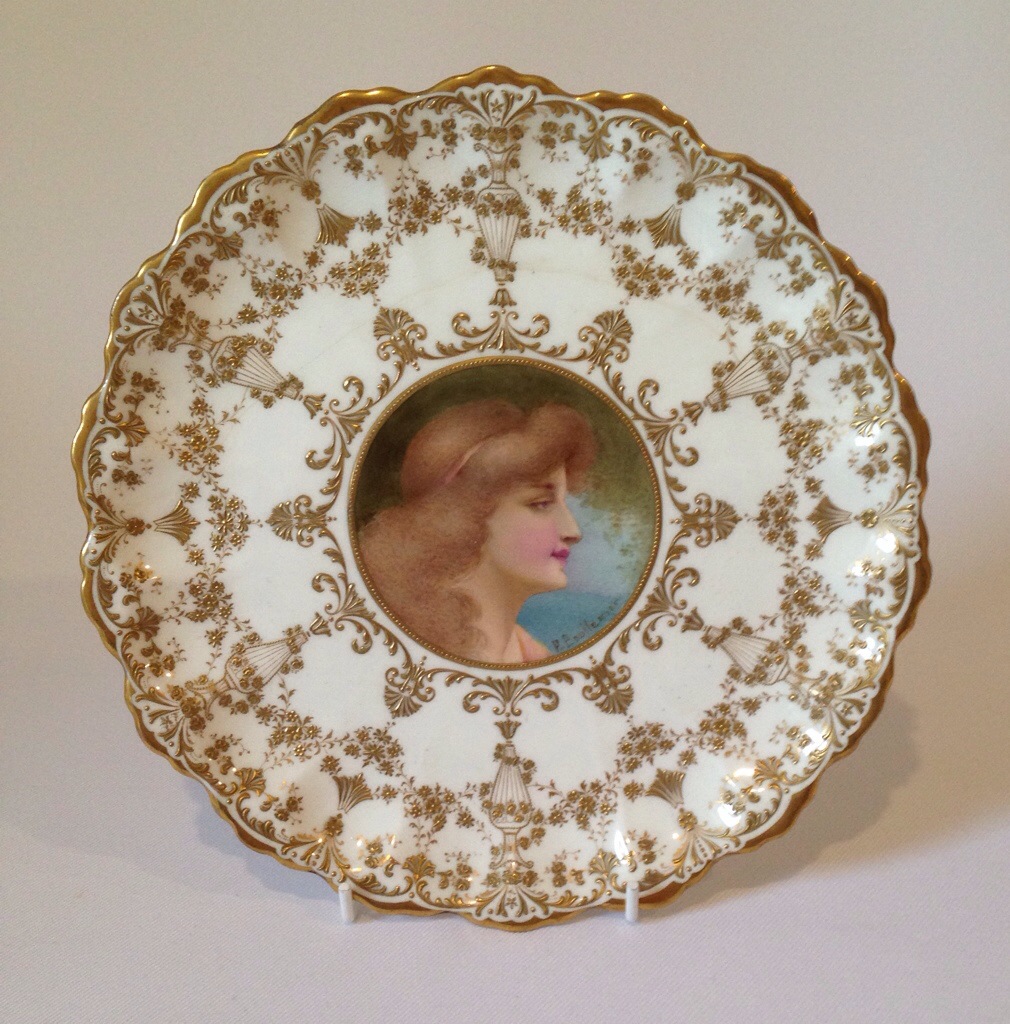
Henri worked for a very short period probably on a freelance basis for Doulton in the first years of the twentieth century and thus examples of his exceptional work are very rare. Typically his work featured on service and dessert plates and featured cherubs, children and classical portrait heads like the example pictured.
Any work by Henri Boullemier is exceptionally rare and pieces seldom appear on the secondary market.

Peggy’s ‘Prima’ Ballerinas!

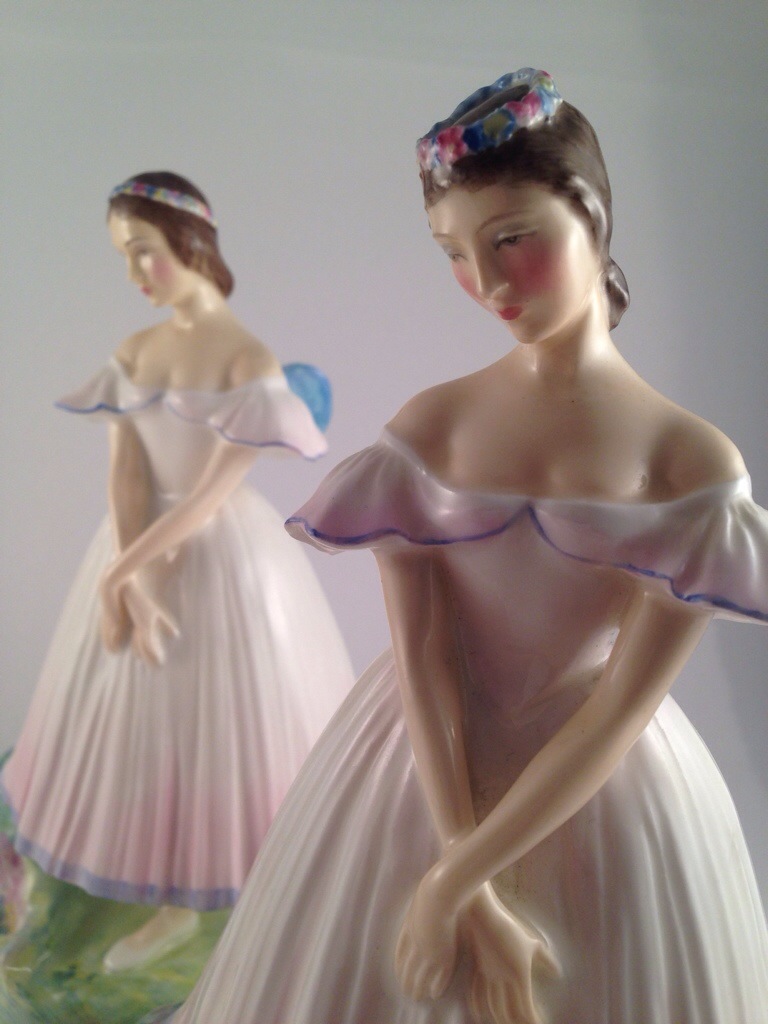
When Peggy Davies began to supply regular models to Doulton for reproduction she was determined to set her style apart from anything else hitherto produced. Whilst Doulton wanted to continue their house style after Harradine, Peggy had other ideas.

Among her first productions were a handful of ballerina figures, something that had not been created since the early and rare Pavlova HN487.

The delicacy and detail of these ballerinas are synonymous with Peggy’s style and so very distinguishable from other figure modellers.

The first in the series are Coppelia HN2115 and Ballerina HN2116, the origins of the latter are discussed in my book Reflections but Coppelia is based on the mechanical doll in Delibes’ comic ballet from which the figure takes her name.

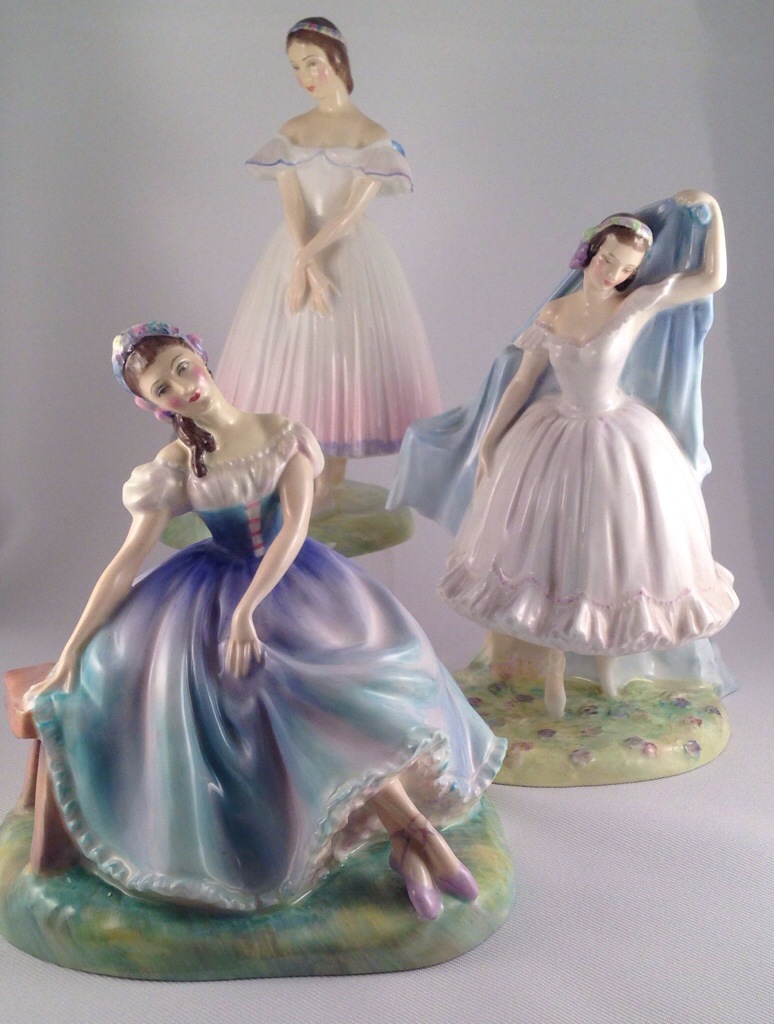
However, the most accurate ballet figures are the trio that followed these two models. The first, la Sylphide, is based on the ballet of the same name. La Sylphide should not be confused by the later ballet Les Sylphides which took inspiration from the original and also features a sylph – a mythological spirit if the air. I have recently discovered the prototype version of this figure with a crown of flowers sitting proudly above her head rather than the band of flowers on the model that went into production.

20140701-204401-74641652.jpg
L-R the production version of la Sylphide and the prototype..

20140701-203400-74040874.jpg
Full views of the two figures that illustrate their common features. Yet, the detail is of course much more defined on the prototype. The prototype version simply carries the Doulton marks as one would expect.

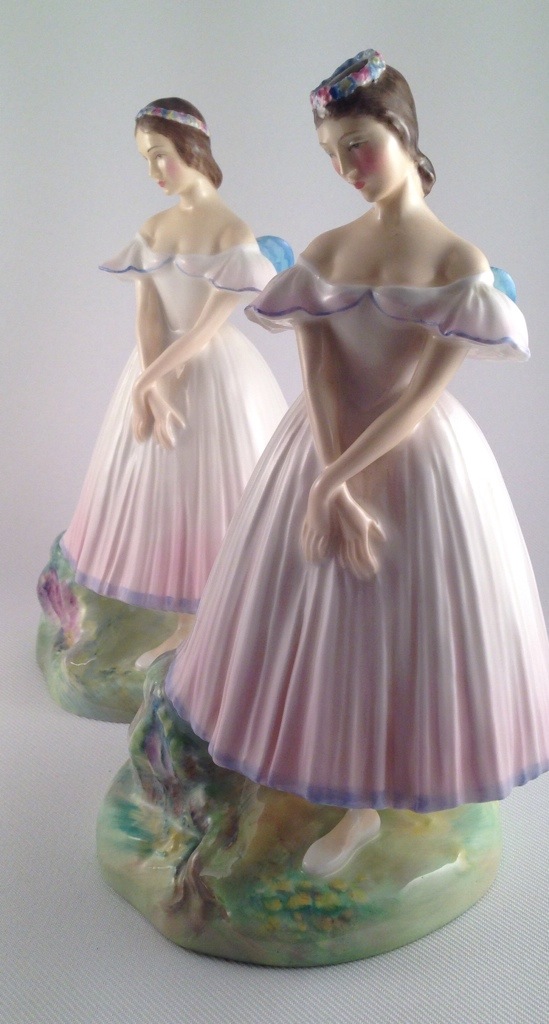
The second two are based on the ballet Giselle by Gautier first performed in 1841. Here are all three studies!

20140701-203711-74231126.jpg
L-R Giselle HN2139, La Sylphide HN2138 and Giselle, the Forest Glade HN2140.

This group of figures make an excellent display and loan themselves to any room in the house!

An A-Z of Collecting Royal Doulton – Cecil Aldin and Royal Doulton’s “Dogs of Character”.

20140628-131728-47848928.jpg
An early publicity shot for the series.

Although the modeller or modellers for this delightful set of dogs is unknown, inspiration for them comes directly from the many dog illustrations by Cecil Aldin, particularly his book A Dog’s Day.

20140628-125838-46718885.jpg
The cover of ‘A dog day’ illustrated by Aldin.

The series was expanded at a handful of points. The original six models were introduced in 1934, then a further two in 1937. These were succeeded by four more models in 1938. There was a large gap then until 1959 when the character dog with slipper was introduced.

20140628-130223-46943865.jpg
A group of character dogs including the rarer HN1098.

From this original set there were withdrawals in 1959 and these are naturally the most sought after.

20140628-130422-47062377.jpg
Another of the first withdrawals HN1101.

At some point in their early production, the series also had an early backstamp unique to it.

20140628-142800-52080857.jpg

A further six studies were added to the set in 1941 and are HN2585-2590. The popularity of this set meant that the remaining dogs were in production until 1985 and even after this a handful were re-produced under the Beswick brand, although these later ones are instantly distinguishable from the Doulton ones due to their lack of detail.

Variations in dogs and occasional prototypes do turn up and I know of a dog playing with a tin and ball of string and here on the right is a rare version of HN1099 with a front paw modelled differently.

20140628-132057-48057927.jpg


20140628-142848-52128310.jpg
A catalogue page showing the first 12 dogs in the set ca.1938.

The canine characters were also featured on Royal Doulton’s famous seriesware and were produced between 1926 and withdrawn during or soon after WWII. Patterns carry one of two D numbers: D4525 or D4629. In total there were six different scenes/dogs featured and items come in regular or Titanian glazes.

A great selection of Doulton’s Aldin ware coming up at Lion and Unicorn Auctions 14 April 2024! http://www.lionandunicorn.com

All content and pictures © Christopher Evans 2014.

A place to share enthusiasm for all things Royal Doulton! All original content ©Christopher Evans 2014 unless otherwise credited. No unauthorised reproduction permitted.