Don’t forget the world’s major Doulton extravaganza is just around the corner!
To reserve your tickets visit icgfair.com
And follow this link-
https://www.facebook.com/events/489880474484013/
Don’t forget the world’s major Doulton extravaganza is just around the corner!
To reserve your tickets visit icgfair.com
And follow this link-
https://www.facebook.com/events/489880474484013/
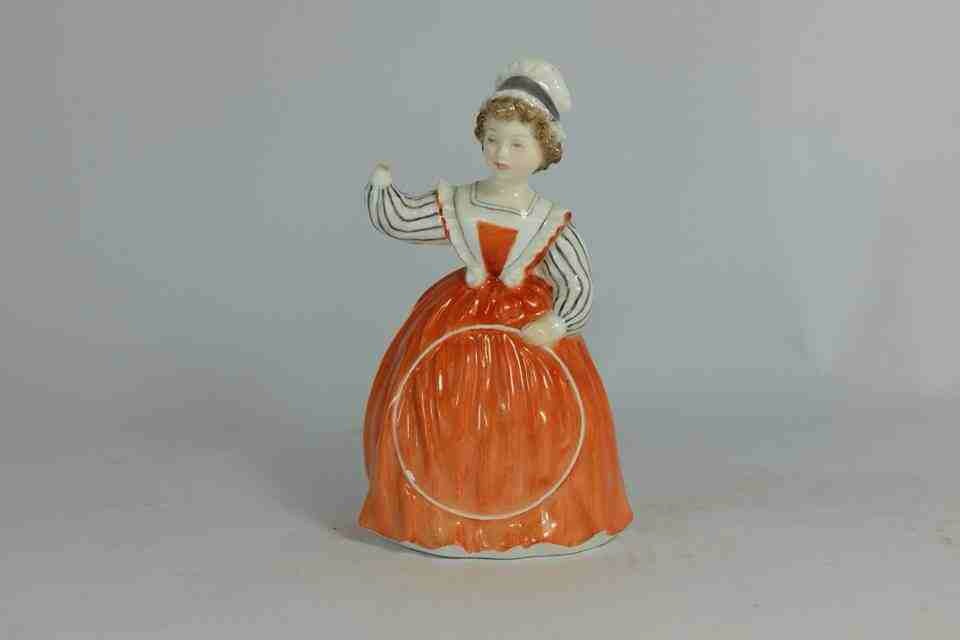
I am always amazed at how these prototypes turn up…you don’t see any for an eternity and then two or three turn up!
This charming young girl is ‘hoop rolling’ and is decorated much in the same palette as Noelle HN2179 also by Peggy. She has an HN number already written on her base suggesting that her introduction was imminent but obviously Doulton decided against her introduction at the last minute. She dates to ca.1958 and this HN number was not used until 1979 for Sunday Best. This young girl will be coming up at the Potteries Antique Auctions.
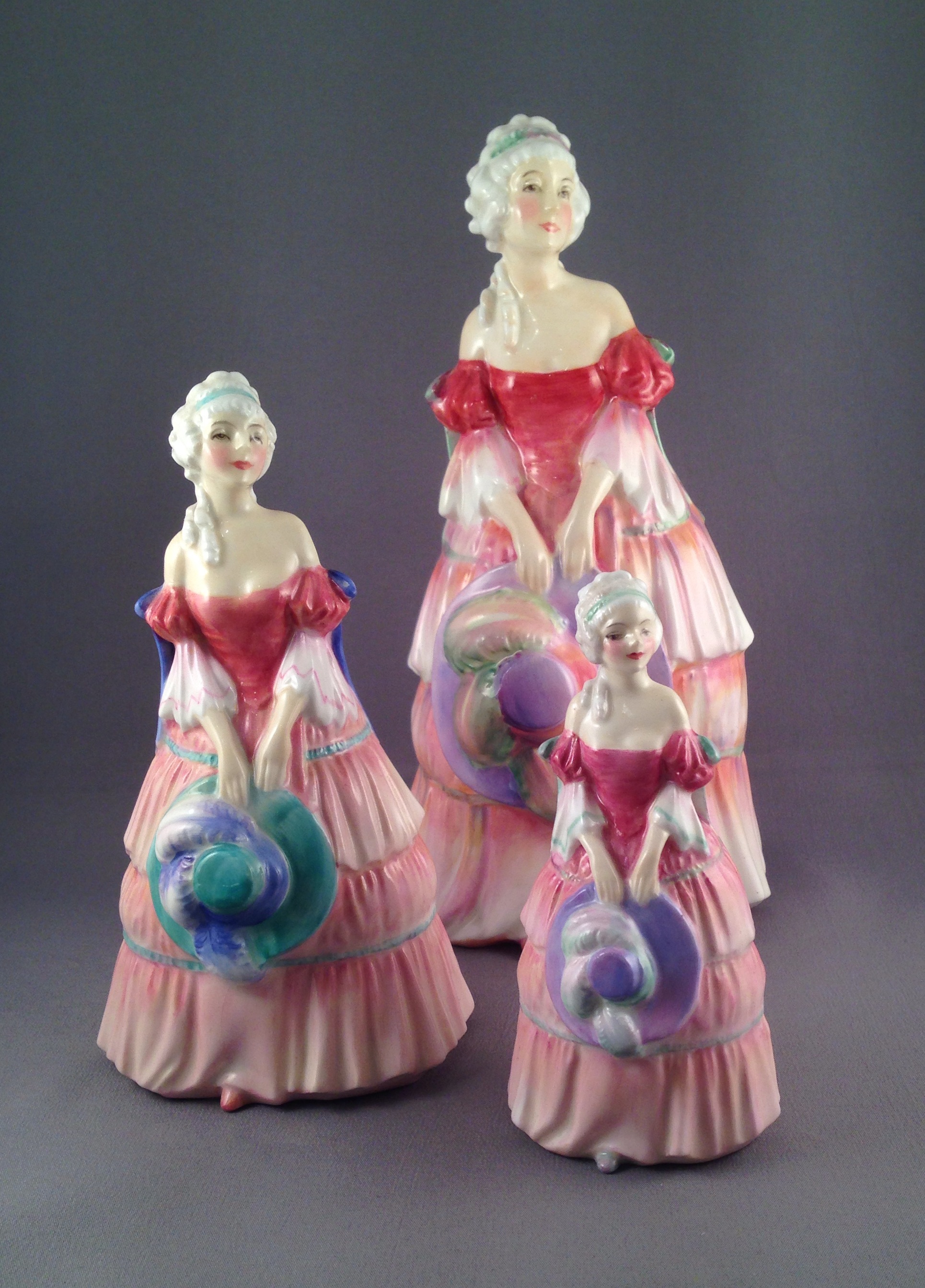
Harradine’s Veronica in all 3 sizes and identical colourways as HN1517, HN1915 and M64.
With Leslie Harradine’s models for the HN Collection, Doulton certainly hit the jackpot! His ‘large’ size figures proved so popular that many were re-modelled for the M Collection when it was introduced in 1932, with further additions to it based on larger figures throughout the 1930’s. Then in the late 1930’s mid size versions of three popular figures were introduced, namely Veronica, the Paisley Shawl and Janet.
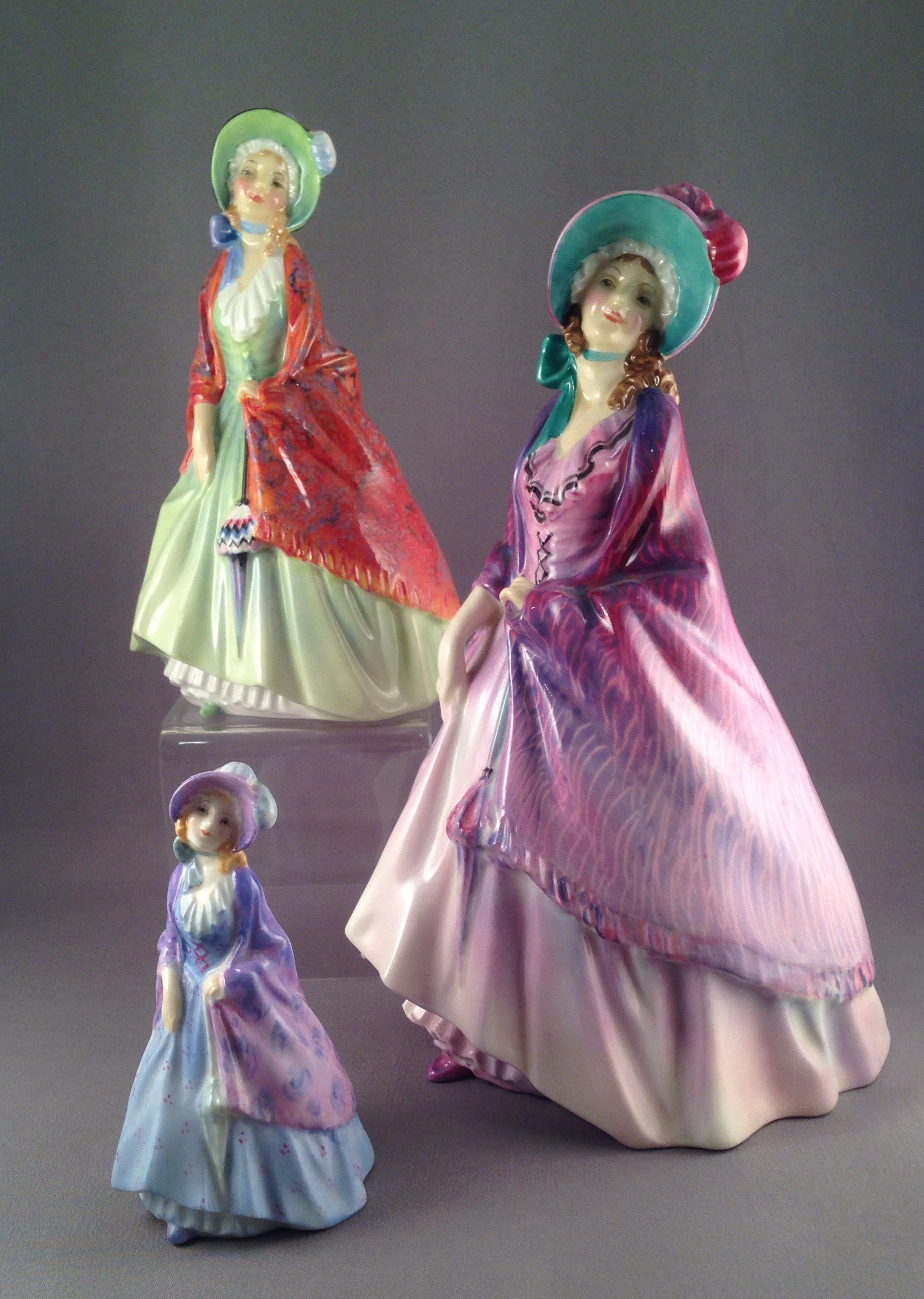
The Paisley Shawl in 3 available sizes HN1707, HN1914 and M3.
Unlike Veronica above, the other two Harradine figures modelled in 3 sizes were not produced in complimentary colourways. The most that can be said is that both the Paisley Shawl HN1392 and HN1988, together with both Janet’s HN1537 and HN1964 are identical in both sizes, but not in the third.
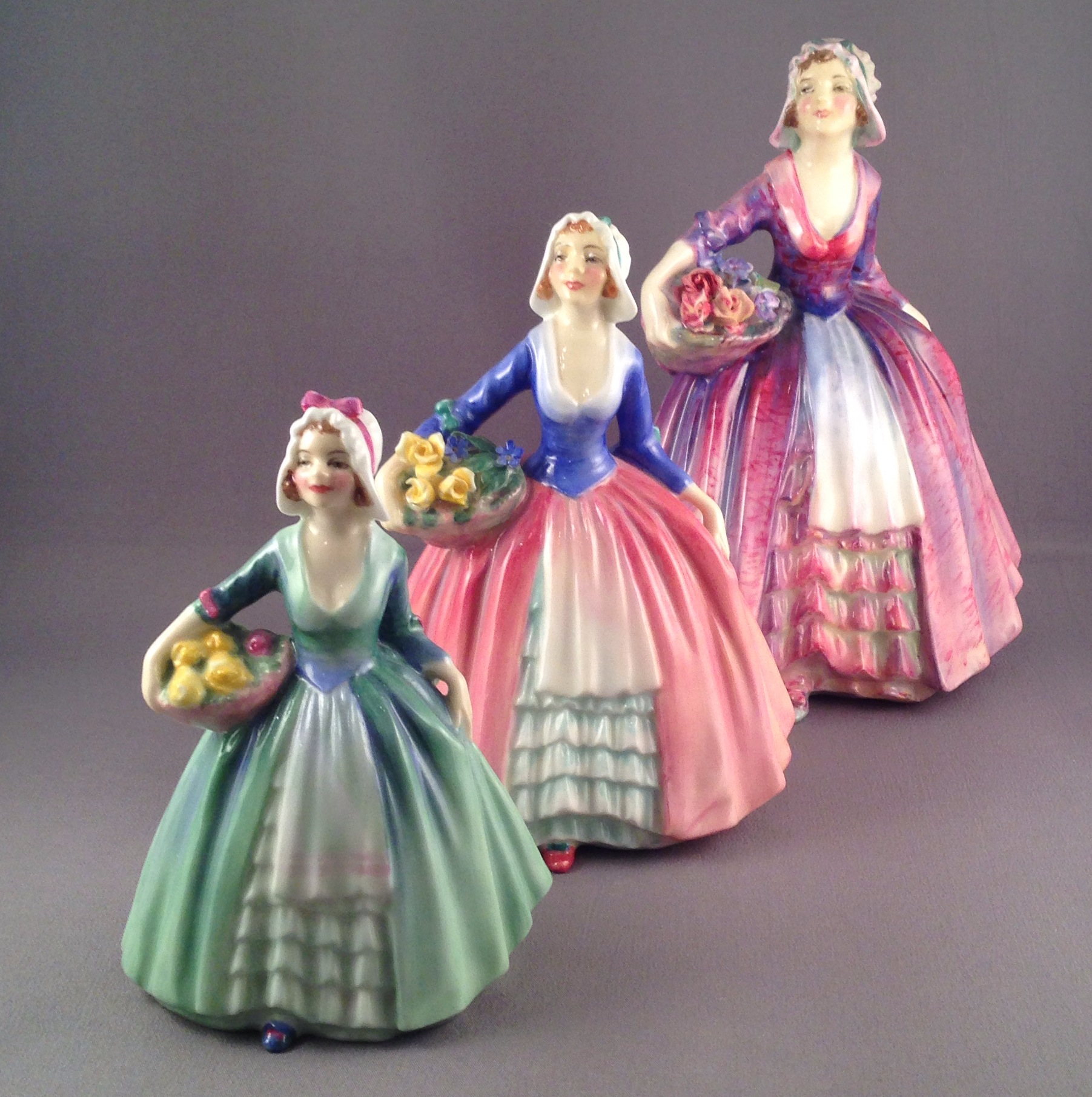
Janet in 3 sizes and all different colourways HN1538, HN1916 and M69.
All three figures were produced in many colourways, yet only the three Veronicas can be said to ‘match’. Whether one displays these figures together as a group together or separately, each is regarded as a classic Harradine model today!
This the first version of Diana is typical of a handful of pre-war figures that were issued again after the war. The special point about Diana is that she was issued in a totally different colourway, unlike others such as Peggy HN1941/2038 or Jean.
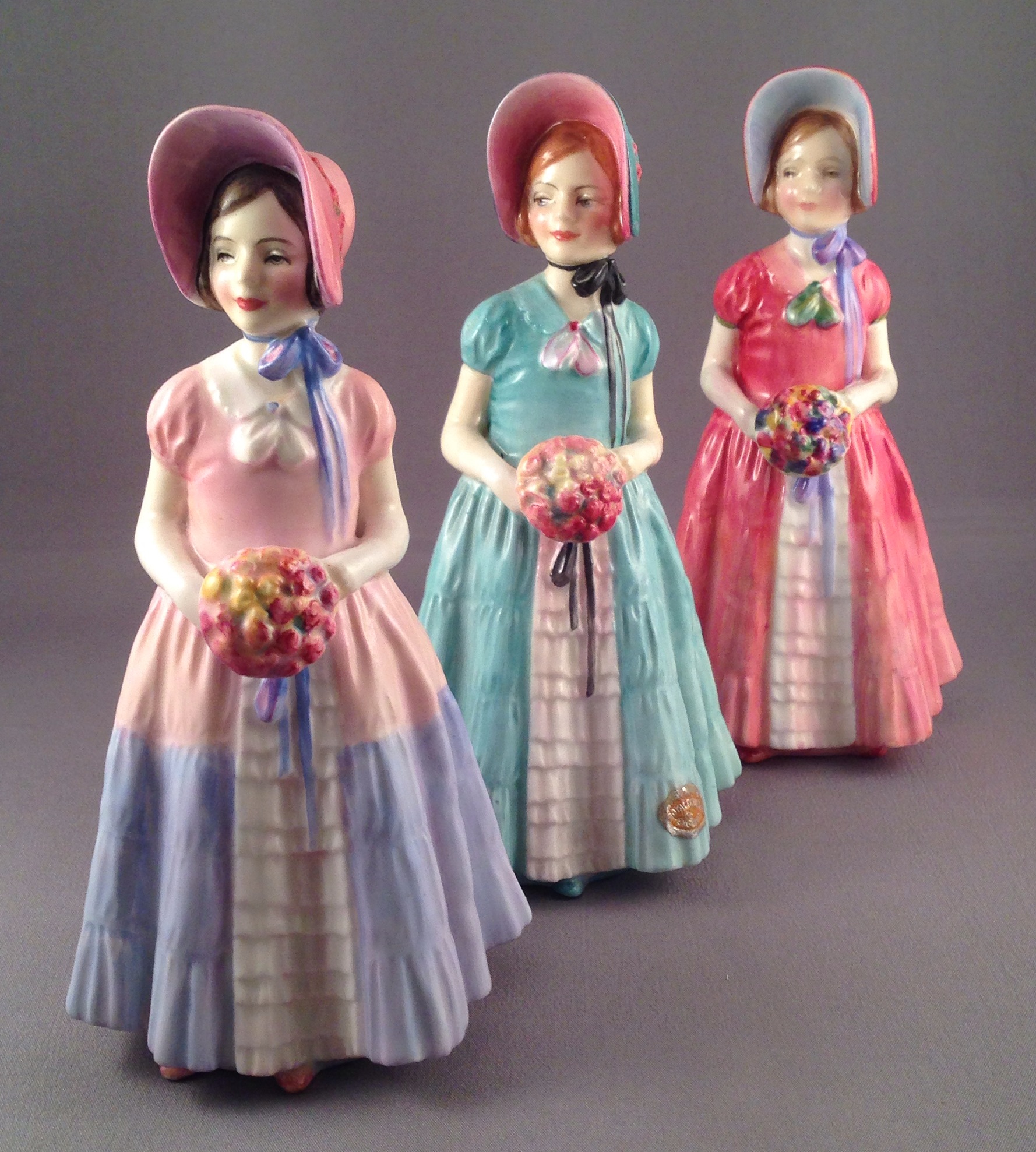
Three versions of Diana HN1716, 1717 and 1986.
This model was in production from 1935 to 1975, proving as if it were needed, the popular appeal of Harradine’s figures. The two earlier versions were withdrawn from production by 1944 and the last version HN1986 was introduced with the updated range of figures once production of Doulton’s famous figures re-commenced in 1946 and remained in production until 1975.
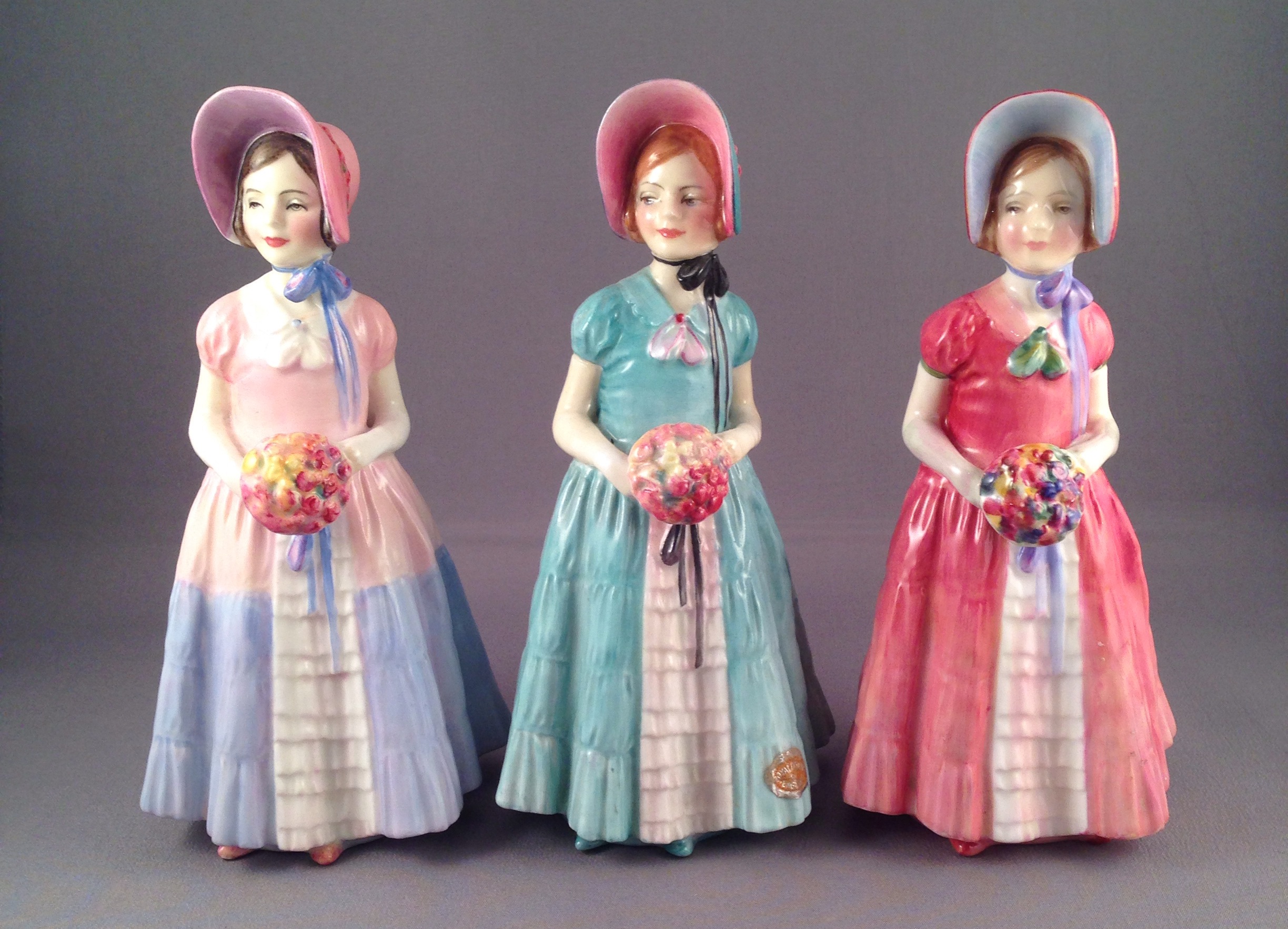
As you can see from the pictures above the only real change between the earlier and later versions, is the position of Diana’s feet, giving her a totally different direction to face!
Here are some publicity shots from the late 1940’s explaining the production process for this popular lady.
1. Pouring the liquid clay into the moulds to form the cast models.
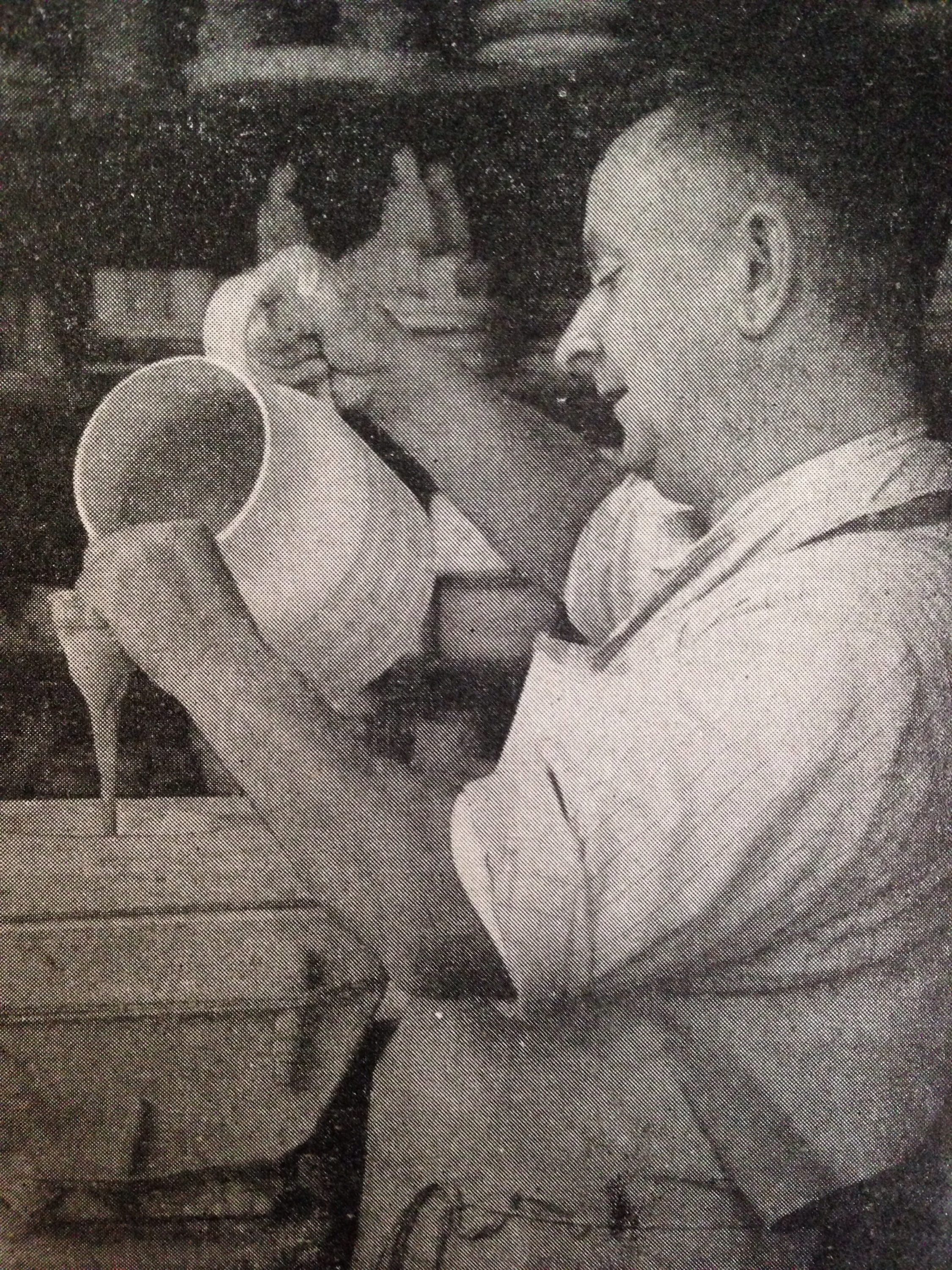
2. Picture of the moulds for her component parts.
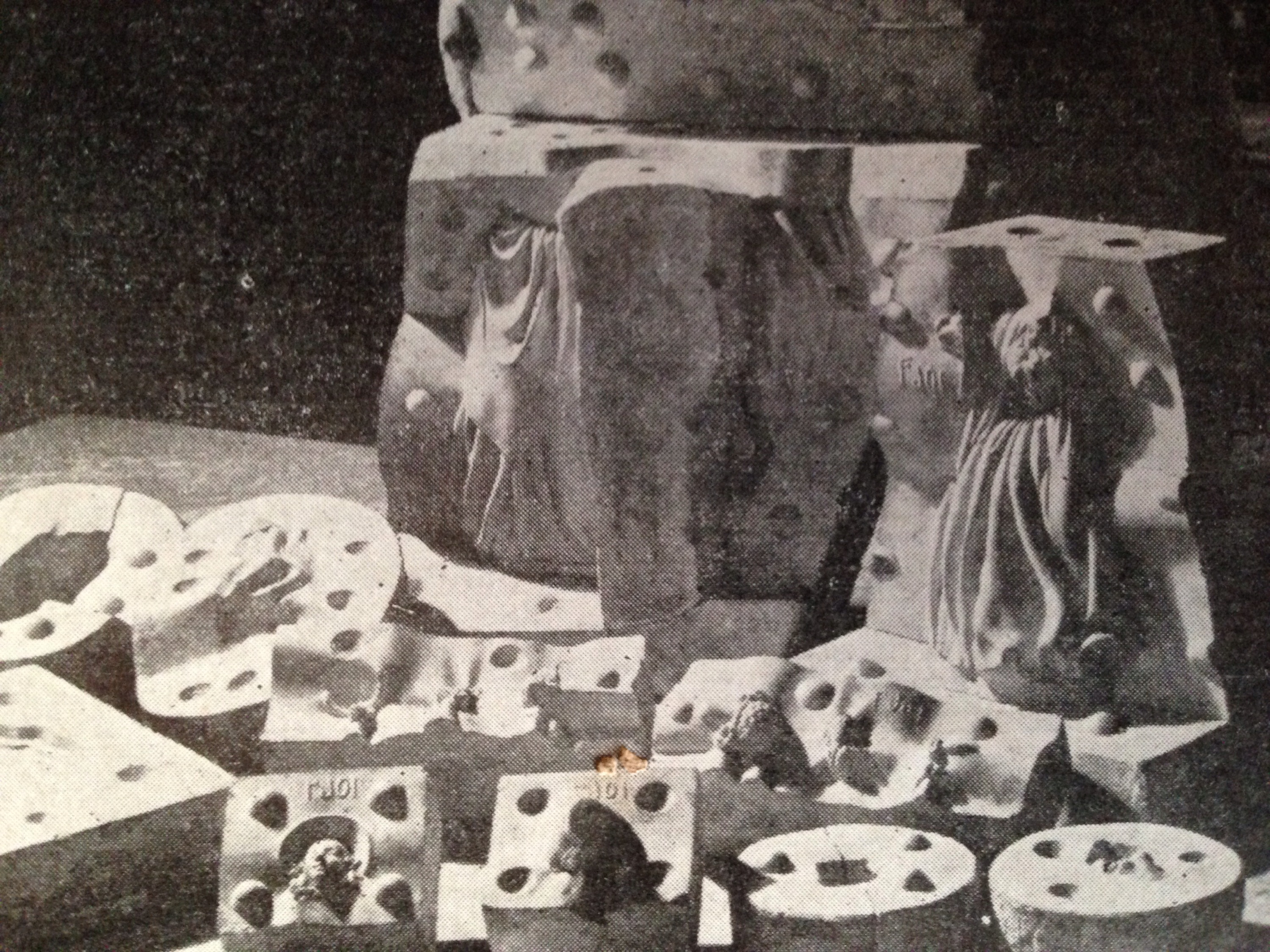
3. Close up of a moulded face and head.
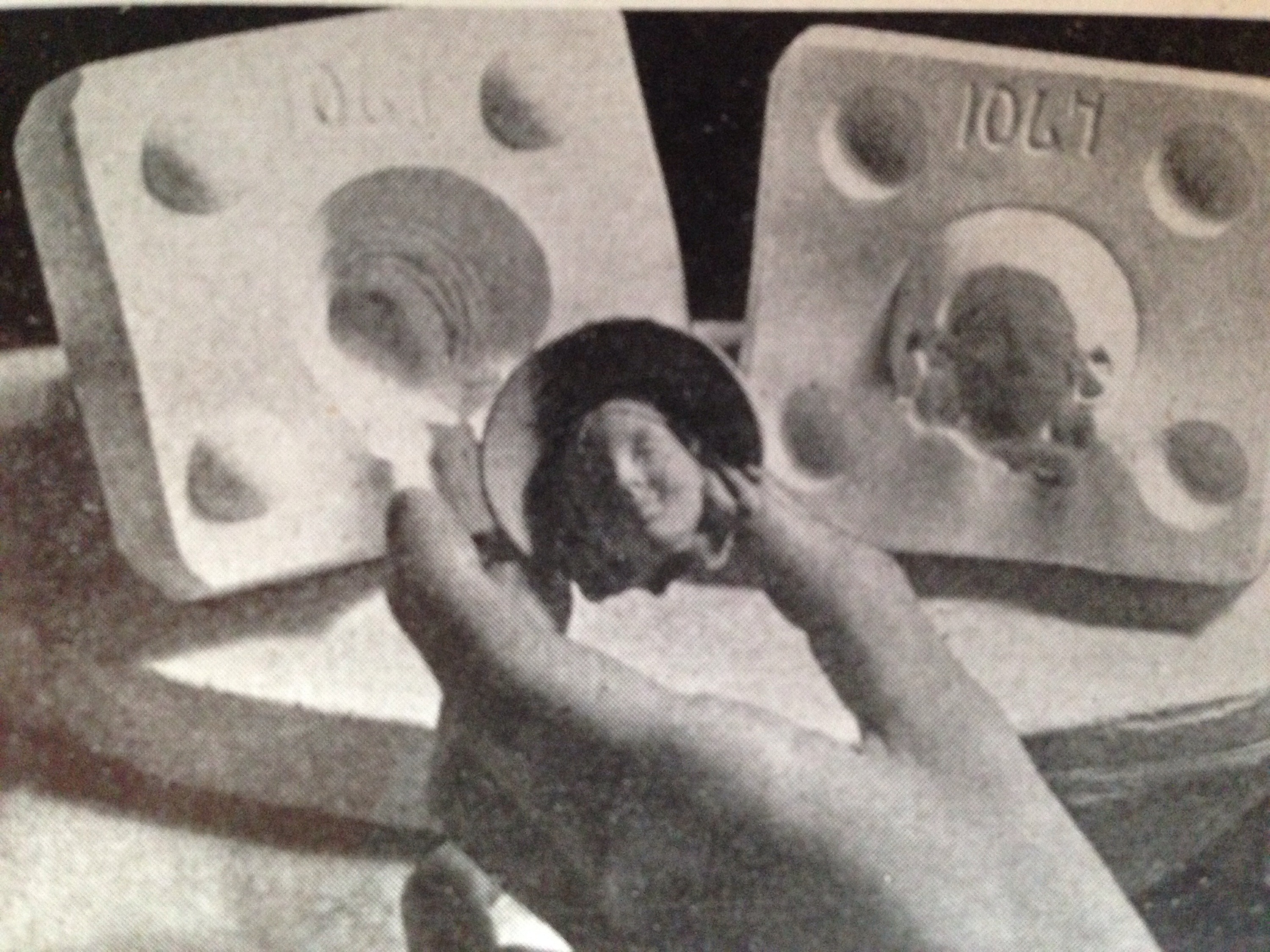
4. Once the figure is assembled any additions are added; in this case hand modelled flowers.
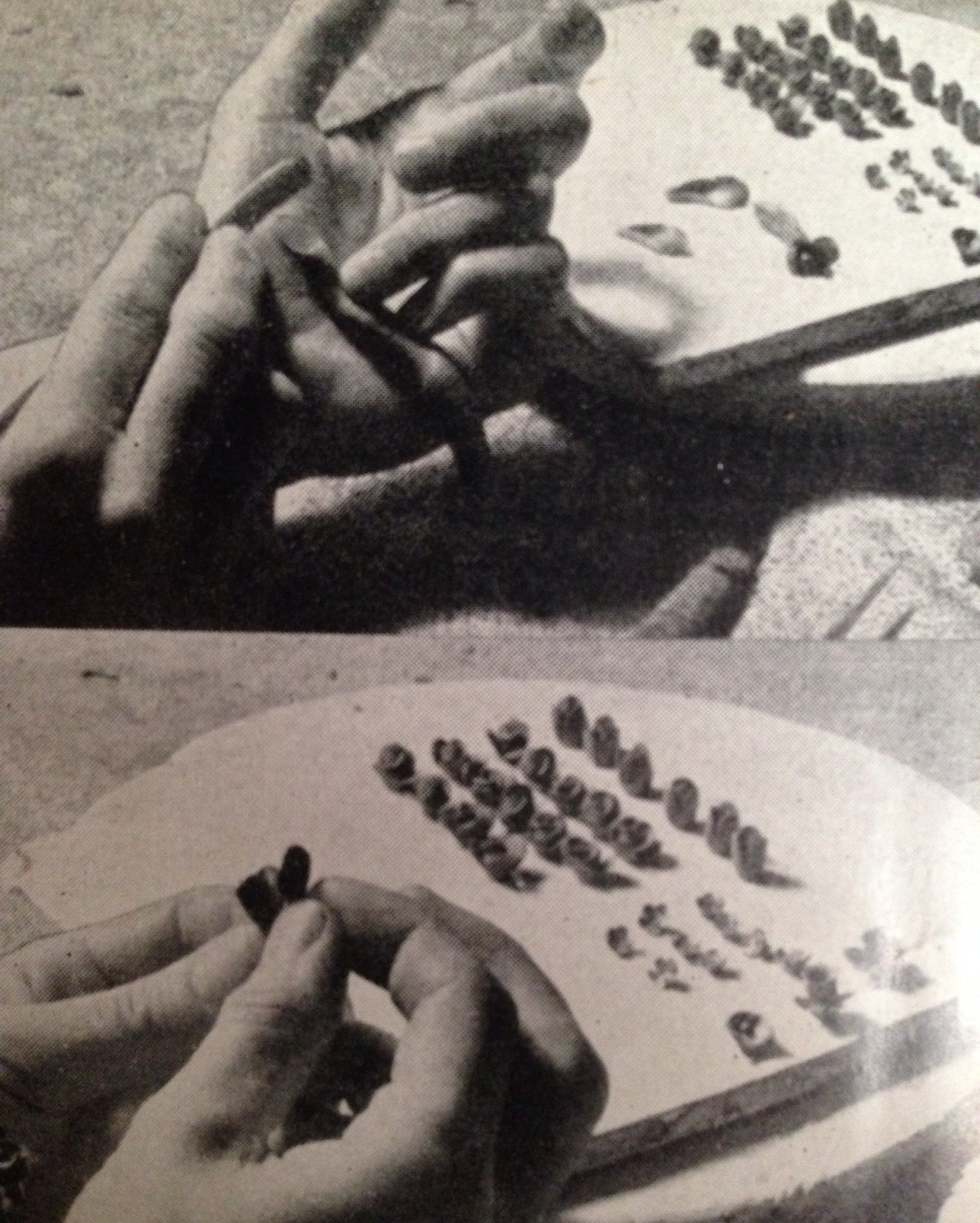
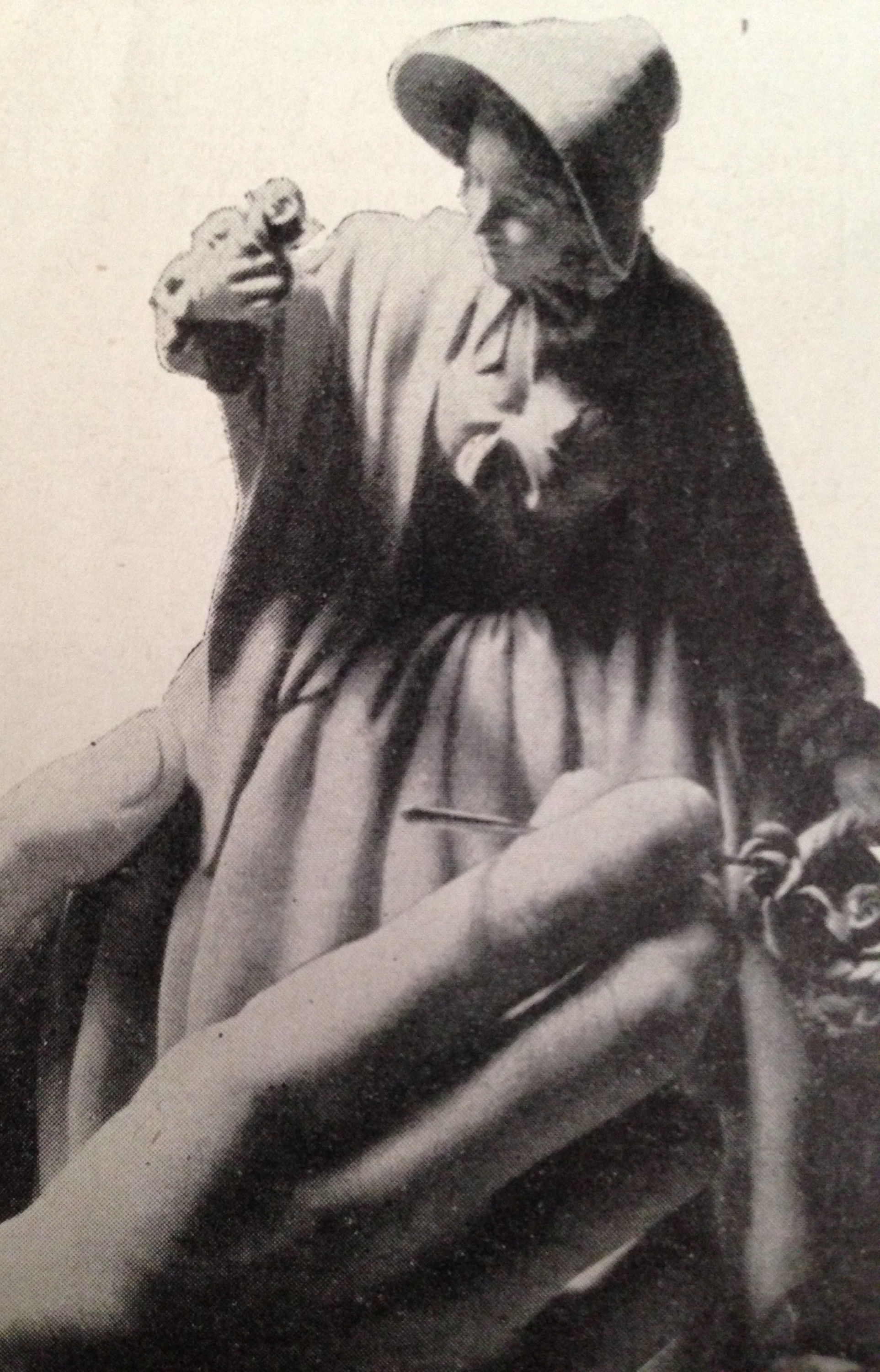
5. At this point the figure is allowed to dry, then it is fired turning it into biscuit china. The size of the figure reduces dramatically at this stage. The figure is then dipped by hand into a specially prepared glaze.
6. The figure is then placed in a fire-proof saggar to be fired.
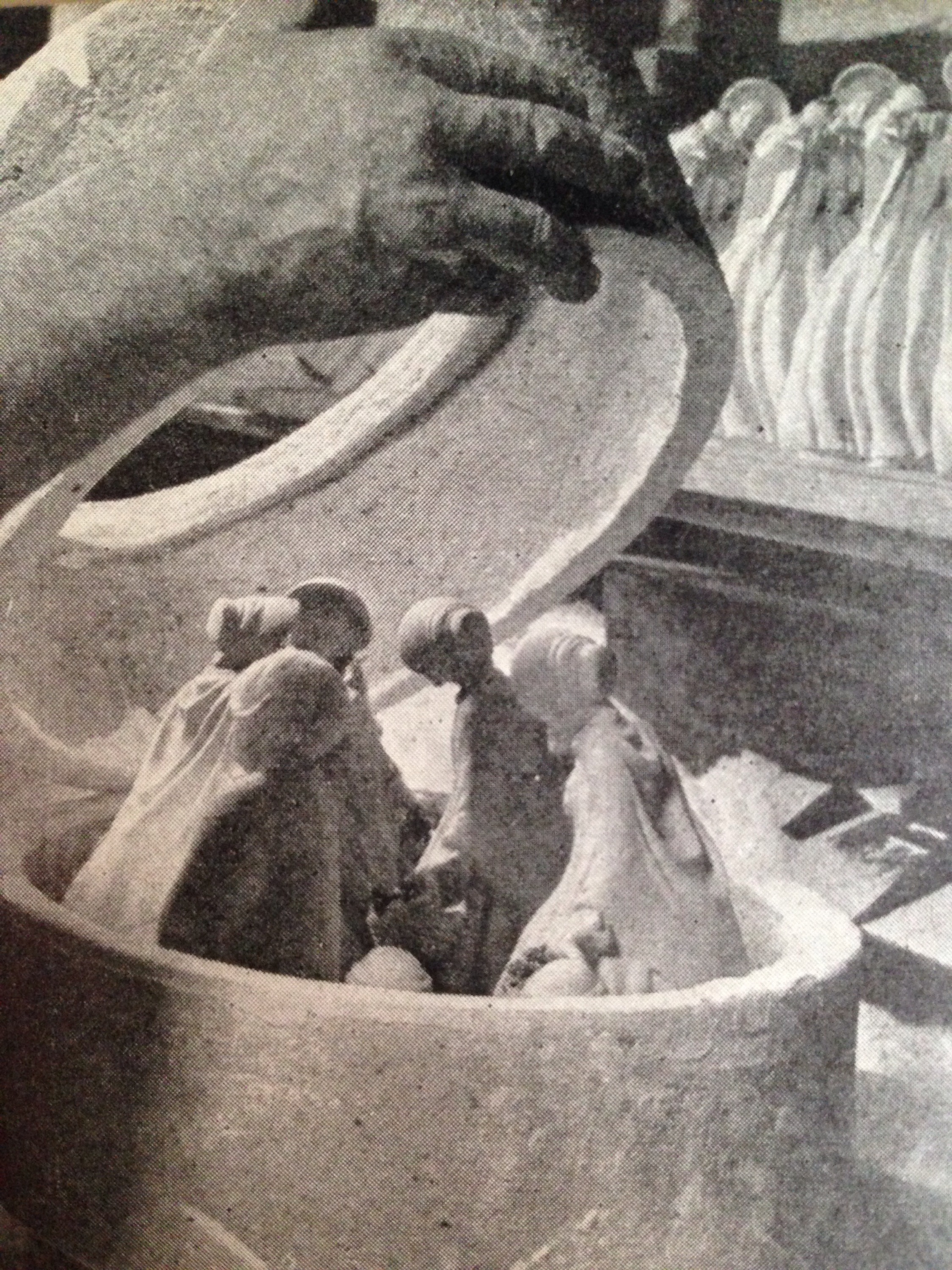
7. From this stage the figure is decorated by hand.
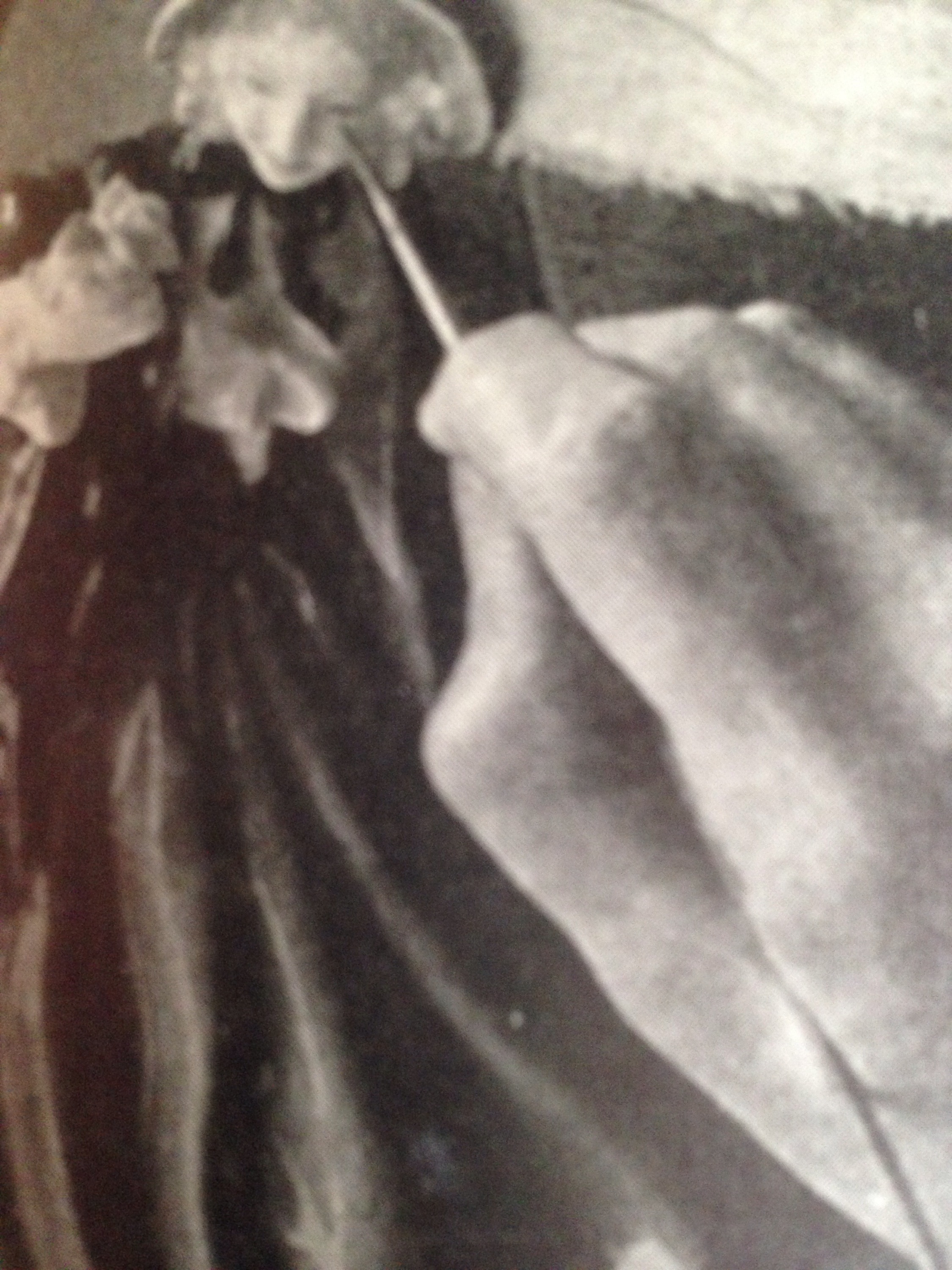
We are no doubt all familiar with the finished product as she has always been popular with collectors.
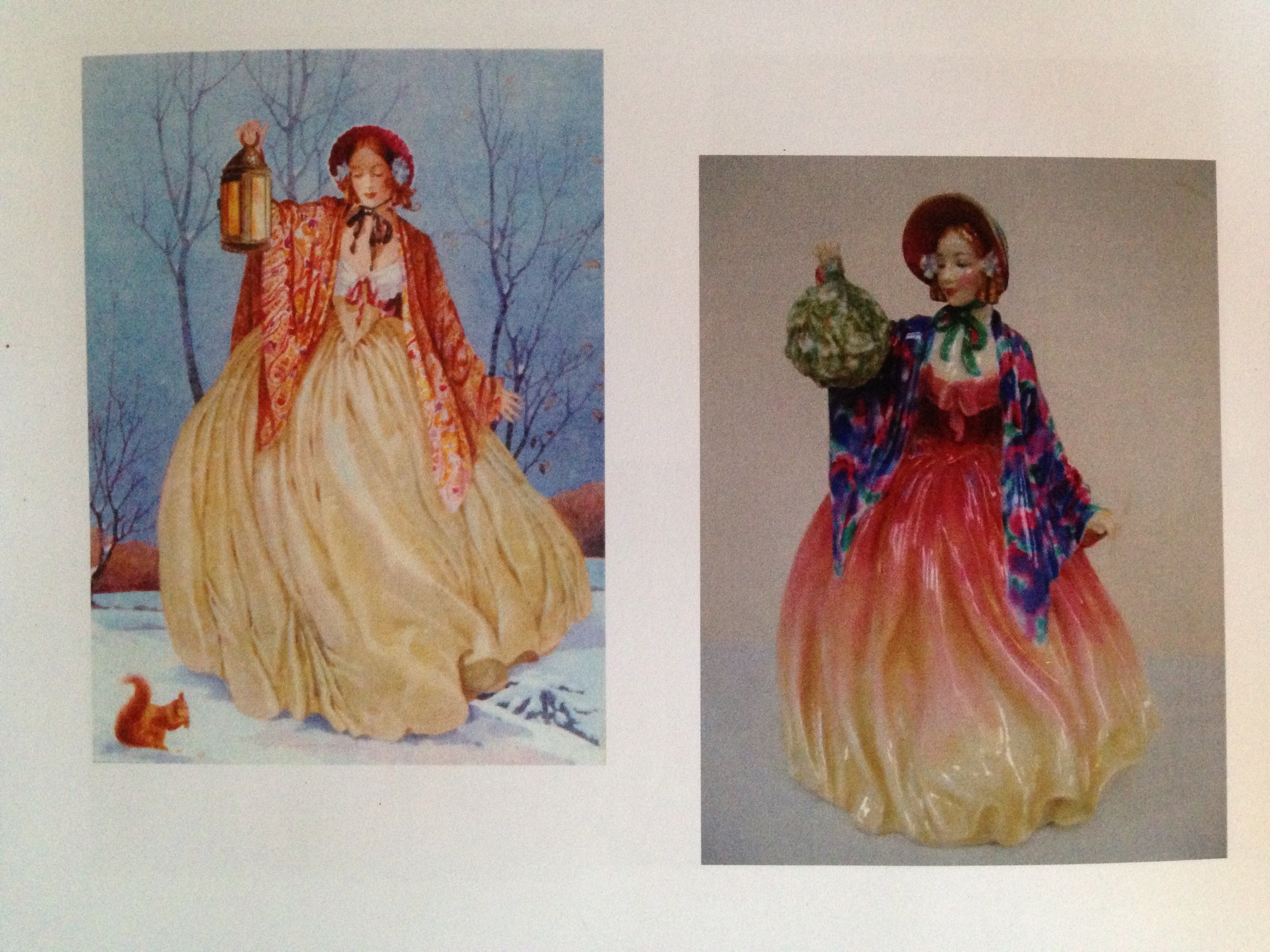
Interestingly Harradine based his model on a painting by Stanislaus Longley and I have seen an early version of the figure without the basket and instead of holding a rose she is holding a ball of mistletoe.
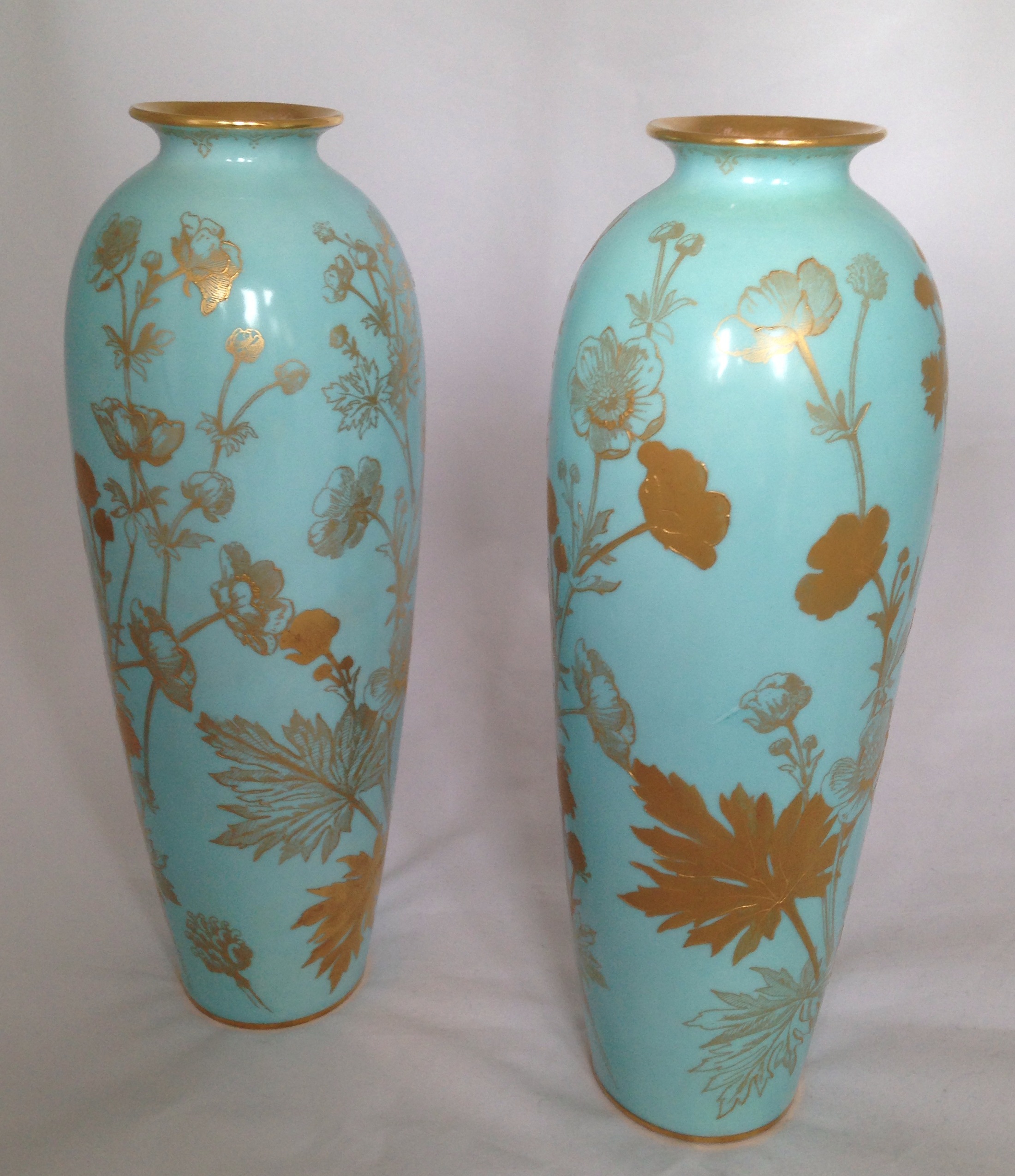
Thanks to Harvey’s Collectibles for the above picture of a pair of vases in their collection. Dating to 1900-02 they are not easy to find and I have seen the same pattern on a pink body only once before.
Interestingly they are from the Robert Allen studio at Burslem as is confirmed by the RA number to each of their bases. The numbers relate to design books and we are able to date items using these RA numbers.
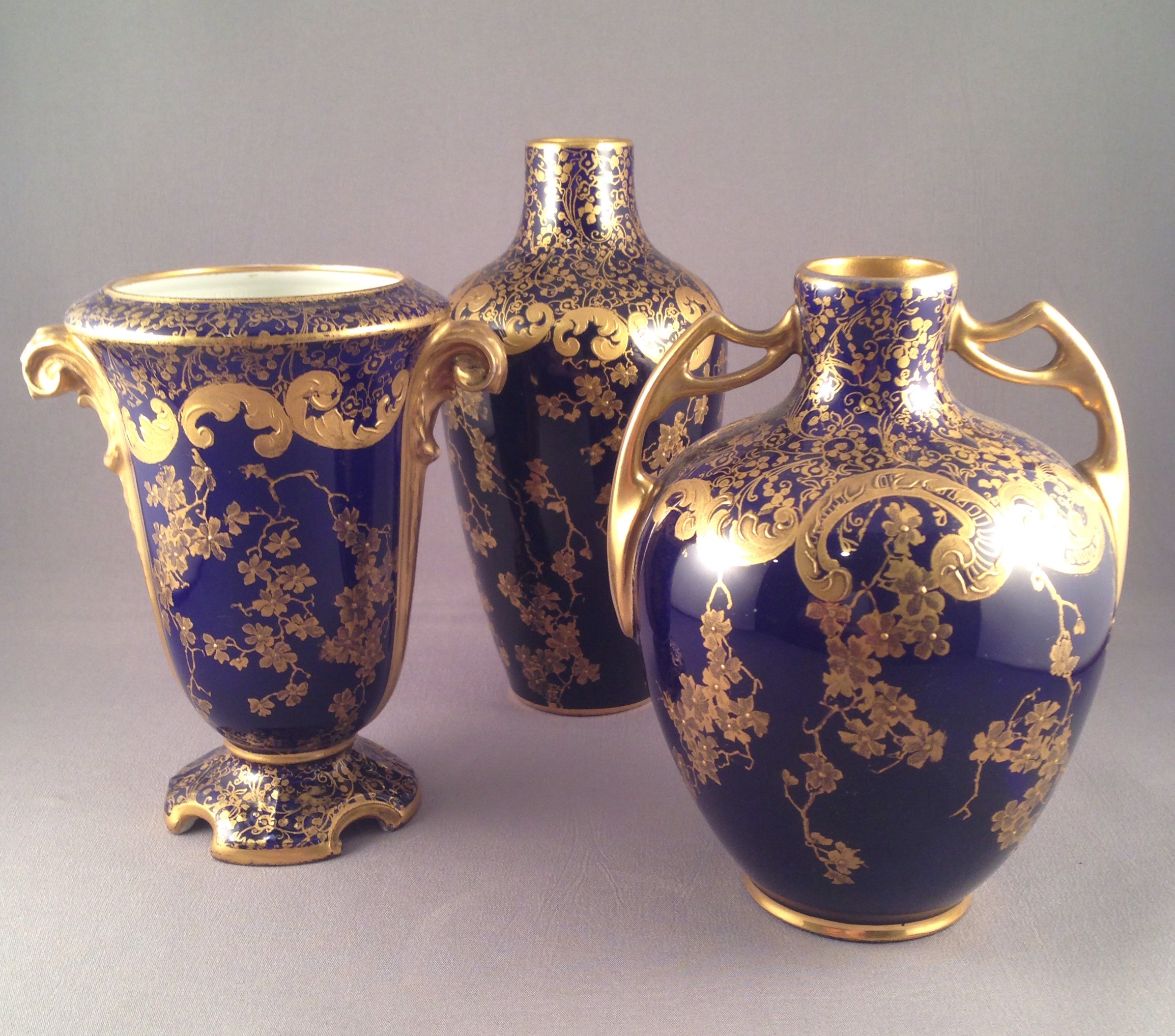
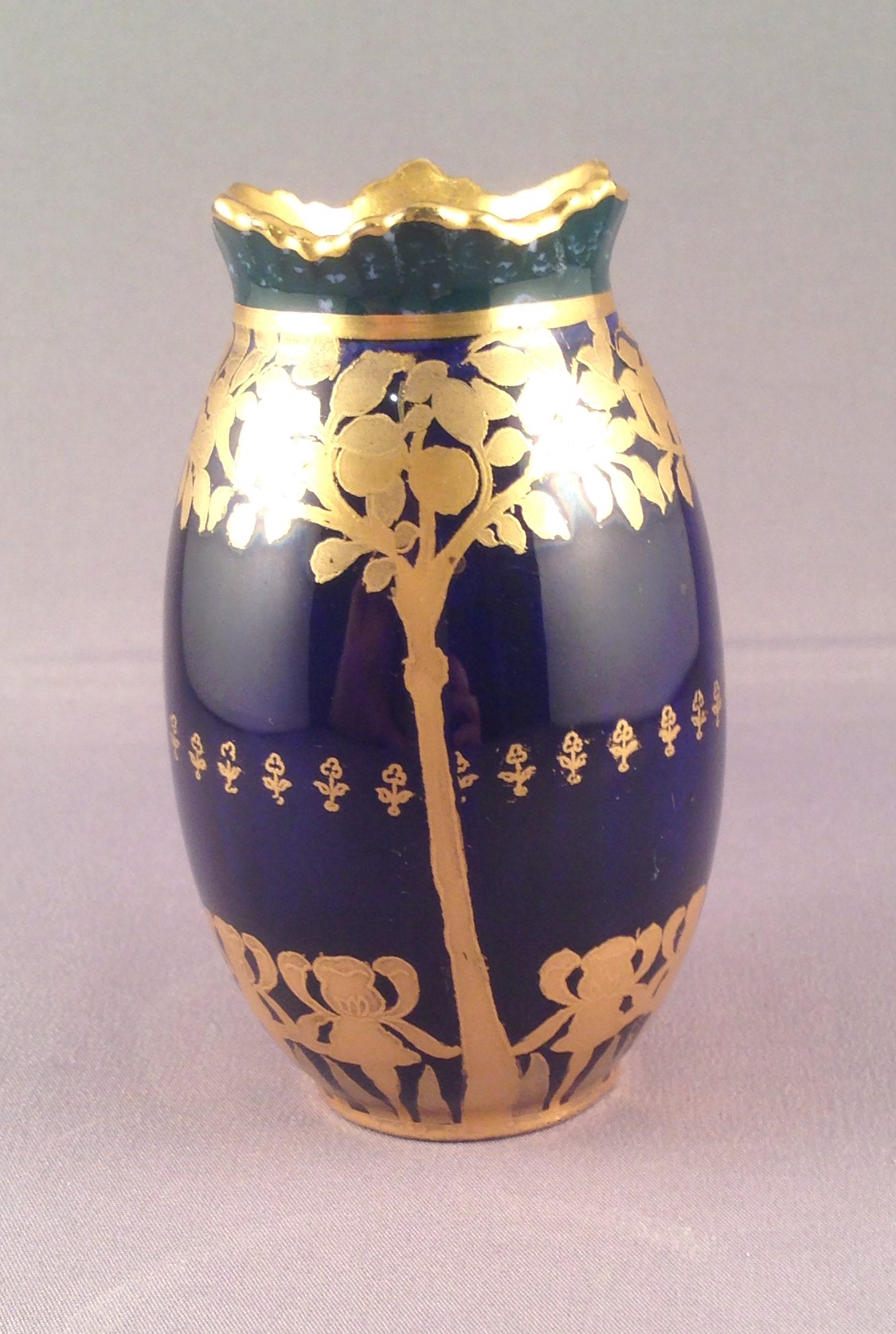
Above and below are further examples of gilt silhouette flowers and foliage from the Robert Allen studio and date slightly earlier to the late 19th Century. The miniature vase below is more typically found in white and light blue rather than cobalt and gilt.
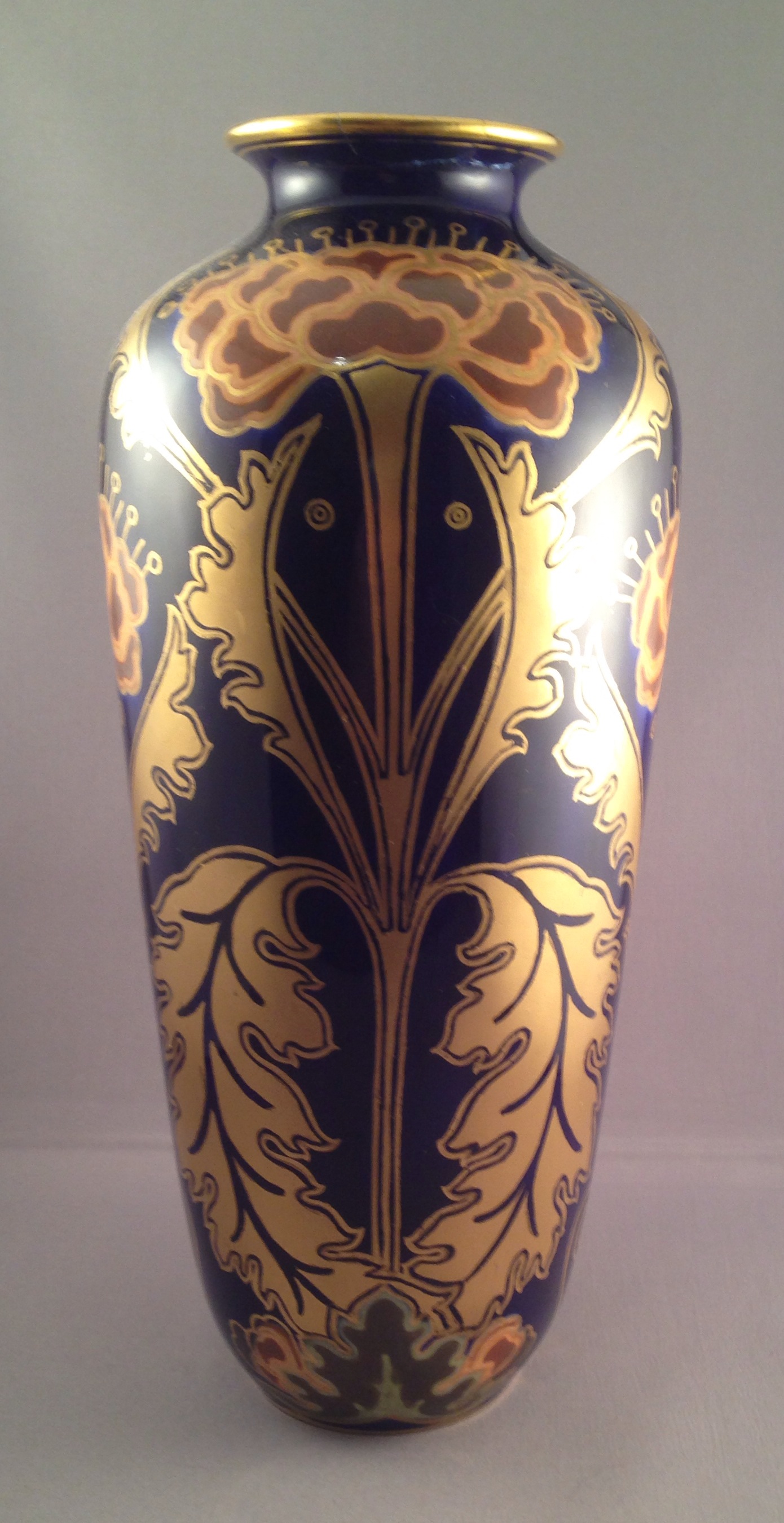
This final vase illustrated Doulton’s ability to change and adapt designs as this is usually found decorating toilet sets rather than gilded cobalt blue vases!
As you know I always love to discover the inspirations for our favourite Doulton figures. Here is another that didn’t make the final cut for Jocelyn’s and my book ‘Reflections’. It is itself a figurine but this time a wax figure by Agatha Walker that she produced as part of her series of figures from the stage in the 1920’s, imitating a popular tradition from the 19th Century. These figures were made of plaster, then coated in wax and finally painted.
Typically Harradine has put his own flourishes to the finished figure including a parasol and changing the direction of Anthea’s head.
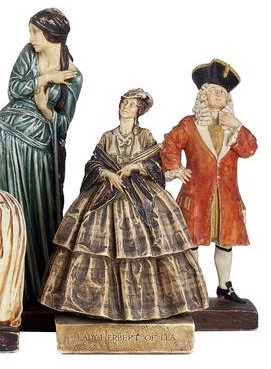
Courtesy of Bonhams.
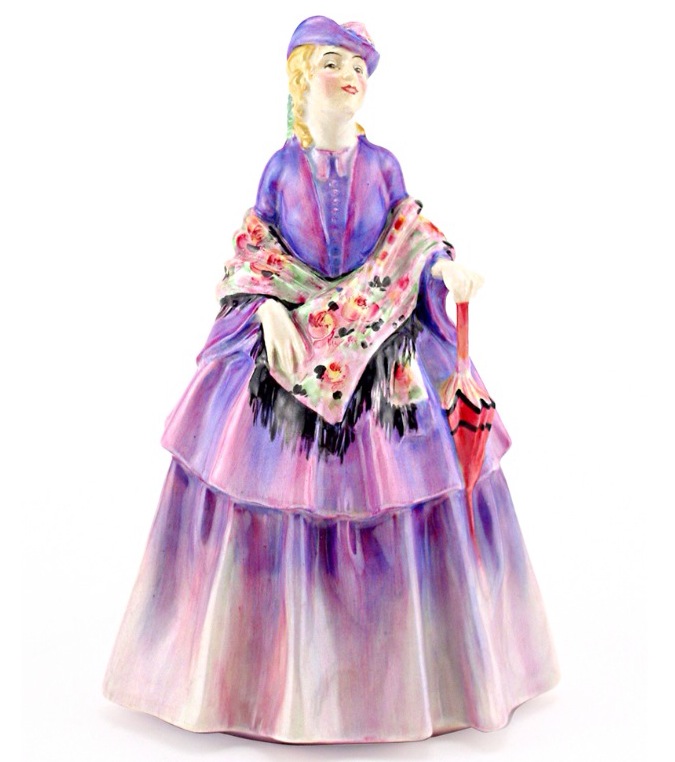
Courtesy of Seaway China.
To date I have found only one other Agatha Walker figure that Harradine used, but that’s for another time!
Whilst pictures and adverts provided much inspiration for Doulton’s modellers, real life and sometimes family life also played a role in inspiring them.
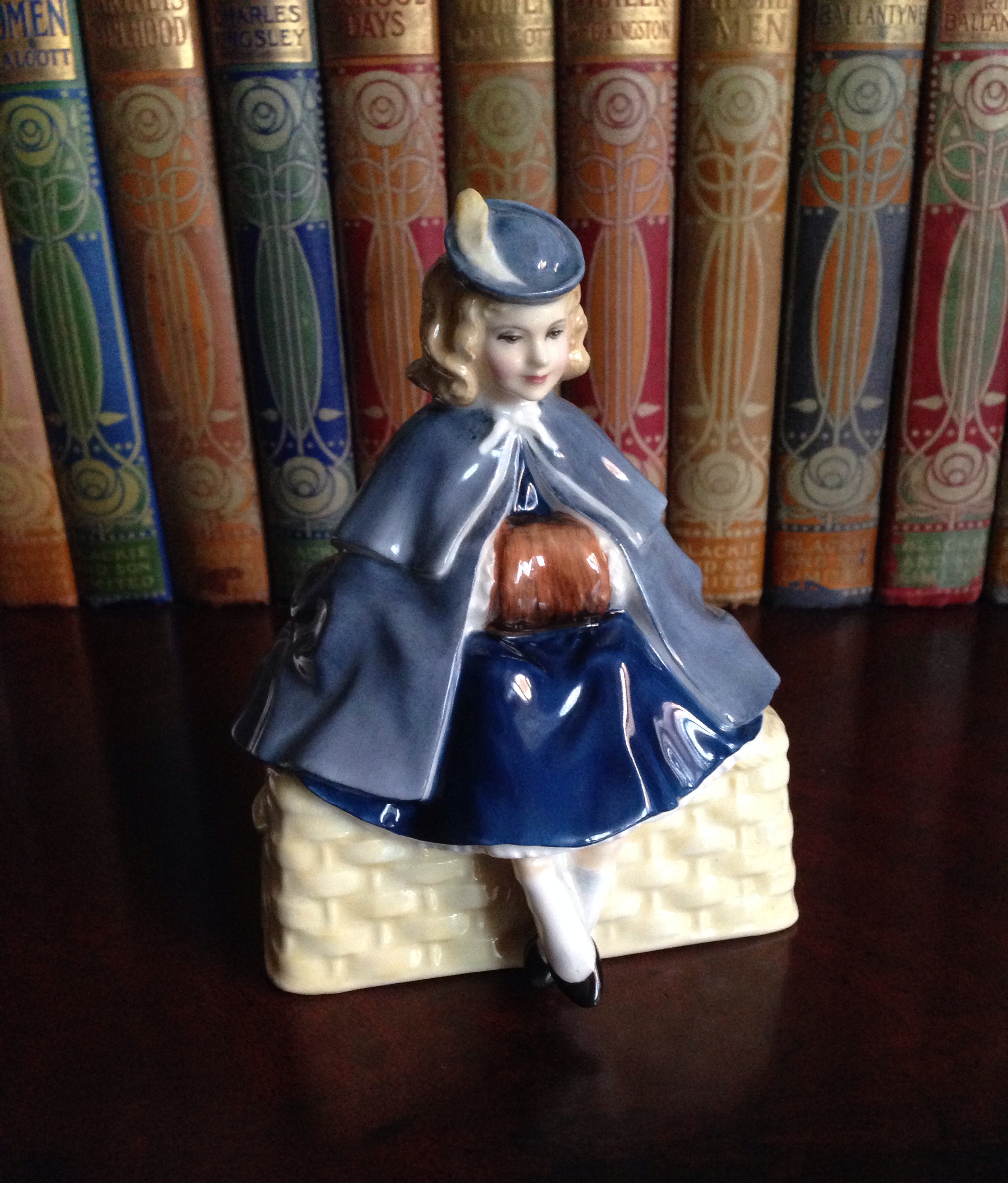
This delightful prototype of a girl by Peggy Davies has cropped up a handful of times and I understand that she is a childhood representation of an aunt who as a child was sent to Canada for adoption, but who was ultimately and happily returned to the family to care for. This is how Peggy saw her waiting to board the boat to Canada, dressed in her best and with her trunk.
….and three would be a crowd.
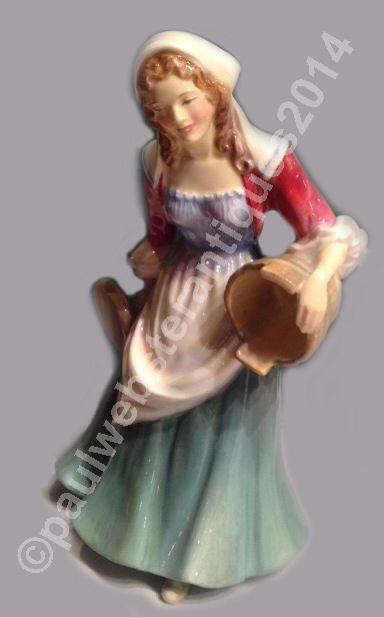
This charming prototype dating to around 1950, I first spotted just a couple of months ago having never seen the model before. At the time I took a picture to add to records, not expecting another version of her to crop up just a week ago!

Although in different colourways, both seem utterly charming and we can only guess as to why the model wasn’t put into production.
The model number dates her quite closely, only the modeller remains unknown. I feel personally that it is a Harradine piece due to the subject and looking at other figures around the same model number they are Harradine’s work. My only doubt is her small waist – a trait of Peggy Davies’.
One day hopefully we will once again be able to access the Doulton records to see if they shed any further light on this interesting figure!
We all know that figures change subtly during the pre-production phase but a sighting this last summer really shows us how drastic some transformations could be!
Here is a prototype version of Market Day complete with a piglet at the girl’s feet! I can’t help thinking that this is one of the piglets often attributed to Peggy Davies! If not identical it probably provided inspiration for her.
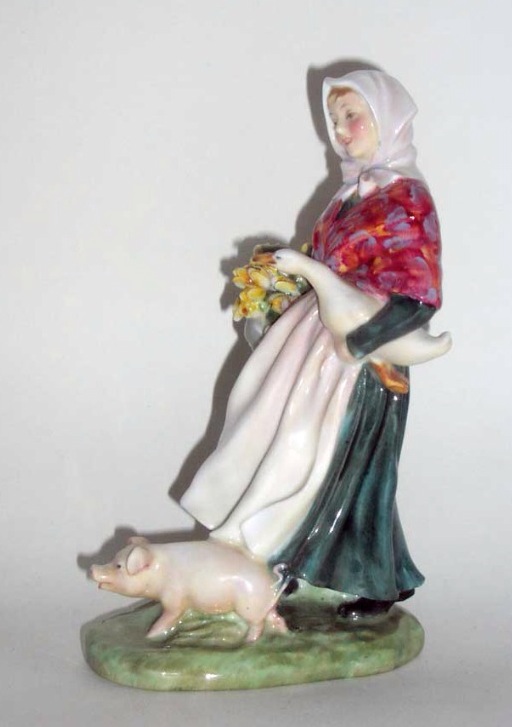
Prototype sold at Louis Taylor.
Here is the production model to compare her with.
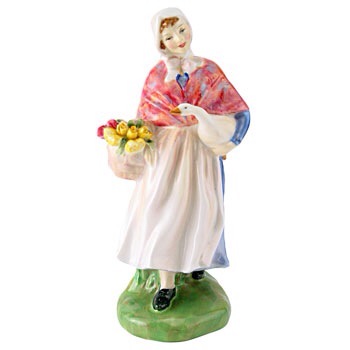
She was of course re-introduced decades later as Country Lass with the same HN number and with a matte glaze for a short period, along with another contemporary figure the Jersey Milkmaid who became the Milkmaid, also in matte, with the same HN and re-named simply The Milkmaid.
 doultoncollectorsclub