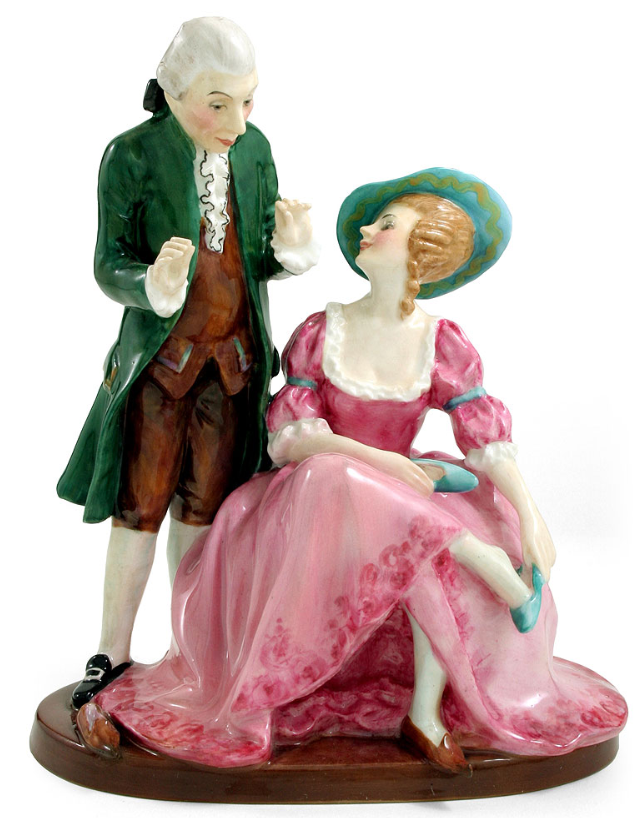
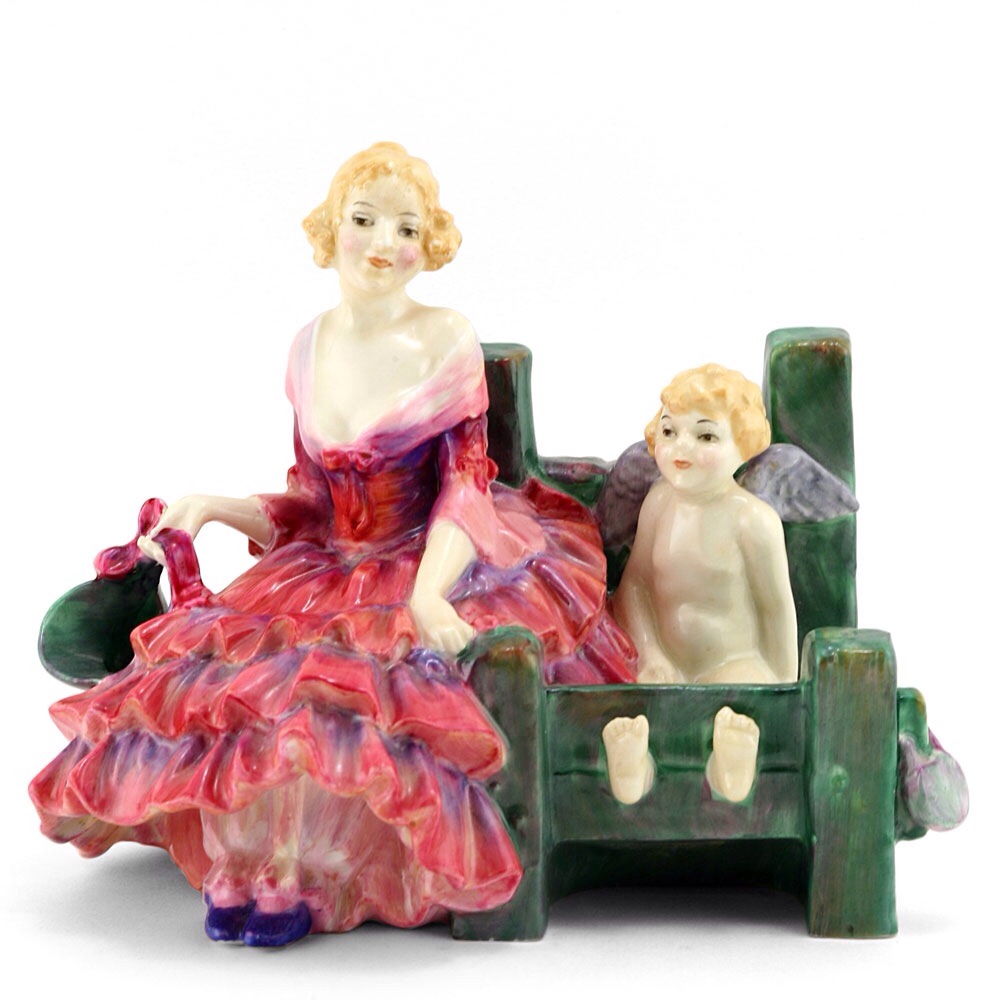
Introduced in 1936, the Court Shoemaker is a typical example of a 1930’s Doulton figure in that the detail in the figure is superb. It is also an example of a double figure popular during this decade. This piece was almost double the price of a standard figure from this period and given the relative scarcity, few can have been made.
An early version of the figure group from 1936.
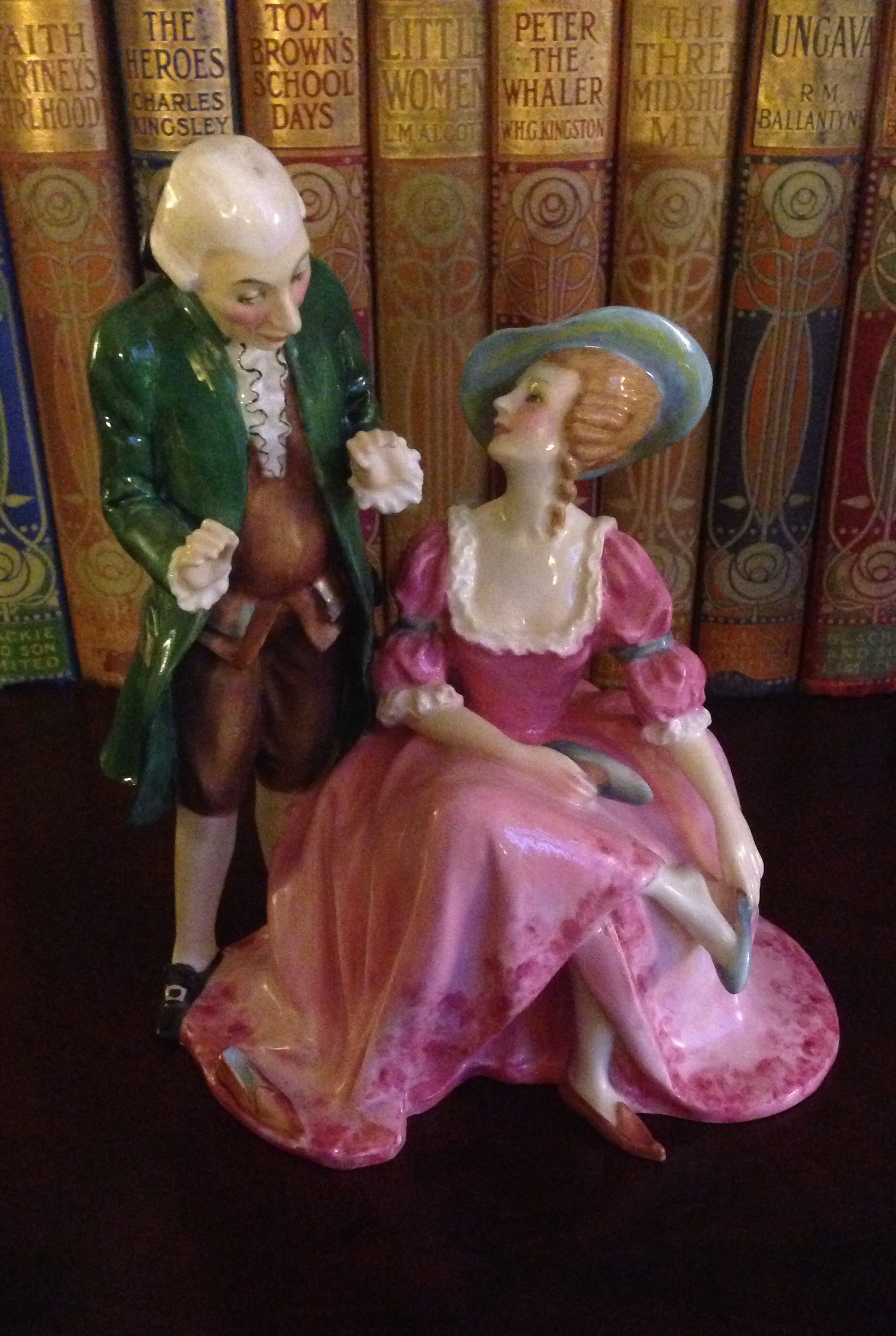
Given this relative scarcity it is always exciting to find slight variations. Directly above is a version I have which must be an example from the original mould due to the impressed date. I am sure you have noticed the absence of the brown base in later models. Clearly the original was just too fragile around the base area without the added base.
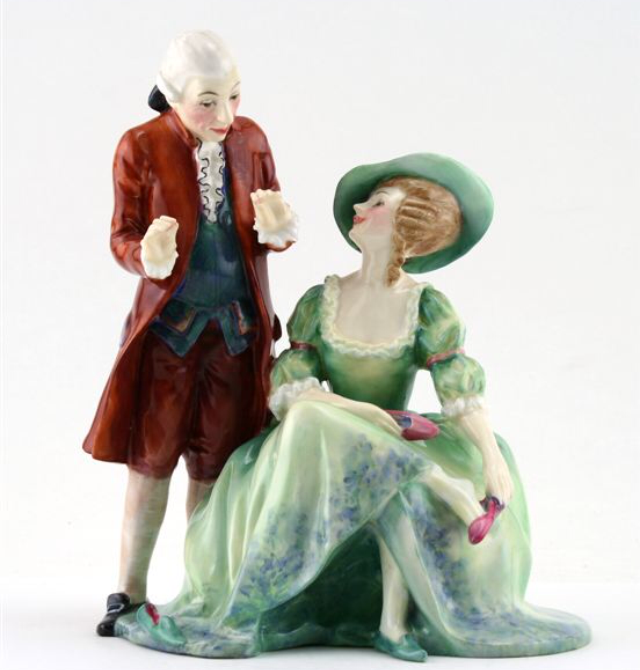
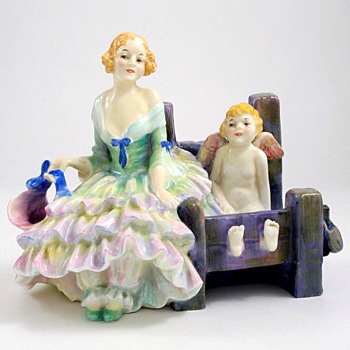
Another sighting from a few years ago was this colourway below, from Seaway China, again with no base telling us it was a pre-production trial.
Perhaps you have a further variation of this rare figure? If so why not share a photograph on our Facebook page ‘ Doutlon Collectors Club’!
When researching the book Reflections with Jocelyn it was an interesting side line to investigate how some of the more unusually named figures arrived with their names.
One particularly unusual lady is Frangçon HN1720 and 1721. Both versions were introduced in 1935, but rarely appear suggesting a much shorter production run to the withdrawal date of ‘by 1949’ suggested in Royal Doulton Figures. In my experience a withdrawal date of 1943 would be more accurate for most figures save for a handful of the most popular figures that were available to the US as late as 1944 and production of these resumed soon after the war ended. These include Autumn Breezes, the Orange Lady, Biddy Penny Farthing, Old a Balloon Seller and a few others.
Frangçon HN1721 and 1720.
Returning to the name Frangçon it is certainly named after the once famous theatre actress. Born in 1891, her first performance was in 1911 and she retired only in 1970 after an illustrious career being encouraged by Ellen Terry and supported by Sir a John Gielgud.
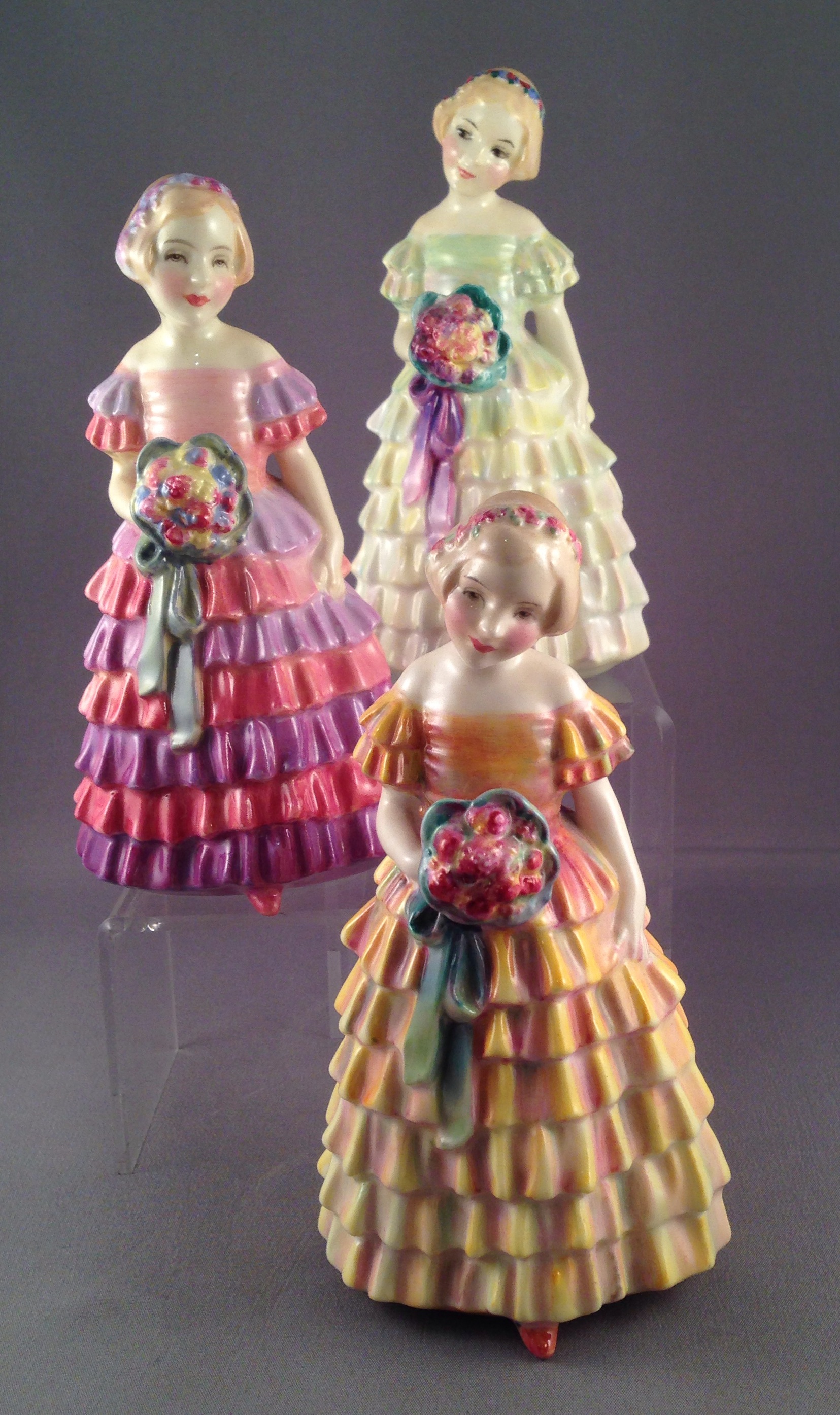
I thought I would share this picture of the three versions of The Little Bridesmaid as the final colourway HN1530 was not available for the last edition of Royal Doulton Figures in 1994. As is typically the case if you wait – sometimes for countless years – that one piece may turn up.
This popular figure remained in production as HN1433 until 1951 and keen eyes can easily distinguish earlier and later versions based on the depth of colour, the backstamp and face.
The elusive HN1530 belongs to a small group of figures with early HN1500 numbers including Pantalettes and Priscilla who were issued once again in complimentary orange colourways just like this Little Bridesmaid.
The yellow HN1434 is the earliest example in the picture above and you can hopefully see how the angle of her head differs to the other two. Alas her head is often prone to being knocked off! Making these three perfect examples all the more unusual!
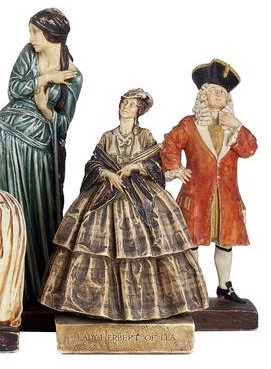
As you know I always love to discover the inspirations for our favourite Doulton figures. Here is another that didn’t make the final cut for Jocelyn’s and my book ‘Reflections’. It is itself a figurine but this time a wax figure by Agatha Walker that she produced as part of her series of figures from the stage in the 1920’s, imitating a popular tradition from the 19th Century. These figures were made of plaster, then coated in wax and finally painted.
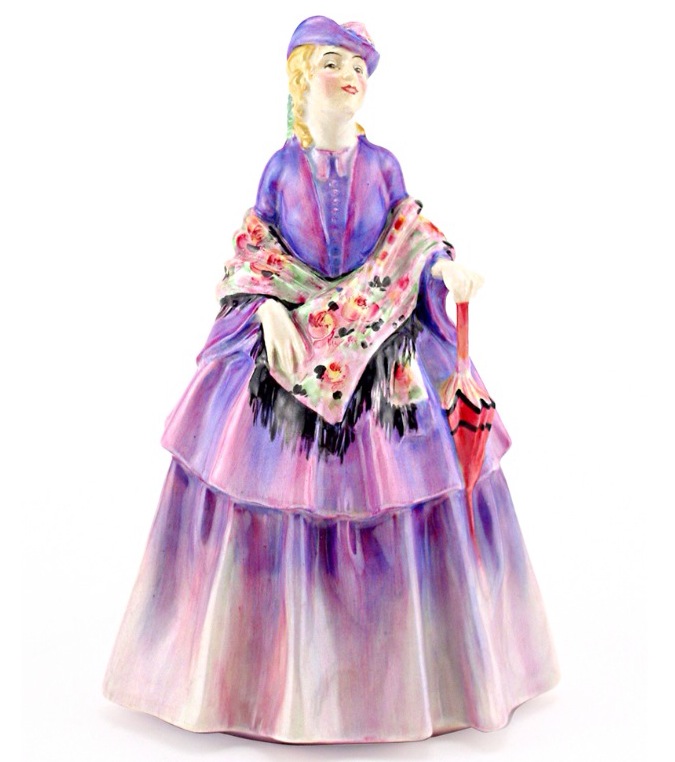
Typically Harradine has put his own flourishes to the finished figure including a parasol and changing the direction of Anthea’s head.
Courtesy of Bonhams.
Courtesy of Seaway China.
To date I have found only one other Agatha Walker figure that Harradine used, but that’s for another time!
Whilst pictures and adverts provided much inspiration for Doulton’s modellers, real life and sometimes family life also played a role in inspiring them.
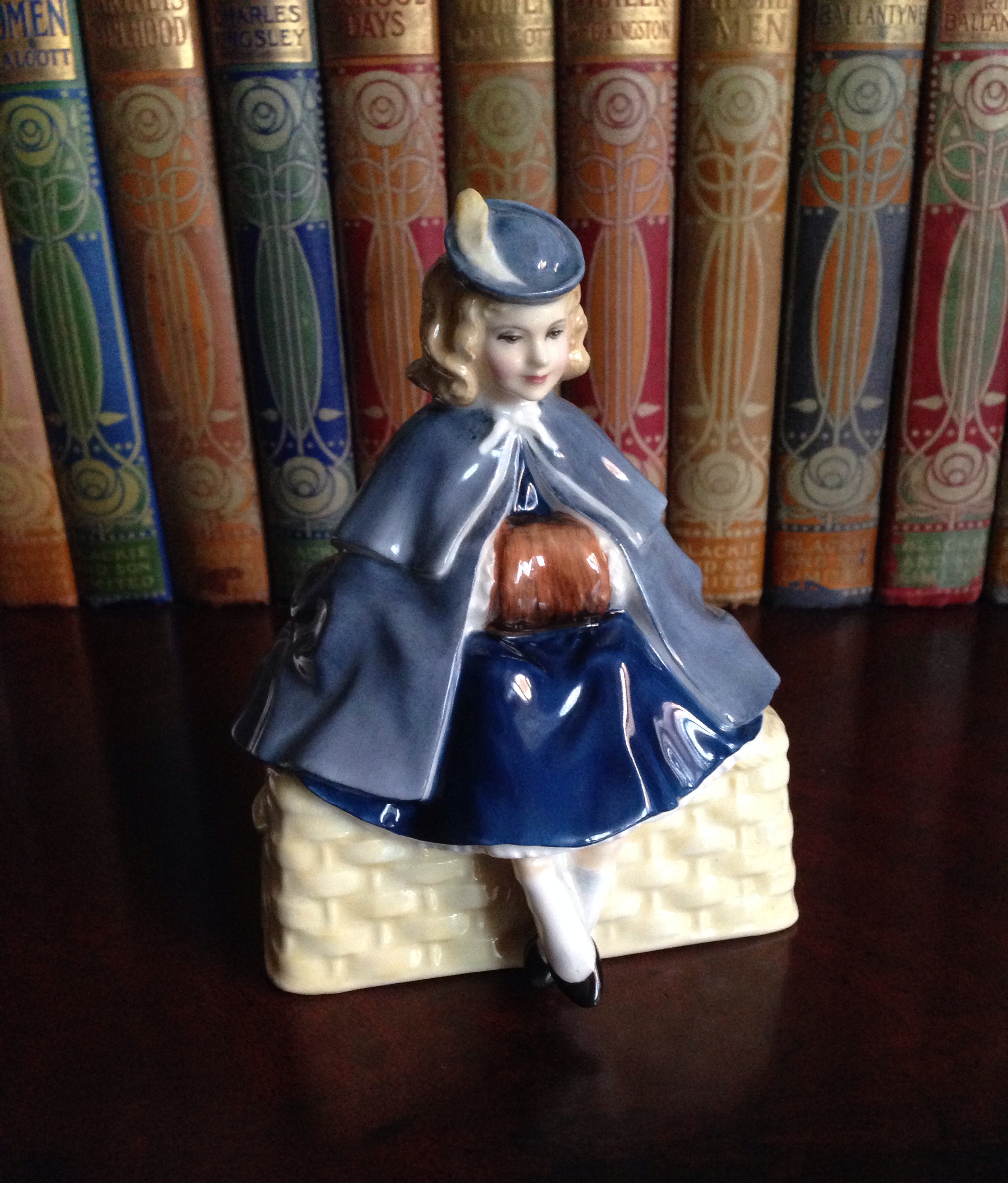
This delightful prototype of a girl by Peggy Davies has cropped up a handful of times and I understand that she is a childhood representation of an aunt who as a child was sent to Canada for adoption, but who was ultimately and happily returned to the family to care for. This is how Peggy saw her waiting to board the boat to Canada, dressed in her best and with her trunk.
This charming prototype dating to around 1950, I first spotted just a couple of months ago having never seen the model before. At the time I took a picture to add to records, not expecting another version of her to crop up just a week ago!
Although in different colourways, both seem utterly charming and we can only guess as to why the model wasn’t put into production.
The model number dates her quite closely, only the modeller remains unknown. I feel personally that it is a Harradine piece due to the subject and looking at other figures around the same model number they are Harradine’s work. My only doubt is her small waist – a trait of Peggy Davies’.
One day hopefully we will once again be able to access the Doulton records to see if they shed any further light on this interesting figure!
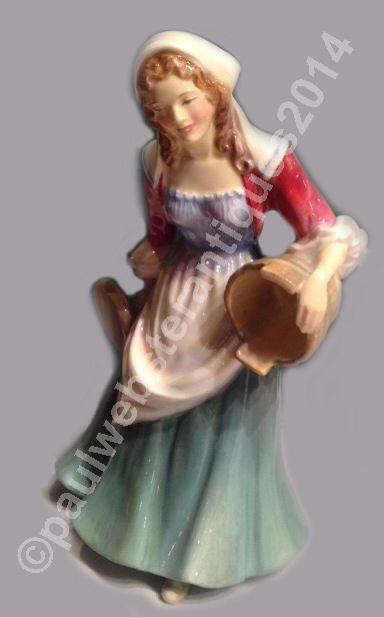
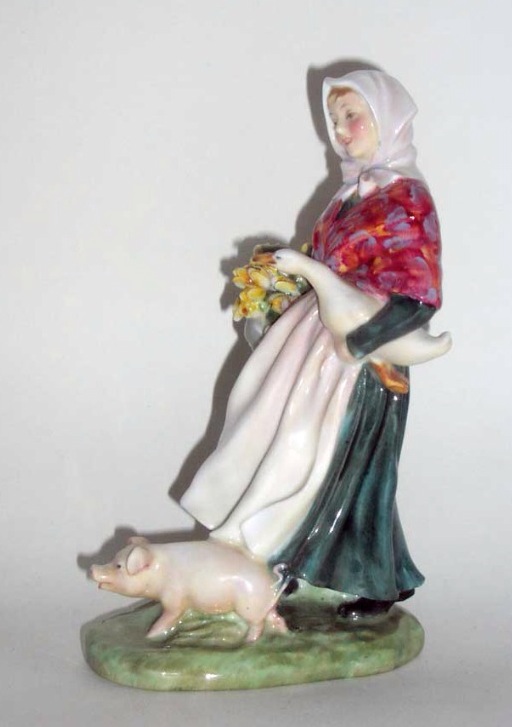
We all know that figures change subtly during the pre-production phase but a sighting this last summer really shows us how drastic some transformations could be!
Here is a prototype version of Market Day complete with a piglet at the girl’s feet! I can’t help thinking that this is one of the piglets often attributed to Peggy Davies! If not identical it probably provided inspiration for her.
Prototype sold at Louis Taylor.
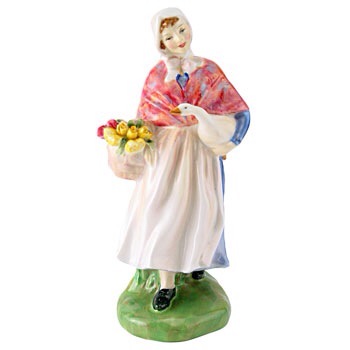
Here is the production model to compare her with.
She was of course re-introduced decades later as Country Lass with the same HN number and with a matte glaze for a short period, along with another contemporary figure the Jersey Milkmaid who became the Milkmaid, also in matte, with the same HN and re-named simply The Milkmaid.
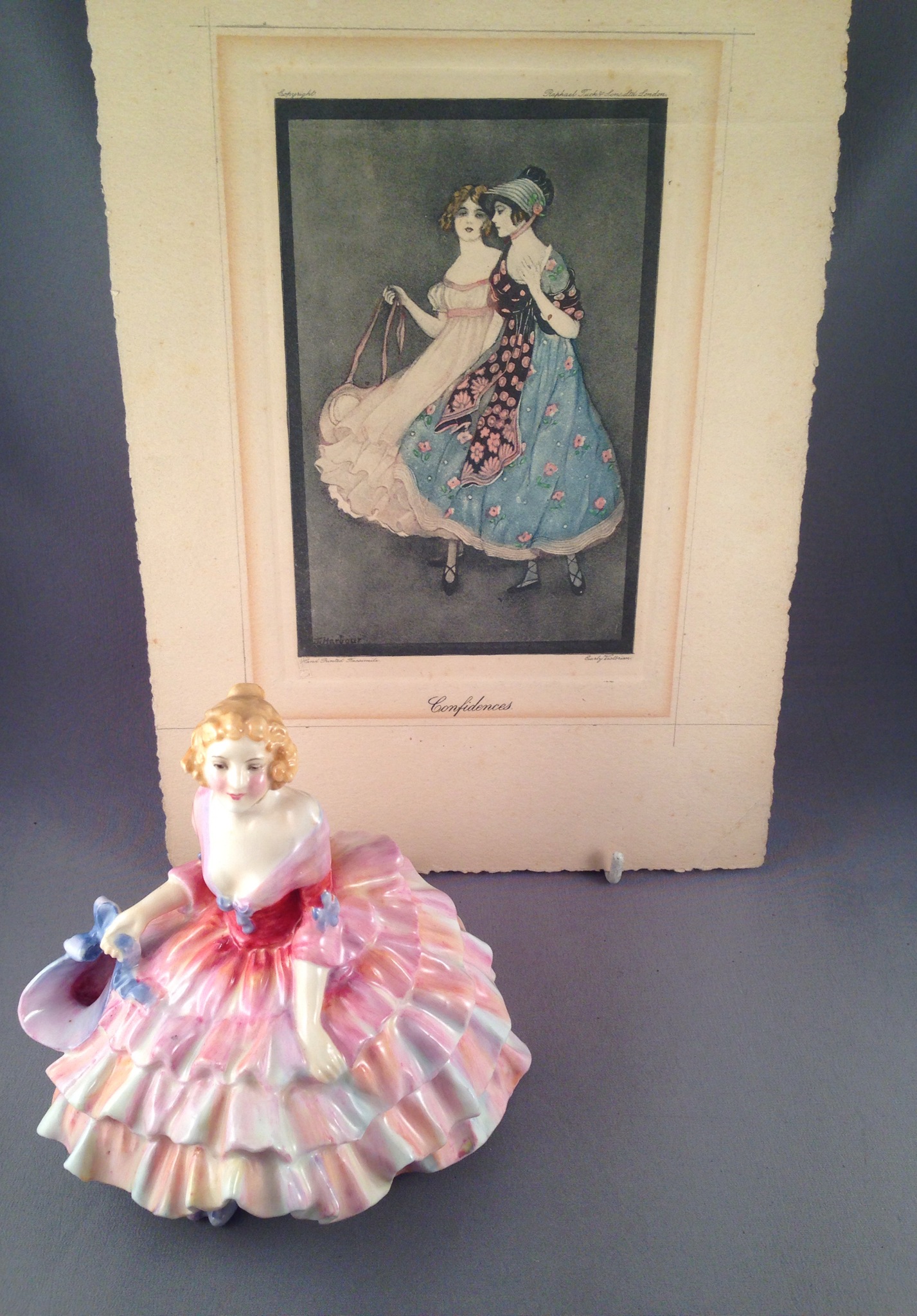
As you’ll be aware a particular interest of mine is tracking down the inspiration of figures, particularly early ones and more particularly those of Leslie Harradine, Royal Doulton’s genius sculptor.
Above you can see Tildy HN1576 together with her inspiration drawn by Jennie Harbour who provided many such ladies for Harradine; whether she was aware of this is unknown. (The Doulton lady is taken from the lady on the left.) Yet, Doulton did have some agreement with Raphael Tuck the publisher of these Jennie Harbour pictures, although correspondence between the two firms that exists only refers to pictures by Stanislaus Longley and Molly Benetar.
Here you can also see Harradine’s In the Stocks HN1474 who would be adapted to become Tildy.
And here is HN1475 the other colourway of In the Stocks. Both versions of this lady taken from the Harbour picture are very rare today and so both had limited production, even more limited than is suggested in the figure book. In the Stocks was introduced in 1931 and Tildy in 1933, suggesting the former had been deleted by then. Tildy it is recorded, was withdrawn in 1939, but by 1939 would be a more accurate description as I have never seen a later 1930’s dated example. Perhaps someone out there has?
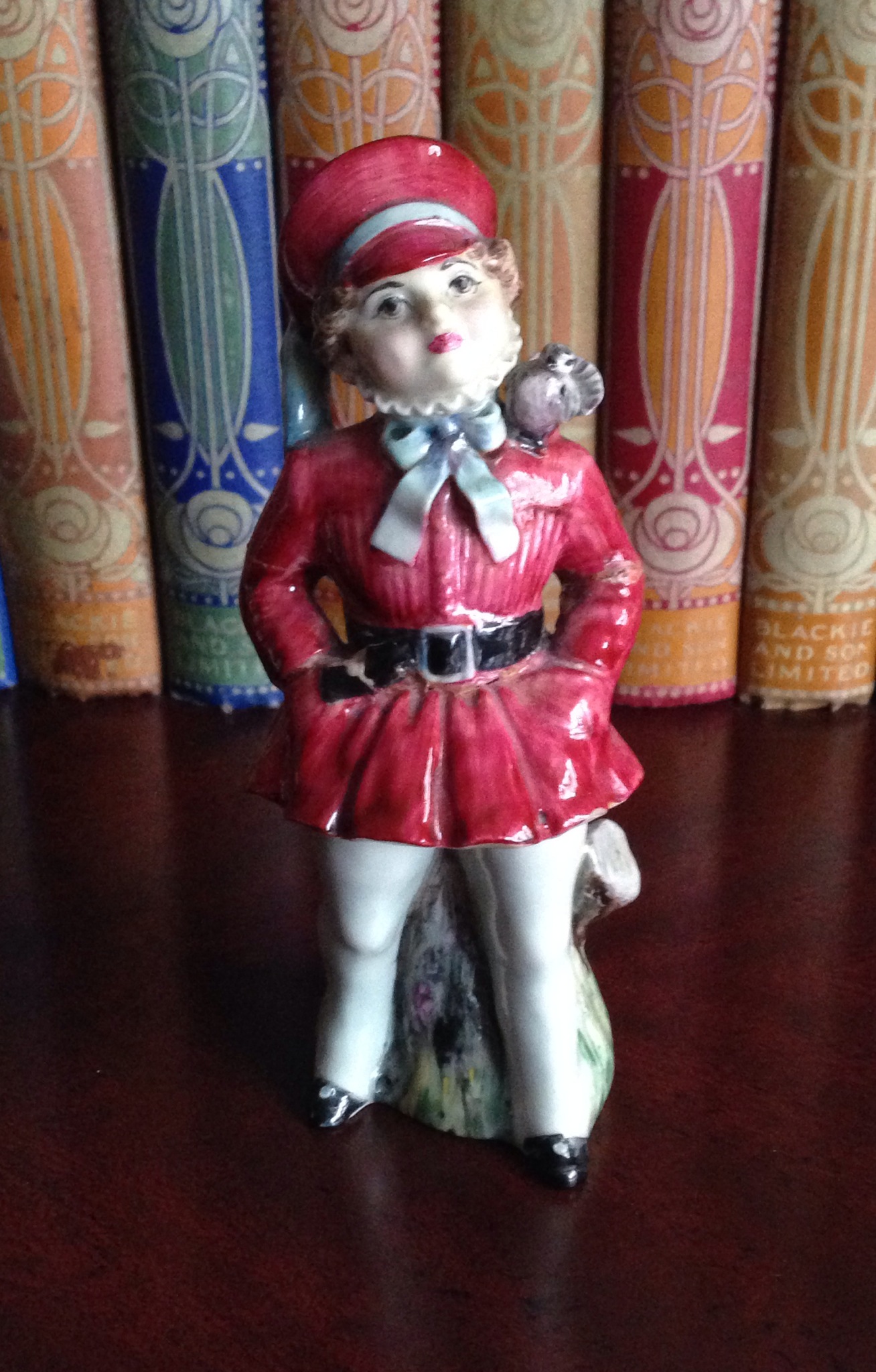
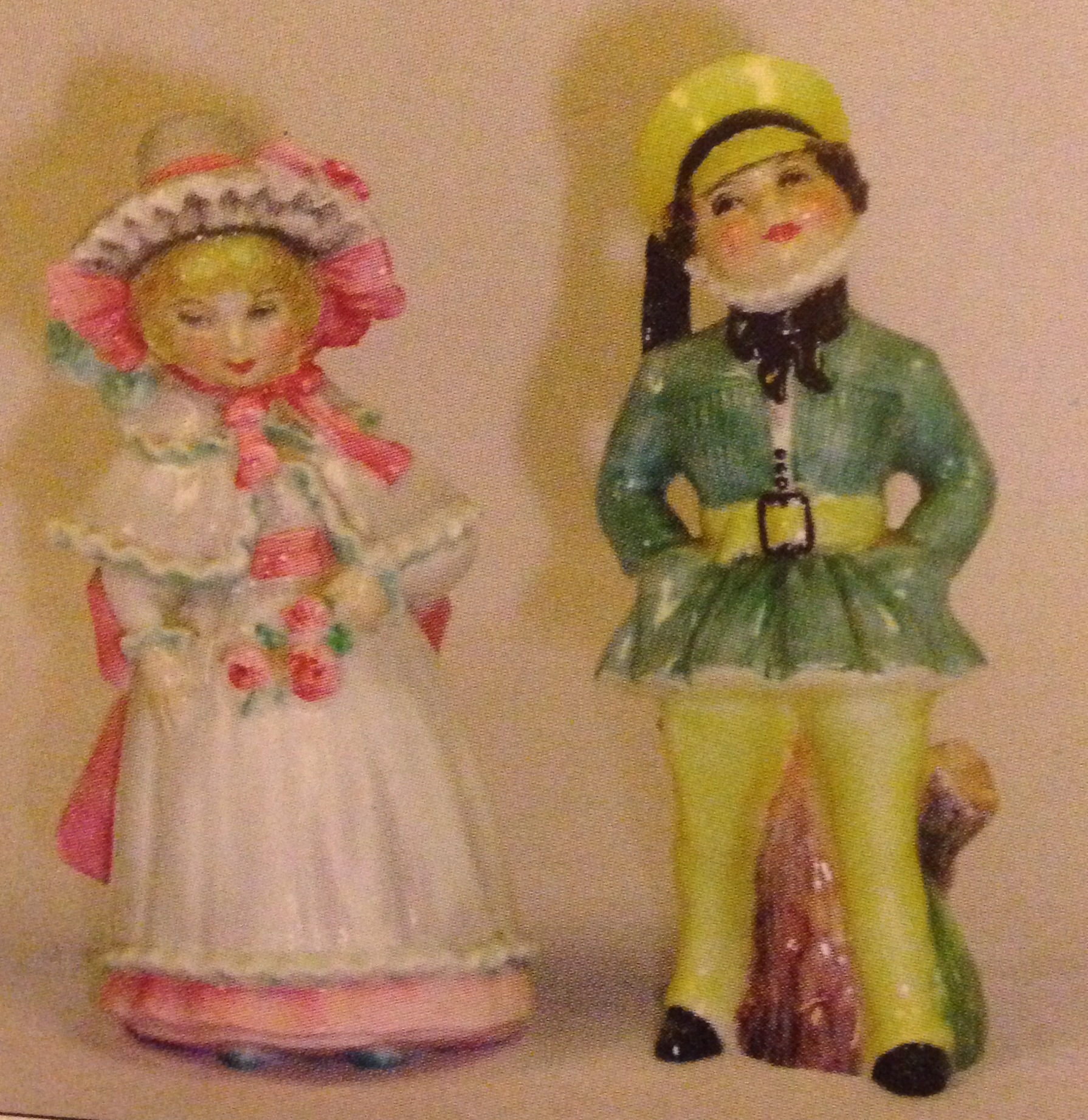
I thought I’d share this little study of a boy by Peggy Davies. It is marked simply ‘Clay Craft’ to the base, a company she ran in the 1940’s-50’s I believe. Interestingly there was a Doulton version of the same figure so I imagine either he was presented to Doulton in the red colourway and prototypes were made or else rejected by Doulton and Peggy used the design herself.
The Doulton version and a young girl too, both sold at Louis Taylor in 2005.
An interesting piece anyway and it goes to show you never know what is waiting around the corner!
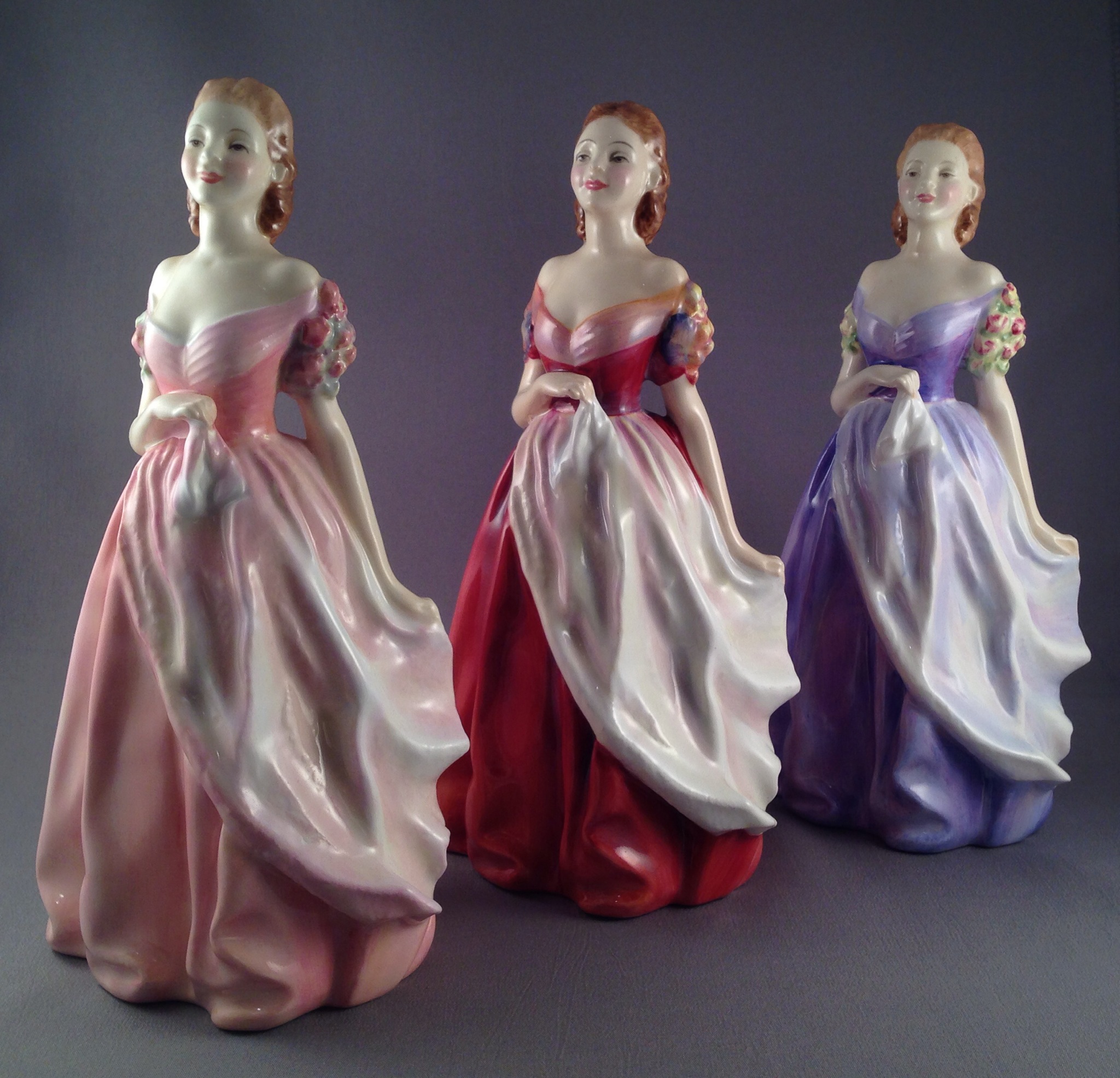
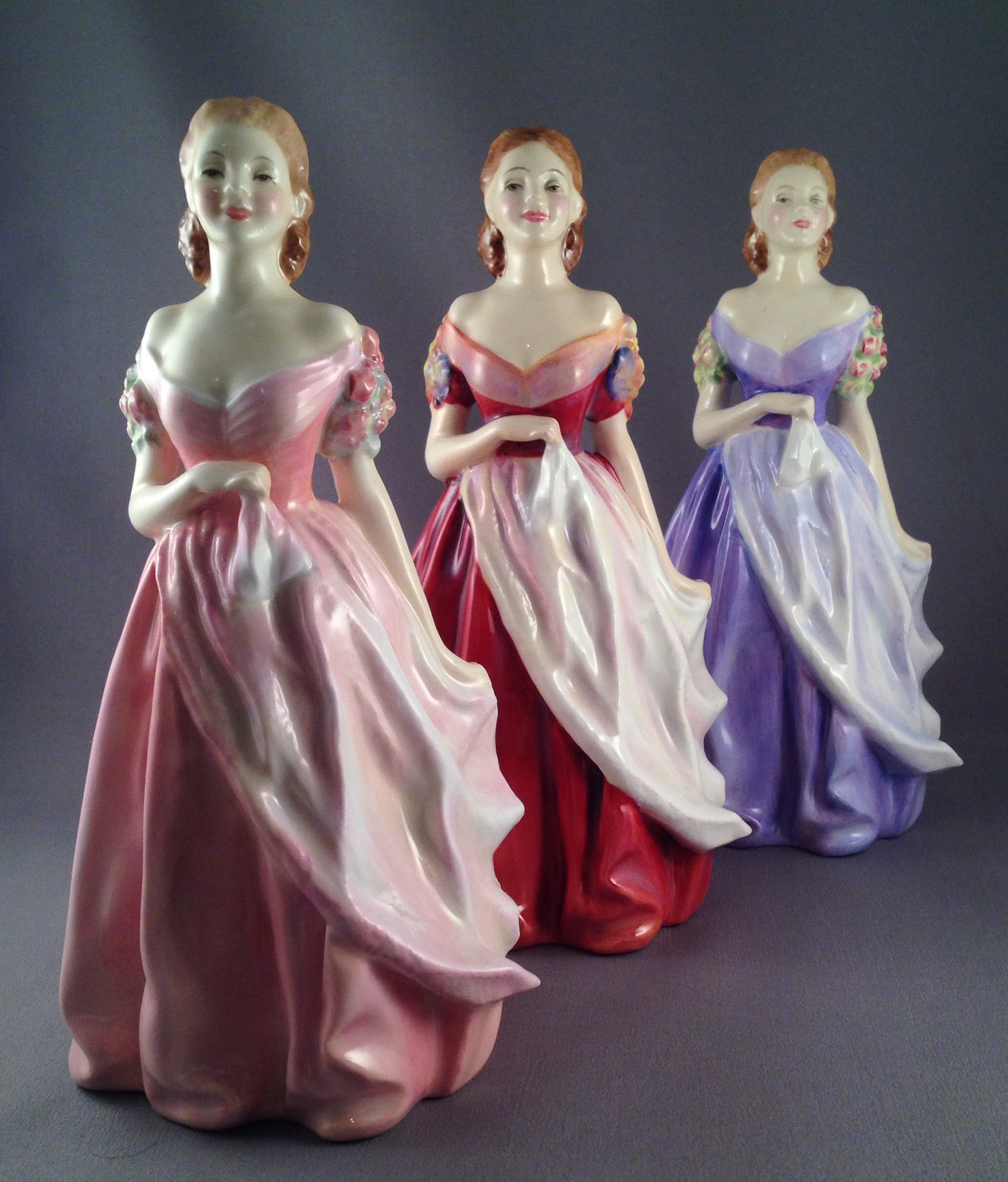
Here are three versions of the hard to find figure Jacqueline. Designed by the great Leslie Harradine, Jacqueline was available as HN2000 and HN2001 between 1947-1951.
The red is a new find, a colourway, with ‘HA3’ to it’s base telling us that it was painted by Harry Allen and this is colourway 3. Presumably 1 and 2 were the two colourways produced in pink and blue pictured either side of her.
Jacqueline is model 1234 telling us that whilst she was introduced in 1947, she would have been modelled in ca.1942. I have versions of models 1230 (Christmas Morn) and 1231 (a prototype similar to Easter Day) dated 1942, so we can date the model quite closely.
The part of collecting that I find most interesting is often the story behind the piece. Although I have not found a pictorial inspiration for Jacqueline there is still plenty to be researched as you can hopefully see above.

 doultoncollectorsclub