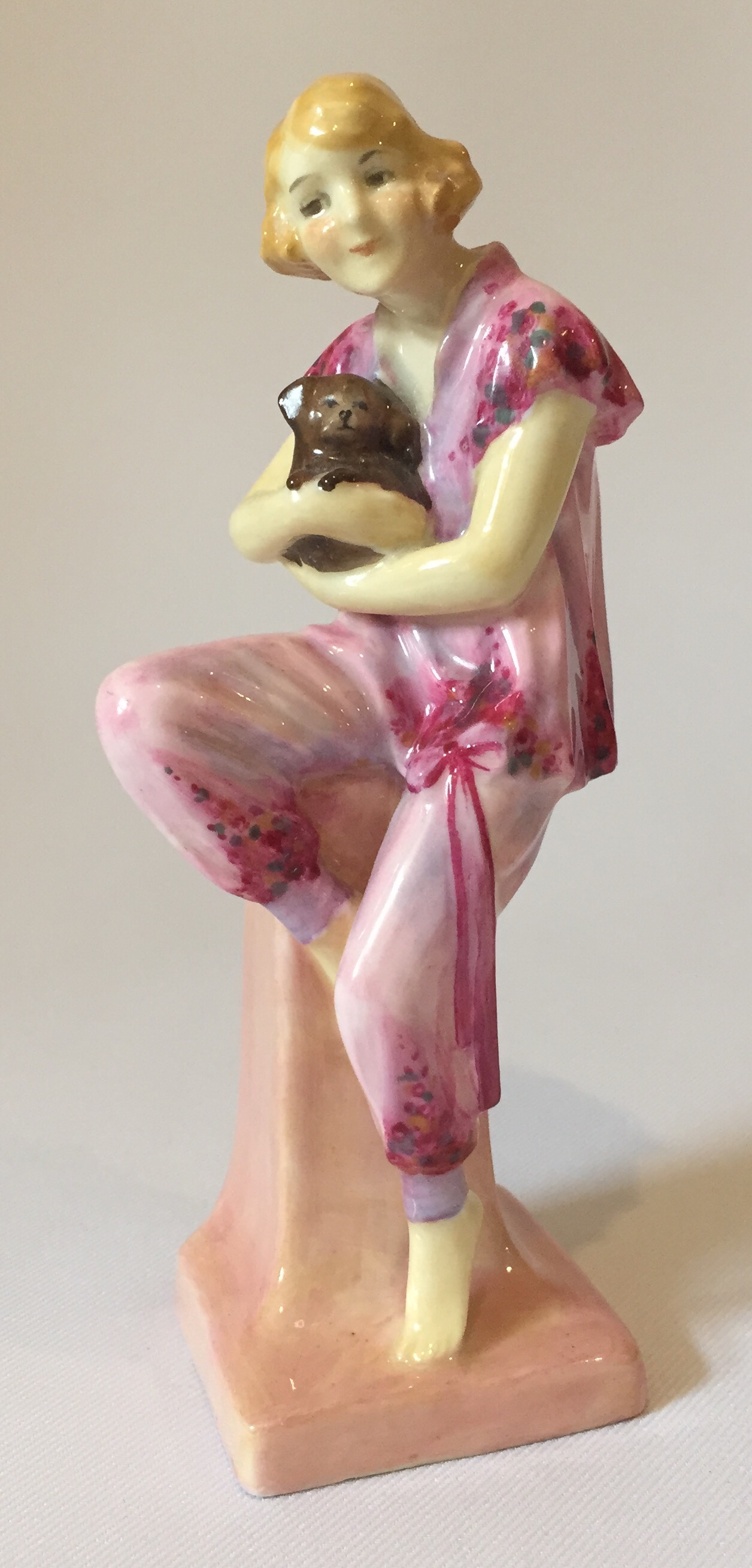
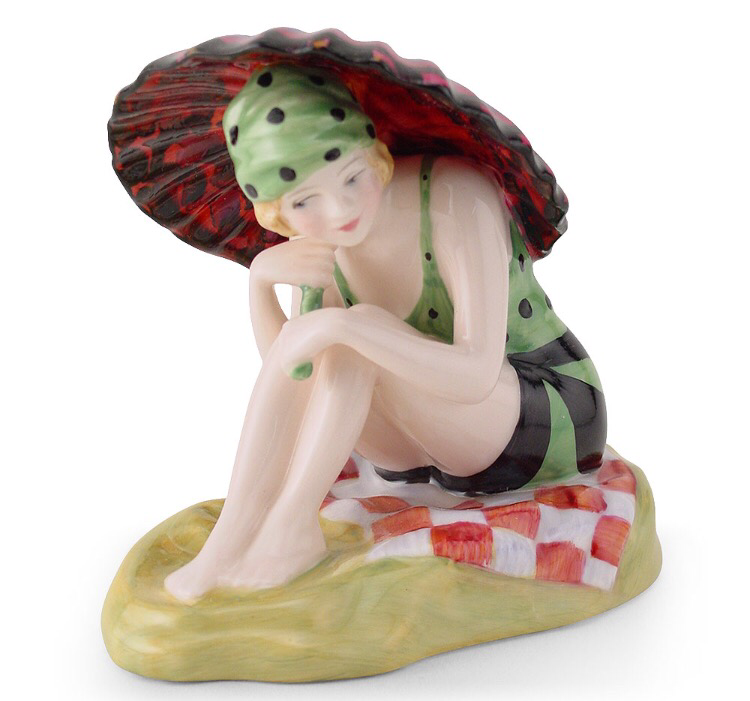
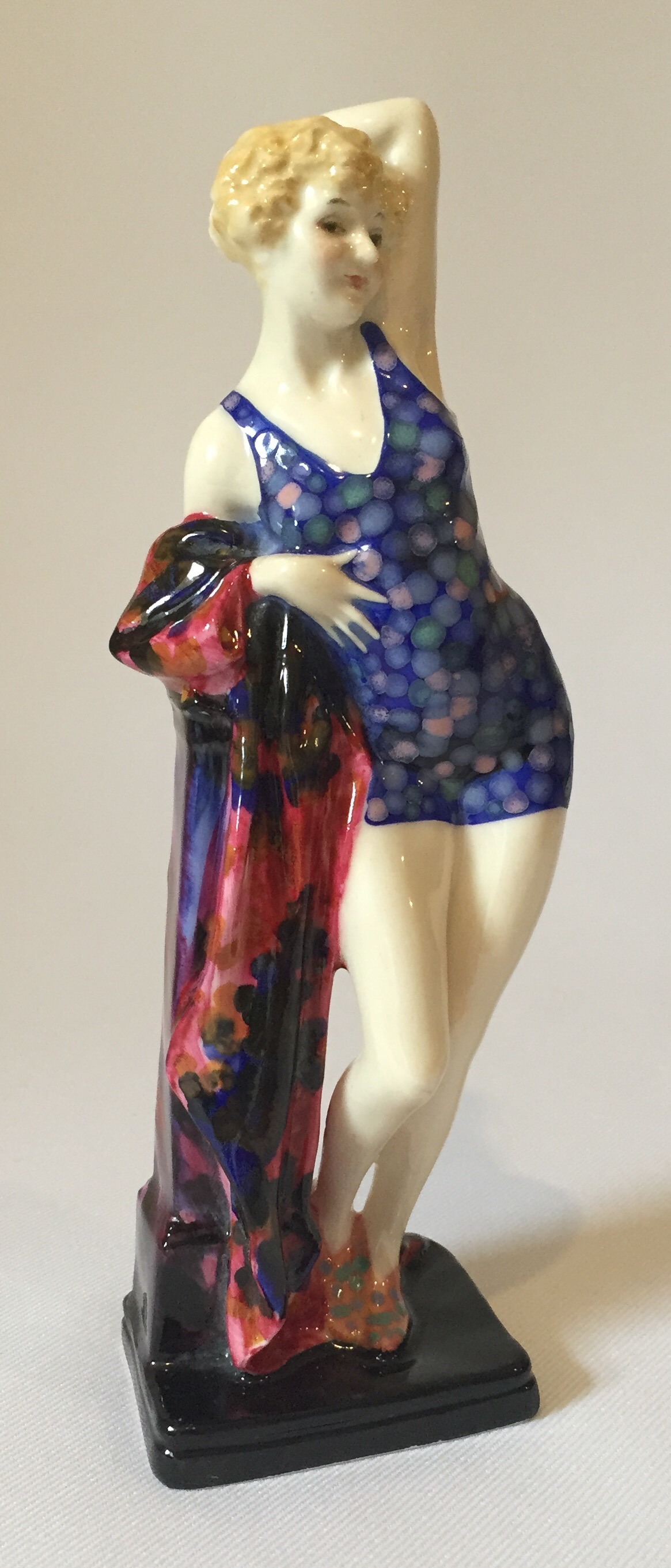
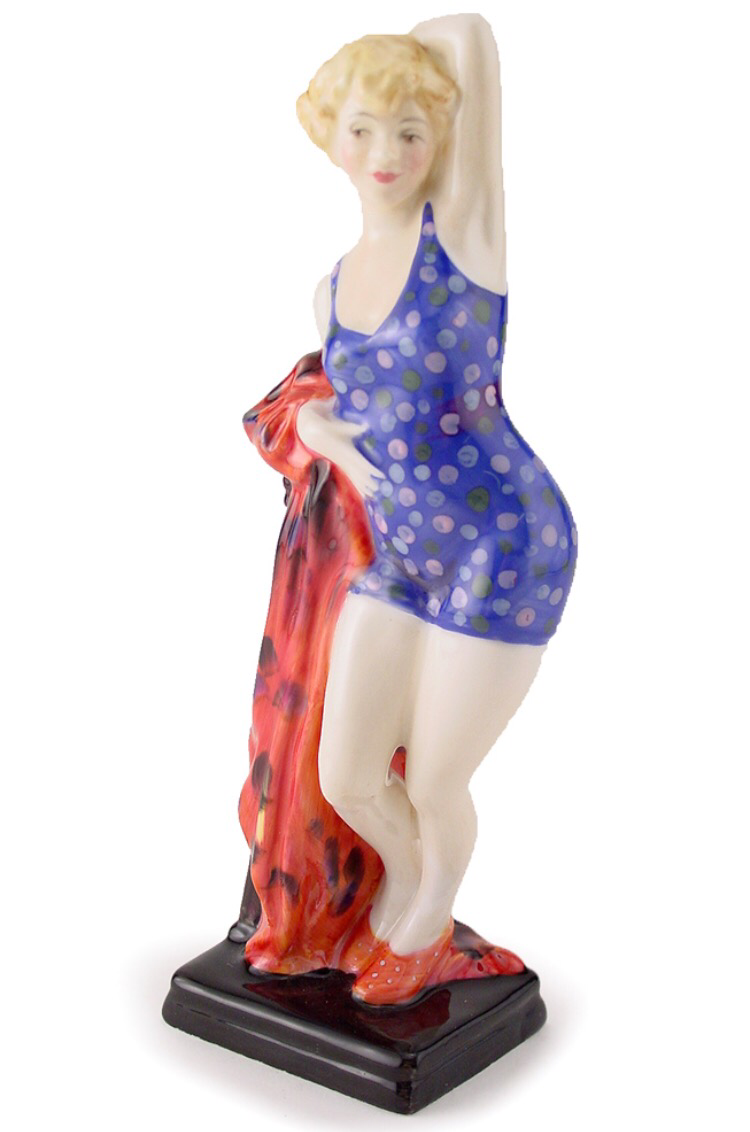
Category Archives: Figure inspiration

Collecting Royal Doulton’s Kate Greenaway child figures. 

Even today we are all aware of the work of Kate Greenaway be it as a book illustrator or artist. First introduced in 1976 with the figures Ruth, Carrie, Lori and Anna, and all skilfully  modelled by the great Peggy Davies, the children in Royal Doulton’s Kate Greenaway Collection are based upon illustrations by Kate that she in turn based upon her own Victorian childhood and upbringing. 
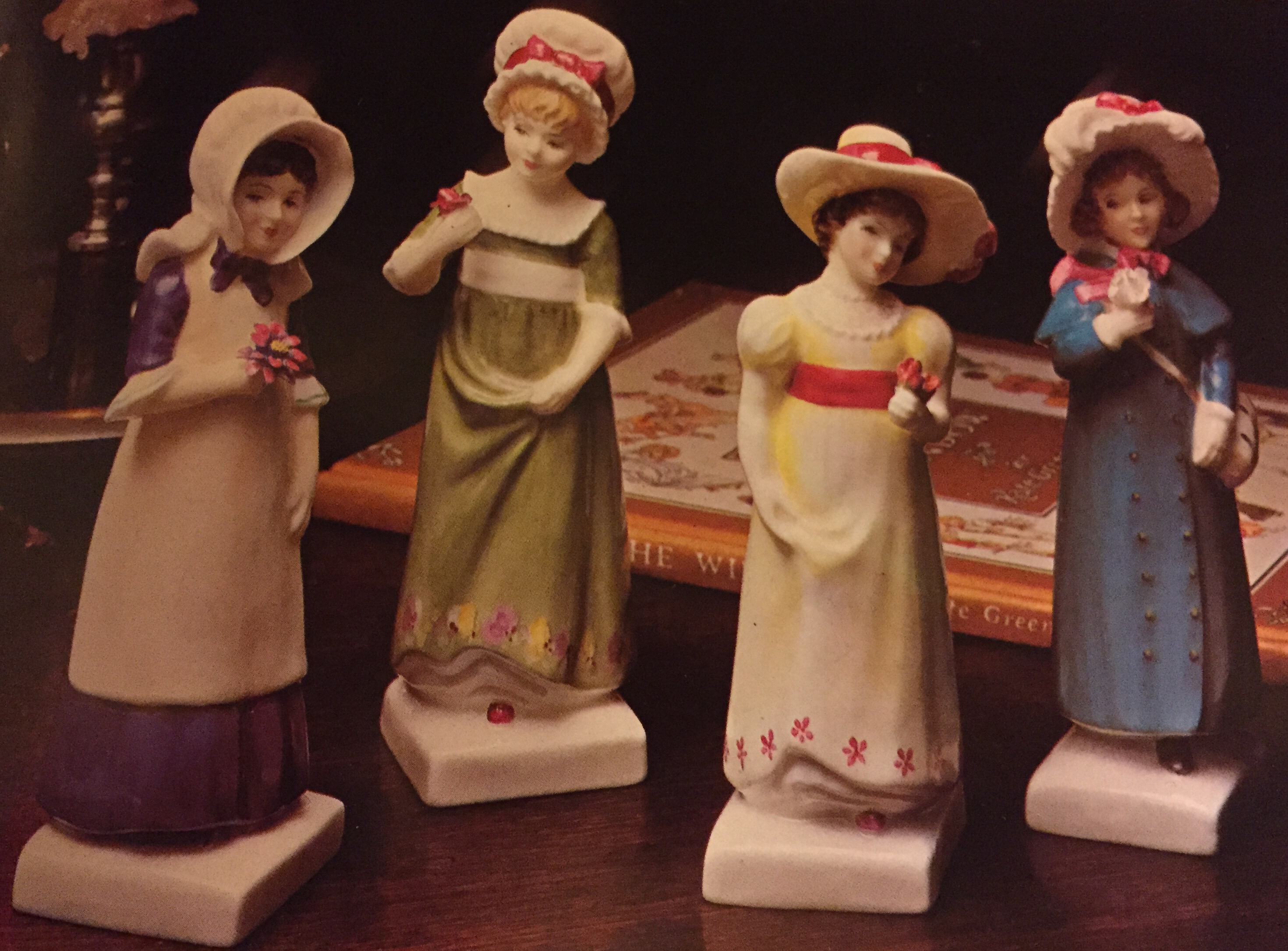
  
Illustration from Doulton’s 1979 catalogue.

Born in 1846, Kate first came to the public’s attention with her illustrations for Christmas cards. Then following a series of successful water colour exhibitions, she wrote and illustrated her Under the Window children’s book.
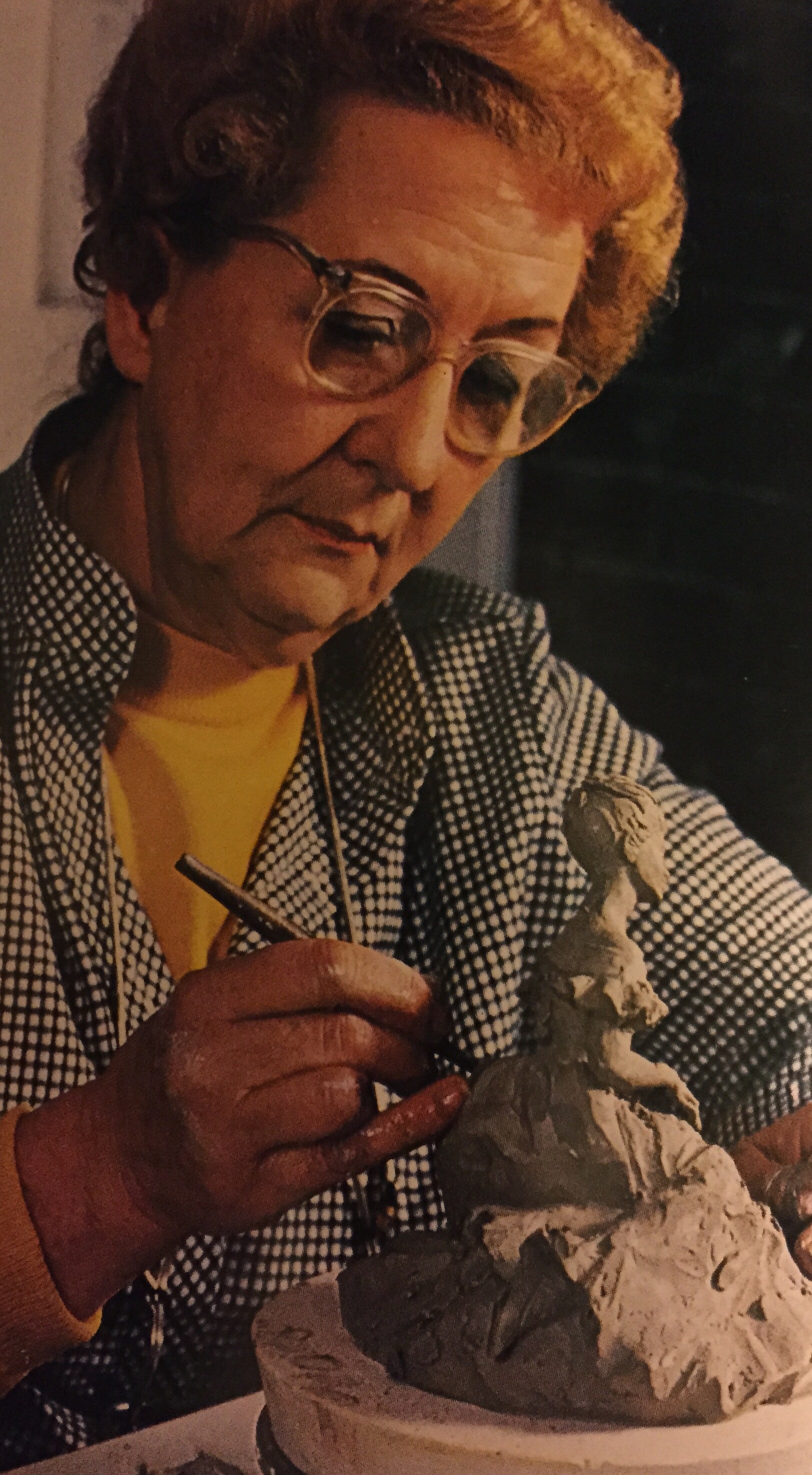
  
The legendary Peggy Davies at work.

The 18 children created by Doulton express the popularity she gave to bonnets, mop caps and high waisted children’s dresses with which she illustrated such famous books as The Birthday Book and Little Ann. Moreover, it was said at the time that she “dressed the children of two continents.” Reflecting her worldwide appeal. 
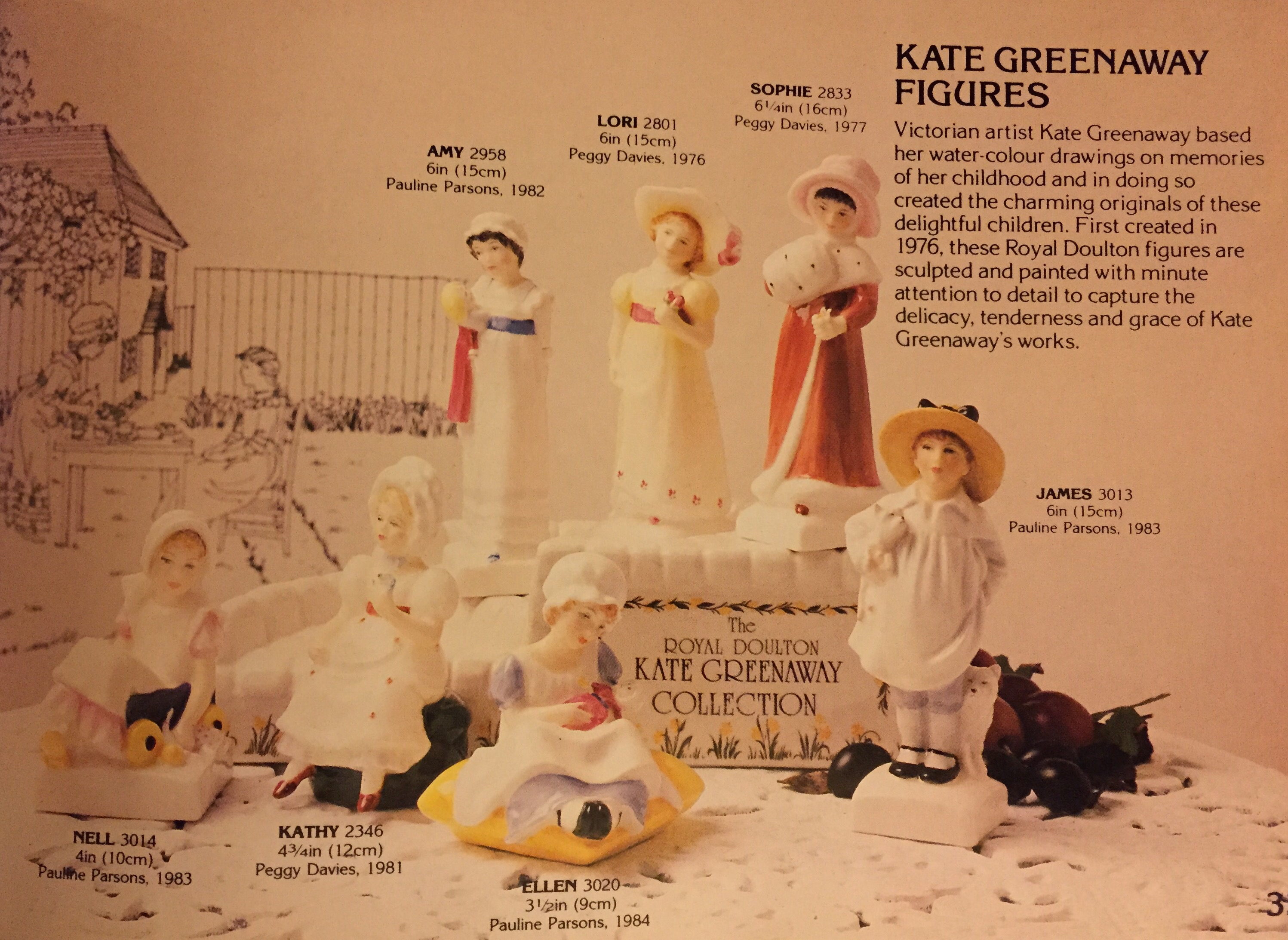
  
Illustration from Doulton’s 1987 catalogue including the display stand. 

Whilst the first 13 figures were modelled by Peggy between 1976-81 with annual introductions between these dates, it would be Pauline Parsons who completed the set between 1982-4 with five more children. The series was finally withdrawn at the end of 1987, three years after the last introduction of a new figure in 1984 with Pauline’s Ellen HN 3020. 
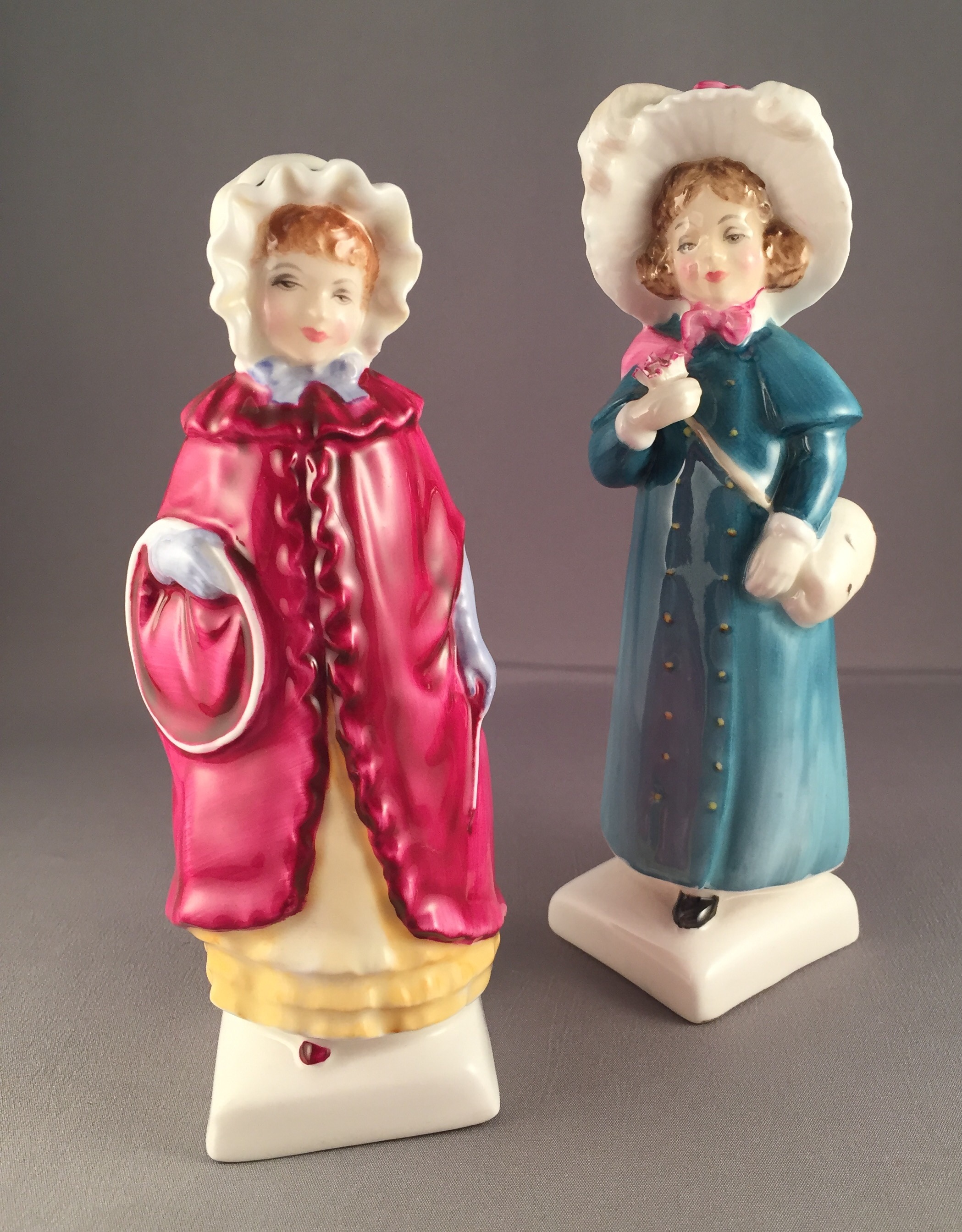
  
Two classic Kate Greenaway figures Georgina HN 2377 and Carrie HN 2800. 

In producing these charming child studies Doulton sought to recreate in china the ‘delicacy, tenderness and grace of Kate’s work.’ This attention to detail explains their enduring popularity among collectors to this day and naturally those with shorter production runs including Tom, Ellen and James are the most keenly sought after and carry the usual price premiums. Also popular with collectors is the display stand seen in the above catalogue illustration. 
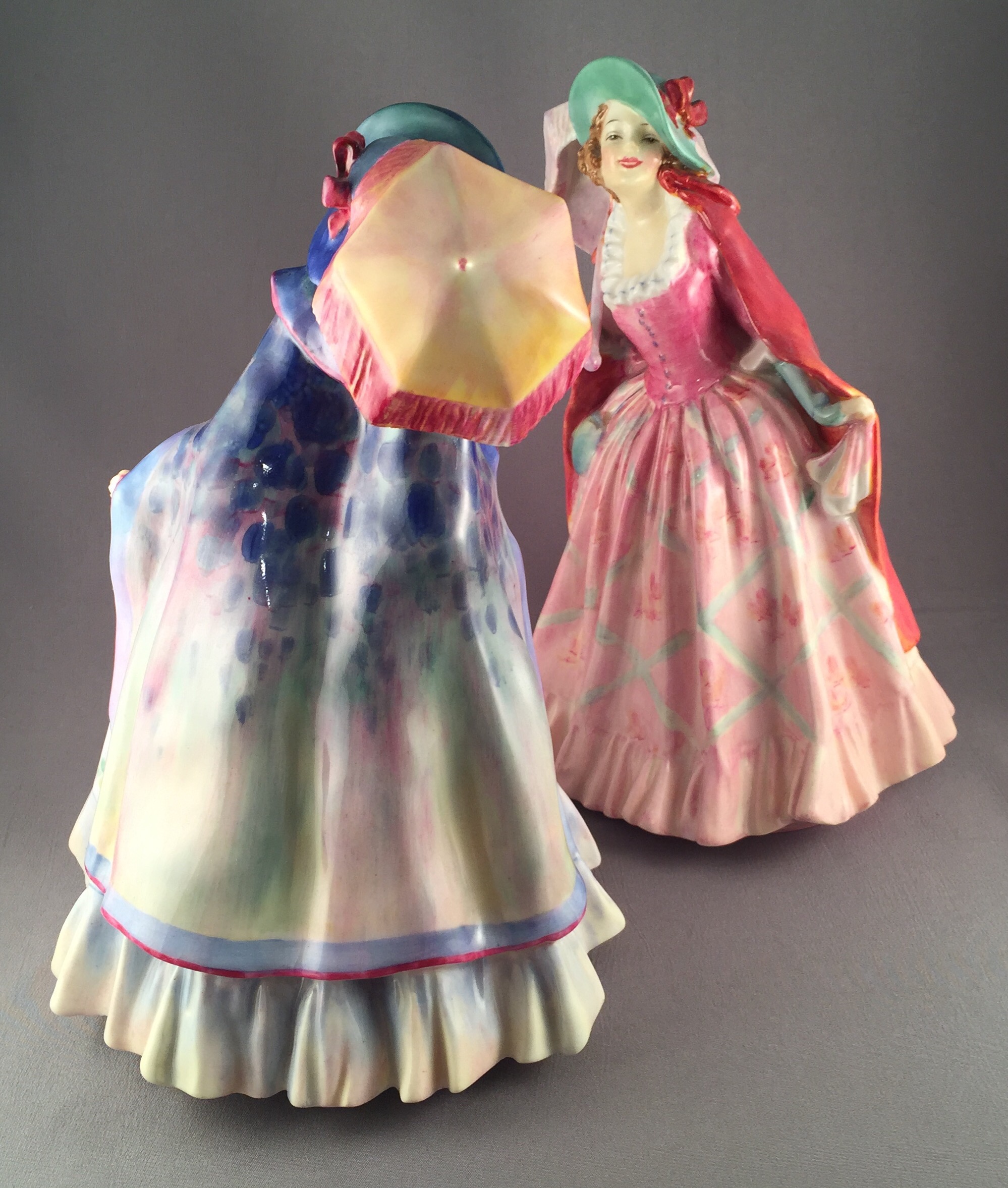
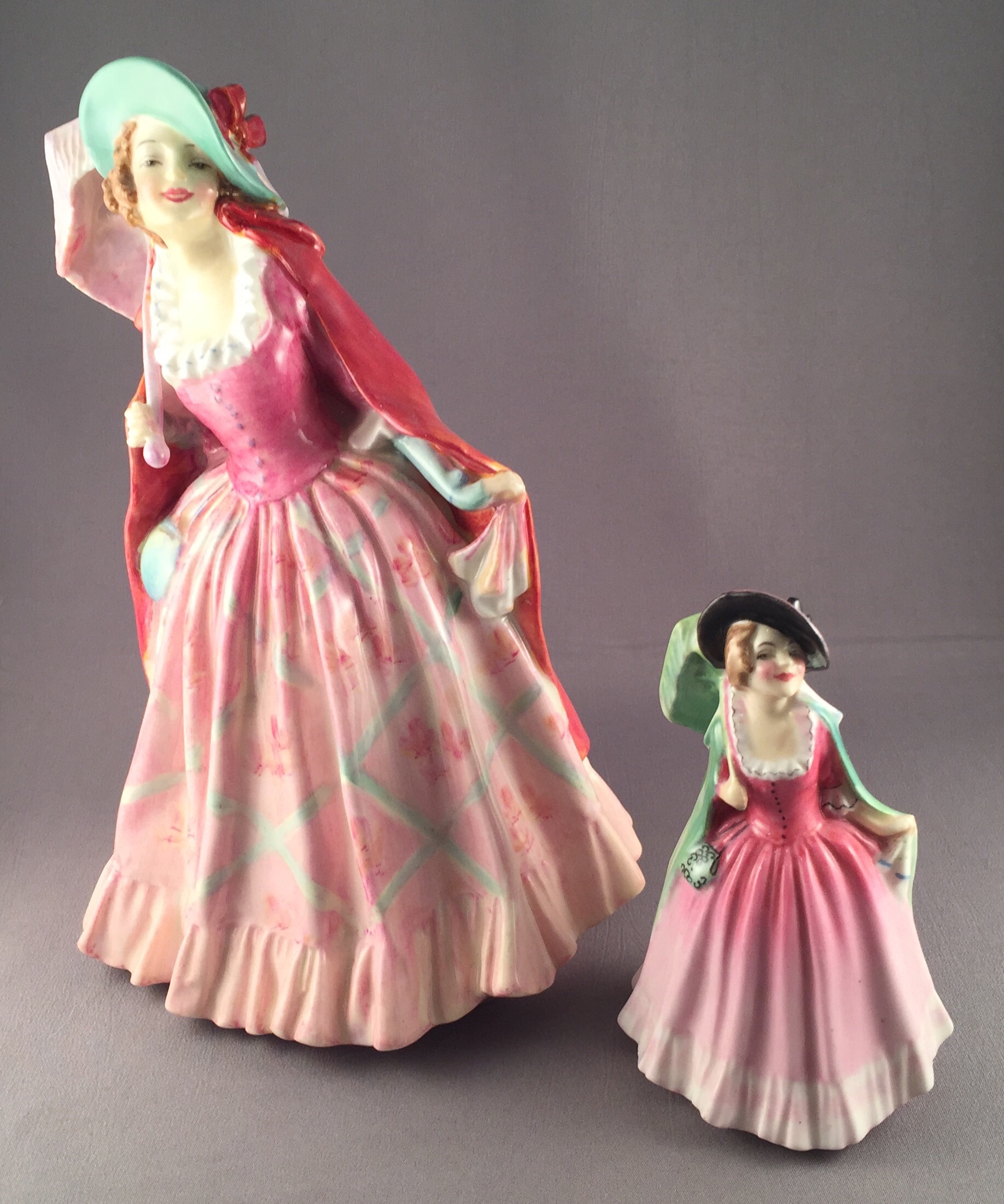
Royal Doulton’s Mirabel figurine – a 1930’s classic! 

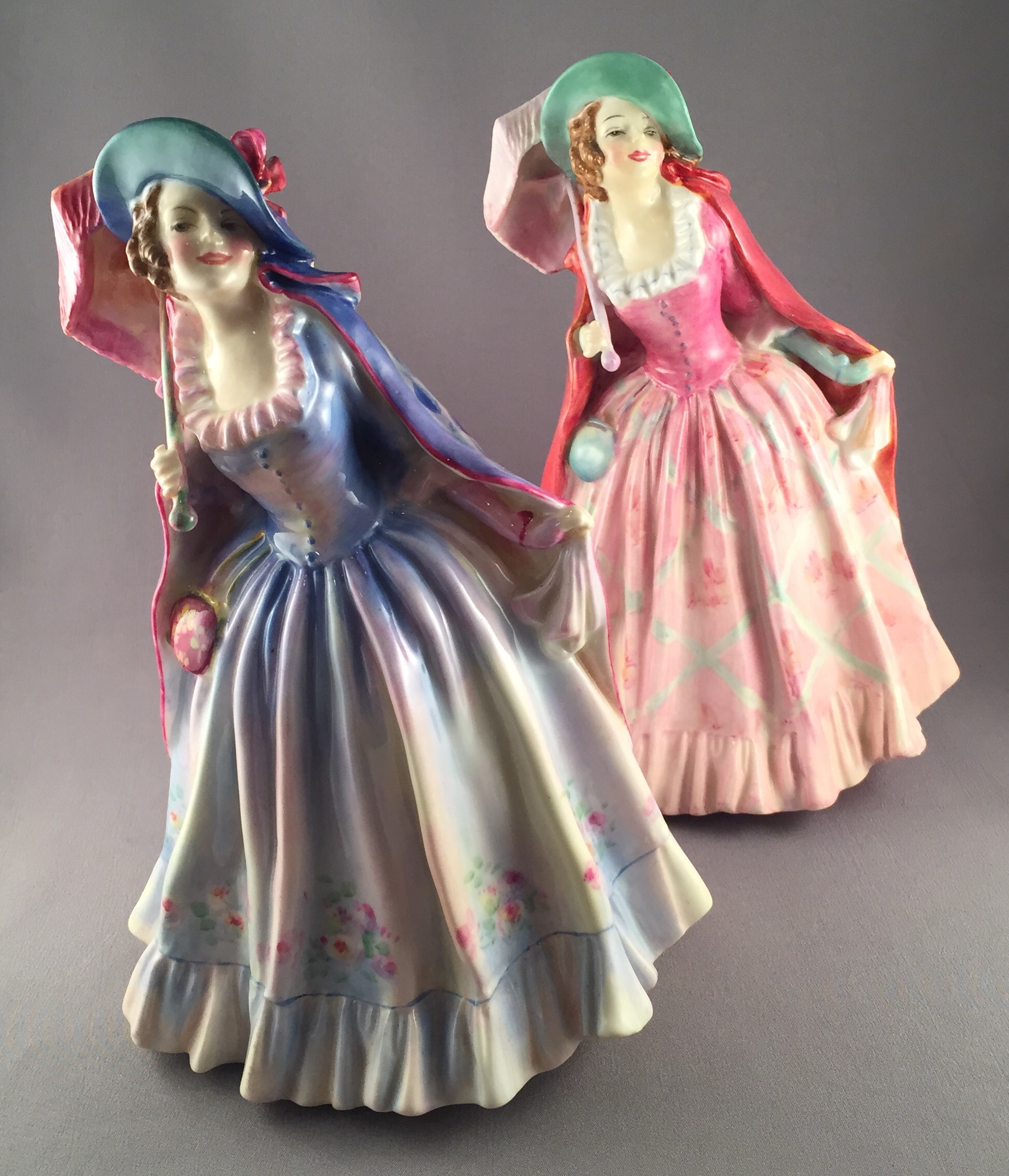
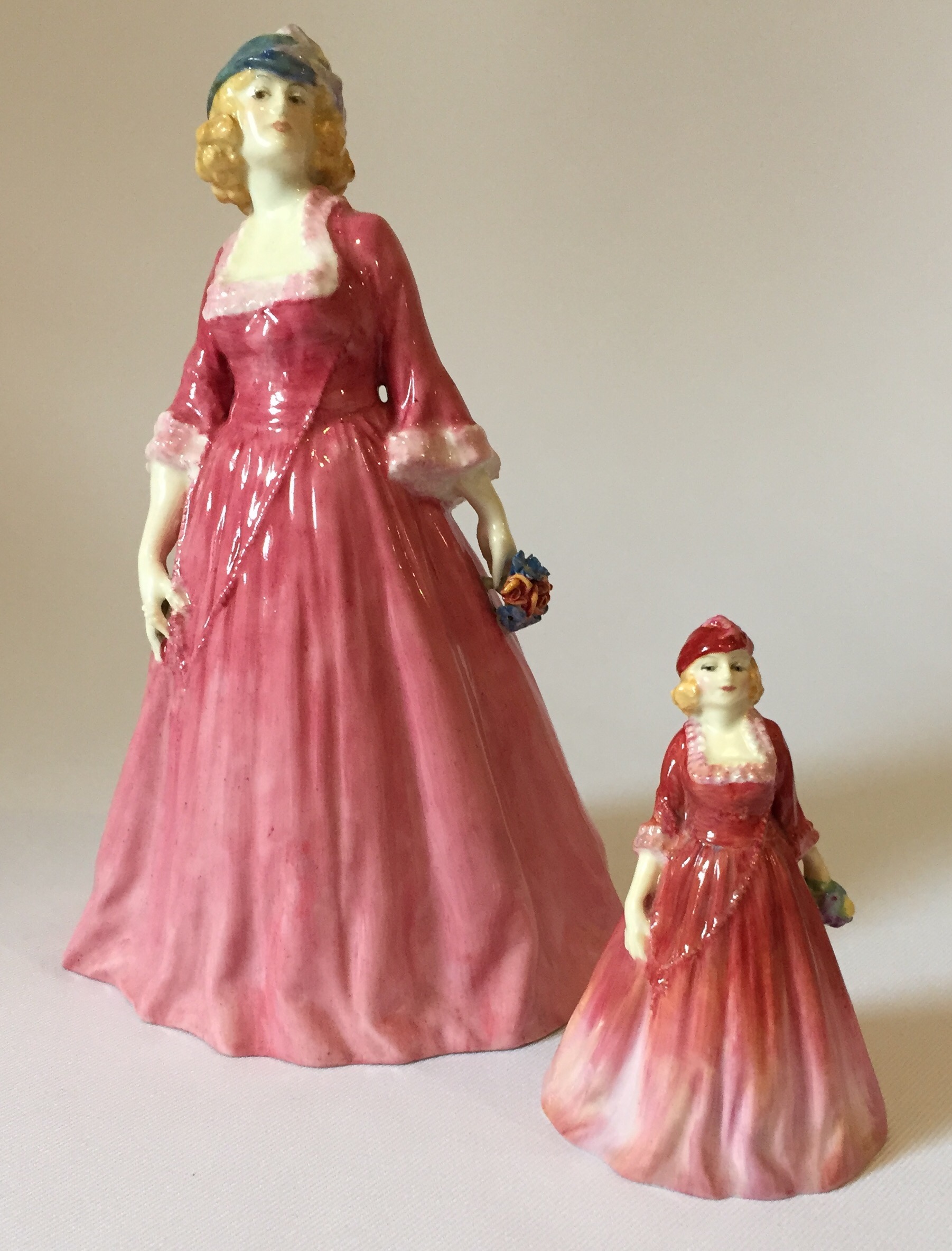
Introduced in 1935 in a large size, Mirabel was not only a popular name of the 30’s but with Doulton’s figurine of the same name she was a popular china figure too!Richly detailed and featuring Doulton’s famous attention to detail – so prevalent in this pre-war period, her success was assured.

  
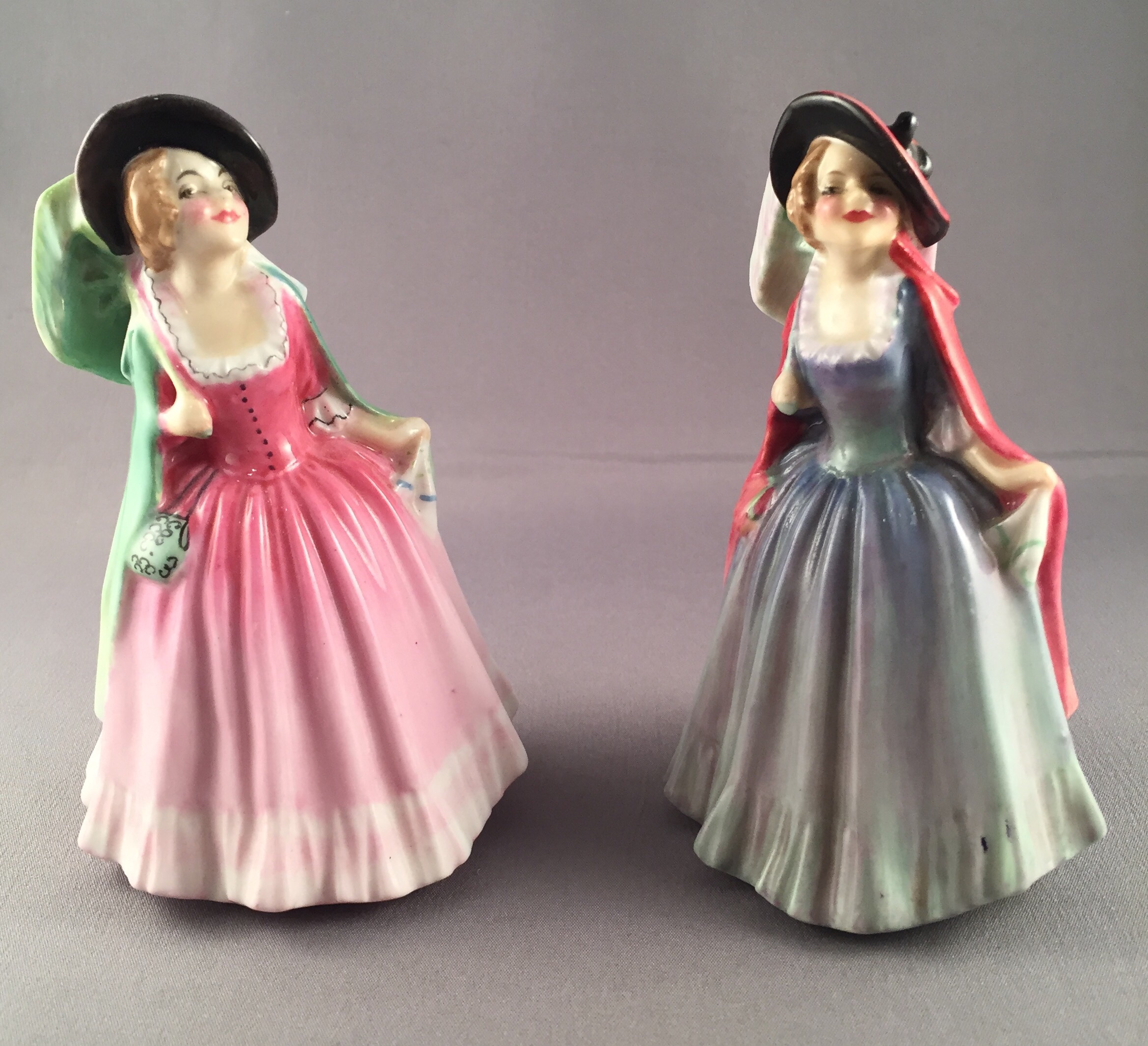
Typical of 1930’s figures Mirabel was issued in a blue colourway as HN 1743 and a pink as HN 1944. Both were in production from 1935 to a withdrawal date recorded as ‘by 1949’. In my experience that ‘by 1949’ was much earlier and a more precise date would be ‘by 1944’ save for a small handful of Doulton’s most popular figurines of the time, which continued to be produced for the export markets. 

  
Again typical of the time, Mirabel’s popularity meant that a miniature version of her was added to Doulton’s M series one year later in 1936. Once again a withdrawal date of 1949 is given but I have not seen any examples later than 1943, so again ‘by 1944’ would be a fairer withdrawal date.

  
As has been illustrated by the secondary market, Doulton’s pink ladies were contemporary favourites with blue colourways much harder to track down and Mirable is no exception to this generalisation, with HN 1743 proving much harder to track down. 

  
No matter what your colour preference, Mirabel is a star personality in any collection due to her impressive size and modelling and displays excellently next to other Harradine favourites such as Sonia, Bonjour and Miss Demure! 

Edmund Dulac’s influence on Royal Doulton’s HN Collection.
EDMUND DULAC 1882 – 1953
Dulac was born in Toulouse, France. His artistic ability showed itself early on and drawings exist from his early teens. He won the 1901 and 1903 Grand Prix for his paintings submitted to annual competitions whilst at the Ecole des Beaux Arts. A scholarship took him to Paris and the Academie Julien where he stayed for three weeks. That same year (1904) he left for London and the start of a meteoric career. 

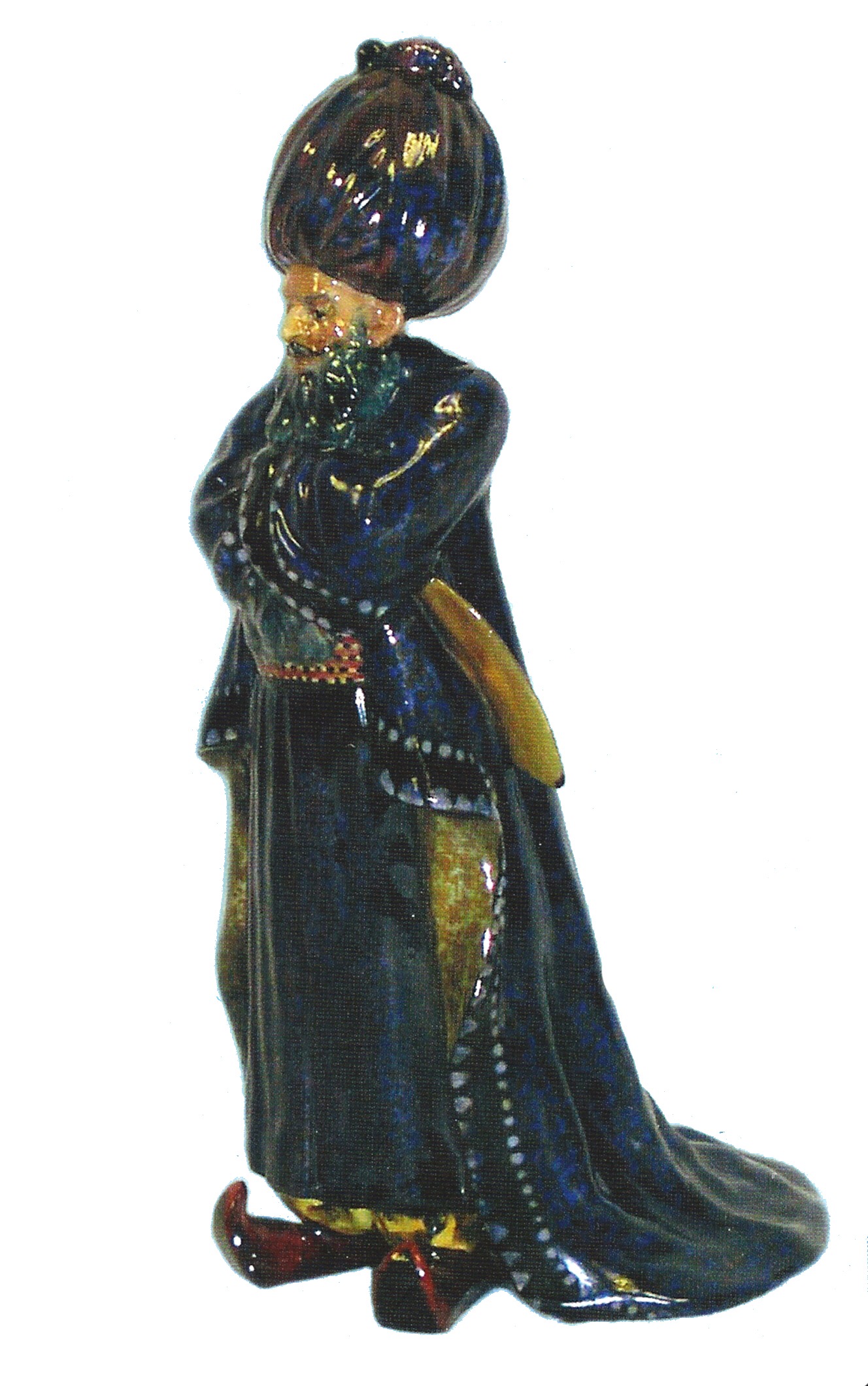
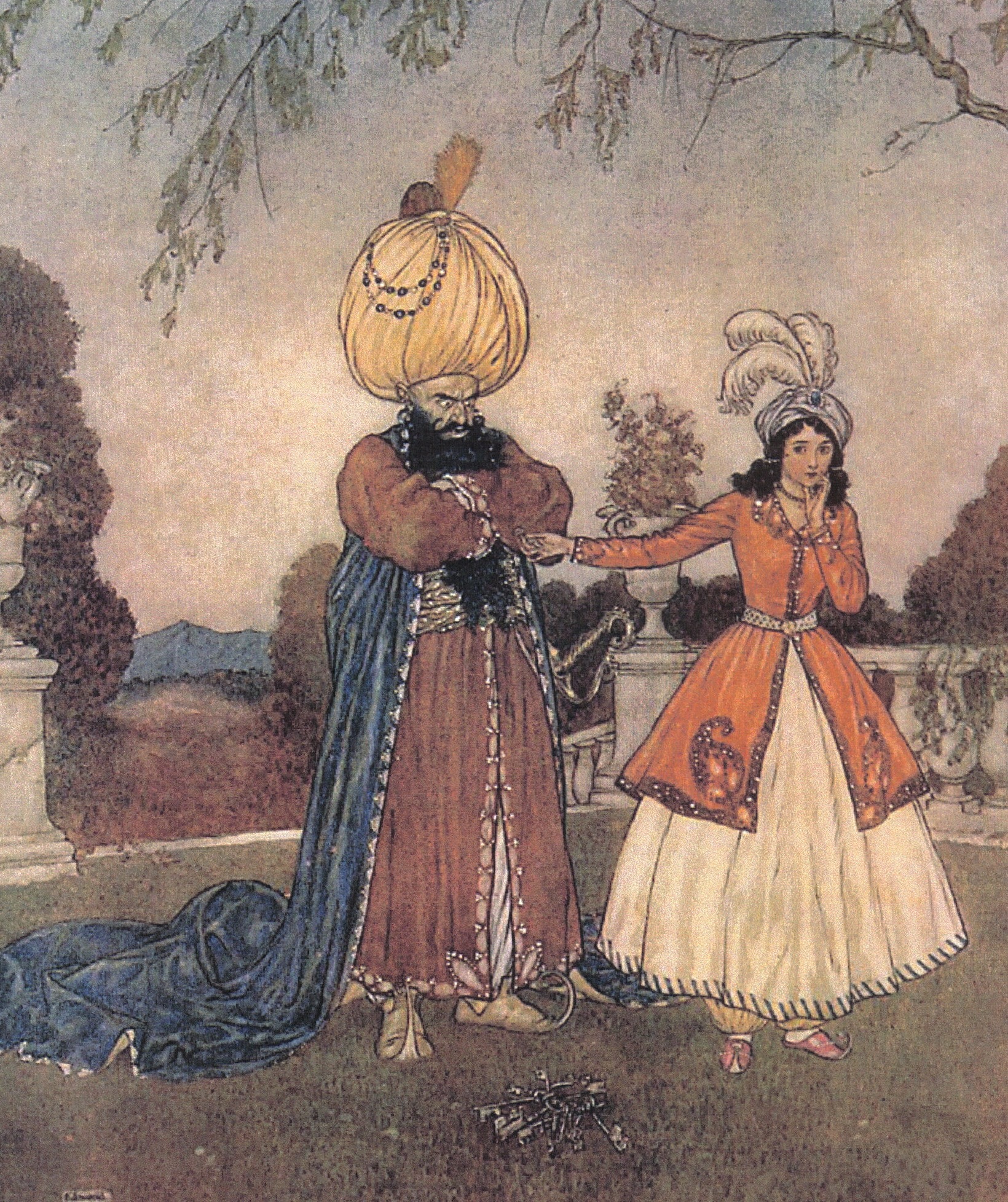
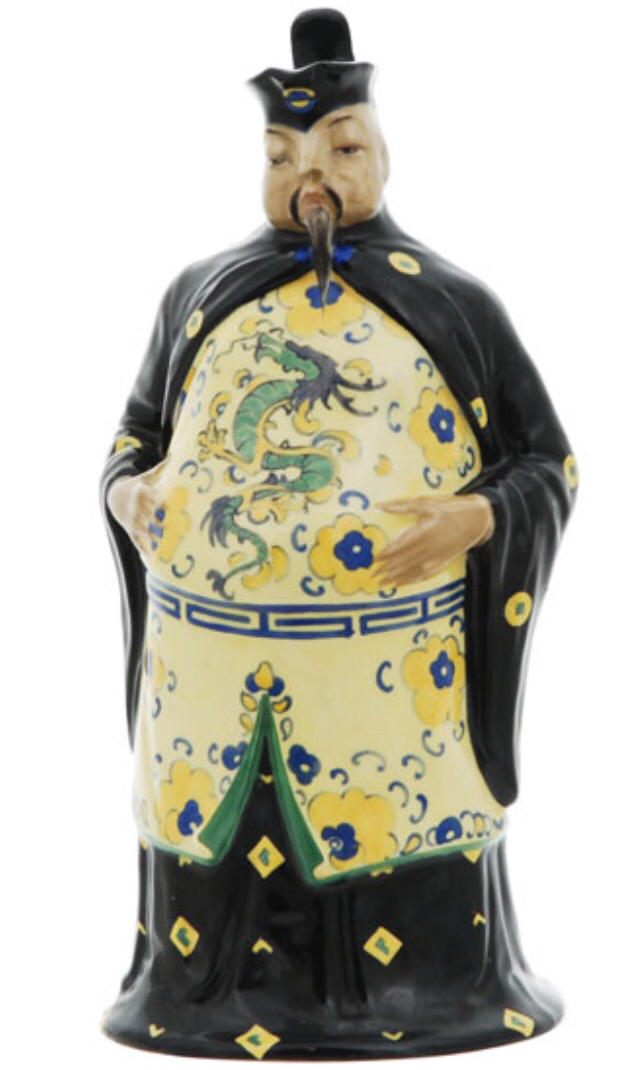
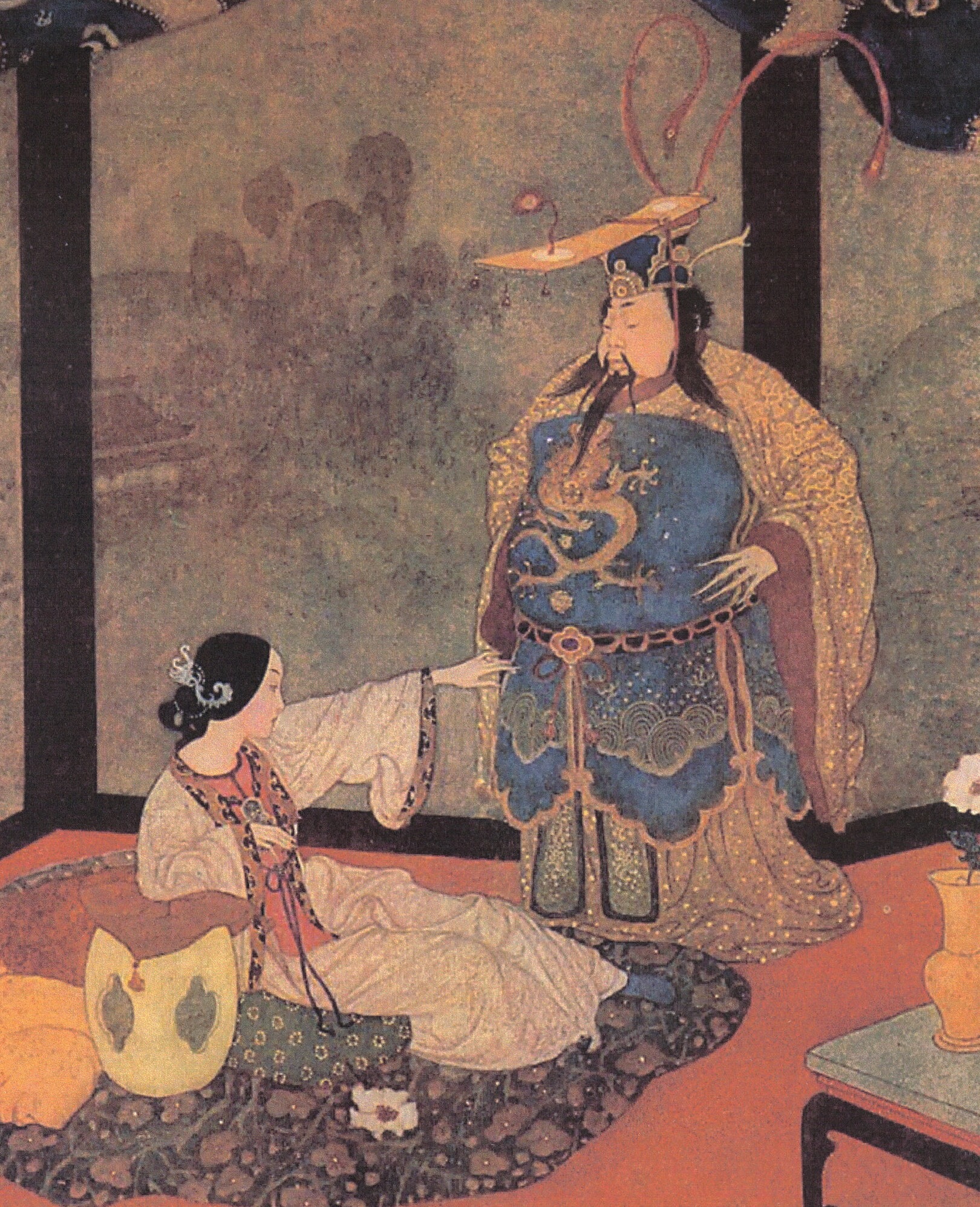
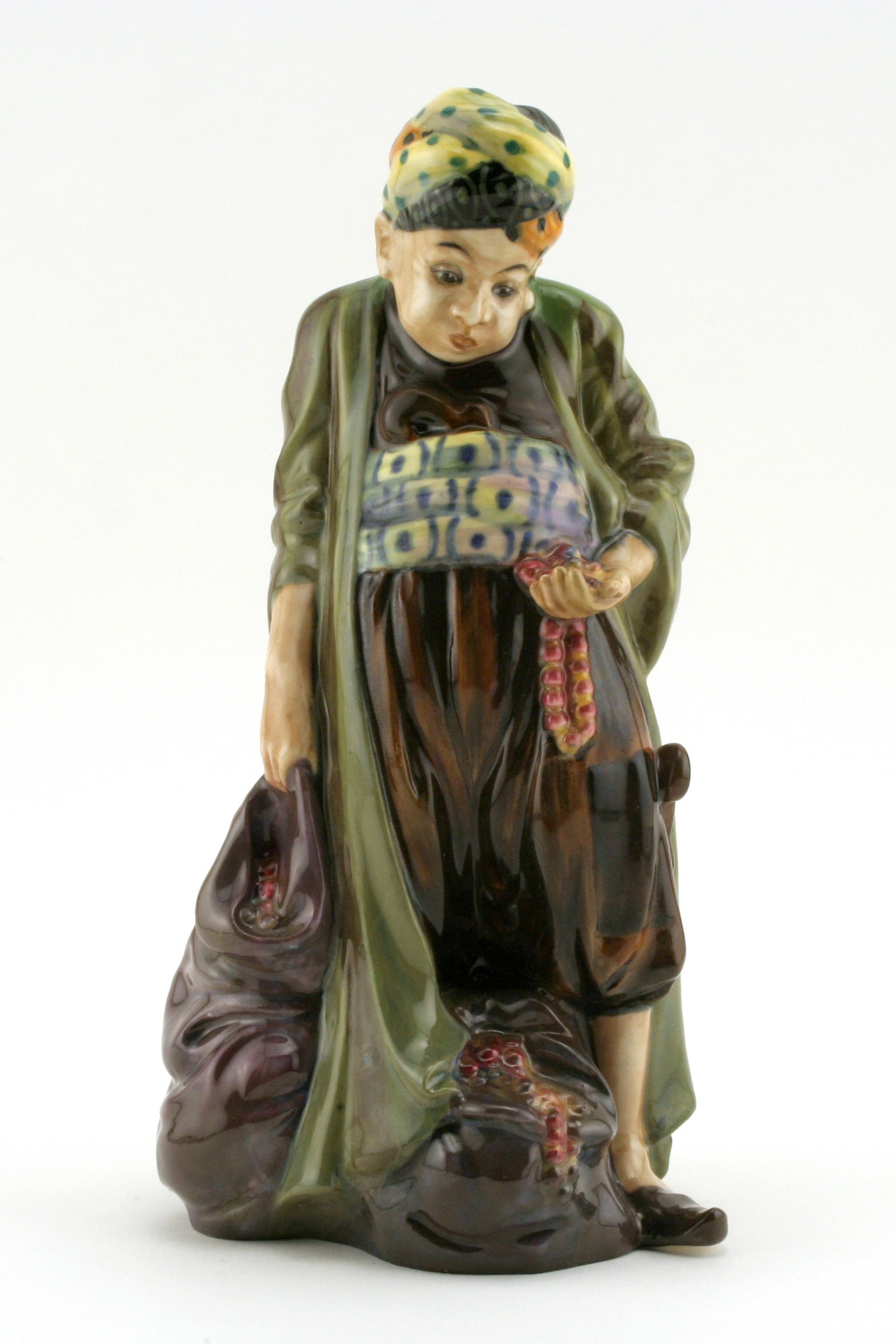
A chance happening across Dulac’s Picture Book for the French Red Cross (1915) led to the following discoveries:

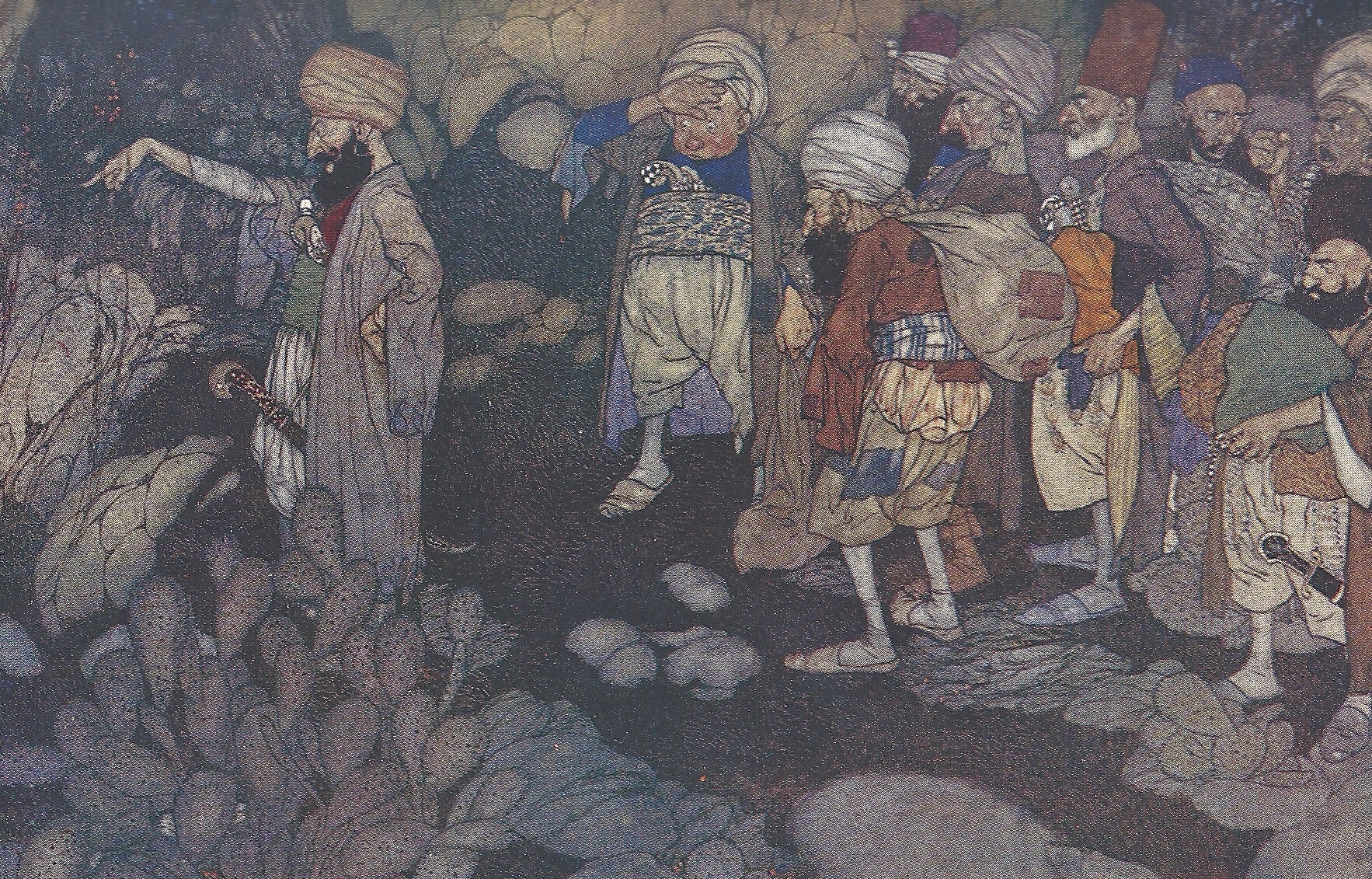
BLUEBEARD HN75 issued in 1917. E W Light.


MANDERIN HN84 issued in 1918 .Charles Noke.


ONE OF THE FORTY HN417 issued in 1920. Harry Tittensor.


Dulac’s illustration above and others by him were used in an early 20th Century version of the popular takes 1001 Arabian Nights.

Also inspired by Dulac illustrations but not shown here is PRINCESS BADOURA HN2081 issued in 1952 again by Harry Tittensor.

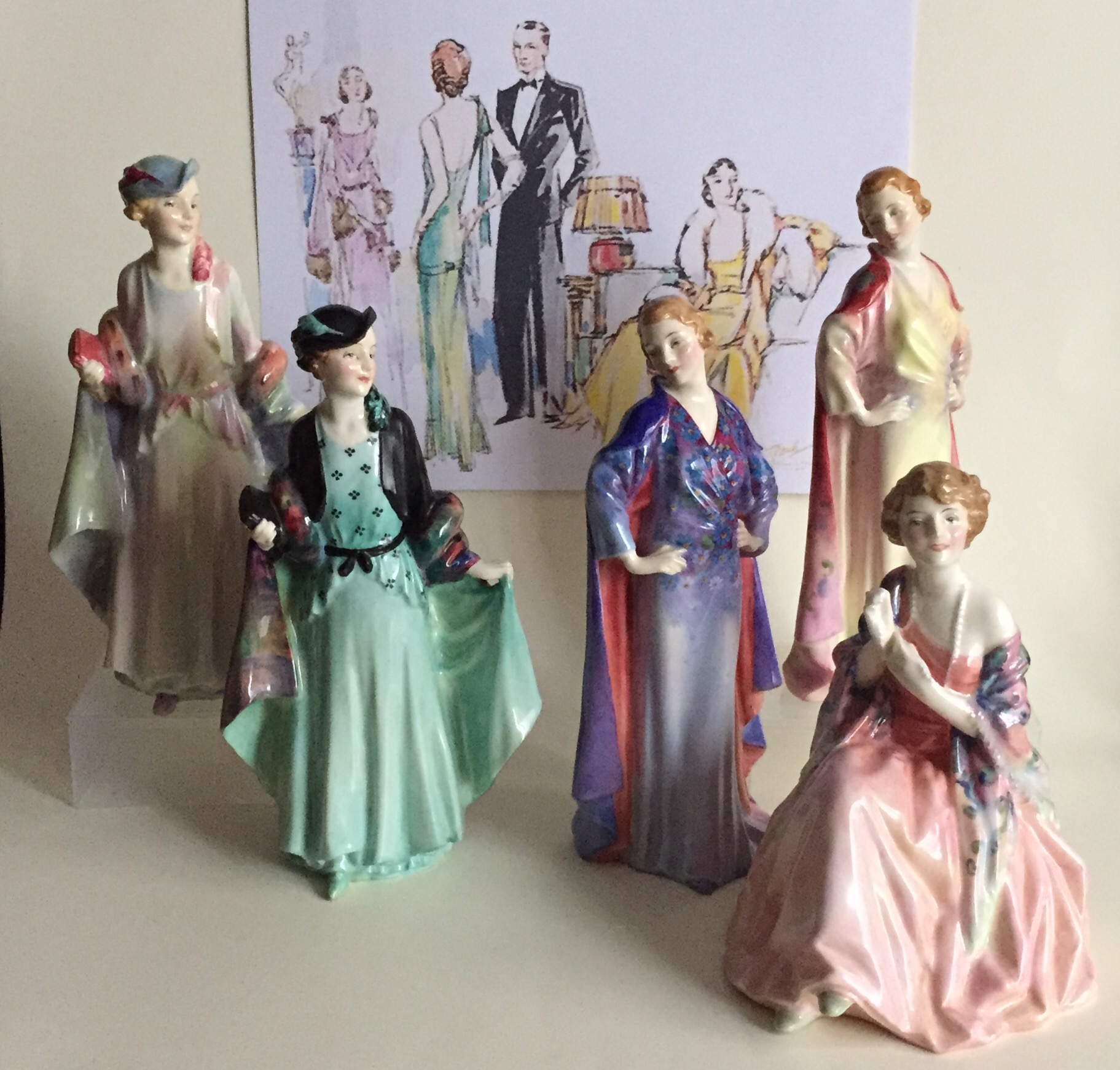
Doulton ladies’ sleek 1930’s style! 

  If the 1920’s were typified by ‘Putting on the ritz’ then the 1930’s were about sleek lines and glamour. 

Typically, Doulton once again responded to the fashion of the times with a handful of designs inspired straight out of early 1930’s fashion magazines. Indeed we know that Mrs Harradine was a fan of a magazine called Britannia & Eve, as her husband based his figure Pamela on a cover girl from 1930. 

Even the names chosen for this select band of ladies represent their time, with stylish names such as Clothilde, Aileen and Gloria. 

Once again Doulton figures can be truly said to have represented their times, just as they had in the 1920’s with perennial favourites such as Pierette and Butterfly in their party costumes and as they would at the end of the 1930’s with Hollywood inspired glamour including The Mirror and Nadine. 

Royal Doulton’s figurine Blithe Morning exudes a blithe spirit all of her own!

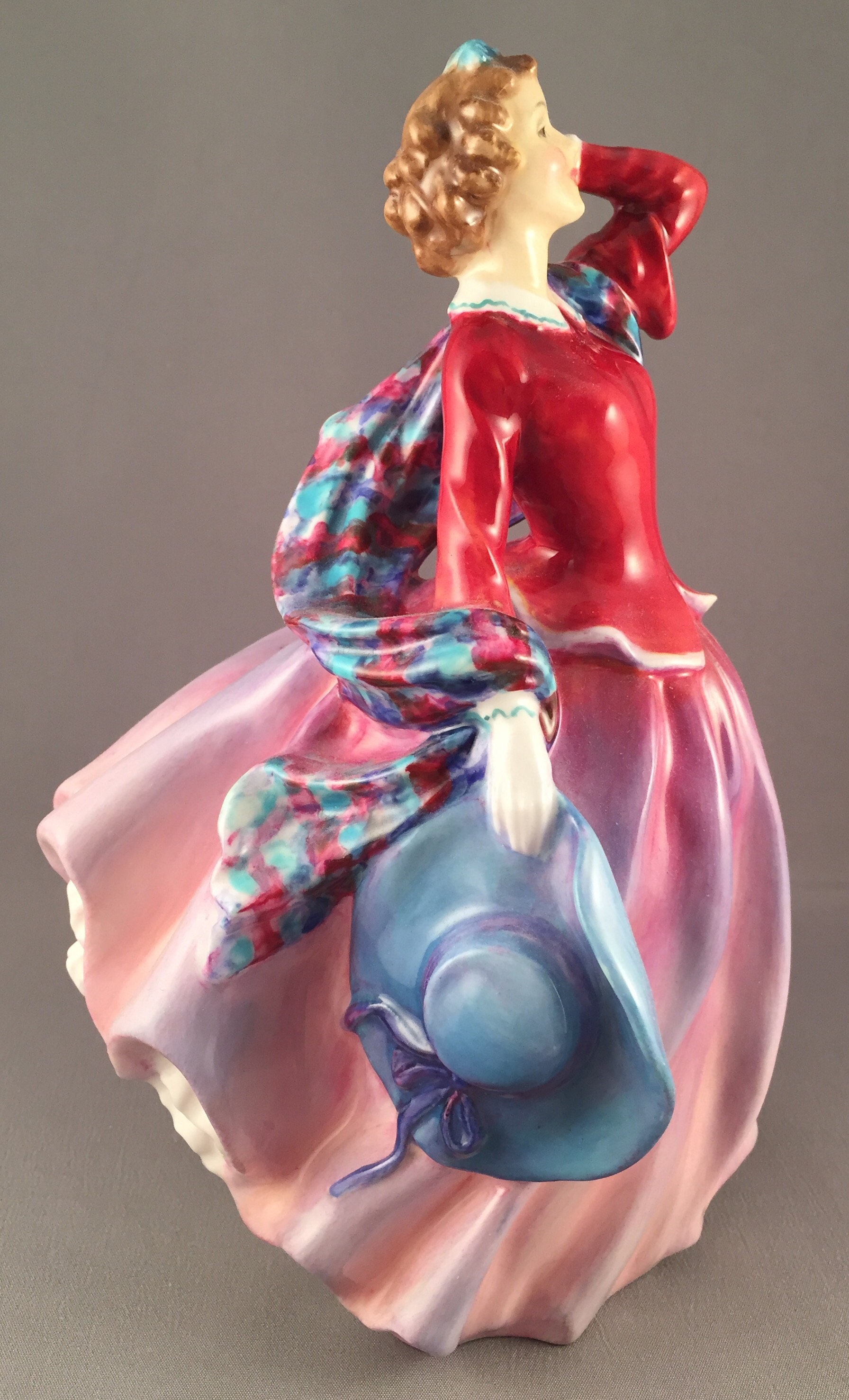
Leslie Harradine’s figurine Blithe Morning certainly has non of the ghostly spirit of the film Blithe Spirit, that invariably influenced her name! The film Blithe Spirit appeared in 1945 and was based on the play of the same name by Noel Coward. The play and film are centred around the socialite and novelist Charles Condomine, who invites the eccentric medium and clairvoyant, Madame Arcati played by Margaret Rutherford, to his house to conduct a séance, hoping to gather material for his next book. The deception backfires when he is haunted by the ghost of his annoying and temperamental first wife, Elvira, after the séance. Elvira makes continual attempts to disrupt Charles’s marriage to his second wife, Ruth, who cannot see or hear the ghost. The comedy is now a classic film.

  
Harradine’s very typical Doulton lady exudes her own kind of blithe spirit as strolls carefree into an oncoming breeze. Introduced in 1949 as HN 2021 in blue colourway and a year later as HN 2065 in a red colourway so favoured by Doulton collectors. She remained in production for some 20 plus years and today’s she is the type of figure that every Harradine collector wants! 

  
Pictured along with the two typical colourways is a further colourway from 1948, which is almost a combination of the two official versions but as is usual with colourways there is added detail particularly to her shawl. 

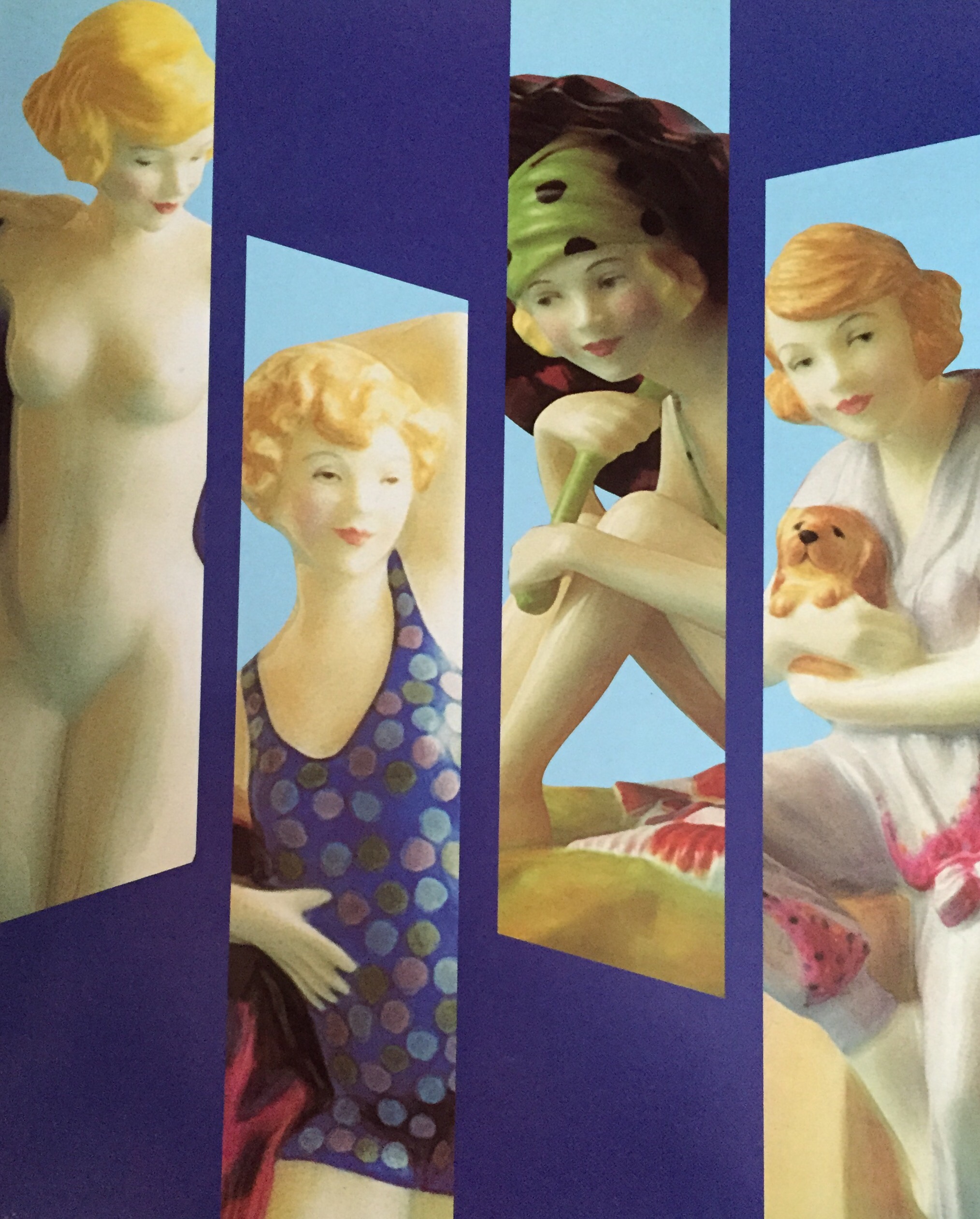
A look back at Royal Doulton’s Bathers Collection. 

Never have a group of figures so captured collectors’ imaginations and for so long, as Leslie Harradine’s wonderful creations from the 1920’s and 1930’s! 

  
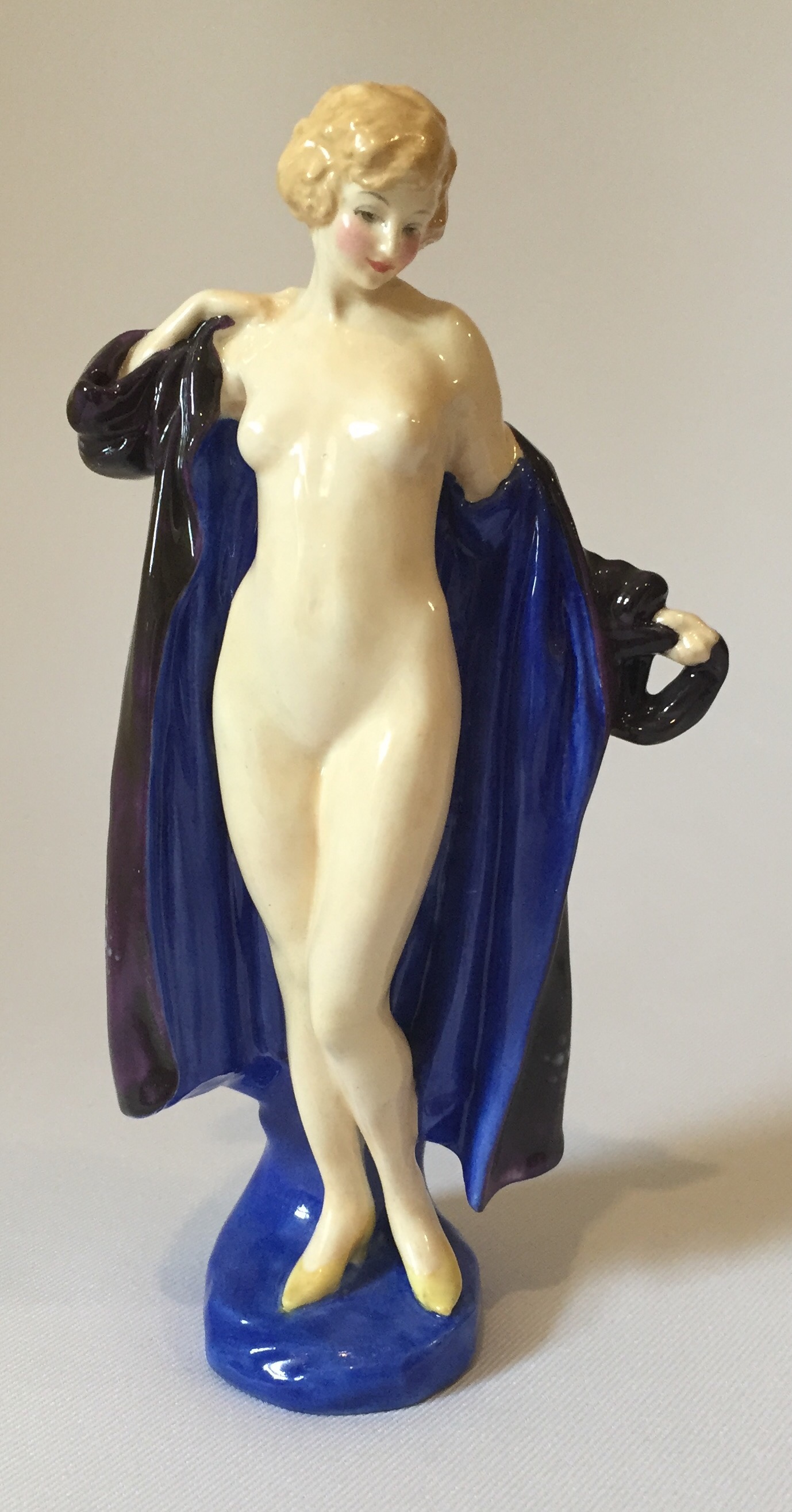
The Bather HN 687 (1924-1943).

Moreover this statement applies more than any to his deco ladies – be they nude, bathers or otherwise lounging in what we today think of as an art deco style. 

  
Lido Lady HN 1220 (1927-1936).

In 2000 Royal Doulton asked Nada Pedley to re-model four of Harradine’s classic deco ladies – the Bather, the Swimmer, Sunshine Girl and Lido Lady. Each was issued in a Limited edition of 2000 pieces and came with a Certificate of Authenticity. 

  
Sunshine Girl HN 4245.

Whilst each of the original figures was available in a selection of colourways the ones chosen for the new series were deemed to be the most classic colourways that collectors today would most appreciate owning. 

  
The Swimmer HN 1270 (1928-by 1938).

Indeed unless one has exceedingly deep pockets, many of these original studies are beyond the reach of most collectors – myself included! 

  
The Swimmer HN 4246.

Nada’s faithful interpretation of these early figures means that they stand alongside the originals without standing out too much. Naturally the methods of decoration over the years changed; such as the number of firings figures originally received to achieve their depth of colouring,  also the techniques and styles of face painting and of course the number of parts that make up each model giving them the refinement we associate with early figures. 

  
Regardless of their relative modernity these new figures are true modern day collectibles in their own right – and when you consider the total scarcity of Sunshine Girl for example one can understand their appeal! 

Doulton figures – made to order! 

You read it correctly! Once there was a time when you could order your favourite model in a colourway of your choice – to suit your interior colour scheme or else in the same palette as another figure you cherished.


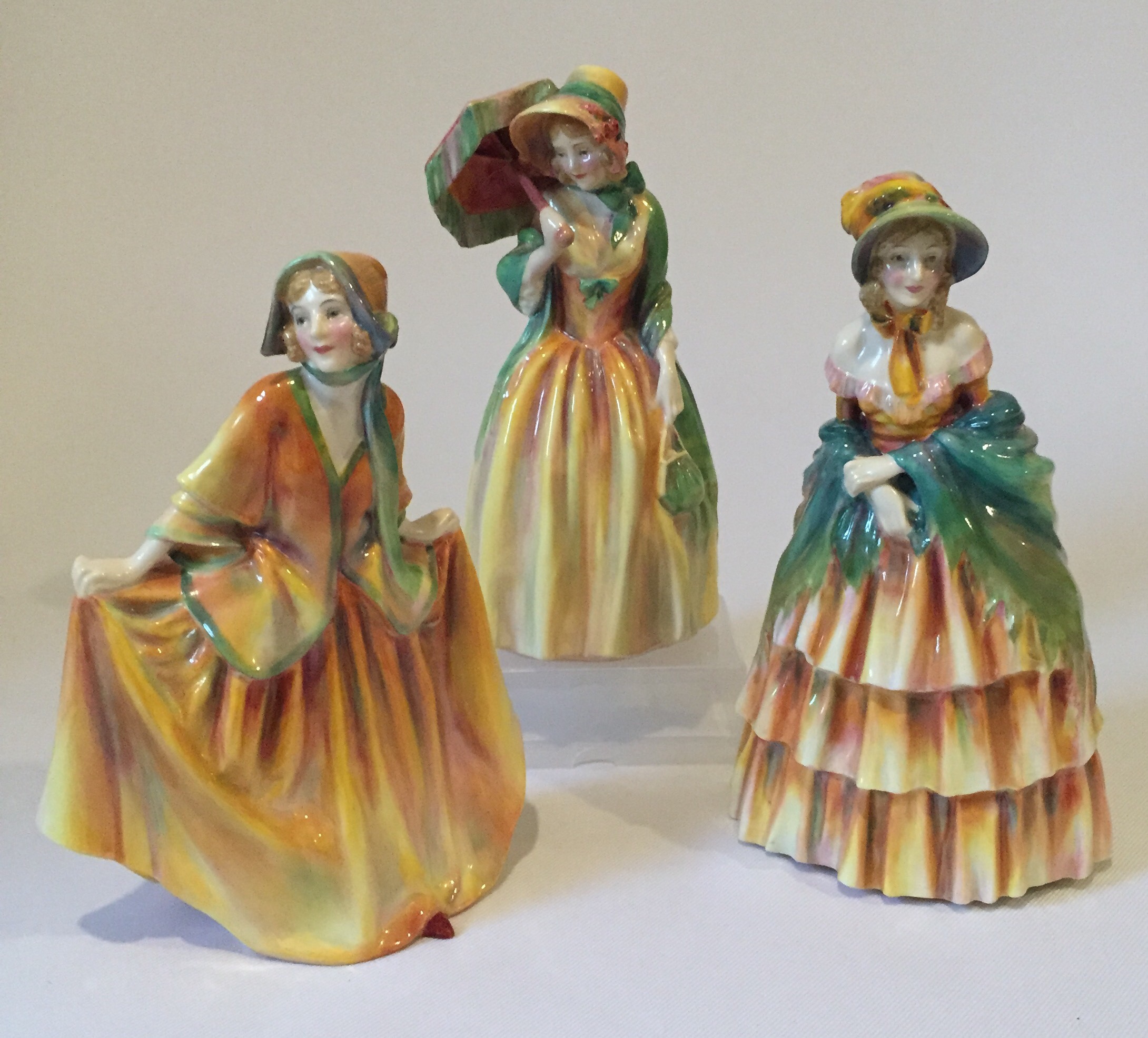
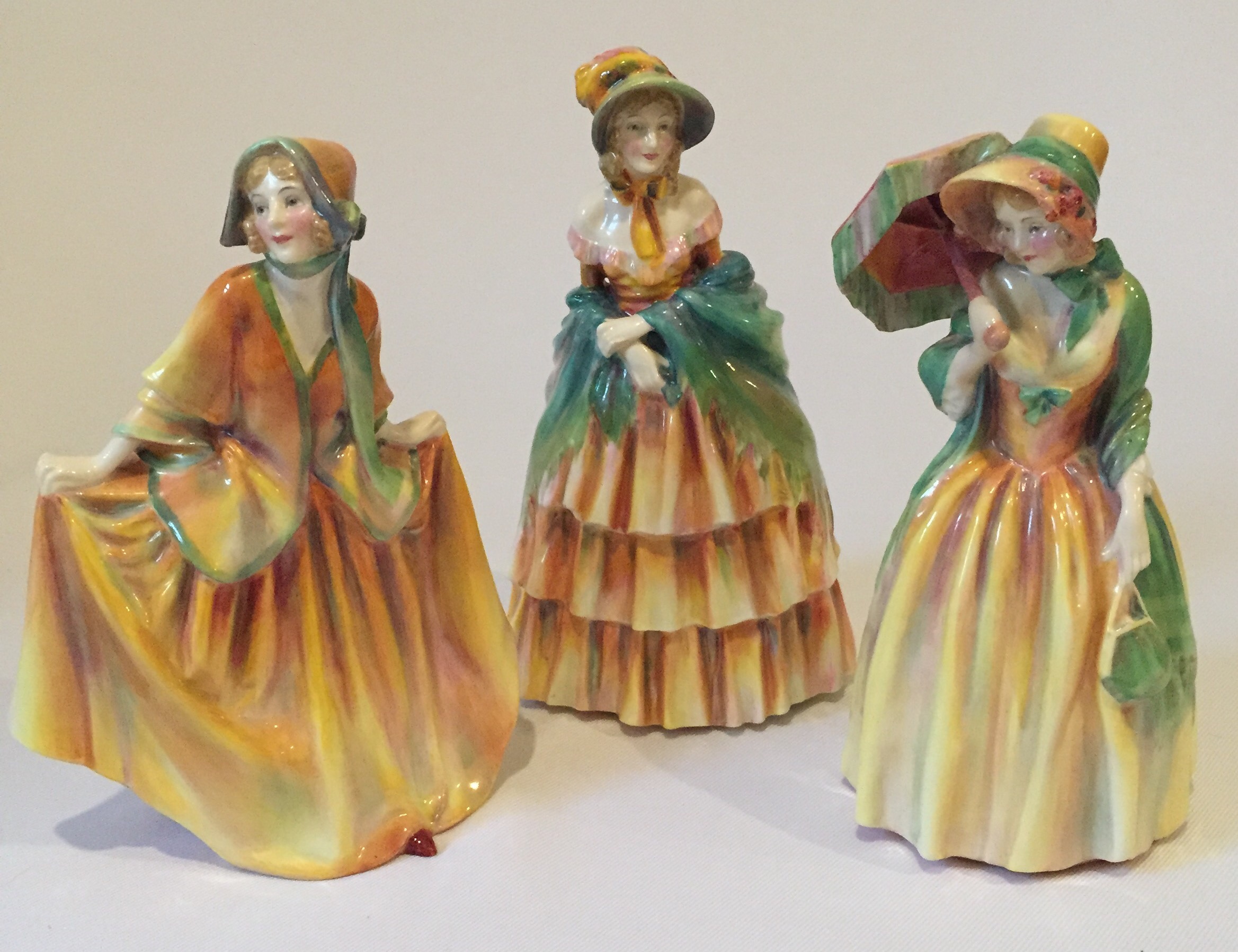
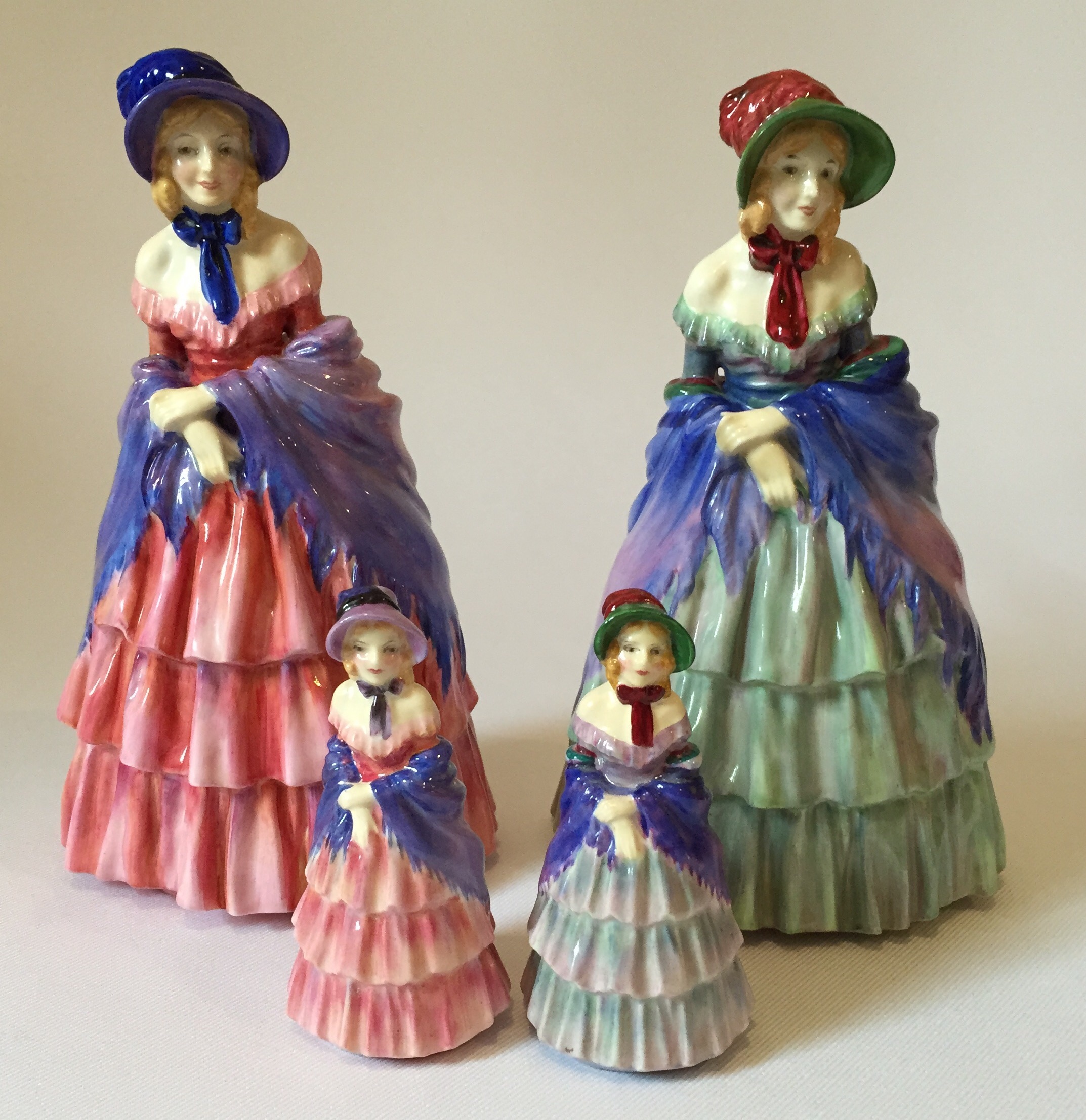
Victorian Lady HN 1529 and two complimentary colourways of Sweet Anne and Miss Demure.

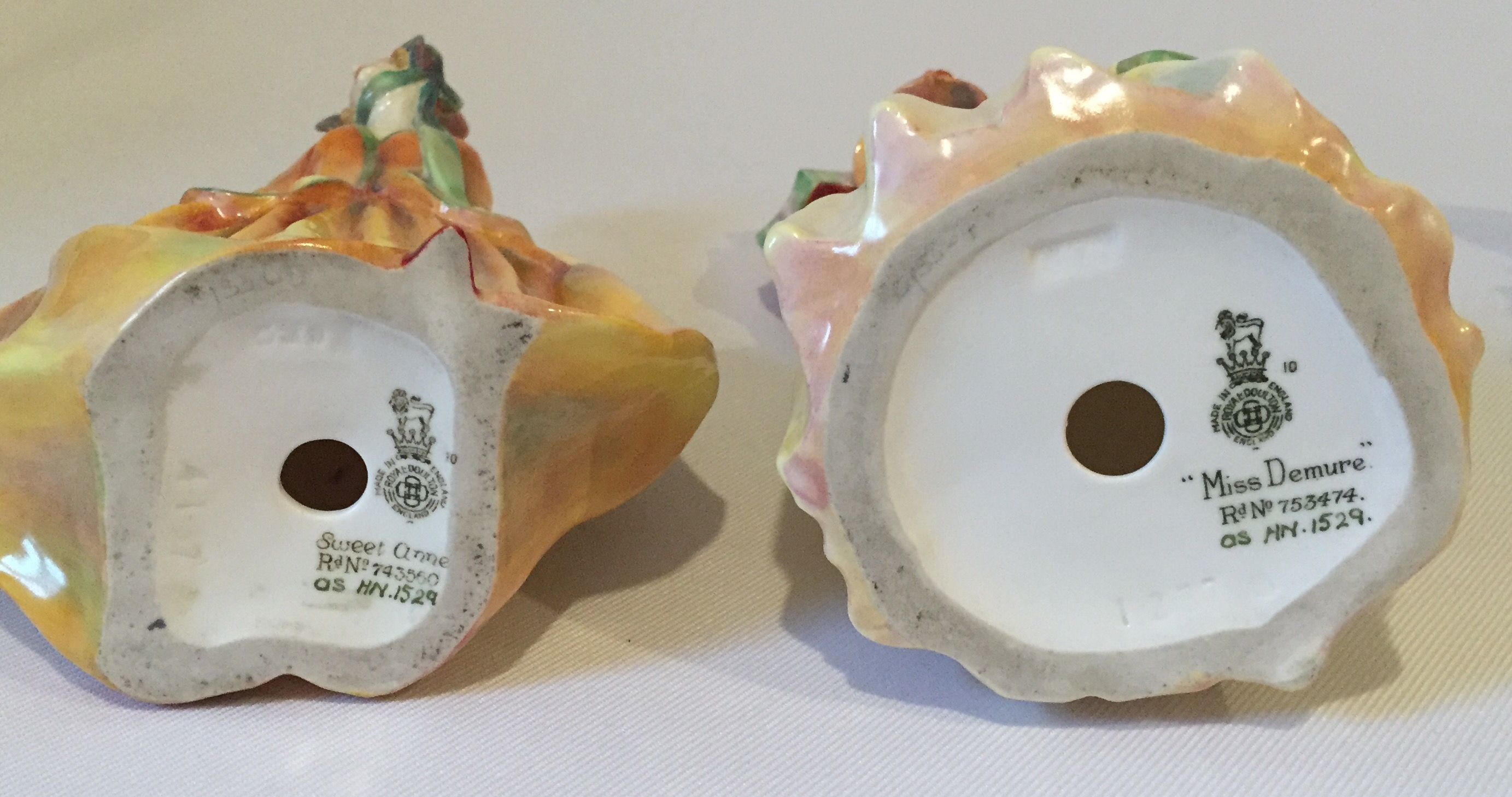
Such was the case with the Sweet Anne and Miss Demure pictured who are painted in the same style as Victorian Lady HN 1529, and both of which also carry that same HN number to their bases!  The bases of the two complimentary figurines. 

Both models as you can see were not only painted in the same year but also by the same artist so you can imagine my surprise when I recently came across the version of Miss Demure and more so when I realised the identical artist and date code! Interestingly the actual models were both produced in early 1937 too (one in January and the other February)! So they must have been part of the same order. Once more Doulton proves you never do know what to expect!

Collecting Doulton’s identical miniature figures! 

Doulton’s early range of miniature figures or M series as it is known offers collectors an additional element to their collection – for if you have the large figure, why not hunt down the miniature as well, or alternatively if space is at a premium, collect just the miniature!  

 Chloe HN 1765 and M 10.

The most popular figures from the HN collection can be found in a miniature size although as always some are much harder to trace and thus carry a premium; thus a miniature Pierette will always outshine a Victorian Lady for example. 

  
Victorian Ladies HN 728 & 1345 with M 25 & M 2.

However, the pleasure of collecting often means that we concentrate on a particular theme – this one being identical colourways to the ‘grown up’ versions of figures. 

  
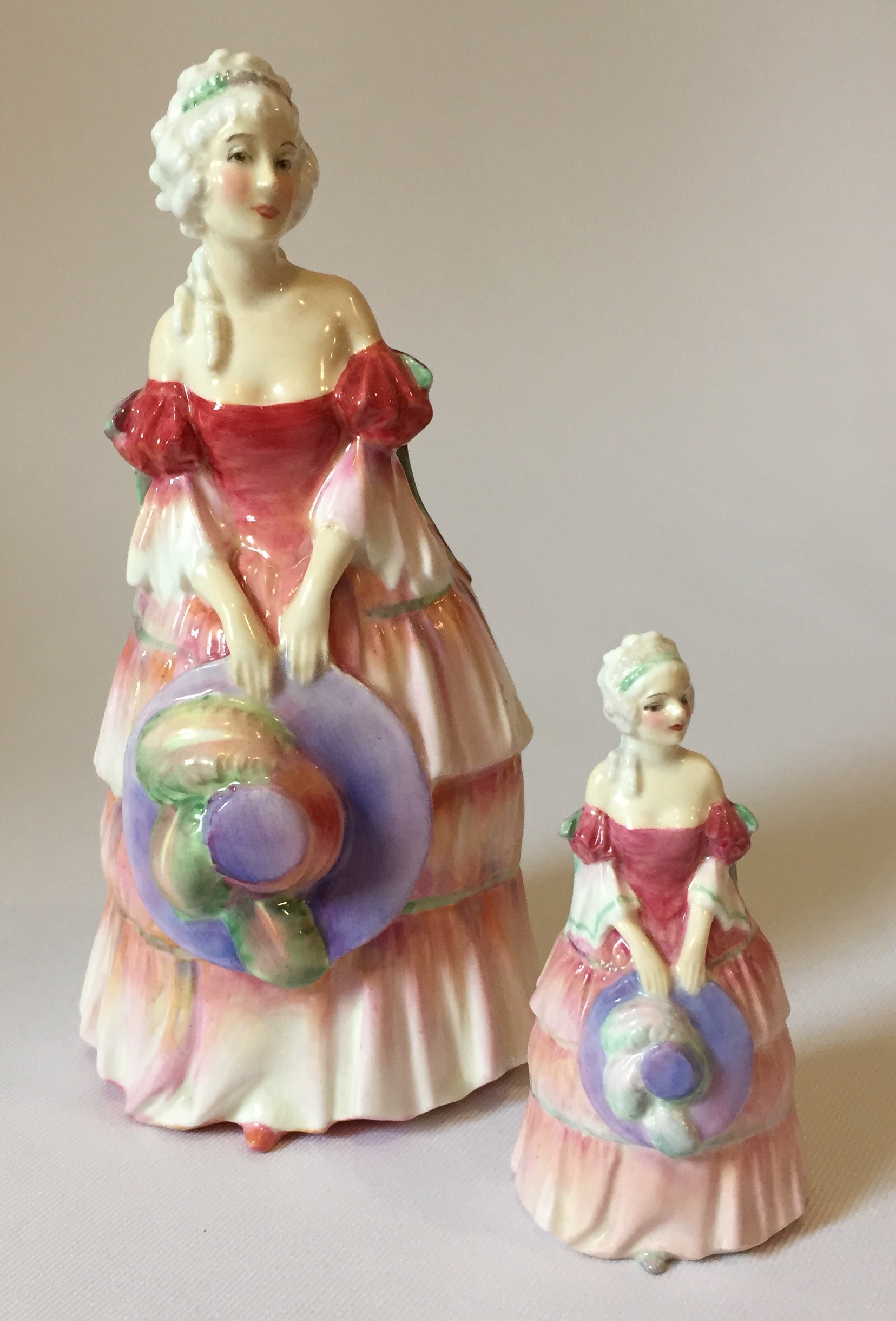
Veronica HN 1517 and M 64.

Many we can predict having been produced such as Victorian Lady, Veronica or even Chloe. All of whom were produced in a rainbow of  M series colourways too that had no corresponding large size partner. 

  
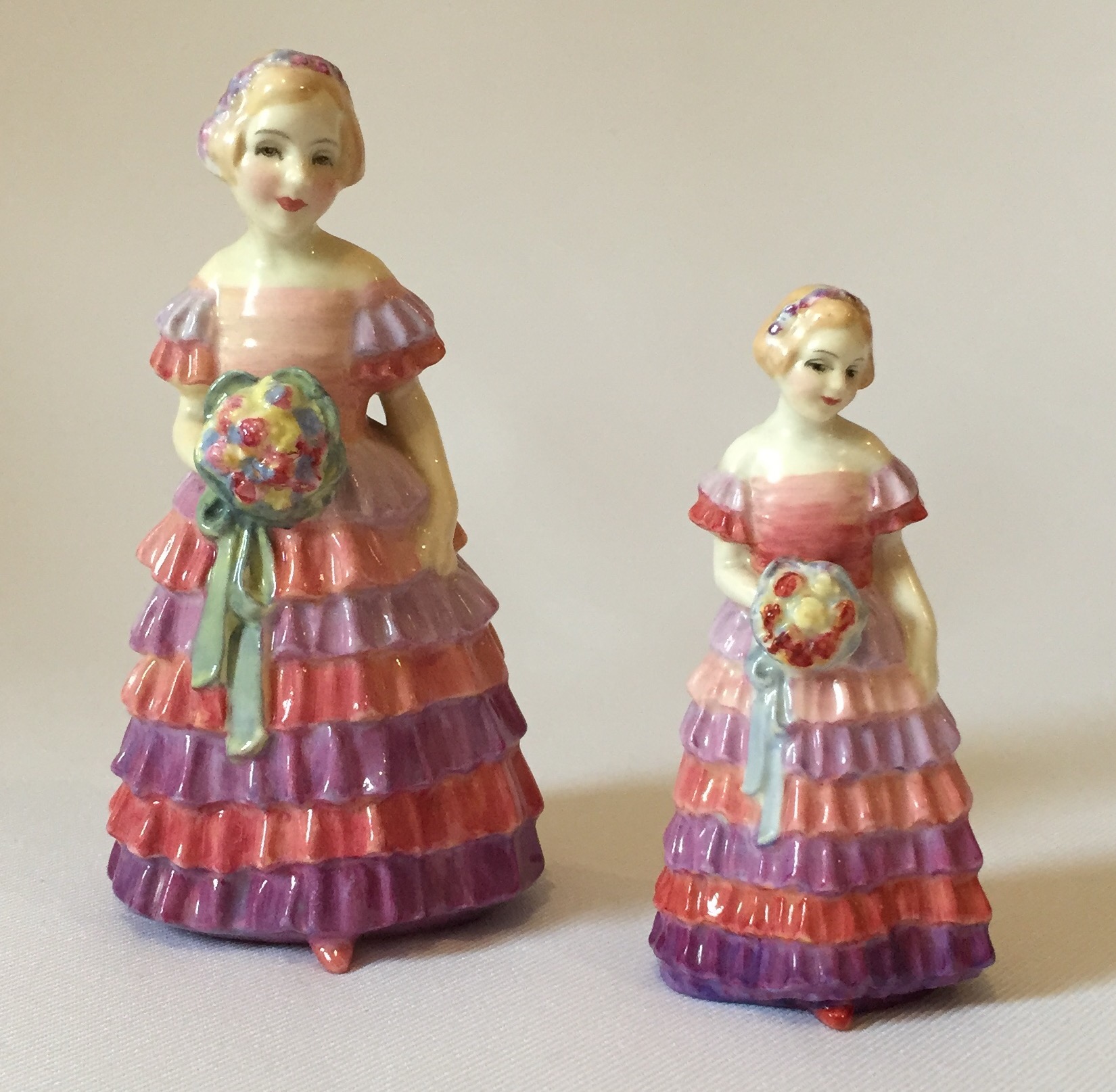
Little Bridesmaid HN 1434 and M 30.

The M range began in 1932 although there are several miniature designs pre-dating this date and which were typically given an HN number, yet, four models bear no HN at all (Pierette, Chelsea Pensioner, Spook and Robert Burns). 

  
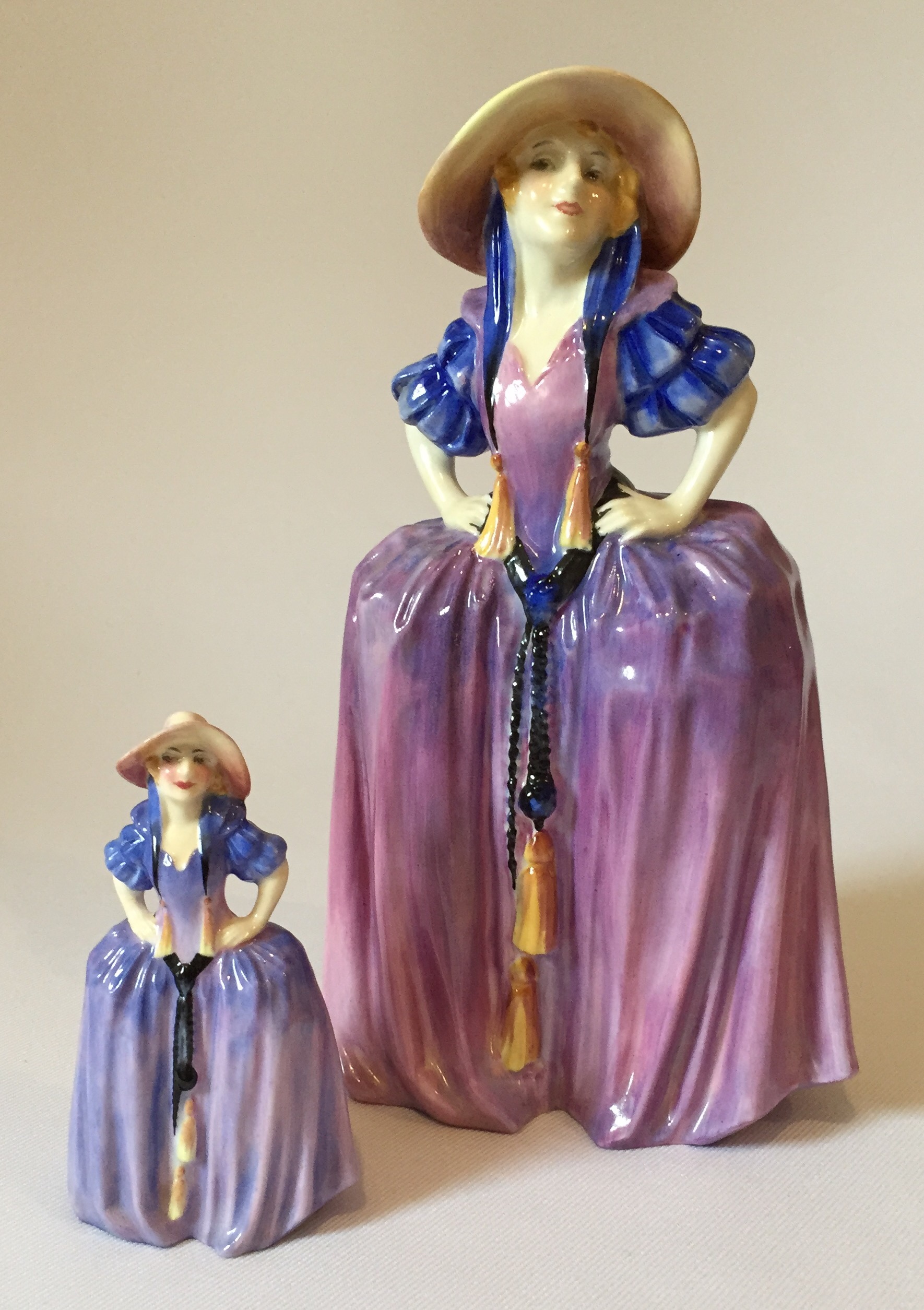
Patricia HN 1431 and M 28.

As you would expect there are many versions of M figures that do not have corresponding large size partners and these too make a distinct display when shown all together! 

  
Rosamund HN 1497 and M 33.

The M series of miniature lady and child figures ceased around the end of the Second World War, but realistically would have stopped long before that date, save for a handful of the most popular models such as Paisley Shawl M4 that continued briefly after the war. The M series continued in spirit although the M number was omitted with the small size Dickens figures that were made up to the 1980’s. 

Royal Doulton’s Helen, her origins and her successor! 

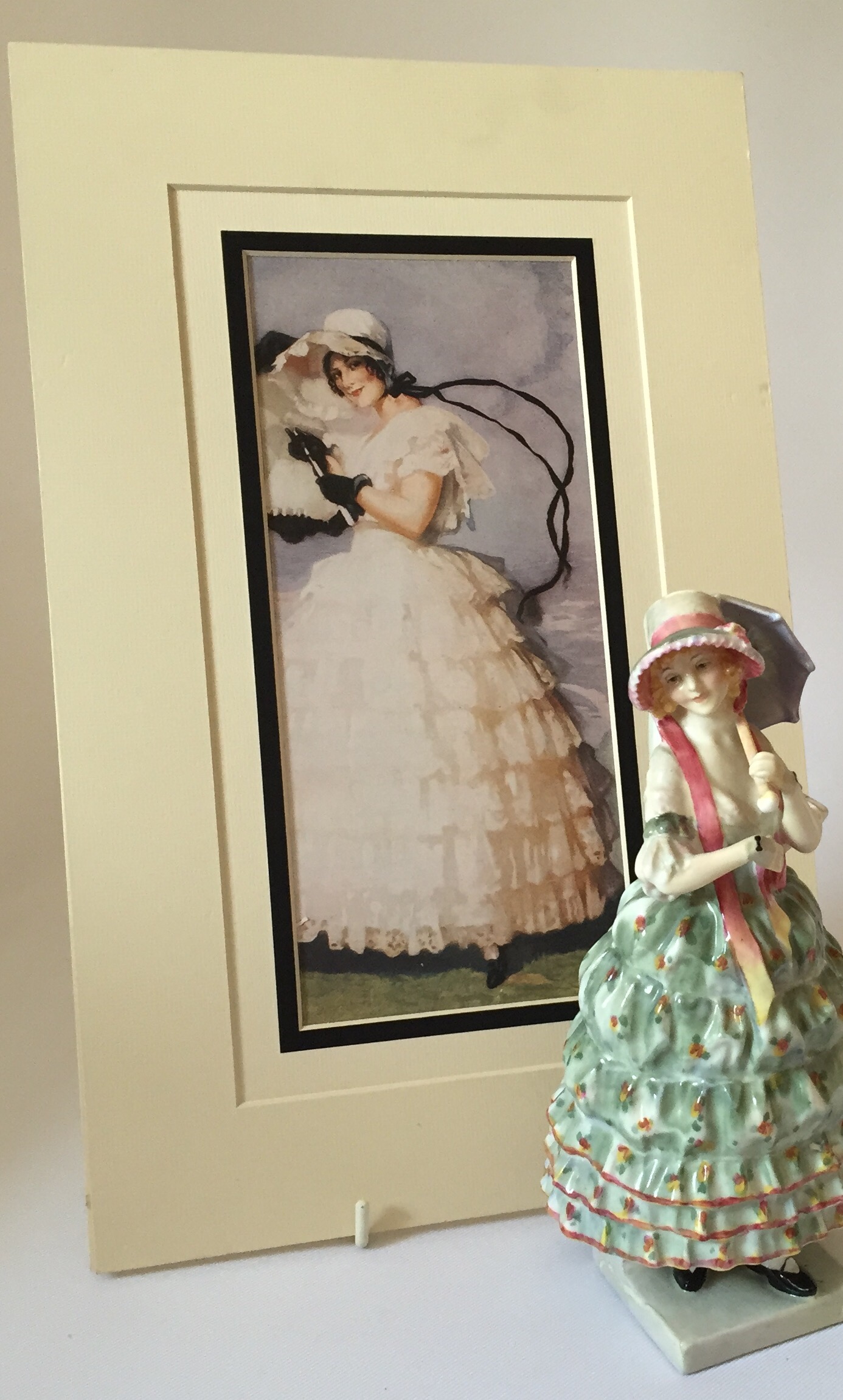
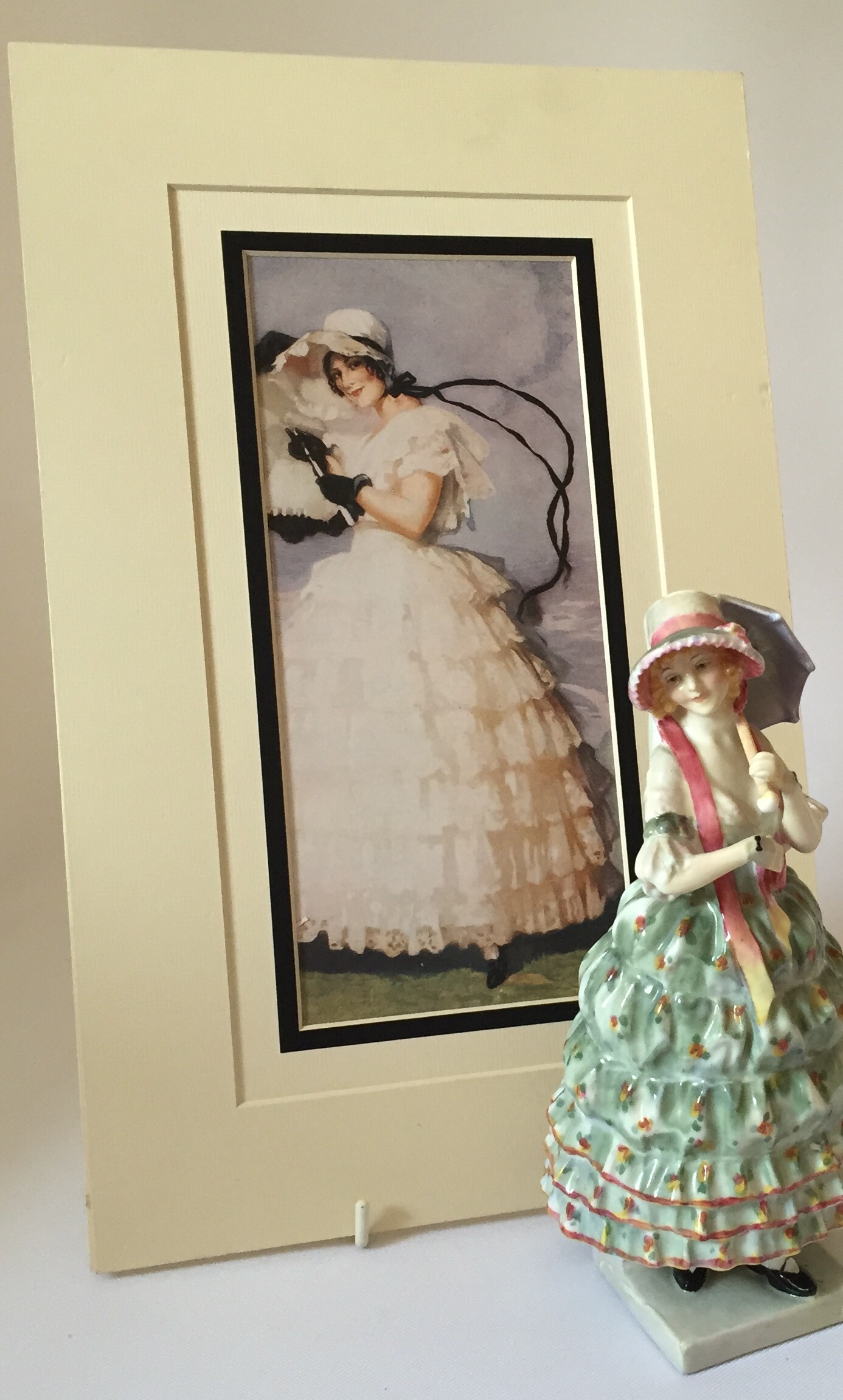
The inspiration behind many of Doulton’s earliest figures comes from contemporary paintings and such is the case with Harradine’s Helen introduced in 1932.

  
Helen HN 1508 with the Webster picture that inspired her.

It was not unusual for complicated figures to be re-modelled after problems arise in their manufacture or because they are too complicated to produced or simply because of market response (Consider Sweet Maid who became Millicent with a fuller skirt). 

  
Helen HN 1572 (1933) and June HN 1947 (1940).

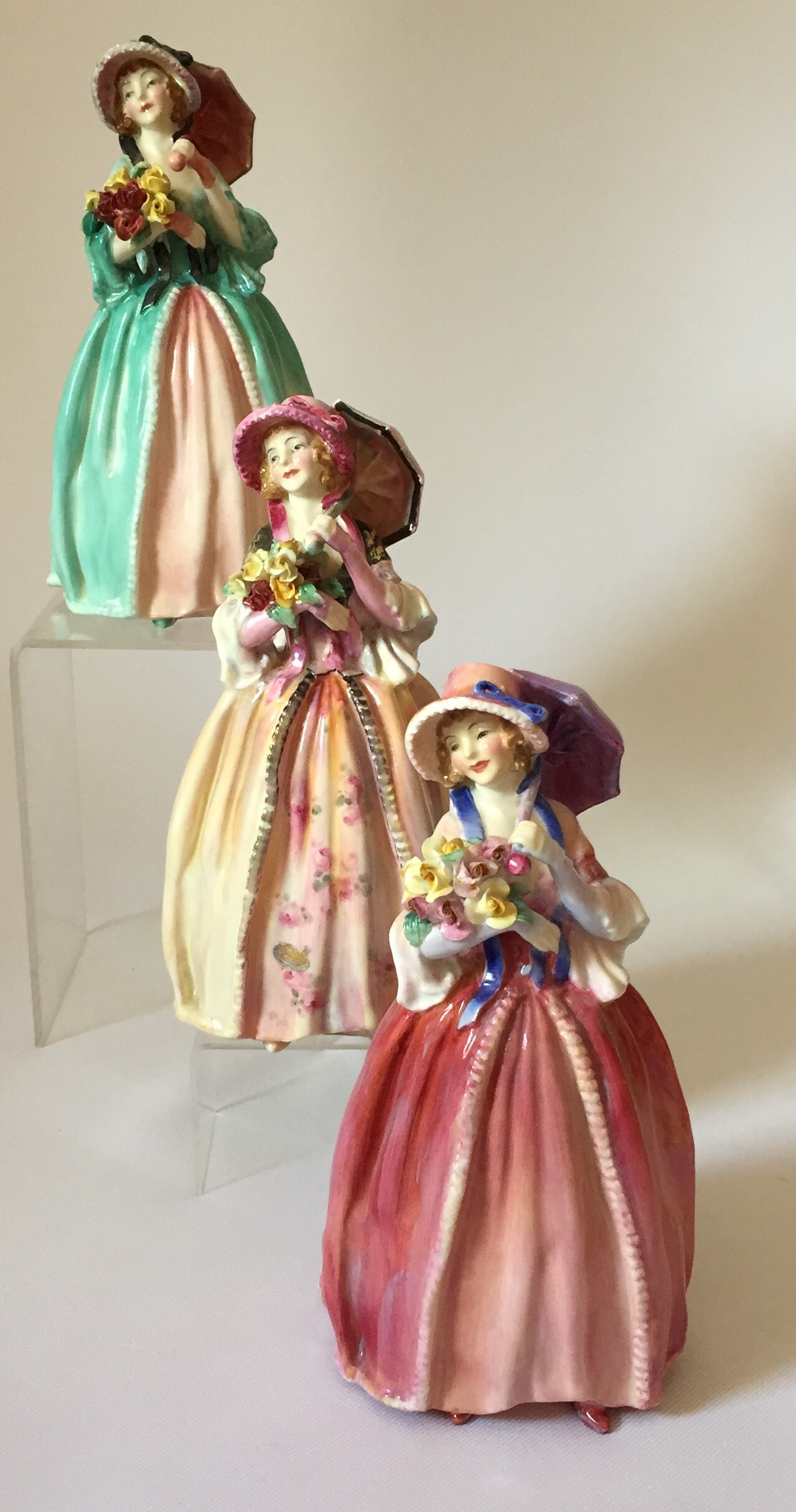
Thus Helen became the popular figure June HN 1690 (1935) with an altered skirt and now holding a bouquet of flowers, which was again re-issued after WWII in slightly more muted tones and simplified flowers and detail to the modelling.


The original three: HN 1690, 1691 and 1947.

The withdrawal dates for the figure Helen say ‘by 1938’ but we can presume that the production was actually much shorter based on the fact that June was introduced in 1935 and I certainly haven’t seen any ‘Helens’ dated after 1934 – but perhaps you have? If so, why not share her with us on our facebook page ‘Doulton Collectors Club’! 


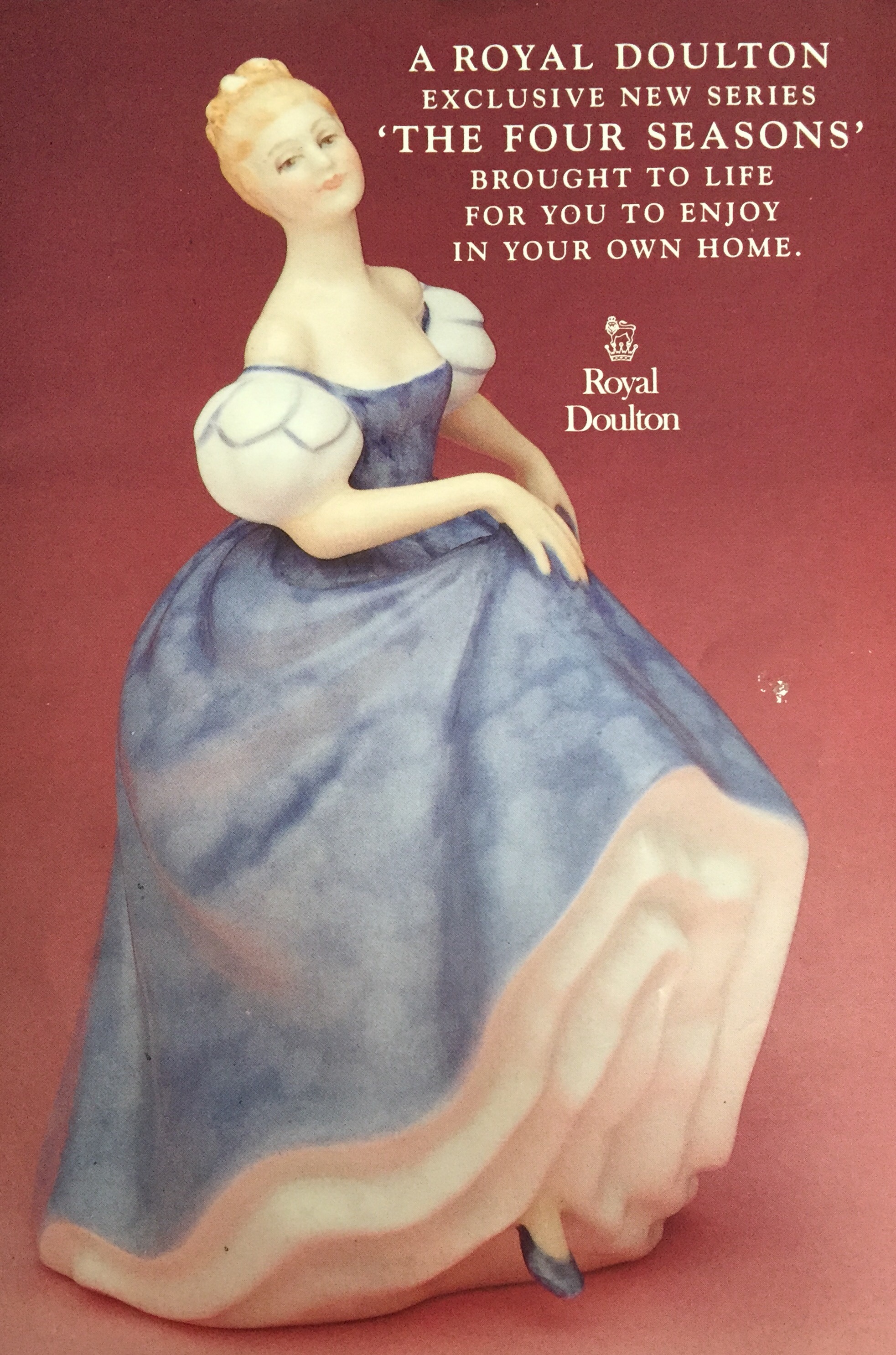
Seasonal changes with Doulton figures! 

  
Cover of a catalogue featuring Summer Serenade.

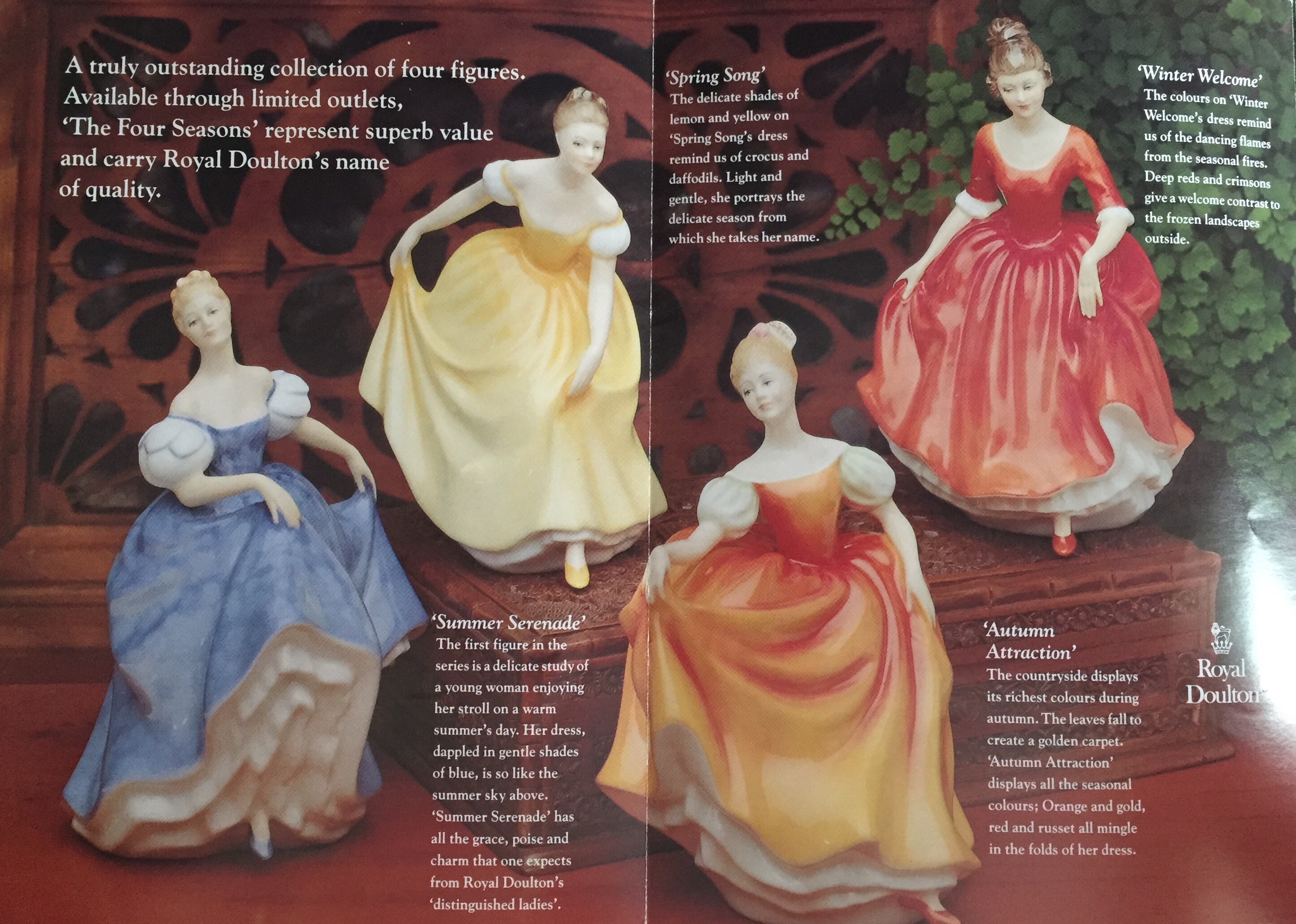
One of several classic sets of four seasons figures produced by Royal Doulton is this set made exclusively for the Guild of China and Glass Retailers to which Doulton belonged. 


Catalogue page from 1993. 

Three existing models by the legendary Peggy Davies and one model from Peter Gee were given a colourful re-incarnation to become part of this series. 

Thus…

Danielle HN 3001 became Spring Song HN

Beatrice HN 3263 became Summer Serenade HN 3610

Michelle HN 2334 became Autumn Attraction HN 3612

And

Caroline HN 3170 became winter welcome HN 3611.

  
Autumn Attraction and Winter Welcome. 

For collectors it is the Doulton ‘colouring’ of these popular models that set them apart from the originals which were typically very modestly decorated and for me too that makes them instantly more attractive!