Harradine’s delightful Diana!

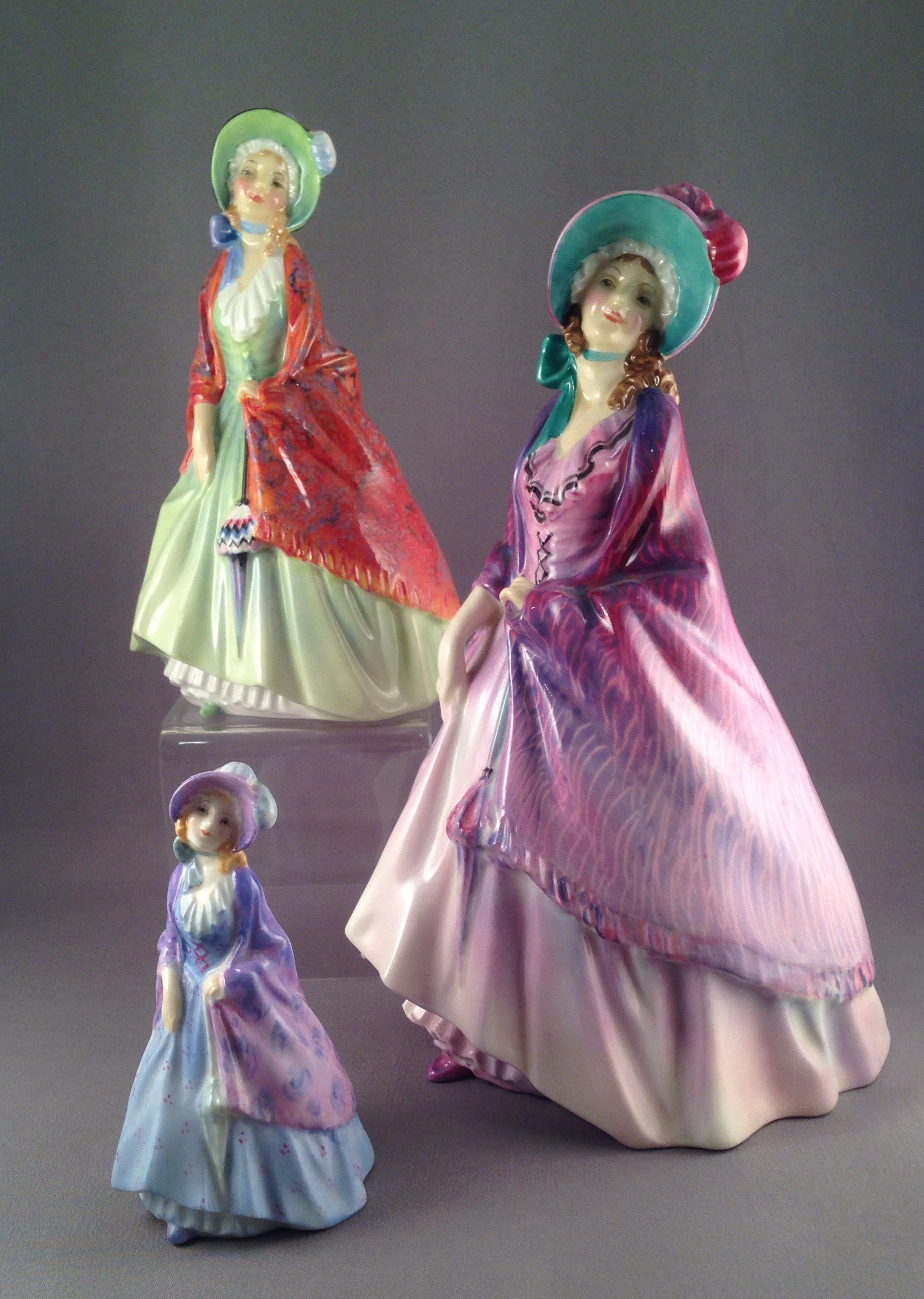
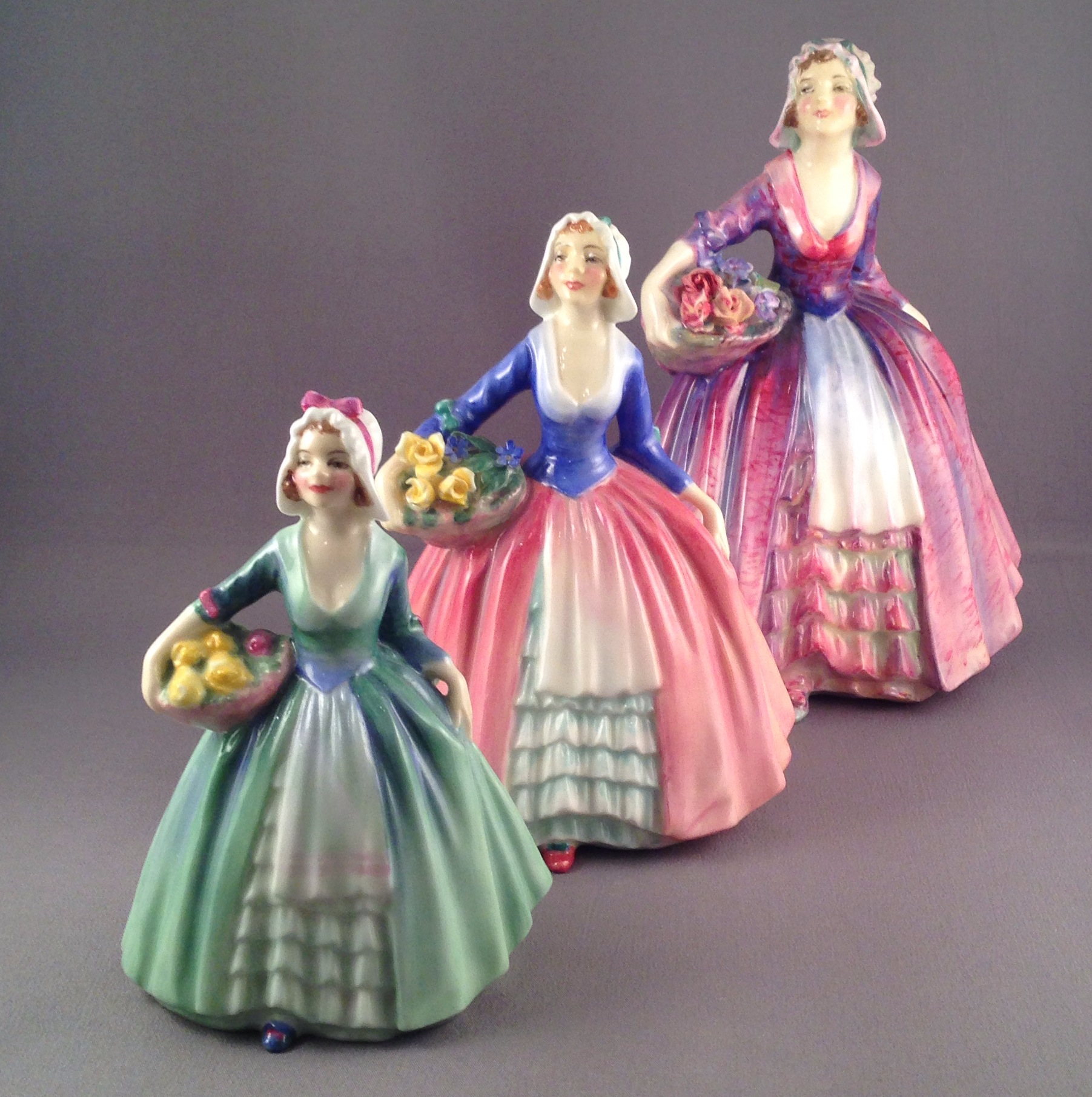
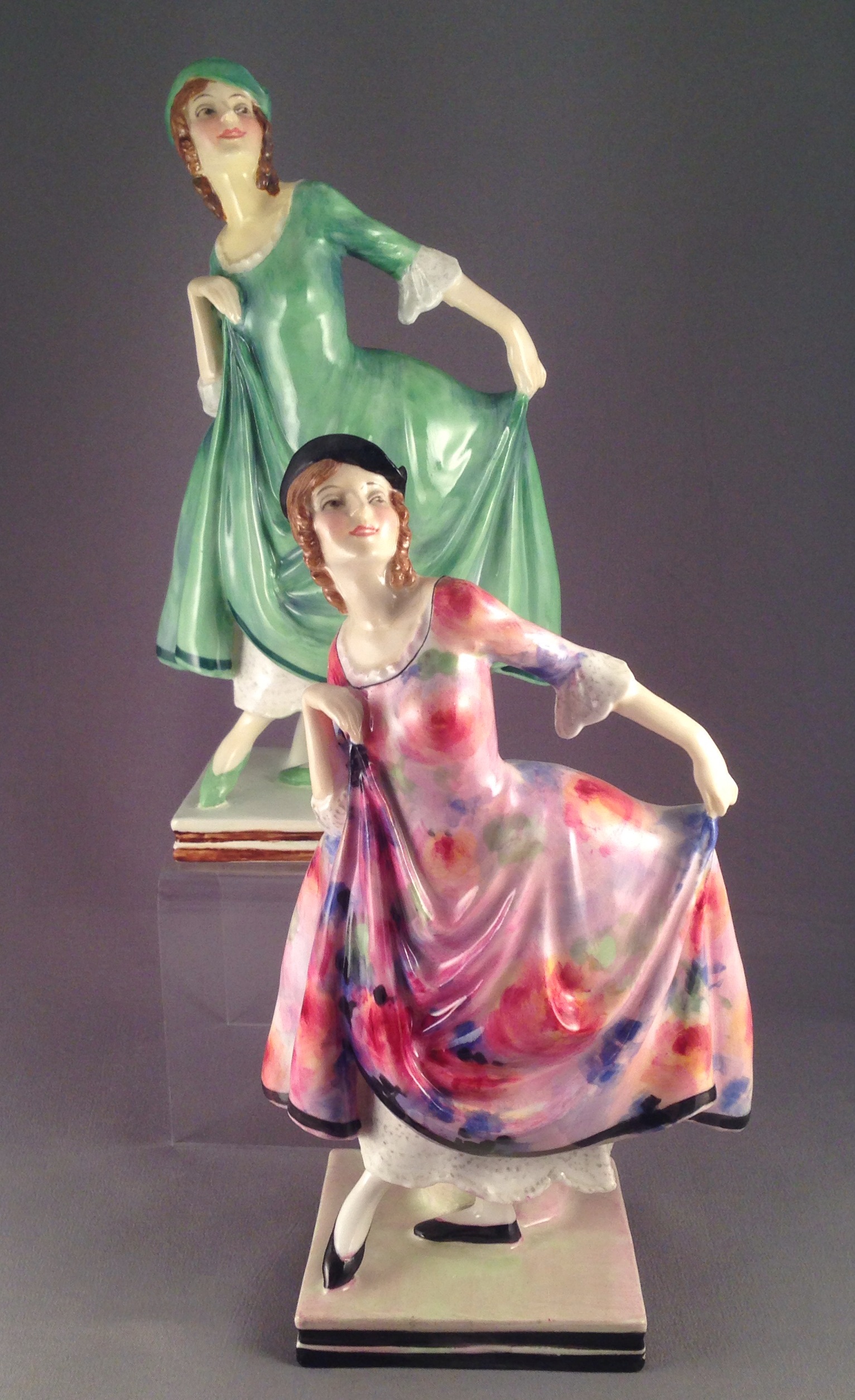
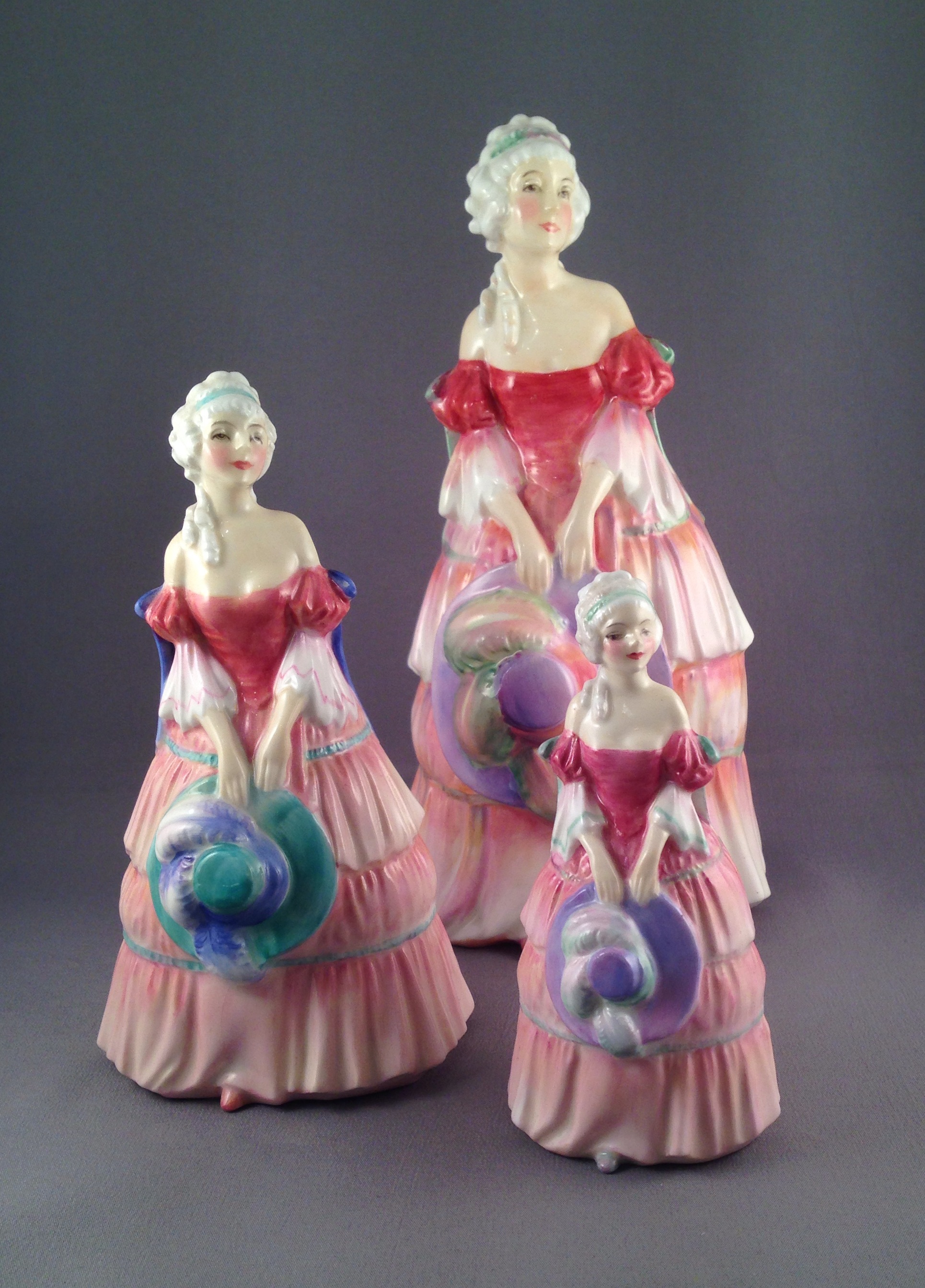
This the first version of Diana is typical of a handful of pre-war figures that were issued again after the war. The special point about Diana is that she was issued in a totally different colourway, unlike others such as Peggy HN1941/2038 or Jean.

2015/01/img_1210.jpg
Three versions of Diana HN1716, 1717 and 1986.

This model was in production from 1935 to 1975, proving as if it were needed, the popular appeal of Harradine’s figures. The two earlier versions were withdrawn from production by 1944 and the last version HN1986 was introduced with the updated range of figures once production of Doulton’s famous figures re-commenced in 1946 and remained in production until 1975.

2015/01/img_1211.jpg

As you can see from the pictures above the only real change between the earlier and later versions, is the position of Diana’s feet, giving her a totally different direction to face!

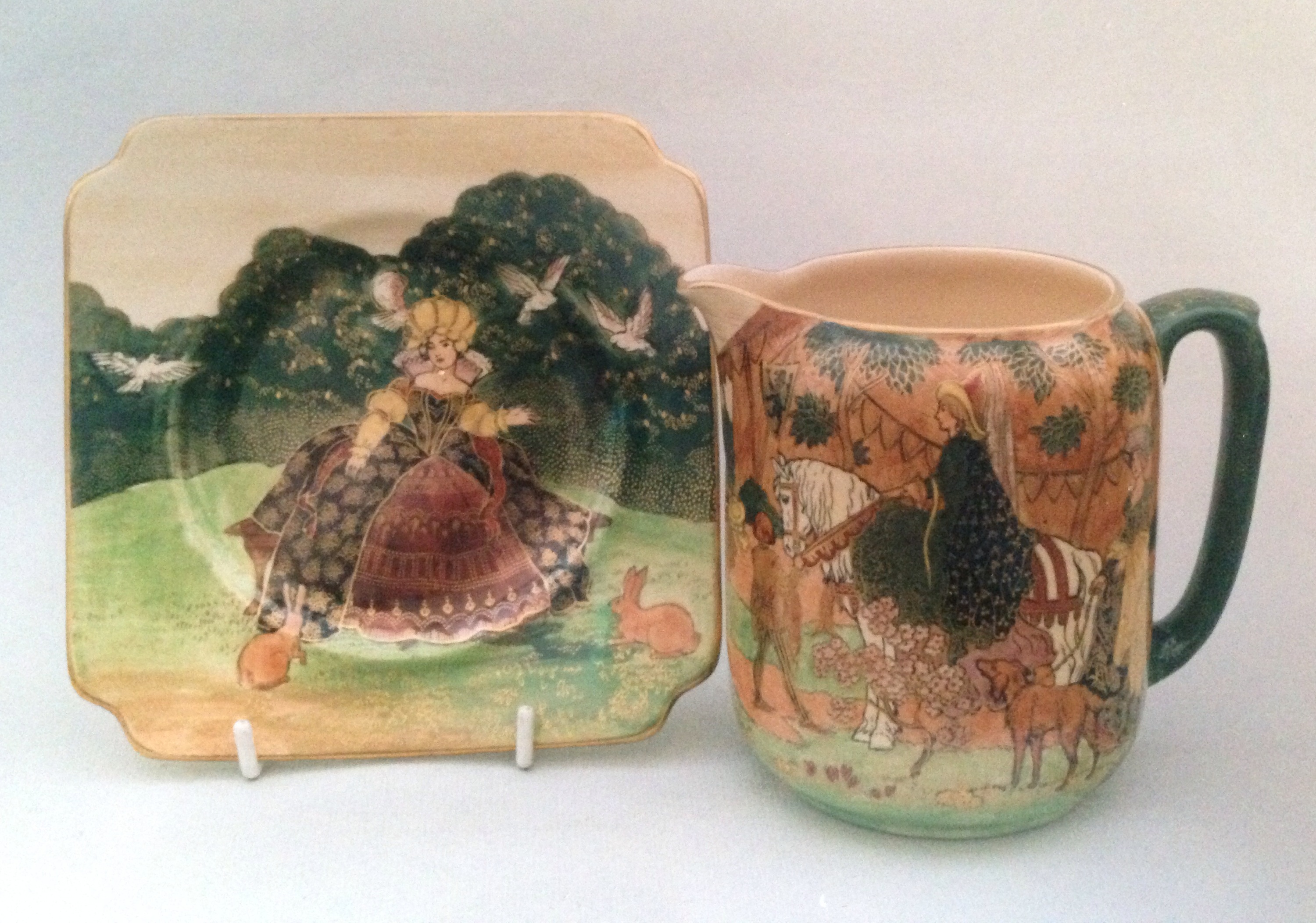
A look back at Doulton’s ‘Chivalry’ seriesware pattern.

2015/01/img_1208.jpg

With six recorded scenes, one would expect to find more examples of this decorative pattern.

In reality production must have been short, which is a real pity as a few examples provide an excellent backdrop to a display of figures. Reputedly designed by Walter Nunn, this design is particularly strong.

2015/01/img_1209.jpg

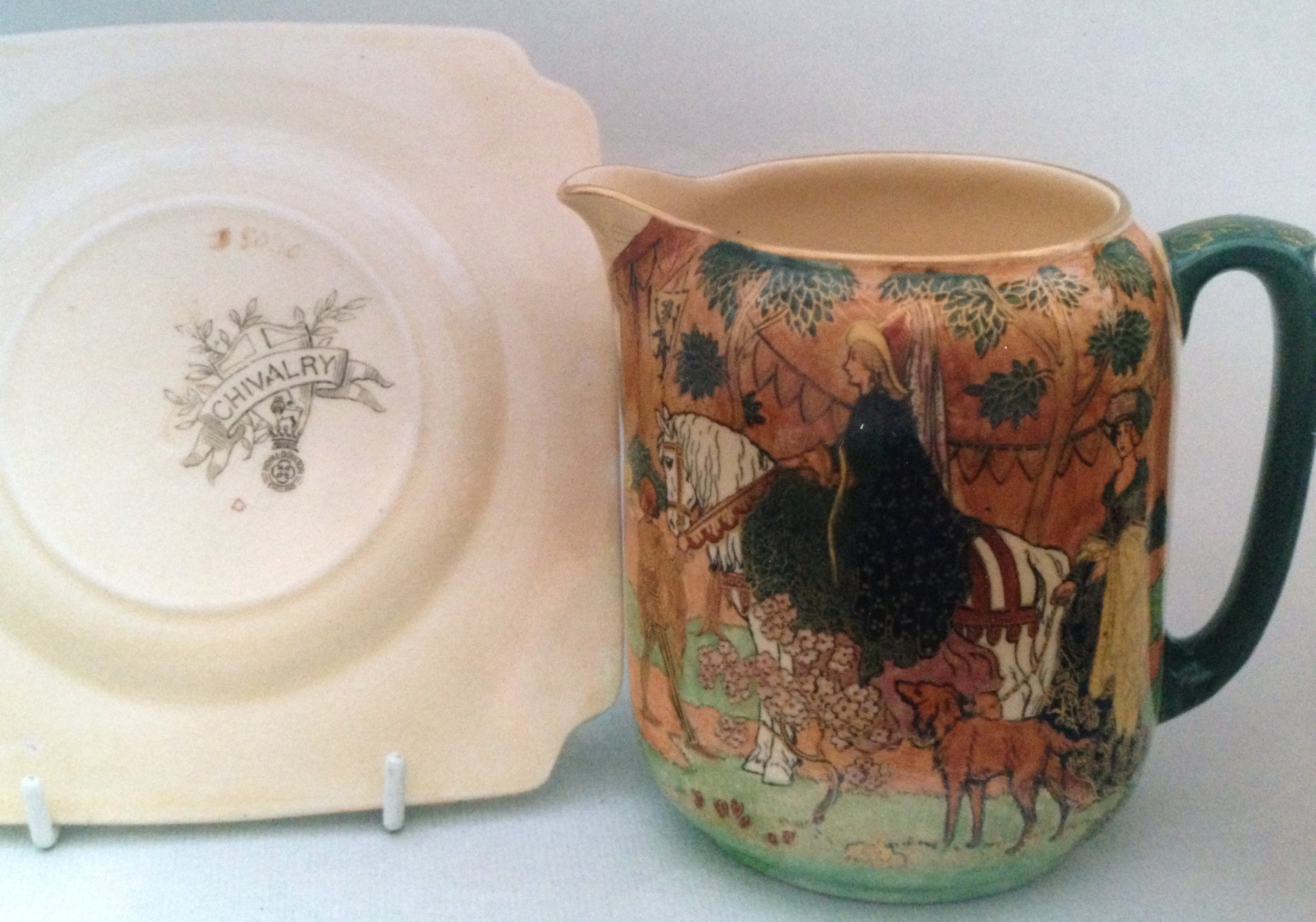
Fortunately for collectors, this design carries a special backstamp to help with identification (as above). It can carry one of two ‘D’ numbers – 5030 or 5158. Rack plates, vases, jugs and square tea plates appear to be the most typical items found and I did see a gadrooned serving dish once too.

Perhaps you collect this series? If so why not share it on our Facebook page ‘Doulton Collectors Club’.

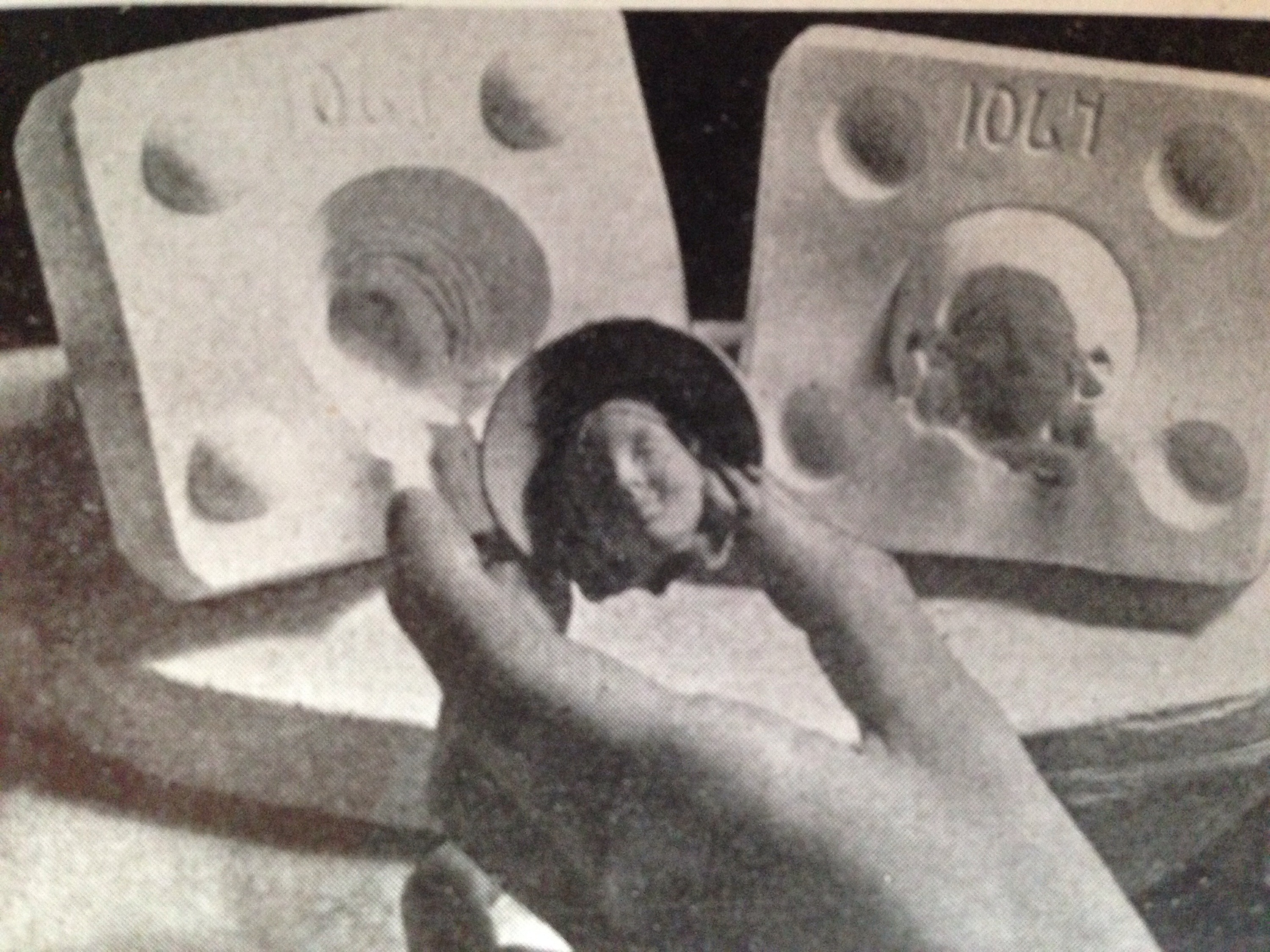
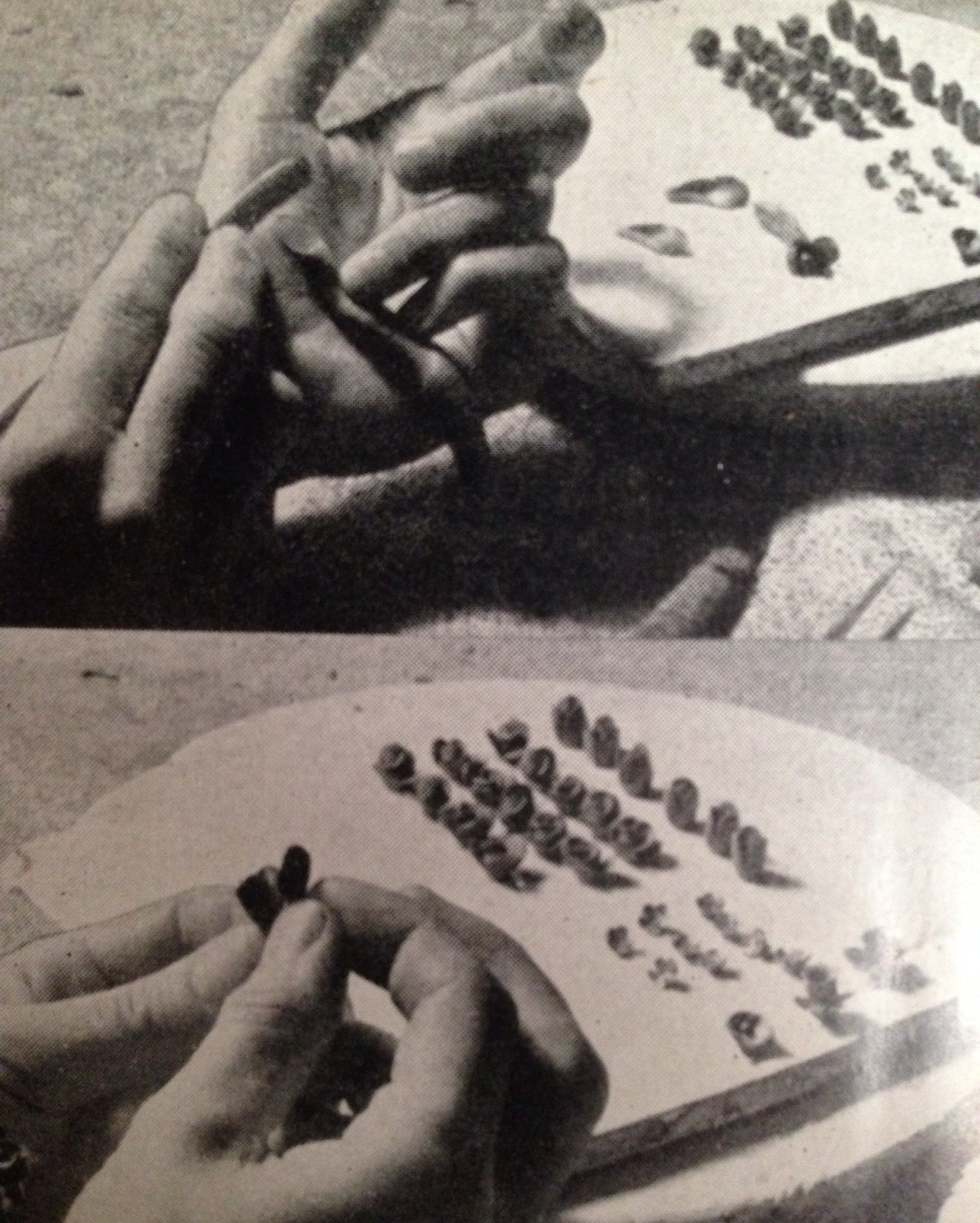
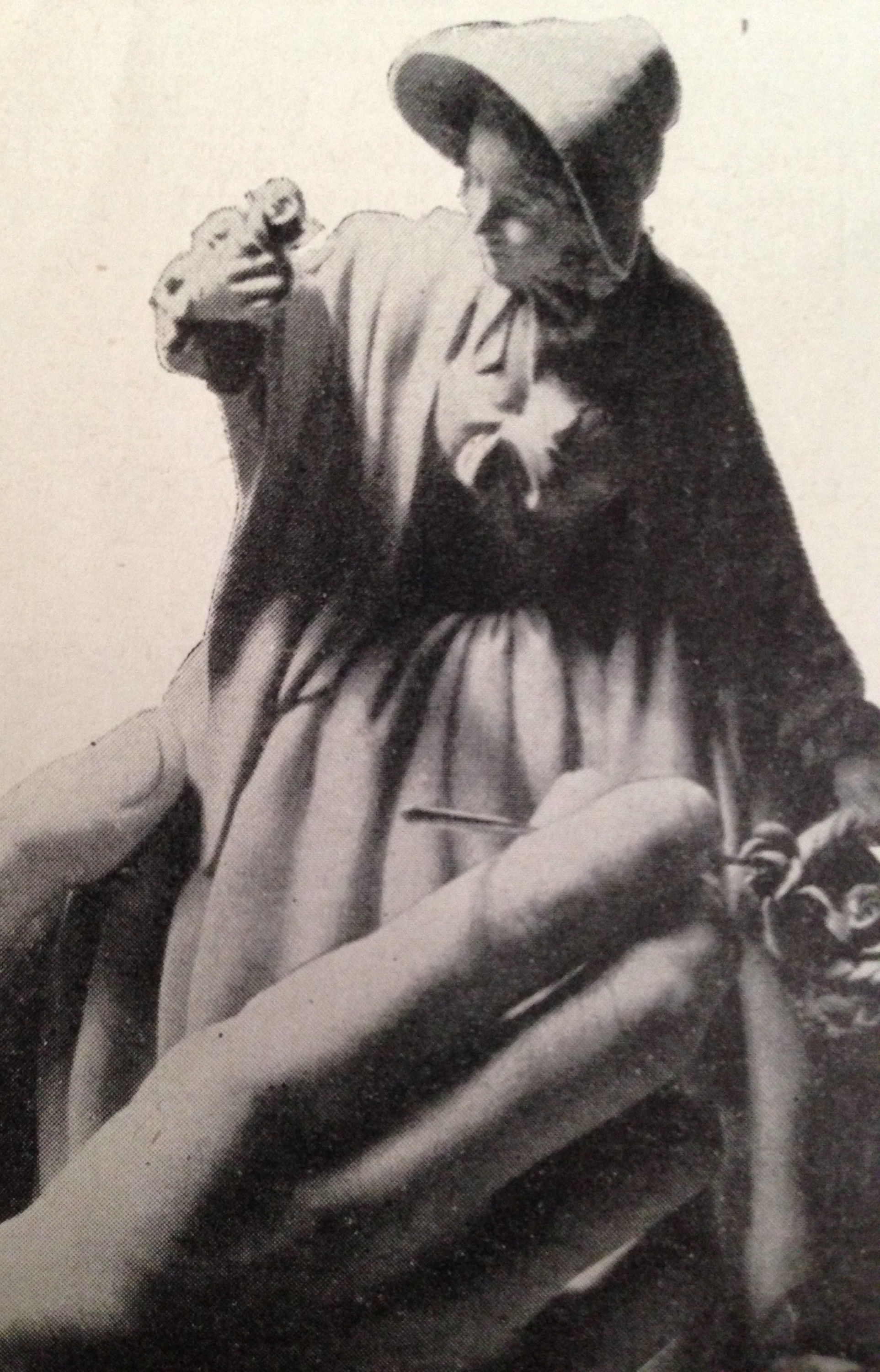
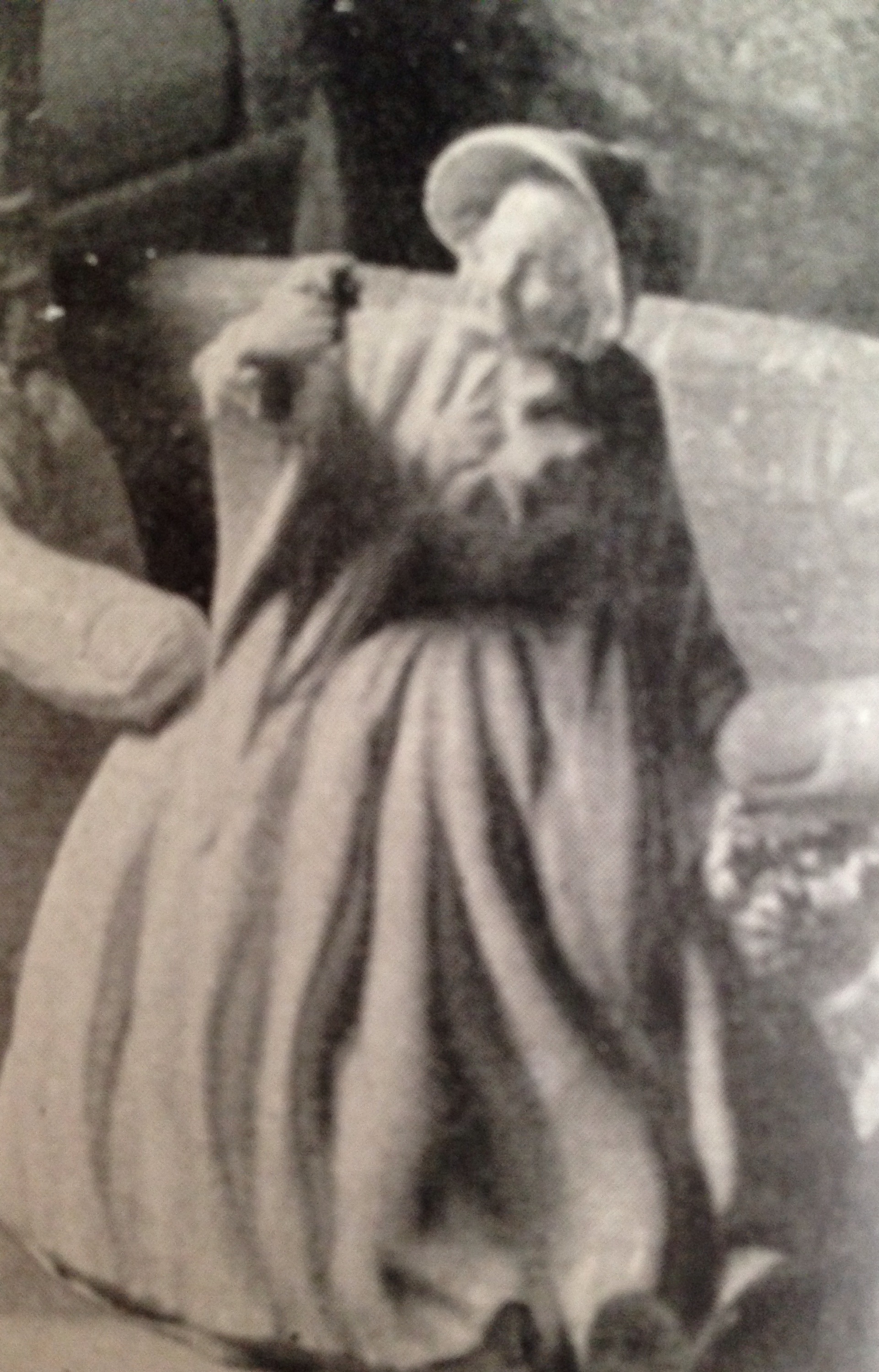
The making of Lady Charmian (from 1947).

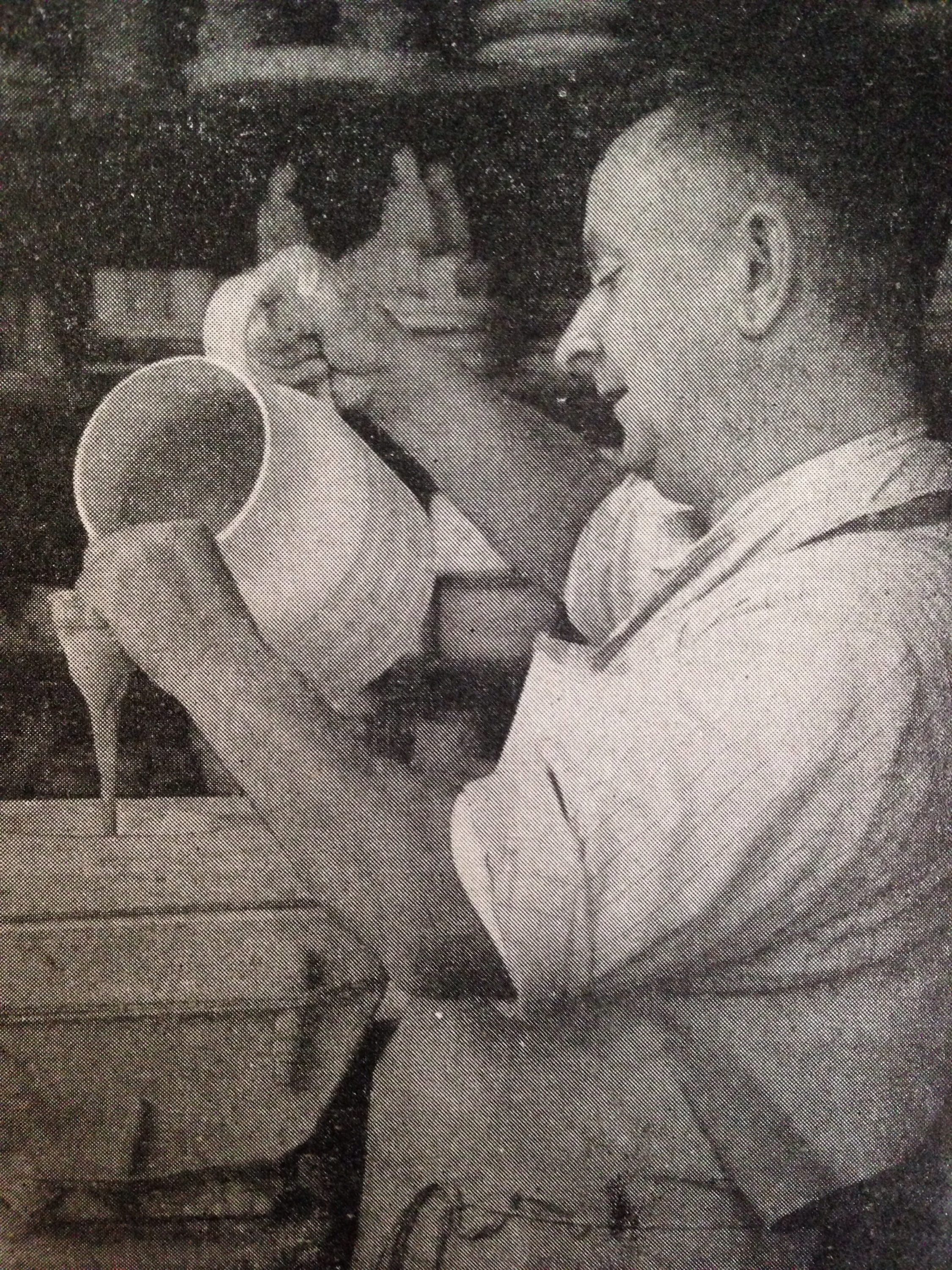
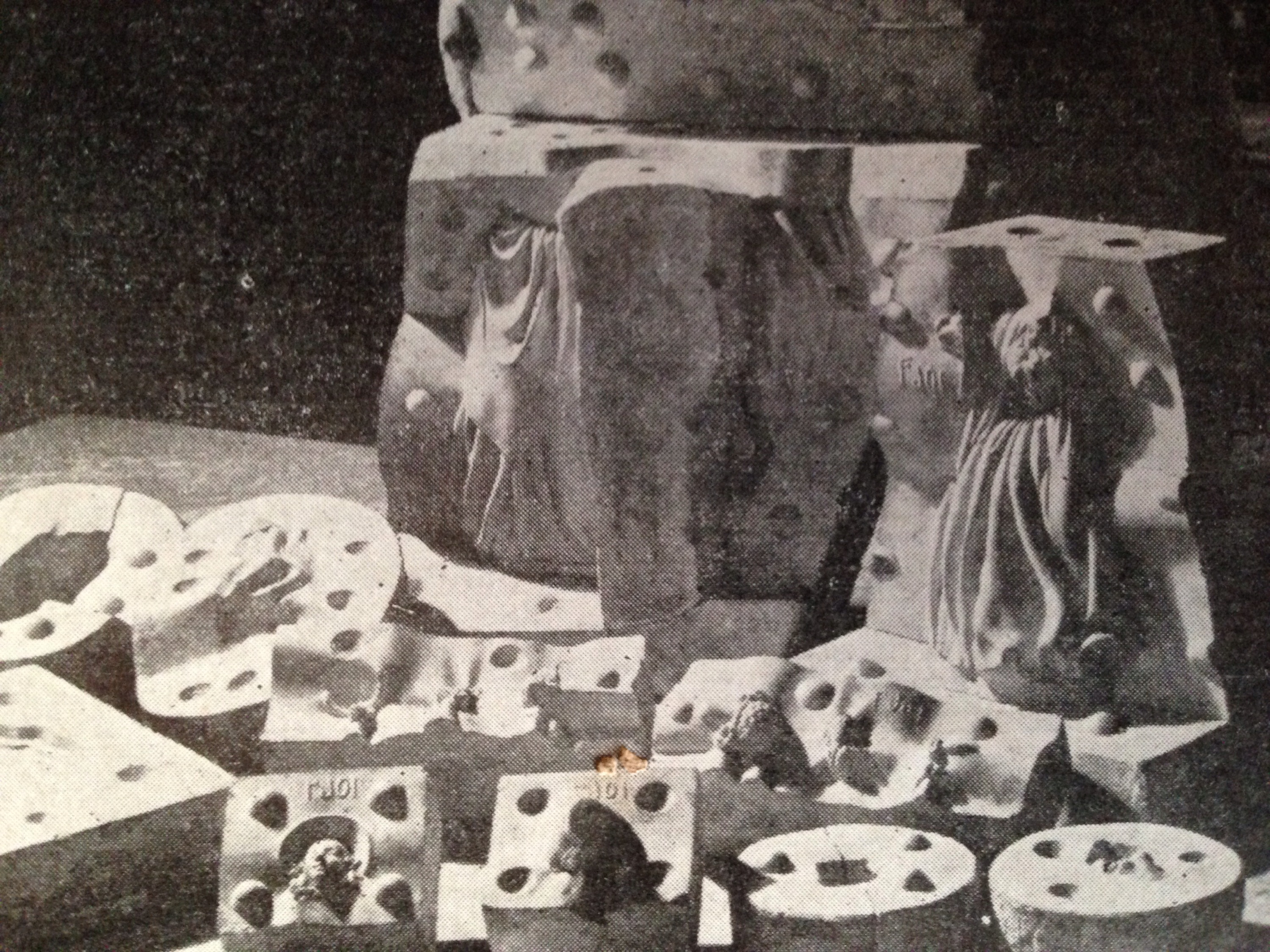
Here are some publicity shots from the late 1940’s explaining the production process for this popular lady.
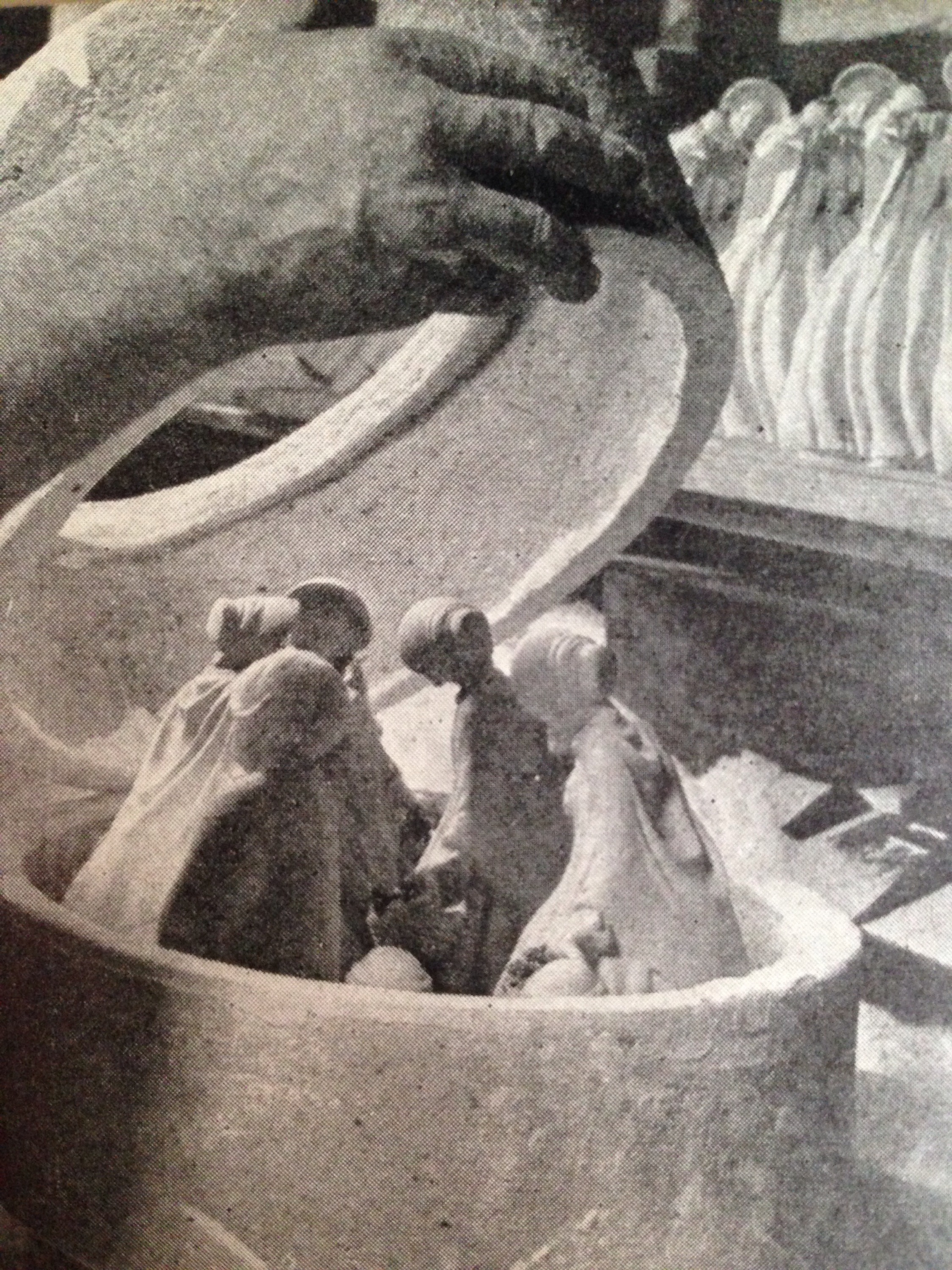
1. Pouring the liquid clay into the moulds to form the cast models.

2015/01/img_1163.jpg

2. Picture of the moulds for her component parts.

2015/01/img_1164-0.jpg

3. Close up of a moulded face and head.

2015/01/img_1165.jpg

4. Once the figure is assembled any additions are added; in this case hand modelled flowers.

2015/01/img_1167.jpg

2015/01/img_1168.jpg

5. At this point the figure is allowed to dry, then it is fired turning it into biscuit china. The size of the figure reduces dramatically at this stage. The figure is then dipped by hand into a specially prepared glaze.

6. The figure is then placed in a fire-proof saggar to be fired.

2015/01/img_1170.jpg

7. From this stage the figure is decorated by hand.

2015/01/img_1171.jpg

We are no doubt all familiar with the finished product as she has always been popular with collectors.

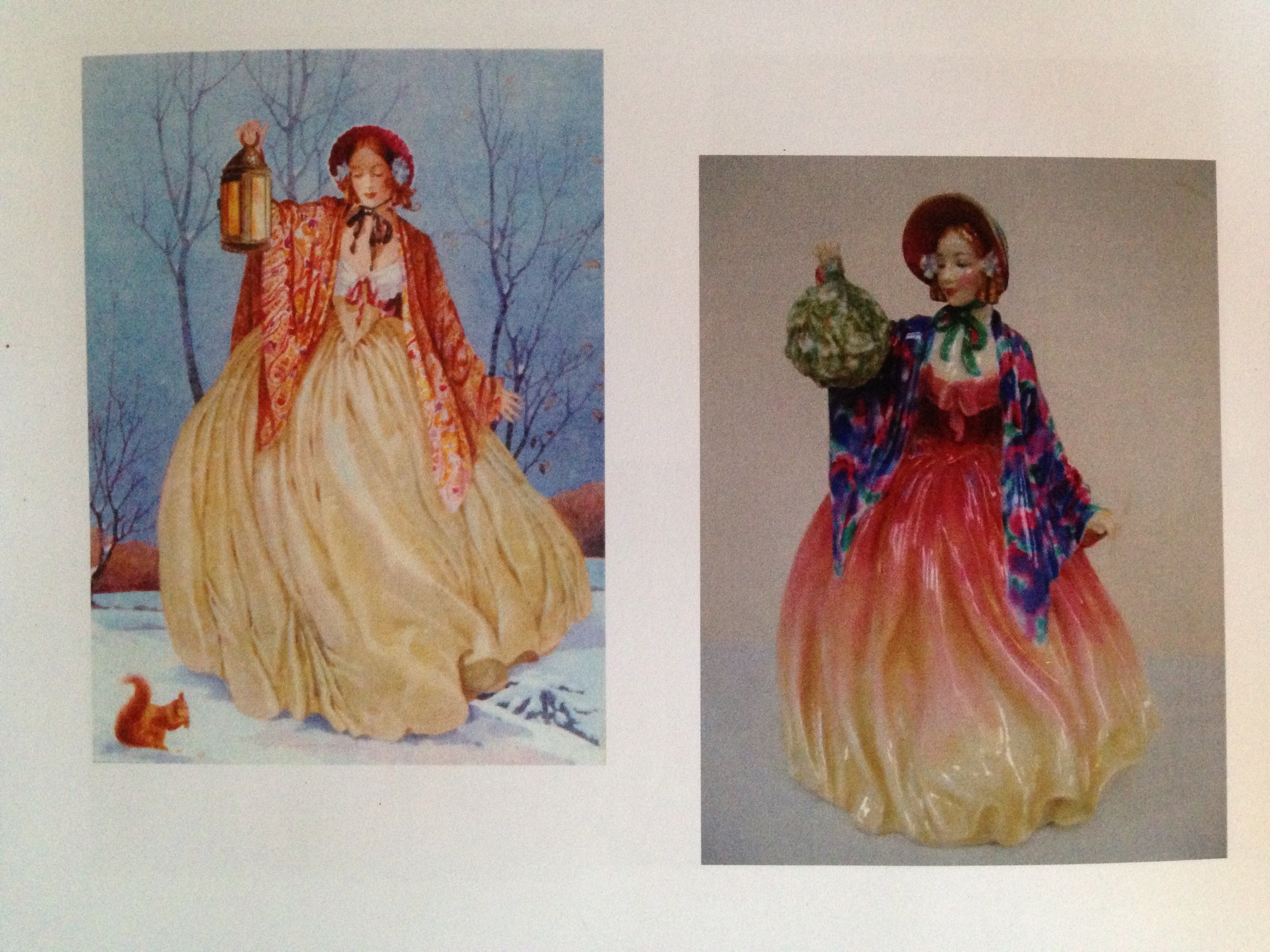
Interestingly Harradine based his model on a painting by Stanislaus Longley and I have seen an early version of the figure without the basket and instead of holding a rose she is holding a ball of mistletoe.

2015/01/img_1176.jpg

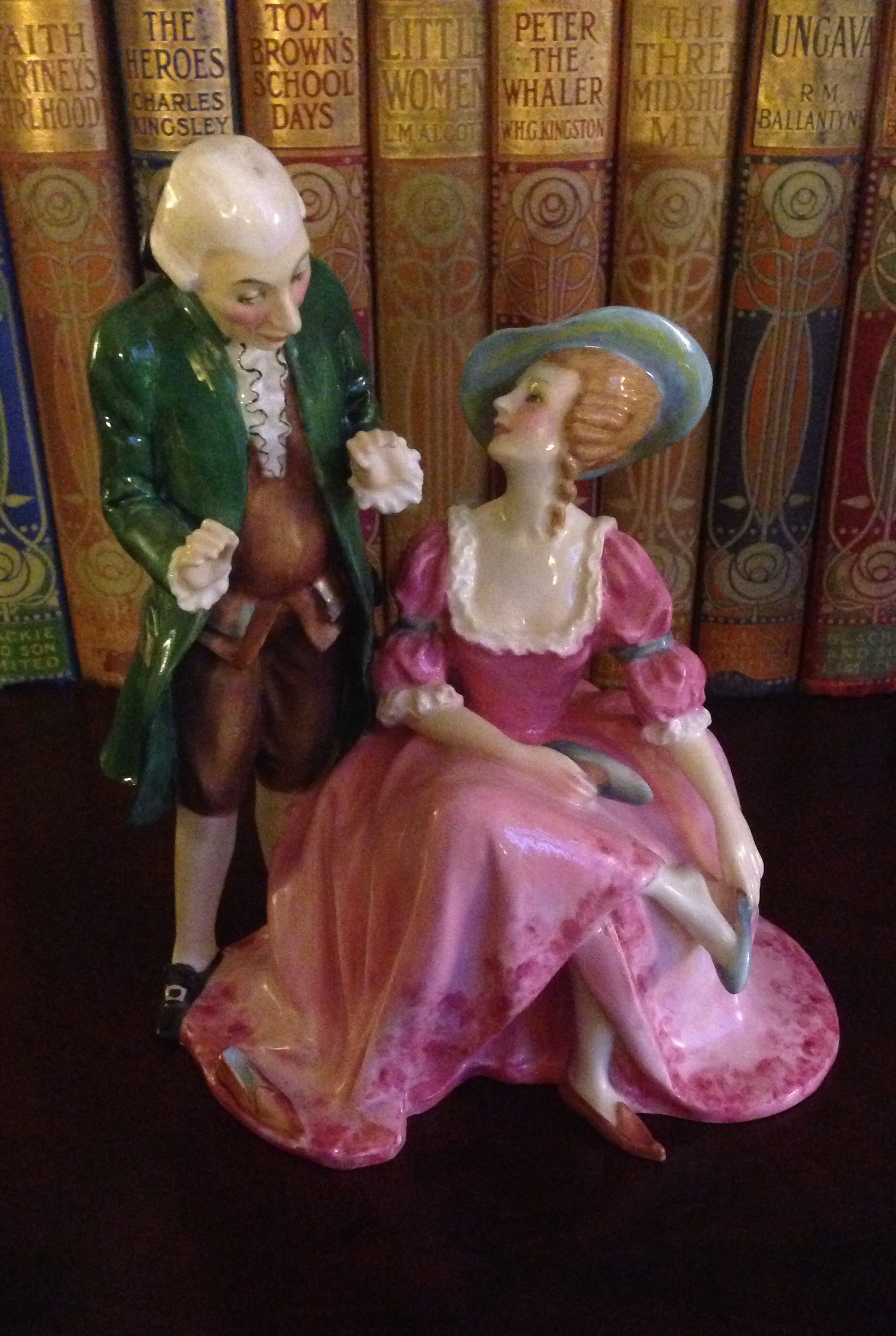
A closer look at Doulton’s The Court Shoemaker.

/home/wpcom/public_html/wp-content/blogs.dir/574/66790219/files/2015/01/img_1139.png
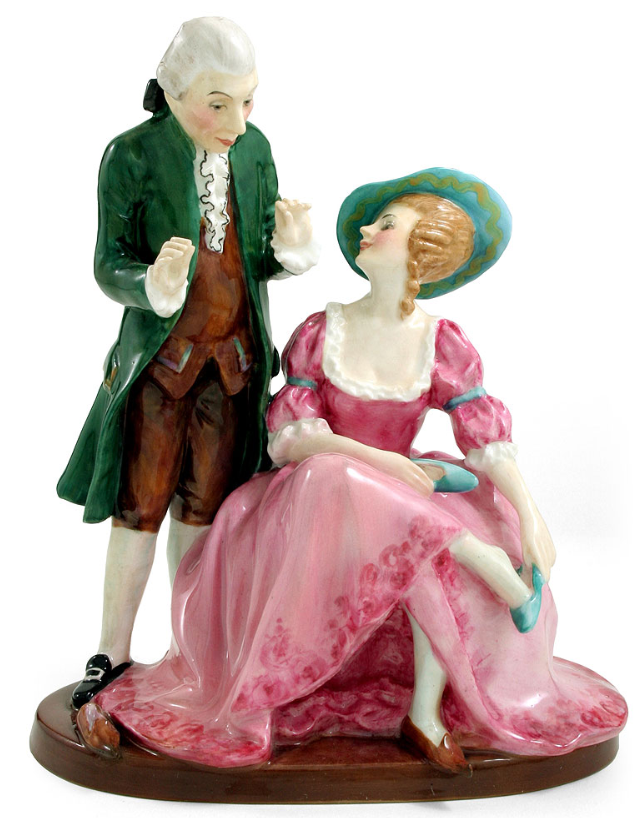
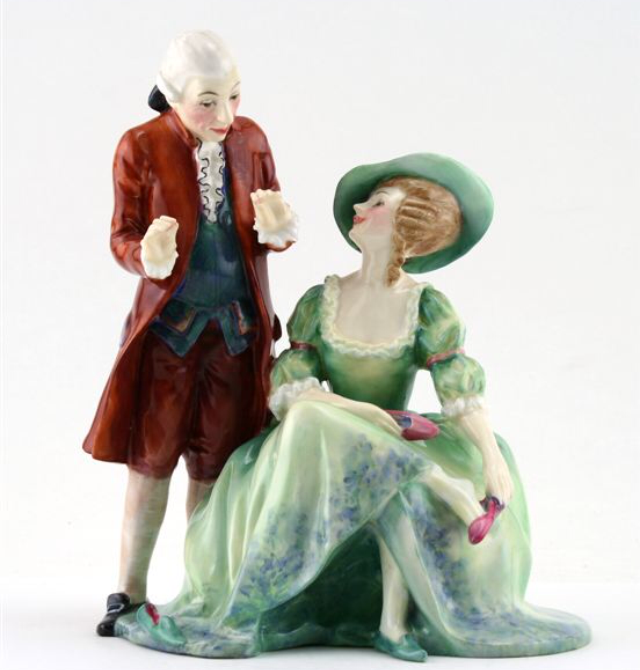
The Court Shoemaker HN1755.

Introduced in 1936, the Court Shoemaker is a typical example of a 1930’s Doulton figure in that the detail in the figure is superb. It is also an example of a double figure popular during this decade. This piece was almost double the price of a standard figure from this period and given the relative scarcity, few can have been made.

/home/wpcom/public_html/wp-content/blogs.dir/574/66790219/files/2015/01/img_1140.jpg
An early version of the figure group from 1936.

Given this relative scarcity it is always exciting to find slight variations. Directly above is a version I have which must be an example from the original mould due to the impressed date. I am sure you have noticed the absence of the brown base in later models. Clearly the original was just too fragile around the base area without the added base.

Another sighting from a few years ago was this colourway below, from Seaway China, again with no base telling us it was a pre-production trial.

/home/wpcom/public_html/wp-content/blogs.dir/574/66790219/files/2015/01/img_1141.png

Perhaps you have a further variation of this rare figure? If so why not share a photograph on our Facebook page ‘ Doutlon Collectors Club’!

What is in a name? How are Doulton figures named?

When researching the book Reflections with Jocelyn it was an interesting side line to investigate how some of the more unusually named figures arrived with their names.
One particularly unusual lady is Frangçon HN1720 and 1721. Both versions were introduced in 1935, but rarely appear suggesting a much shorter production run to the withdrawal date of ‘by 1949’ suggested in Royal Doulton Figures. In my experience a withdrawal date of 1943 would be more accurate for most figures save for a handful of the most popular figures that were available to the US as late as 1944 and production of these resumed soon after the war ended. These include Autumn Breezes, the Orange Lady, Biddy Penny Farthing, Old a Balloon Seller and a few others.

/home/wpcom/public_html/wp-content/blogs.dir/574/66790219/files/2015/01/img_1112-0.jpg
Frangçon HN1721 and 1720.

Returning to the name Frangçon it is certainly named after the once famous theatre actress. Born in 1891, her first performance was in 1911 and she retired only in 1970 after an illustrious career being encouraged by Ellen Terry and supported by Sir a John Gielgud.

A rare colourway of Doulton’s Little Bridesmaid HN1530.

/home/wpcom/public_html/wp-content/blogs.dir/574/66790219/files/2014/12/img_1089.jpg

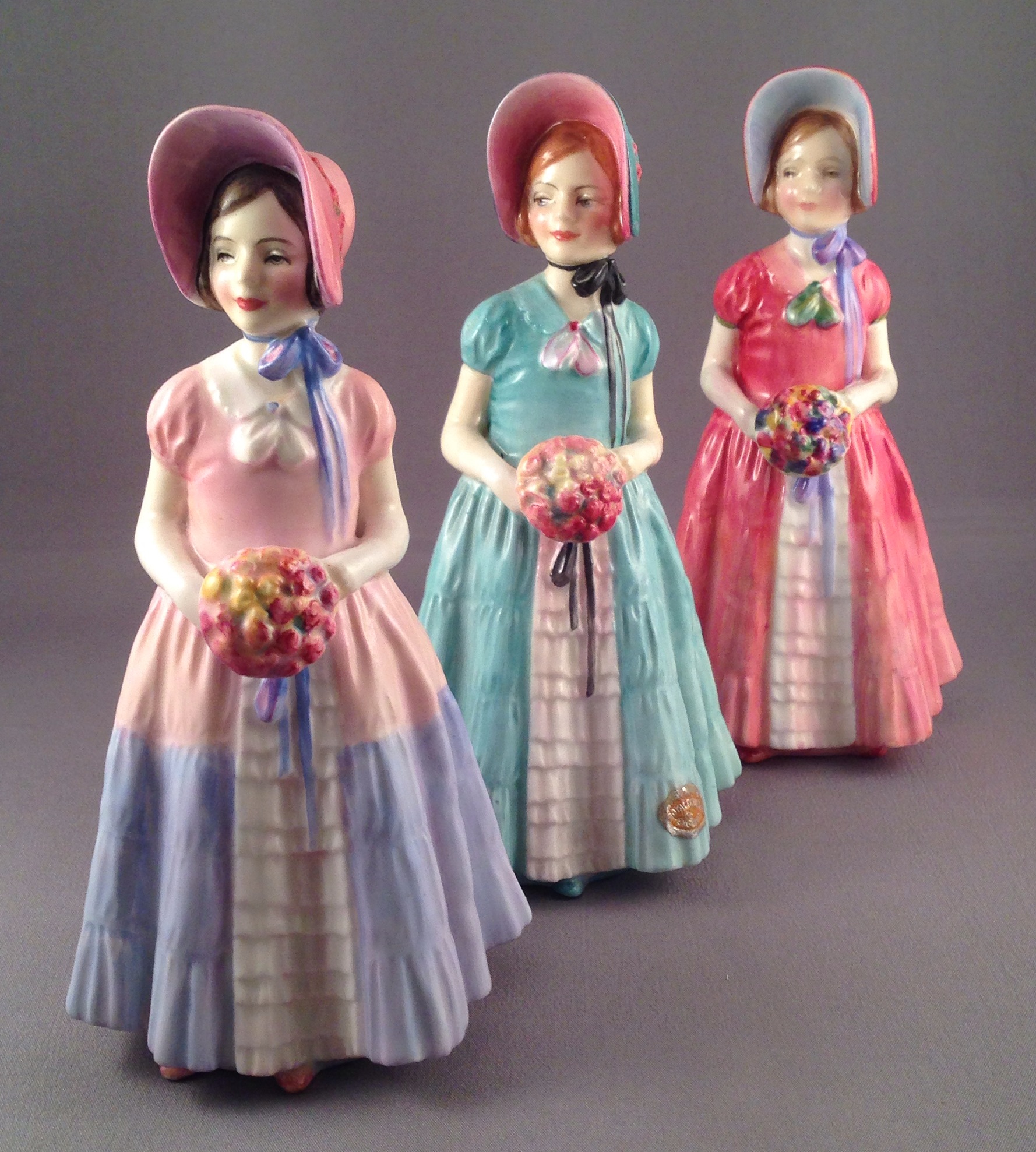
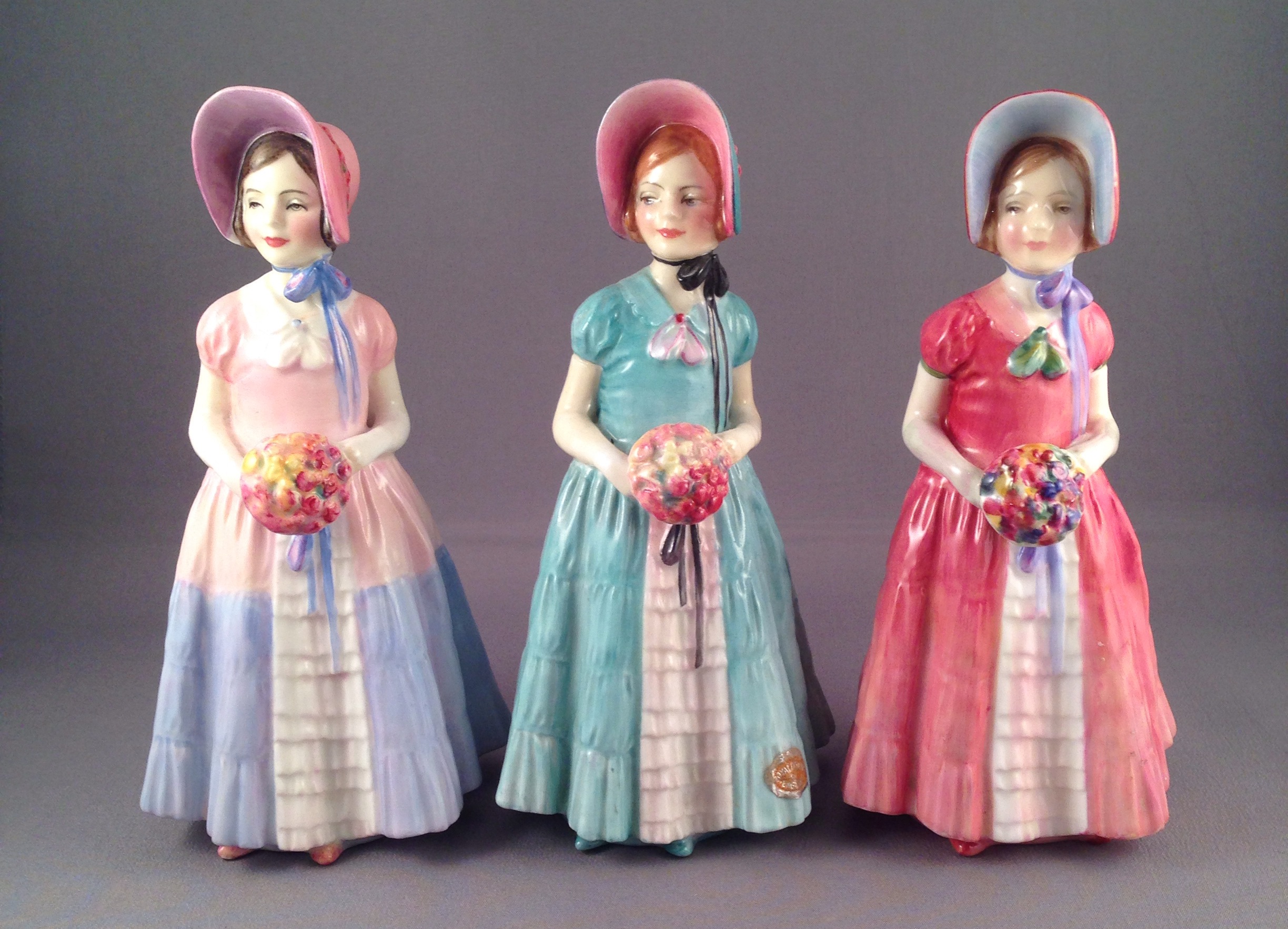
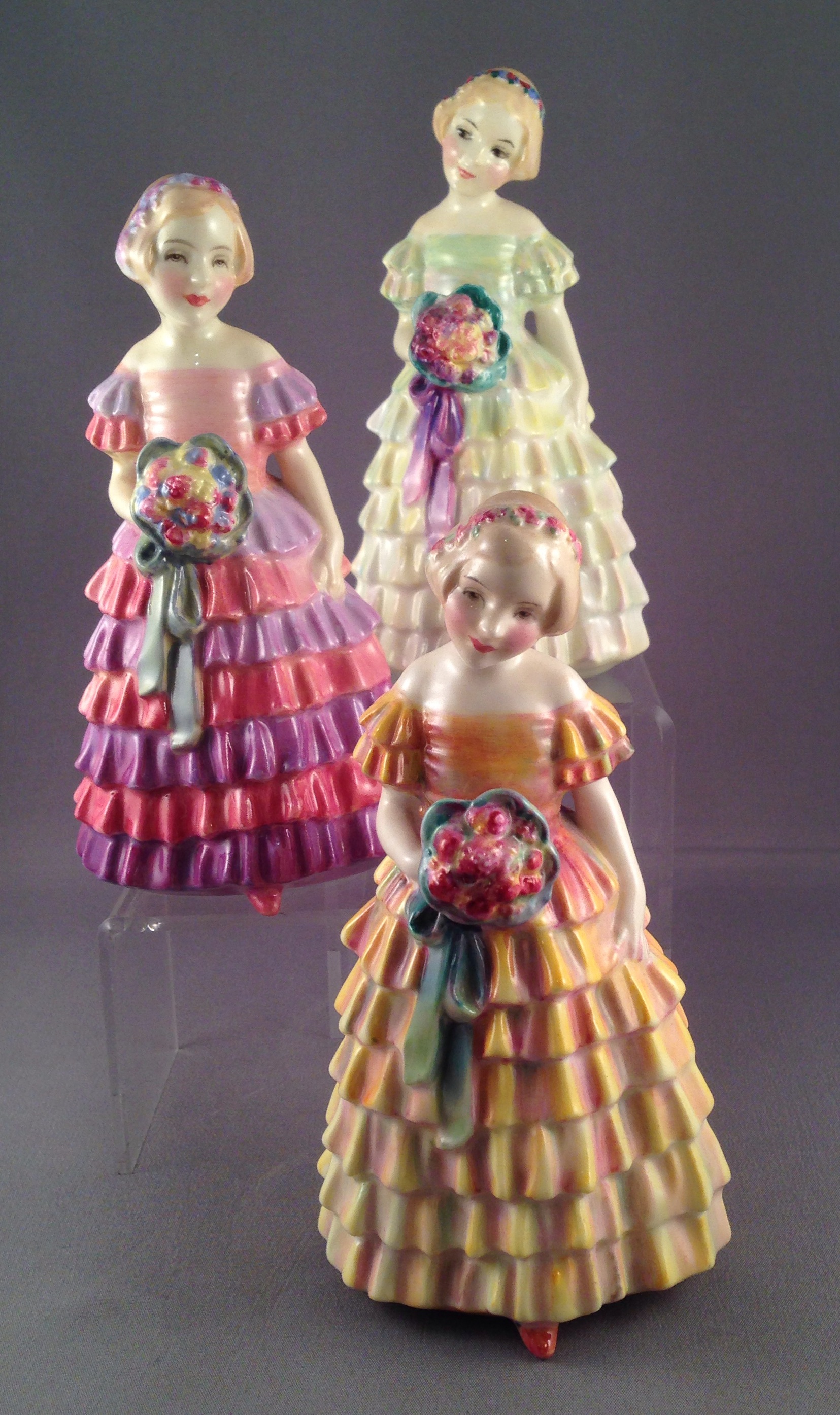
I thought I would share this picture of the three versions of The Little Bridesmaid as the final colourway HN1530 was not available for the last edition of Royal Doulton Figures in 1994. As is typically the case if you wait – sometimes for countless years – that one piece may turn up.

This popular figure remained in production as HN1433 until 1951 and keen eyes can easily distinguish earlier and later versions based on the depth of colour, the backstamp and face.

The elusive HN1530 belongs to a small group of figures with early HN1500 numbers including Pantalettes and Priscilla who were issued once again in complimentary orange colourways just like this Little Bridesmaid.

The yellow HN1434 is the earliest example in the picture above and you can hopefully see how the angle of her head differs to the other two. Alas her head is often prone to being knocked off! Making these three perfect examples all the more unusual!

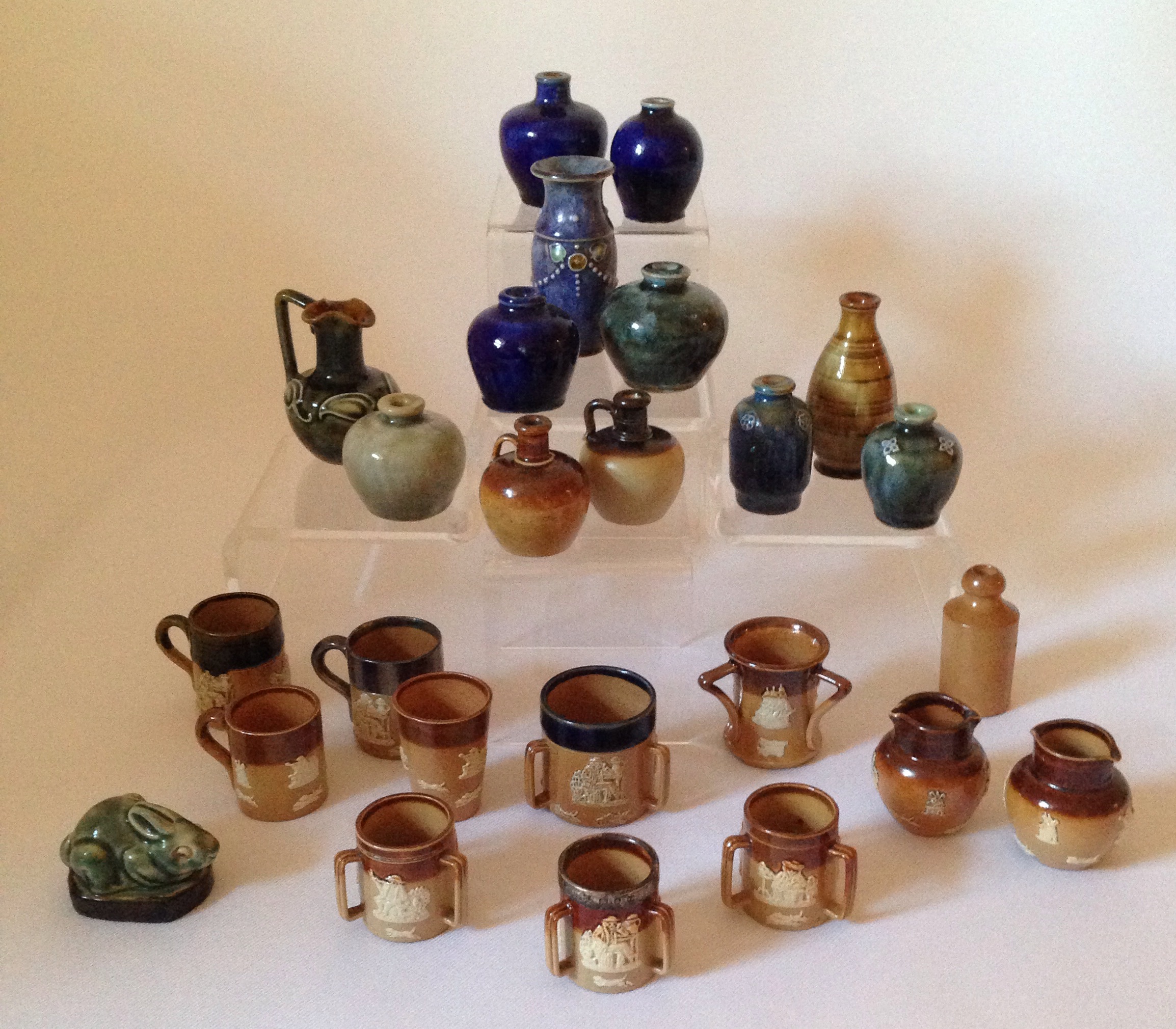
Collecting Doulton Lambeth miniatures.

/home/wpcom/public_html/wp-content/blogs.dir/574/66790219/files/2014/12/img_1085.jpg

No other area of Doulton offers more scope than the collecting of miniatures and Doulton’s Lambeth factory created the lion’s share of these miniatures.
Not including cruets, bird feeders, advertising items, inkwells, teawares and many other lines that were produced in a small scale, as you can see above there are numerous vases, flasks, containers, whimsies and other items that can be found in miniature.

Doulton’s famous Huntingwares, produced over many decades, are perhaps the most easily found but again many subtle variations exist. Brown, green, blue and metallic glazes can be found decorating them as in the picture below.

/home/wpcom/public_html/wp-content/blogs.dir/574/66790219/files/2014/12/img_1086.jpg
These items can be found with silver or plated silver mounts in a variety of shapes.
Other such applied patterns can also be found if you have a keen eye including a Willow design and the rare Naval reliefs.
Many of these miniatures were perfume bottles. Here on the left is one such example for the old London department store Jason Shoolbred & Co and these were stamped as such to their bases.

/home/wpcom/public_html/wp-content/blogs.dir/574/66790219/files/2014/12/img_1088.jpg

Naturally many typical art wares can be found in miniature like the vases and ewer above and there are some examples above including the Mark Marshall rabbit paperweight, again pictured above.

Other lines containing miniatures are the simulated wares such as blackjacks and also the many commemorative wares produced to mark events over the years. A particular favourite are the Nelson miniatures!

Perhaps you too collect miniatures, if so why not share a photograph on our Doulton Collectors Group Facebook page!

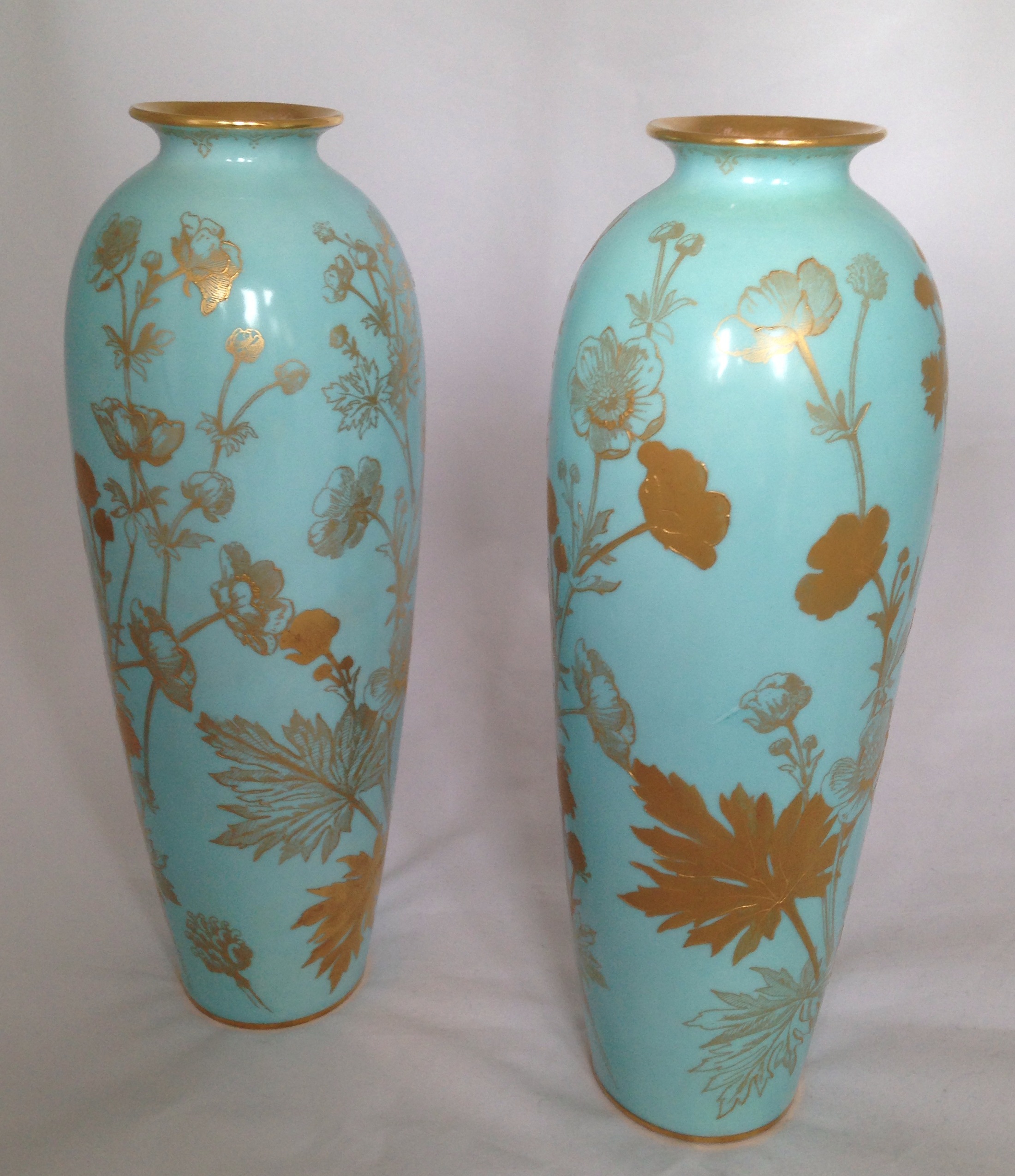
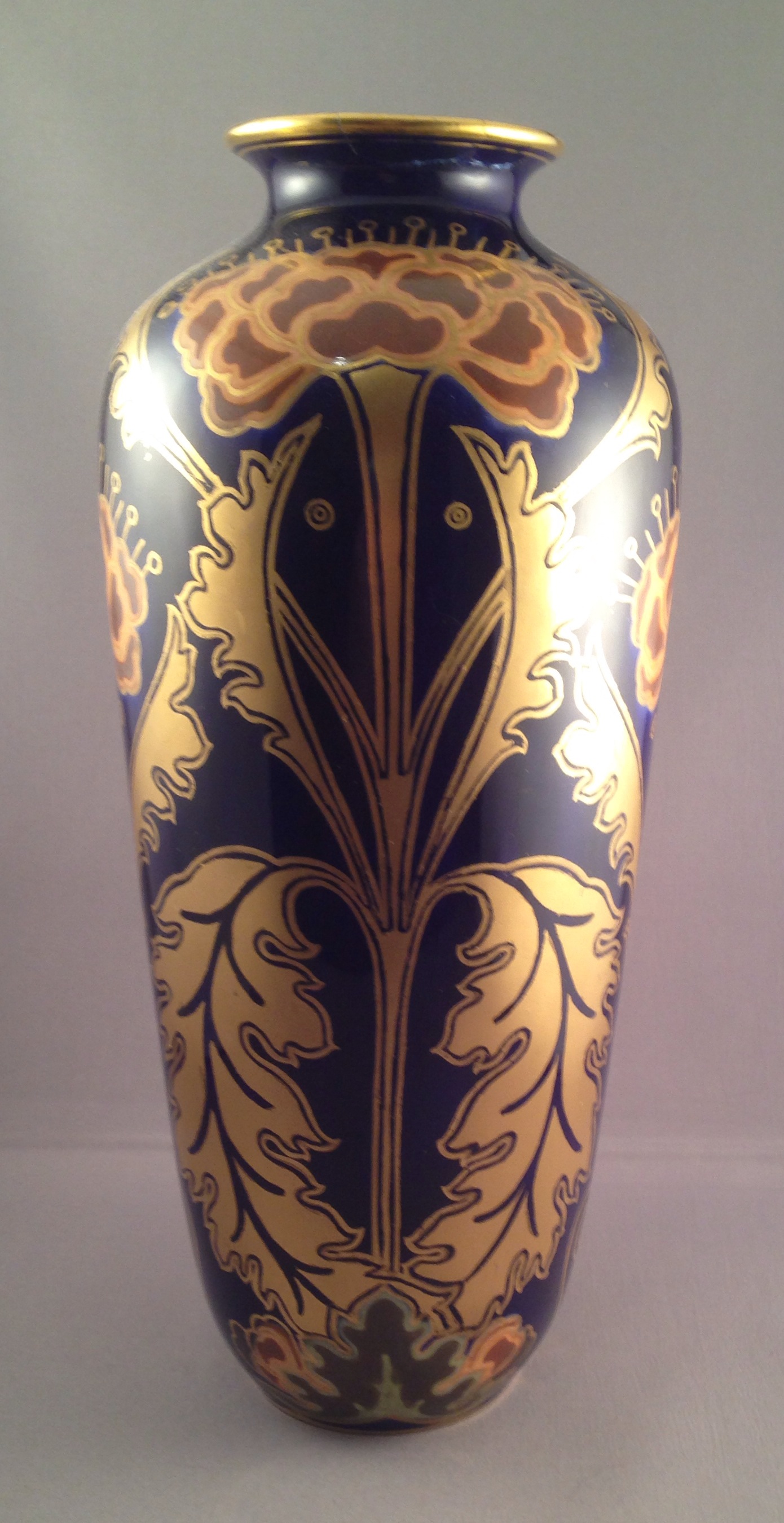
Collecting Doulton’s floral gilt silhouette vases!

/home/wpcom/public_html/wp-content/blogs.dir/574/66790219/files/2014/12/img_9883.jpg

Thanks to Harvey’s Collectibles for the above picture of a pair of vases in their collection. Dating to 1900-02 they are not easy to find and I have seen the same pattern on a pink body only once before.
Interestingly they are from the Robert Allen studio at Burslem as is confirmed by the RA number to each of their bases. The numbers relate to design books and we are able to date items using these RA numbers.

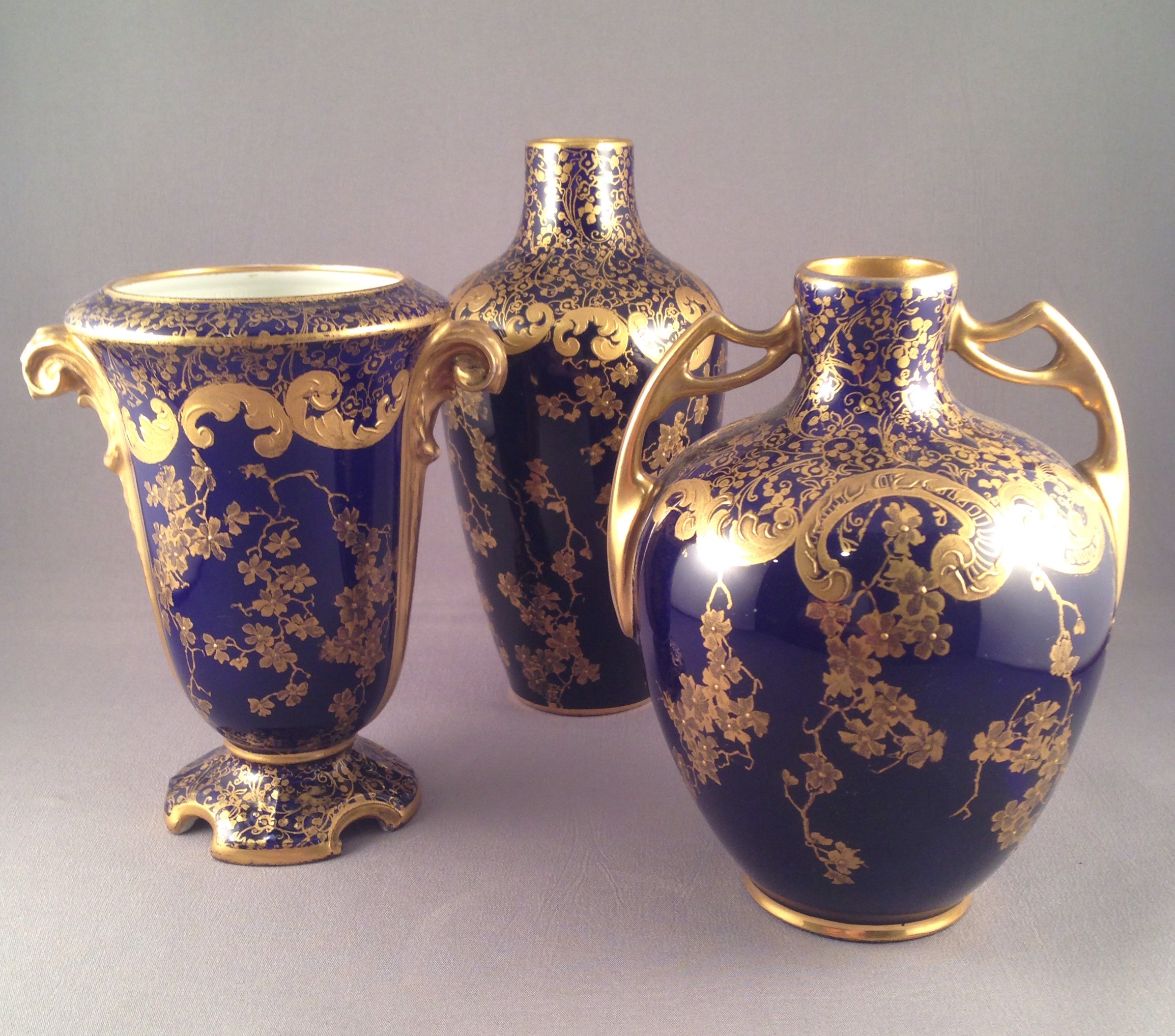
/home/wpcom/public_html/wp-content/blogs.dir/574/66790219/files/2014/12/img_1083.jpg

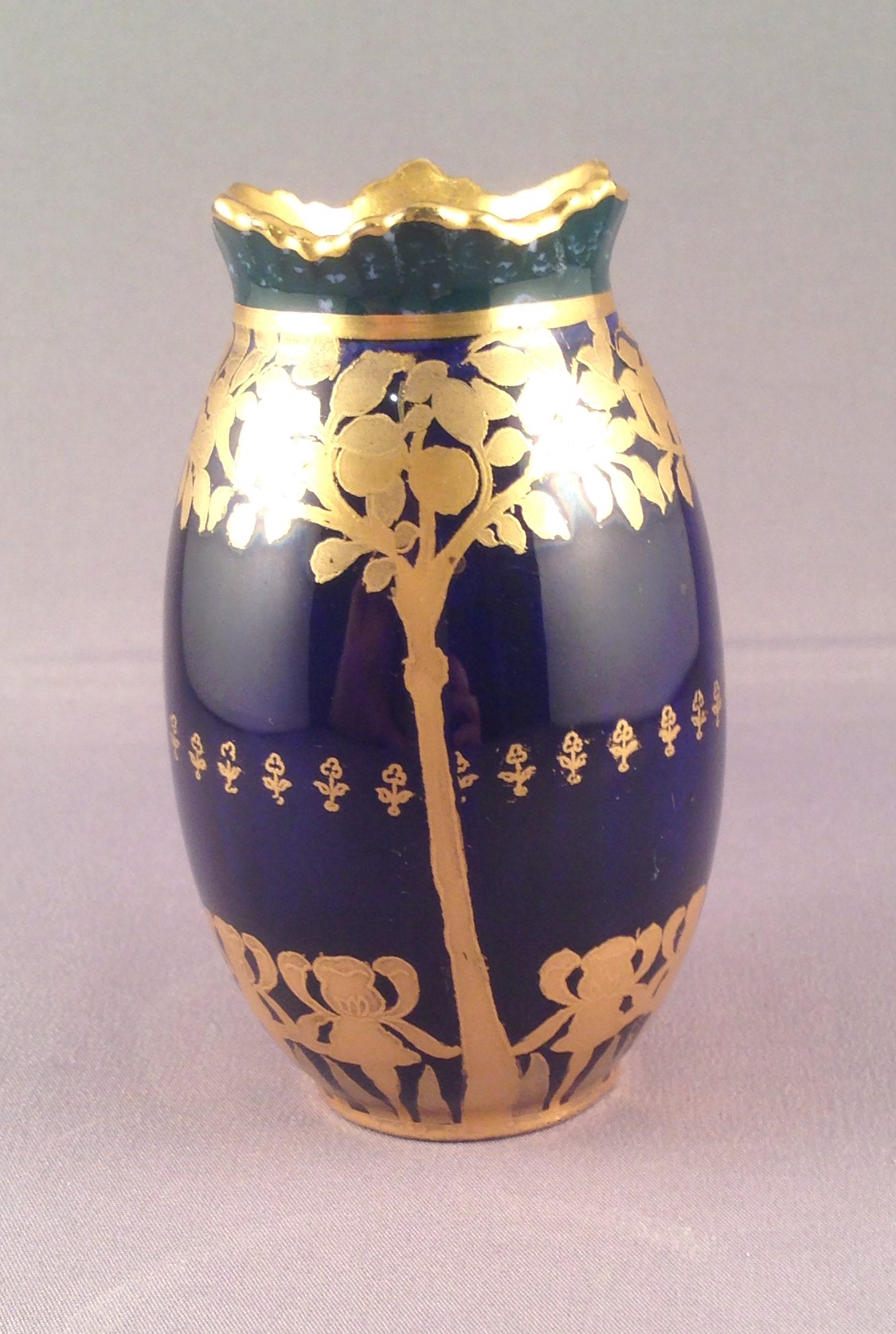
Above and below are further examples of gilt silhouette flowers and foliage from the Robert Allen studio and date slightly earlier to the late 19th Century. The miniature vase below is more typically found in white and light blue rather than cobalt and gilt.

/home/wpcom/public_html/wp-content/blogs.dir/574/66790219/files/2014/12/img_1082-0.jpg

This final vase illustrated Doulton’s ability to change and adapt designs as this is usually found decorating toilet sets rather than gilded cobalt blue vases!

/home/wpcom/public_html/wp-content/blogs.dir/574/66790219/files/2014/12/img_1081.jpg

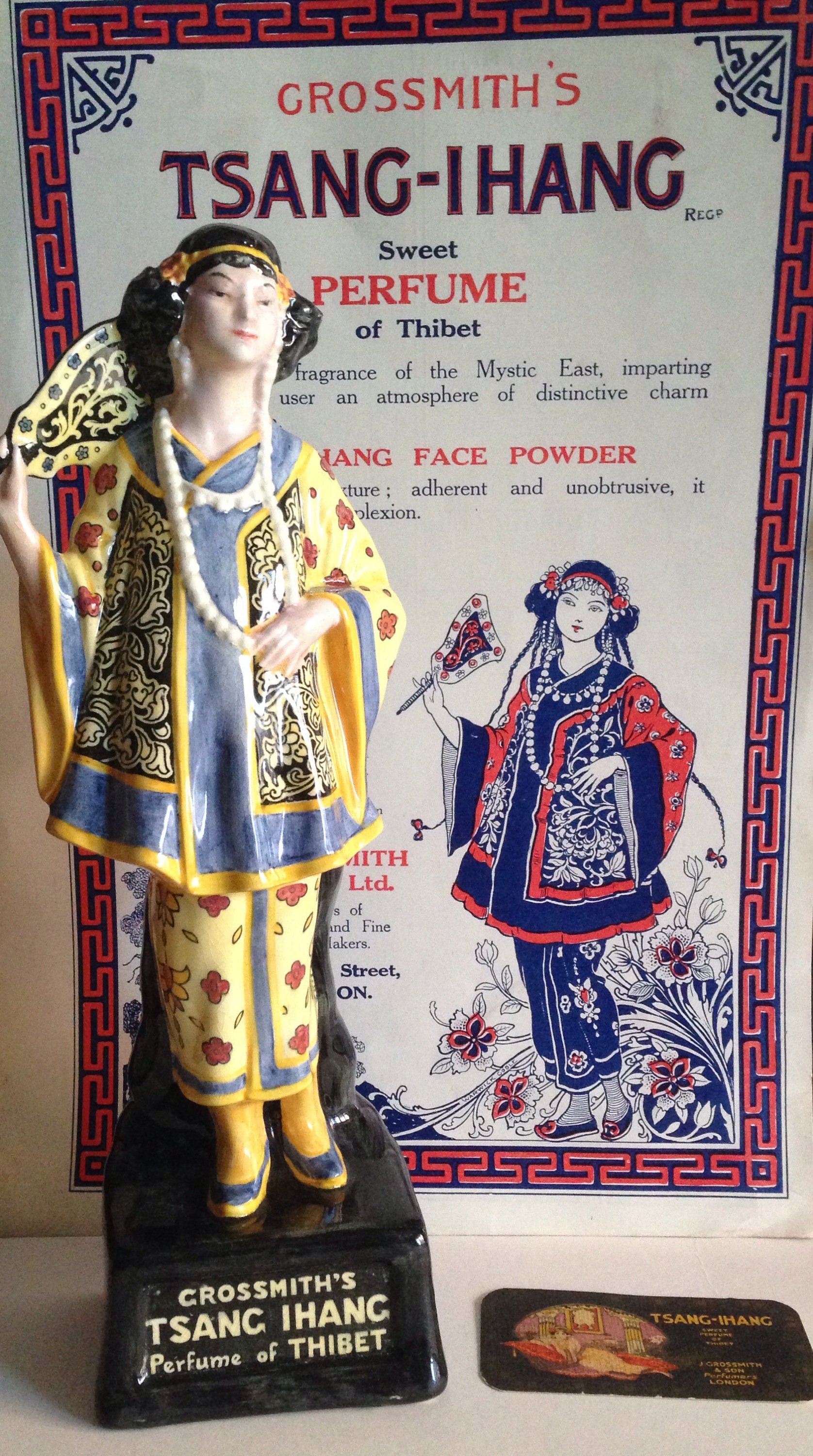
Doulton’s advertising figure Tsang Ihang.

Back in the 1920’s Doulton produced a handful of so-called advertising figures such as Tsang Ihang here and also The Yardley’s group and the Perfect Pair made for the publishing house behind the Tatler and Eve magazine. There were other figures too but produced without HN numbers such as the Standing Beefeater for the Illustrated London News and of course the delightful Sketch Girl.

/home/wpcom/public_html/wp-content/blogs.dir/574/66790219/files/2014/12/img_1078.jpg

It took many decades to eventually track the original advert down featuring the Tsang Ihang lady, but fortunately we did just before the book Reflections was published. I see that someone online has used a black and white version of it we used as the end papers so I thought it time to show this coloured version. Naturally once one has been found others crop up too, which is the good thing about collecting so I am sure collectors will be able to track down their own copies to use in your their displays.

Harradine’s inspiration for his figure Anthea.

As you know I always love to discover the inspirations for our favourite Doulton figures. Here is another that didn’t make the final cut for Jocelyn’s and my book ‘Reflections’. It is itself a figurine but this time a wax figure by Agatha Walker that she produced as part of her series of figures from the stage in the 1920’s, imitating a popular tradition from the 19th Century. These figures were made of plaster, then coated in wax and finally painted.
Typically Harradine has put his own flourishes to the finished figure including a parasol and changing the direction of Anthea’s head.

/home/wpcom/public_html/wp-content/blogs.dir/574/66790219/files/2014/12/img_1074.jpg
Courtesy of Bonhams.

/home/wpcom/public_html/wp-content/blogs.dir/574/66790219/files/2014/12/img_1073.jpg
Courtesy of Seaway China.

To date I have found only one other Agatha Walker figure that Harradine used, but that’s for another time!

A place to share enthusiasm for all things Royal Doulton! All original content ©Christopher Evans 2014 unless otherwise credited. No unauthorised reproduction permitted.