Pantalettes and petticoats!

20140715-184709-67629330.jpg
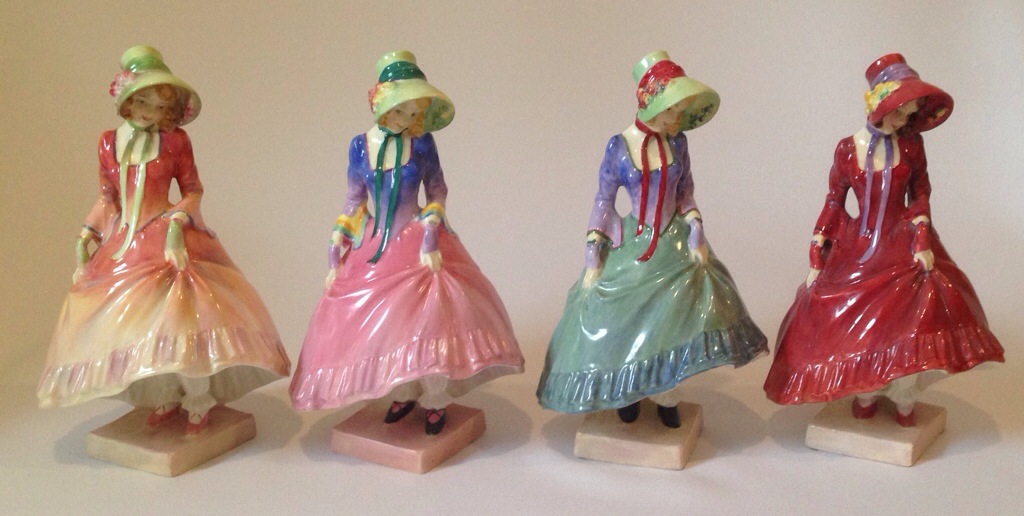
The four available colourways of Pantalettes.

Some of the most popular Royal Doulton figures are those from the early 1930’s that recall those halcyon days of the Victorian era with all of its romanticism and courtship rituals.

This band of coy young ladies demurely pose with their pantalettes and numerous petticoats on show – each supposedly causing a minor sensation! Oh how times have changed.
20140715-184858-67738108.jpg
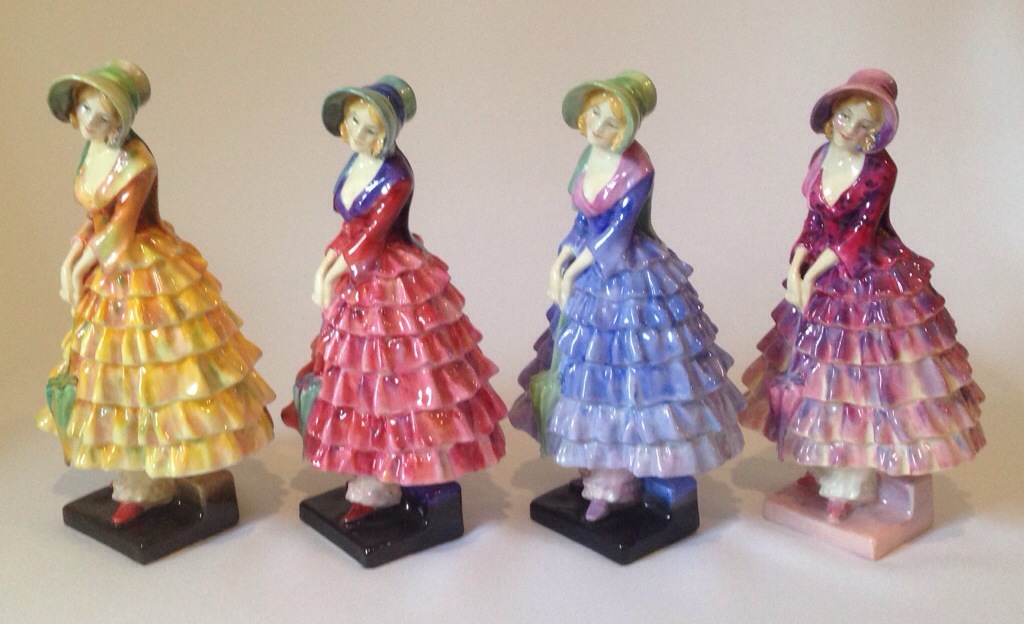
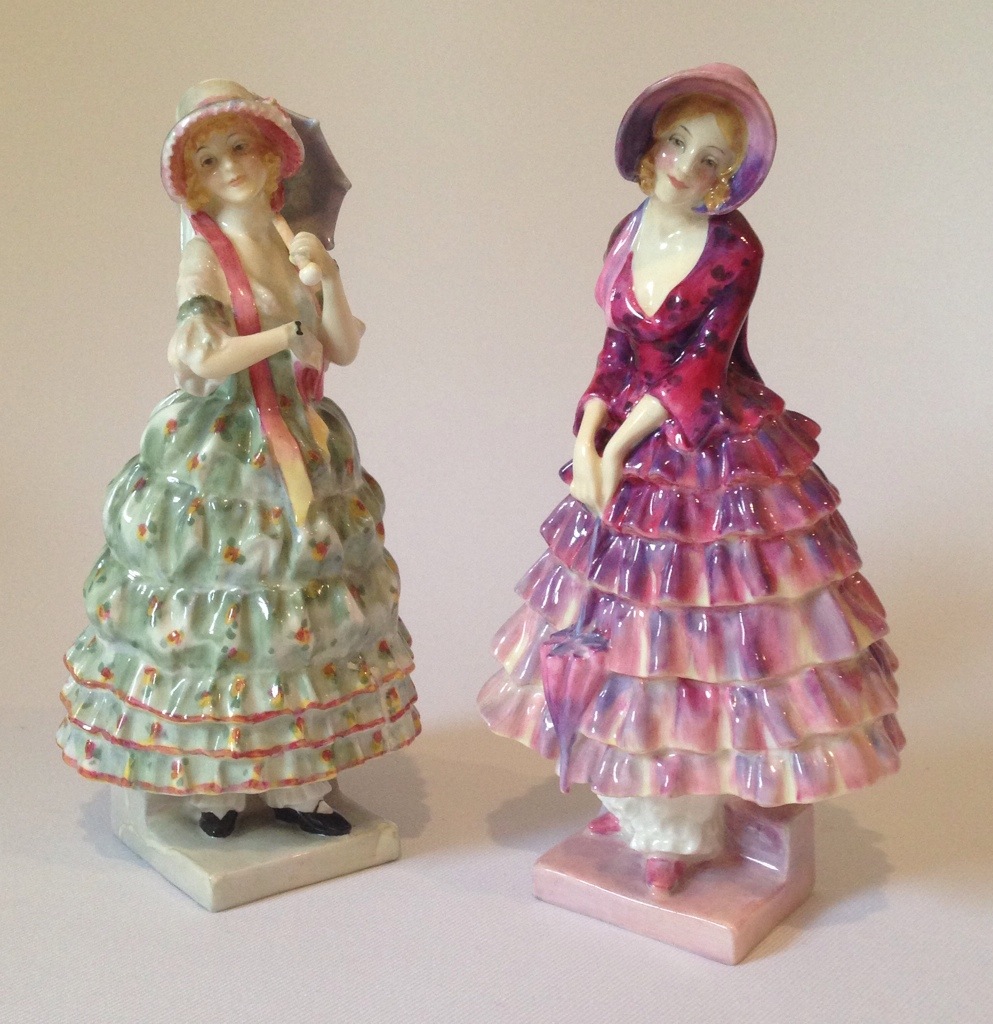
Four of the five available versions of Priscilla.

Of course we must start with the figure Pantalettes HN1362, introduced in 1929 and withdrawn by 1952, not the erroneous date given in the books on the subject of ‘by 1942’. She has three other ‘sisters’ to collect the rarer of the two being HN1507 and the lushious red HN1709. She has always been a favourite of mine and I remember hunting down an early version many years ago!
20140715-185222-67942623.jpg
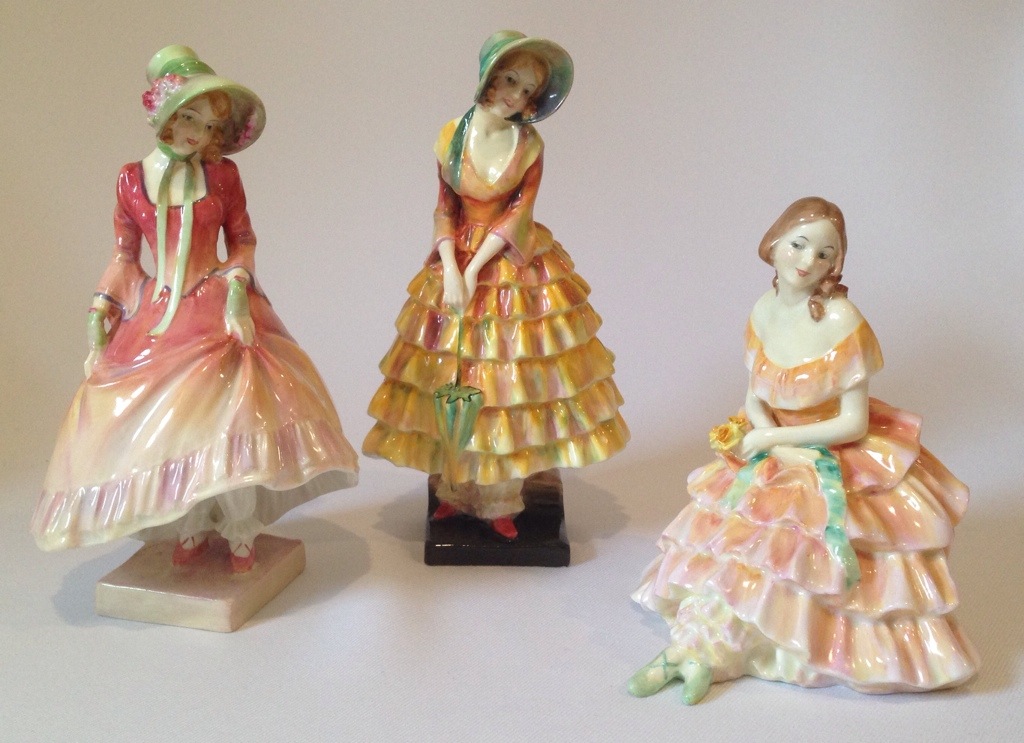
The rare Helen and a more unusual colouring of Priscilla.

Another favourite among collectors is Priscilla HN1340 introduced in the same year. She is modelled coyly swaying in a soft breeze with her head posed in a coquettish manner!
Other rarer figures can be added to this theme including the rare Helen HN1508, who would later be adapted to June HN1690 in 1935, presumably meaning that Helen’s production had ceased by that point… As was always typical of Doulton various figures were produced in complimentary colourways and we can add Gwendolen HN1503 to this group of ‘pantalette and petticoat’ ladies!
20140715-185318-67998866.jpg
A complimentary group of petticoat and pantalettes wearing damsels.

Far from bring a definitive list, perhaps you also collect this theme of ladies? If so why not post a picture to our Doulton Collectors Club page?

Doulton’s lustre wares – Part 2: Reco Capey

20140713-075133-28293083.jpg
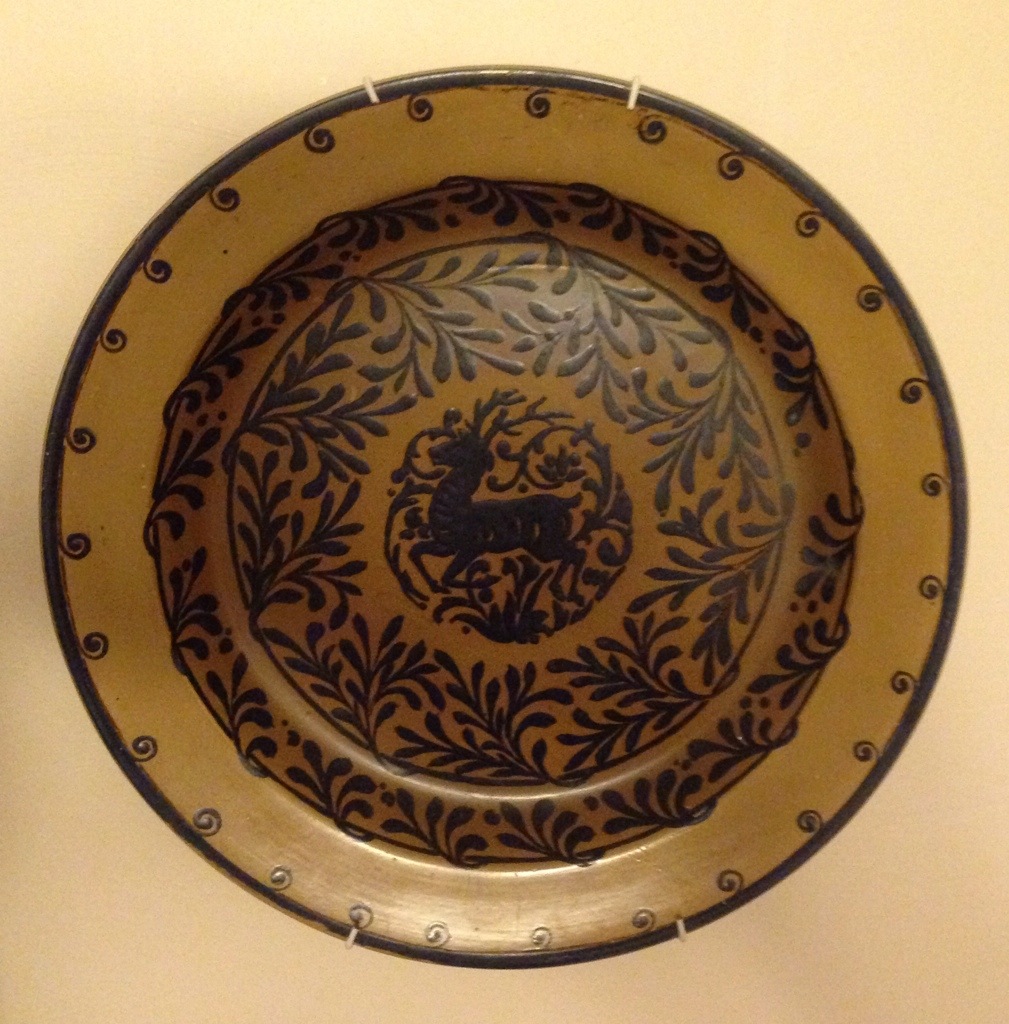
A selection of Reco Capey lustre ware and a stray fox!

Some of you will already be aware of the name Reco Capey and his links to Royal Doulton. Capey it has been discovered designed prestigious flambé wares and also in the late 1930’s pieces for Lambeth too.

However it is his lustre ware designs that are the focus here. It is uncertain when precisely he began his association with Doulton but the date 1914 has been mentioned. Certainly items signed by him and presumably fired at Burslem have been found. Others bearing a Doulton stamp and dating to 1915 have also been found dated around this time. Capey’s designs certainly follow a theme with his designs echoing those of William de Morgan and also William Morris.

20140713-075711-28631830.jpg
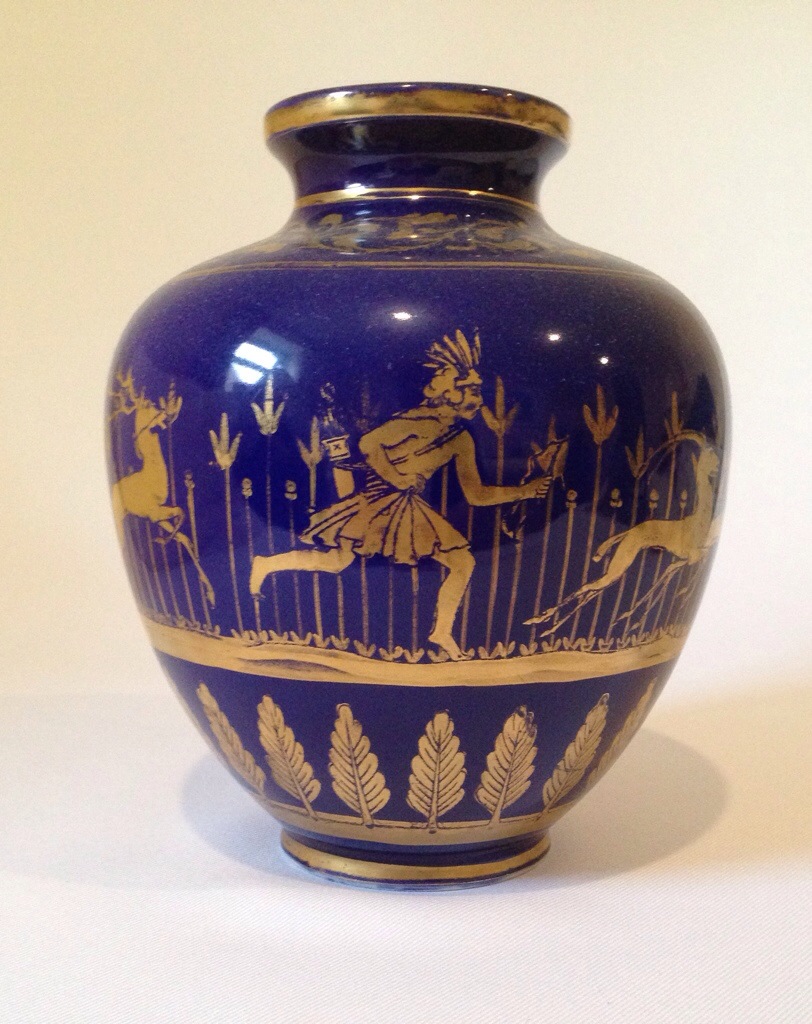
An unusual gilt version of Capey’s design of Indian runner and deer more usually found on an orange lustre background.

20140713-075812-28692485.jpg
A large charger in orange lustre with the deer design dated 1918.

The mythical birds in the picture below are undoubtedly the tile design that Capey would complain to his family that he was not paid enough for. As was typical with Doulton they used their in house artists to adapt the original artists’ designs (just as happened to Frank Brangwyn).

20140713-080119-28879215.jpg
A full tea set bearing a seriesware D number 4080 introduced in 1919. This design was the only one in this colouring that I have found with a D number.

Other interesting pieces of this lustre ware include lidded jars with finials including ‘Old Nod’ and a ‘Chicken’. The actual titles of these finials are unknown.

20140713-080403-29043336.jpg
A large vase, typically used for Capey’s work, bearing Nelson’s motto: PALMAM QUI MERUIT FERAT

These delightful pieces of lustre ware were produced at a time when lustre ware was at its most popular and whilst designs do turn up, particularly the black, white and green designs, there are so many variations and rarities out there still to be found that will hopefully shed more light on his work and time with Doulton’s of Burslem.

20140713-080723-29243132.jpg
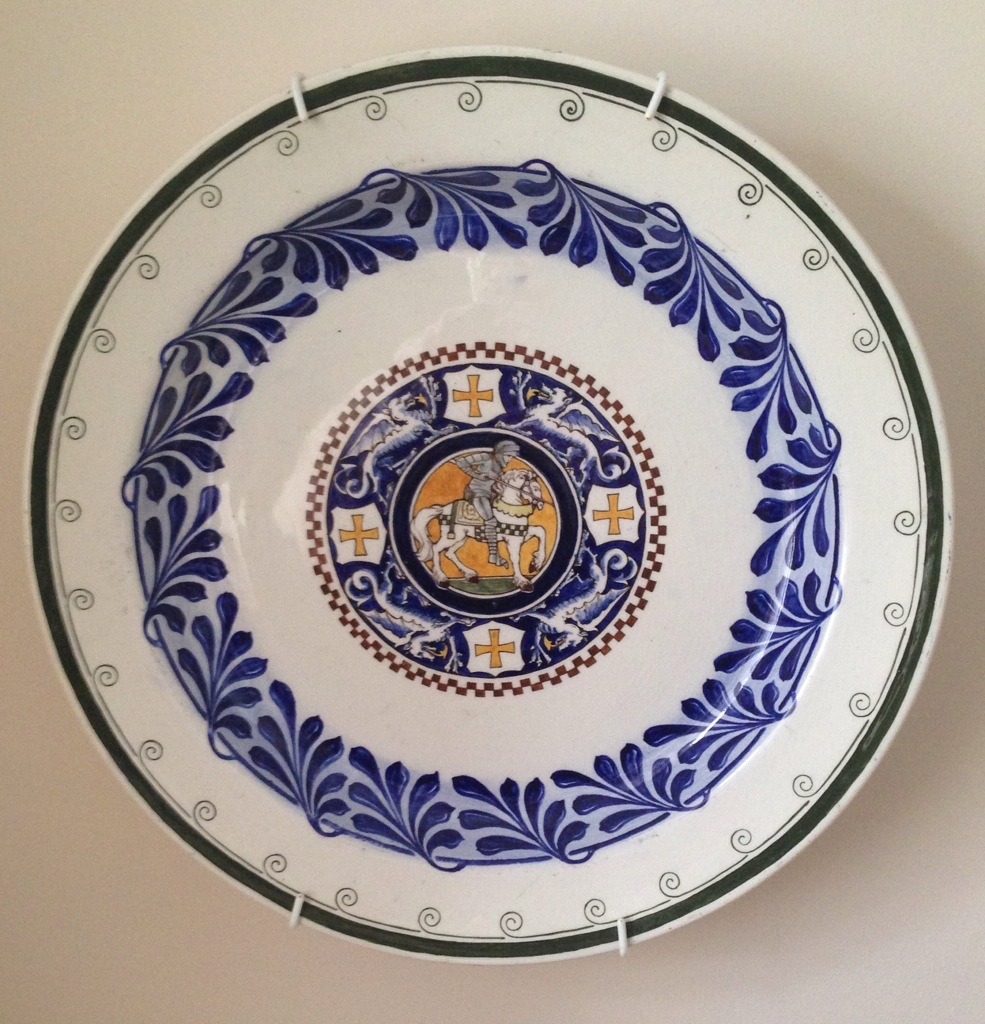
One last charger by Capey featuring St. George, again dated 1919 that I found in Australia.

Collecting Doulton tiles

20140712-163610-59770886.jpg
An early advertisement featuring a tile.

Tiles are another avenue of collecting that many Doulton collectors know very little about. However, if you were to ask tile collectors about Doulton tiles, they would tell you that there are some magnificent examples out there to collect.

20140712-163712-59832288.jpg
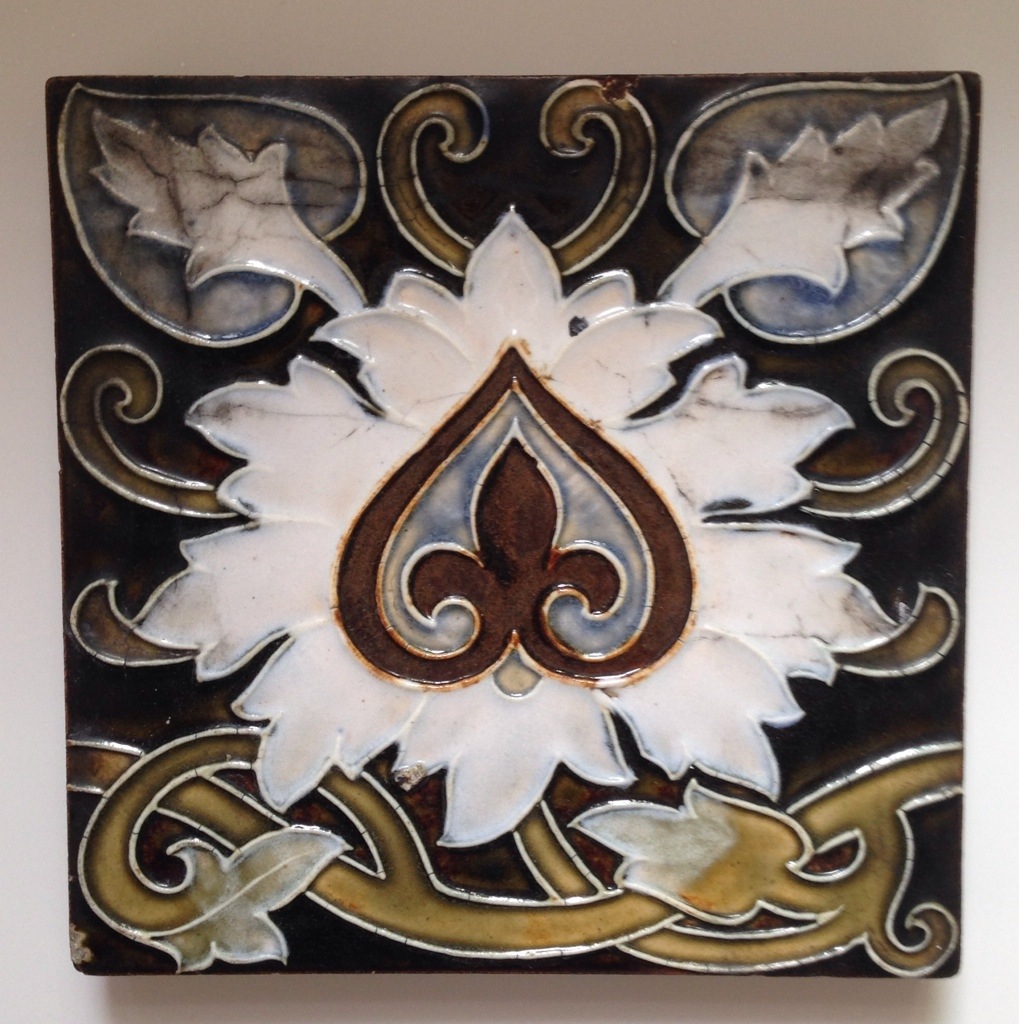
A similar tile to the one in the advert above.

Originally produced in the 19th and early 20th century, the fashion for decorating great portions of buildings, both inside and out, in tiles fell out of fashion during the first half of the last century.

20140712-163811-59891071.jpg
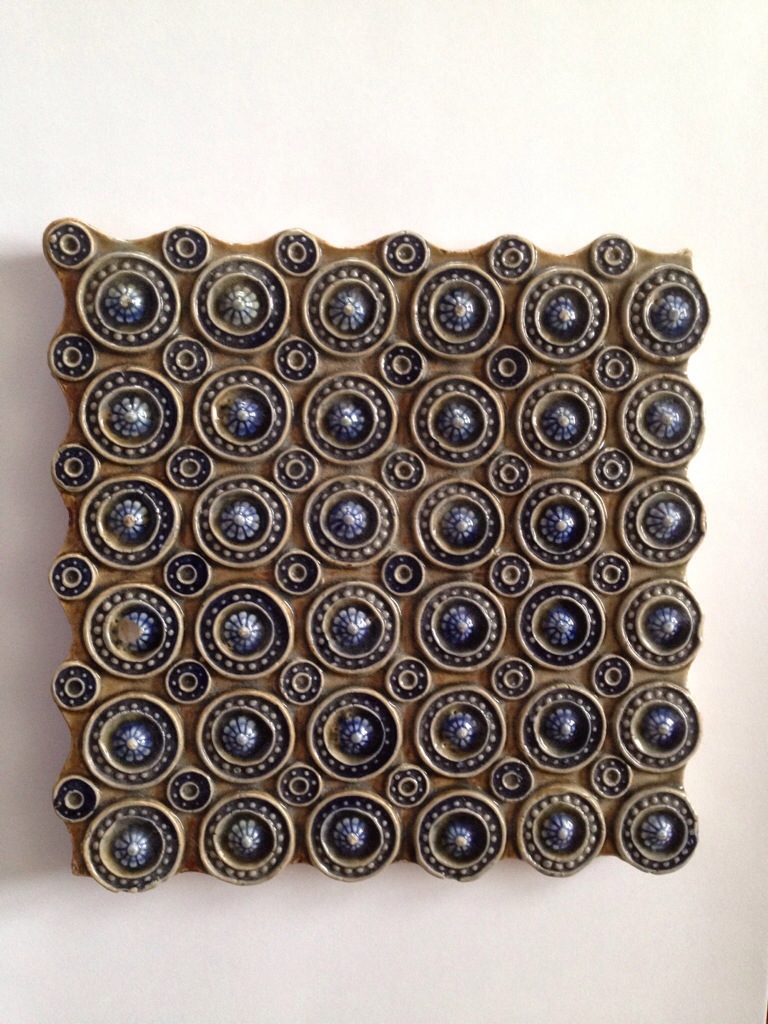
A good example of a tube lined tile.

Doulton tiles fall into two camps: architectural and art ware; and again divided into individual tiles and sets or panels.

20140712-163905-59945698.jpg
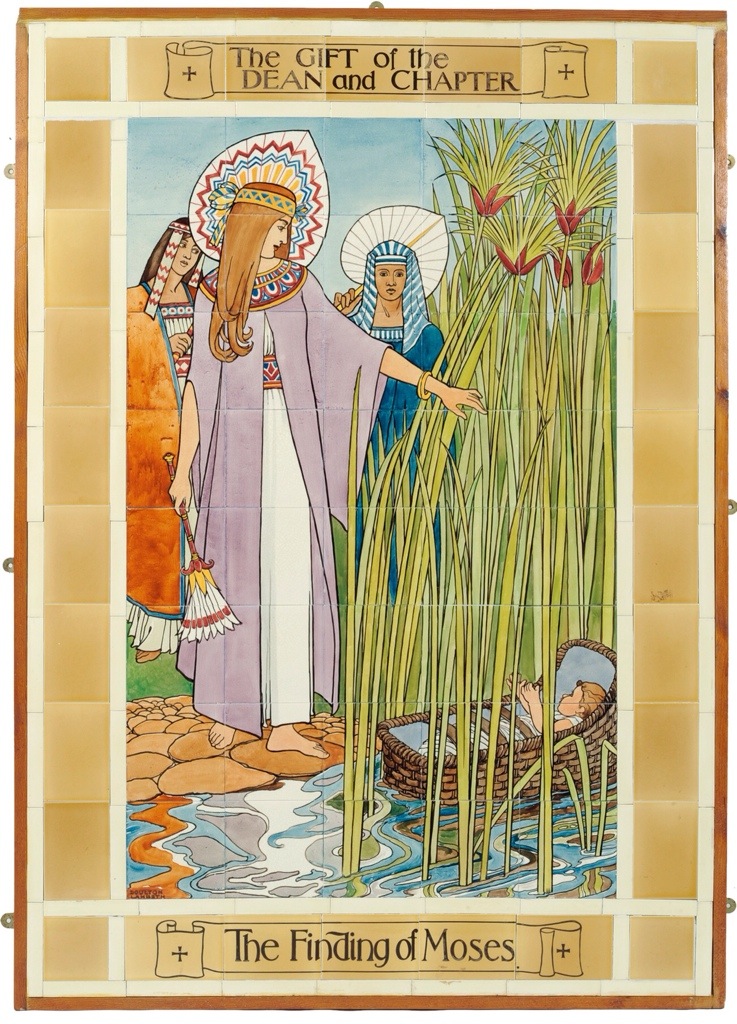
A magnificent panel courtesy of Seaway China.

I am sure many of you will have paid a visit to the food halls of Harrods in London and seen the wonderful art nouveau Doulton tiles by Neatby there or perhaps the wonderful Doulton art nouveau arcade in Norwich, but there are examples outside the UK too in Singapore’s railway station for example and countless hospitals around the world.

20140712-164007-60007460.jpg
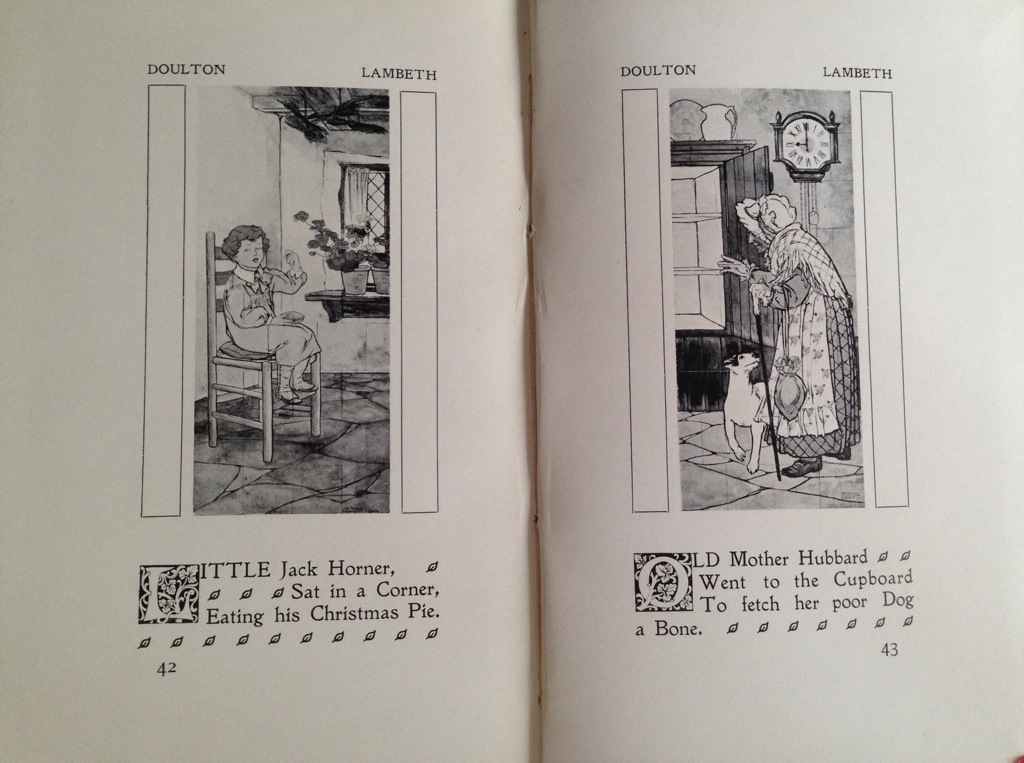
A double page from a book by Doulton from 1904 illustrating some Hospital panels installed by them to date.

As I have already mentioned there are countless tile panels in churches and hospitals around the world too designed by Doulton’s top artists including Margaret Thompson and William Rowe.

20140712-164315-60195383.jpg
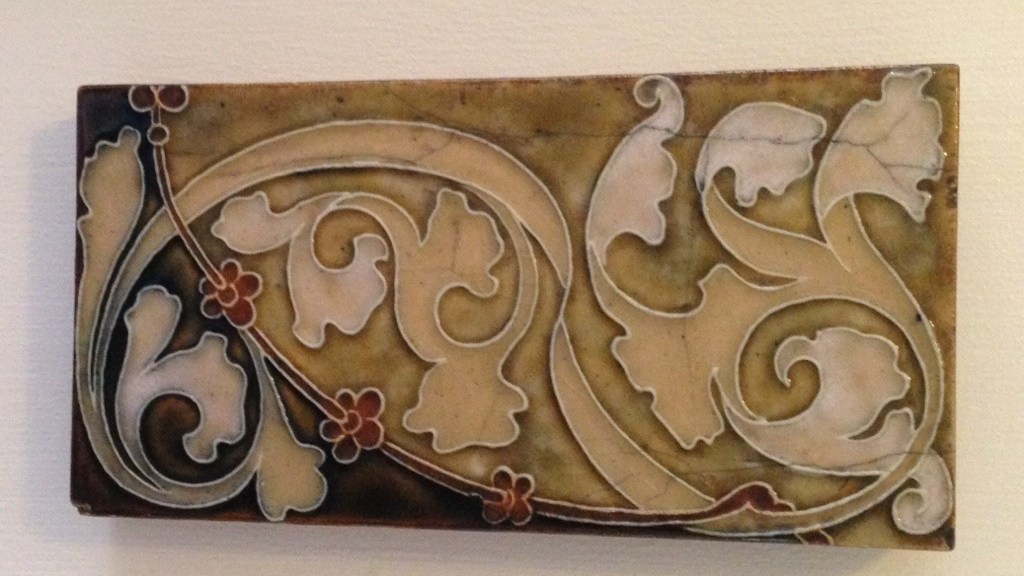
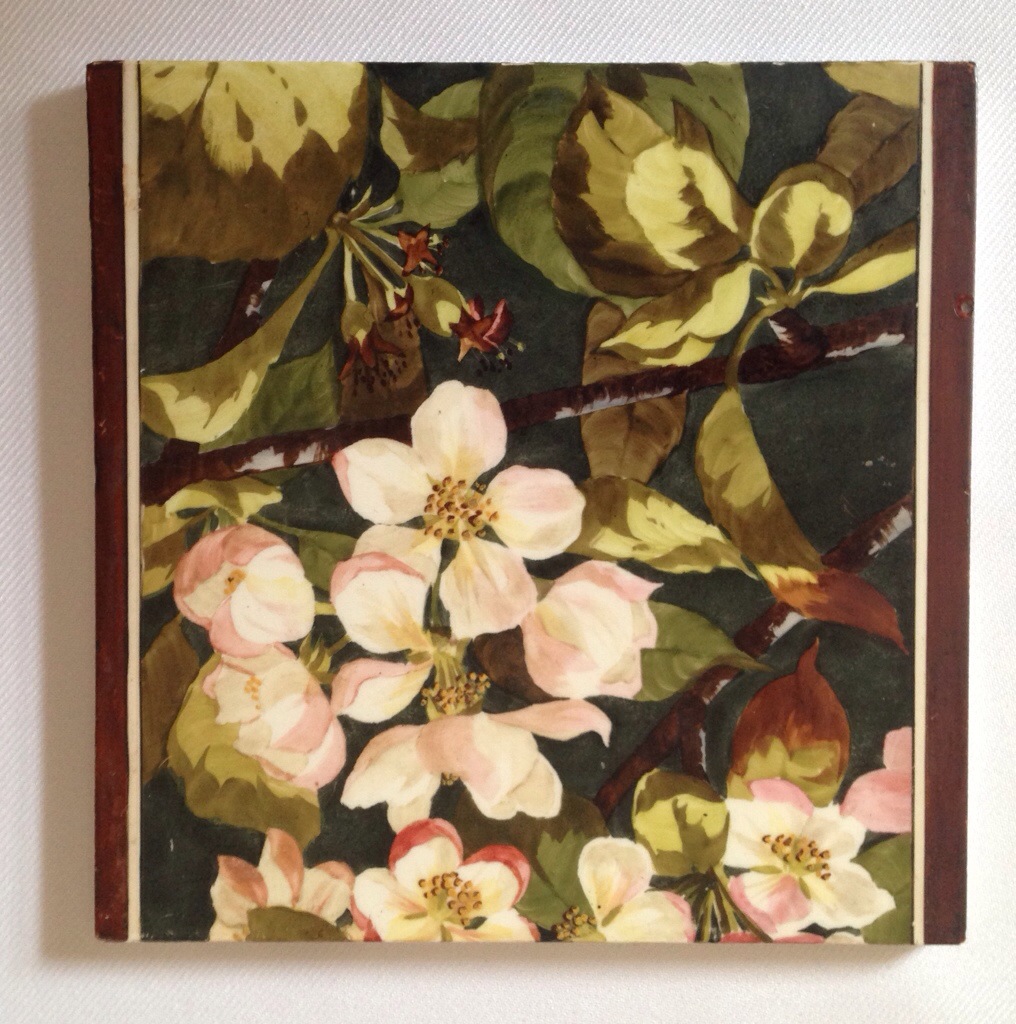
A charming hand-painted tile with Apple blossom.

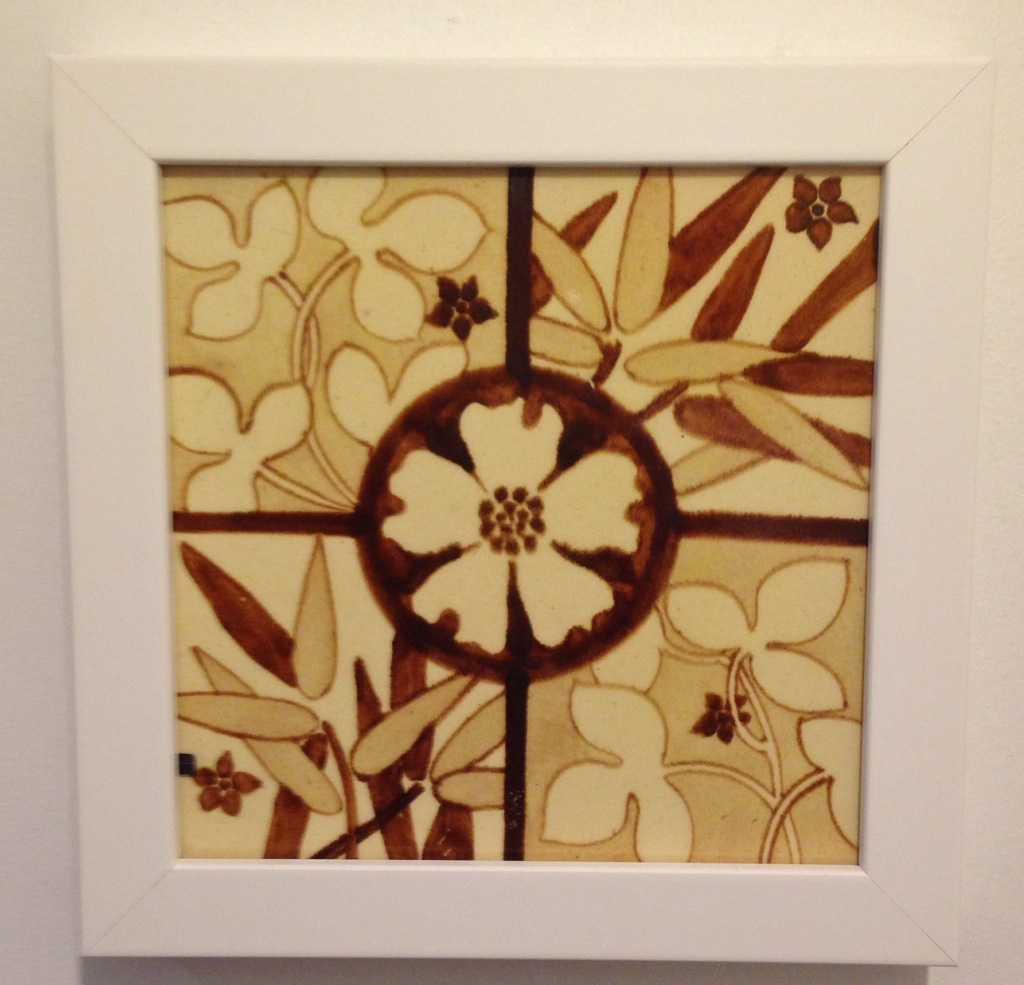
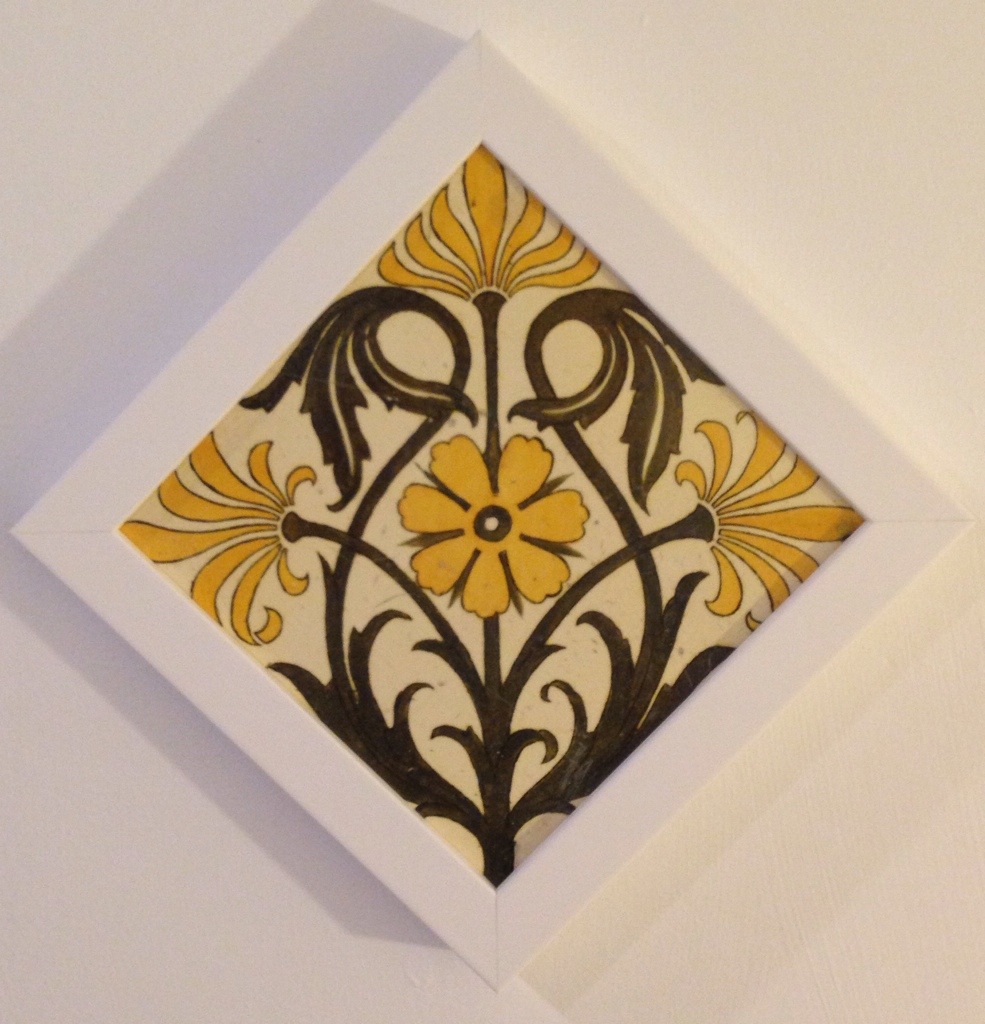
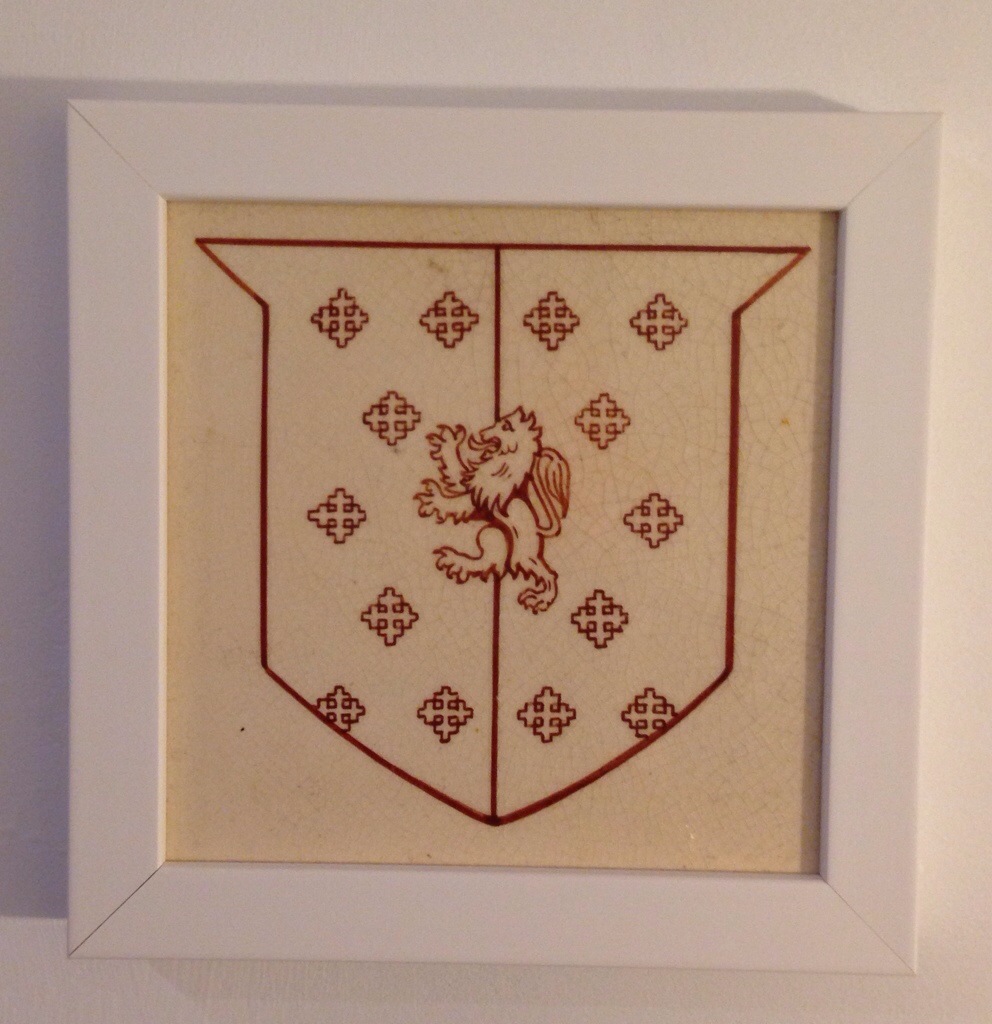
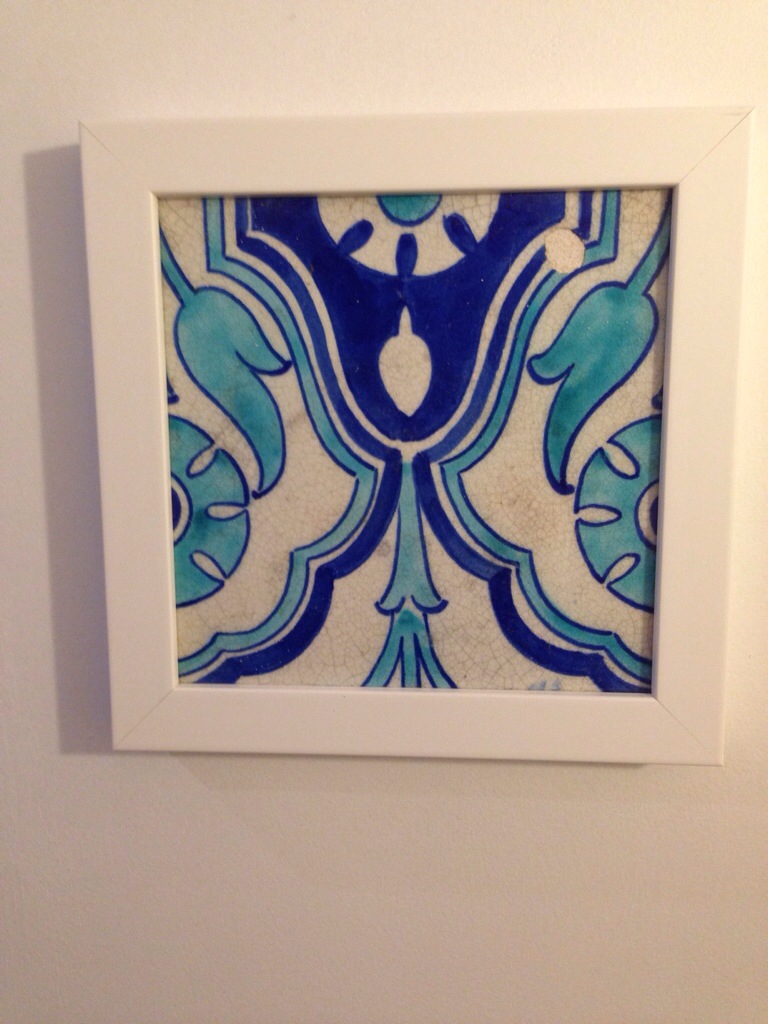
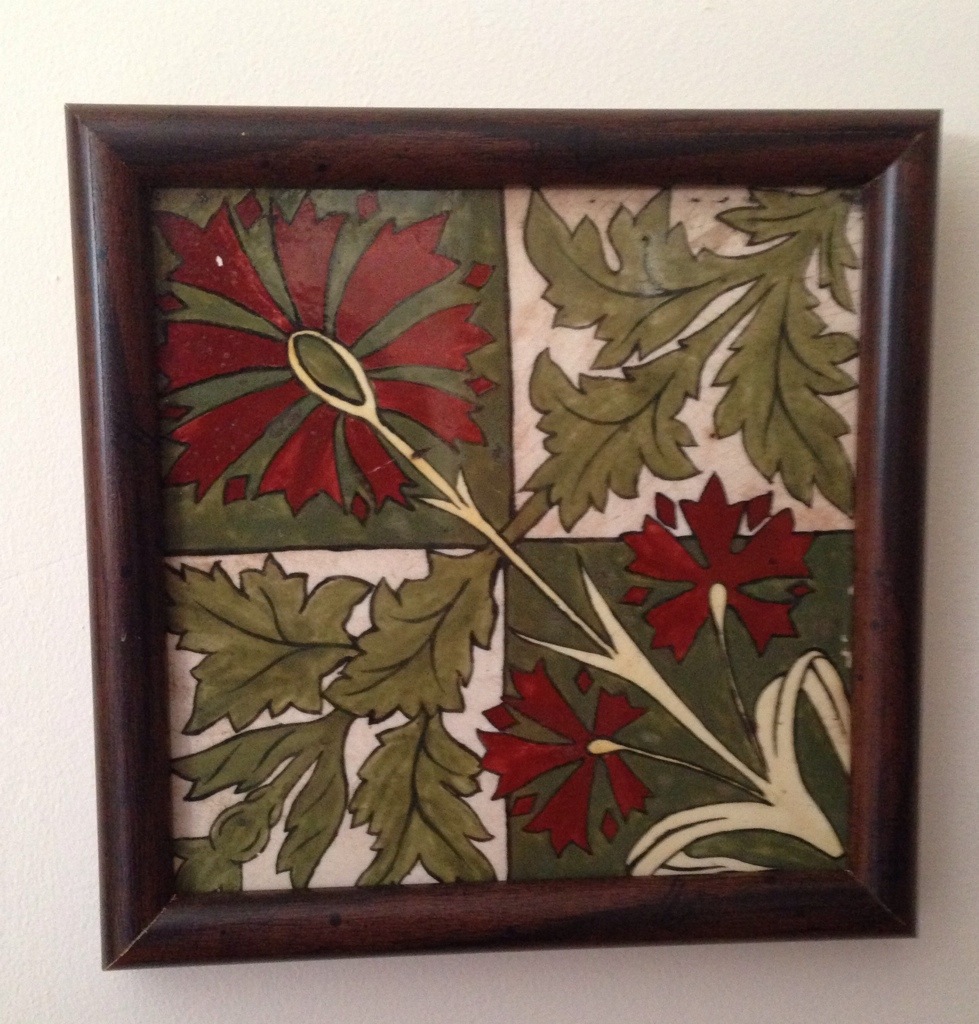
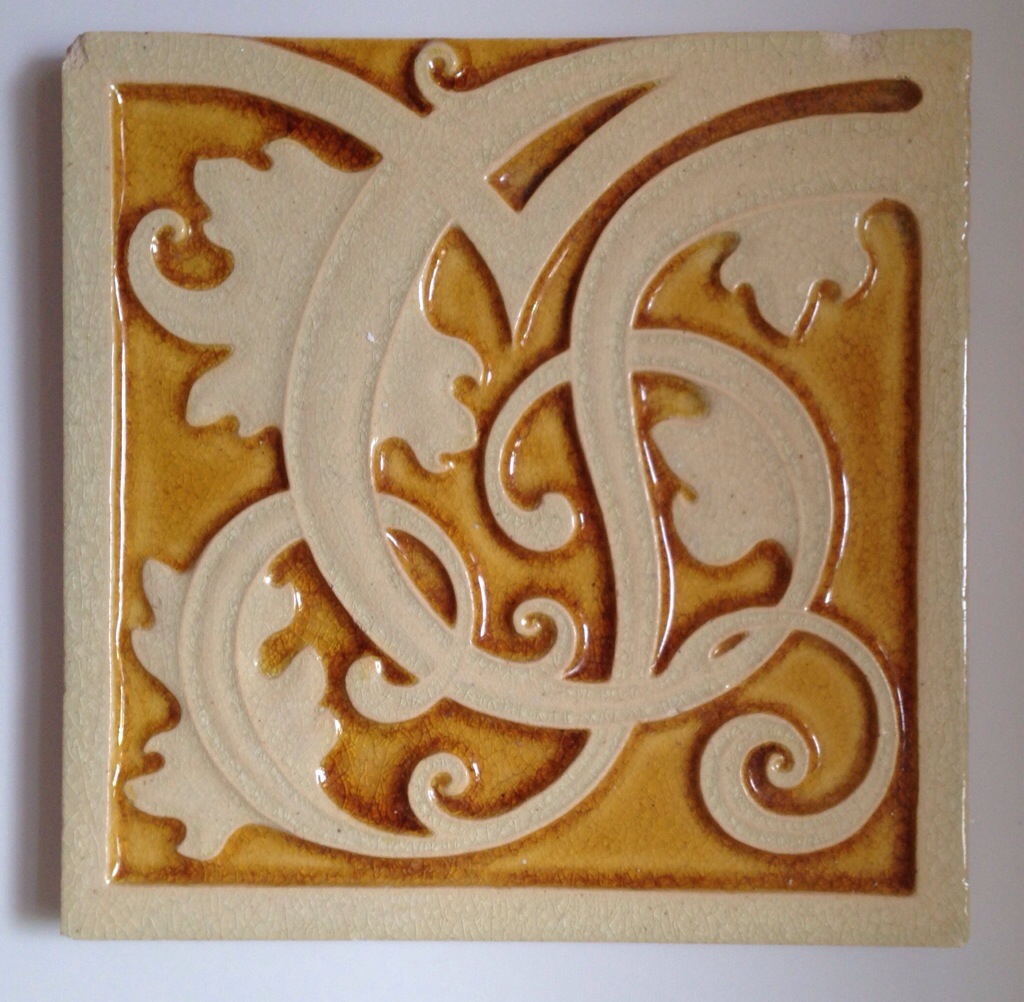
Yet, for collectors there are numerous designs in tiles to collect. Here are some that I have come across over the years, some artist pieces some production pieces. Nevertheless an interesting theme to collect!

20140712-164431-60271538.jpg

20140712-164434-60274110.jpg

20140712-164433-60273272.jpg

20140712-164432-60272359.jpg

20140712-164430-60270548.jpg

20140712-164429-60269734.jpg

Royal Doulton’s Edward VIII loving cup

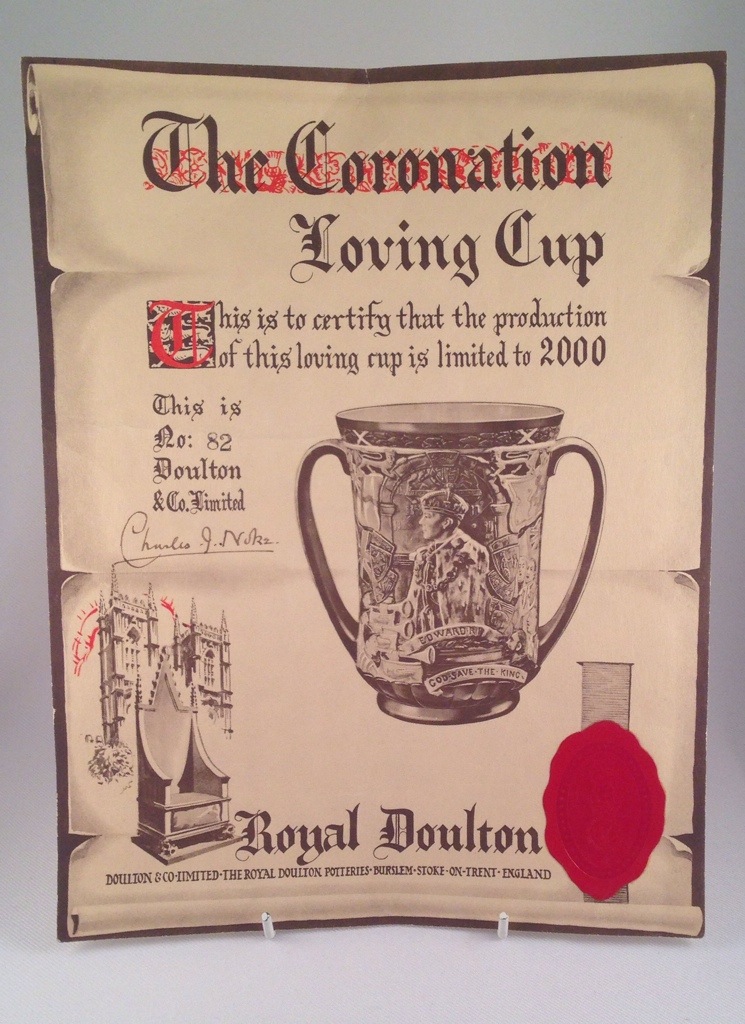
20140711-143259-52379030.jpg
Original Certificate for this cup.

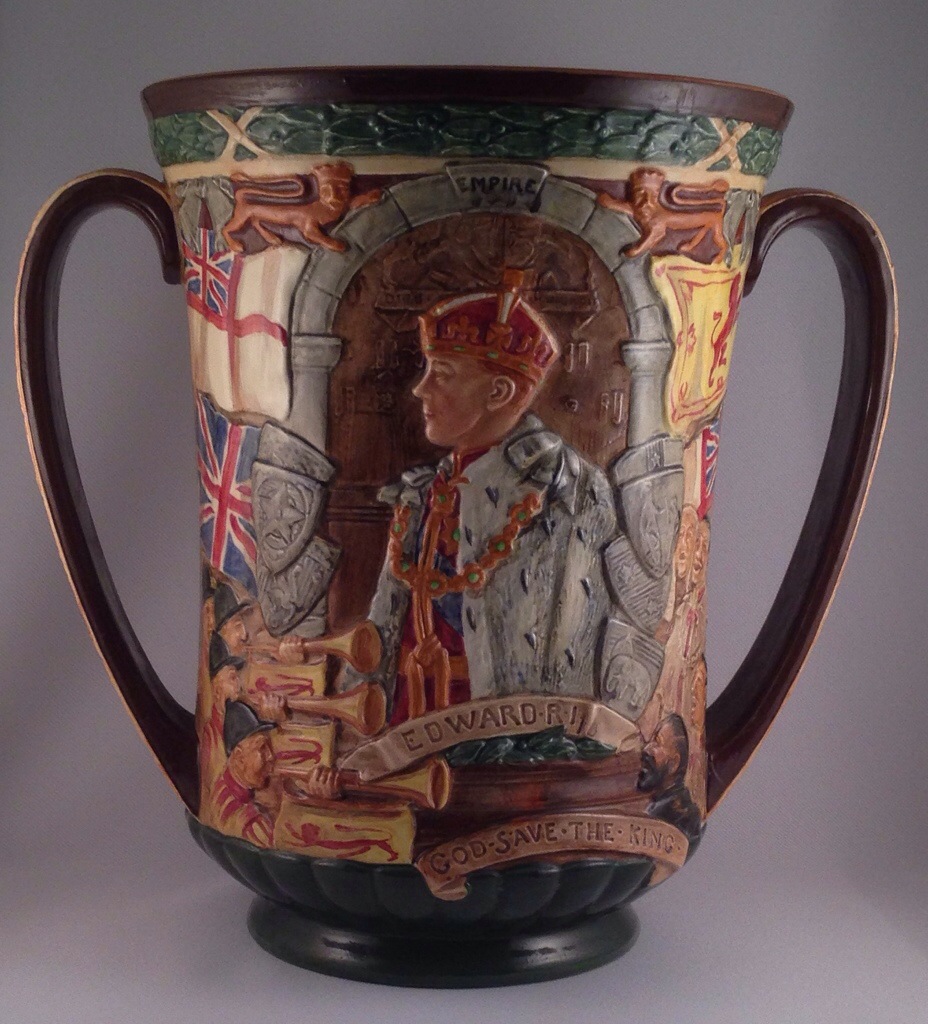
This commemorative loving cup was made to commemorate the coronation that never was. Edward VIII was born in 1894 and succeeded his father as King in 1936. The story of his abdication and the reasons behind it are now romantic legend, yet he did serve as King for 325 days before deciding to abdicate.

20140711-143631-52591645.jpg
The front of the large jug.

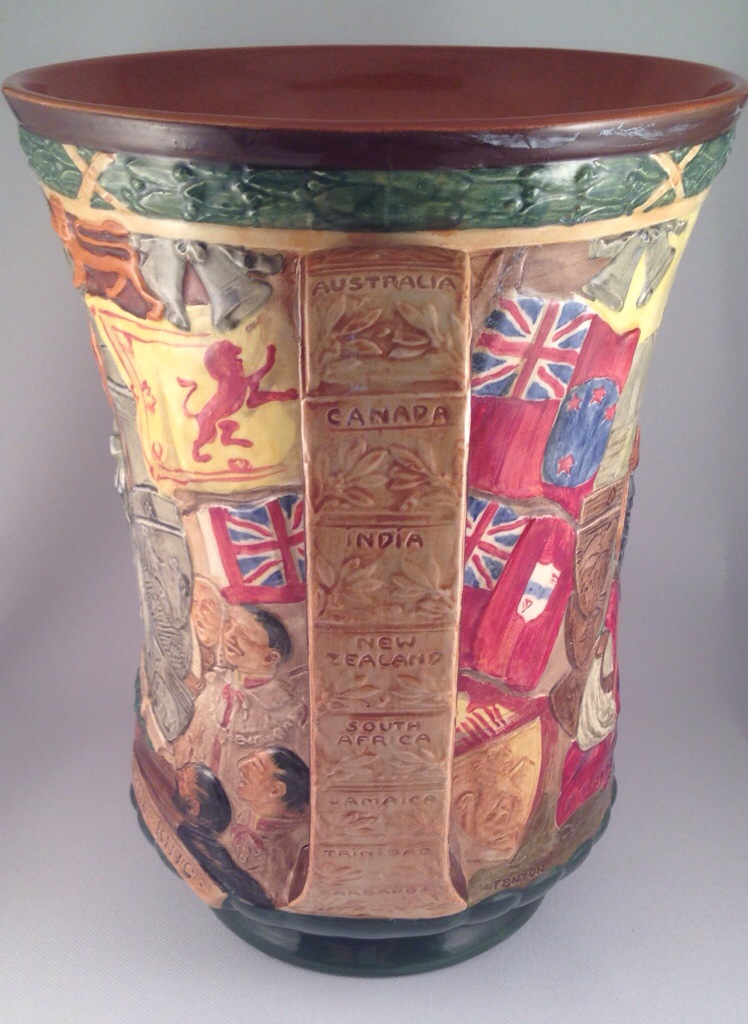
Edward VIII is portrayed in half length on the front if the jug wearing what would have been his coronation regalia, together with the flags for the 4 realms of the UK. The handles bear the names of the countries that now make up the Commonwealth where he was also King.

20140711-143949-52789832.jpg
Detail of one handle.

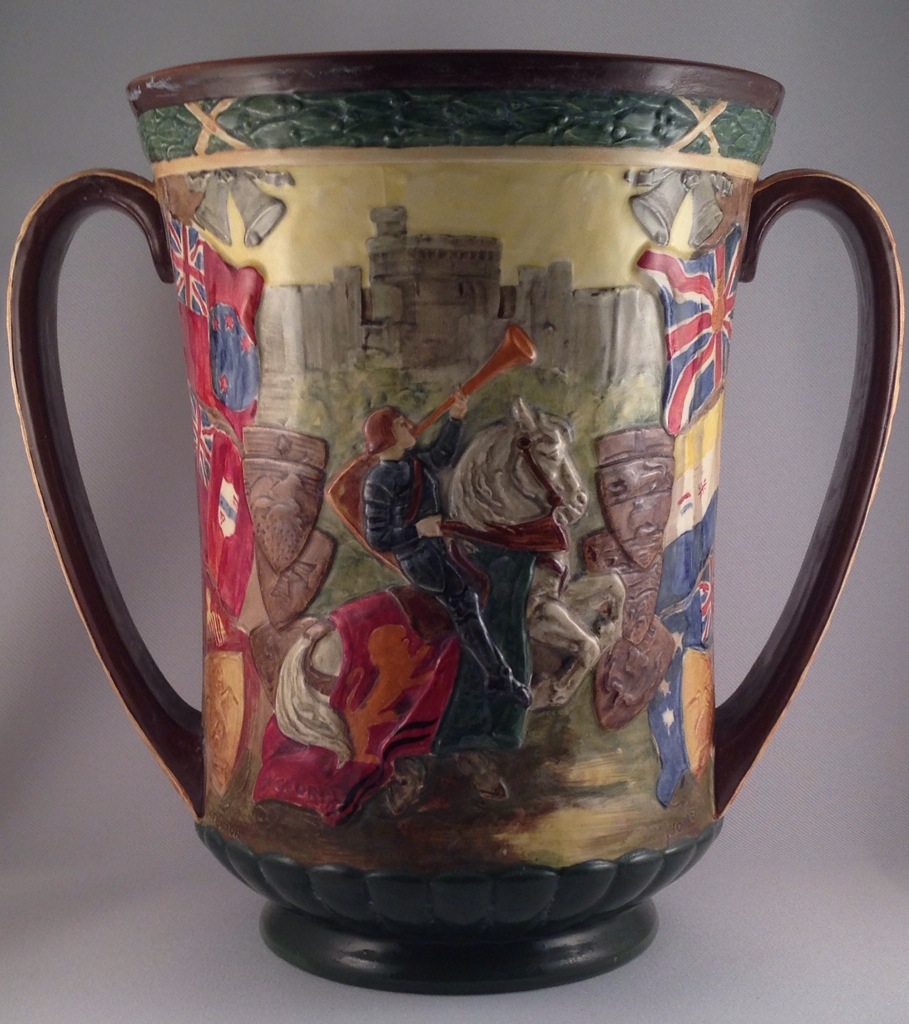
The reverse of the jug shows St. George on horseback infront of Windsor Castle surrounded by Commonwealth flags and other regalia.

20140711-144128-52888520.jpg
The wonderfully detailed reverse of the large jug.

This large jug was issued in 1937 in an addition of 2000, although only 1080 were sold before the abdication crisis. Modelled by the greats- Noke and Fenton who were responsible for do many wares at this time – the cup bears both signatures.

It is possible to build up a collection of all these limited edition loving cups and jugs and it makes a strong statement when they are all together.

For further information on loving cups and jugs, see the article devoted to them on our Doulton Collectors Club Facebook page.

Royal Doulton’s ‘Skating’ seriesware pattern

20140711-111157-40317537.jpg
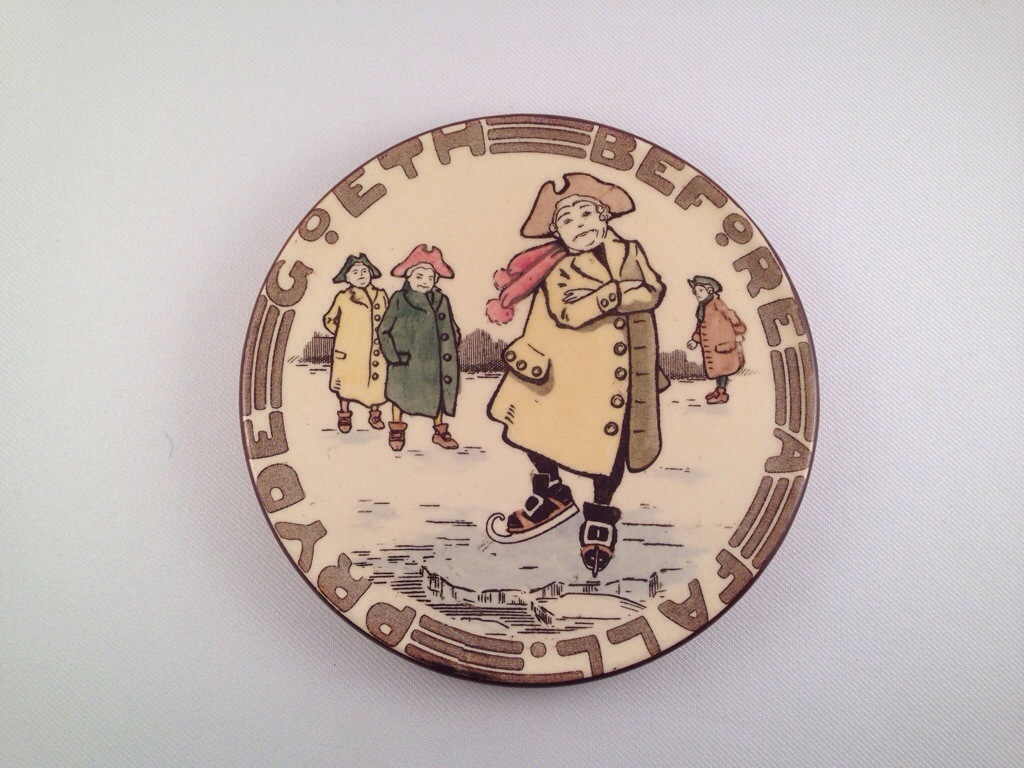
An early trivet in the Skating pattern dated 1907.

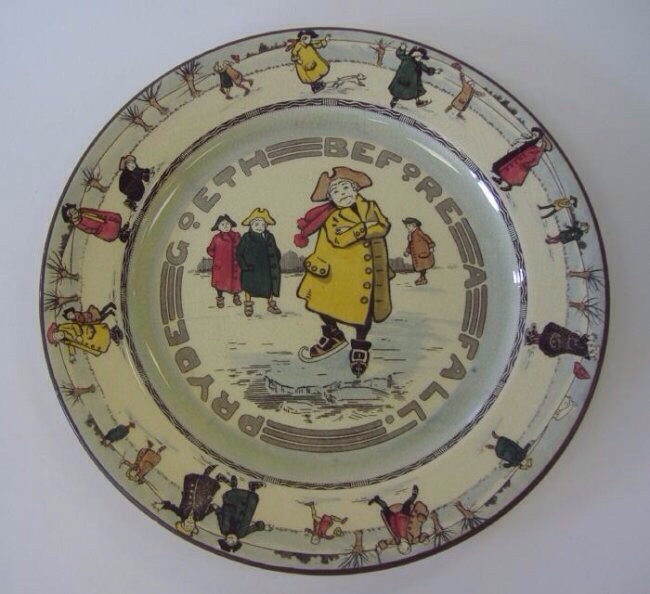
This old world comic scene of skaters with the inscriptions ‘Pryde goeth before a fall’ or ‘Do not worry, do not flurry, nothing good is got by worry’ are particularly hard to find today and always popular with collectors.

20140711-111512-40512307.jpg

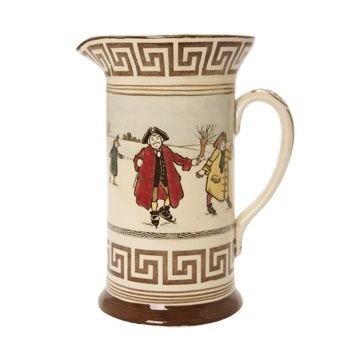
A charming jug with the alternate Greek key border.

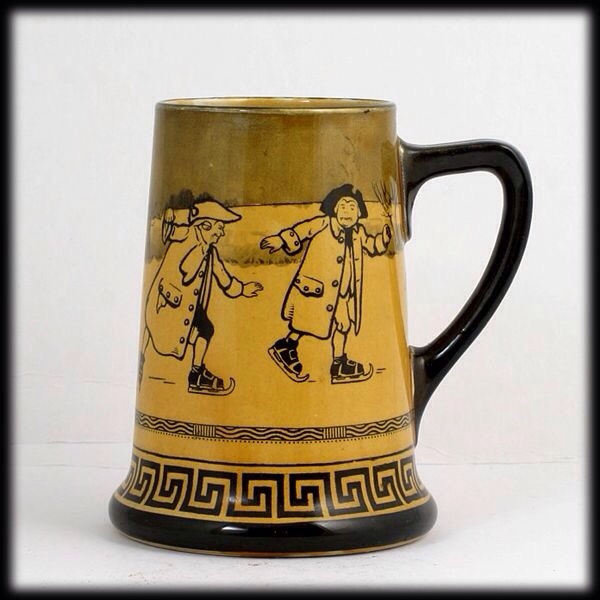
Introduced in 1907 and certainly withdrawn before the late 1920’s this series offers 14 different scenes for collectors with a handful of subtle variations to borders and also glazes for collectors to seek out.

20140711-112004-40804916.jpg

A jug in a treacle or Holbein glaze as I have occasionally heard it called.

A display makes an eye catching feature at Christmas and I know of several collectors who specialise in collecting particular shapes with all seriesware patterns; trivets being a popular theme and of course I collect pin trays as a few if you know.
Typically rack plates are the most easily found items, and this is also the case with this rare pattern.

20140711-112143-40903055.jpg
A super rack plate with an illustrative border.

Royal Doulton’s Gaffers seriesware

20140711-102116-37276799.jpg
An early publicity booklet for the Gaffers pattern.

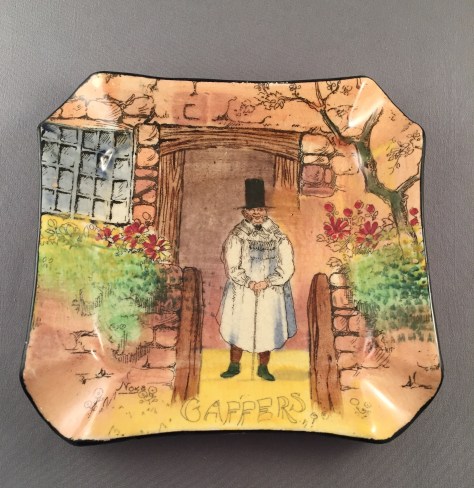
This quaint series certainly belongs to a different age although the dialect is still associated with the wonderful people of Somerset.

20140711-101144-36704131.jpg
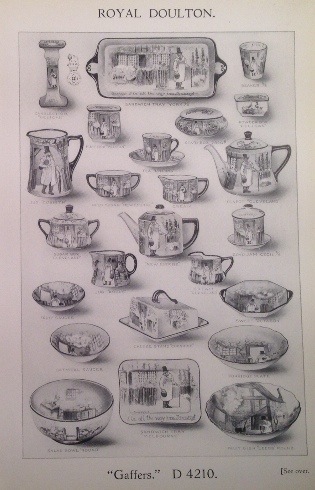
A catalogue page illustrating some if the styles available ca.1924.

The leaflet pictured above comes with a vivid description of his life and routine, even explaining some of his typically ‘Zummerset’ sayings!

The pattern was introduced in 1921 and being popular remained in production until WWII.

FullSizeRender(13)

A Gaffers ash tray.

There were some 19 different scenes available, designed by the great C. J. Noke and typically bearing his signature; he  had a particular interest in all things literary and other personalities from English heritage.

20140711-101435-36875271.jpg
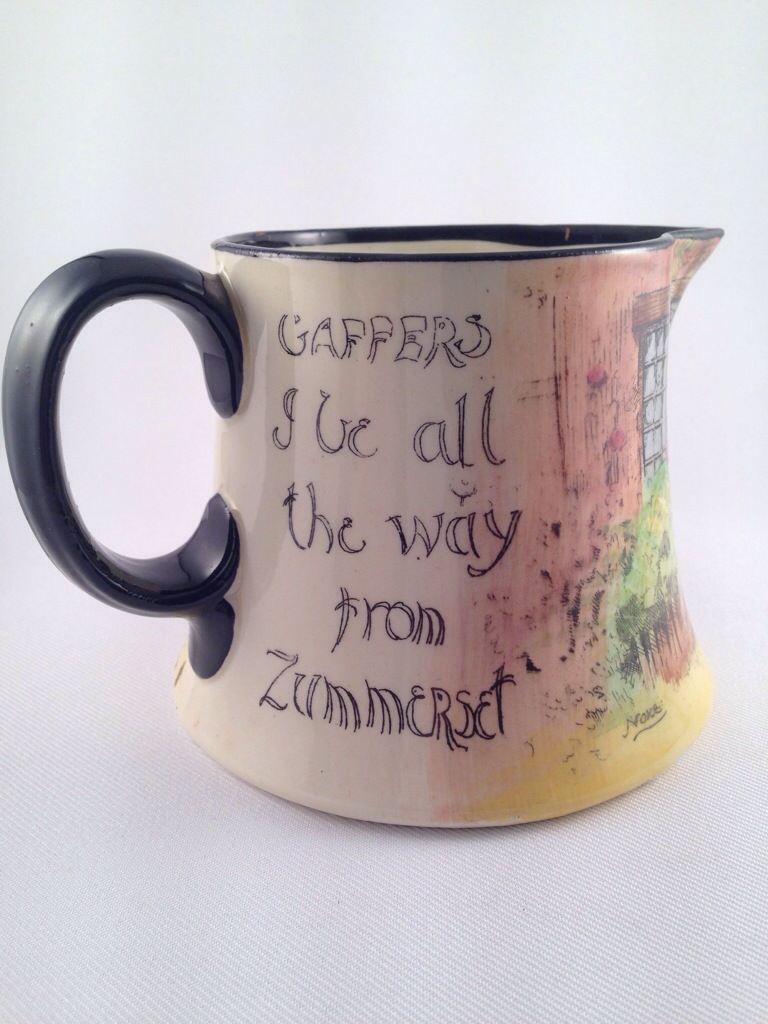
A large milk jug with scene 1 on it.

20140711-101524-36924730.jpg
The reverse of the same jug with the inscription ‘GAFFERS I be all the way from Zummerset’.

The character, the Gaffer, derives his name from respect as it refers to either an older man or master, not the more common term today for a boss.

FullSizeRender(17)

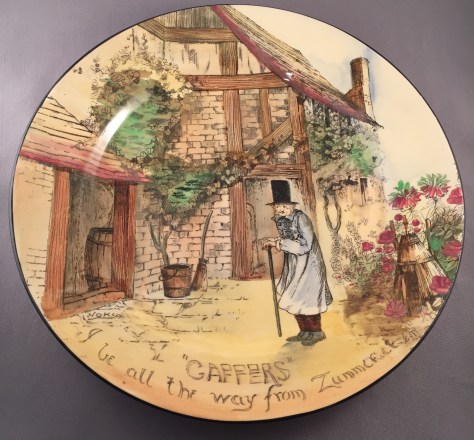
A typical 12″ rack plate.

The Gaffer is seen in his typical smock of brown holland or hand-made linen, with either an umbrella or knobbly stick in his hand.

FullSizeRender(15)

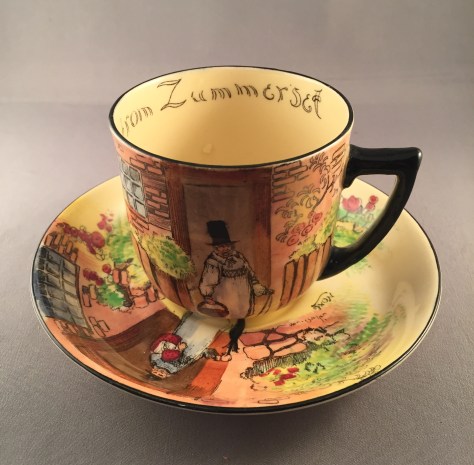
A Gaffers tea cup and saucer.


Collecting Doulton Queensware

20140706-115836-43116881.jpg
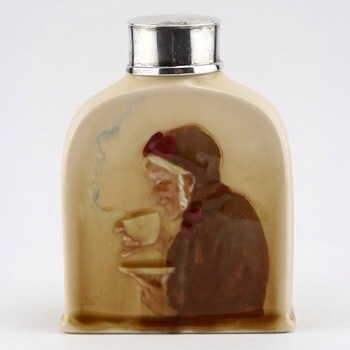
Queensware tea caddy

Queensware has been described as the perfect partner to Doulton’s famous Kingsware. The method if decorating is exactly the same as that for Kingsware, but the body is an ivory colour.

20140706-115916-43156172.jpg
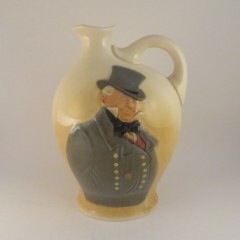
Micawber jug minus stopper.

During it’s production it proved less popular than Kingsware, and as with all rarities is much sought after by collectors, especially those in Australia.
The exact introduction date of Queensware is not known although the first reference to it by Doulton was in 1932, however there is a Hogarth jug D5173 from 1931.

20140706-120008-43208222.jpg
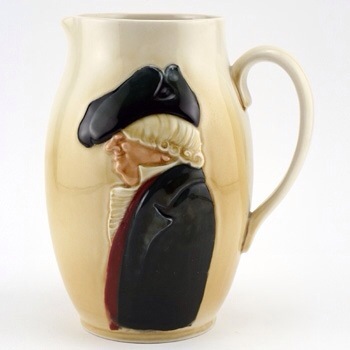
Queensware Parson Brown.

Just as Kingsware, Queensware can be found in whiskey flasks, tablewares and other novelties.

Doulton’s Mandarin ware

20140706-093640-34600985.jpg

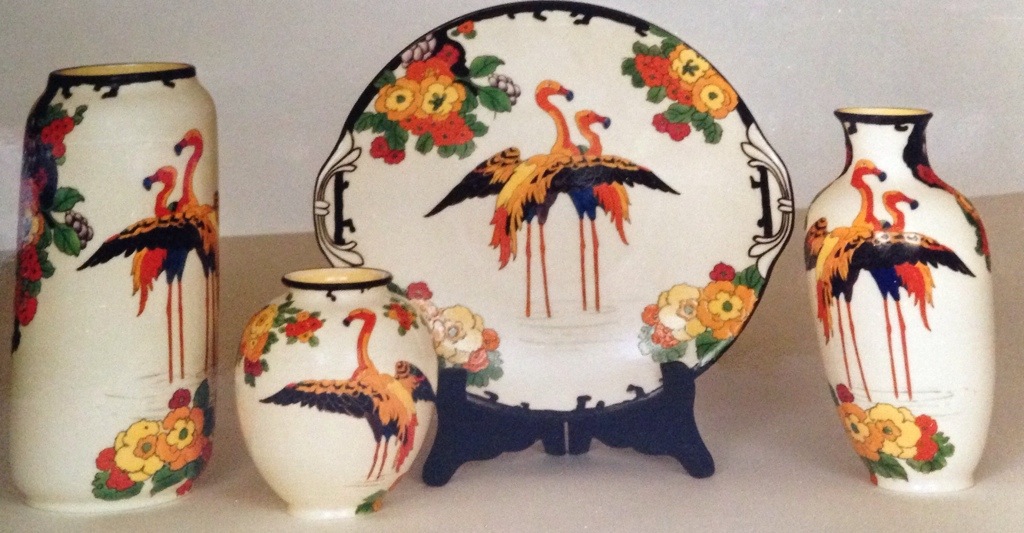
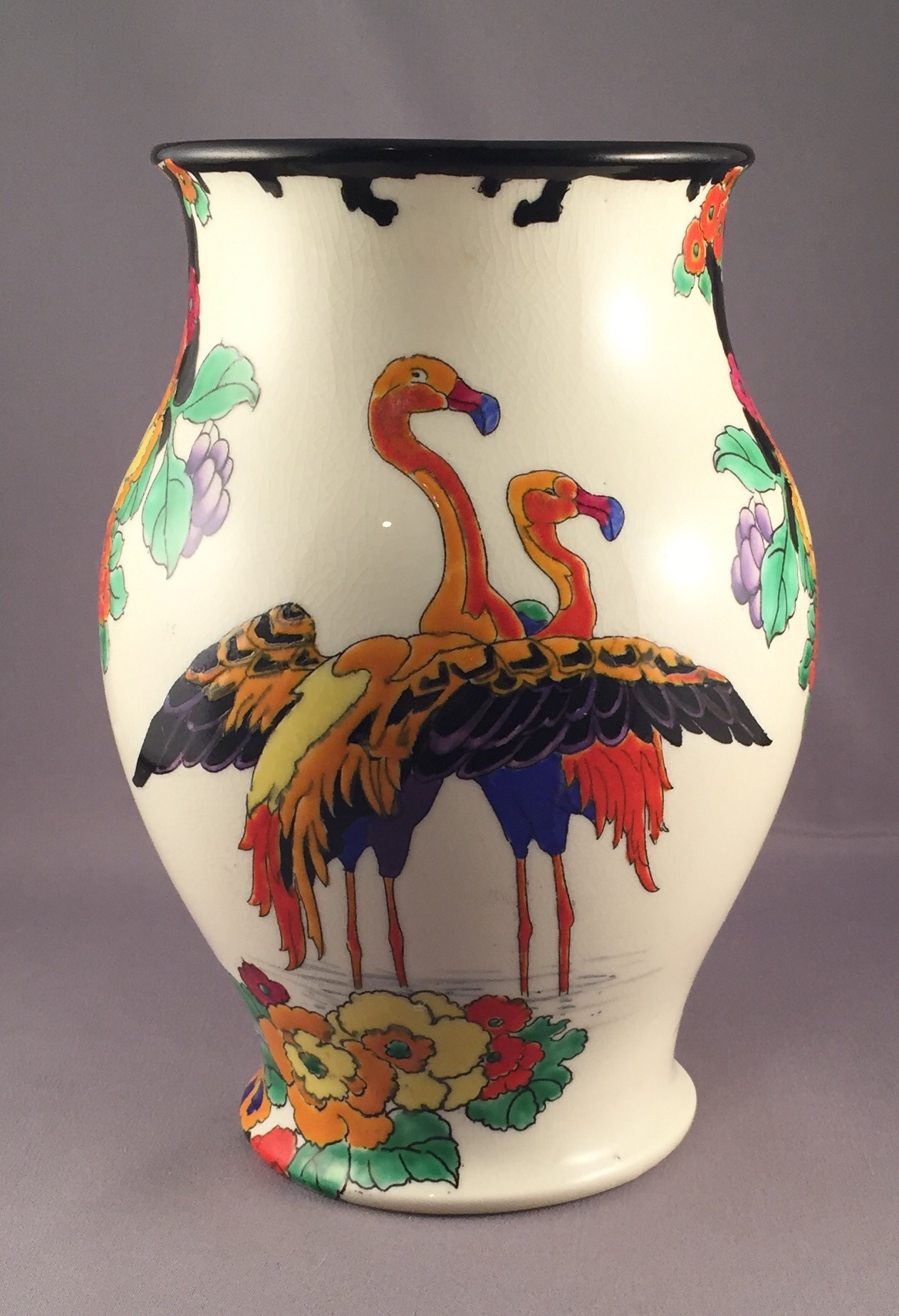
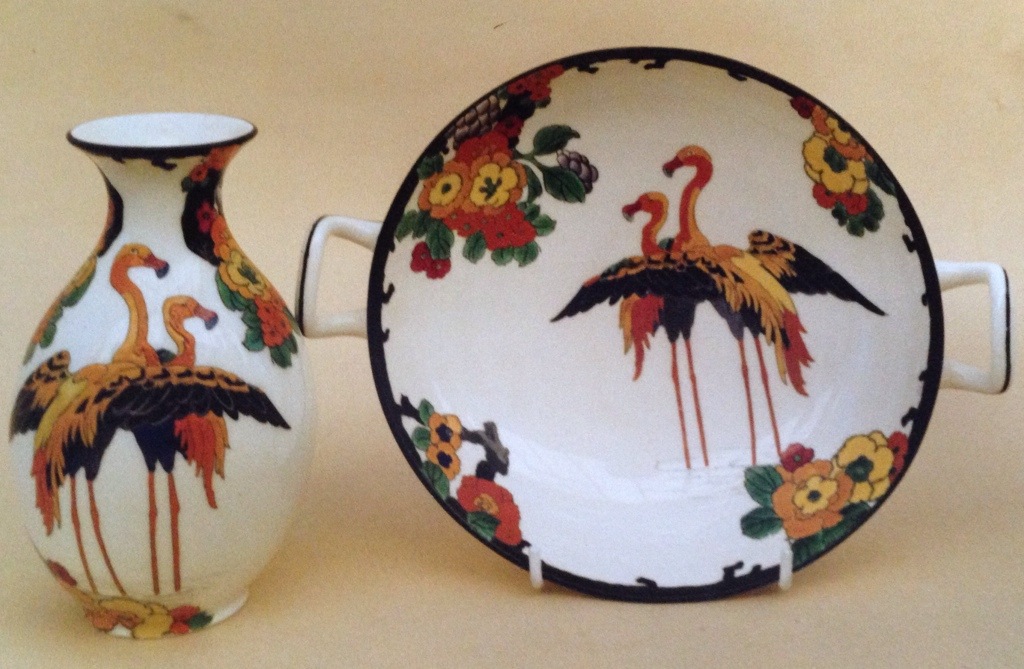
Doulton’s popular Mandarin ware falls into two broad categories. The first like the pictures above and below has an almost seriesware feel but features much painting around a transfer pattern. 

  
Typically prunus and flamingos feature on this first type of mandarin ware.

20140706-094250-34970286.jpg
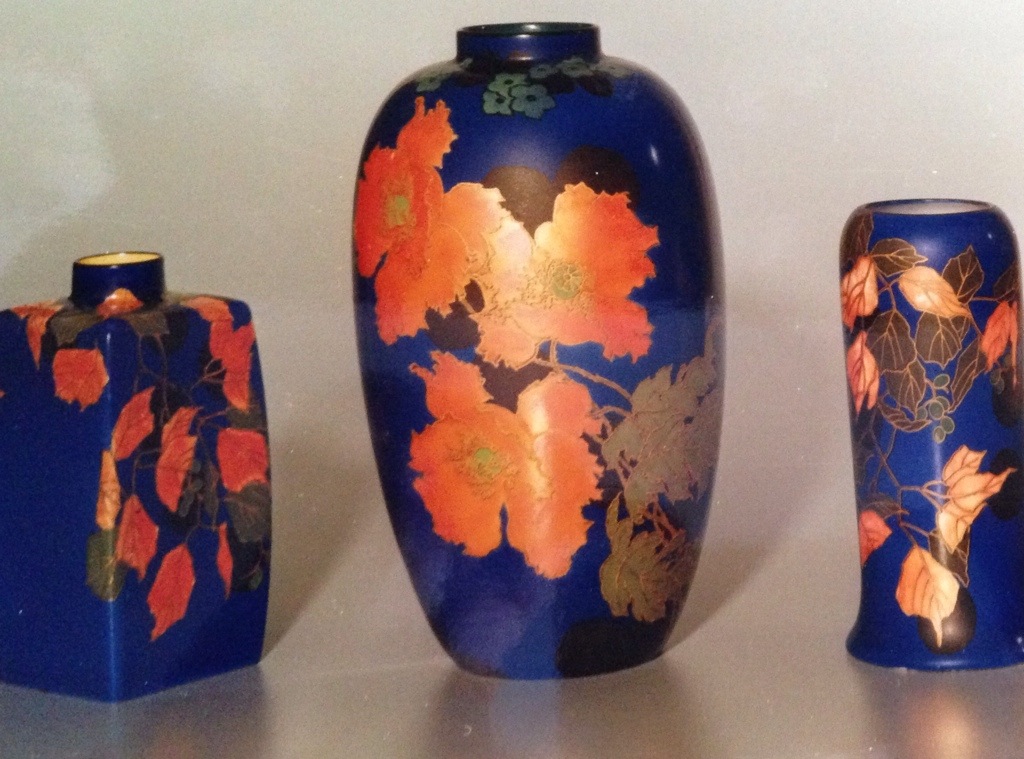
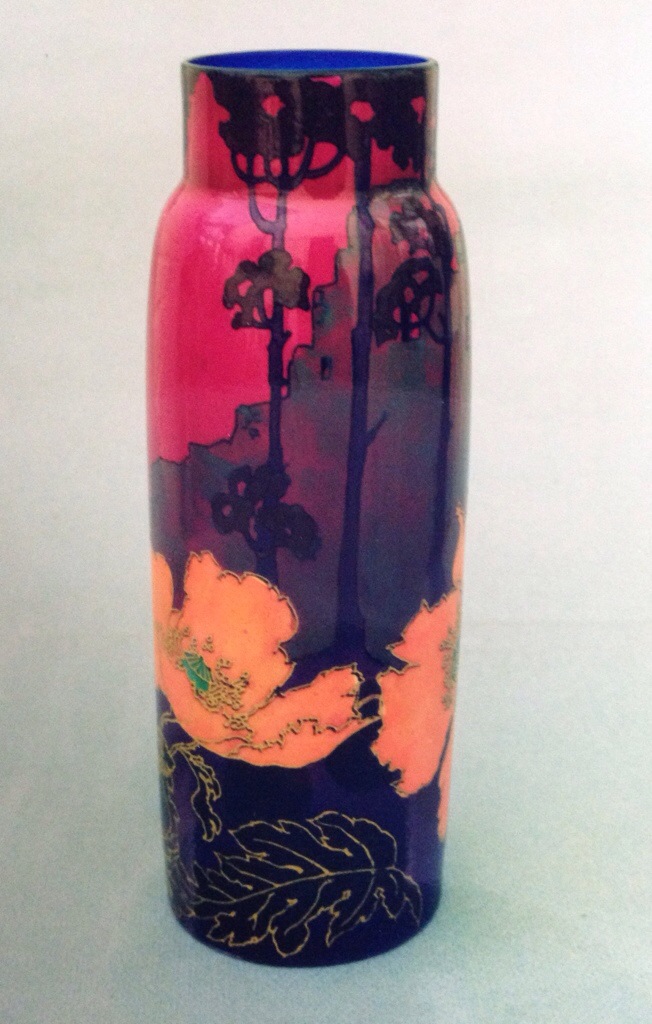
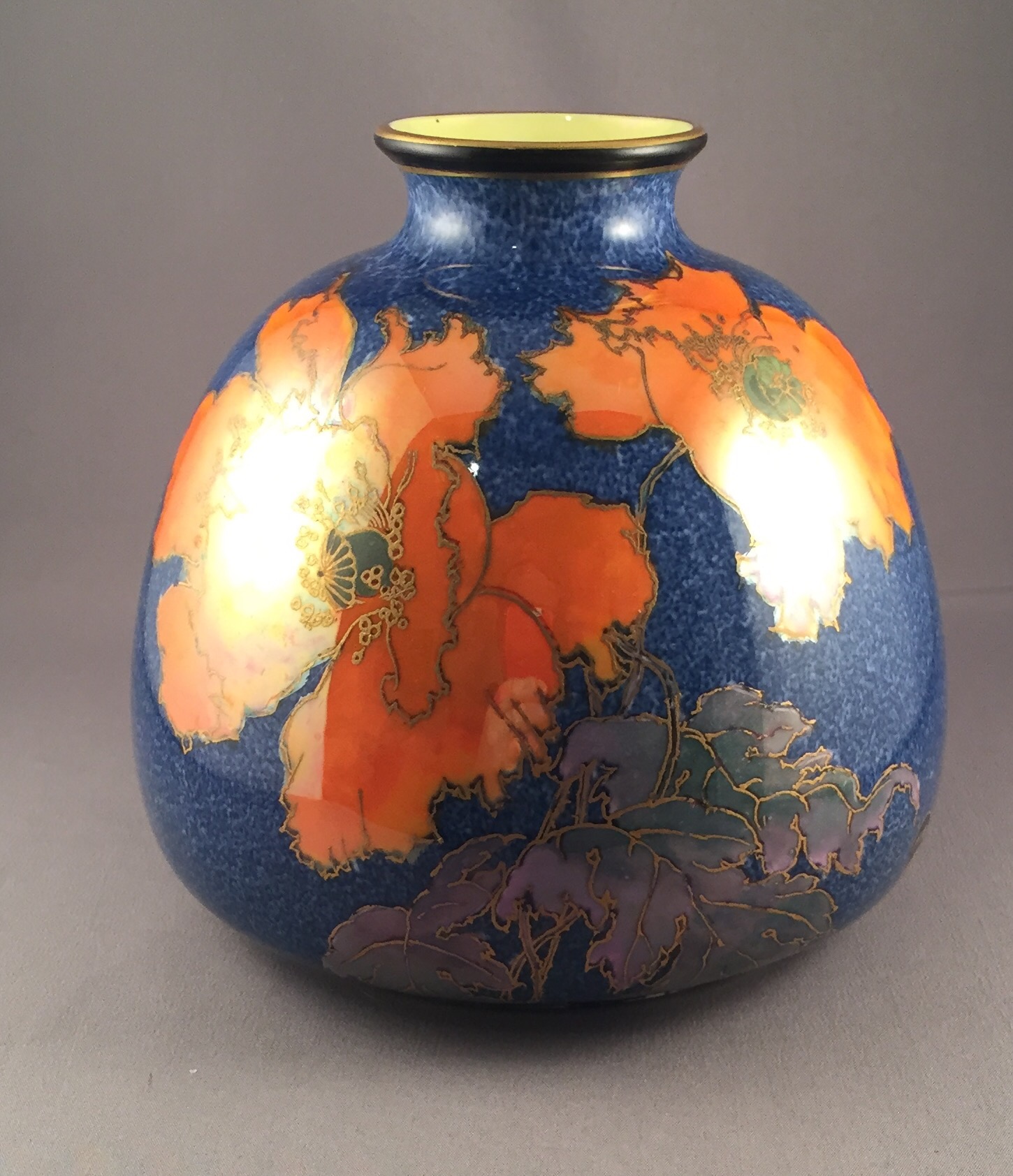
The second is much more delicate and feature lustred poppies generally against a blue background. As with many Doulton wares the shapes of vases used really distinguish this second type of Mandarin ware.

20140706-094038-34838508.jpg

I once came across a Sung version of this type of Mandarin vase and it was exquisite as you can see. Both types of Mandarin ware are much sought after today and pieces are quickly snapped up by collectors.

20140706-094211-34931715.jpg

A rare Sung version of the Mandarin poppy design. 

Both types of Mandarin ware are difficult to find today and production certainly ceased by the 1930’s.

  
A recent find in the poppy design from the 1920’s.

Collecting Doulton Holbein ware

Around the turn of the 20th Century there were many exciting introductions at Doulton’s Burslem studios, many the brainchildren of the famous Charles Noke.

20140706-091630-33390006.jpg

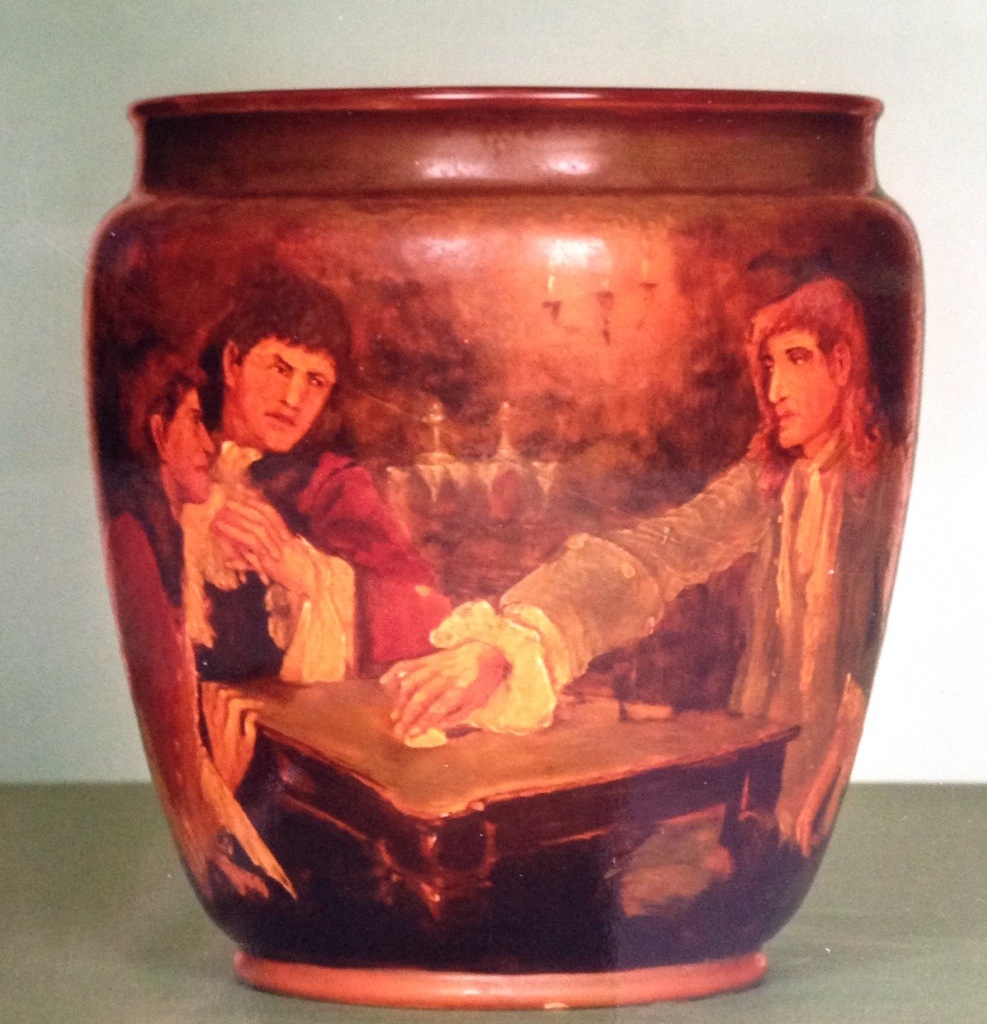
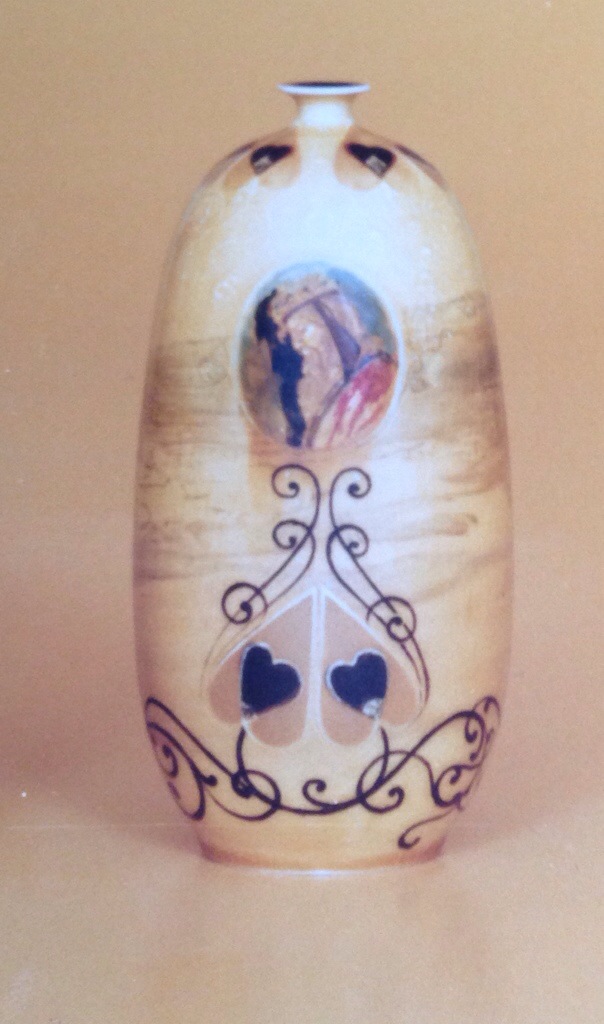
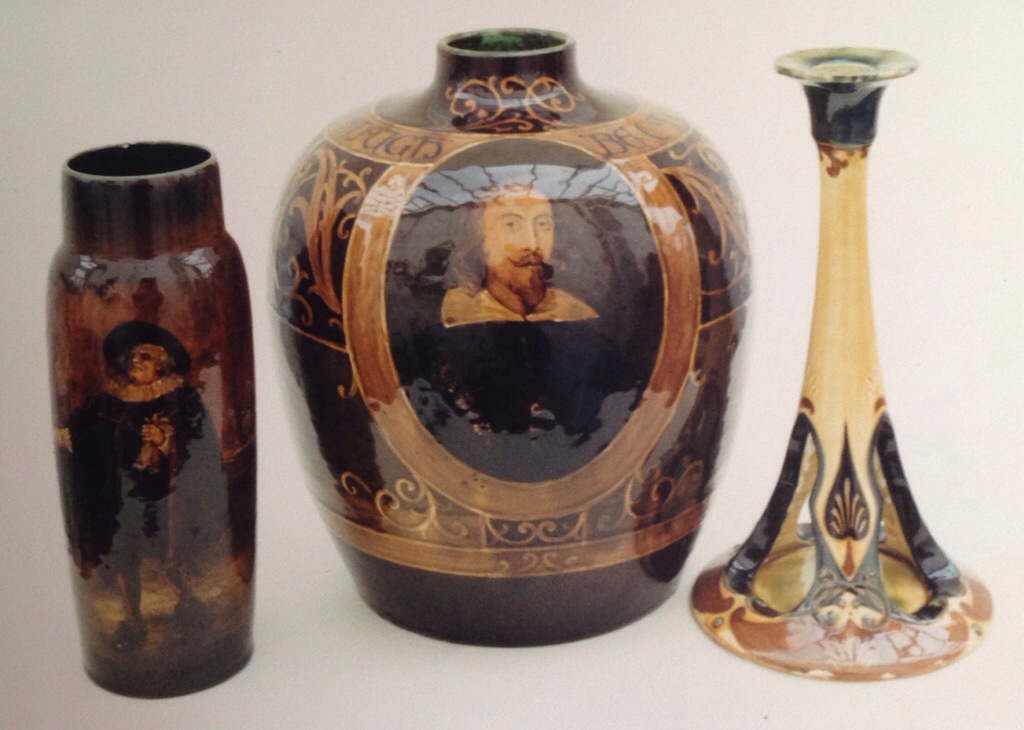
Holbein ware is a typical example of Noke’s experimentation with glazes. Holbein wares give the impression of old masters through the use of yellow, green and brown slip on a cream earthenware body. Portraits on these vases were typically by Harry Tittensor and Walter Nunn among others.

Incidentally this name of ware was also given to a series of items including candlesticks and oil lamp bases modelled in an art nouveau style but not bearing any portrait!

20140706-091737-33457490.jpg

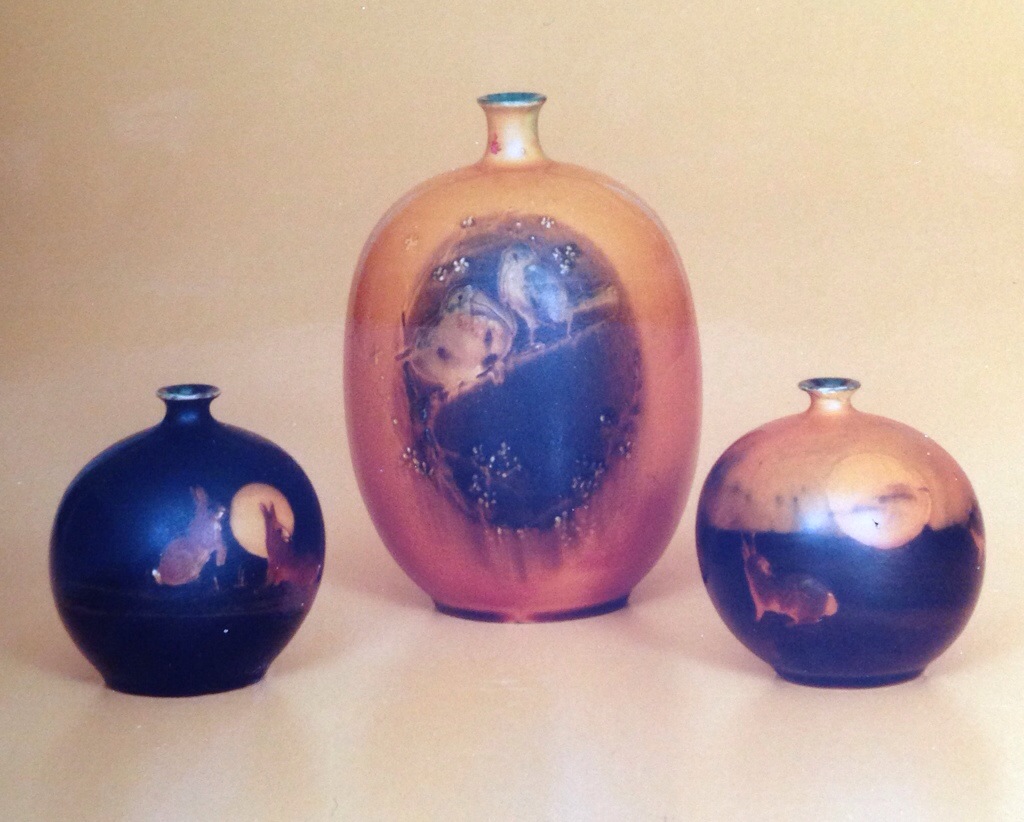
Further Holbein pieces not featuring portraits but rather nocturnal animals including owls also appear.

20140706-091803-33483109.jpg

This ware had a special backstamp but it was not always used, creating certain confusion about this particular ware. This ware should not be confused with Rembrandt ware.

20140706-091821-33501869.jpg
L-R Holbein vase, Rembrandt vase and Holbein

candlestick.

Collecting Doulton Spanish wares

This technique introduced around 1890 offers something for every collector, with simple to elaborate designs and with prices to match!

20140706-084930-31770969.jpg

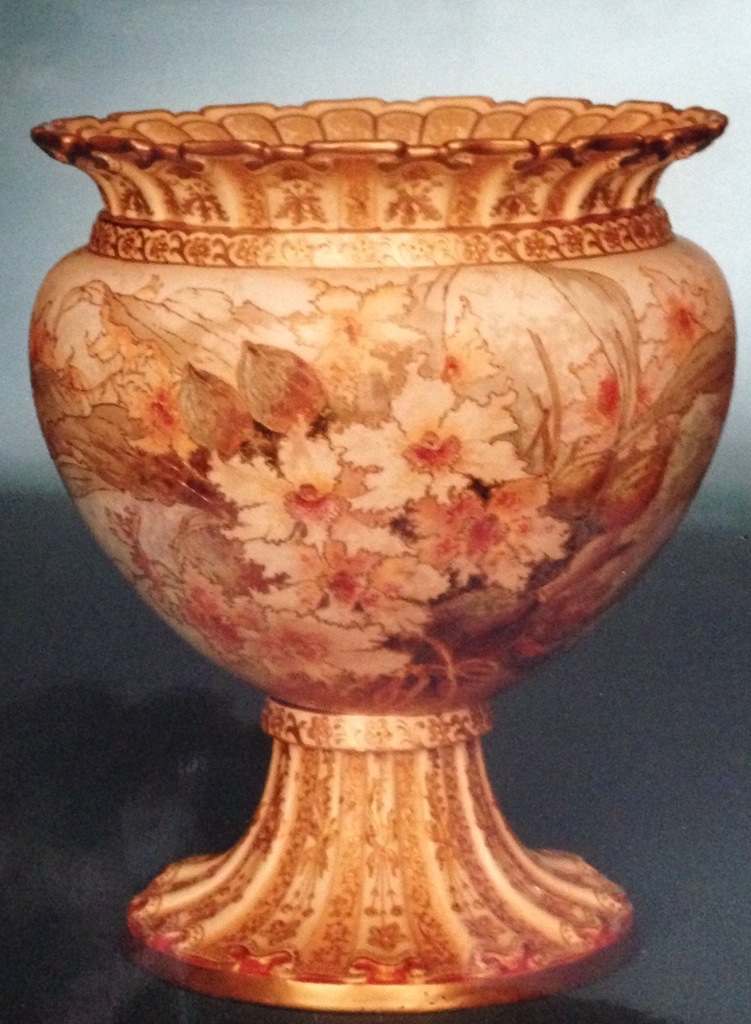
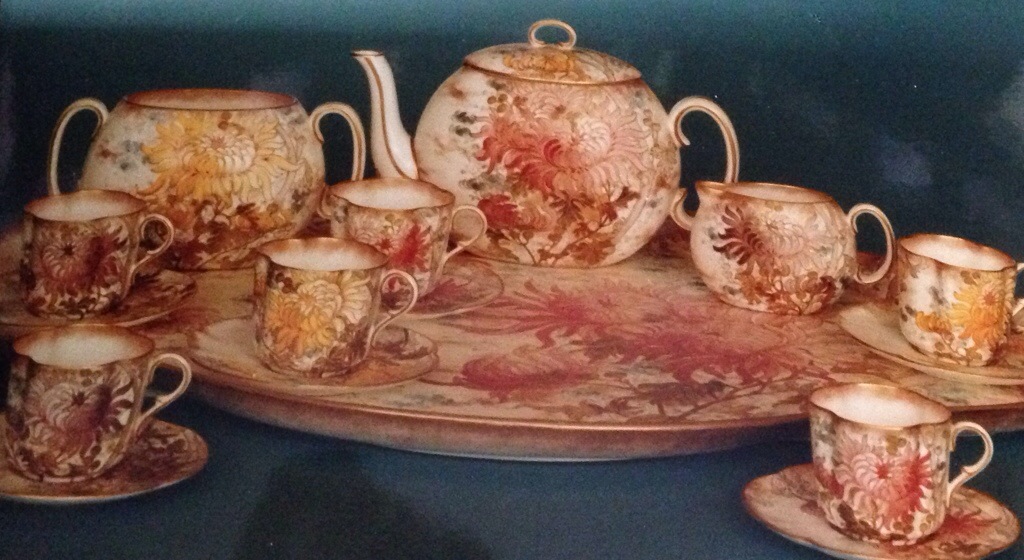
The Spanish ware technique consisted mainly of flowers outlined in raised gilt. Examples of handpainting and transfer printing can be found on this ware, although the general rule of thumb for collectors is the more elaborate the more likely it is that it is an artist piece.

20140706-085257-31977301.jpg

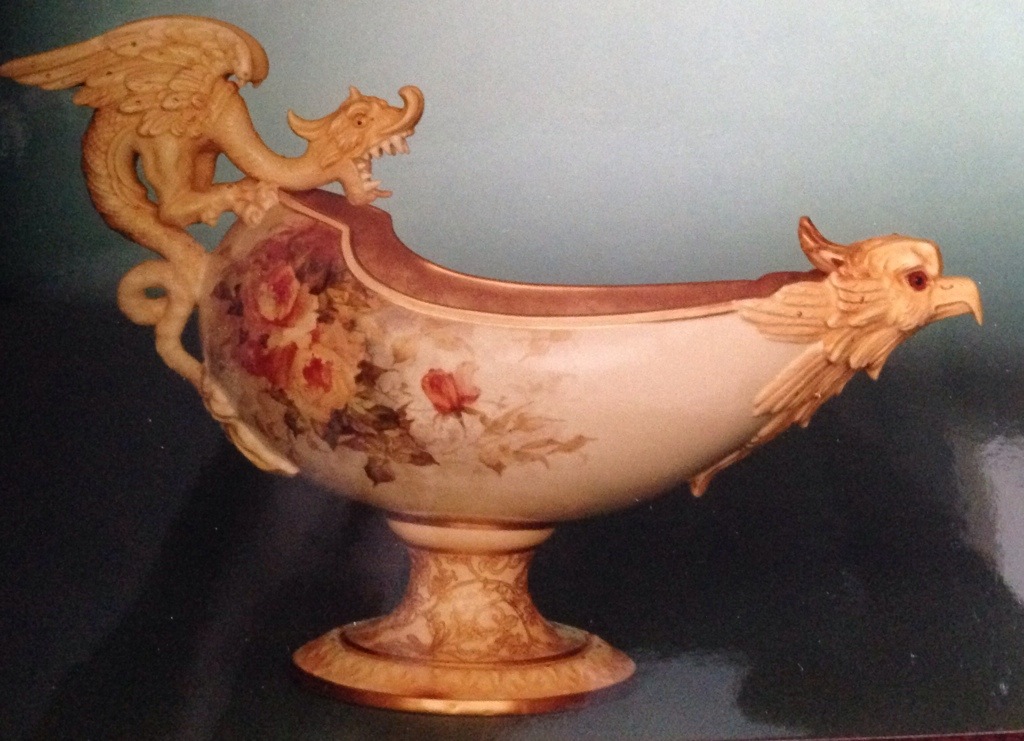
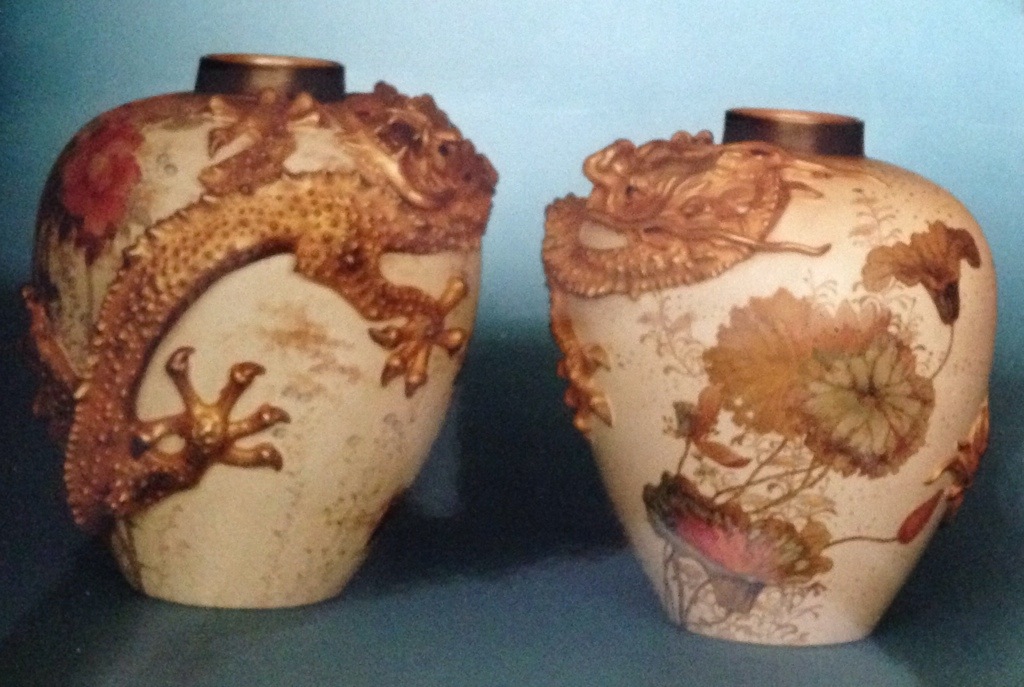
The body used on this ware was often Vellum, just like the small range of figures developed in the late 19th Century. The gilding on this particular ware is exceptional and the styles of vases etc…were equally elaborate and often featured dragons.

20140706-085459-32099479.jpg

This method of decoration was often used on high end tablewares, and cabinet sets like the one below were particularly popular with this decoration.

20140706-085613-32173238.jpg

Prices for Spanish ware correspond to how elaborate the piece is and there are many avid collectors of this ware around the world.

20140706-085729-32249413.jpg

Spanish ware production ceased sometime around the outbreak of WWI in 1914.

A place to share enthusiasm for all things Royal Doulton! All original content ©Christopher Evans 2014 unless otherwise credited. No unauthorised reproduction permitted.